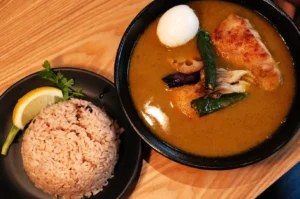
When we first encountered the aromatic steam rising from a bowl of authentic Hokkaido soup curry in Sapporo, we knew we had discovered something extraordinary. The fragrant broth, alive with warming curry spices and crowned with vibrant vegetables, represented a unique take on curry. This wasn’t the thick, sweet Japanese curry rice most know, nor traditional Indian food with its complex spice blend and coconut milk.
To understand soup curry, we must appreciate curry’s evolution across cultures. Originating in the Indian subcontinent over 4,000 years ago with spices like turmeric, cumin, and coriander, curry recipes have diversified globally. The word derives from the Tamil “kari,” meaning sauce or relish for rice, though British colonial influences later standardized curry powder blends that spread worldwide and reached Japan in the late 19th century through Royal Navy cookbooks.
What Separates Soup Curry from Typical Chicken Curry?
Soup curry is a revolutionary departure from conventional curry. While most associate curry with thick, coating sauces—whether the coconut milk-rich gravies of Thai cuisine, aromatic spices of traditional Indian preparations, or the roux-thickened sweetness of Japanese curry rice—soup curry takes a different approach.
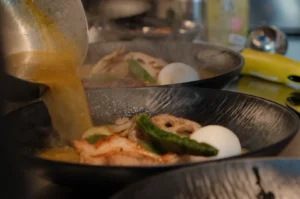
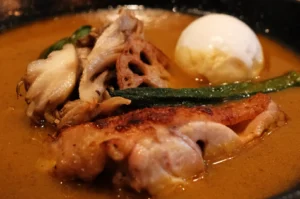
At its essence, soup curry is a fragrant, brothy curry soup showcasing large, distinct pieces of vegetables and tender chicken pieces in a light yet flavorful base. Unlike familiar curry sauce that submerges ingredients into uniformity, soup curry celebrates each component individually. Picture grilled chicken pieces nestled alongside whole carrots, wedges of kabocha pumpkin, and bell peppers, floating in a golden broth carrying the warming essence of dozens of carefully balanced spices. The amount and type of chilli used can be adjusted to control how spicy the soup curry becomes, catering to personal preferences.
Key characteristics include:
Brothy consistency: A thin, soup-like texture allowing each ingredient to shine
Large vegetable cuts: Vegetables retain their shape and texture
Aromatic spice blends: Complex combinations of whole and ground curry spices create depth without overwhelming heat; the level of chilli can be increased for a more spicy flavor or reduced for milder tastes
Interactive dining: Rice is served separately, allowing diners to customize each bite and tailor flavors to their personal preferences
This creates a different eating experience from curry rice, where thick sauce dominates. In soup curry, the delicate chicken broth base allows the natural sweetness of vegetables to emerge while the spice blend provides warming complexity that builds with each spoonful. During the cooking process, the broth and spices are brought to a simmer and stirred regularly to develop flavor, ensuring each ingredient is cooked to perfection.
The Origins of Soup Curry in Sapporo
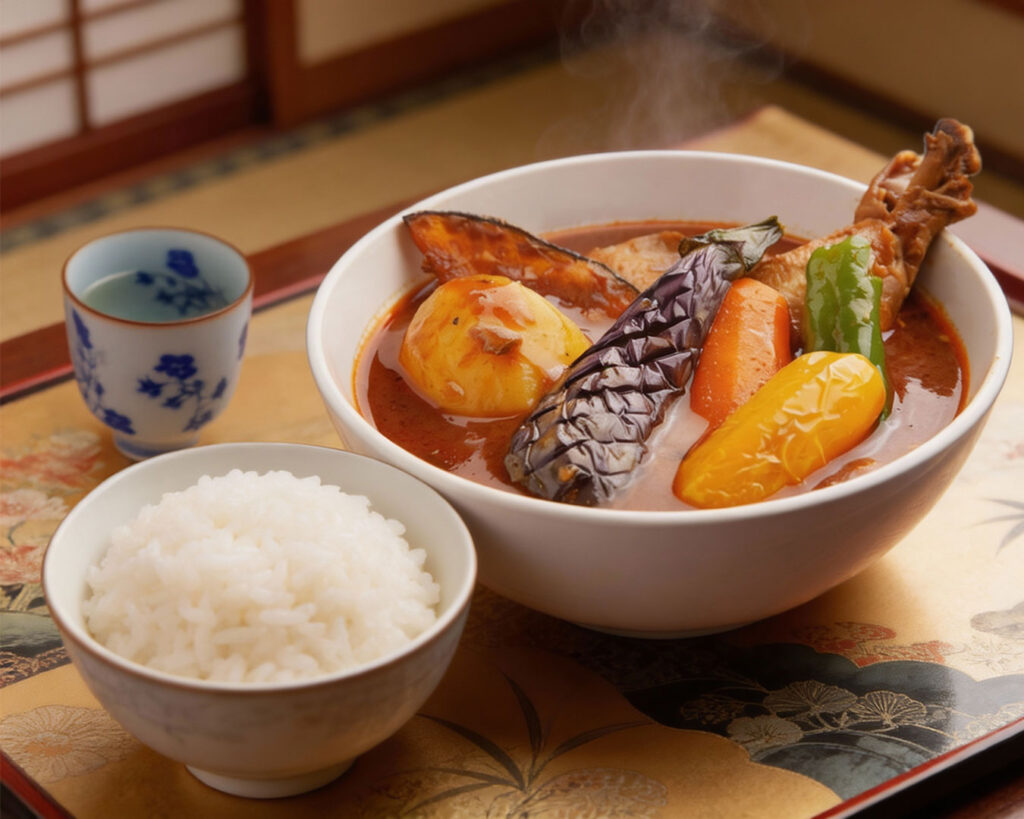
Soup curry began in the 1970s in Sapporo, where an experimental café culture thrived. Unlike mainland Japan’s established culinary traditions, Hokkaido’s recent settlement allowed fusion influences from Russian, Western, and indigenous Ainu food cultures.
The defining moment came in 1993 with Garaku, the first dedicated soup curry restaurant, blending warming winter nourishment with health-conscious café trends, shaping modern soup curry.
Sapporo’s harsh winters, with temperatures often below freezing and months of snow, created demand for hot, nourishing dishes. Traditional Japanese curry felt too heavy, while ramen lacked vegetables.
By the late 1990s, many soup curry shops emerged, each with unique spice blends and styles. Its popularity surged in the 2000s, making soup curry a must-try across Japan.
Soup curry fits cultural trends: healthier, vegetable-forward dining; customizable spice levels and toppings; and social dining, making soup curry shops popular gathering spots.
Hokkaido’s Culinary Landscape
Hokkaido’s agricultural abundance forms the foundation of authentic soup curry. As Japan’s northernmost major island, it produces exceptional potatoes, corn, onions, spinach, dairy, fresh fish, and pasture-raised cattle and lamb used in Jingisukan grilling.
The harsh climate—with winters reaching -20°C and five months of snow—shapes local food preferences for warming, substantial dishes like soup curry, which delivers warming spices, nourishing vegetables, and satisfying proteins in one comforting bowl.
Ainu indigenous food culture influences soup curry’s development, emphasizing natural flavors and nutrient-rich broths and stews suited for harsh winters. Though modern, soup curry reflects this philosophy of quality ingredients and nourishing meals.
How Soup Curry Differs from Traditional Japanese Curry
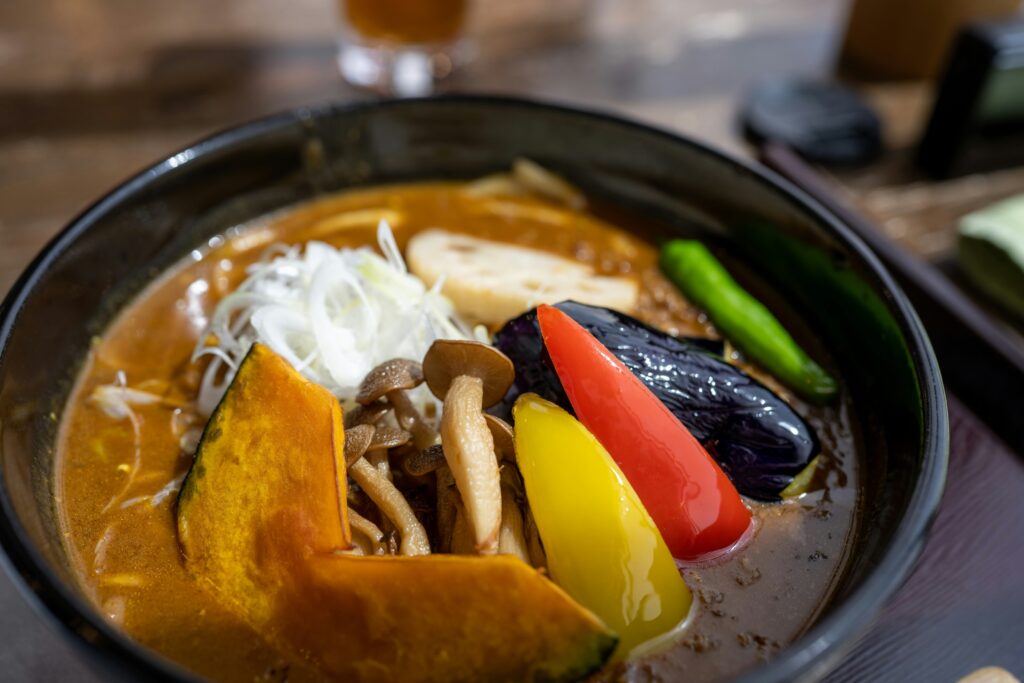
Soup curry differs dramatically from the curry rice most associate with Japanese cuisine. Traditional Japanese curry, introduced in the Meiji era through British naval influences, evolved into a comfort food characterized by thick, roux-based sauce and mild, sweet flavor.
The key difference is consistency.
Traditional Japanese Curry: uses a flour-and-fat roux creating thick gravy coating rice and standing on a spoon. This curry sauce contains curry powder, onions, and vegetables cooked until soft and uniform.
Soup Curry: maintains a thin, broth-like consistency allowing sipping directly from the spoon with rice served separately for dipping.
Vegetable preparation is another difference.
Traditional Curry Rice: features small, diced vegetables—potatoes, carrots, onions—cooked until tender and integrated into sauce.
Soup Curry: celebrates vegetables as individual stars, featuring large cuts retaining shape, color, and texture—half-carrots, kabocha wedges, whole okra, bell pepper strips—highlighting natural flavor and visual appeal.
Spice profiles differ.
Traditional Japanese Curry: relies on commercial curry powder blends emphasizing mild warmth and sweetness, often containing flour, salt, and sugar for consistent, family-loved flavor. It often uses a mixture of seasonings and sometimes a curry paste to create its characteristic flavor.
Soup Curry: builds complexity with 15-20 different aromatics—cumin, coriander, turmeric, cardamom, cloves, black pepper, and various chili varieties—each toasted and ground to create layered depth.
Serving style creates different dining experiences.
Curry Rice: arrives as a single plate with sauce ladled over rice for uniform bites.
Soup Curry: comes in a bowl with white rice served separately, allowing customization—alternating sips of flavorful broth, bites of rice dipped in soup, and individual vegetable and meat pieces.
Customization options are central.
Soup curry shops offer spice levels from mild (child-friendly) to extremely hot (for spice enthusiasts), plus choices of protein (chicken, pork, fish, vegetables), additional toppings (cheese, soft-boiled eggs, extra vegetables), and broth richness.
Condiments such as pickles or chutney, and even grated apples, are sometimes offered to personalize the dish according to personal preferences. This transforms ordering into an interactive experience tailored to mood, appetite, and preferences.
Essential Elements of Authentic Hokkaido Soup Curry: Chicken Broth
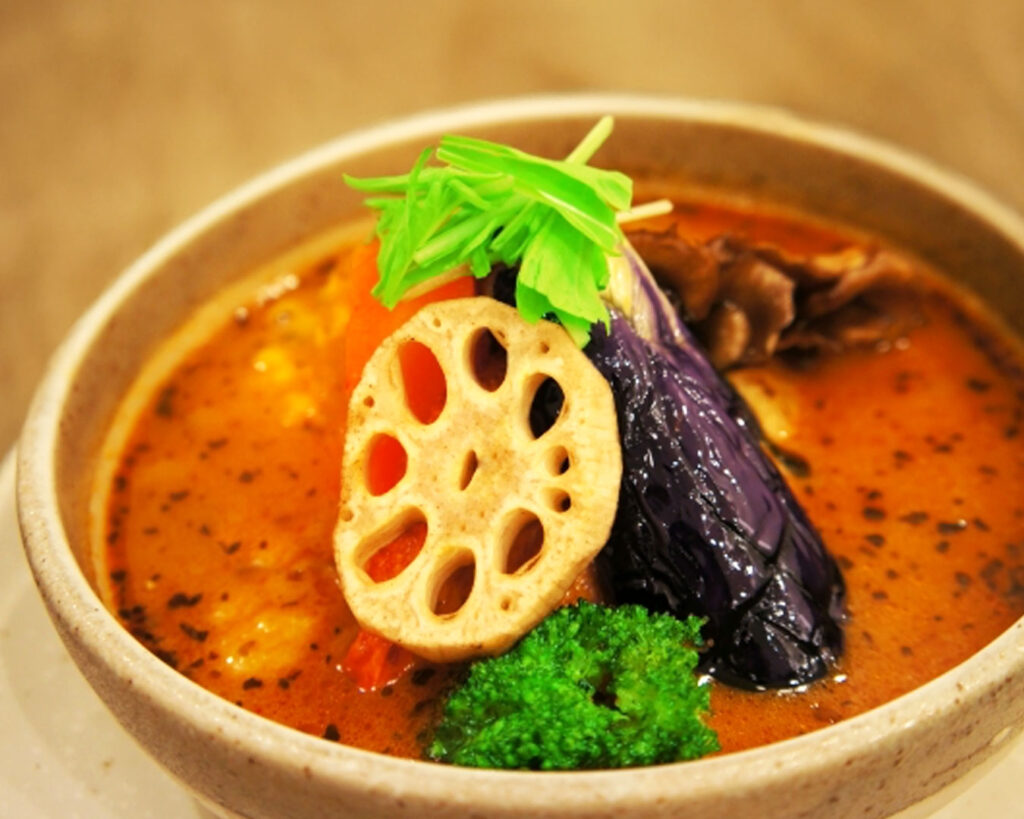
Authentic Hokkaido soup curry features a complex blend of 15-20 spices like cumin, coriander, turmeric, cinnamon, cardamom, cloves, chili varieties, black pepper, mustard seed, and curry leaves. The spice mix is toasted and ground to release rich aromas, sometimes enhanced with shrimp paste for umami.
Hokkaido’s abundant vegetables—corn, potatoes, carrots, bell peppers, eggplant, okra, broccoli, and kabocha pumpkin—are grilled or roasted to add texture and color.
Bone-in chicken leg is slow-cooked to yield tender pieces that enrich the broth. Pork, lamb, fish, seafood, and vegetarian options also complement the soup.
Cooking starts with chicken broth, enriched with vegetables or mushrooms for umami. The spice blend is sautéed with garlic, ginger, and onion before adding the broth. Water adjusts soup consistency, while cream or yoghurt can add richness. A squeeze of lemon brightens flavors. Vegetables and proteins are prepared separately, then combined for the final dish.
The Perfect Balance of Curry Spices and Flavors
Authentic soup curry balances taste elements working together. Achieving a balanced, tasty flavour profile is essential in authentic soup curry, as the right combination of spices and seasonings creates a rich and enjoyable eating experience. Heat builds gradually, allowing appreciation of complex spice blend without overwhelming burn. Sweetness, from caramelized onions, honey, or natural vegetable sugars, complements rather than dominates spices.
Umami, typically from quality chicken broth, supports vegetables and spices without overpowering. Some enhance with soy sauce, miso, or mushrooms, but goal remains balance over intensity.
Seasonal adaptations showcase Hokkaido’s agricultural calendar. Spring features asparagus and bamboo shoots, summer brings corn and tomatoes, autumn highlights pumpkins and root vegetables, winter emphasizes warming spices and heartier ingredients. Seasonal variations keep soup curry dynamic while maintaining essential character.
The Soup Curry Rice Dining Experience
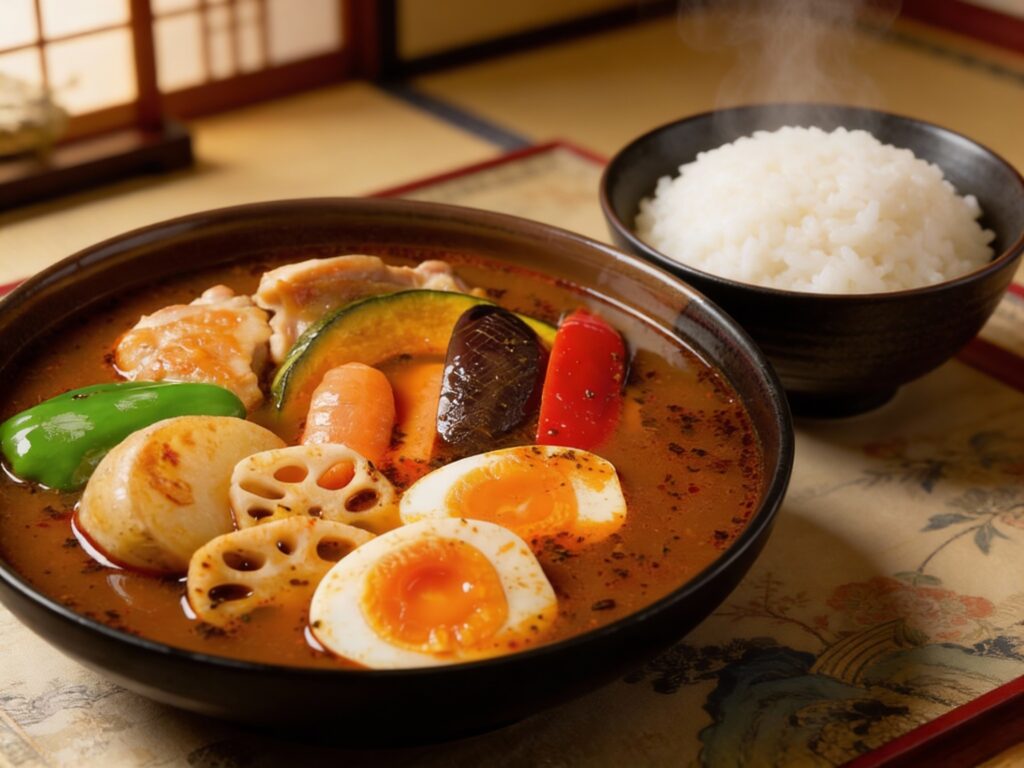
Eating soup curry is a flavorful ritual featuring a large bowl of aromatic soup with vegetables and protein, served alongside steamed white rice or alternatives like turmeric or multigrain rice for customization. Prepared in a large pot for even cooking, spice levels range from 0 (child-friendly) to 10+ for spice lovers, accommodating varied heat preferences.
Ordering is interactive with choices of protein (chicken, pork, fish, vegetables), toppings (cheese, soft-boiled eggs, extra vegetables), and broth richness. Chutney often accompanies as a flavorful condiment.
Unlike curry rice, soup curry encourages alternating between broth, rice, and vegetable or meat pieces. The social dining atmosphere invites relaxed meals, and some use an Instant Pot for quick preparation at home.
Artistic presentation with colorful vegetables in golden broth adds visual appeal, popular on social media and sparking conversation.
Soup Curry’s Cultural Significance in Japan
Within Japan’s culinary landscape, soup curry embodies Hokkaido’s regional identity. Unlike traditional Japanese dishes with subtle flavors, soup curry celebrates bold spices, vibrant colors, and customizable intensity—reflecting Hokkaido’s frontier spirit and multicultural influences.
It draws curry enthusiasts nationwide, boosting tourism and impacting hotels, transport, and local economy. Culinary tourism has transformed soup curry from a local specialty to a national phenomenon.
Soup curry balances heavy traditional comfort foods and lighter health-conscious options, emphasizing vegetables and adjustable spice levels to suit diverse diets while providing warming satisfaction.
Internationally, soup curry represents regional Japanese cuisine beyond sushi and ramen, featured in cultural centers and restaurants worldwide to showcase culinary diversity.
Social media amplifies its appeal; soup curry’s visual charm and customization culture make it highly shareable, promoting Hokkaido’s culinary scene and increasing tourism through food bloggers and influencers.
Experience Authentic Hokkaido Soup Curry at Ki-Setsu
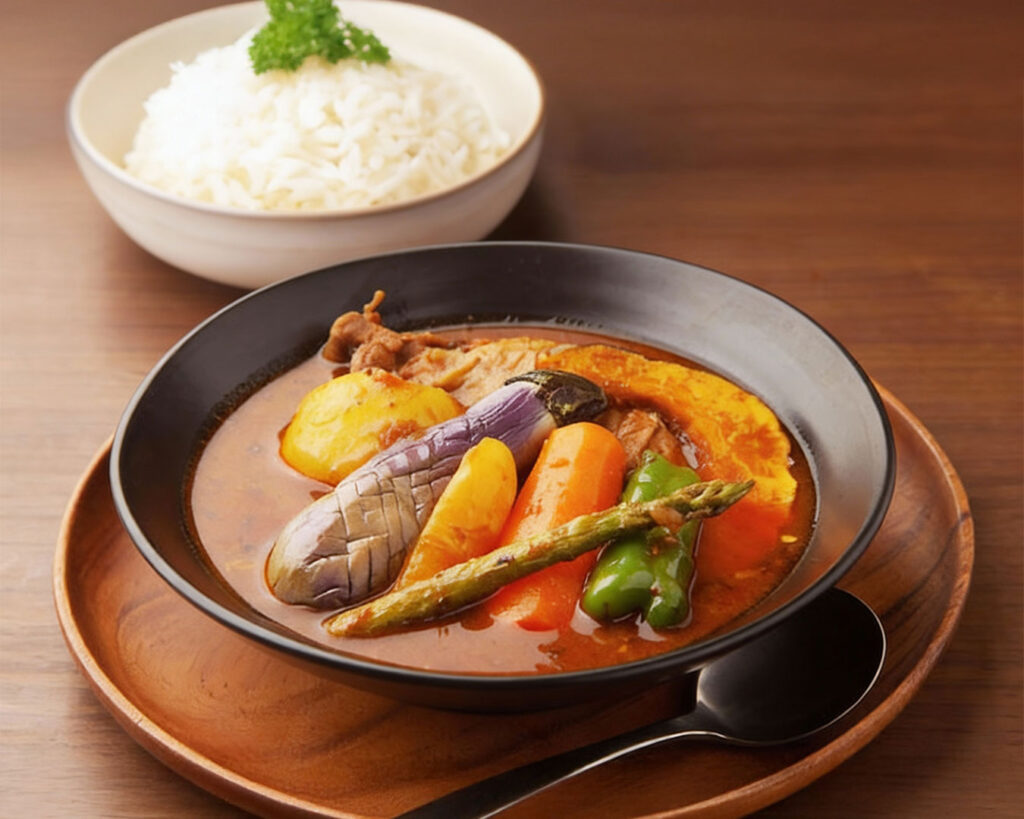
As Singapore’s first authentic Hokkaido soup curry restaurant, Soup Curry by Ki-Setsu brings the genuine Sapporo experience to local diners. We honor traditional Hokkaido methods with carefully sourced spices, large-cut vegetables, and tender chicken pieces that enrich the broth’s flavor.
Our menu embraces Sapporo’s customization culture, offering milder spice levels for newcomers and hotter options for spice lovers. We recommend the signature chicken soup curry at a moderate spice level, served with white basmati rice, showcasing large vegetables like corn, potatoes, carrots, and bell peppers.
Whether you seek a new culinary adventure or crave Hokkaido flavors, Soup Curry by Ki-Setsu offers an authentic gateway to soup curry’s warming tradition. Experience the difference quality ingredients and cultural care bring to every aromatic, colorful bowl.