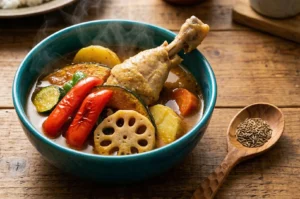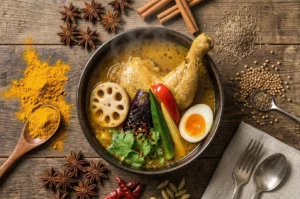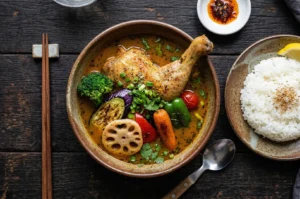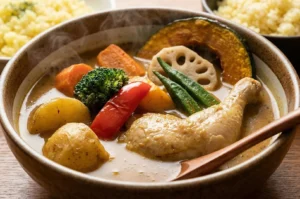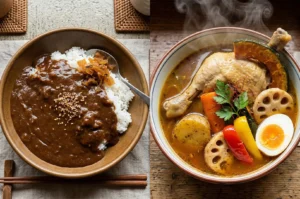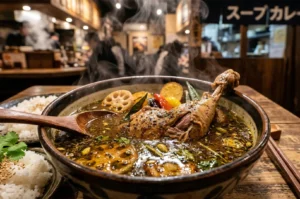
The moment a bowl of authentic Hokkaido soup curry arrives at your table, a complex wave of aromas fills the air. Among the symphony of spices that define this Sapporo soul food, one ingredient stands out as the unsung hero. That spice is cumin.
At Soup Curry by Ki-Setsu, we often reflect on how this single, unassuming seed builds the very foundation of our signature dish. The science of cumin in soup curry is a fascinating journey of heat, oil, and chemistry. It is what transforms a simple chicken broth into a deeply comforting, curry-flavoured masterpiece.
The Aromatic Chemistry Behind Cumin in Soup Curry
Cumin contains a high concentration of an organic compound called cuminaldehyde. This compound is responsible for the warm, earthy scent that you immediately recognise when stepping into our dining place.
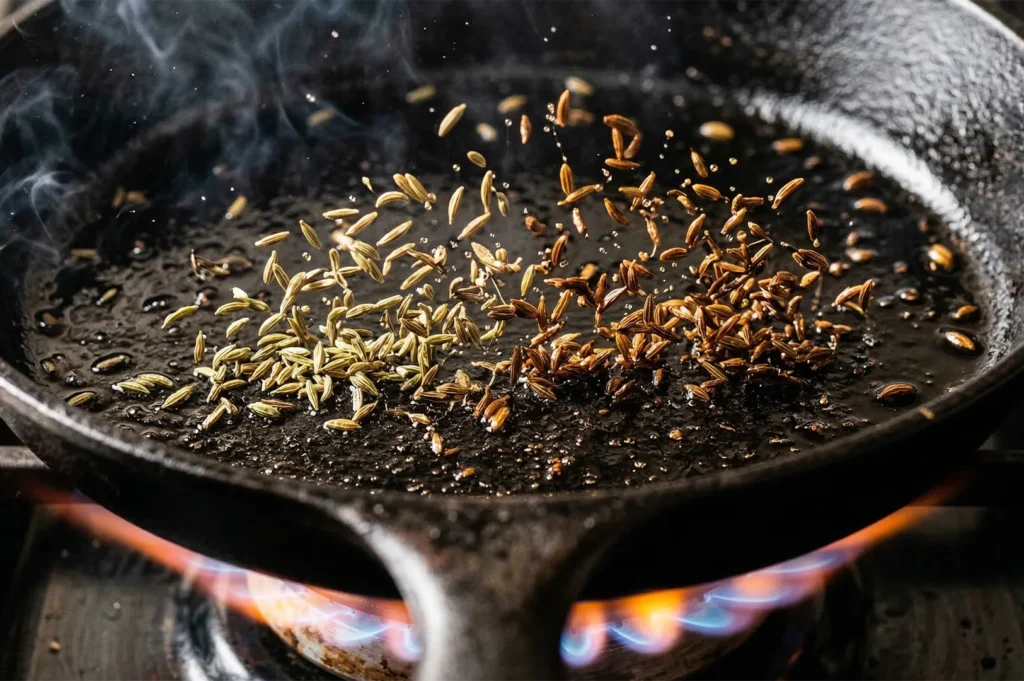
The cumin seed’s tough outer shell protects its essential oils. Breaking this shell down requires either grinding or heat. When we grind our spices, we break open the seed’s walls, but adding hot oil is what truly releases the cumin’s aroma. This process requires great precision. Too little heat, and the aroma stays locked inside, leaving the curry without its signature flavour. Too much heat, and the delicate compounds burn, resulting in a bitter aftertaste that ruins the entire batch. Our careful temperature control ensures these oils are gently released, creating a rich flavour base that infuses every spoonful of our light soup.
Toasting Cumin for Maximum Flavour Extraction
In the culinary world, the technique of blooming or toasting spices is an essential science. For soup curry, toasting cumin seeds before blending them with curry powder and garam masala ensures the essential oils are fully activated.
If we simply added raw cumin to boiling chicken broth, the result would taste flat and slightly bitter. Instead, the heat triggers a Maillard reaction within the seeds. This chemical reaction browns the cumin, mellows its harshness, and amplifies its nutty, savoury notes. This meticulous extraction process is exactly how a light, watery soup achieves such profound, lingering depth.
Bridging Hokkaido Culinary Traditions and Global Spice Routes
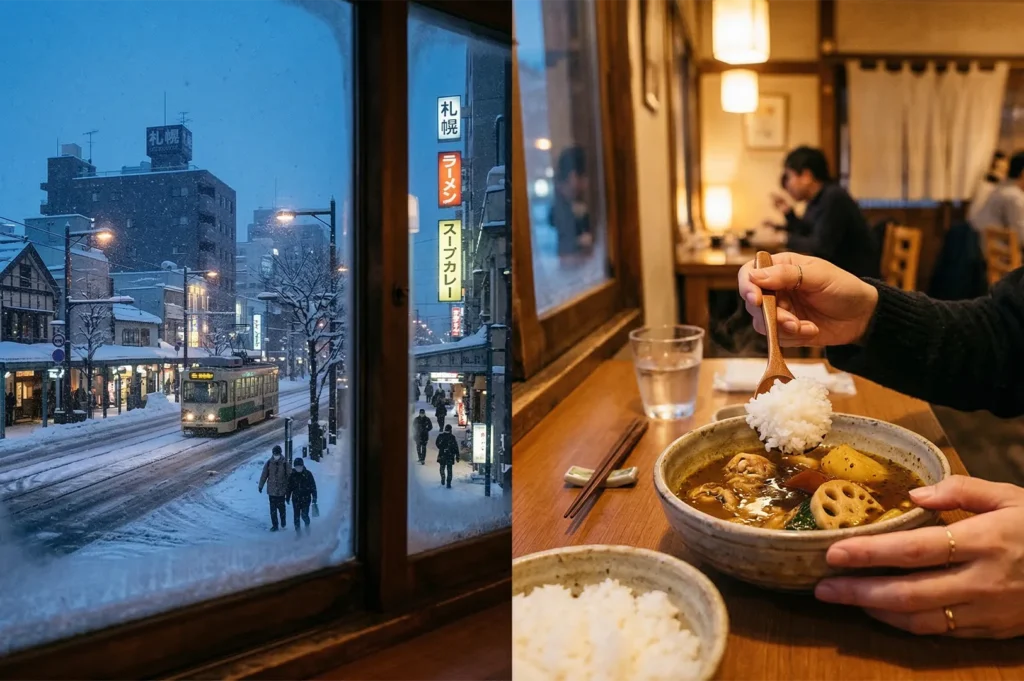
To appreciate the role of cumin, we must look at the origins of this beloved comfort food. Soup curry was born in Sapporo in the early 1970s. It began as a medicinal herbal soup designed to warm the body during freezing Hokkaido winters. Cumin, with its well-documented warming properties and historical use in traditional medicine, was a natural inclusion.
In the snowy capital of Hokkaido, diners would seek out this restorative dish to ward off the winter chill. The medicinal roots of soup curry rely heavily on cumin to stimulate digestion and promote circulation. This functional approach to food is deeply embedded in the soul food philosophy. Diners were not just looking for a quick meal. They were looking for sustenance that would fortify them against the harsh elements.
Unlike typical Japanese curry, which relies on a thick roux and a sweeter profile, soup curry embraces a lighter, deeply spiced approach. Cumin acts as the bridge connecting the wholesome, restorative nature of Japanese soup making with the intricate spice blends of South Asia.
Cumin as the Anchor in Our Garam Masala Blend
Our soup curry features a delicate balance of spices, but cumin serves as the steadfast anchor. When you taste the broth, you will notice it is incredibly light yet entirely uncompromising in its curry profile.
This is because cumin harmonises perfectly with the other spices in our garam masala. It grounds the sharp bite of black pepper, complements the sweetness of coriander, and provides a stable backdrop for the vibrant heat of chilli. Without the earthy weight of cumin, the lighter spices would simply float away, leaving the soup feeling thin and uninspired.
How Cumin Enhances the Savoury Umami of Chicken Broth

The magic really happens when cumin meets our slow-simmered chicken broth. Chicken stock is naturally rich in umami, and cumin’s earthy bitterness provides the perfect contrast, cutting through the richness to keep the soup from feeling too heavy.
Cumin also enhances our vibrant mix of deep-fried vegetables. The spice clings to the sweet bell pepper, comforting potato, crisp lotus root, and soft aubergine, ensuring every bite is infused with the signature depth of Hokkaido soup curry.
Finally, cumin is key to how the soup interacts with the rice. When you dip your rice into the broth, it instantly absorbs the aromatic, cumin-laced oils, creating a perfect balance of fluffy rice and savoury umami in every mouthful.
Experiencing the Depth of Cumin at Our Cosy Spot
Cumin is more than just a seasoning; it’s a vital component of authentic soup curry’s structure, aroma, and heritage. By understanding its chemistry, we capture the true essence of Sapporo’s favourite soul food.
We invite you to taste this meticulous balance of spices at Soup Curry by Ki-Setsu, Singapore’s first and only authentic Hokkaido soup curry restaurant. We’re open daily from 11:30 AM to 10:00 PM. Walk-ins are welcome for lunch, and from 6 PM onwards, we transform into a vibrant izakaya offering small plates, sake, and our signature curry. Evening reservations are accepted exclusively at 6:30 PM.
Join us soon and let the warming, cumin-rich depths of our broth transport you to northern Japan.