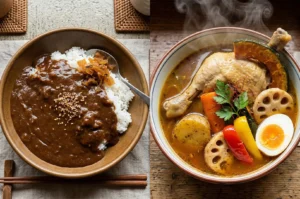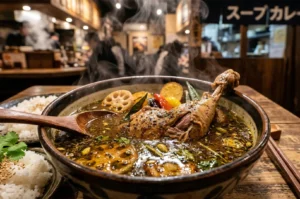
When travellers arrive in Sapporo, the crisp air carries the scent of warming spices, sparking curiosity about Hokkaido’s soup curry. Often confused with Indian or typical Japanese curry, this dish offers a unique culinary experience. Unlike thick sauces, soup curry is a complex, layered broth reflecting Hokkaido’s spirit. Despite common myths about how it’s eaten and its ingredients, understanding its true nature helps you appreciate the vibrant flavors that make it a local favorite.
Myth 1: It Is Just a Thinner Version of Typical Japanese Curry
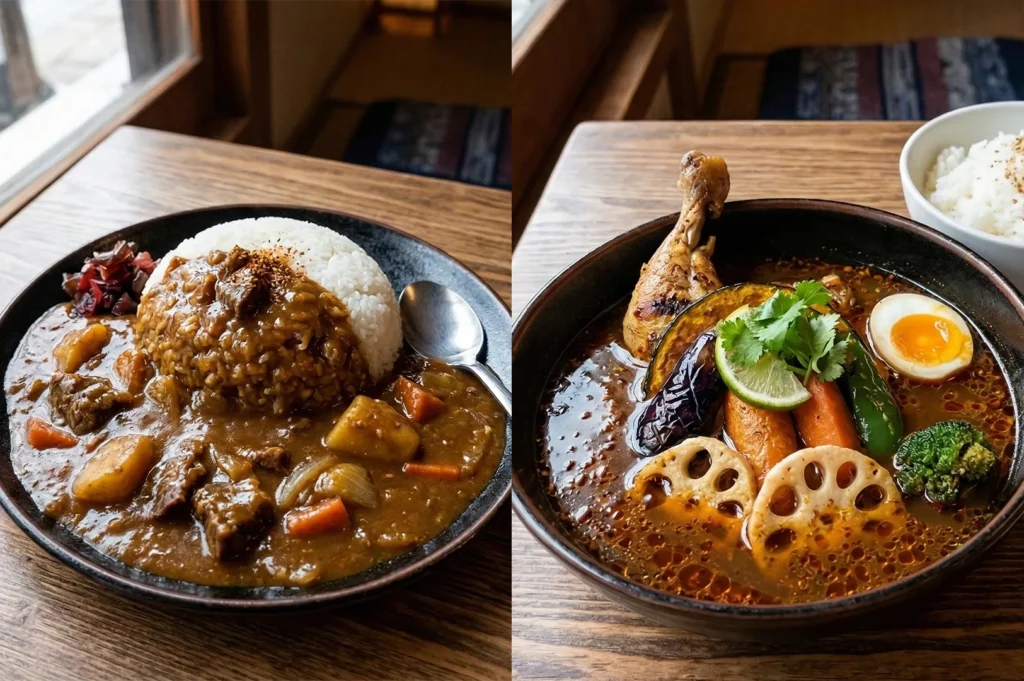
One of the most common soup curry myths is that this dish is just a diluted version of standard Japanese brown curry. To a Japanese person from northern regions, this is almost culinary heresy. Typical Japanese curry is thick and glossy, made with a flour-based roux, sweet, mild, and heavy, designed to cling to rice.
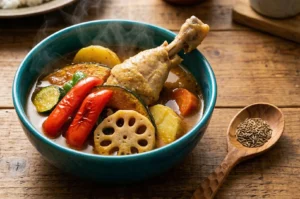
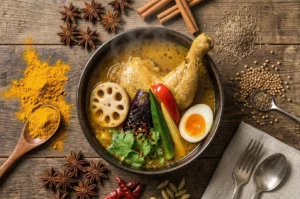
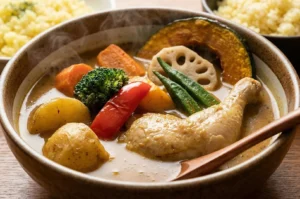
In contrast, Hokkaido’s soup curry is a different creation. Its base is a medicinal, aromatic broth simmered for hours with chicken and pork bones plus many vegetables. Instead of a roux, its depth comes from spices like cumin, garlic, and ginger. It’s a light yet rich liquid, more like a soulful consommé than a heavy gravy. The thin texture highlights the flavors of meat and vegetables. Unlike mushy vegetables in standard curry, Sapporo soup curry features vibrant, deep-fried vegetables such as eggplant, pumpkin, and bell pepper, retaining their crunch and sweetness because they aren’t drowned in thick sauce.
Myth 2: The Spiciness Is the Same as Indian Curry
Because of the vibrant yellow hue and spiciness, many tourists entering Indian restaurants or soup curry shops expect an experience identical to Indian food. While soup curry draws inspiration from South Asia, especially Indian sambar and lentil dishes, its flavor profile has been transformed to suit the Japanese palate and local ingredients.
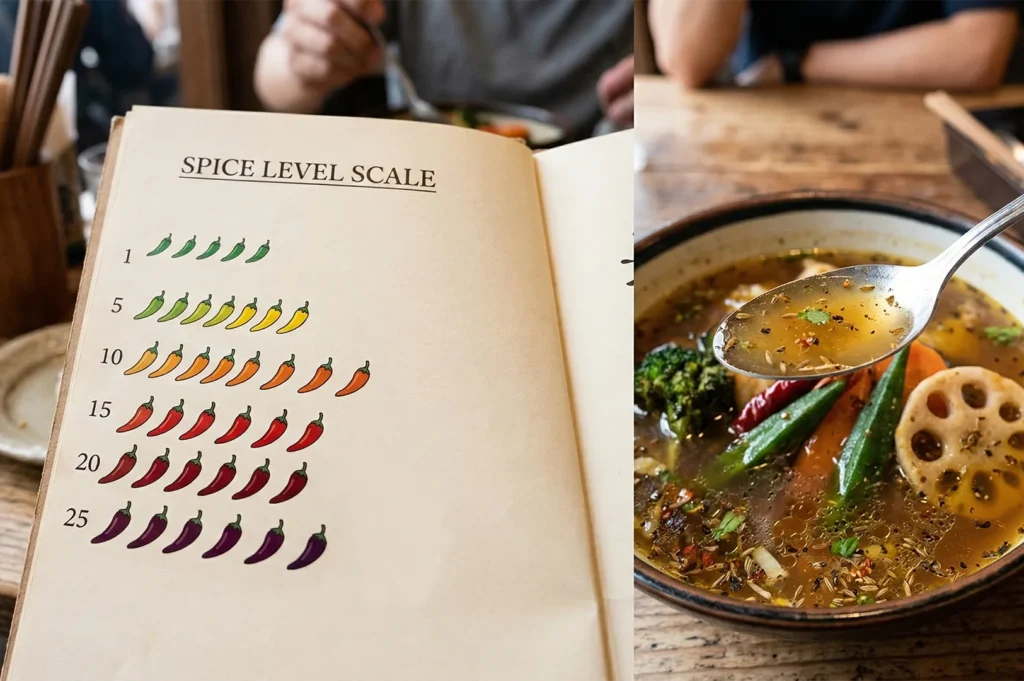
A common myth is that “spicy” in soup curry means the same as in traditional Indian curry. Both use red chiles and spice blends, but soup curry’s heat is more adjustable and cleaner. Most places offer a scale from one to thirty or higher. Tourists often underestimate the peak spiciness. Indian dishes often integrate heat into a heavy coconut milk or cream base, which buffers the burn. In clear soup, pepper and chili hit the tongue directly.
While Indian dishes rely heavily on garam masala for lingering heat, soup curry balances heat with umami from dashi or kelp. This transparent heat lets you taste the sweetness of charred pumpkin or the succulence of a chicken leg. It awakens the senses without overwhelming them.
Myth 3: You Should Pour the Soup Over the Rice
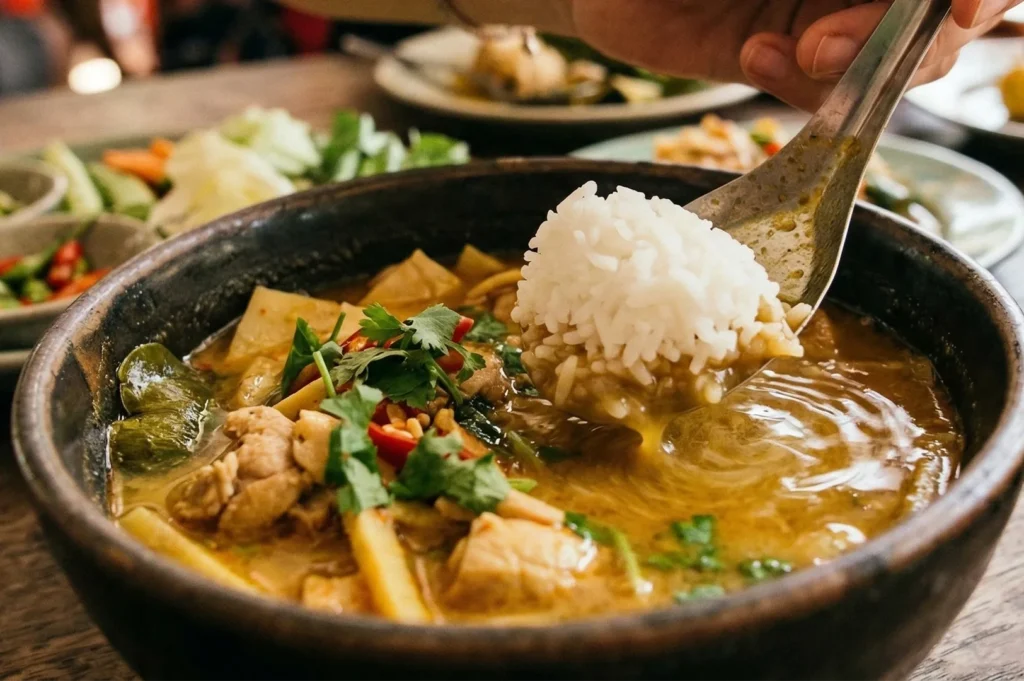
If there is one thing that marks a tourist in a Sapporo café, it is the sight of someone dumping their entire bowl of rice into the soup. While there are no strict rules, the traditional way involves more finesse.
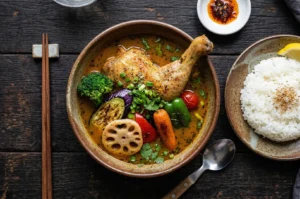
Typically, soup and rice are served separately to keep the rice’s texture. To eat like a local, take a spoonful of rice, dip it into the soup to soak up some broth, then enjoy. This preserves the firm grain and rich flavor.
Pouring rice into the soup creates a porridge-like mix, losing the distinct textures of the vegetables. Hokkaido’s soup curry celebrates the island’s produce. When you see a beautifully prepared eggplant or lotus root atop the broth, you want to savor each taste before it gets lost in soggy rice.
Myth 4: It Started as a Traditional Ancient Recipe
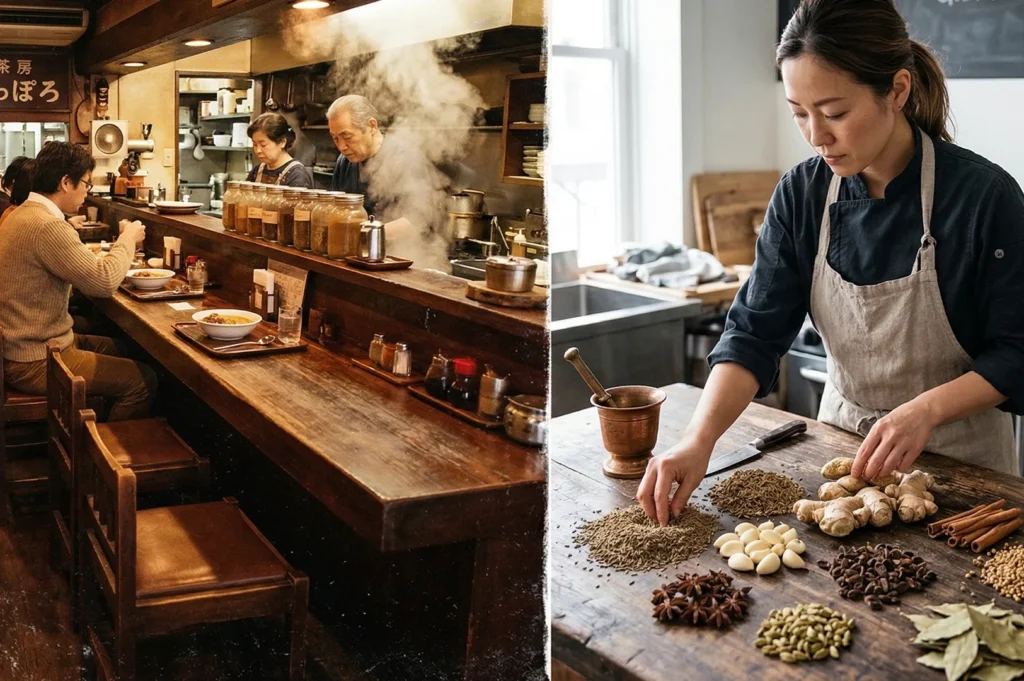
Many visitors believe that soup curry is an ancient Japanese tradition passed down through centuries. In reality, this dish began as a staff meal in a small Sapporo café during the 1970s. It was created as a warming answer to Hokkaido’s cold winters, blending medicinal qualities of Indian curry with Japanese soup.
The dish’s popularity surged in the 1990s and 2000s across the city. Born of innovation and international influence, including a British touch from the Meiji era, Hokkaido’s residents transformed these inspirations into something unique.
This modern origin explains the menu variety across restaurants. Without an “ancient” recipe, chefs freely experiment with garlic, ginger, cumin, and coconut milk to craft signature flavors. At Soup Curry by Ki-Setsu, we honor these Sapporo roots by focusing on authentic broth that carries the soul of the early pioneers.
Myth 5: The Vegetables Are Just Garnish
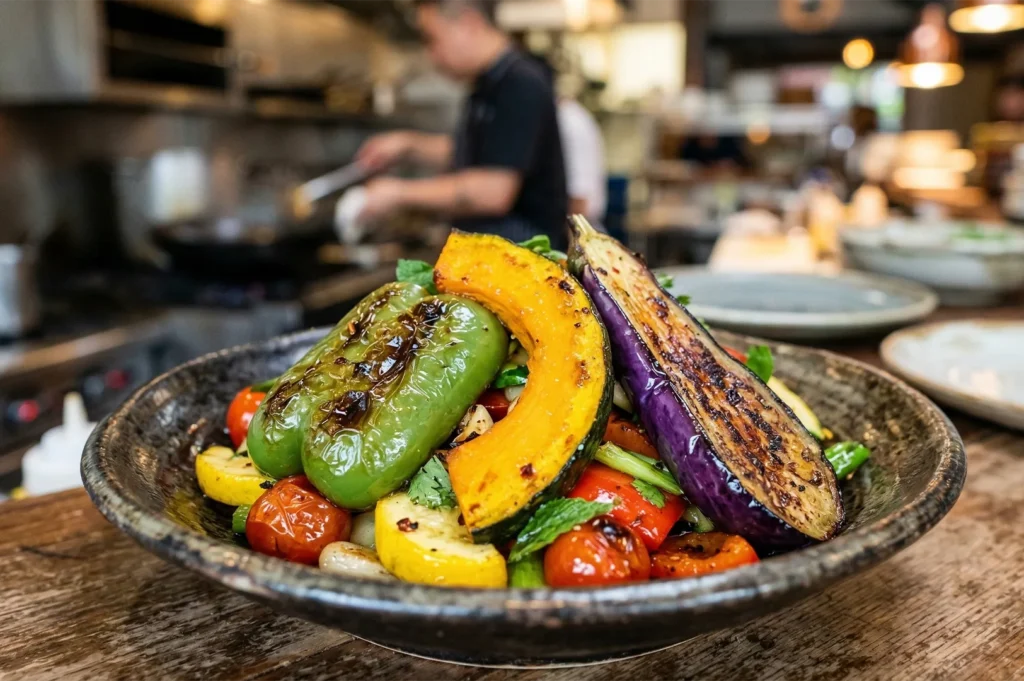
In many Indian restaurants or global curry houses, the meat is the star, and vegetables are often chopped small and simmered until they dissolve into the sauce. Tourists often see the large chunks of eggplant, pumpkin, and broccoli in soup curry and assume they are just for decoration or to cover the bowl.
This is a myth. In Hokkaido, vegetables are as important as the meat. The island, Japan’s agricultural heart, inspires soup curry to showcase its bounty. Vegetables are flash-fried or roasted, creating a crisp exterior and tender interior.
When you sit at the table and see a wedge of pumpkin, it’s not just a side; it’s a burst of sweetness balancing the spicy broth. Eggplant soaks up garam masala and broth, while charred pepper adds smoky notes to the taste.
Myth 6: It’s the Same Thing as Curry Udon
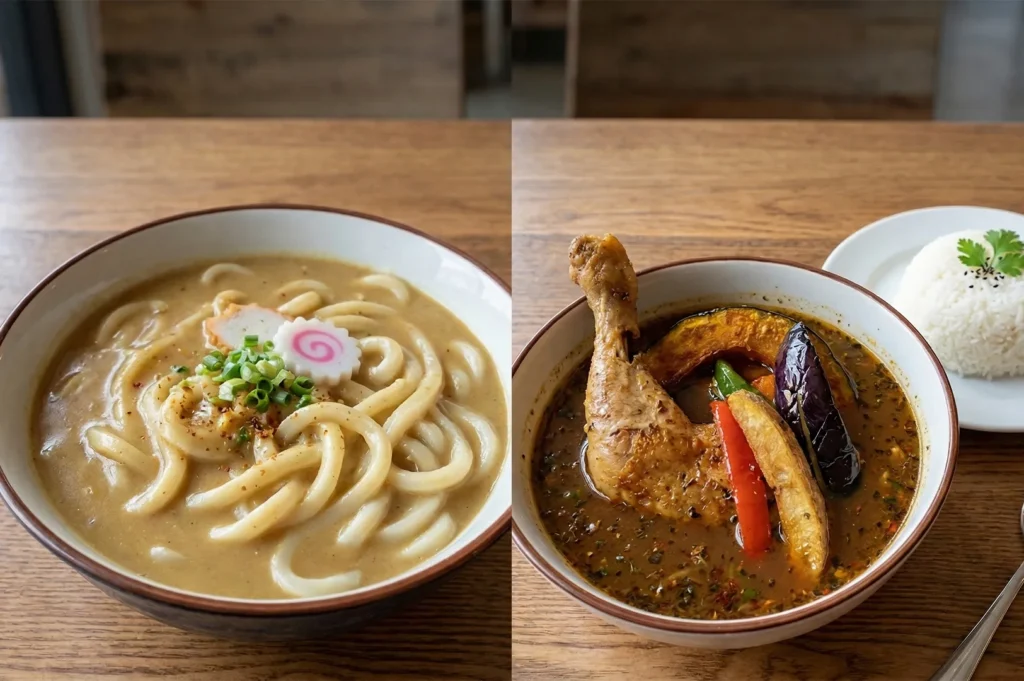
Because both involve a noodle or soup-like consistency, tourists often confuse soup curry with curry udon. However, the two could not be more different in their life story. Curry udon typically uses the thick, roux-based Japanese curry mentioned earlier, diluted slightly with dashi stock to make it pourable over thick wheat noodles. It is heavy, starchy, and very mild.
Soup curry, on the other hand, is almost always served with rice, not noodles. The broth is much more complex, featuring a higher concentration of spice and a lighter body. While curry udon is a quick, comforting snack often found in train stations, Hokkaido’s soup curry is a full meal, a delight that requires time to appreciate. You wouldn’t find the same array of deep-fried vegetables or a whole, fall-off-the-bone chicken leg in a standard bowl of udon.
Myth 7: All Soup Curry Contains Coconut Milk
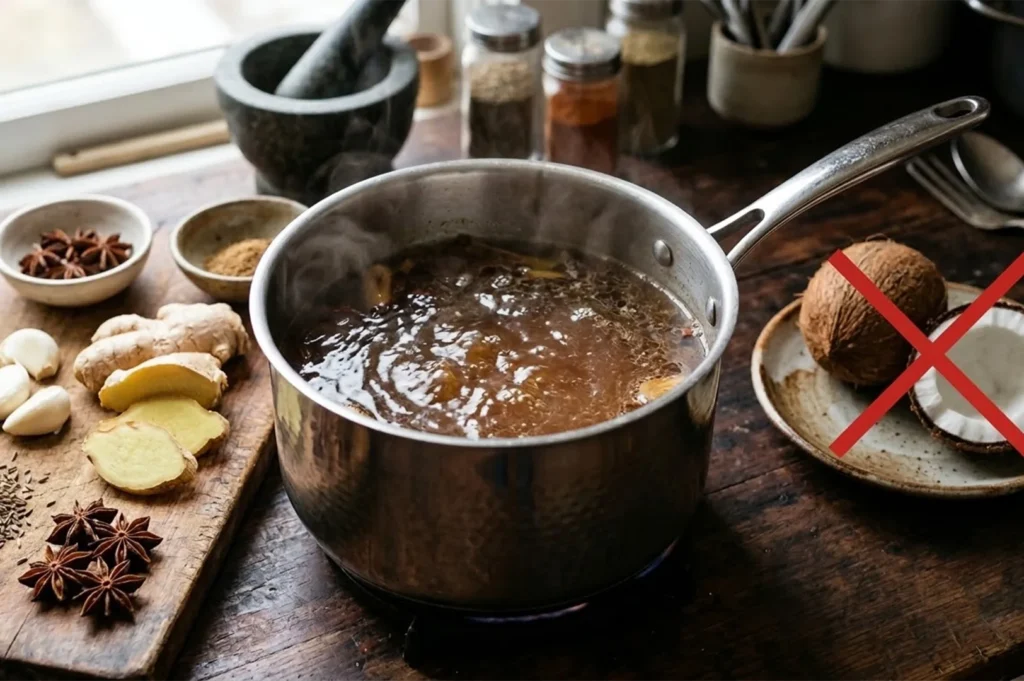
While some modern variations and “Asian-style” soup curries do use coconut milk to add creaminess, it is a myth that this is a requirement for an authentic Sapporo soup curry. The original versions are often clear, spice-forward broths. Adding coconut can sometimes mask the delicate balance of the mixture of herbs and bones that have been simmered for half a day.
At our restaurant, we focus on the rich depth of the broth itself. We believe that the flavour should come from the quality of the ingredients and the precision of the spice blend, rather than relying on heavy fats to provide body. If you are looking for a true Hokkaido experience, you want to be able to taste the cumin, the garlic, and the underlying umami without too much interference.
Navigating the Menu: Tips for the Curious Tourist
When you are navigating a menu for the first time, the sheer number of choices can be overwhelming. From the level of spiciness to the types of meat, it feels like a puzzle. Here are a few ways to ensure your first experience isn’t clouded by soup curry myths:
Choose your spice level wisely: Don’t try to be a hero on your first visit. Start at a medium level to ensure you can still appreciate the taste of the broth.
Appreciate the “Toppings”: Many restaurants allow you to add extra vegetables. Always say yes to the eggplant or the pumpkin; they are the highlights of the dish.
Observe the Rice: Notice if the rice is served with a slice of lemon. Squeezing lemon over the rice provides a hit of acidity that cuts through the rich soup beautifully.
The Night Transformation: In many parts of Sapporo, and indeed at our establishment, the atmosphere changes as the night goes on. A space that serves a comforting lunch can transform into a cosy izakaya where you can pair your curry with side dishes and drinks.
Sapporo Soup Curry Served in Every Bowl
At the end of the day, soup curry is about the excitement of the first snow, the warmth of a crowded café, and the pride of Hokkaido’s farmers. When you move past the soup curry myths and stop comparing it to India’s idli or Britain’s version of curry, you find a food that is uniquely Japanese and incredibly welcoming.
We invite you to sit at our table and experience this for yourself. Whether you are a tourist who has heard stories of the famous Sapporo soup curry or a local looking for a rich and soul-warming meal, there is always something new to discover in a bowl. The combination of tender chicken, vibrant vegetables, and a broth filled with history is enough to change your perspective on what “curry” can be.
As the sun sets and the night settles in, there is nothing quite like the feeling of a hot pot of soup placed before you. It is a delight that stays with you long after the meal is over, a story of spice and steam that defines the Hokkaido way of life.