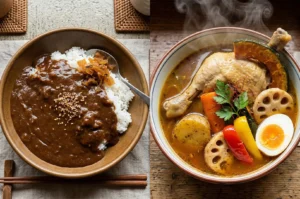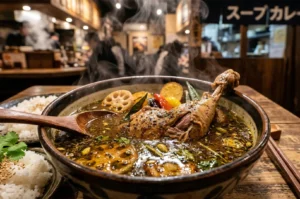
At Soup Curry by Ki-Setsu, we often see a look of pleasant surprise when our guests first encounter a steaming bowl of Hokkaido soup curry. For many in Singapore, the term “Japanese curry” immediately brings to mind a very specific image: a thick, velvety brown gravy blanketing a mound of rice. While that beloved dish is a cornerstone of Japanese food culture, it represents only one side of the story.
As Singapore’s first and only authentic Hokkaido soup curry restaurant, we are passionate about introducing diners to the “other” curry—the iconic food of Sapporo. Understanding the Japanese curry vs soup curry distinction is more than just a culinary lesson; it is a gateway to a different side of Japanese cuisine. One is a comforting, stew-like curry sauce, while the other is a complex, aromatic soup dish. Both have their place in the heart of Japan, but their origins, textures, and even the way you eat them are worlds apart.
The Legacy of the British Navy and Traditional Curry Rice
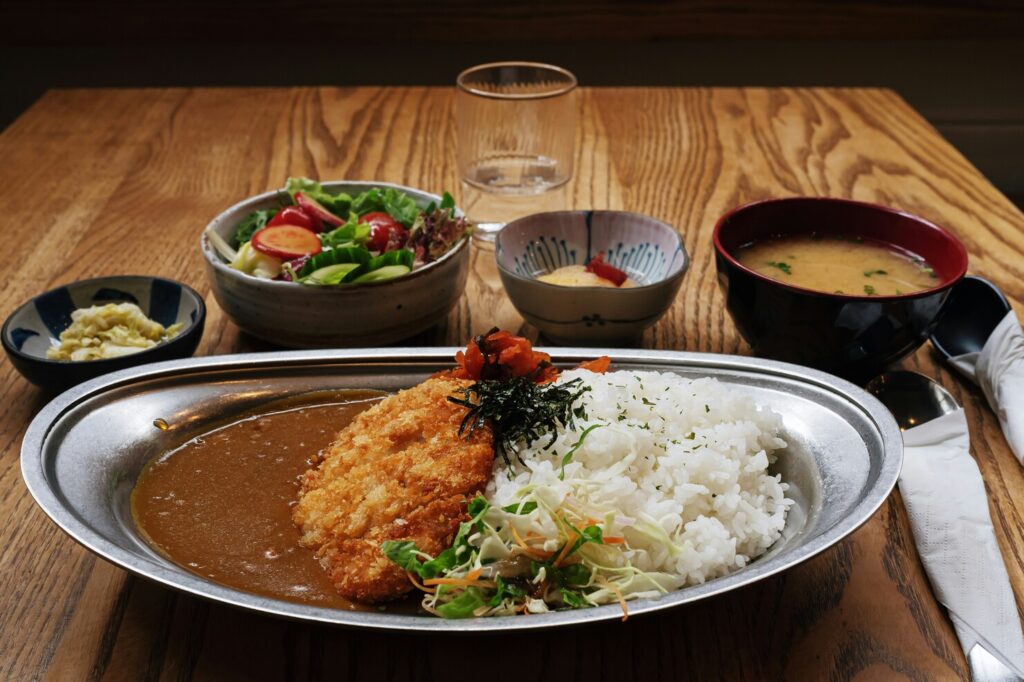
To understand why soup curry is so unique, we must first look at the traditional Japanese curry that most of the world knows and loves. Often called kare raisu, Japanese curry rice is a national obsession. Unlike the fiery Indian curries or the coconut-infused Thai curries, Japan curry has been refined over a century to suit Japanese tastes, resulting in a profile that is milder, sweeter, and deeply savory.
Japanese curry arrived in the late nineteenth century through an unexpected route. Rather than coming directly from India, it travelled through the British Navy, which had adapted Indian recipes into something more suitable for mess hall cooking. When the Japanese Navy encountered this British-style curry, they brought it home and modified it further to suit Japanese tastes—adding sweetness, reducing spice intensity, and developing the roux-thickening technique. Yokosuka Navy Curry remains a celebrated example of this military heritage.
Soup curry, however, is a much younger sibling. It evolved from “Yakuzen” (medicinal) cafes in Sapporo. These pioneers began to sell curry that focused on the stimulating properties of a spice mix. By the 1980s, these medicinal soups had incorporated larger portions of meat and vegetables, transforming into the hearty meal we recognize today. Every year, Japan celebrates Curry Day, acknowledging how these varied styles—from the Yokosuka Navy Curry to the Hokkaido soup curry—have become inseparable from Japanese cuisine.
The Role of the Curry Roux
The defining characteristic of this style is its viscosity. This thick texture is achieved through a curry roux—a mixture of flour, fats, oils, curry powder, and seasonings. In many curry restaurants, and even in home cooking, the use of instant curry roux blocks is the standard. Brands like Golden Curry, Vermont Curry, and House Foods have made this a household essential. When these roux blocks dissolve into hot water or stock, they create a smooth, viscous sauce that clings to every grain of cooked rice.
Understanding the Thick Textures of Japanese Curry Sauce
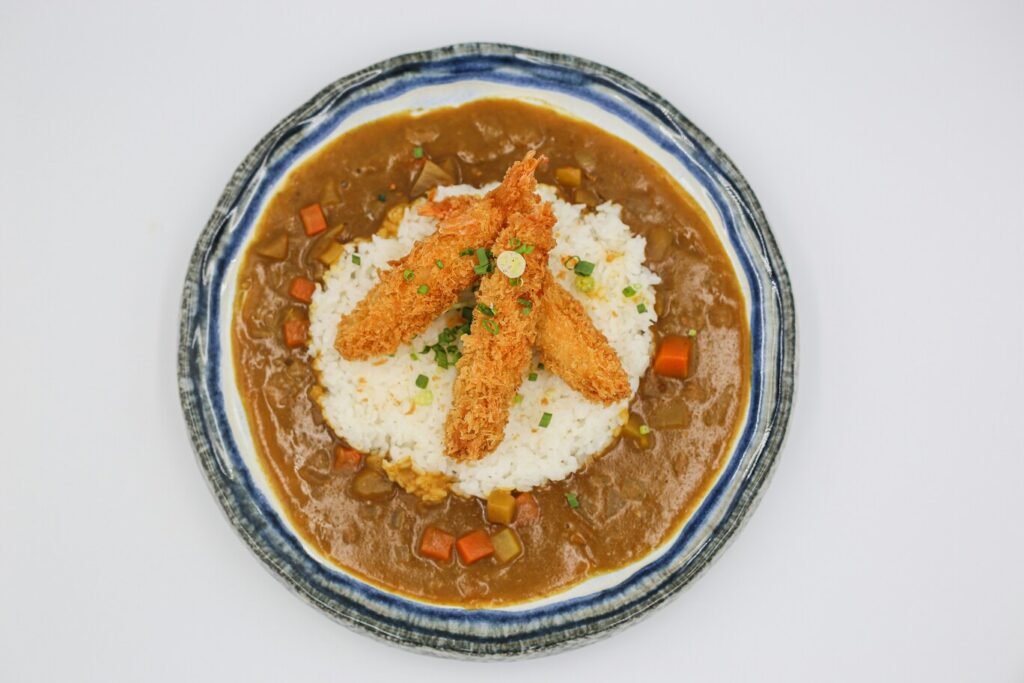
A typical curry rice features vegetables and meat—usually bite-sized potatoes, carrots, and onions—simmered until they nearly dissolve into the curry sauce. Proteins like a breaded pork cutlet for katsu curry are popular additions, providing a crispy exterior that contrasts with the soft sauce.
The sauce often includes subtle additions—grated apple for fruity sweetness, honey for depth, or a splash of soy sauce for umami. Everything simmers together until the vegetables turn tender and the sauce thickens enough to coat everything in that signature gooey consistency. While it is a hearty meal, the heavy reliance on flour and fats means it can sometimes feel quite weighted on the stomach, especially in our tropical climate.
Variations Beyond the Plate: Curry Udon, Curry Bread, and Curry Soba
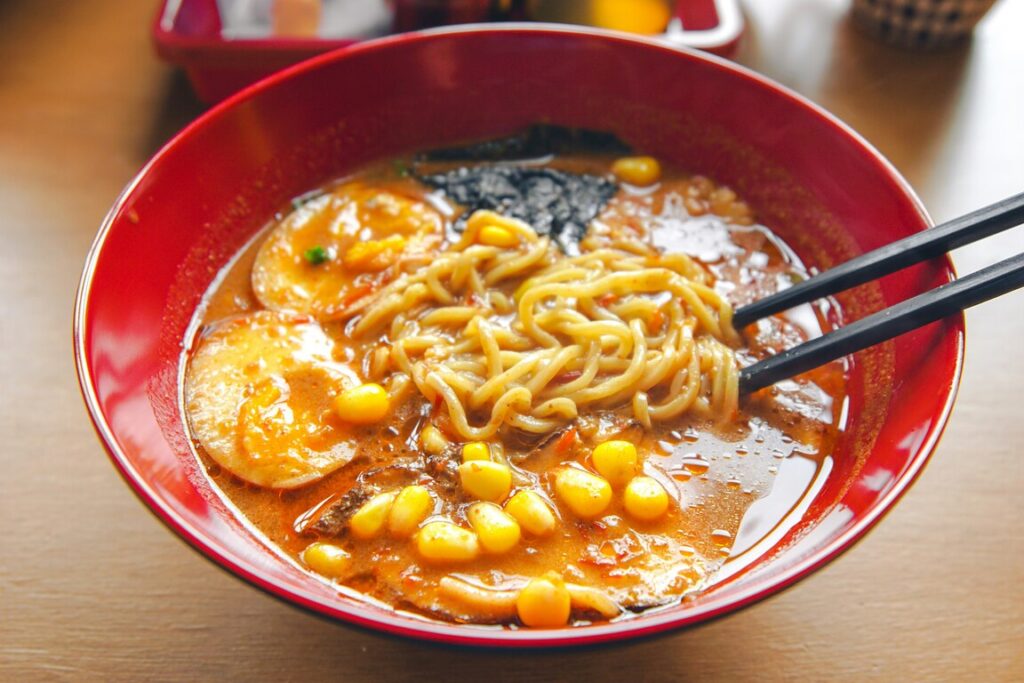
The popularity of the thick roux style has led to various forms of Japanese food culture.
Curry Udon: This serves a version of the sauce over chewy udon noodles, often thinned slightly with dashi for a more slurpable experience.
Curry Bread: Known as curry pan, this involves curry wrapped in bread dough before being deep fried for a portable snack.
Curry Soba: For those who prefer buckwheat noodles, curry soba offers a lighter noodle alternative paired with the savory curry sauce.
In typical curry restaurants across Japan, these dishes serve as quick, filling everyday meals. That reliability is their strength, but the experience rarely surprises the palate in the way a complex soup dish can.
The Evolution of Authentic Hokkaido Soup Curry
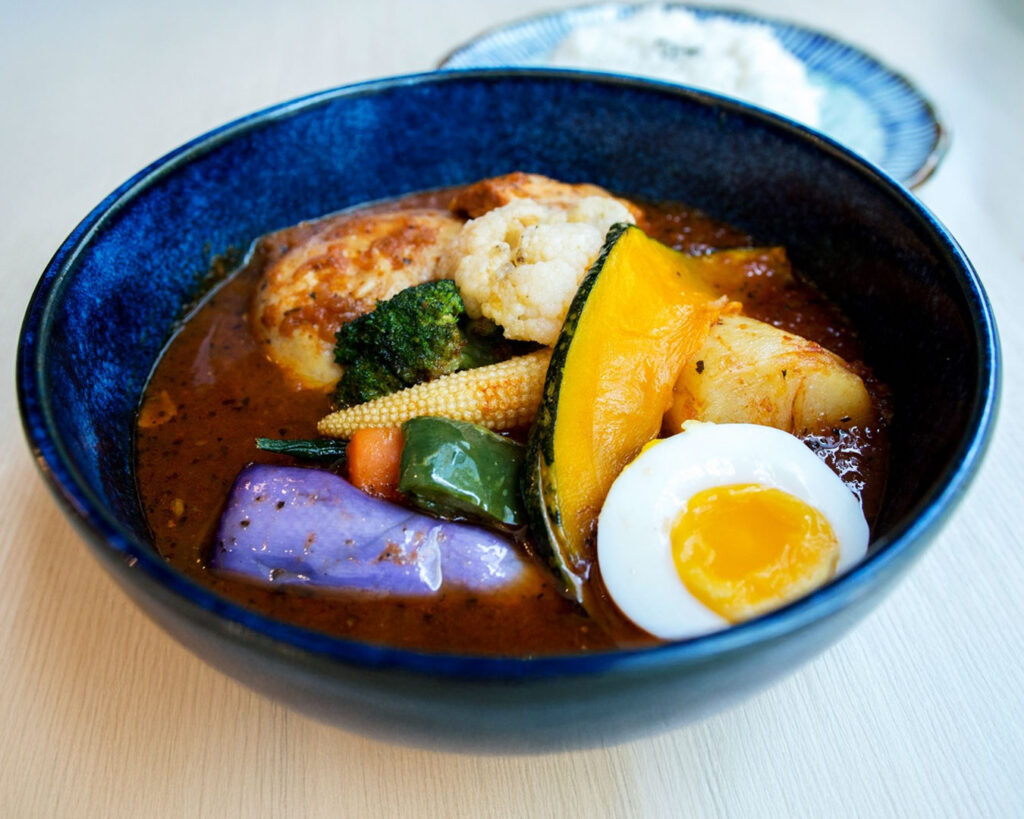
If Japanese curry rice is the comfort food of the mainland, Hokkaido soup curry is the soul food of the north. Born in the early 1970s in the capital of Hokkaido, this uniquely Japanese creation was originally inspired by medicinal spice broths intended to provide health benefits during the island’s harsh, snowy winters.
At Soup Curry by Ki-Setsu, we honor this heritage by focusing on a soup base that is light yet profoundly flavorful. Unlike the flour-thickened versions, our soup curry starts with a clear, nutrient-rich stock. We simmer chicken bones and pork bones for hours to extract a deep umami foundation.
A Fragrant Blend of Spices
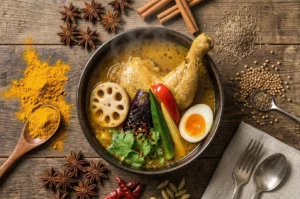
The “curry” element comes from a precise spice mix involving curry powder and garam masala. Because there is no roux to mask the aromatics, you can taste the individual notes of the spices—the warmth of cinnamon, the brightness of coriander, and the earthy hit of turmeric. This results in a spicy soup that is thin enough to sip like a fine broth but complex enough to satisfy the most demanding spice lovers.
Technical Differences: Roux Blocks vs. Fresh Vegetables and Broth
The technical divergence between these two dishes is significant. In home cooking, Japanese curry is often a “one-pot” affair where meat and vegetables are boiled together until they reach a uniform softness. The goal is a cohesive, singular flavor where the ingredients become an integrated part of the curry sauce.
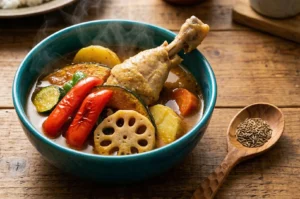
In contrast, soup curry treats every ingredient with individual respect. Our preparation philosophy involves preparing the fresh vegetables separately to preserve their integrity.
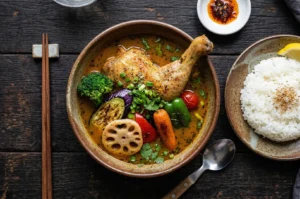
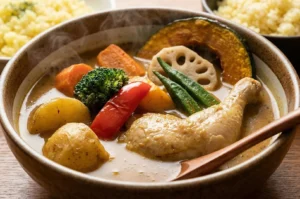
The Vegetables: We use deep fried techniques for items like bell pepper, lotus root, eggplant, and sweet potatoes. This “suage” method (frying without batter) intensifies the natural sweetness and creates a texture that absorbs the spicy soup without becoming mushy.
The Protein: Instead of small chunks of meat, an authentic soup curry often features a whole chicken leg. We cook our chicken until it is so tender it can be pulled apart with a spoon, yet it remains distinct from the soup base.
How to Eat Soup Curry Like a Sapporo Local
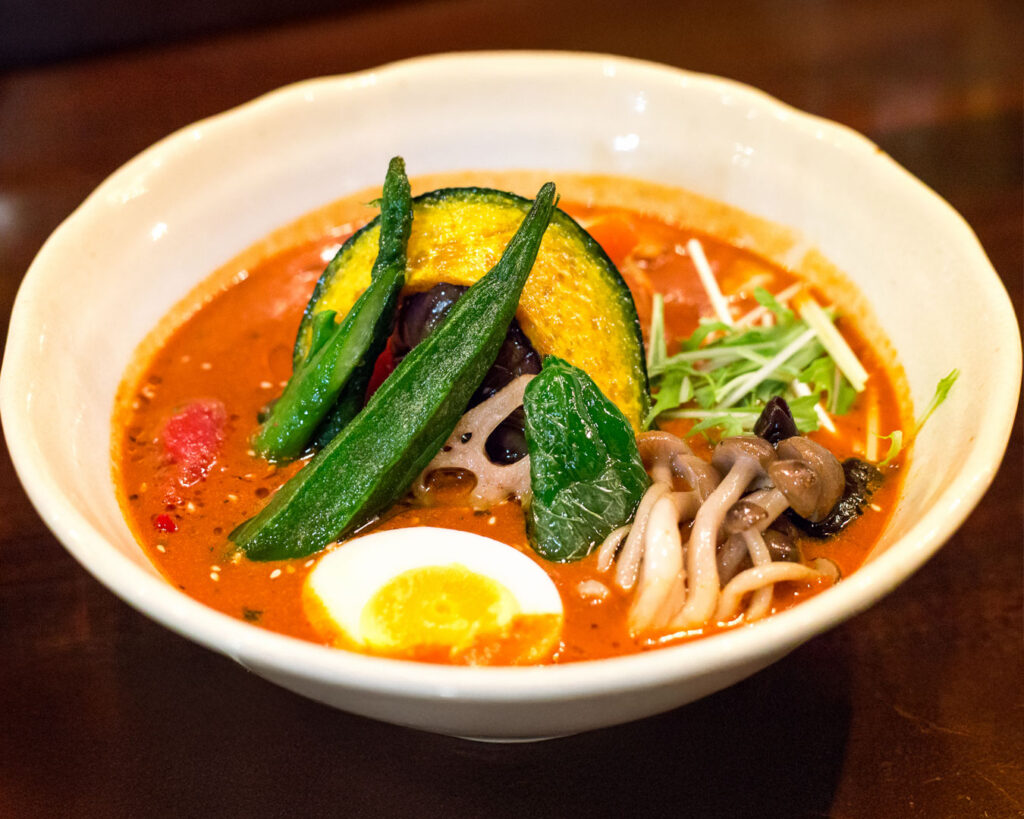
One of the most common questions we get at Soup Curry by Ki-Setsu is: “How do I eat this?” Because Japanese curry rice is served as a single unit, people are often tempted to pour their rice portion into the soup. While there is no “wrong” way to enjoy Japanese curry, there is a traditional ritual to eat soup curry that maximizes the flavor.
The Separate Rice: Your rice is served on a separate plate, often garnished with a wedge of lemon.
The Dip: Take a spoonful of rice, dip it halfway into the spicy soup, and let the grains soak up the aromatic broth for a second before eating.
The Sip: Sip the broth directly to appreciate the rich flavors and the specific blend of spices.
The Veggies: Enjoy the fresh vegetables, such as our deep fried lotus root, and the chicken leg piece by piece.
This interactive style of dining is a hallmark of the Sapporo experience. It allows you to appreciate the contrast between the fluffy cooked rice and the light soup base without the meal turning into a porridge.
Nutritional Profile and Satiety
Because it lacks the heavy flour and fat content of a roux, soup curry is often perceived as a lighter alternative. While traditional Japanese curry provides a sense of “stick-to-your-ribs” fullness, a vegetable curry in the soup style offers a different kind of satisfaction. You are consuming a high volume of other vegetables and a nutrient-dense broth, which provides energy without the post-meal heaviness.
At our restaurant, we take great care in our spice levels. Spices like turmeric and ginger are known for their warming properties, making soup curry an excellent choice for both cool days and the humid heat of Singapore. It stimulates the appetite in a way that a thick curry sauce might not.
Discover the Soul of Hokkaido at Soup Curry by Ki-Setsu
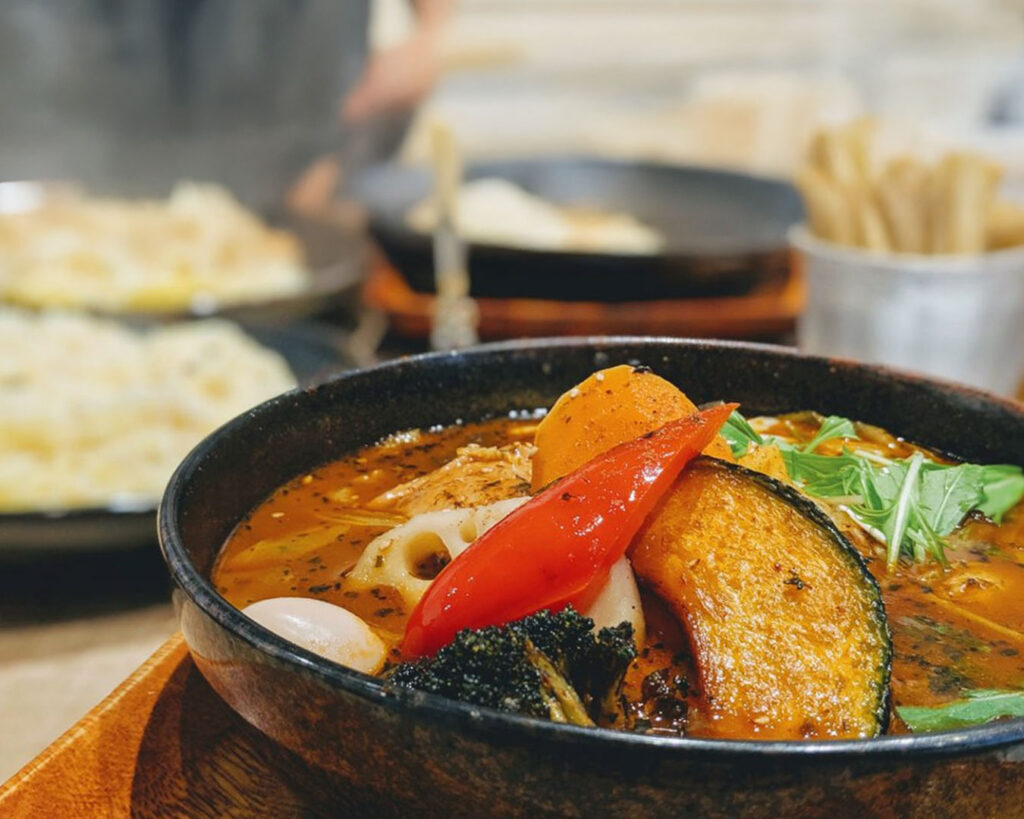
We opened Soup Curry by Ki-Setsu to fill a gap in Singapore’s vibrant Japanese restaurants scene. While you can find katsu curry or curry udon in almost every corner of the island, the true Sapporo soup curry experience remained a rarity.
Our philosophy is built on authenticity. We do not use shortcuts. Every bowl is a labor of love, from the hand-cut lotus root to the hours spent clarifying our broth. We believe that Japanese cuisine is at its best when it balances tradition with high-quality ingredients.
Join Us for an Izakaya Evening
While we serve our signature curry throughout the day, we invite you to experience our space as it transforms. From 6 PM onwards, we evolve into a cozy izakaya, where you can pair your soup curry with Japanese small plates and sake. It is the perfect setting to explore rich flavors in a warm and inviting atmosphere.
Important Dining Information:
Operating Hours: We are open from 11:30 AM to 10:00 PM daily. Please note we do not serve a breakfast menu.
Lunch: We operate on a walk-in basis for lunch; we do not take reservations during this period.
Dinner Reservations: To ensure you have a seat in our cozy space, we offer dinner reservations exclusively at 6:30 PM. This is the only time slot available for booking. Please arrive on time, as tables are held for a maximum of 15 minutes.
Two Curries, One Delicious Journey
Whether you are a lifelong fan of Japanese curry rice or a newcomer to the world of spicy foods, there is always room to discover something new. Traditional Japanese curry offers the comfort of a warm hug—sweet, thick, and familiar. Hokkaido soup curry offers the excitement of a journey—aromatic, complex, and full of texture.
At Soup Curry by Ki-Setsu, we invite you to sit down, take a spoon, and experience the magic spice of Sapporo for yourself. From the crispy exterior of our deep fried vegetables to the soul-warming depth of our broth, every element is designed to show you why this is Hokkaido’s most beloved dish.
We look forward to welcoming you soon. Your first authentic bowl of soup curry is waiting.