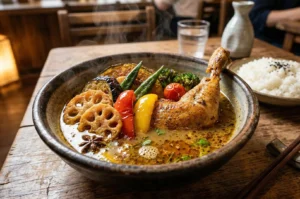
When you settle into a lively dining space at the end of a long day, there is a specific sound that signals the true beginning of the evening. It is the bright clinking of glasses accompanied by a joyful, unified chorus of voices. In Japanese dining culture, this moment is encapsulated in a single, powerful word. That word is “kanpai.” But what is kanpai, and why does this simple gesture hold such profound importance?
At our restaurant, we believe that understanding the traditions behind your meal enriches the entire dining experience. The act of raising a glass goes far beyond a casual greeting: it is a deeply rooted cultural practice that reveals the core values of Japanese society. Let us explore the origins of this toast, what it symbolises, and how it perfectly sets the stage for sharing authentic soul food with the people who matter most.
What is Kanpai? The Historical Origins of the Japanese Toast
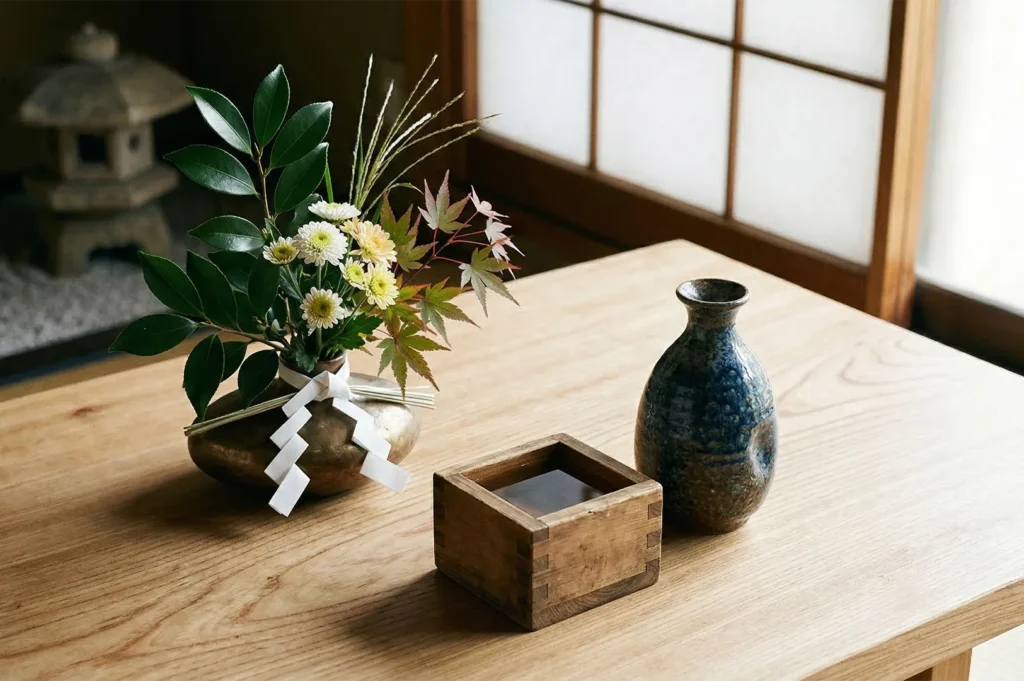
To truly appreciate what your first toast reveals about Japanese culture, we must look at where the tradition began. The word kanpai translates directly to “empty the cup” or “dry the glass.” While this might sound like an invitation to consume your beverage quickly, the historical meaning is far more spiritual.
In ancient Japan, sharing a drink was a sacred act. People would offer sake to the gods during religious ceremonies to pray for good harvests, health, and prosperity. After making the offering, the community would share the blessed sake among themselves. This act of drinking from the same vessel, or sharing the same batch of sake, was believed to bind the community together and connect them with the divine. Over the centuries, as Japan modernised and dining habits evolved, this sacred ritual transformed into the secular, communal toast we recognise today. However, the foundational meaning never vanished. The toast still serves as a vital ritual that unifies a group of people before a meal begins.
What Your First Toast Reveals About Social Harmony
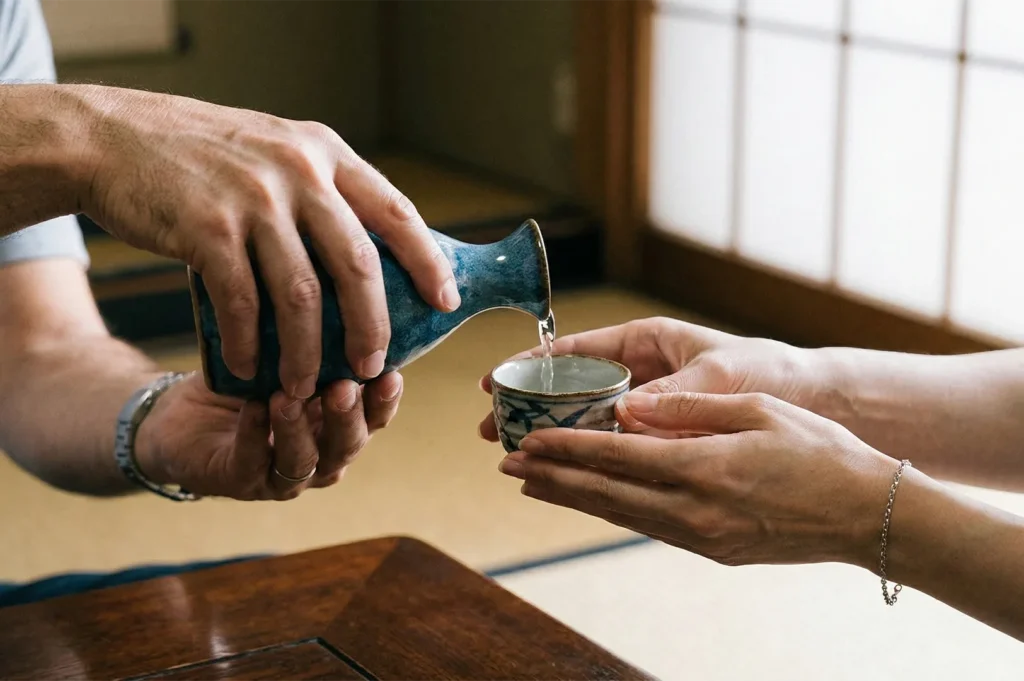
If you observe a group of Japanese diners closely, you will notice a strict, unspoken rule governing the beginning of the meal. No one takes a single sip of their drink until every person at the table has been served. Furthermore, everyone waits until the collective kanpai is declared. This practice is a direct reflection of “Wa,” the Japanese concept of social harmony.
Waiting for your companions reveals a fundamental cultural priority. It demonstrates that the comfort and inclusion of the group are vastly more important than the immediate desires of the individual. In a bustling society where people work incredibly hard, the evening meal is a sanctuary. The synchronised toast acts as a bridge, transitioning everyone from the chaotic, individualistic pressures of the workday into a shared, harmonious space. When you raise your glass and wait for your friends, you are silently affirming your respect for their presence.
The Nuanced Etiquette of the Pour
The moments leading up to the toast are equally revealing. In Japanese dining culture, it is customary to pour drinks for others rather than pouring for yourself. This etiquette extends deeply into the social hierarchy; some historians even speculate this is part of how izakaya was invented, evolving from sake shops that allowed customers to drink on the premises. To manage the service, younger individuals or junior colleagues will traditionally pour drinks for their elders or superiors.
When the glasses finally meet in the centre of the table for the kanpai, you might even notice a subtle physical hierarchy. Junior members will often angle their glasses slightly lower than those of their seniors during the clink. This is a quiet, respectful acknowledgement of status and gratitude. Far from being rigid or oppressive, this structured etiquette creates a nurturing environment. It ensures that everyone at the table is cared for and that no one’s glass is ever empty.
How the Kanpai Ritual Elevates the Hokkaido Dining Experience
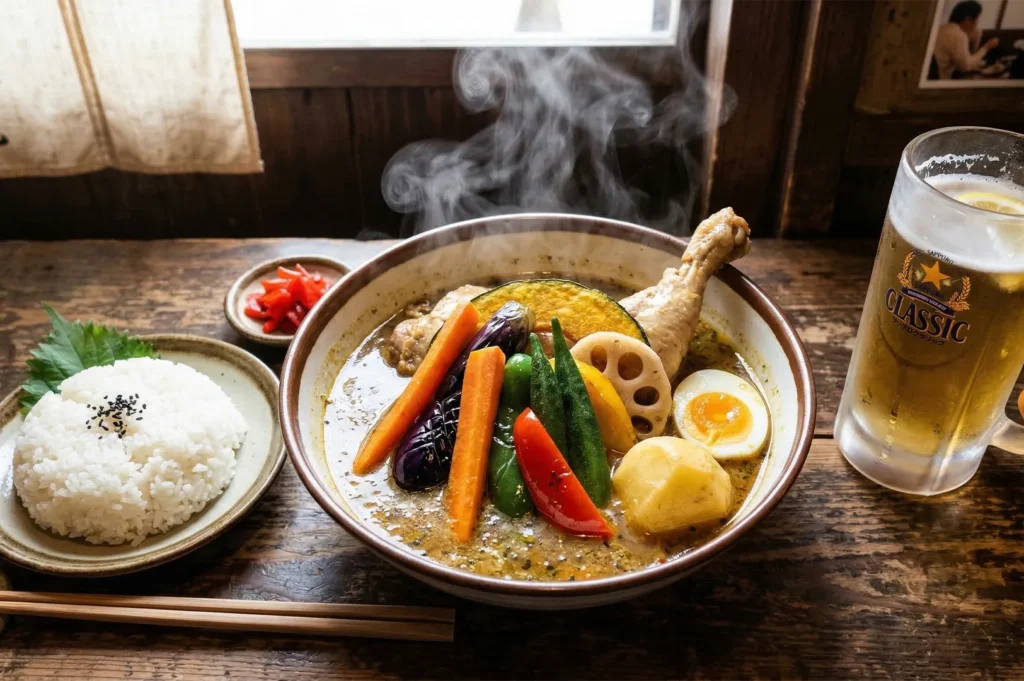
The warming, communal nature of the toast pairs perfectly with the culinary traditions of northern Japan. In Sapporo, the birthplace of our beloved soul food, the winters are famously harsh. When residents gather indoors to escape the freezing snow, the initial kanpai is a celebration of warmth and survival. It warms the spirit, preparing diners for the physical warmth of the meal to follow.
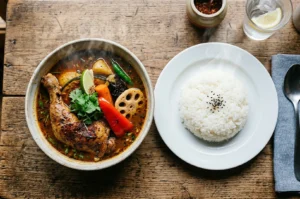
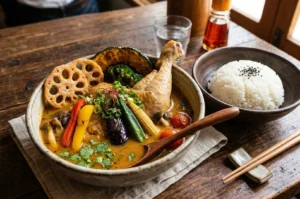
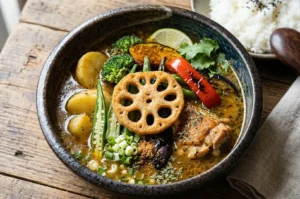
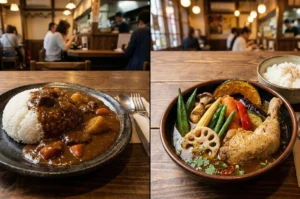
Soup curry was born in this exact environment in the early 1970s. It was designed as a restorative, comforting dish. Unlike typical thick and sweet Japanese curry, authentic soup curry features a light, watery, curry-flavoured soup base made with slow-simmered chicken broth, complex curry powder, and warming garam masala. When you gather with friends, the bright, citrusy notes of a cold beverage during the kanpai provide the perfect refreshing contrast to the rich, deeply spiced warmth of the curry broth. The toast awakens the palate, ensuring that every subtle flavour in the bowl is fully appreciated.
Experience the Spirit of Kanpai at Our Cosy Spot
Understanding what is kanpai transforms a simple dinner into a meaningful cultural celebration. It is a testament to unity, respect, and the joy of shared sustenance. We are incredibly passionate about bringing this authentic, welcoming spirit to every guest who walks through our doors.
Come and experience this harmonious tradition with your friends at Soup Curry by Ki-Setsu, Singapore’s first and only authentic Hokkaido soup curry restaurant. We are open daily from 11:30 AM to 10:00 PM, serving the true flavours and heartwarming hospitality of northern Japan. We operate on a walk-in basis for lunch, so you can drop by anytime to enjoy our aromatic broth.
From 6 PM, our restaurant transforms into a vibrant izakaya, perfect for sharing small plates, exceptional sake, and our signature soup curry. We accept evening reservations for 6:30 PM, so gather your friends, raise a glass, and discover the joy of Japanese dining culture with us.
Ready to take your sake knowledge to the next level? Read our guide: Sake 101: A Beginner’s Introduction to Pairing Sake with Izakaya Food.