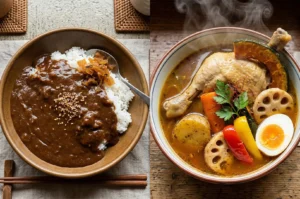
Japanese comfort food speaks to memory, warmth, and care. Many Japanese people grow up with Japanese dishes built around simple recipes, quality ingredients, and a warm bowl shared at the table. In Singapore, Japanese food has long been popular, yet much of what diners see leans toward a sushi bar, ramen shops, or grilled meat establishments.
Japanese food in Singapore often highlights polished dining or fast meals. Soup curry shifts attention back to care, cooking, and flavor built slowly. This dish carries the feeling of mom’s home cooking, yet presents a bold taste that feels fresh and exciting. Through this specialised cuisine, we share a side of Japan that many diners have never experienced before.
Beyond the Sushi Bar: Understanding Japanese Comfort
Japanese comfort food goes far beyond sushi and sashimi. In homes across Japan, Japanese comfort often comes from Japanese dishes typically served in a single bowl or plate. Think of curry rice, katsu don, stew, and miso soup. These hearty meals focus on nourishment, balance, and satisfaction rather than show.
Comfort food in Japanese dining often includes rice, soup, vegetables, and protein in one complete meal. Fried tofu, cabbage, onions, and tofu appear often. Broth plays a key role. A good soup base supports the entire dish, whether thick or light. These meals suit both lunch and dinner, offering satisfaction without excess. At our restaurant, we build on this tradition. We respect how Japanese comfort food feeds both the body and the mood. Soup curry allows us to present comfort food through a dish that feels generous, warming, and deeply rooted in daily life.
From Sapporo with Love: The Roots of a Northern Soul Food
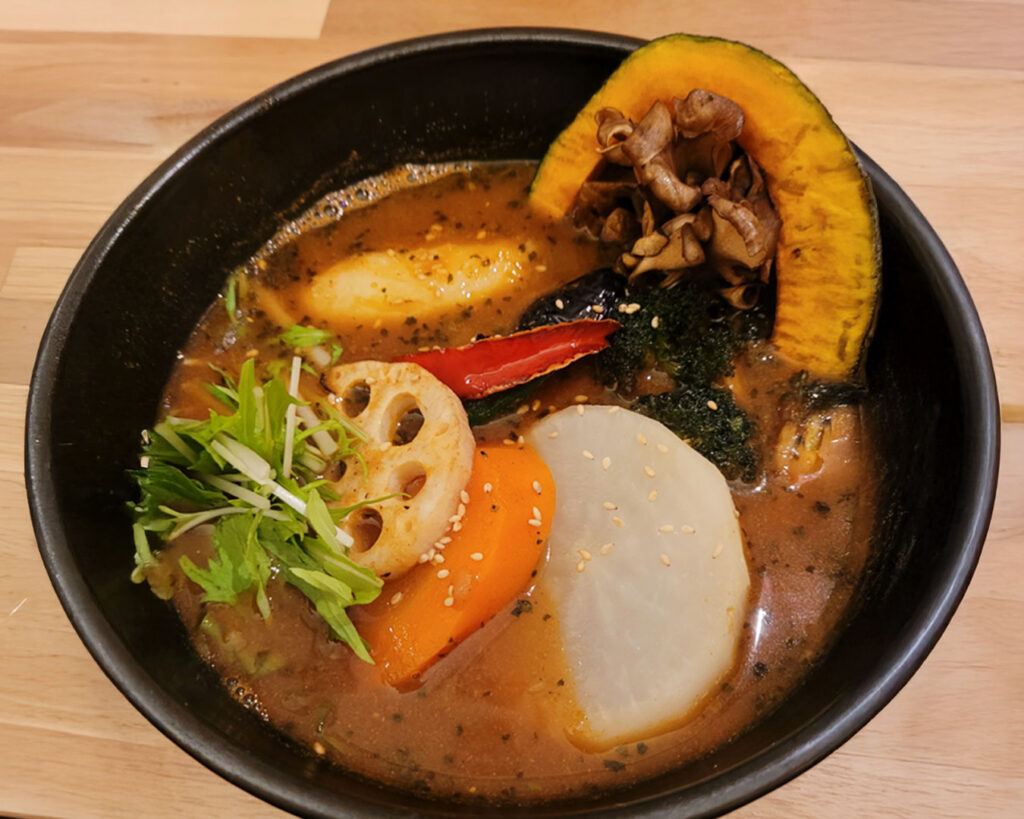
Soup curry began in Sapporo in the early 1970s. Hokkaido winters are long and cold, so local cooking focuses on heat, nutrition, and seasonal produce. Soup curry emerged as a response to these needs. Unlike thick Japanese curry sauce, soup curry uses a lighter broth infused with curry powder, spices, and herbs.
The dish was built around vegetables grown in Hokkaido, chicken, seafood, and a rich soup base. Each bowl delivered warmth and energy without feeling heavy. Over time, soup curry became an iconic part of the local cuisine, enjoyed by families, workers, and students alike. We bring this history with us to Singapore. Soup curry represents the heart of Japanese comfort food from the north. Through careful cooking and respect for tradition, we serve a dish tied closely to the soul of Japan.
Why Soup Curry Stands Apart from Typical Japanese Curry
Many diners in Singapore know Japanese curry as thick, smooth, and slightly sweet. It often arrives poured over rice, with pork, beef, or chicken. This style remains popular and comforting in its own way. Soup curry takes a different path. The broth stays light yet rich, allowing spices to shine without coating the palate. Curry powder and garam masala add depth, while chicken broth forms the base. The result feels cleaner and more layered.
Rice is served on the side, not drowned in sauce. This allows diners to control each bite. Some prefer dipping rice into the soup. Others alternate spoonfuls. The experience feels interactive and personal. To us, this difference matters. Soup curry reflects Japanese comfort food through balance and intention. The dish feels both filling and refreshing, making it suitable for a midday meal or a relaxing evening.
The Architecture of a Hearty Bowl: Ingredients and Preparation
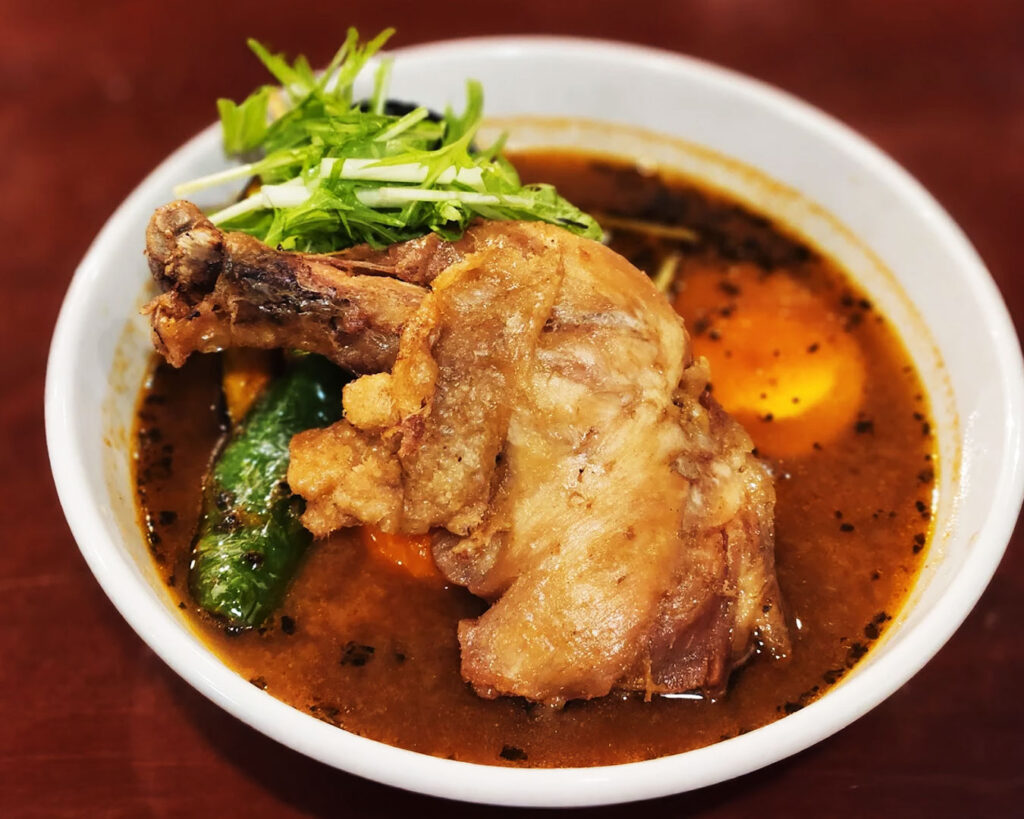
Japanese comfort food relies on quality ingredients and careful cooking. This philosophy comes to life through each component of our signature dish.
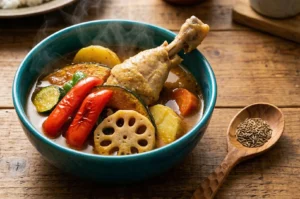
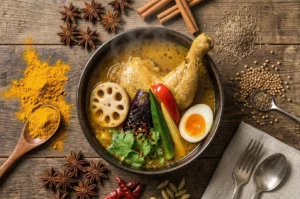
The Soup Base: Our broth starts with chicken stock, layered with spices and aromatics. Curry powder and garam masala add warmth and depth. The broth stays clear, not thick, yet carries strong flavor. This balance defines Japanese soup curry.
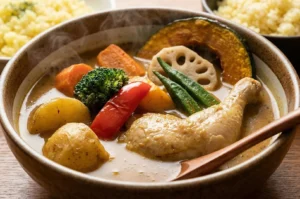
Protein Selection: Chicken plays a central role. Tender chicken thighs and chicken legs simmer slowly in the broth. The meat absorbs spice while staying juicy and soft. While beef and seafood also feature in Japanese comfort food, chicken suits this broth best due to its richness.
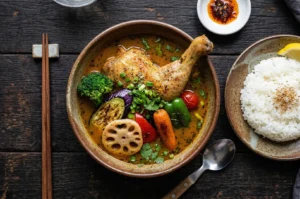
Vibrant Vegetables: Vegetables matter as much as meat. Bell pepper, lotus root, eggplant, and potato are deep fried using Japanese cutting methods. This technique seals flavor and creates contrast. Broccoli, cabbage, onions, and carrot add colour and nutrition. Seasonal produce guides our selection, keeping each bowl fresh.
Rice and Balance: Steamed rice arrives separately. Japanese people value rice as a foundation of the meal. In this dish, rice supports the broth rather than disappearing under a heavy sauce.
Redefining the Japanese Restaurant Experience
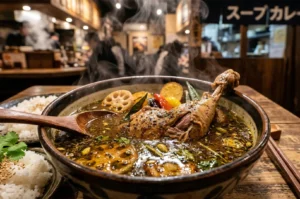
At Soup Curry by Ki-Setsu, we focus on authenticity without complication. We bring Hokkaido culture to Singapore through careful cooking and thoughtful service. Our opening hours run from 11:30 AM to 10:00 PM, Mon-Sun, welcoming diners throughout the day.
From 6:00 PM onwards, our restaurant shifts into a cosy izakaya style setting. Alongside our main dish, diners enjoy Japanese small plates, sake, and relaxed dining. This reflects how comfort food often pairs with good company and conversation. Our service staff guide diners through the menu, explaining spiciness, ingredients, and soup base choices. This support helps guests understand this unique cuisine and enjoy it fully, even on their first visit.
Finding Quality Japanese Cuisine in the Heart of the City
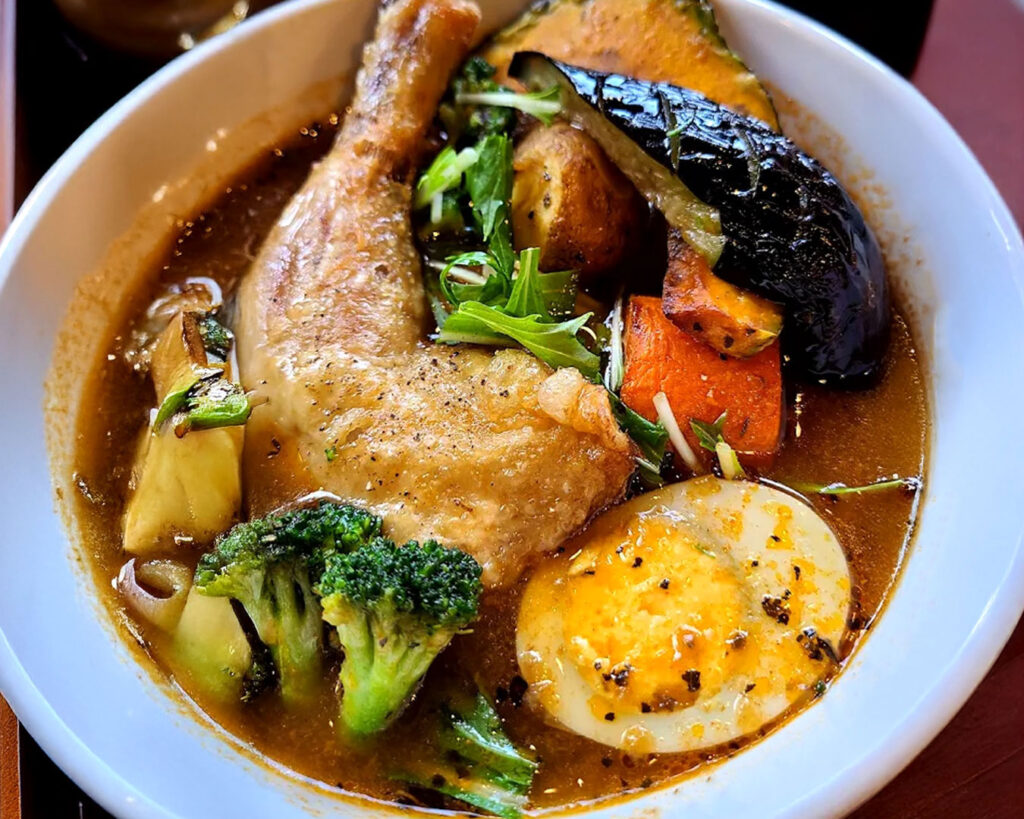
Japanese food in Singapore continues to grow. Diners seek more than the standard offerings. Many want hearty meals that feel complete and satisfying. Japanese comfort food answers this desire. Locations such as Raffles City Shopping Centre and Chinatown Point see steady interest in Japanese dining, yet much of the focus stays on familiar formats like udon or sushi.
Soup curry offers something different. It brings a dish that Japanese people recognise as comfort food, yet remains new to many local diners. It also suits local dining habits. It works well for lunch sets and dinner meals. The total bill stays at a reasonable price, while quality ingredients sourced with an eye on the Toyosu Market shine. This balance supports everyday dining rather than only special occasion spending.
A Complete Japanese Dining Perspective
Japanese comfort food often arrives as a complete set. Our signature dish fits this idea well. The bowl includes protein, vegetables, and broth, with rice served alongside. This structure reflects how people eat at home in Tokyo or Sapporo. Unlike udon noodles or ramen, this meal focuses more on a variety of vegetables. Unlike standard curry rice, it avoids heaviness. The dish feels both hearty and light, making it suitable across seasons.
The meal also adapts well. Diners choose their spiciness level, meat, and vegetables. This flexibility reflects modern Japanese dining, where personal taste matters. Some guests may even add shirataki noodles or extra tofu to further customise their experience. This level of choice ensures that every total bill represents a meal tailored to the individual.
Traditions Beyond the Trends
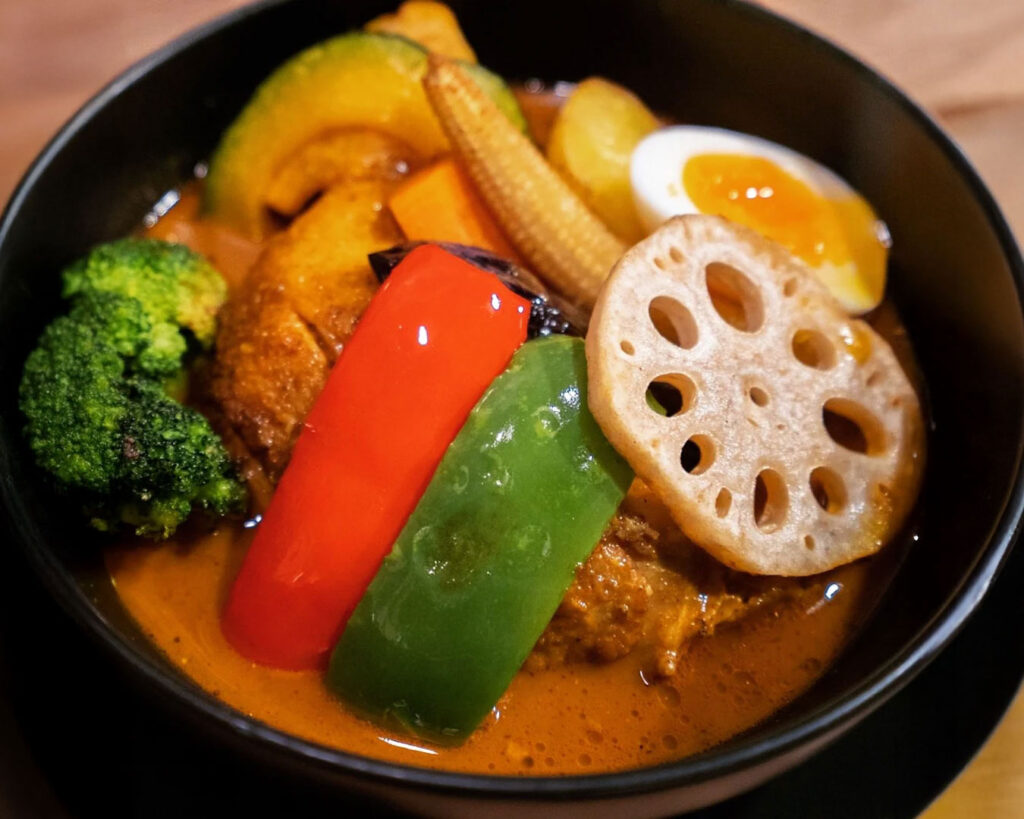
Many best Japanese restaurants chase trends. True Japanese comfort food does not rely on trends. It rests on tradition, care, and flavor built over time. At Soup Curry by Ki-Setsu, we do not rush this dish. We cook with respect for its roots in Sapporo. We value recipes shaped by decades of home cooking and local culture. This approach allows us to stand strong in a diverse food scene.
Whether you are looking for a quick lunch or a long dinner with sake, our restaurant provides a space to slow down. For lunch, we welcome walk ins to enjoy our lunch sets. For those joining us for dinner, we offer a specific reservation slot at 6:30 PM to ensure the best experience, holding the table for 15 minutes. This allows us to maintain the quality of our service and the warmth of our atmosphere.
An Invitation to Authentic Hokkaido Flavours
Soup curry in Singapore introduces a new chapter in Japanese food. It fills a gap between familiar comfort food and the joy of discovery. Through broth, spice, vegetables, and rice, the dish offers warmth and satisfaction. We invite diners to experience this side of Japanese comfort food at Soup Curry by Ki-Setsu. Enjoy a meal rooted in Hokkaido tradition, prepared with soy sauce, garam masala, and passion, and served with care. From the first sip of the soup to the last grain of rice, discover why this is considered the ultimate soul food of northern Japan.