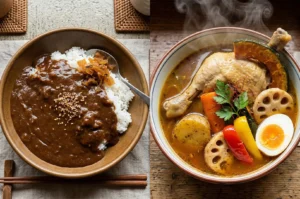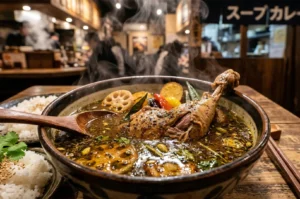
When many people think of curry, their minds immediately drift to the thick, creamy textures of a North Indian korma or the coconut milk-infused richness of a Thai green curry. However, in the capital city of Hokkaido, a different kind of magic was born.
It is a light curry flavored soup that drinks like a consommé but hits with the complexity of a spice rack. It represents a specific evolution of Japanese style cooking, where the focus is on the purity of individual ingredients rather than a singular, blended consistency.
At Soup Curry by Ki-Setsu, we often meet guests who are surprised by the clarity and depth of our broth. They expect the heavy, gravy-like consistency of a typical Japanese curry or the intense oiliness of certain international styles, but instead, they find something entirely unique.
The Foundation of the Broth: A Departure from Tradition
The most striking difference lies in the soup base. While Indian curry is often a reduction, simmering down until the flavours are concentrated into a thick paste, soup curry remains fluid. In our kitchen, we lean into the traditional methods of the capital city of Hokkaido to create a light broth that carries immense weight in flavour.
The Role of Animal Proteins
In many Indian recipes, the meat is braised directly within the sauce, contributing its fat and juices to thicken the final product. In contrast, the foundation of an authentic soup curry often involves a long-simmered stock made from chicken bones and pork bones.
This creates a clear, umami-rich chicken broth that acts as a canvas. This technique is more akin to ramen or French bouillon than it is to a traditional Madras or Vindaloo. By using pork bones and chicken, we achieve a collagen-rich mouthfeel without the need for flour-based thickeners found in regular Japanese curry.
Achieving Complexity Without Heaviness
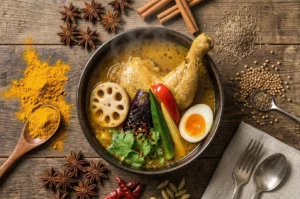
The aromatic profile of Sapporo soup curry is achieved through a delicate balance of curry powder, garam masala, and tomato paste. While Indian curries use these spices to create a dense coat for the meat, we use them to infuse a curry soup that remains easy to drink.
There is no coconut milk to mask the nuances of the spices, and no heavy roux to weigh down the palate. This allows the diner to eat soup curry and feel nourished rather than sluggish, a hallmark of this soul food.
Why Vegetables Take Centre Stage in Soup Curry Restaurants
If you visit soup curry restaurants in Japan or here in Singapore, you will notice a visual feast that is rarely seen in Thai or Indian presentations.
In a Thai red curry, vegetables are often simmered until they are soft and have absorbed the colour of the sauce. In Indian vegetable curries, the ingredients are often mashed or finely chopped into the gravy.
The Art of the Japanese Su-Age Technique
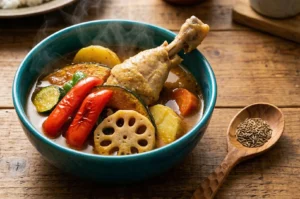
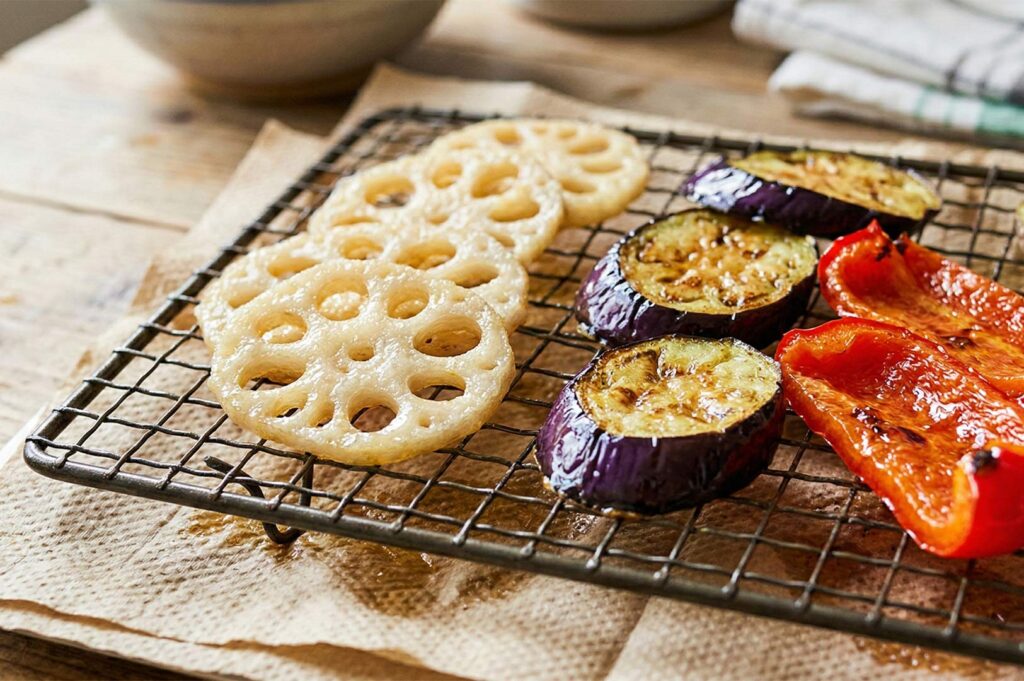
What makes our vegetable soup curry visually stunning and texturally superior is the Japanese su-age technique. This involves flash frying the fresh vegetables without any batter or flour. By deep fried methods, we ensure that the bell peppers, eggplant, and lotus root retain their vibrant colors and natural crunch.
Lotus Root: When treated with this deep fried method, it becomes a crisp, earthy addition that provides a necessary structural contrast to the soup.
Eggplant: Instead of becoming mushy, it turns golden brown and silky, absorbing just enough of the flavor of the broth when submerged.
Root Vegetables: Carrots and potato are often steamed first to ensure they are perfectly cooked and tender, then finished with a quick fry.
This focus on fried vegetables is a key differentiator. It respects the integrity of the fresh vegetables, allowing their natural sweetness to balance the heat of the spices.
In Thai cuisine, the heat is often sharp and immediate, coming from fresh bird’s eye chillies. In Indian cuisine, the heat is warm and lingering, built from layers of dried chillies and black pepper.
Japanese curry, traditionally, is known for being quite mild and sweet, often using grated apple or honey. However, Sapporo soup curry breaks this mould by offering a customisable spice level that can challenge even the most seasoned spice lovers.
Beyond the Traditional Japanese Curry
While a traditional Japanese curry is thick and somewhat sweet, the soup curry found in Hokkaido’s Chuo Ward or near Susukino Station is bold. We use a complex blend of spices that includes cumin, coriander, and turmeric, but we also incorporate garam masala towards the end of the cooking process to keep the top notes bright. This results in a delicious and aromatic experience that feels more “global” than the typical Japanese curry found in home kitchens.
Comparing the Protein: Tender Chicken Thighs vs. Braised Meats
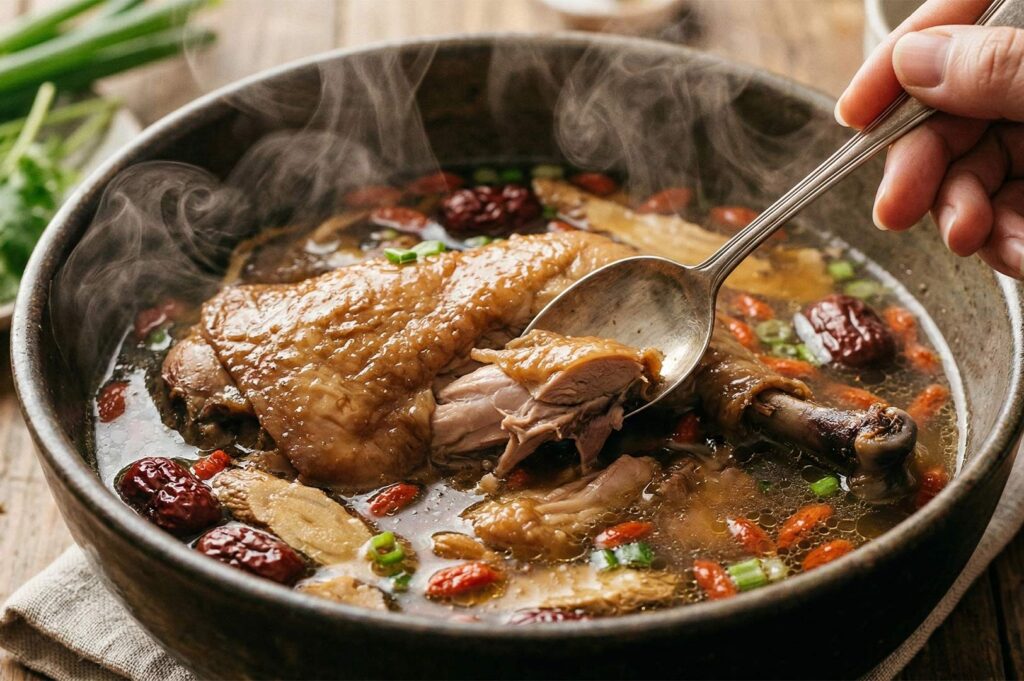
When you eat soup curry, the protein is often the star of the bowl, yet it is prepared with a level of care that differs from other regional curries. In many Indian dishes, the meat is cut into small cubes to increase the surface area for the sauce to cling to.
The Signature Chicken Leg
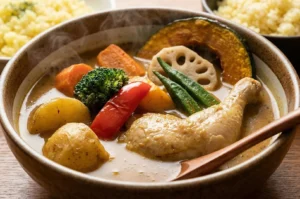
In our original soup curry, we prioritise the use of whole chicken legs or tender chicken thighs. These are slow-cooked until the meat literally falls off the bone with the slightest pressure from a spoon. This method ensures the chicken stays incredibly moist. Because the soup is thin, it can penetrate deep into the fibres of the chicken, seasoned by the pork bones and aromatics in the broth.
The Ritual of How to Eat Soup Curry
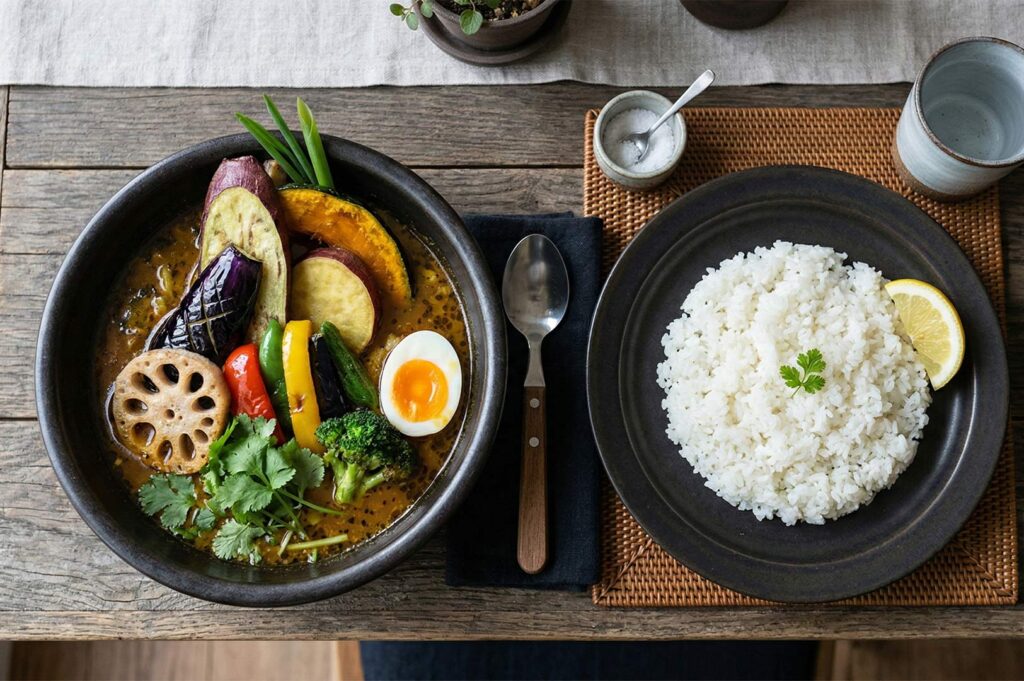
One of the most distinctive differences between Sapporo soup curry and other varieties is the serving style. In an Indian setting, you might have naan or steamed rice on the same plate, often mixed together by hand or spoon. In a Thai setting, the curry is often shared from a communal bowl and ladled over rice.
The Two-Bowl System
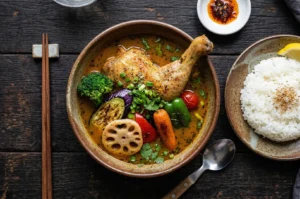
In the Japanese style, we serve the curry soup and the rice in two separate vessels. This is not just for aesthetics; it is functional. Because it is a soup dish, keeping the rice separate prevents it from becoming a soggy porridge.
The small bowl of rice: Usually served on a flat plate or small bowl, the rice is often garnished with a wedge of lemon.
The technique: You take a spoonful of rice, dip it into the heavy bottomed pot or bowl of soup, and allow the grains to soak up the light broth for just a second before eating.
The vegetables: You alternate between sips of the delicious broth and bites of the deep fried vegetables, ensuring every texture remains distinct throughout the meal.
The Influence of the Capital City: From Sapporo to Singapore
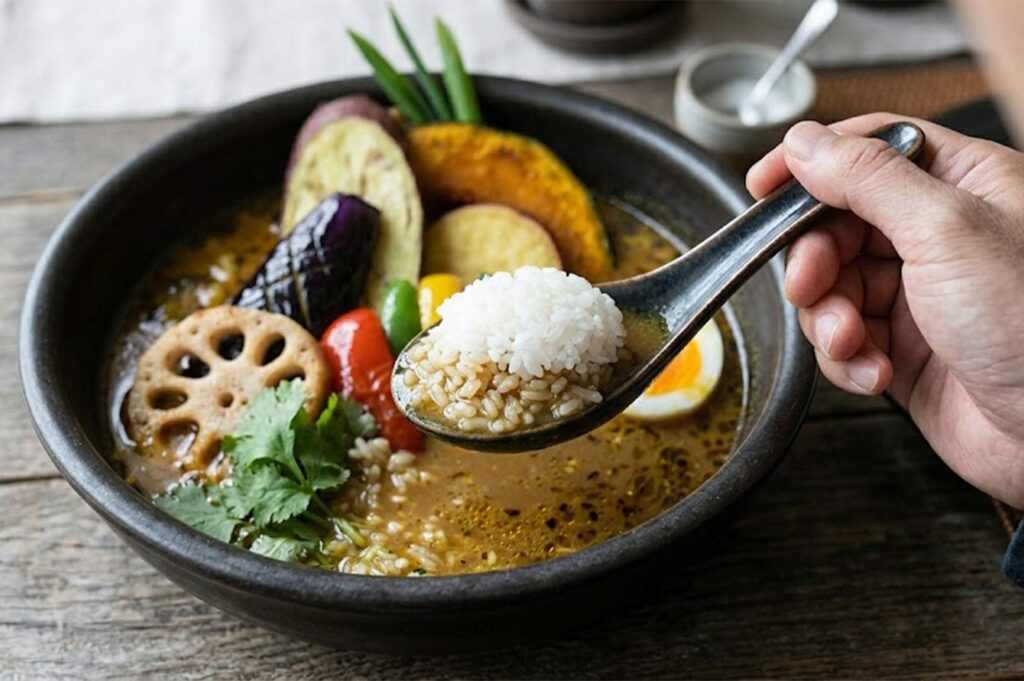
The original soup curry movement began as a medicinal soul food in Hokkaido, intended to warm the body during the harsh, snowy winters. This history is reflected in the ingredients. We use plenty of onions, ginger, and garlic to create a base that feels restorative.
A Cultural Crossover
At Soup Curry by Ki-Setsu, we bring this specific Sapporo soup culture to Singapore, maintaining the strict standards of Hokkaido’s Chuo Ward. We believe that the difference lies in the patience of the process. From the way we caramelise the onions to the way we dry the fried vegetables on a wire rack with paper towels to remove excess oil, every step is a departure from the quick-simmered methods of other curry styles.
Texture and Mouthfeel: Why It Is Not a Stew
A common misconception is that soup curry is simply a “thin” version of Japanese curry. This is incorrect. A stew or a typical Japanese curry uses a flour roux to create a velvety, tongue-coating texture. Our soup curry avoids this entirely.
The mouthfeel of a vegetable curry from Hokkaido is clean. By using tomato paste for acidity and body rather than flour, the flavor remains sharp and defined. This allows the subtle notes of okra, bell peppers, and lotus root to shine through. It is a soup first and a curry second, a distinction that makes it the ultimate comfort dish.
The Ingredients: A Focus on the Harvest
In Thai curry, you often find bamboo shoots or Thai aubergine. In Indian curry, you find chickpeas or cauliflower. In Sapporo soup curry, the choice of vegetables is a tribute to the “farm-to-table” philosophy of Hokkaido.
Cabbage: Often found at the bottom of the bowl, it adds a leafy sweetness to the broth.
Carrots: Thick chunks that have been simmered until they are as soft as butter.
Potato: A staple of Hokkaido that provides the necessary starch to make the meal heartier.
When we prepare our Japanese recipes, we ensure that these fresh vegetables are the stars. The vibrant colors of a well-plated bowl are a hallmark of soup curry restaurants, providing a visual appeal that is quite different from the monochromatic look of many traditional stews.
The Modern Izakaya Connection
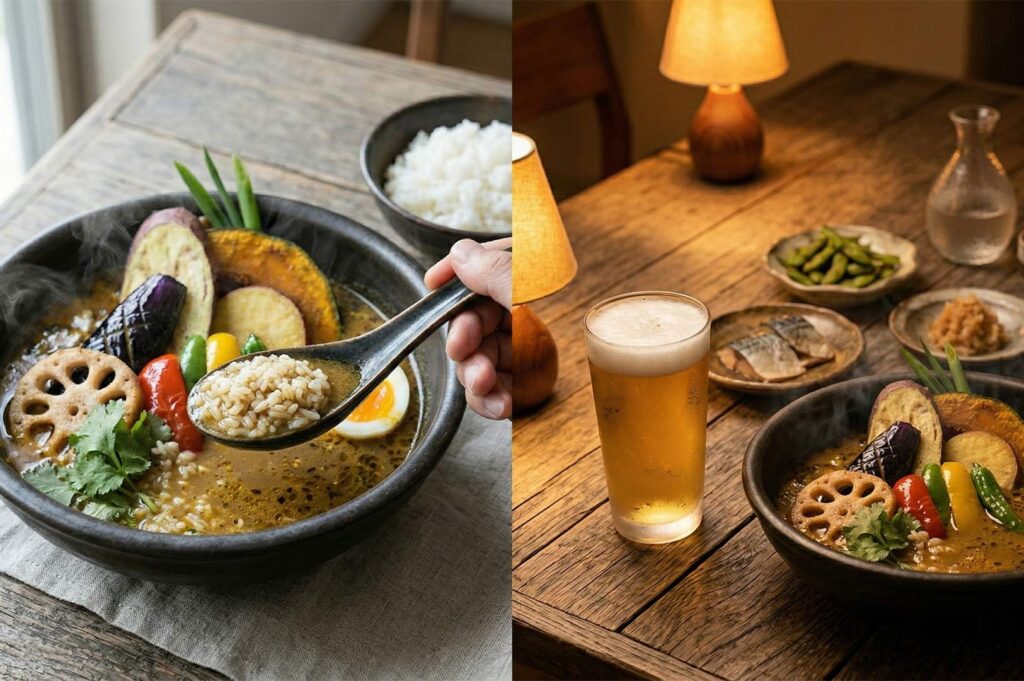
While the daytime focus is on the soup, the atmosphere of a Sapporo soup establishment often shifts as the sun goes down. In the spirit of the capital city, our restaurant transforms into a cosy izakaya from 6 PM onwards.
This transition makes sense because the bold, spiced flavor of the soup pairs beautifully with a range of Japanese sides and drinks. It is a testament to the versatility of soup curry that it can be both a quick, healthy lunch and the centrepiece of a relaxed evening meal.
A Unique Culinary Identity
Ultimately, what makes Sapporo soup curry different from Thai or Indian curry is its refusal to compromise on the clarity of its ingredients. It is a Japanese style innovation that takes the best parts of a nutrient-dense vegetable soup and marries them with the complex heat of global spices.
Whether it’s the tender chicken thighs that melt in your mouth or the crunch of deep fried vegetables like lotus root and eggplant, each element is crafted to be distinct. At Soup Curry by Ki-Setsu, we proudly serve this iconic soul food as it was meant to be: vibrant, aromatic, and deeply satisfying—a true taste of Hokkaido’s heart.
Next time you are looking for a meal that offers the comfort of a traditional Japanese kitchen with the bold punch of an international spice level, remember that the original soup curry offers a perspective unlike any other. It is a dish that invites you to slow down, dip your rice, and savour the layers of a truly unique Japanese curry.