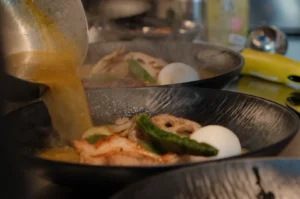
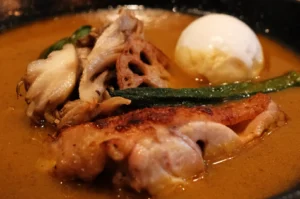
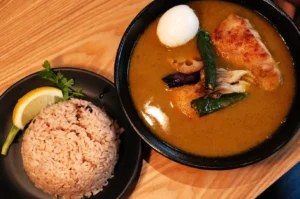
When a steaming bowl of Hokkaido soup curry first arrives at the table, the reaction is almost always one of awe. The vibrant colours of the flash fried vegetables, the intoxicating aroma of the spice-laden broth, and the carefully mounded plate of rice create a sensory experience unlike any other. However, as many of our guests soon discover, this dish carries its own unique set of unwritten rules. In typical curry restaurants, you might be tempted to mix everything together or pour the sauce over your rice. While there is no “punishment” for eating it this way, doing so often masks the very nuances that make this Hokkaido soul food so special.
We believe that the way you eat soup curry is just as important as the ingredients themselves. Our goal at Soup Curry by Ki-Setsu is to ensure every guest experiences the full depth of our craftsmanship, and that starts with unlearning a few common habits.
The Pitfall of the "Curry Rice" Mindset
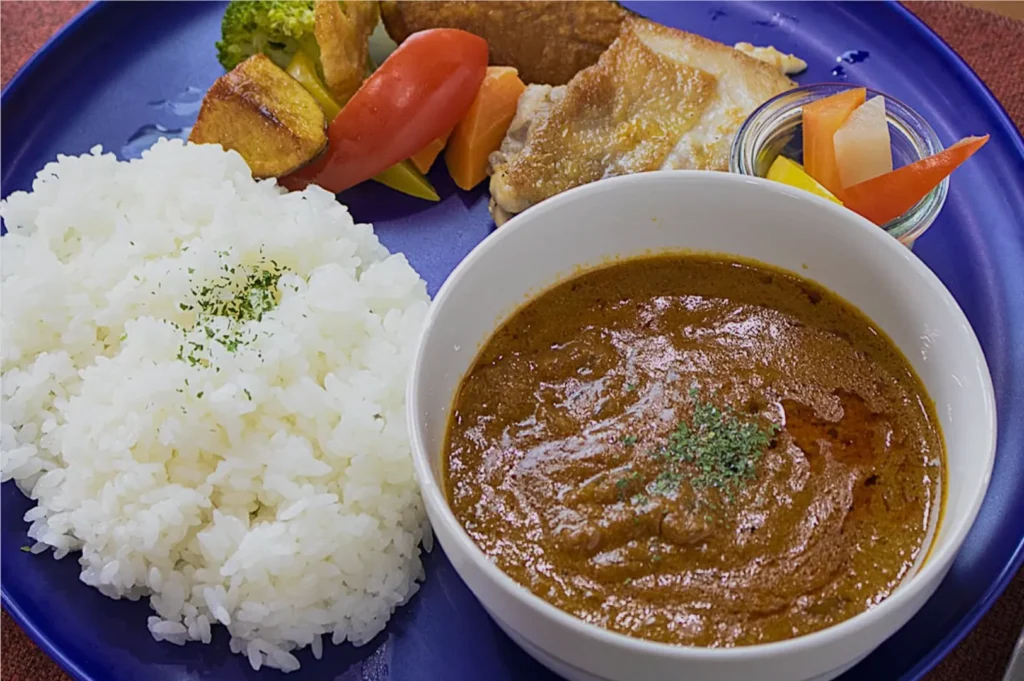
The most common mistake we see involves the subconscious comparison to regular Japanese curry. In most establishments, curry is a thick, gravy-like sauce served directly on top of a large bed of rice. It is a hearty, unified mess of flavour where the components blend together into one singular profile. Naturally, many newcomers to our restaurant reach for their spoons and immediately attempt to dump their rice into the soup bowl or pour the liquid over their plate.
This approach is the primary reason why many people miss the true essence of soup curry. Unlike the heavy roux used in other styles, our soup is a refined, clear broth built on a foundation of meticulously simmered chicken stock and bloomed spices. When you submerge all your rice at once, the starch from the grains begins to thicken the soup, turning a vibrant, drinkable broth into something cloudy and heavy. To truly eat soup curry the right way, one must respect the separation of these two elements. The rice and the soup are partners, not a single entity.
Mastering the Traditional Dip and Sip Method
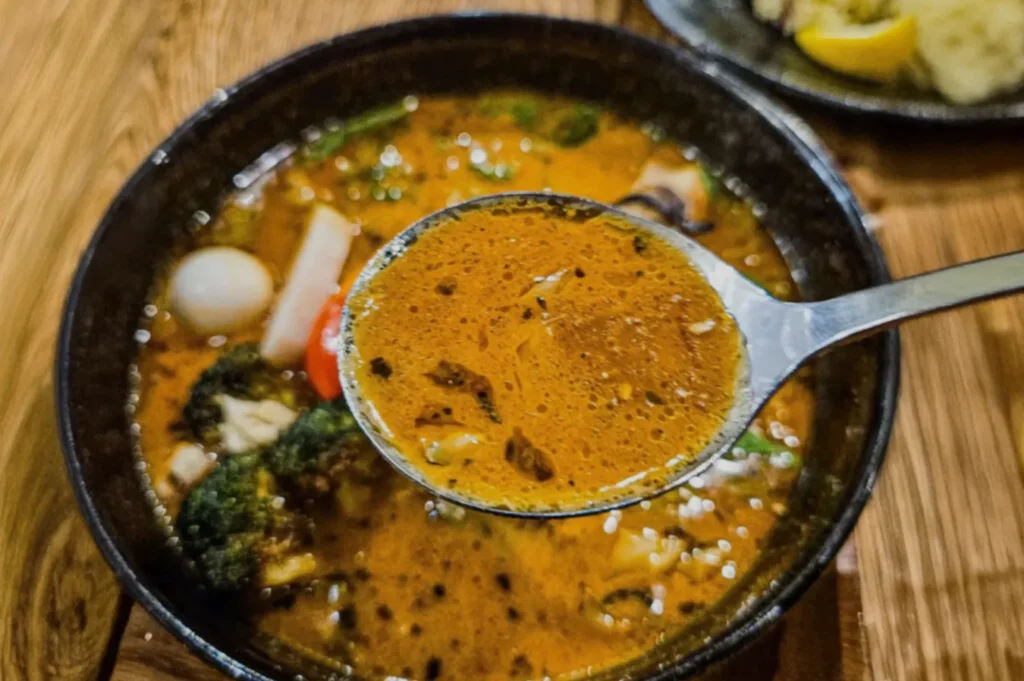
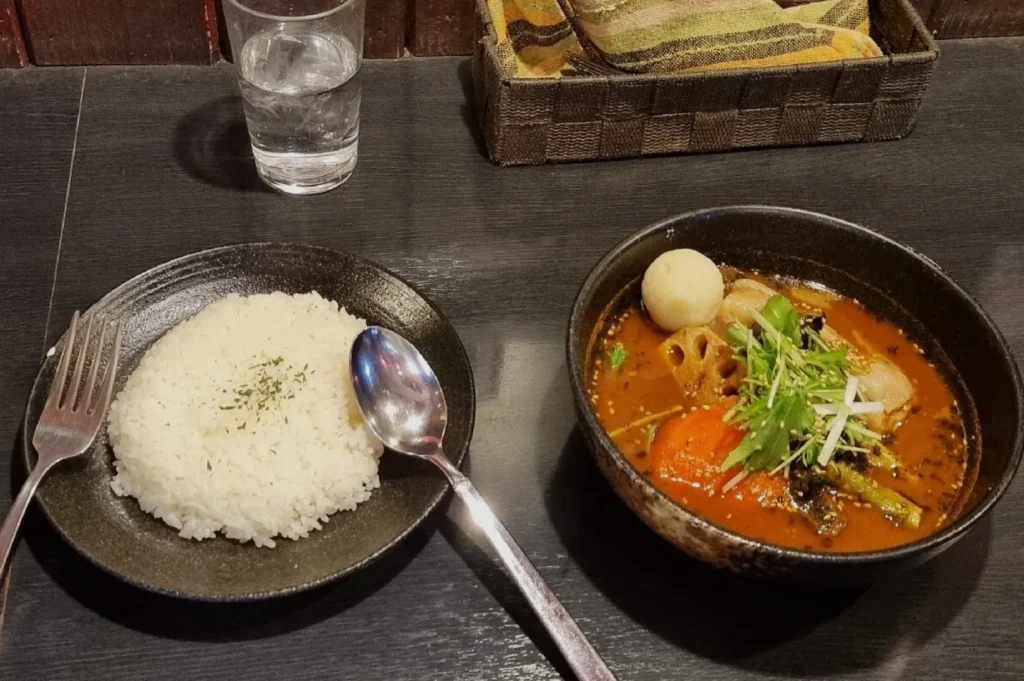
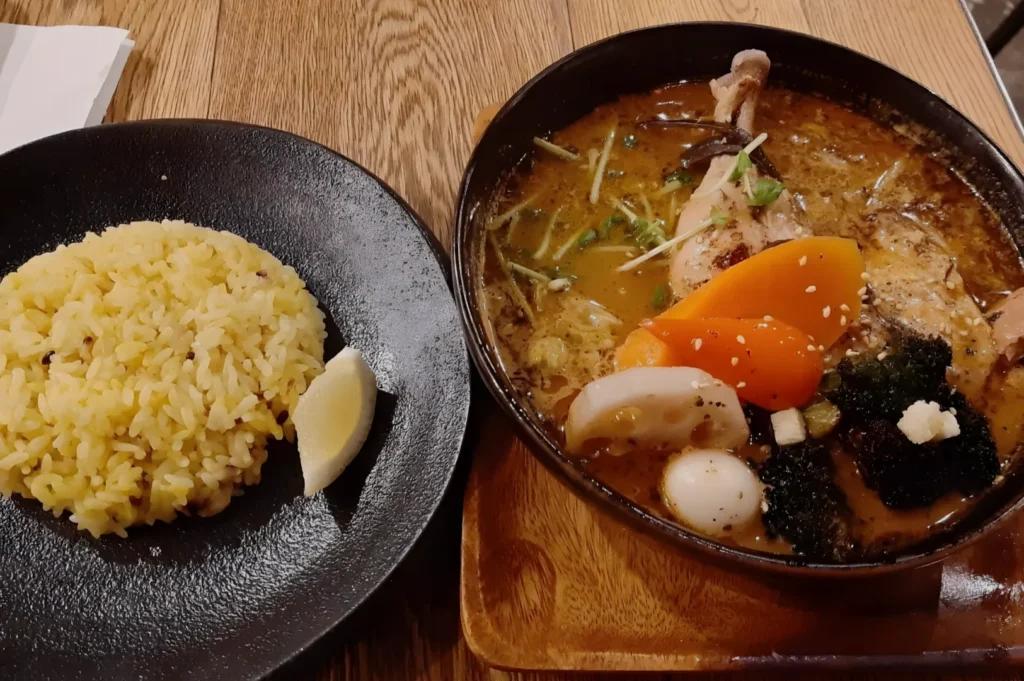
So, what is the correct way to navigate the bowl? The authentic Sapporo tradition dictates a specific sequence that preserves the integrity of every ingredient. Rather than mixing, you should take a spoonful of rice from your side plate and partially submerge it into the soup. This “dip” allows the grains to soak up the aromatic oils and spices on the surface of the broth without losing their fluffy, Japanese short grain texture.
As you lift the spoon, you get a perfect ratio: the neutral, grounding flavour of the rice paired with the intense, spicy kick of the soup. This method ensures that every mouthful is fresh. You are not eating a bowl of soggy rice; you are enjoying a series of precisely flavoured bites. This interactive process is a fundamental part of the dining experience in Hokkaido. It forces a slower pace, allowing you to appreciate the warmth and soul that we pour into every batch of broth. When you eat this way, the complexity of the garam masala and the subtle tang of rice vinegar in our recipe become much more apparent.
Protecting the Texture of Deep Fried Vegetables
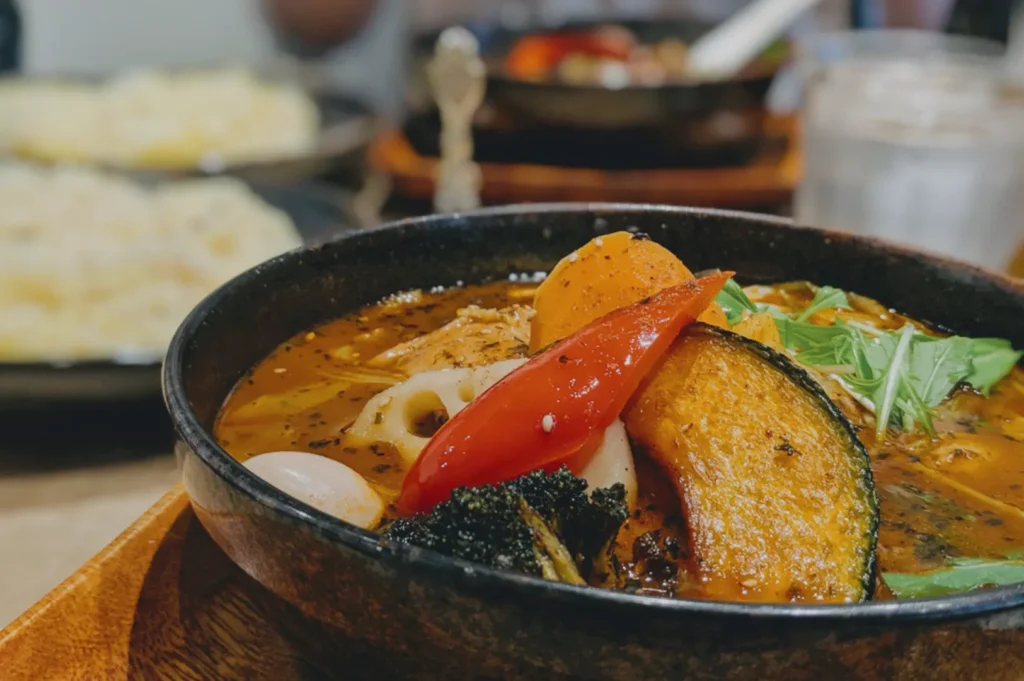
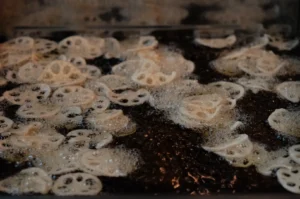
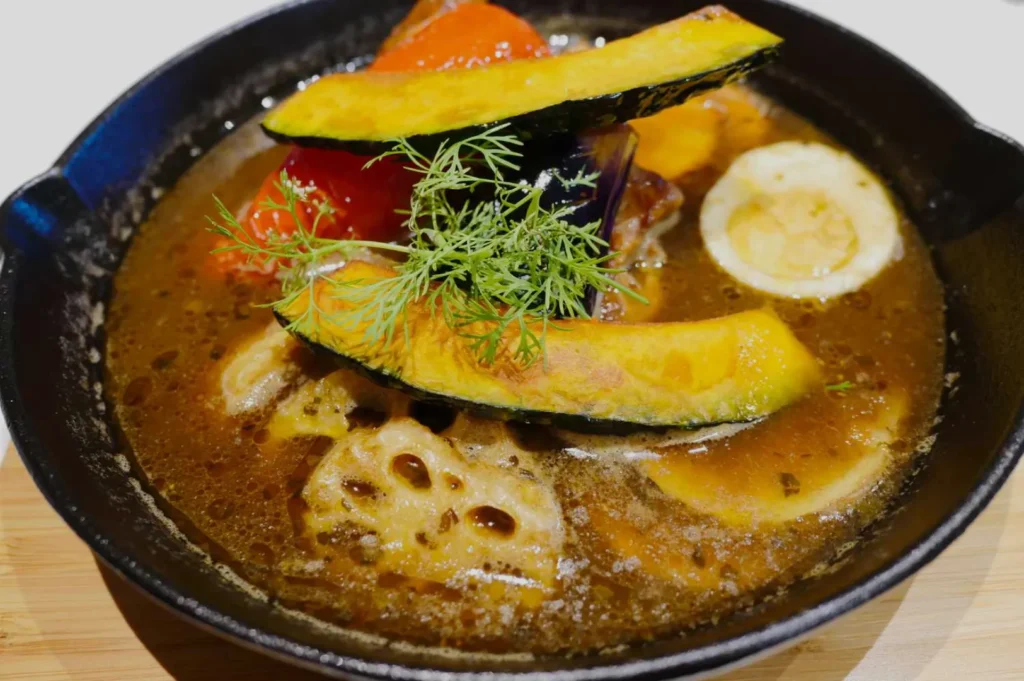
Another common mistake is submerging the deep-fried vegetables in the broth all at once. We use the su-age technique, deep-frying produce like kabocha squash and bell peppers without batter. This creates a caramelised exterior while keeping the inside succulent.
To maintain their crispness, these vegetables are placed on top of the soup. Pushing them into the broth boils them a second time, losing their delightful crunch. For the best experience, pick up each vegetable individually and dip it into the soup just before eating. This preserves the distinct textures and allows you to appreciate the full benefit of our specialised frying techniques.
Why the Order of Flavours Matters
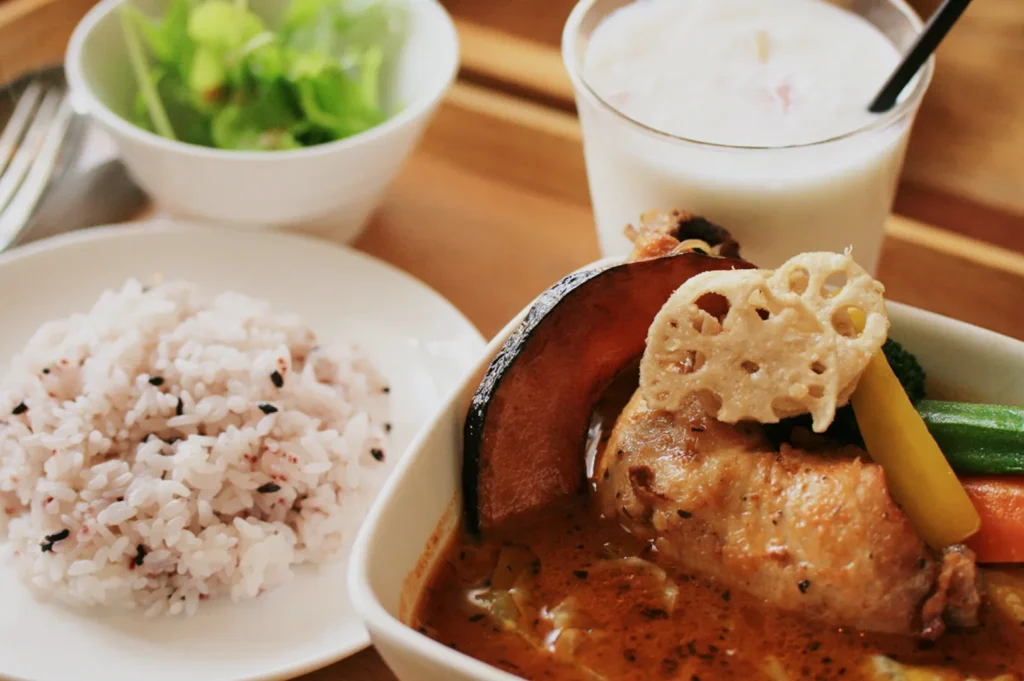
The structure of an authentic soup curry meal is designed to be a journey. Often, we see guests dive straight into the spiciest part of the broth or focus solely on the meat at the beginning. However, the most rewarding way to experience the bowl is to taste the soup in its purest form first. Take a small sip of the broth before you add rice or break into the protein. This allows you to calibrate your palate to the spice level and the richness of the chicken stock.
Once you have established that baseline, you can begin to incorporate the other elements. The tender chicken, often prepared so it falls off the bone, provides a rich counterpoint to the light broth. If you are someone who enjoys a bit of acidity, this is also the moment to use the lemon wedge often served with the rice. Squeezing the lemon over the grains rather than into the soup adds a bright, citrusy lift that refreshes the palate between spicy bites. This layering of flavours is intentional. It prevents “palate fatigue,” ensuring that the last spoonful of soup is just as exciting as the first.
Navigating the Dual Nature of the Dining Experience
At our establishment, the atmosphere is an extension of the food. We believe that soul food should be enjoyed in a space that feels like a sanctuary. This is particularly true in the evenings, when we transform into a cosy izakaya from 6 PM onwards. The pace of an izakaya is naturally slower, which perfectly complements the “dip and sip” method of eating. It is an environment built for lingering over appetisers and enjoying the warmth of a shared meal.
First-timers who rush through their bowl often miss this cultural context. Soup curry is not “fast food.” It is a dish that rewards patience and attention. When the lights dim and the restaurant takes on its evening glow, the act of carefully dipping your rice and selecting your vegetables becomes a meditative experience. It is about more than just satiety; it is about the comfort of the Hokkaido tradition. By slowing down and following the traditional etiquette, you align yourself with the spirit of the dish, transforming a simple dinner into a moment of genuine connection.
The Role of Spices and Personalisation
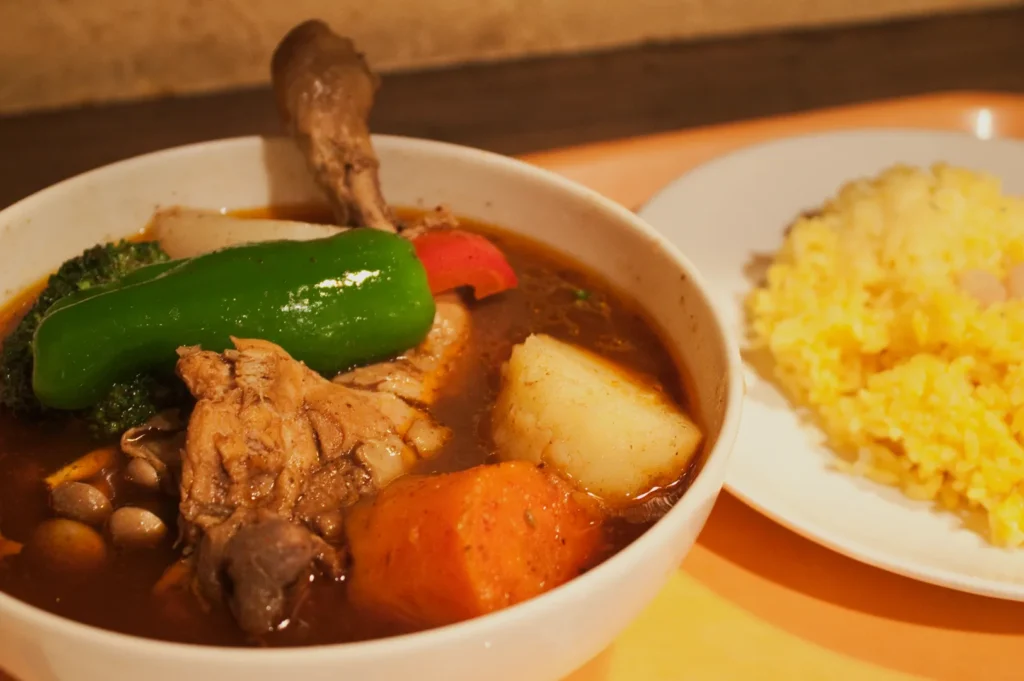
One of the beauties of this cuisine is how much it can be tailored to the individual. In our kitchen, we take the blooming of spices very seriously, ensuring the curry powder and garam masala are activated in oil to reach their full potential. However, we also know that every guest has a different tolerance for heat. A common mistake is choosing a spice level that is too high, thinking it will enhance the flavour. In reality, an overwhelming level of chili can mask the delicate notes of the tomato paste and the bay leaf in our broth.
We always suggest that first-timers start at a medium level. This allows the “magic spice” of the soup to shine through without numbing the tongue. If you find you want more heat, you can always adjust in future visits. Part of eating soup curry “the right way” is finding the balance that works for your own taste buds. It is an exploration of flavour where you are in the driver’s seat. Whether you prefer the earthy sweetness of kabocha pumpkin or the savoury depth of chicken drumsticks, the goal is to create a harmony that feels right to you.
Common Myths About Soup Curry Etiquette
Let’s debunk some common myths that can trip up newcomers.
- You must finish every last drop: Some believe it’s rude to leave any soup, while others think you must eat all the rice first. The most important rule is to enjoy your meal. It is, however, traditional to sip any leftover soup like a nourishing broth.
- It’s just “watery” curry: This couldn’t be further from the truth. Soup curry is a distinct, soup-based dish, not a thinned-down version of regular curry. It celebrates a light, clean chicken stock and fresh ingredients, without the heavy flour or roux found in thicker sauces.
- It’s always super spicy: While some varieties of soup curry are known for their spicy kick, this dish can be enjoyed in a range of spice levels. Many restaurants allow diners to customize the spice intensity to suit their preferences, making it accessible to those who prefer milder flavors.
- It’s incomplete without rice: While rice is a common accompaniment, soup curry stands strong as a dish on its own. The hearty broth and medley of vegetables can be savored independently for a lighter meal, proving that rice is not a required component.
Embracing the Soul of Hokkaido in Singapore
Bringing the authentic taste of Sapporo to our city is a responsibility we carry with pride. Every bowl served at Soup Curry by Ki-Setsu is a tribute to the traditions of the north. We use the same techniques, the same attention to detail, and the same passion that you would find in the busiest shops of Hokkaido. By teaching our guests the “right way” to eat, we are inviting them into a culture that values the integrity of food and the joy of a well-balanced meal.
It is heartening to see guests who initially struggled with the concept return and navigate their bowls like seasoned experts. They move from the initial confusion of “where do I start?” to the confident dipping of rice and the careful savouring of each fried vegetable. This transition is what makes our work so rewarding. We are not just serving food; we are sharing a piece of our heritage.
The Journey to Becoming a Soup Curry Connoisseur
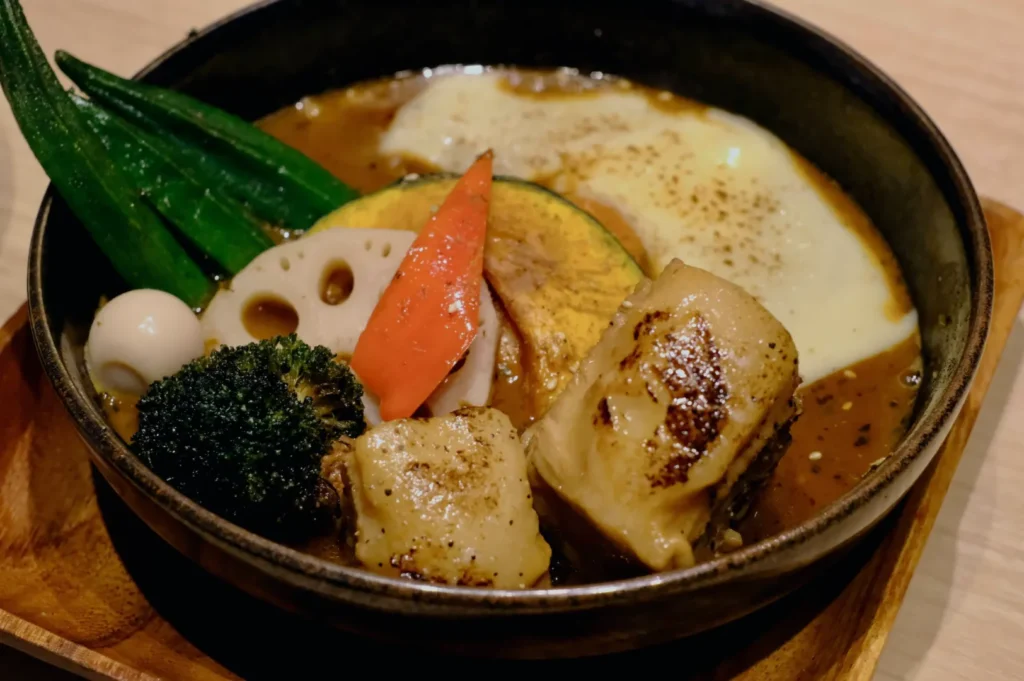
Ultimately, the “wrong way” to eat soup curry is any way that prevents you from enjoying it to the fullest. However, by keeping the rice separate, dipping for texture, and protecting the crispness of the vegetables, you unlock a new level of flavour.
We invite you to put these techniques to the test. Experiment with the dip-and-sip method, be mindful of your vegetable textures, and let the warmth of the broth provide the comfort you deserve. With a little practice, you’ll find the “right way” isn’t just about etiquette; it’s about the best possible taste.
The next time you have our signature soup curry, remember every element is there for a reason. All you have to do is follow the rhythm of the meal, one dip at a time, and let the soul of Hokkaido speak for itself. We look forward to seeing you at our table.