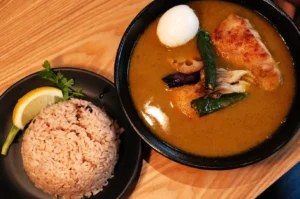
There is a right way and a wrong way to eat soup curry. If you have ever sat down before a steaming bowl of this iconic Hokkaido soup dish and wondered whether to dip, pour, stir, or simply dive in headfirst, you are not alone. First-timers often feel a little uncertain, and that is perfectly understandable.
Sapporo soup curry breaks almost every rule you have come to expect from a curry meal. It does not behave like a traditional Japanese curry, and it certainly does not behave like a stew. Once you understand how to eat soup curry properly, though, every spoonful becomes a revelation.
We have seen guests walk through our doors and immediately reach for their spoons, attempting to combine the rice and broth in one go. We have also seen guests treat it like miso soup, sipping cautiously from the bowl without engaging with the toppings at all. Both approaches miss the point entirely. This guide is here to help you get it right.
Understanding the Authentic Soup Curry Format Before You Begin
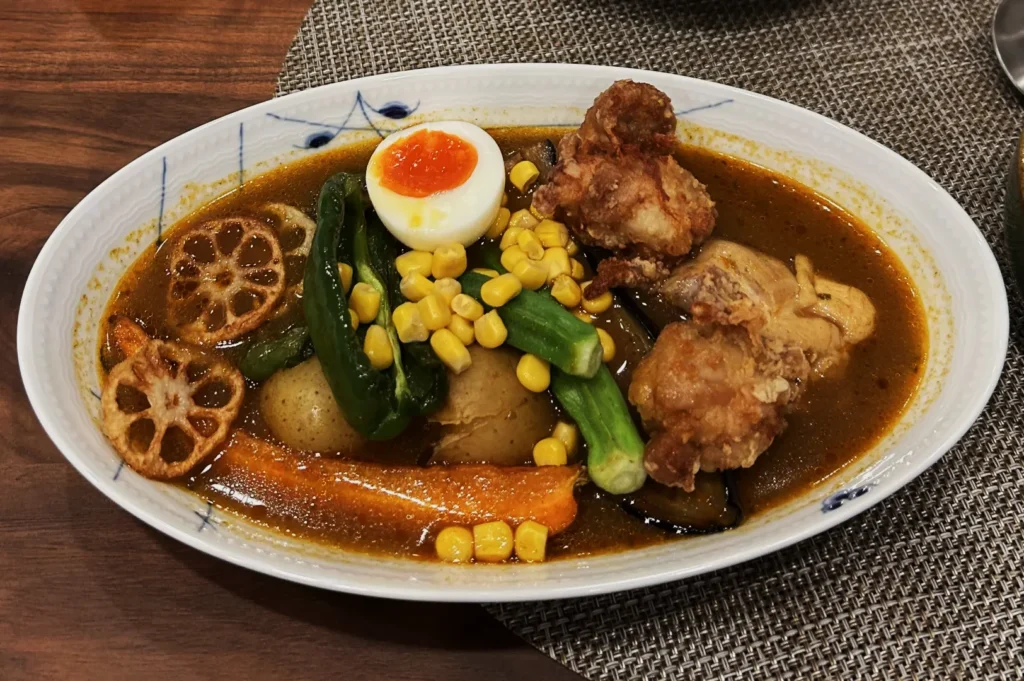
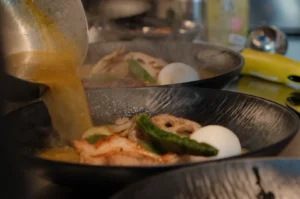
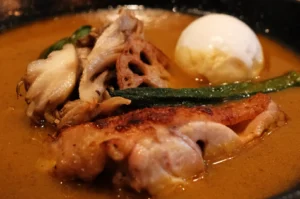
To eat soup curry the right way, you first need to appreciate how it is served. Unlike regular Japanese curry, which arrives as a thick, unified mass ladled over rice, authentic soup curry comes as a soup dish with the broth served separately from your rice. Your rice sits in its own bowl to the side, while the soup arrives loaded with large, beautifully prepared ingredients: a tender chicken leg, deep fried vegetables like bell peppers, lotus root, eggplant, pumpkin, and carrots, along with okra, mushrooms, broccoli, baby corn, and more.
This separation is intentional. The rice is not meant to be dumped into the broth. The broth is not meant to be ignored in favour of the rice. Each element plays a specific role in the meal, and the delicious way to enjoy this dish is to let them work together, on your terms, bite by bite.
How to Eat Soup Curry: The Classic Technique
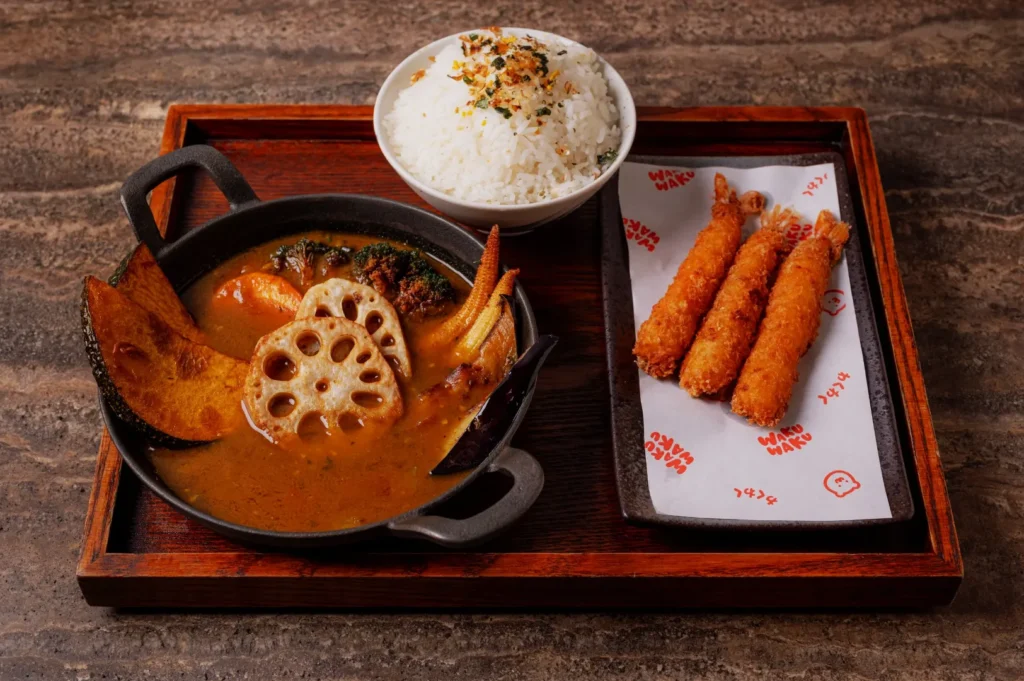
Eating soup curry is an experience that combines rich flavors, vibrant textures, and a unique dining style. To fully appreciate this iconic Hokkaido dish, it’s important to understand the proper way to enjoy each component. With the right approach, every bite reveals the harmony between the spicy broth, fresh vegetables, and tender meat. Let’s explore the classic techniques and common pitfalls to ensure you savor soup curry exactly as it was meant to be enjoyed.
Spoon a Mouthful of Rice, Then Dip It Into the Broth
The most authentic way to eat soup curry is to take a spoonful of steamed rice, dip it briefly into the fragrant curry broth, and eat it together. This technique, practised across Sapporo’s soup curry restaurants for decades, allows you to control how much of that rich, spiced soup clings to each bite of rice. You are essentially using your rice as a vehicle for the soup, rather than drowning everything together.
The result is a cleaner, more nuanced taste. Each mouthful gives you the subtle earthiness of Japanese rice, the warmth of the curry broth, and the layered complexity of spices including coriander, garam masala, and other aromatics that make Hokkaido soup curry so distinctive. Many restaurants craft their own take on the spice blend, often incorporating a secret “magic spice” mix that adds depth and intrigue to the broth.
Eat the Toppings Separately Between Bites
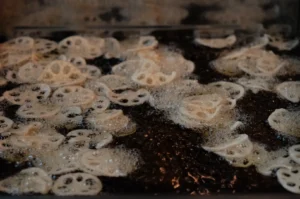
Your large ingredients, whether that is the chicken leg, the deep fried vegetables, or the root vegetables, are meant to be enjoyed between bites of dipped rice. Pick up a piece of eggplant or a slice of lotus root, eat it on its own or with a small amount of broth, then return to your rice-dipping rhythm. The toppings carry their own character. The su-age technique used for vegetables, a Japanese method of flash-frying without batter, preserves their natural sweetness, vibrant colour, and original texture. Eating them separately lets you appreciate that effort.
Vegetable soup curry is especially celebrated for the variety and freshness of its ingredients, with many restaurants offering over twenty types of vegetables to choose from. This allows you to tailor your bowl to your preferences, whether you favour baby corn, pumpkin, or broccoli. The vegetables are often simmered or deep-fried to perfection, balancing texture and flavor.
Adjust Your Spice Level Early
Most authentic soup curry restaurants allow you to choose your spice levels before your bowl arrives. This is not an afterthought. The heat of the broth fundamentally changes how you experience the entire meal, so choose a level that excites you without overwhelming your palate. Spice lovers may prefer a higher setting that builds slowly through the meal, while newcomers might start somewhere moderate to allow the full flavour of the soup base to come through.
Common Mistakes When You Eat Soup Curry
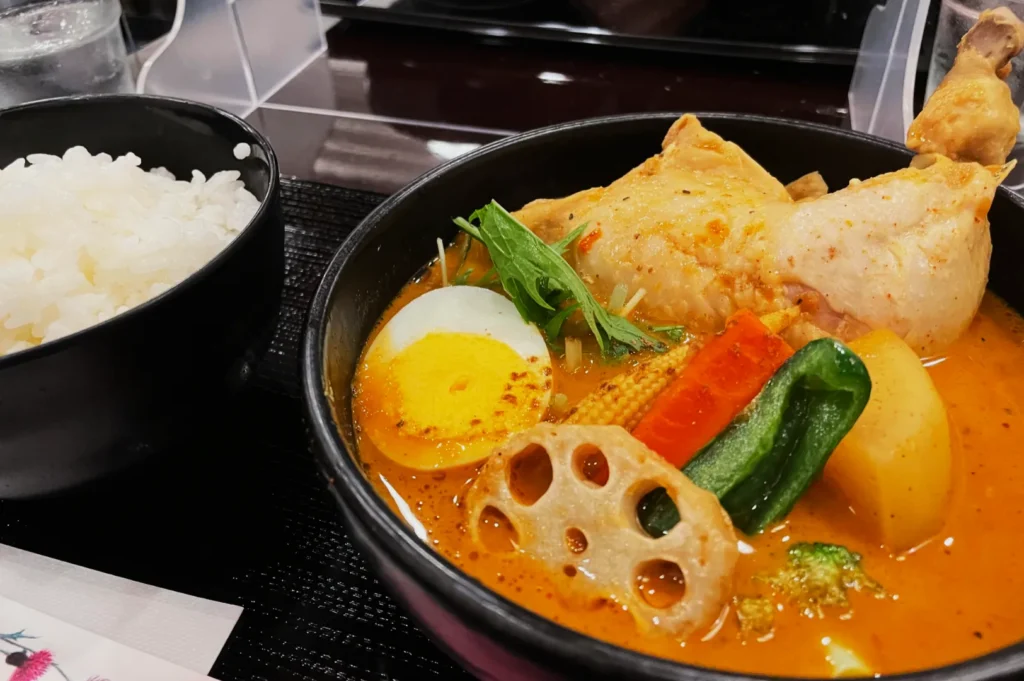
Before diving into the specifics of how to eat soup curry, it’s helpful to understand the common mistakes that can diminish your experience. By knowing what to avoid, you can fully appreciate the rich flavors, textures, and traditions that make this dish so special.
Pouring All Your Rice Into the Broth at Once
This is the most common mistake we see, and it is understandable. For many diners, combining rice and sauce feels instinctive. With soup curry, however, pouring all your rice in at once turns the broth cloudy, dilutes the flavour, and leaves you with a texture that does not do justice to either the rice or the soup. Keep them separate. Work between them.
Ignoring the Deep Fried Vegetables
The vegetables in a bowl of authentic soup curry are not garnishes. They are a signature component of the dish. Bell peppers, lotus root, potato, and other vegetables are carefully prepared and fried using methods that maintain their shape, colour, and fresh ingredients’ natural sweetness. Rushing past them to get to the chicken leg means missing some of the most carefully crafted elements on your table. Give the vegetables fresh attention, and eat them while they are still warm.
Drinking the Broth Like Miso Soup
It can be tempting to treat the aromatic broth as you would miso soup, lifting the bowl and sipping freely. While there is nothing wrong with enjoying the broth this way towards the end of your meal, doing so from the start means you will consume your soup base too quickly and have less to work with as you eat through your toppings. Pace yourself with the broth. Let it serve as your dipping companion throughout the meal.
How to Eat Soup Curry at Hokkaido Soup Curry Restaurants
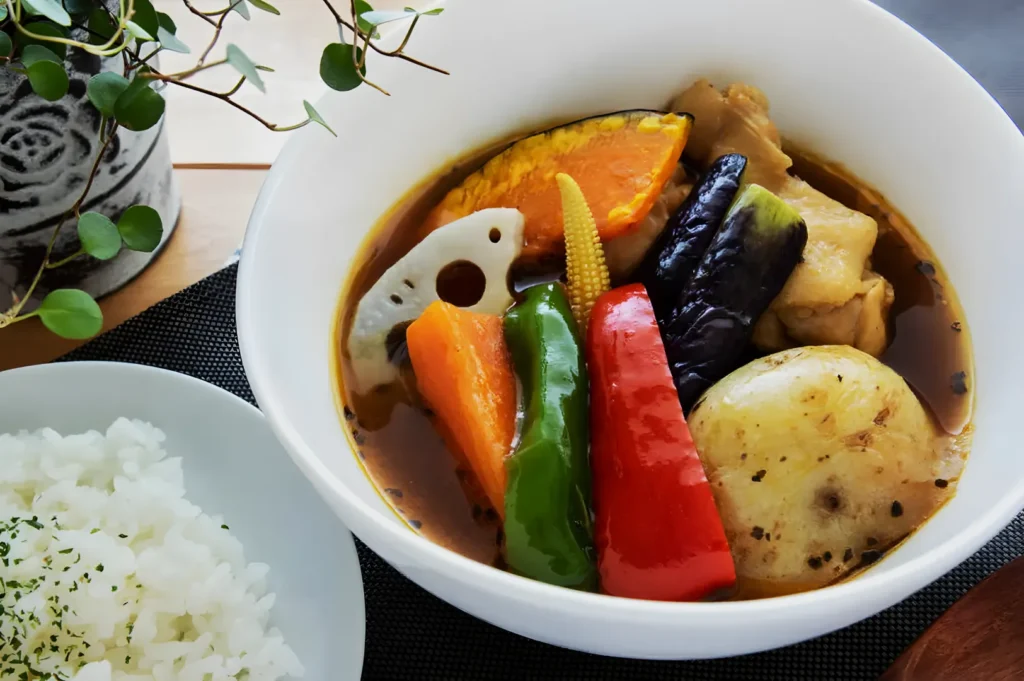
Now that you understand the unique presentation and components of soup curry, it’s time to learn the proper way to enjoy this flavorful dish. Mastering the eating technique enhances the experience, allowing you to appreciate the harmony between the rich broth, tender meats, and vibrant vegetables. Let’s explore the classic approach to savoring soup curry like a true Hokkaido local.
Read the Table Instructions
Many dedicated soup curry restaurants provide guidance at the table or on the menu. Do not skip this. At most restaurants, including renowned spots like Sapporo Rakkyo and Magic Spice, you will find tips on how to enjoy your meal to the fullest. If you have questions about technique or ingredients, ask. The staff are usually eager to share their knowledge and enhance your experience.
Take Your Time With Each Component
Sapporo’s soup curry culture is not a fast food culture. The long lines outside popular curry restaurants in Sapporo’s Chuo Ward near Susukino Station exist because people queue for an experience, not just a meal. That spirit carries into how the dish is meant to be eaten: slowly, attentively, and with appreciation for each element on the table. A proper bowl of hokkaido soup curry deserves at least forty-five minutes of your time.
The Delicious Way to Finish Your Bowl
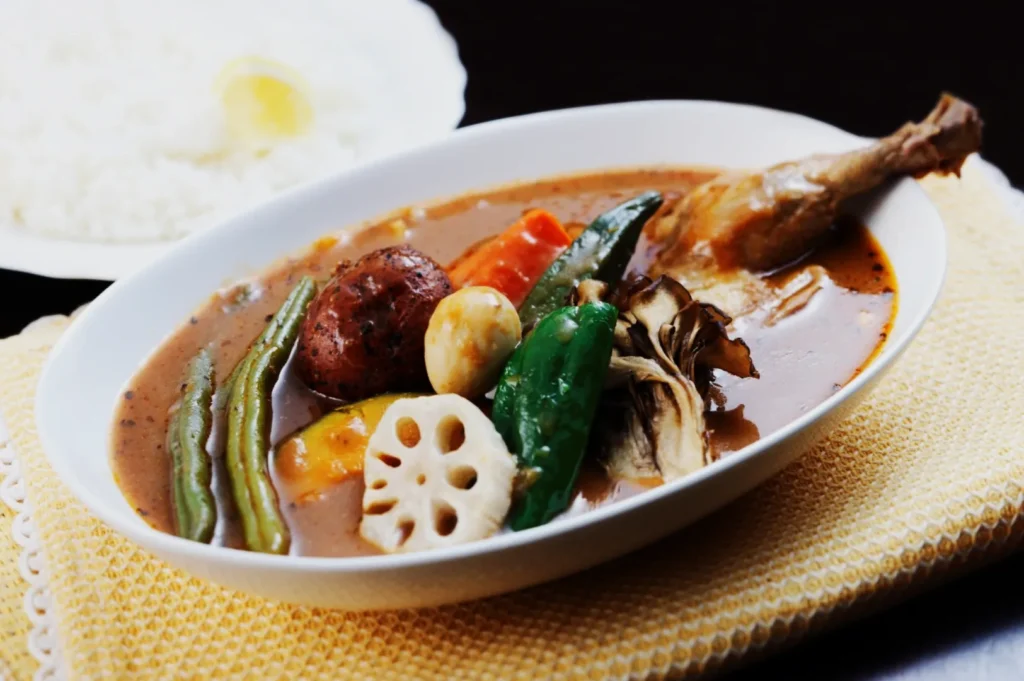
Now that you understand the unique presentation and components of soup curry, it’s essential to learn the best way to enjoy this flavorful dish. Eating soup curry properly enhances the experience, allowing you to appreciate the balance between the rich broth, tender meats, and vibrant vegetables.
Use the Last of Your Rice to Soak Up Remaining Broth
As you work through the large ingredients and approach the end of your meal, use the final spoonfuls of rice to soak up whatever remains in your bowl. By this point, the broth will have deepened slightly in flavour, absorbing hints of the chicken, pork, or shrimp based broth, vegetables, and spices that surrounded it. This final stage is often the most satisfying part of the meal.
Save a Piece of Vegetable for the Last Bite
We always suggest saving one piece of your favourite vegetable, whether that is a slice of pumpkin, a ring of lotus root, or a piece of broccoli, for the very last bite. It gives the meal a clean, intentional ending, and it means your final impression of the dish is the freshness of a beautifully prepared ingredient rather than just an empty bowl.
Eating Soup Curry the Right Way Is About Respect for the Dish
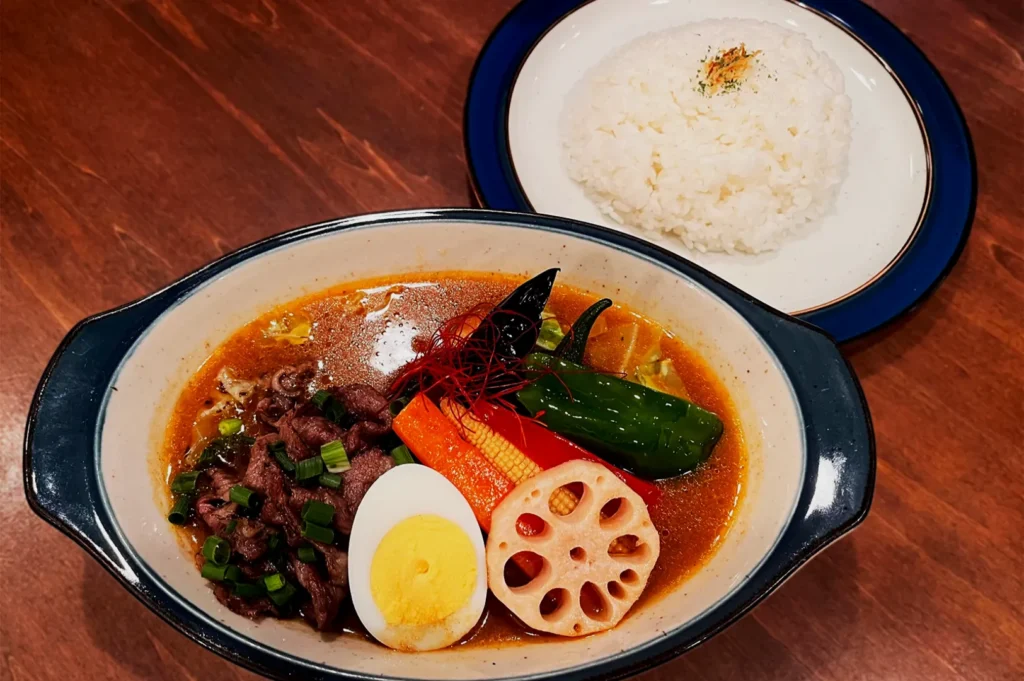
Authentic soup curry is a carefully constructed soup dish. Every component has been chosen, prepared, and presented with intention. The soup base is built on a foundation of chicken bones, pork bones, aromatics, and a precise blend of spices. The vegetables are deep fried using Japanese techniques to preserve what makes them worth eating. The chicken is cooked until it falls away from the bone. This is not food meant to be consumed quickly or carelessly.
When you understand how to eat soup curry the right way, you are not just following instructions. You are engaging with a tradition that has shaped dining culture in Hokkaido for over fifty years. You are honouring the thought that went into each component of your bowl. And you are giving yourself the best possible chance of falling completely in love with one of Japan’s most extraordinary comfort foods.
Whether you are visiting Soup Curry by Ki-Setsu for the first time or returning for your tenth bowl, this dish always rewards the diner who slows down, pays attention, and eats with curiosity.