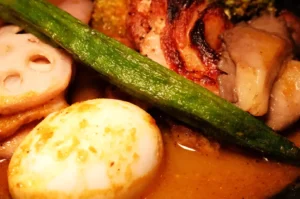
When people think of Japanese comfort food, the mind tends to wander to the same familiar landmarks: a steaming bowl of ramen with its deeply layered broth, or the satisfying crunch of a perfectly breaded tonkatsu. These dishes have earned their global recognition, and rightly so.
Yet there is another dish from Japan’s northern island of Hokkaido that has been quietly winning hearts for decades, one that carries the same soul-warming depth, the same cultural weight, and the same obsessive attention to craft. Soup curry deserves to stand alongside these icons, not as a curiosity or a novelty, but as a fully realised expression of Japanese comfort food at its finest.
We, at Soup Curry by Ki-Setsu, have seen this first-hand. Guests who walk through our doors for the first time often arrive with a certain hesitation, as if they are stepping into unfamiliar territory. By the time they finish their bowl, the conversation changes entirely.
The Broth: Where Soup Curry Holds Its Own Against Ramen
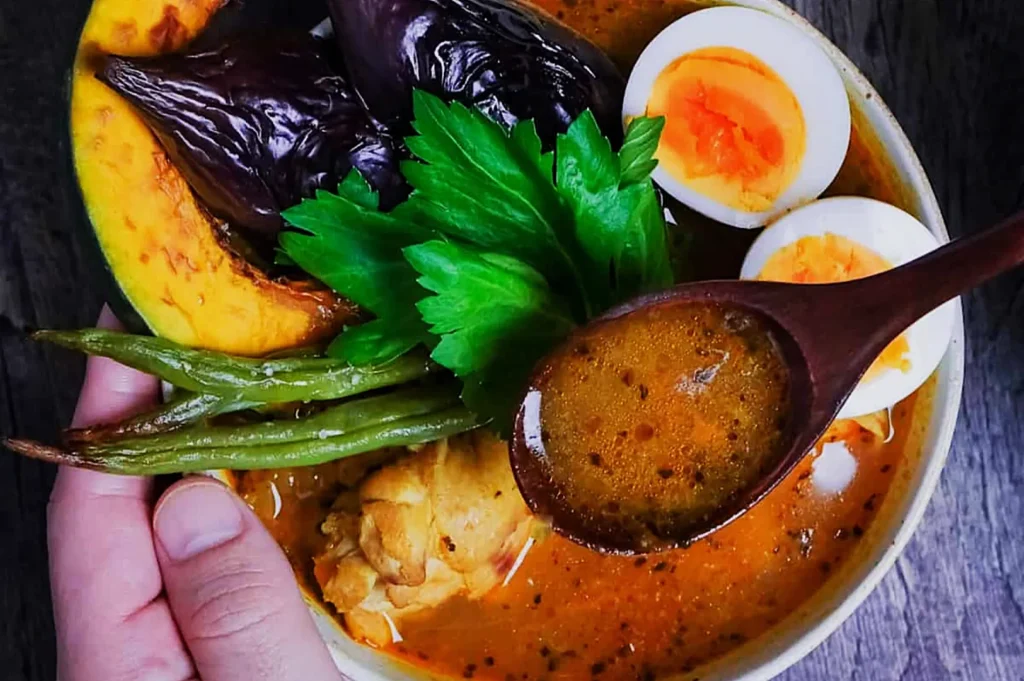
Ask any devoted ramen lover what separates a great bowl from a forgettable one, and the answer will almost always come back to the broth. A tonkotsu that has been simmered for eighteen hours. A shoyu tare balanced to the last drop. The broth is where the craft lives, and it is the standard by which the dish is judged.
Soup curry operates by exactly the same principle, and this is the first reason it belongs in the same conversation.
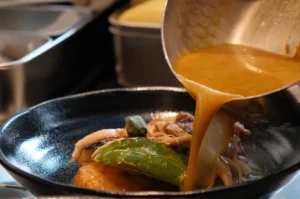
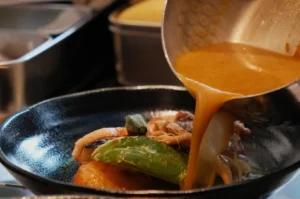
A well-made soup curry broth is not something that comes together quickly. It is the result of layering spices with intention, building aromatics over low heat, and achieving a balance between warmth and depth that never tips into heaviness. The spice profile in an authentic Hokkaido soup curry can draw on upwards of a dozen individual spices, each contributing something distinct to the final character of the bowl.
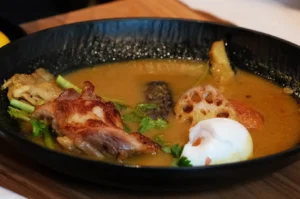
At our restaurant, the broth is treated with the same seriousness that a ramen chef brings to their tare and stock. The result is a soup base that is thin enough to drink freely yet rich enough to feel genuinely satisfying. It holds the ingredients without drowning them, which speaks to a level of calibration that is easy to overlook but impossible to fake. That is the hallmark of a kitchen that understands what it is doing, and it is precisely the quality that places soup curry in the same tier as Japan’s most celebrated comfort foods.
Why Thin Does Not Mean Simple
One of the most common misconceptions about soup curry is that its lighter consistency implies less effort or less complexity than a thick ramen broth. In fact, the opposite is true. Achieving depth in a thinner liquid is considerably harder, because there is nowhere for imbalance to hide. Every element must earn its place. The discipline required to produce a broth that is both delicate and deeply flavoured is no different from what separates an exceptional ramen from an ordinary one.
The Vegetables: The Element That Puts Soup Curry in a Class of Its Own
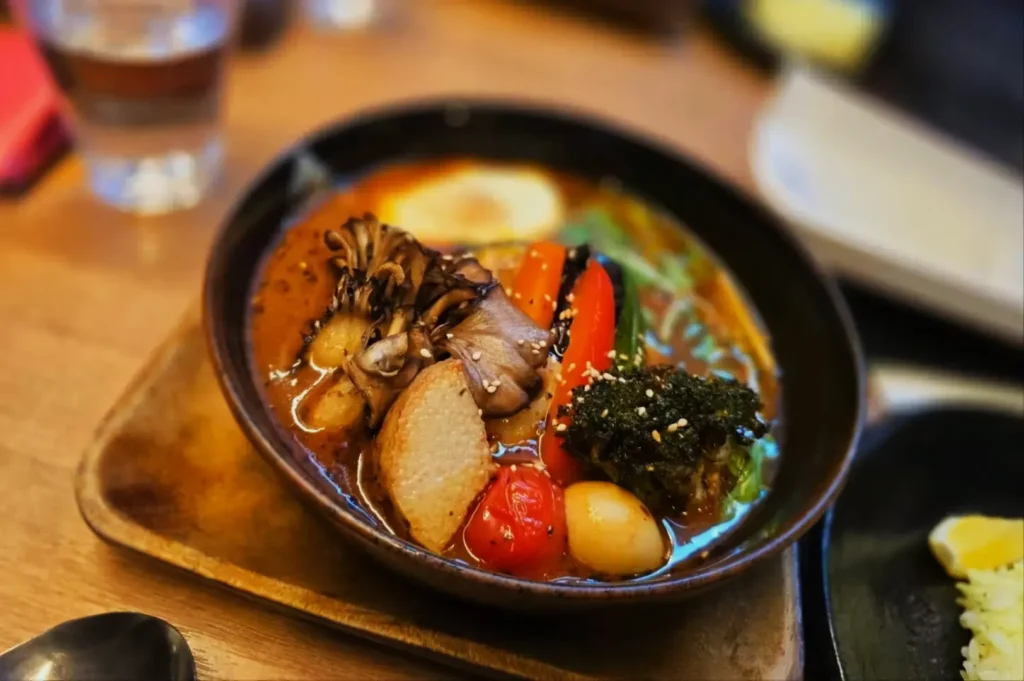
If ramen is defined by its noodles and tonkatsu by its cutlet, soup curry is defined, in no small part, by its vegetables. This is not a supporting element. It is a central argument for why the dish deserves far more recognition than it currently receives.
In Hokkaido, vegetables are taken seriously. The island’s agricultural output is exceptional, and that culture of respect for produce has shaped how soup curry is built and how it is judged. Vegetables in a proper soup curry are not an afterthought or a garnish. They are individually prepared, cooked to retain their own character, and presented as equal partners to the broth and protein.
Our approach reflects this philosophy directly. We deep-fry our vegetables, including bell pepper, lotus root, aubergine, and potato, using Japanese cutting methods that maximise both texture and visual appeal. Each piece is treated as its own preparation before it meets the soup. The result is a bowl where the vegetables are as compelling as anything else on the table, something rarely encountered in other styles of Japanese comfort food.
A Bowl That Rewards Attention
This is also where soup curry distinguishes itself from tonkatsu in a meaningful way. Tonkatsu is a masterpiece of singular focus: one cut of pork, one execution, one experience. Soup curry asks you to pay attention to the whole composition. Every element of the bowl has been considered, and every element repays that consideration. For a diner who wants to be genuinely engaged by what they are eating, that quality is quietly extraordinary.
The Ritual: A Dining Experience That Earns Its Place at the Table
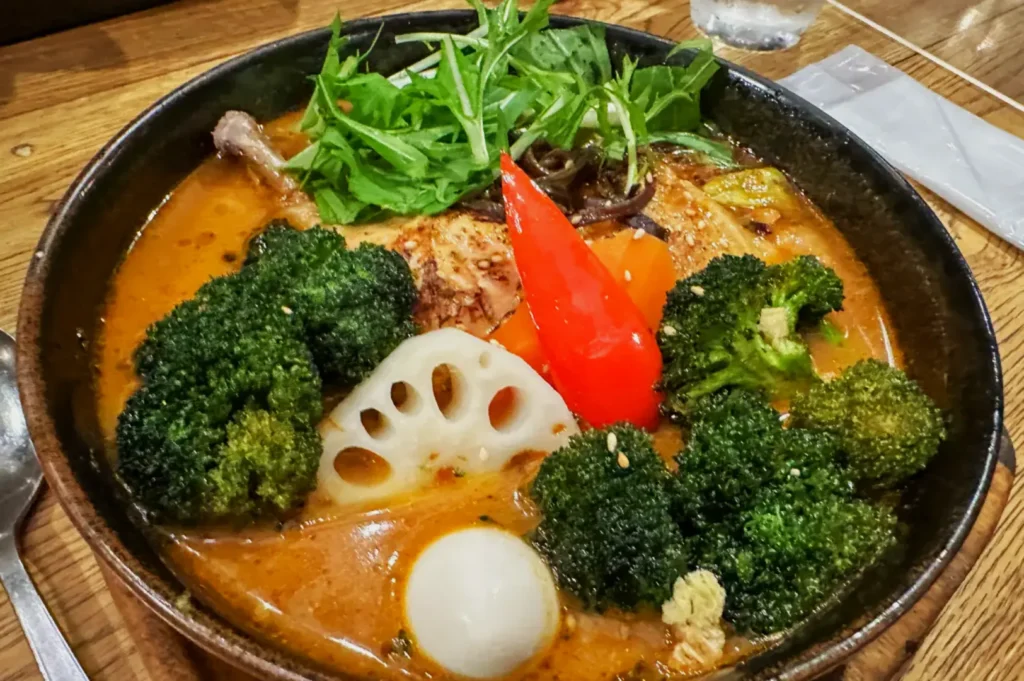
Beyond the flavours and the ingredients, there is something about the way soup curry is eaten that sets it apart from ramen and tonkatsu, and it has everything to do with participation.
With ramen, the ritual is largely settled for you. The noodles are in the bowl, the toppings arranged, the experience is one of receiving and consuming. Tonkatsu arrives complete, its components in their proper places, the decision-making done before the plate reaches you. Soup curry introduces a different kind of engagement. Diners choose their spice level, select their protein, and adjust the balance of soup to rice as they eat. The bowl becomes a conversation between the kitchen and the guest.
This participatory quality is something we actively encourage. When a guest sits down and begins to build their order, they are not simply choosing a meal. They are making it their own, and that sense of ownership creates a connection to the dish that is difficult to replicate with something more fixed. It is one of the clearest reasons that guests return, not just because they enjoyed what they had, but because they want to revisit and refine their own version of it.
From Lunchtime Bowl to Evening Ritual
That sense of occasion deepens as the day progresses. From 6 PM onwards, our space transforms into something closer to a cosy izakaya, where the atmosphere softens and the evening takes on a more unhurried quality. Soup curry in that setting becomes something different again: less a quick meal and more a genuine gathering around a table. Ramen and tonkatsu have long been embedded in that kind of social ritual. Soup curry belongs there too, and in the right environment, it holds that role with ease.
The Soul: The Argument That Needs No Comparison
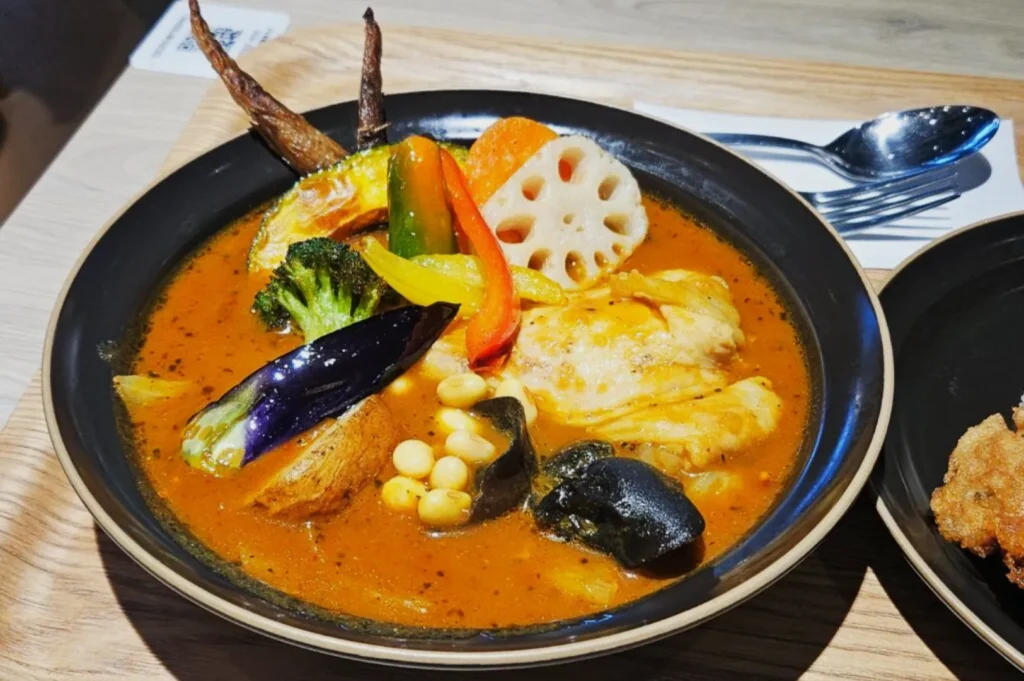
The strongest case for soup curry’s place at the table alongside ramen and tonkatsu is perhaps the simplest one: it is soul food, in the truest sense of the phrase.
Soul food does not need to be glamorous. It needs to be honest, generous, and deeply satisfying. It needs to feel like something made with care, eaten with gratitude, and remembered long after the bowl is empty. By every one of those measures, soup curry qualifies without reservation.
We have watched guests discover this across our tables, and the response is remarkably consistent. There is a moment, usually somewhere in the first few sips of broth, where something shifts. The wariness gives way to warmth. The unfamiliarity becomes curiosity, and then quickly becomes something closer to affection. That is not a response you manufacture. It is the natural response to encountering food that is genuinely good and genuinely cared for.
Giving Soup Curry Its Due
The global popularity of ramen and tonkatsu did not happen by accident. It happened because the food world began paying attention, and because enough people tasted these dishes and understood, without needing to be persuaded, that they were encountering something remarkable.
Soup curry is at a similar inflection point. As more diners seek out regional Japanese cuisine beyond the familiar canon, and as appetite for Hokkaido food grows more confident, soup curry is finding its audience. We believe that audience will only grow, because the dish earns its place every single time it is served. The broth, the vegetables, the ritual, the warmth: each of these elements holds up against anything Japanese comfort food has to offer. Together, they make a case that is difficult to argue with.
Discover what Sapporo has known for decades at Soup Curry by Ki-Setsu, and find out why this is a dish that was always meant to be in the conversation.