For decades, Singapore’s infatuation with Japanese gastronomy has leaned heavily toward a singular geographical muse. When a new ramen joint launches in the Central Business District, or an ultra-exclusive omakase counter opens its doors in Orchard, the culinary blueprint almost invariably traces back to the neon-lit streets of Tokyo. From the immaculate, streamlined presentation of sushi to the hyper-efficient, high-turnover models of urban noodle bars, Tokyo has long reigned as the default setting for what local diners perceive as premium Japanese cuisine.
This metropolitan bias is understandable, yet it tells only a fraction of Japan’s vast culinary story. By prioritizing the fast-paced, highly commercialized trends of the capital, the local food scene has unintentionally sidelined the rich, rustic tapestries of regional Japan. However, a quiet rebellion is taking place. As diners grow weary of predictable, corporate restaurant concepts, a profound appreciation for regional culinary arts is emerging, challenging the Tokyo monopoly and making space for the soulful heritages of the north.
The Metropolitan Bias: Why Tokyo Dominates the Local Imagination
The primary reason Singapore’s Japanese food scene has consistently favoured Tokyo comes down to commercial infrastructure and global marketing. Tokyo is a global culinary megaphone. It is a city engineered for export, where dining concepts are meticulously polished, branded, and packaged for rapid international expansion. When many establishments in Singapore look to source a new dining trend, the standardized models of the capital offer a predictable, low-risk path to commercial success.
Furthermore, Tokyo cuisine aligns perfectly with the fast-paced, transactional nature of Singapore’s urban lifestyle. The capital’s culinary identity is built on efficiency, speed, and sleek structural minimalism. While this satisfies the immediate need for a quick corporate lunch or a high-end business dinner, it often lacks the visceral warmth and comforting depth found in the rural prefectures. Local diners have been conditioned to associate Japanese food with this metropolitan stiffness, missing out on the rugged, ingredient-driven comfort that defines regional soul food.
The Rise of Regional Consciousness and the Appeal of Hokkaido Culture
As Singapore’s dining public grows more sophisticated, the desire for superficial trendiness is giving way to a craving for authentic regional identity. Food lovers are beginning to look beyond the slick branding of Tokyo to discover the diverse, micro-regional food cultures of Japan. Among these, the northern frontier of Hokkaido holds a uniquely powerful allure.
Hokkaido’s culinary philosophy stands in stark opposition to the clinical perfection of the capital. It is an environment shaped by harsh winters and vast agricultural landscapes, giving birth to a food culture rooted in deep physical restoration, absolute ingredient integrity, and slow, patient craftsmanship. Instead of delicate, bite-sized portions designed for rapid urban turnover, northern cuisine focuses on hearty, soul-warming dishes meant to sustain and comfort. This rustic, unpretentious approach to dining offers a refreshing antidote to the crowded, loud, and formulaic environments that dominate the local Japanese food scene.
Challenging the Status Quo with Northern Soul Food
Nowhere is the contrast between Tokyo’s commercial efficiency and regional depth clearer than in how the country’s most comfort-inducing dishes are prepared. For years, the local market has been flooded with thick, roux-based curries, a sweet and heavy style popularized by massive commercial chains across Japan’s major metropolitan centers. These dishes rely on dense starches and uniform sauces designed for high-volume service, offering little room for ingredient expression or complexity.
Our perspective on Northern gastronomy aims to completely dismantle this uniform approach by introducing a legendary Sapporo tradition born in the early 1970s. True northern comfort food rejects the heavy blanket of a flour roux, choosing instead to celebrate the individual architecture of a masterfully crafted liquid base.
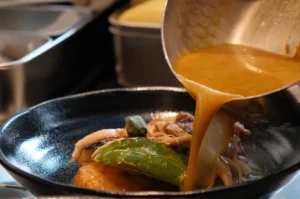
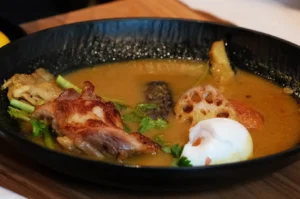
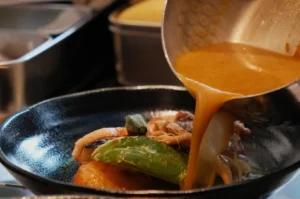
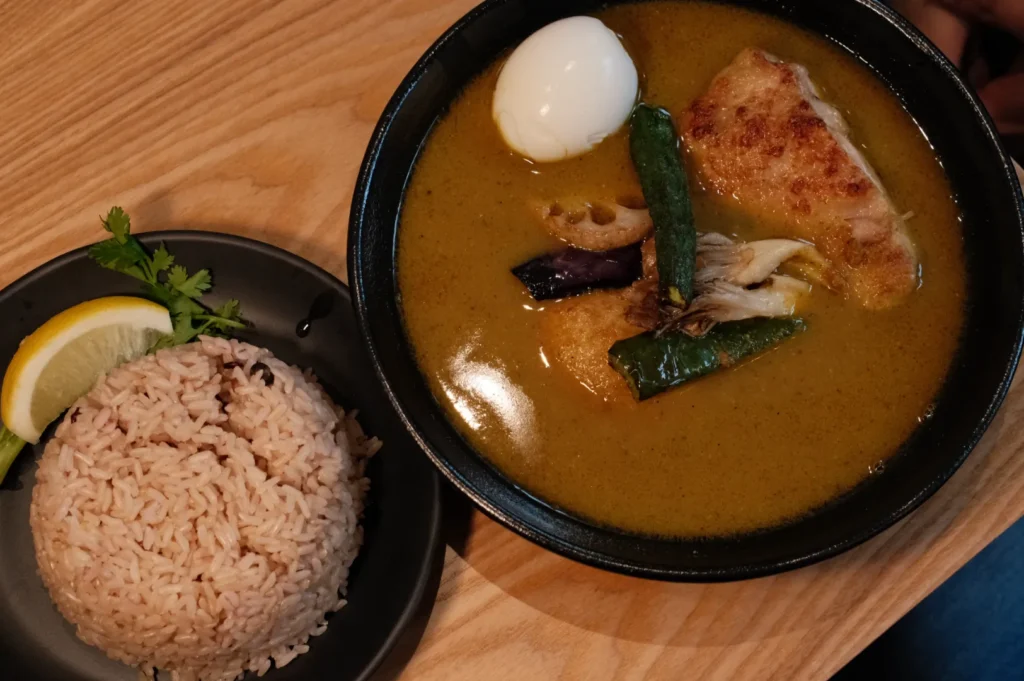
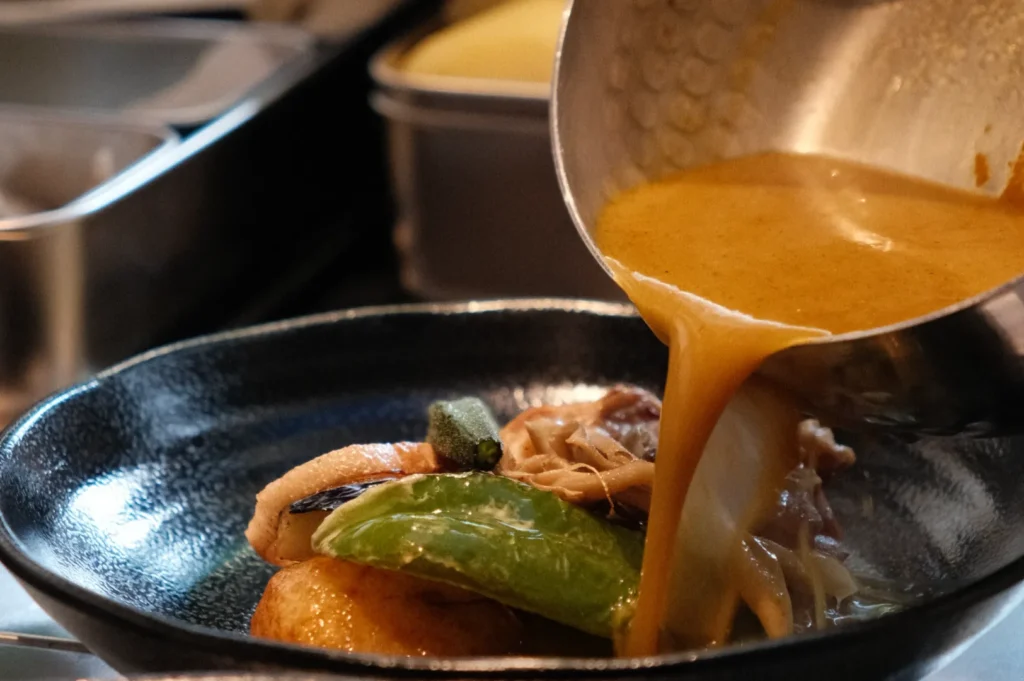
When the narrative naturally calls for traditional preparation and ingredient details, the brilliance of regional technique becomes undeniable. An authentic northern bowl is anchored by a light curry-flavoured soup base made with chicken broth, curry powder, and garam masala. Because the broth is entirely fluid and drinkable, it requires hours of unhurried simmering to extract natural umami, a stark contrast to the instant thickness of typical corporate curries.
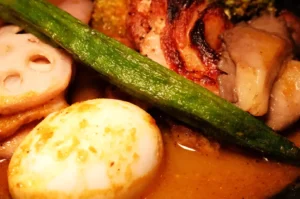
Resting within this fragrant, spiced soup is a vibrant mix of deep-fried vegetables, such as bell pepper, lotus root, aubergine, and potato, prepared using traditional Japanese cutting methods to maximize caramelisation while locking in their distinct structural snap. Alongside exceptionally tender chicken thighs and legs, these elements sit proudly above the liquid line, preserving their textures until the very moment they are enjoyed. This regional philosophy proves that comfort does not have to mean heavy density, offering a multi-layered, aromatic clarity that simply cannot be replicated by the standardized formulas of the capital.
Bringing the Authentic Warmth of Sapporo to Singapore
Breaking Tokyo’s culinary monopoly requires more than just serving regional recipes, it demands an absolute, uncompromising commitment to the cultural context and hospitality of that region. It means rejecting high-turnover corporate structures to foster a space where time slows down, allowing guests to experience the traditional dining rituals of the north in their purest form.
At Soup Curry by Ki-Setsu, we are immensely proud to stand as a dedicated sanctuary for this northern culinary heritage in Singapore. We believe that local diners are entirely ready to embrace the unhurried, restorative energy of Sapporo’s iconic soul food. By keeping our focus centered on the profound complexity of our slow-simmered broth and the vibrant preservation of seasonal textures, we provide a holistic escape from the rigid, metropolitan dining styles that have dominated the local landscape for far too long.
Our cosy establishment is open to welcome you from 11:30 AM to 10:00 PM, Monday to Sunday, ensuring a warm haven is always available whenever you seek a genuine culinary reset. To maintain a relaxed, accessible atmosphere for daytime diners, we do not accept lunch reservations, operating entirely on a walk-in basis.
Come nightfall, as the sun sets and our space transforms into a cosy izakaya-style atmosphere after 6 PM, the slower pace of our dining room becomes the perfect setting for a mindful, interactive evening. For guests looking to join us during the later hours to experience our unique, regional dinner service, we accept reservations exclusively for our 6:30 PM seating, with tables held for a maximum of 15 minutes to preserve the intimate flow of the evening.
We invite you to venture past the familiar, mass-market trends of the capital this week, pull up a chair at our table, and discover the incredible warmth that can only be found when you look toward regional Japan.