There is a particular moment, halfway through a bowl of spicy soup curry, when the body seems to shift gear. The forehead warms slightly, breathing deepens, and a faint flush spreads across the cheeks. For anyone who has experienced this, the question naturally follows: Is spicy soup curry actually doing something to the metabolism, or is that warmth simply a fleeting sensation with no real effect behind it?
This is the exact question we want to answer, because it deserves a proper, focused response rather than a generic detour into soup curry history. As a team that works daily with chillies, curry paste, and slow simmered stocks, we see this reaction in our guests often enough to take it seriously. Below, we look specifically at what spicy Sapporo soup curry does inside the body, which ingredients are responsible, and why the particular structure of a well made bowl, in the Sapporo soup curry tradition, matters for anyone hoping for a genuine metabolic lift.
What Actually Happens When You Eat Spicy Soup Curry
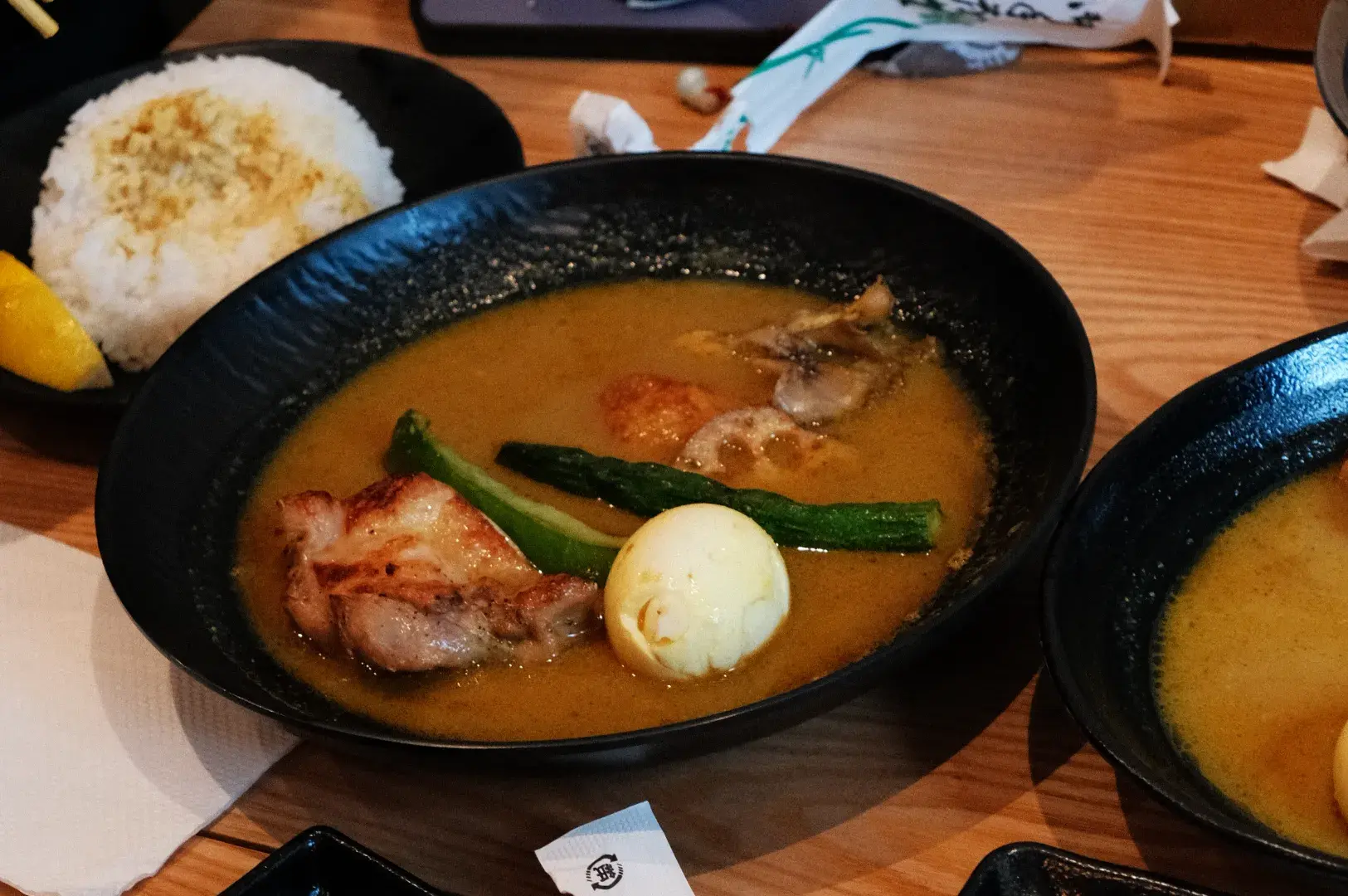
The metabolic response to spicy soup curry centres on a process called diet induced thermogenesis. Capsaicin, the active compound in chillies, briefly raises the body’s core temperature. In response, the body expends a small amount of extra energy trying to cool itself back down. This is a measurable, if modest, effect, and it is the primary reason a bowl of properly spiced soup curry leaves you feeling warmer and more energised than a plain, unspiced broth ever could.
Curry powder adds to this response. Most curry powder blends include cumin, coriander, turmeric, and black pepper, spices individually associated with mild thermogenic and digestive effects. On their own, none of these will meaningfully shift your metabolism. Combined in a proper spice blend, however, they work together in a way that many guests notice almost immediately after eating.
Why Curry Paste Is the Real Engine Behind the Effect
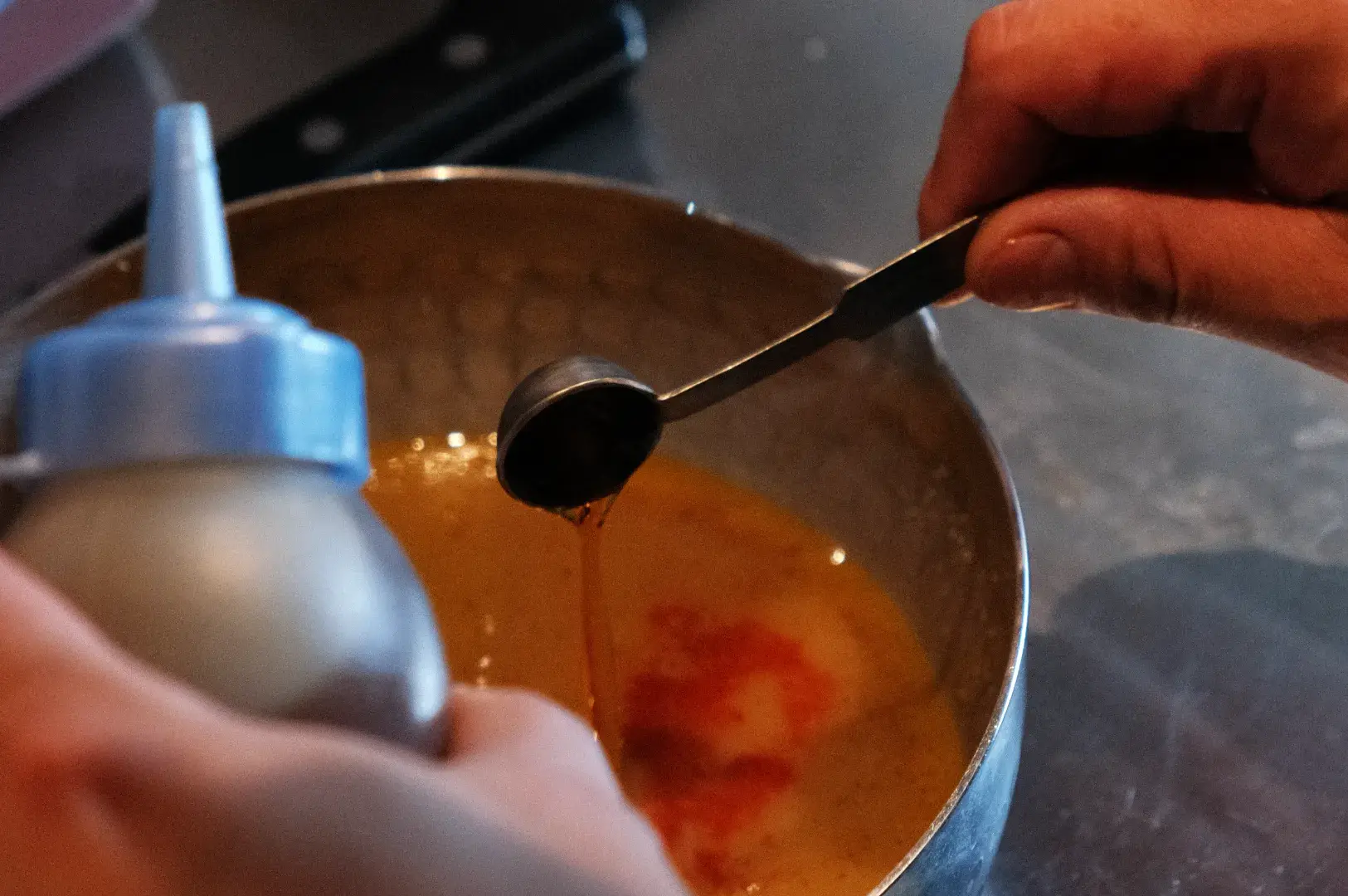
If spicy soup curry has a metabolic effect, curry paste is where that effect begins. A properly made curry paste is built slowly, with spices toasted first to release their oils, then combined with aromatics and chillies in careful proportion. Garam masala often anchors this blend, giving depth without tipping the balance into pure heat. These aromatic spices are not decorative. They are the working component behind the thermogenic response the title is asking about.
We take a gentle boil approach when developing our curry paste, allowing spices to release flavour and active compounds gradually rather than burning them off over high heat. Garlic and ginger typically go in early, both carrying a reputation for supporting digestion, which works in tandem with the thermogenic effect rather than separately from it. A rushed curry paste, by contrast, tends to taste flat and delivers far less of this warming quality, regardless of how much chilli is added.
Does Coconut Milk Help or Hinder the Metabolic Effect?
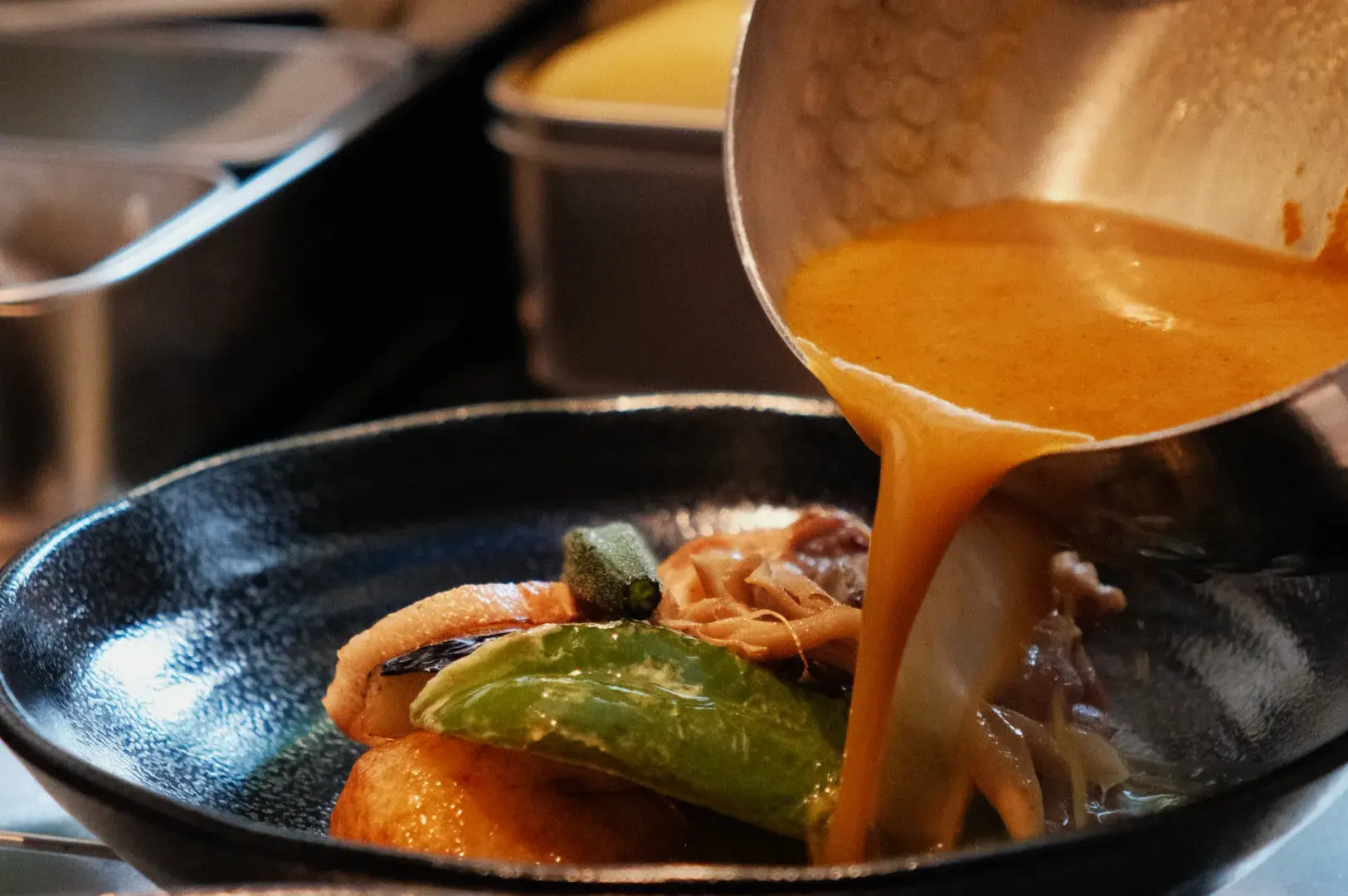
Coconut milk appears in many soup curry variations, including coconut curry soup, and it raises a fair question for anyone focused on metabolism specifically: Does the added fat dilute the effect of the spices? In practice, the opposite tends to happen.
Coconut milk contains fats that help the body absorb fat soluble compounds in turmeric and other spices more efficiently, meaning a coconut curry soup can actually support the availability of beneficial compounds rather than masking them. That said, guests mindful of saturated fat sometimes prefer a smaller measure, and a light curry flavoured soup still preserves most of the spice concentration responsible for the warming sensation.
Why Hokkaido Soup Curry Delivers a Stronger Effect Than Typical Japanese Curry
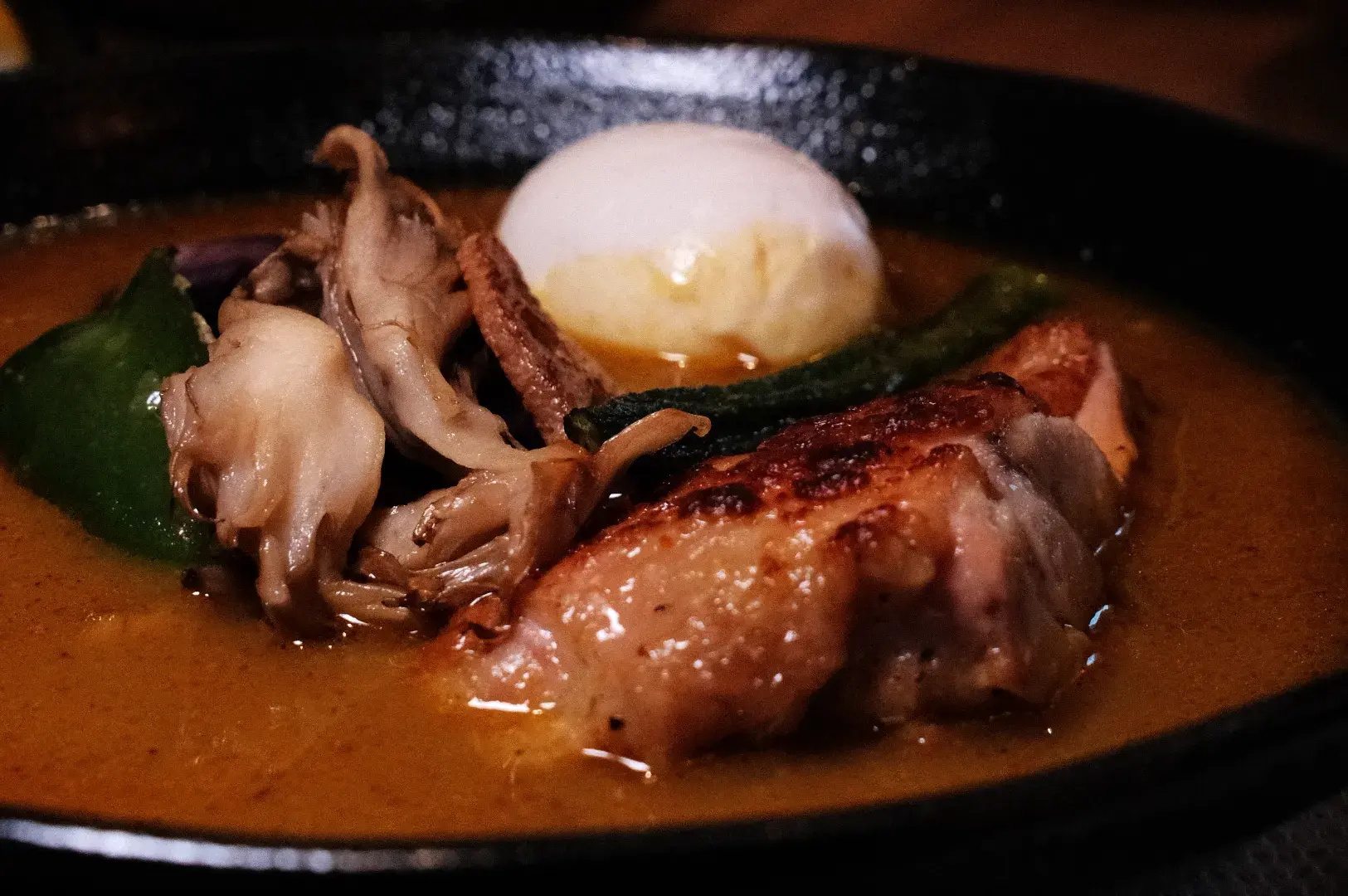
This is the point where the title’s angle becomes most specific, because not all curry formats trigger the same response. Traditional Japanese curry, the thick, roux based version most people know, relies on flour and fat for its body. It is comforting, but the starch content mutes spice concentration, meaning the thermogenic effect tends to be milder than the title’s question is really asking about.
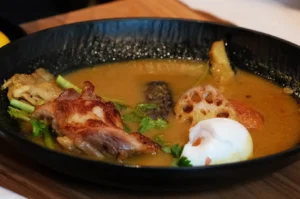
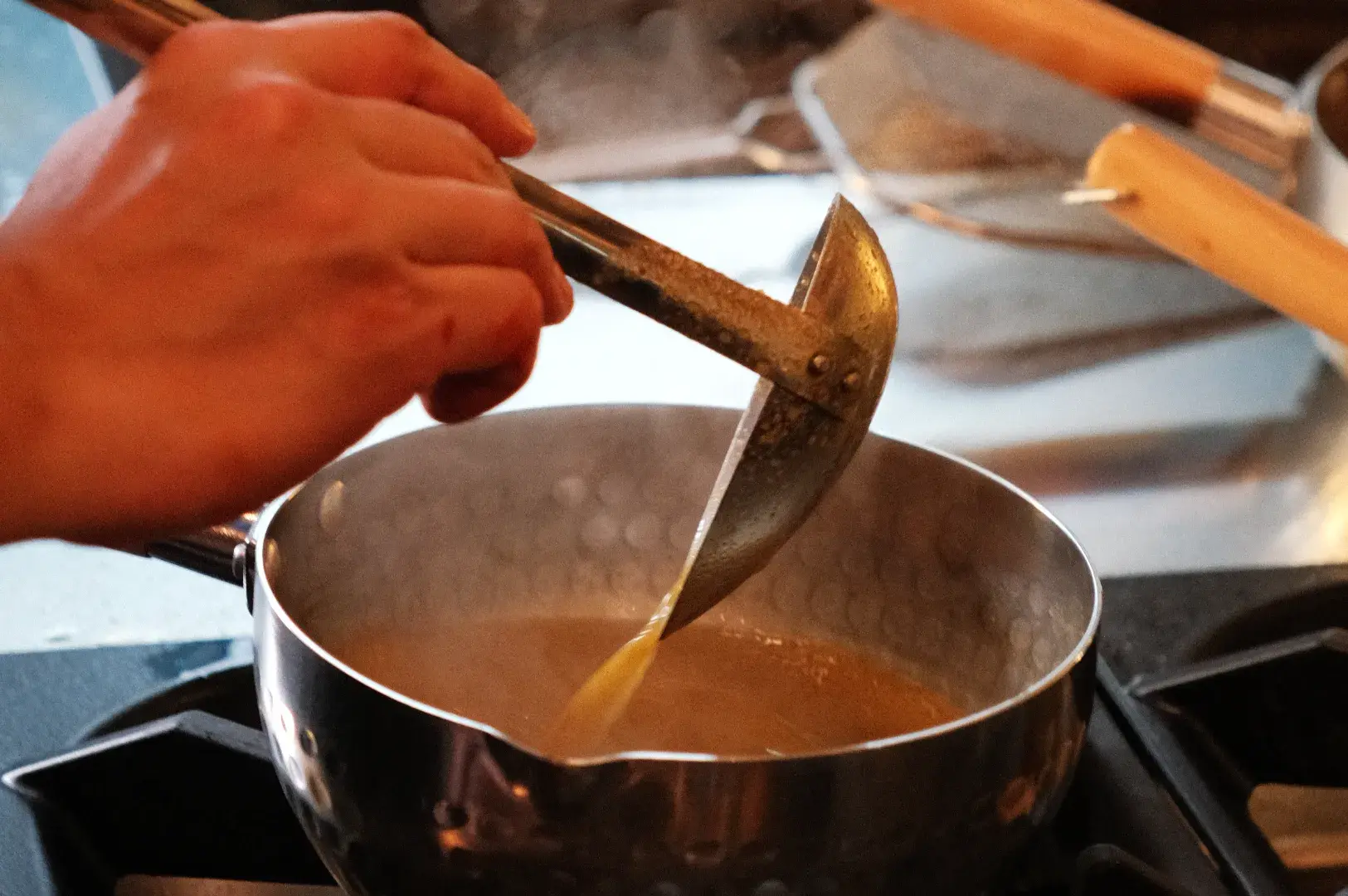
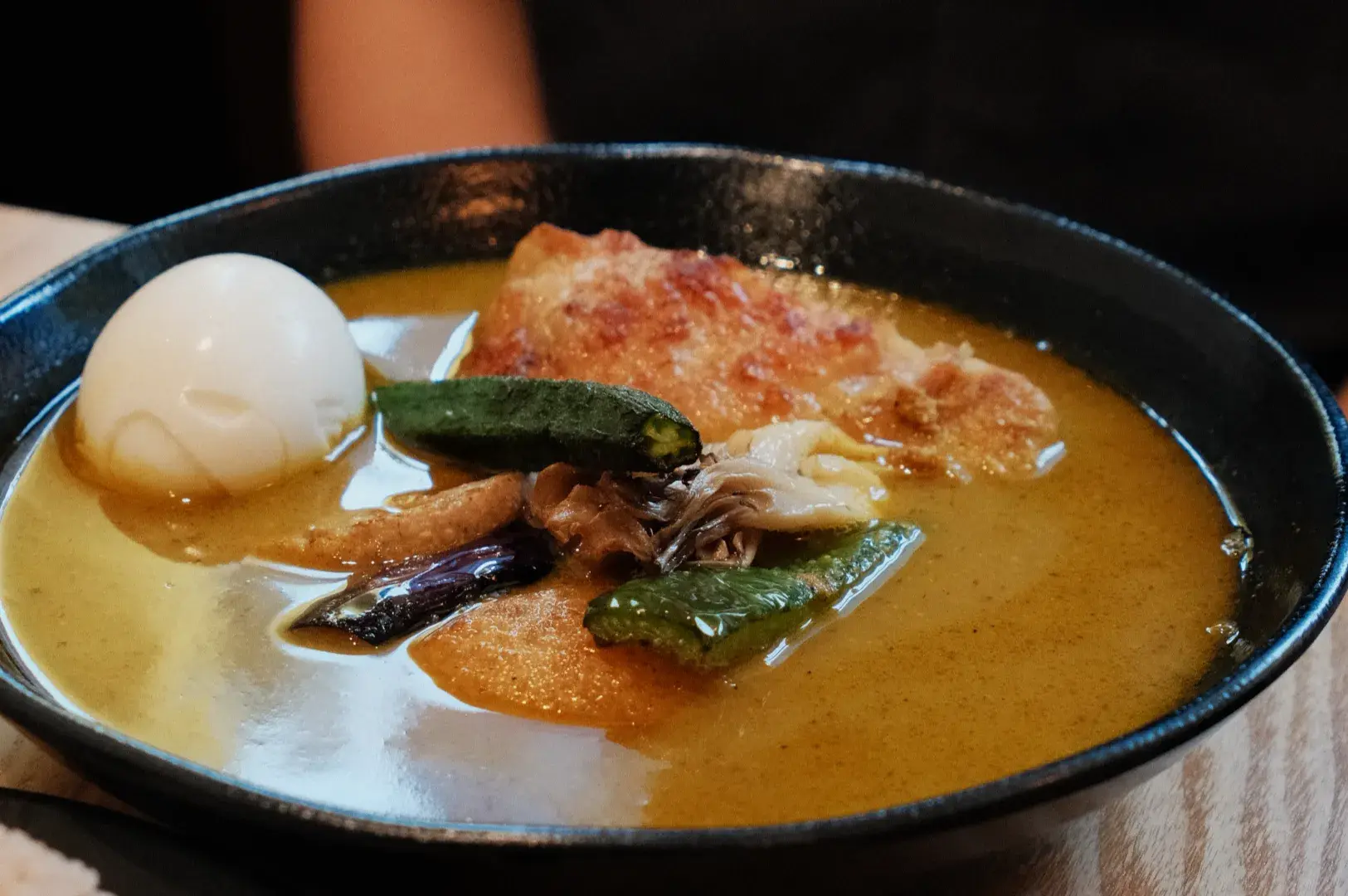
Hokkaido soup curry works differently. Originating in Sapporo, it keeps the broth thin and clear, which means the curry paste and its spices remain concentrated rather than diluted by a heavy roux. This is precisely why Hokkaido soup curry produces a more noticeable warming effect than typical Japanese curry. Without flour thickening the base, chilli compounds stay in more direct contact with the palate, which is where much of the thermogenic response actually begins.
The Practical Difference in a Bowl
Place a bowl of original soup curry beside a bowl of typical Japanese curry and the contrast is immediate. The soup curry version looks lighter but often carries a sharper, more concentrated aroma from its curry paste base. The traditional Japanese curry coats the palate in a way that softens spice intensity. For anyone specifically asking whether their curry is doing something metabolically, the thinner, Sapporo style format is the more relevant one to reach for.
Fresh Vegetables and Deep Fried Vegetables: Supporting the Effect, Not Just Filling the Bowl
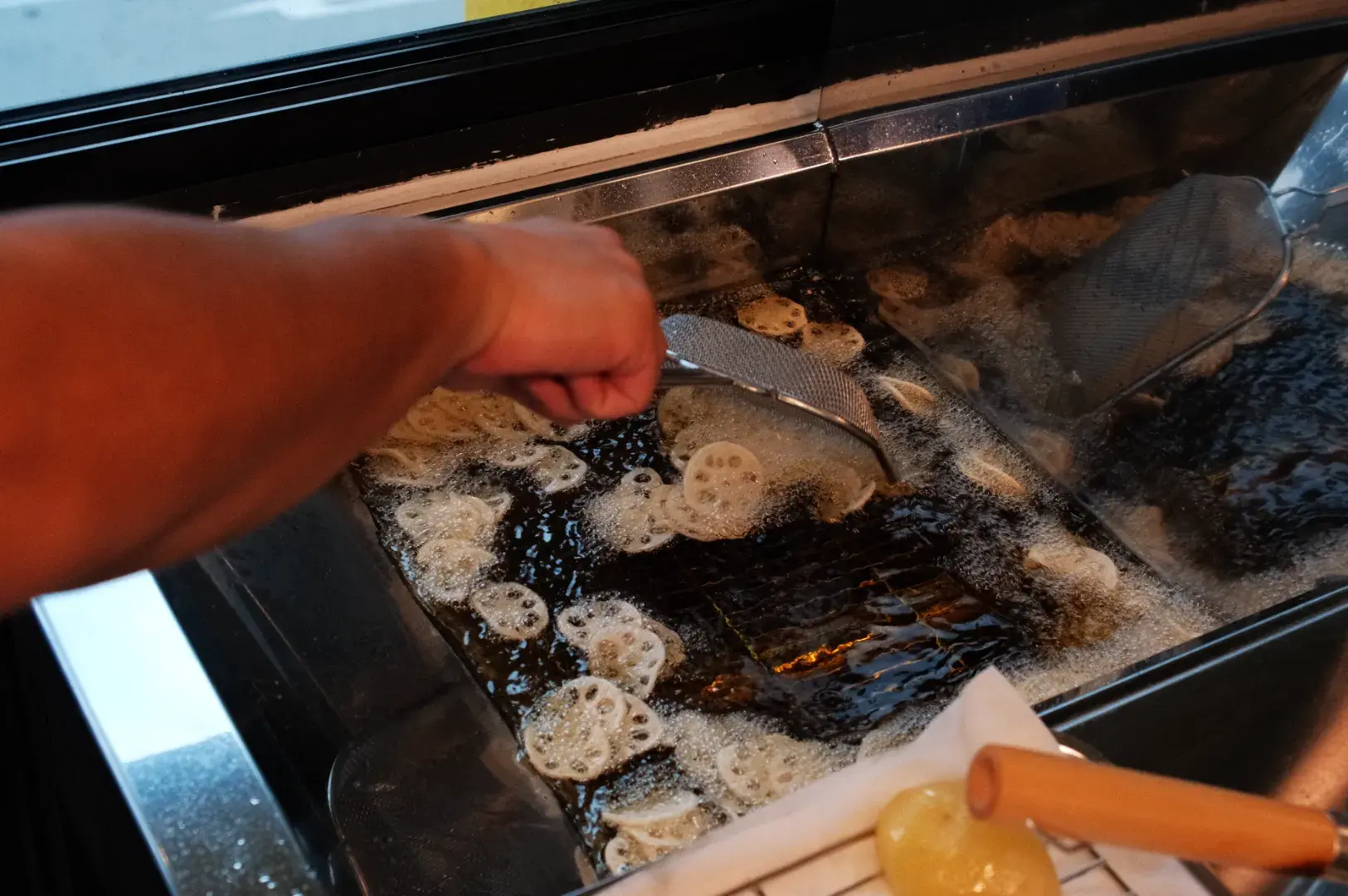
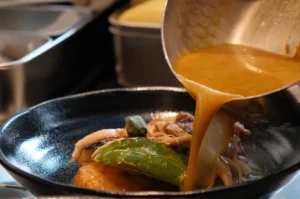
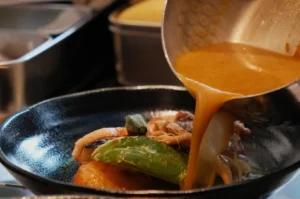
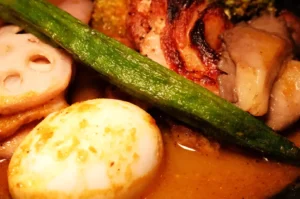
Spicy soup curry rarely arrives as spice and broth alone. Fresh vegetables, kabocha squash, lotus root, green beans, and bell peppers, absorb the surrounding spice while contributing fibre that supports digestion. This digestive support works alongside the thermogenic effect of the chillies, rather than being a separate benefit, since a body digesting efficiently tends to process that mild energy expenditure more smoothly.
Many soup curry bowls use fried vegetables rather than boiled ones, and this is a deliberate technique rather than a stylistic flourish. A quick deep fry at medium high heat, or a lighter pass of roasted vegetables for those who prefer less oil, allows chunky vegetables to hold their shape and develop a golden brown edge while keeping their internal moisture intact. Bell peppers in particular become sweeter through this method, without turning soft or waterlogged.
Comparing the Heat: Red Curry Paste and Thai Curry Soup
Since many people researching this question also consider other spiced soups, it is worth addressing red curry and Thai curry soup directly, rather than assuming Hokkaido soup curry sits in isolation. A red Thai curry paste typically uses dried red chillies, shrimp paste, and lemongrass, giving red curry a sharper, more immediate heat than the curry paste used in Japanese style soup curry.
Thai red curry soup often leans on coconut cream for body, similar in principle to coconut curry soup, but the chilli concentration in many red curry paste recipes runs higher, which may produce a stronger short term thermogenic spike. Fish sauce, lime juice, lime wedges on the side, and fresh herbs or cilantro typically finish these bowls, adding brightness that cuts through richness. The underlying mechanism is the same as in soup curry, capsaicin driving a mild rise in energy expenditure, but the intensity and speed of that effect will vary depending on how much chilli the paste actually contains and on personal taste.
Building the Effect at Home: What a Metabolism Minded Bowl Looks Like
For guests curious enough to experiment in their own kitchen, the same principles apply whether you are working with a Dutch oven or simply the same pot you use for weeknight meals. A basic approach starts by warming olive oil or coconut oil over medium heat in a large pot, then browning bone in chicken, or a single chicken leg for a smaller portion, until the skin turns golden. Heat to medium once the curry paste goes in, stirring occasionally so the spices bloom without catching on the base of the pot.
From there, chicken stock or veggie stock, a spoonful of tomato paste for body, a bay leaf, and a touch of brown sugar to round out the heat are added before the whole pot is left to simmer gently, with the cooking time doing most of the work in developing flavour.
Green onions and boiled eggs make a familiar finishing touch, spooned in just before serving, while a small bowl of steamed Japanese rice or rice noodles alongside soaks up the broth without competing with it.
Soy sauce, used sparingly, can deepen the savoury base further, and reduce heat toward the end of cooking helps the vegetables stay intact rather than turning to mush.
Leftovers, if there are any, store well in an airtight container in the refrigerator, where the spice blend tends to mellow and deepen overnight, a detail most home cooks only discover the second time they make the dish. It is a format flexible enough to sit alongside other favourites, whether that is a side of pad thai style vegetables or simply steamed rice, and one that rewards patience far more than speed.
So, How Much of a Boost Are We Really Talking About?
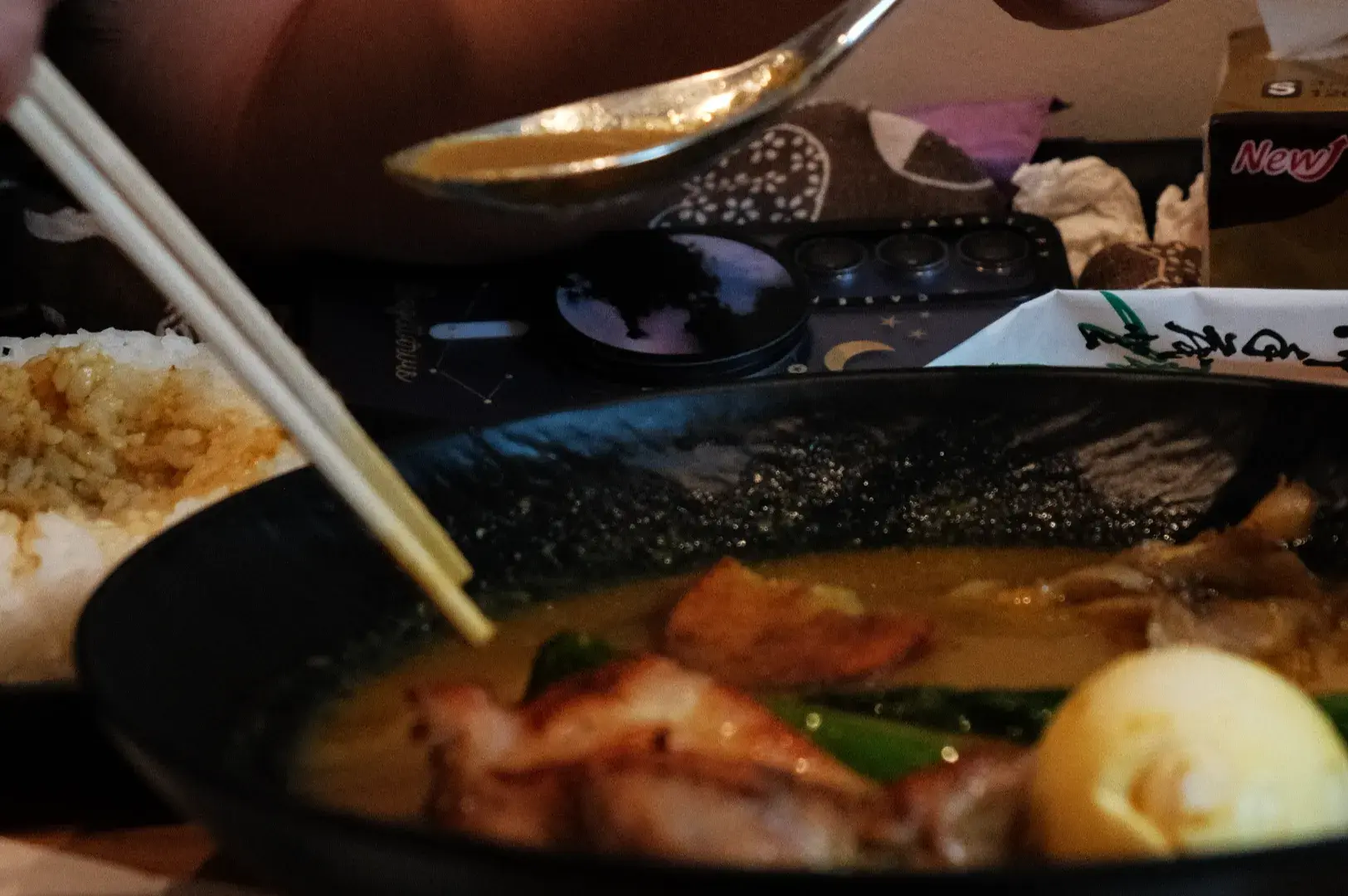
It is important to answer the title’s question honestly rather than overstating it. Spicy soup curry will not replace exercise, and it will not meaningfully alter body composition on its own. What it offers is a small, genuine physiological nudge, layered onto a dish that is already nourishing, warming, and satisfying in its own right. The effect is real, measurable in a modest way, and most noticeable when the spice base, whether garam masala driven curry paste or red curry paste, is properly built rather than added as an afterthought.
A Warming Conclusion
Can spicy soup curry help boost your metabolism? In a modest but genuine way, yes. The thermogenic lift comes from capsaicin working alongside a properly built curry paste, supported by fresh vegetables and, where used, coconut milk that helps the body absorb the spice compounds rather than dilute them. The format matters as much as the ingredients. A thin, spice forward bowl in the Sapporo soup curry tradition will generally deliver a clearer version of this effect than a thick, flour based curry, and remains something of a local specialty here in Singapore precisely because it does what it does so distinctly.
At our restaurant, Soup Curry by Ki-Setsu, this is exactly the kind of detail we think about daily, not as a marketing point but as part of building a bowl that is honest about what it contains and what it can genuinely offer. It is comfort food with a quiet, functional edge, which is perhaps the truest expression of soul food there is.