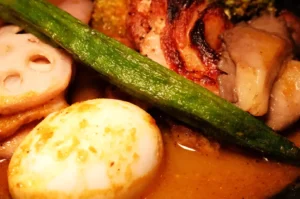
There is a small detail that separates a proper bowl of Hokkaido soup curry from an ordinary one, and it has nothing to do with the spice blend or the vegetables sitting in the broth. It is the rice. More specifically, it is how that rice is kept apart from the soup itself, and why that separation matters so much to the entire eating experience.
Many curry restaurants, especially those serving the thicker, roux based Japanese style curry that Singapore has grown used to, pour the sauce directly over the rice before it reaches the table. The two elements arrive already combined, softened together, and by the time a guest picks up their spoon the rice has begun absorbing moisture and losing its own character.
Soup curry works differently, and that difference is not a stylistic choice. It is a rule, and it is one that far too many establishments either misunderstand or simply skip.
Why Rice and Soup Are Never Meant to Meet on the Plate
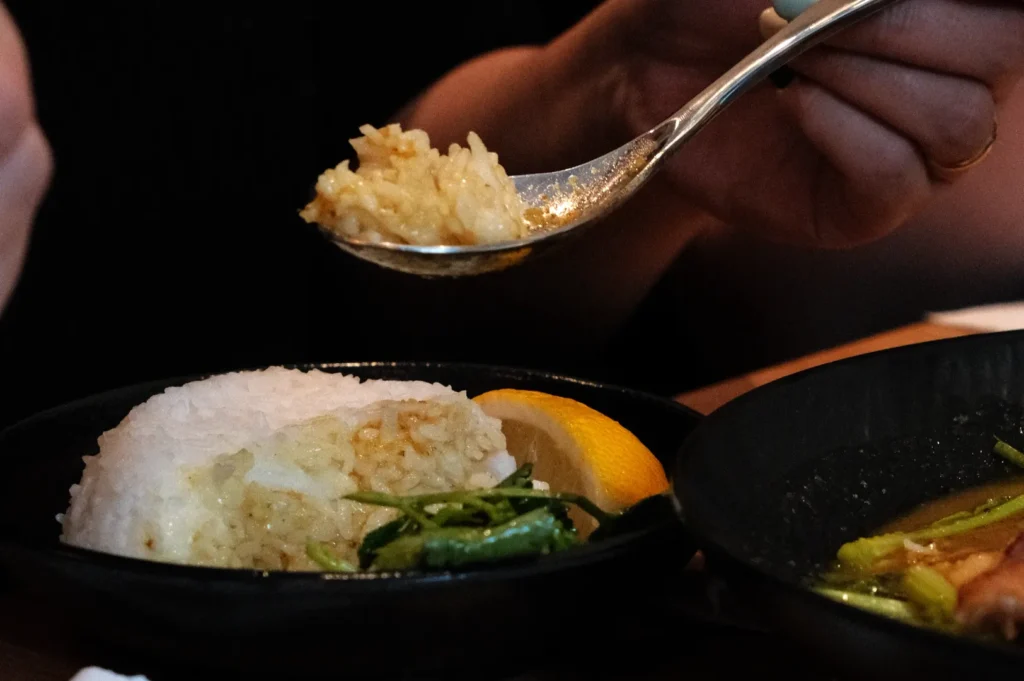
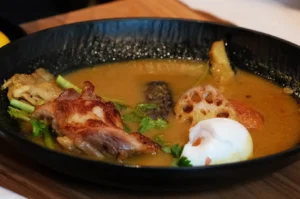
Soup curry is, as the name suggests, a soup. It is served in a bowl, often deep and wide, with the curry broth as the main event and the rice presented separately on its own plate or in its own small vessel. This is not merely presentation for the sake of aesthetics.
The soup base, built from chicken broth, chicken bones, curry powder, garam masala and tomato paste, is meant to stay thin, aromatic and hot enough to sip almost like a broth. If rice is submerged into that liquid too early, it begins to soak up the soup, swell, and lose the fluffy texture that steamed Japanese rice is known for.
At our restaurant, we plate the rice separately every single time, and we encourage guests to control exactly how much rice meets how much soup, spoonful by spoonful. This is the steamed rice rule that we believe defines proper soup curry, and it is a rule we take seriously because it protects the integrity of both components. The rice stays fluffy and slightly sweet on its own. The soup stays vibrant, spiced and full bodied. Neither compromises the other.
The Texture Problem When Rules Are Ignored
When restaurants skip this rule, whether out of convenience, unfamiliarity with authentic Hokkaido serving methods, or simply because it is faster to plate everything together, the result is a bowl that starts strong and deteriorates with every passing minute. The first bite might taste fine, but by the halfway point the rice has turned soggy, clumped together, and lost the individual grain separation that steamed Japanese rice should have. The soup, in turn, becomes thicker and starchier than it was meant to be, diluting the clarity of the spice blend.
This matters more than it might seem. Soup curry is meant to be a layered eating experience. Each spoonful should let a guest decide how much rice, how much broth, and how much of the tender chicken or deep fried vegetables they want in that particular bite. When everything is pre-combined, that control disappears entirely, and what is left is closer to a wet curry rice dish than the soul food that soup curry is supposed to represent.
How Steamed Rice Should Actually Be Handled
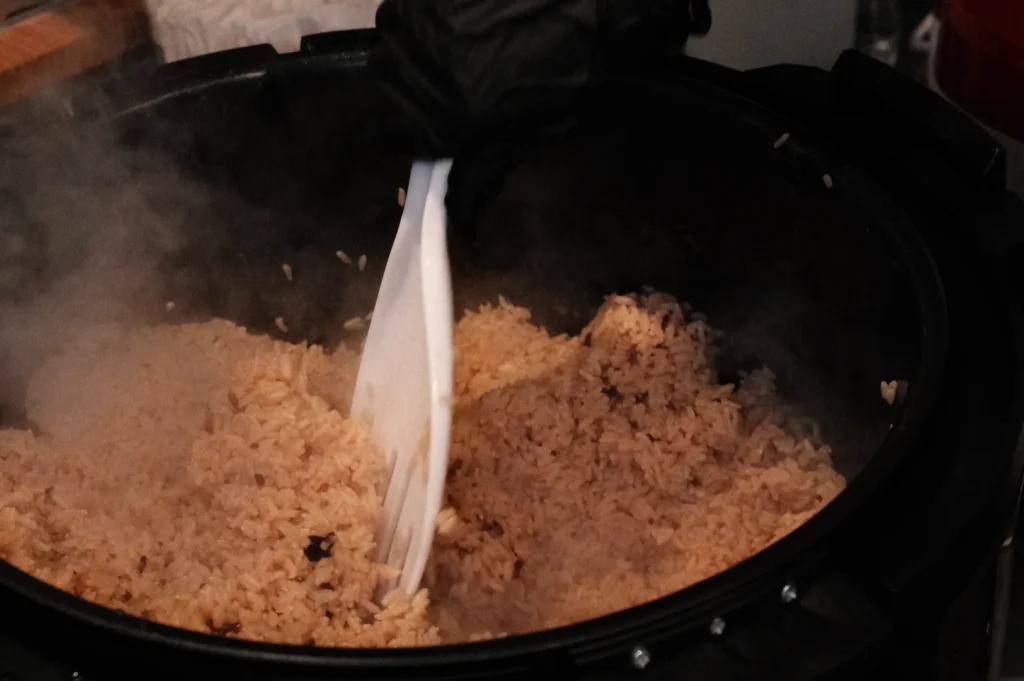
Getting the rice right is not just about keeping it separate from the soup. It starts earlier, with how the rice itself is cooked and handled before it ever reaches the table.
Choosing and Cooking the Rice
Short grain Japanese rice is the standard for soup curry, prized for its slightly sticky texture and natural sweetness. The grains need to be rinsed thoroughly before cooking to remove excess surface starch, which, if left on, can make the rice gummy rather than fluffy. Steaming, rather than boiling in excess water, is the traditional method, allowing each grain to cook evenly while retaining just enough moisture to stay tender without becoming mushy.
We steam our rice fresh, portioned out as orders come in rather than left sitting under a heat lamp for hours, because rice that has been held too long begins to dry out and harden, losing the very texture that makes it worth keeping separate from the soup in the first place.
The Serving Vessel Matters Too
Beyond cooking method, how the rice is presented plays a role most diners never consciously notice but absolutely register on a subconscious level. Rice served in its own small bowl or on a side plate, distinct from the soup bowl, signals to the guest that this is meant to be a hands on, self paced meal. It invites the ritual of spooning rice into the broth bit by bit, rather than receiving a pre-mixed dish where all decisions have already been made for them.
Many typical curry restaurants, particularly those unfamiliar with the Sapporo tradition this dish comes from, do not think to separate the vessels at all. The rice simply becomes a bed at the bottom of the same bowl the soup is served in, which technically satisfies the idea of “rice with curry” but misses the entire philosophy behind why soup curry is served the way it is in Hokkaido in the first place.
What This Reveals About a Restaurant’s Understanding of Soup Curry
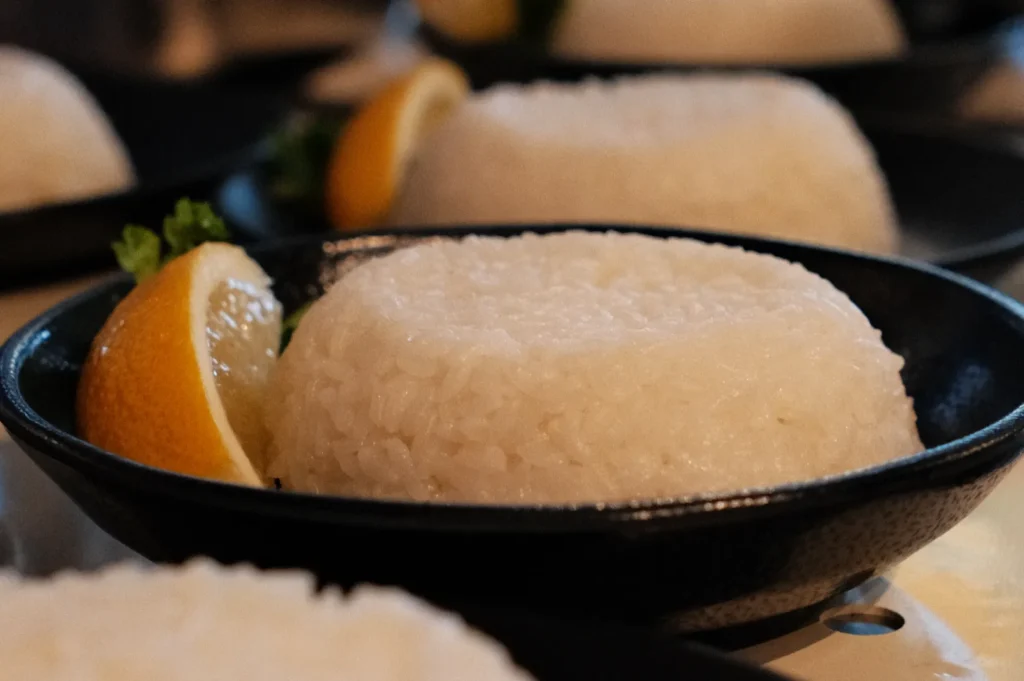
The steamed rice rule is a small thing to notice, but it tells a guest a great deal about whether a restaurant genuinely understands the dish they are serving or is simply adapting a generic curry format and calling it soup curry.
Restaurants that have taken the time to understand Sapporo’s soup curry tradition tend to get the small details right, not just the big ones. The way vegetables are deep fried using techniques that preserve their colour and bite, the way chicken is kept tender rather than stewed into the broth for hours, and yes, the way rice is kept separate until the very last moment before eating.
We believe this attention to detail is what makes the difference between a dish that merely resembles soup curry and one that honours it properly. At Soup Curry by Ki-Setsu, every bowl is built with this principle in mind, right down to how the rice reaches the table.
A Small Rule With a Big Impact on Flavour
Ignoring the steamed rice rule might seem like a minor shortcut, but its effects ripple through the entire meal. A guest who receives soggy, pre-mixed rice is tasting a compromised version of the dish, one where the broth has lost some of its clarity and the rice has lost all of its character. A guest who receives properly steamed rice served separately gets to experience the dish as it was intended, spoonful by spoonful, with each bite retaining the contrast between hot, spiced broth and clean, fluffy rice.
This is part of why we see soup curry as a dish that rewards patience and attention, both from the kitchen preparing it and the guest eating it. It is not a meal to be rushed or homogenised. The separation of rice and soup is, in many ways, a small act of respect toward the dish’s origins and toward the guest’s experience of it.
Bringing the Rule to the Table
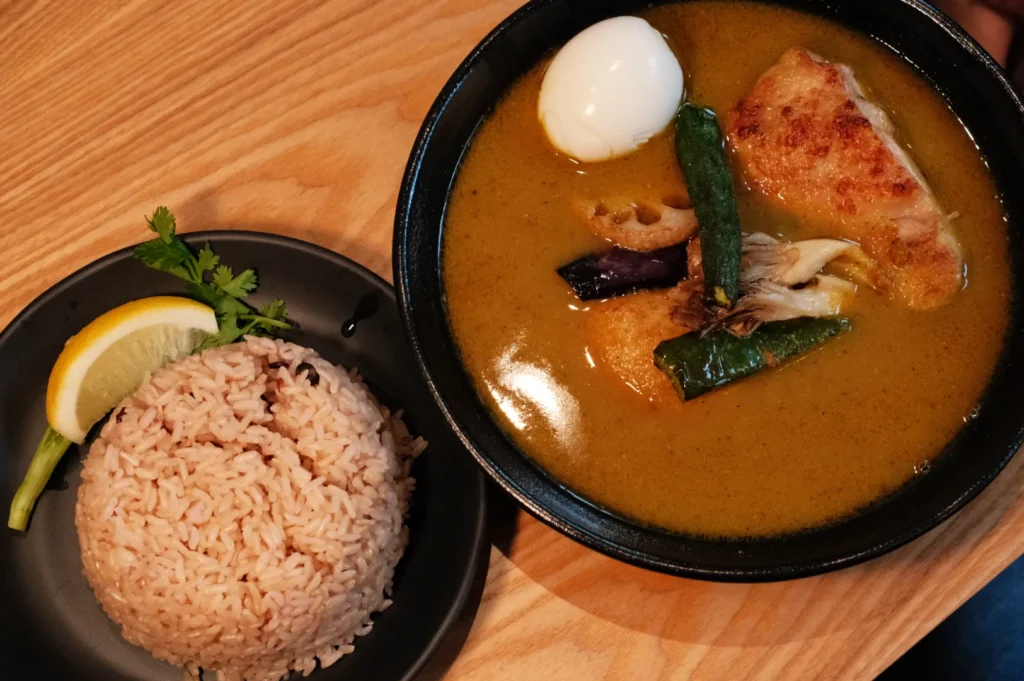
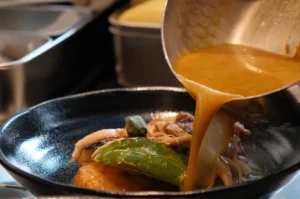
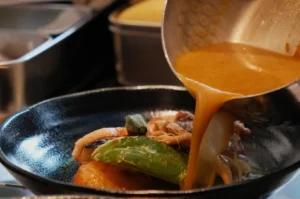
When guests visit us, whether for a relaxed lunch or as part of our evening izakaya atmosphere from 6pm onwards, they will notice the rice arriving on its own, steaming gently beside a bowl of aromatic curry soup filled with tender chicken and vibrant deep fried vegetables like bell pepper, lotus root, aubergine and potato.
This is not an accidental choice. It reflects a deliberate decision to honour how soup curry is meant to be enjoyed, one spoonful of rice folded into the broth at a time, rather than a shortcut that trades authenticity for convenience.
The steamed rice rule may not be something every curry restaurant thinks to follow, but for anyone who has tasted soup curry served the proper way, the difference is unmistakable. It is a small detail with an outsized impact, and it is one we will always keep separate, quite literally, on every plate we send out.