Walk into any hawker centre or food court in Singapore and you will find bowls of fragrant, spiced broth everywhere you look. Two of the most beloved are curry laksa and soup curry, and to the uninitiated, they can look remarkably similar at first glance.
Both are warm, generously spiced and deeply comforting. Yet the moment you taste them, you realise these two dishes come from entirely different culinary worlds. One is a Peranakan classic rooted in Malaysia and Singapore’s coastal heritage, the other a Japanese comfort dish born in the snowy city of Sapporo. At Soup Curry by Ki-Setsu, we are often asked how our style of curry differs from the curry laksa our guests grew up eating, so we thought it was time to lay out the differences clearly, bowl by bowl.
Curry Soup vs Curry Laksa: Where the Comparison Begins
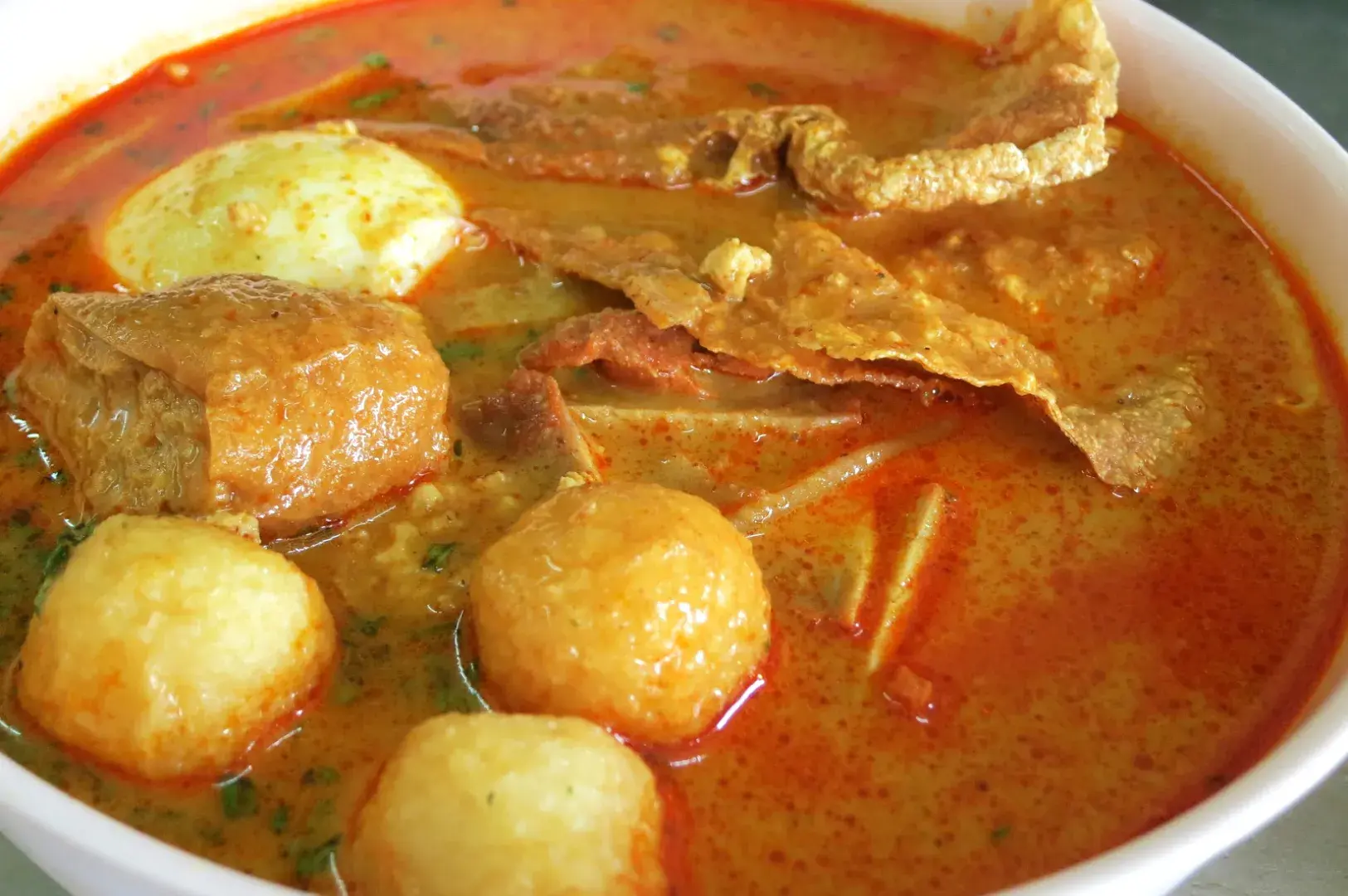
The most obvious difference between our soup curry and curry laksa lies in the broth itself. Curry laksa is built on a rich, coconut forward gravy that clings to noodles, while our approach is thinner and clearer, designed to be sipped as much as eaten. Where curry laksa leans heavily on coconut milk for body, our version is closer to a consommé, letting individual spices shine rather than blending into one heavy sauce.
This distinction matters because it changes how each dish is meant to be enjoyed. A bowl of laksa soup is meant to coat every strand of noodle in richness, whereas our bowl is meant to be savoured spoonful by spoonful, with rice served separately so the broth stays vibrant and the vegetables stay crisp. If you have grown up on curry laksa, the first sip of our Hokkaido style broth can be a genuine surprise, lighter, brighter and altogether different in character.
The Curry Broth Difference: Why Ours Has No Coconut Milk
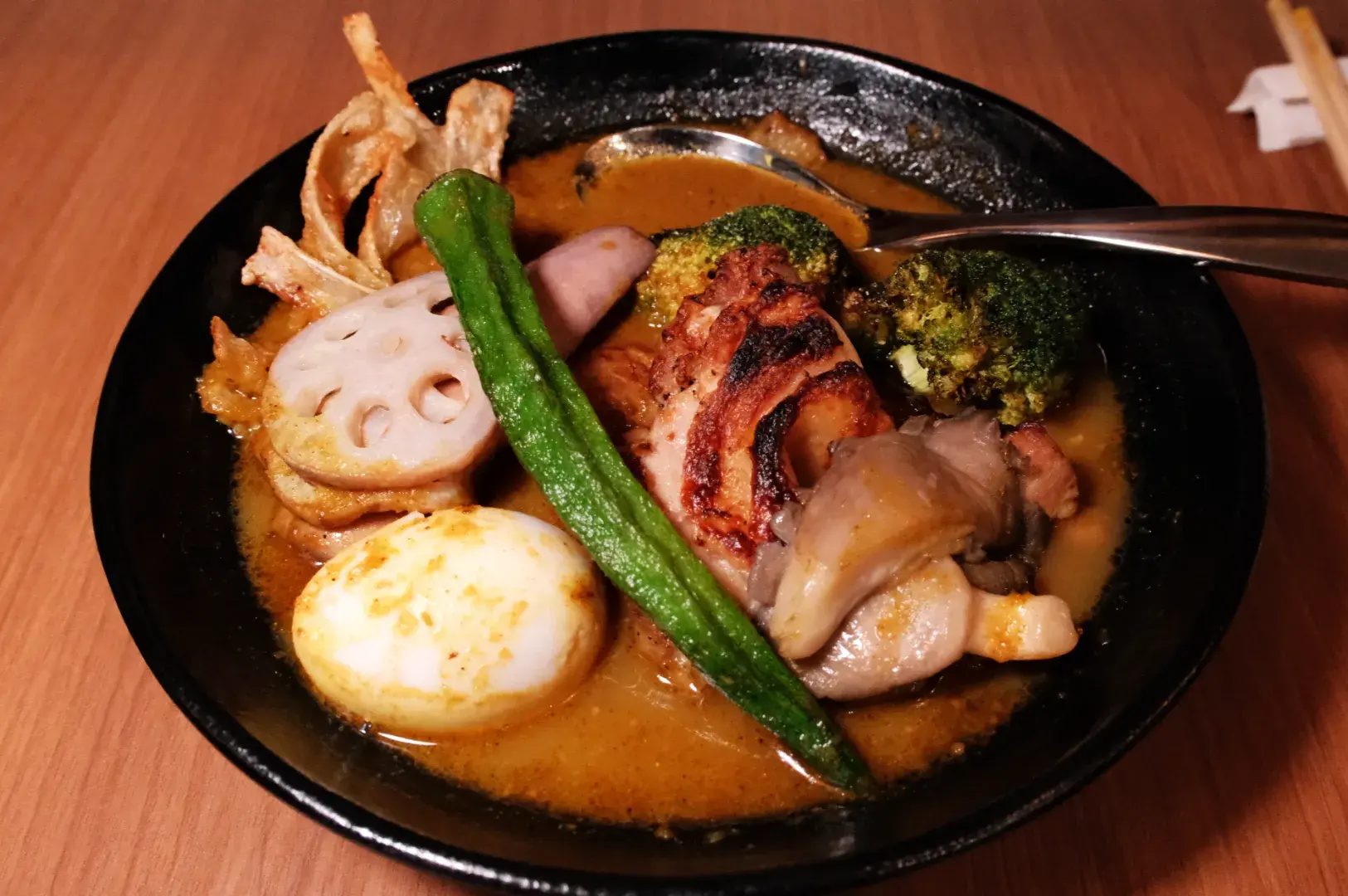
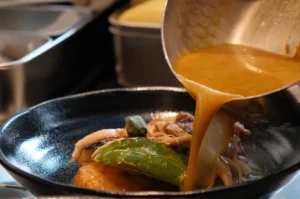
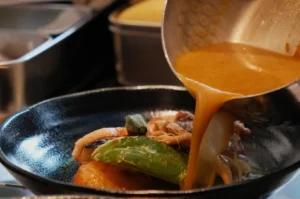
Our broth begins with a long simmered stock, often chicken based, into which we introduce a carefully balanced blend of spices rather than a premade laksa paste. There is no coconut milk in our traditional base at all, which is precisely why our bowl tastes so different from curry laksa broth on the very first spoonful. Instead of richness from coconut milk, depth comes from slow reduction and layered aromatics, giving our curry a clean, warming quality that Hokkaido is known for.
Curry laksa broth, by contrast, almost always relies on coconut milk for its signature creaminess. Laksa paste, typically a blend of dried chillies, shrimp paste, galangal and lemongrass, is fried until fragrant before coconut milk is stirred in to create that unmistakably rich, coconut based gravy. Some cooks add a touch of red curry paste alongside their laksa paste for extra depth, while others rely purely on a traditional homemade laksa paste passed down through generations. Either way, the goal is a thick, luscious result that clings generously to every strand of noodle, quite unlike the clear curry soup we serve.
Rice Noodles, Noodle Soup and the Laksa Soup Experience
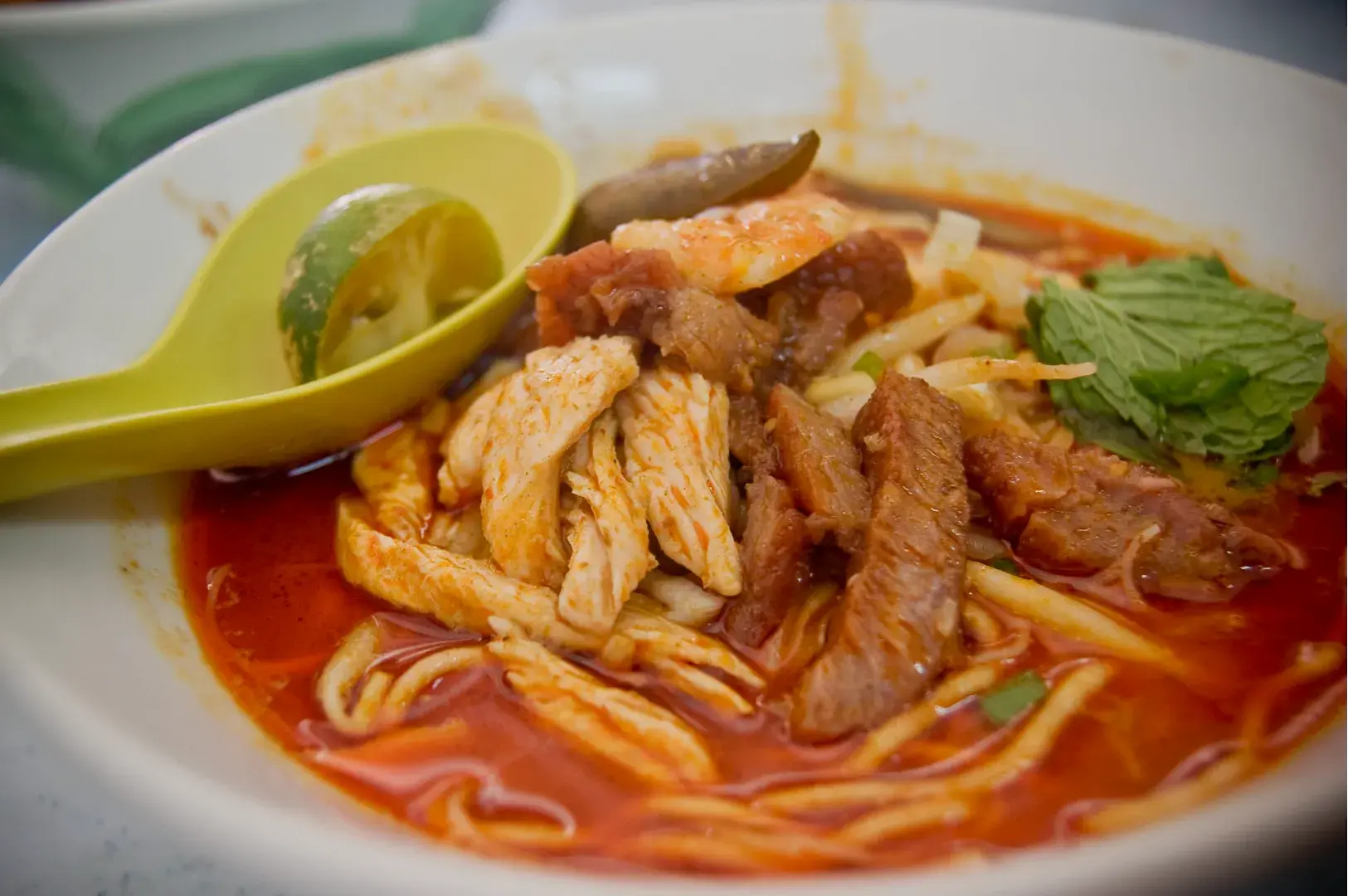
Perhaps the clearest visual giveaway between the two dishes is the noodles. Curry laksa is almost always served as a noodle soup, with rice noodles forming the base, sometimes paired with yellow noodles for extra bite. The rice noodles used in laksa soup are typically thick, round bee hoon that soak up the coconut gravy beautifully. Many home cooks will cook rice noodles separately before ladling the hot curry laksa over the top, ensuring the fresh rice noodles stay tender rather than overcooked and mushy.
Our restaurant, on the other hand, does not serve a noodle soup at all. There are no rice noodles in a traditional bowl of our Hokkaido style curry. Instead, a mound of fluffy Japanese rice sits beside the broth, meant to be dipped spoonful by spoonful rather than submerged. This is one of the simplest ways to tell the two apart at a glance: if there are rice noodles floating in the bowl, you are almost certainly looking at some form of curry laksa or another noodle soup, not our version of soup curry.
Red Curry, Laksa Paste and Other Spice Foundations
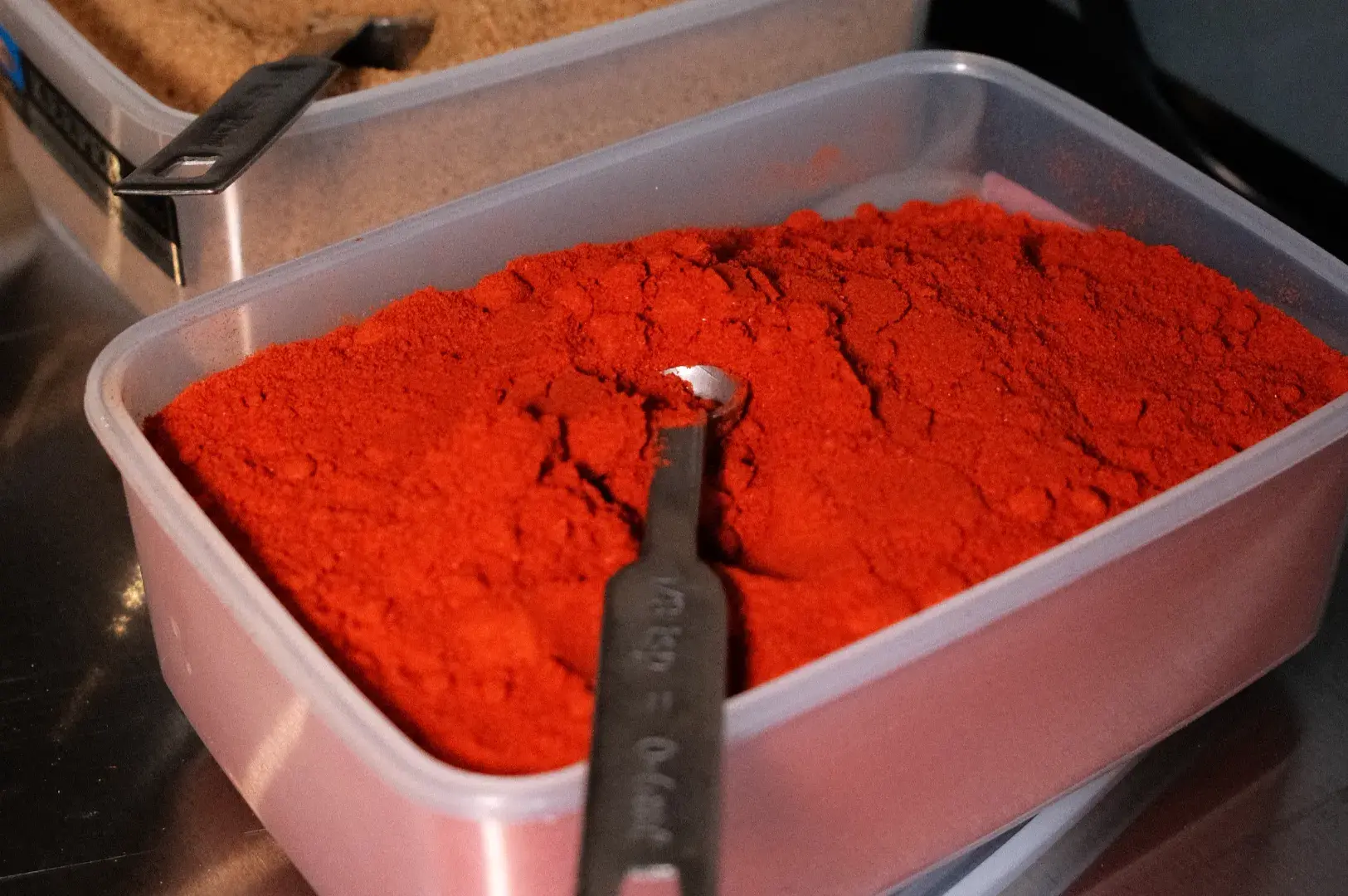
The spice profiles of these two dishes could not be more different, even though both are technically curry based. Curry laksa relies heavily on laksa paste, a fragrant blend that typically includes shrimp paste, dried chillies, candlenuts and turmeric. This gives curry laksa its distinctive savoury, slightly funky depth, layered with the richness of coconut milk. Some variations lean closer to a red curry style paste, particularly in versions influenced by Thai cooking, though most Singapore style laksa paste remains firmly rooted in Peranakan tradition rather than red curry paste from further afield.
Our approach, by comparison, draws its warmth from a Japanese method of spice blending, using ingredients like cumin, coriander, garlic, ginger and a house blend of ground spices rather than belacan or dried chilli pastes. There is a gentle heat that builds slowly rather than hitting immediately, and no fermented seafood notes at all. Where curry laksa is built for boldness from the first spoonful, our broth is built for a slow, layered reveal, closer in spirit to a Japanese soup curry than anything from a red curry paste tradition.
Curry Mee, Asam Laksa and Other Regional Laksa Styles
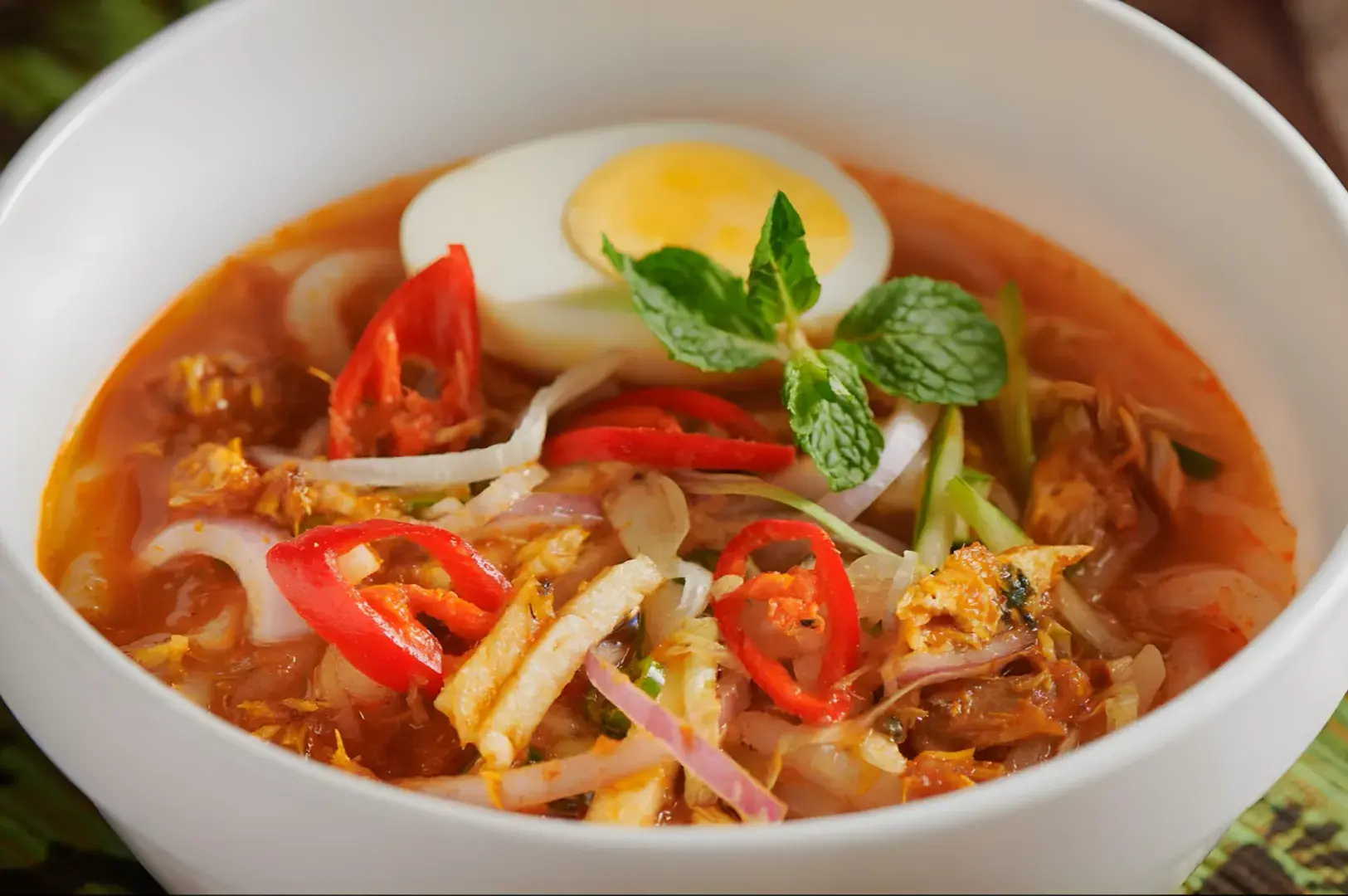
It is worth noting that curry laksa itself is not a single fixed dish.
Penang laksa, more commonly known as asam laksa, actually swaps out coconut milk entirely in favour of a tamarind based fish broth, making it tangier and less creamy than the curry laksa most Singaporeans know.
Sarawak laksa takes yet another approach, using a distinctive sambal belacan and a lighter, more herbal laksa soup that differs again from the thick, coconut heavy style found in Peninsular Malaysia and Singapore.
Curry mee, a close cousin often confused with curry laksa, typically uses a similar coconut and spice base but is served with a wider mix of ingredients such as tofu puffs, cuttlefish and pork blood cubes, depending on the stall. While curry mee shares many ingredients with curry laksa, including laksa paste and coconut milk, curry mee tends to be slightly less intensely flavoured.
None of these regional styles, whether Penang laksa, Sarawak laksa or curry mee, bear much resemblance to the clear, vegetable forward broth we serve, which owes nothing to Peranakan cooking traditions and everything to Hokkaido’s approach to hearty, warming food, quite far removed from laksa lemak and its many coconut rich cousins.
A Simple Laksa Recipe You Can Try At Home
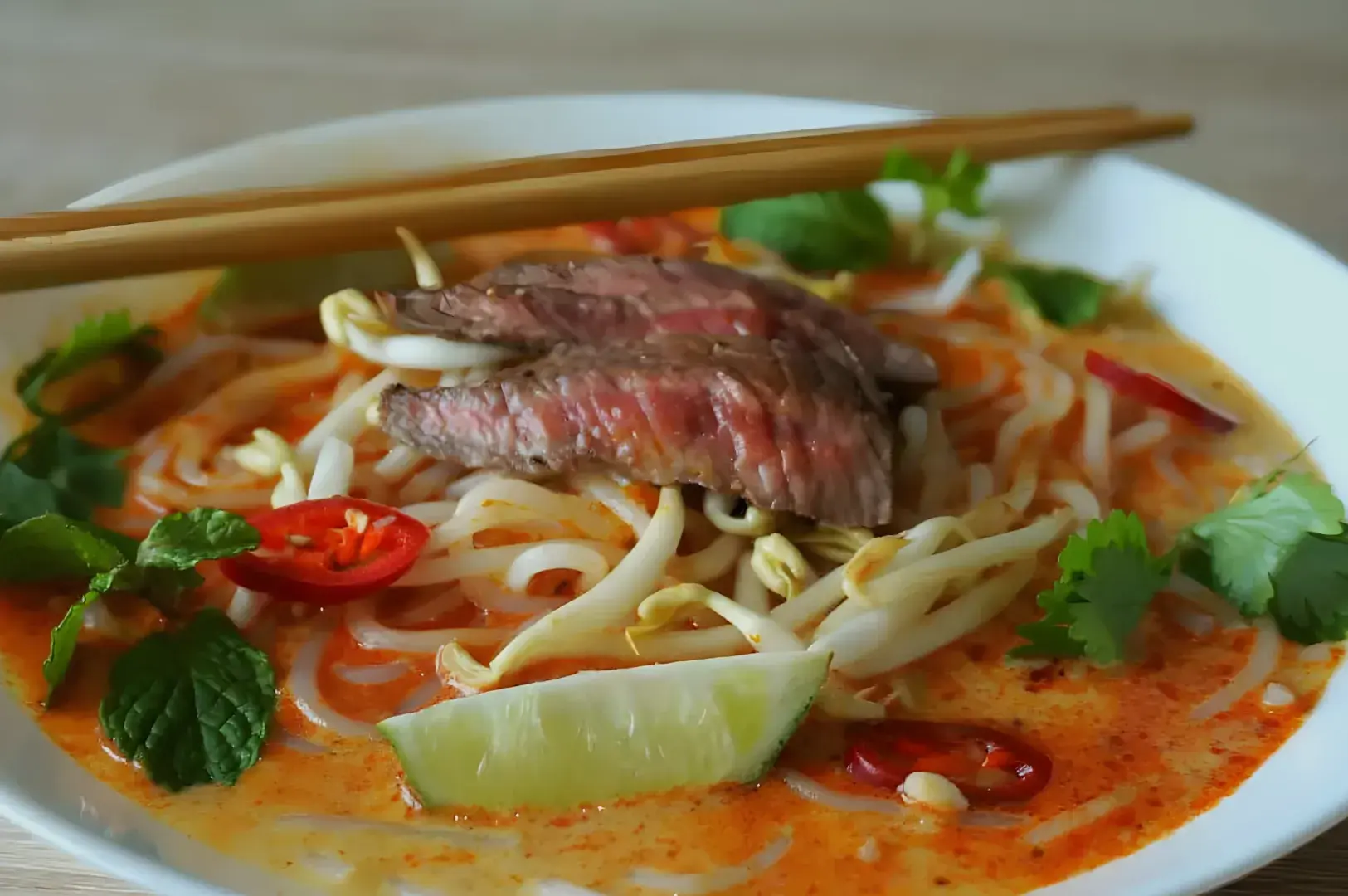
Nothing teaches the difference quite like trying a laksa recipe yourself. Most home versions begin with a spice paste, blitzed in a food processor with dried chillies, shallots, garlic and a spoonful of sambal paste or sambal oelek. Some cooks stir in tomato paste for colour, a trick borrowed from Laksa Johor, the tomato based version popular around Kuala Lumpur.
Once the paste, sometimes spelled laska paste in older recipes, is fried until golden brown, a vegetable stock, chicken stock or light chicken broth is poured in, or a veggie broth for a vegetarian version. Traditional cooks add fresh fish or ikan kembung and a few curry leaves. Bring it to a rolling boil, add chicken and simmer gently rather than blasting it with hot water.
Meanwhile, cooked noodles or rice vermicelli are prepared separately in boiling water. Common toppings include fried shallots, long beans, lime wedges and bean sprouts, with extra sambal for a spicy version, though the richness of coconut milk does mean these dishes carry more saturated fat than our clear broth.
It is an easy recipe once the paste is made, and many families keep a double batch frozen, following the dark instructions of a well loved notebook passed down through generations. It remains a famous dish across the region for very good reason.
Finishing Touches That Set Them Apart
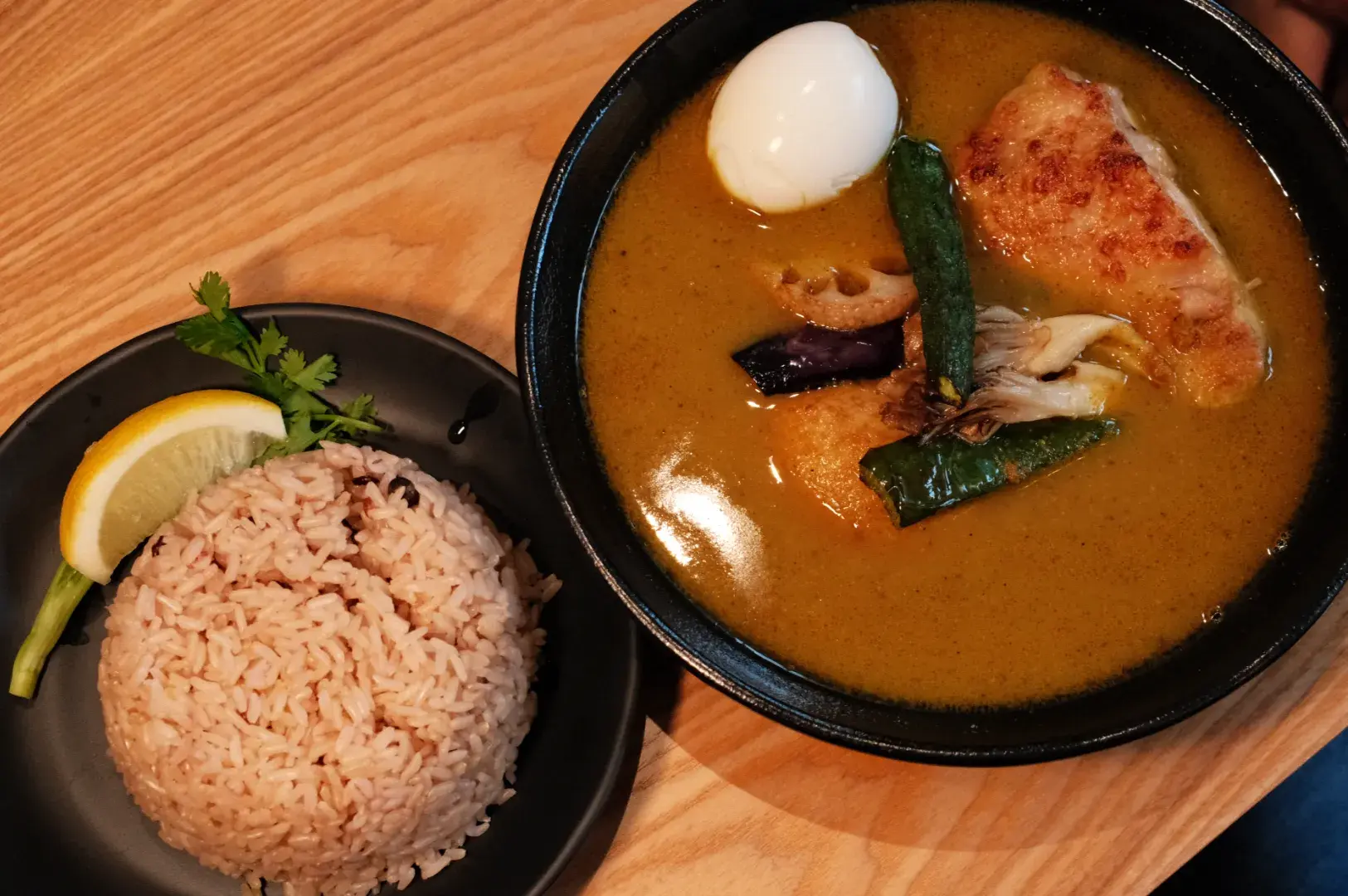
Finishing touches also set these dishes apart. Curry laksa is typically topped with bean sprouts, a wedge of lime, fried tofu puffs and sometimes a spoonful of sambal for extra heat. A squeeze of lime juice at the table brightens the richness of the coconut milk, cutting through the fattiness of the gravy. Bean sprouts add crunch and freshness against the soft rice noodles, while fish sauce is sometimes used to season the base during cooking for an added layer of umami.
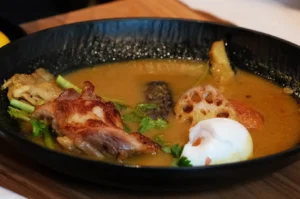
Our bowl, meanwhile, is finished quite differently. Rather than bean sprouts or lime juice, we top each serving with vibrant deep fried vegetables, bell pepper, lotus root, aubergine and potato, cut using traditional Japanese methods to keep their shape and colour. Tender chicken, slow simmered in the broth itself, rounds out the dish. There is no fish sauce, no shrimp paste and no citrus involved anywhere in the process, a reflection of how far removed our curry is from the Southeast Asian flavour families that define coconut based laksa cooking.
How to Tell Them Apart at First Taste
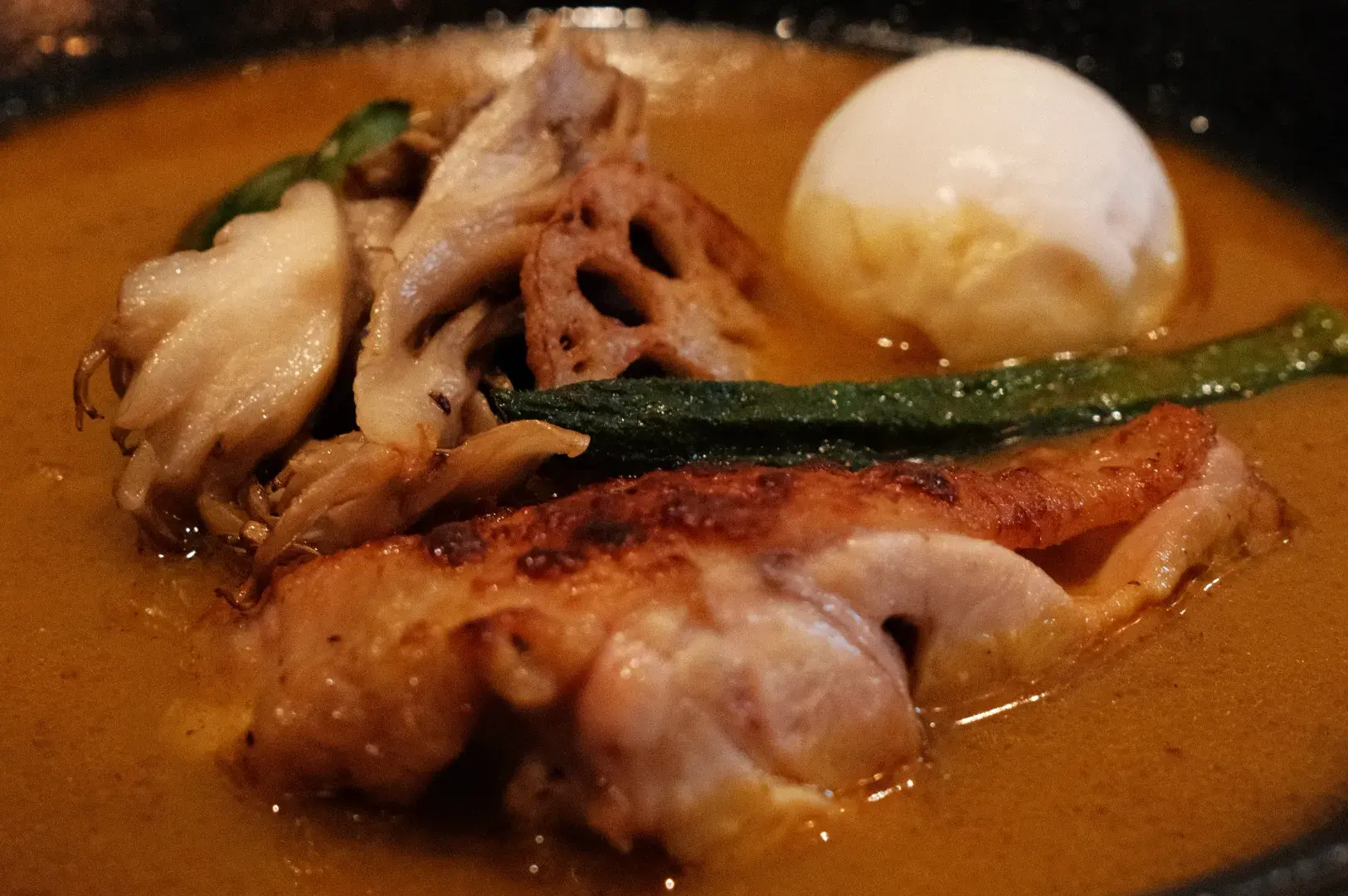
If you only remember one thing, remember this: curry laksa is a noodle soup built on coconut milk and laksa paste, rich, creamy and often quite spicy, served with rice noodles and finished with bean sprouts and a squeeze of lime juice. Our version is a clear, spice forward bowl served with rice on the side and a colourful array of vegetables and meat, entirely free of coconut milk, belacan or fish sauce.
Guests visiting us for the first time often arrive expecting something closer to curry laksa or laksa soup, given the shared word curry, and leave pleasantly surprised by how different an authentic Hokkaido bowl actually tastes. One guest recently wrote to say thank you so much for introducing them to a curry so unlike anything they had tried before, adding that they absolutely loved how gentle and comforting it felt compared to the laksa they grew up with. At Soup Curry by Ki-Setsu, we see this moment of discovery often, and it is part of why we love introducing Singapore to this side of Japanese comfort food.
Whether you are a lifelong fan of curry laksa or simply curious about what makes our approach unique, understanding these differences means you will always know exactly what to expect the next time a bowl of fragrant, spiced broth lands in front of you.