Two bowls, two kitchens, and one stubborn belief: that a pot of hot soup can say more than almost any other dish. On one side sits a peppery pork rib broth that Singapore knows by heart. On the other sits a fragrant Hokkaido curry soup, a newer arrival with its own devoted following. The debate of soup curry vs bak kut teh is usually set up as a rivalry, but when we sit down with both bowls, what we notice is not competition. It is kinship.
Both dishes begin with a simple promise: take good ingredients, give them time in hot liquid, and let the soup do the talking. A bowl of Sapporo soup curry follows that promise just as faithfully as a pot of pork ribs does. Both are served with rice. Both reward the person who lingers over the bowl rather than rushing through it. In this article, we want to put the two side by side and look at what they share, where they differ, and why a person who loves one will almost certainly find something to love in the other.
Why Soup Curry vs Bak Kut Teh Is Not a Fight Worth Having
These dishes were born from similar needs. Bak Kut Teh is often traced to labourers and dock workers who wanted a restorative, deeply nourishing meal to fuel long days. Soup Curry, which grew up in Sapporo, answers a different climate but the same hunger: a Hokkaido winter demands food that warms you from the inside out.
Neither dish is delicate, and neither is trying to be. They are soul food in the truest sense, meant to comfort and bring people together around a shared table. When a guest tells us that our soup curry reminds them of the pork rib soup they grew up with, we take it as the highest compliment, because it means the bowl has made them feel at home.
What Bak Kut Teh Teaches Us About Soup
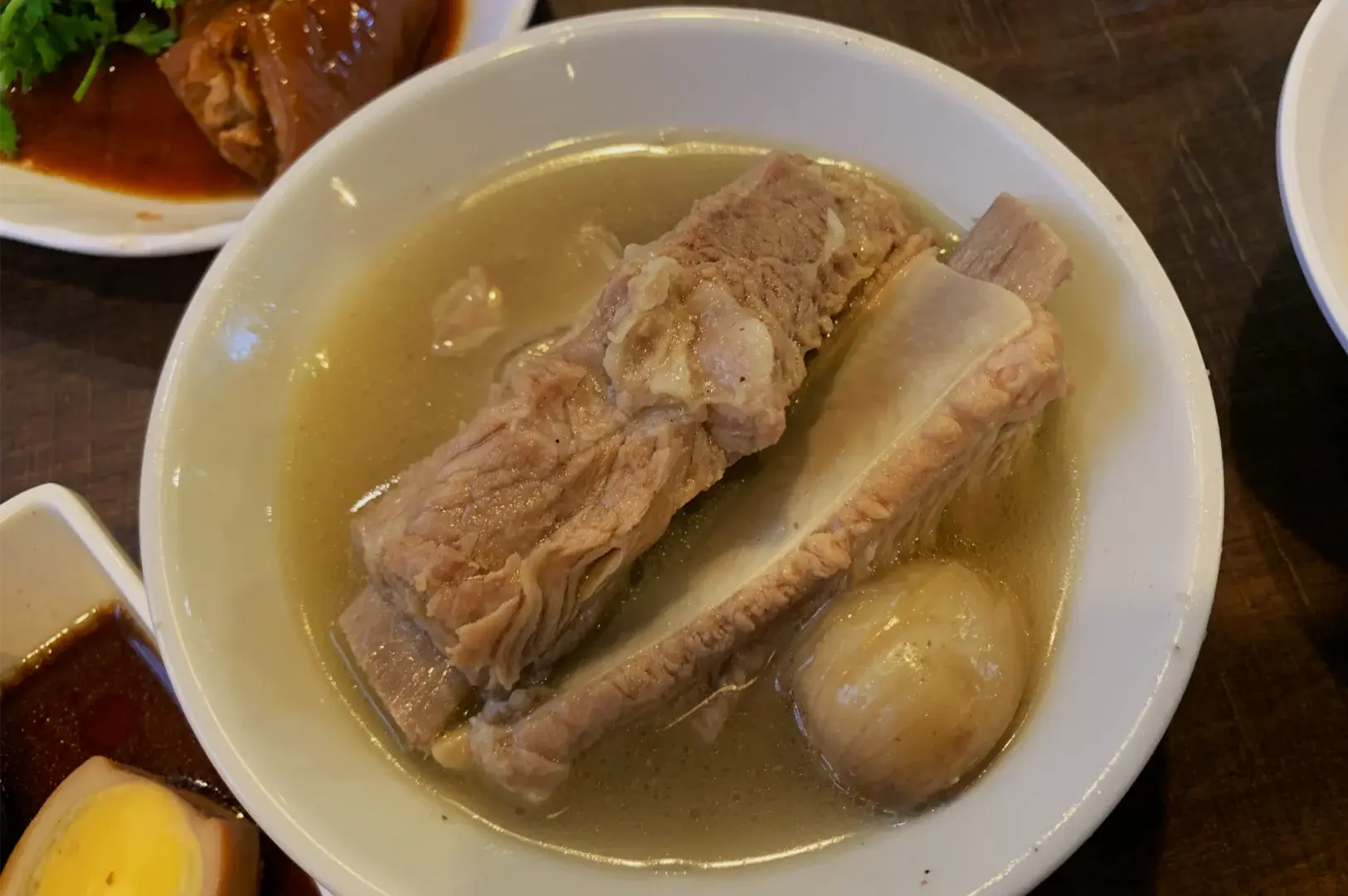
Anyone who cooks soup seriously learns respect from Bak Kut Teh. There is no heavy sauce to mask a weak stock and no garnish to distract from poor technique. The broth has to be clear, balanced and satisfying on its own.
Singaporean Bak Kut Teh and the Power of Pepper
Singaporean Bak Kut Teh is typically associated with a peppery, garlic-forward broth, lighter in colour than the darker, herb-heavy versions found elsewhere in the region. The heat comes from white pepper, and it builds gently rather than hitting all at once. The soup is thin enough to sip but rich enough to coat the lips, which is the hallmark of long, patient simmering.
What we admire most is the restraint. A good bowl does not shout. It hums. That is a lesson we carry into our own kitchen, where the goal is a curry soup that feels aromatic and layered rather than overwhelming.
The Pork Ribs and the Patience
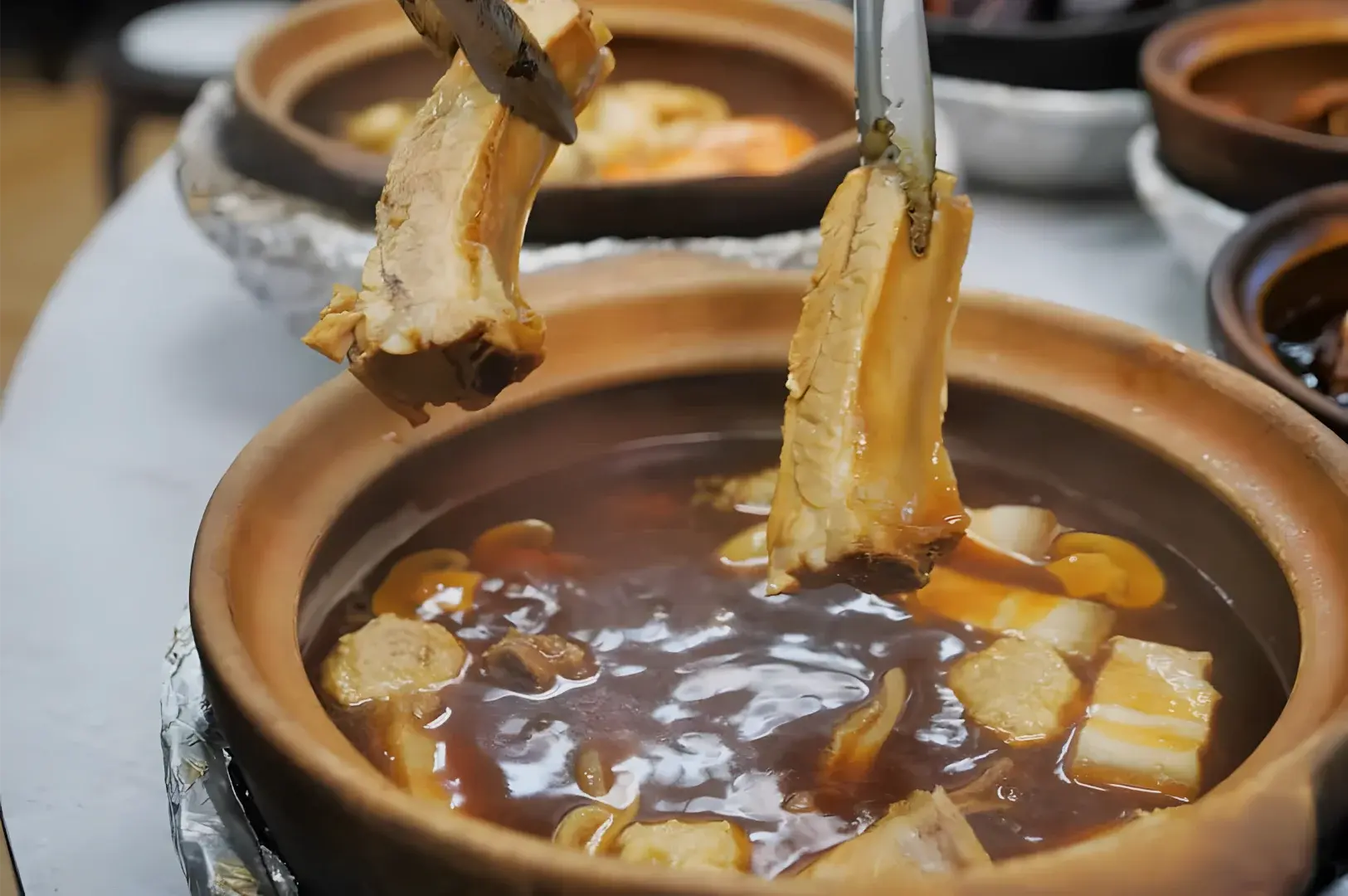
At the heart of the dish are the pork ribs, simmered until the meat yields to the lightest pressure from a spoon. This is the same principle behind the tender chicken in our soup curry. Meat cooked slowly in a flavourful liquid gives something back to that liquid, and the broth becomes richer for it. The ribs flavour the soup, and the soup flavours the ribs.
Reading the Name: Bak Kut and Kut Teh
The name itself tells a story, and it reveals how both traditions think about food.
What Bak Kut Means
In the Hokkien dialect, “bak kut” translates roughly to “meat bone.” It is a refreshingly honest name. The dish is about the pork and the bones that give the broth its body and depth.
What Kut Teh Tells Us
The second half, “kut teh,” refers to tea, and there are a few popular explanations. Some say it describes the herbal character of the broth, which feels medicinal in the best sense. Others point to the strong tea traditionally served alongside, which cuts through the richness of the meat and clears the palate. Either way, kut teh reminds us that a bowl of soup is rarely the whole story. What you drink with it, and how you pace yourself, matters just as much. We feel the same about soup curry, where the rice, the crisp vegetables and even a cool drink all shape the experience.
Where the Bowls Meet: Shared Habits
Set the two dishes next to each other and a family resemblance begins to appear.
Spices and Herbs
Bak Kut Teh builds its character from pepper, garlic and, depending on the style, a bouquet of herbs and warming spices. Soup Curry builds its own fragrance from aromatic spices layered into a broth rather than a thick roux. In both cases, the spices are not decoration. They are the architecture of the dish.
Where they differ is the direction of the flavour. Bak Kut Teh leans peppery and savoury, with herbs lending a gentle bitterness. Soup Curry leans warm and aromatic, with a deeper, rounder spice profile. Yet a diner who enjoys the tingle of white pepper will often appreciate the way a well-made curry soup builds heat slowly, then lingers.
Oil, and Why It Matters
Oil is a quiet hero in both traditions. A little fragrant oil on the surface of a soup carries aroma to the nose before the first sip. In Bak Kut Teh, you will often see a sheen of rendered pork fat. In soup curry, the oil that carries the spices adds both flavour and a glossy richness. The key is balance. Too much and the soup feels heavy. Too little and it feels thin.
Rice as the Anchor
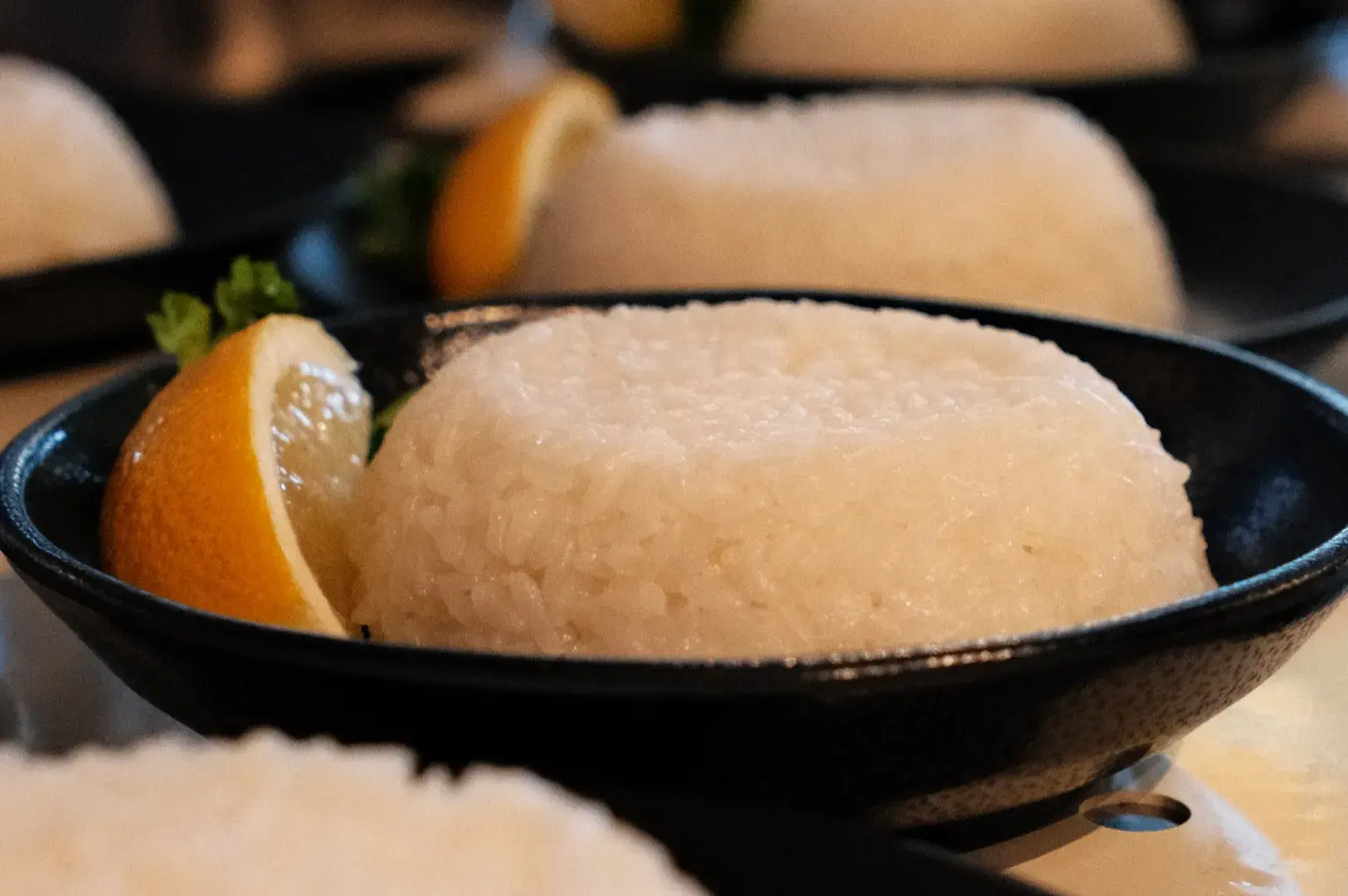
In Singapore, rice is the great equaliser. Whether you are spooning broth over plain white rice beside a pot of pork ribs or pairing it with a bowl of curry soup, the rice absorbs, steadies and stretches the flavour so that every last drop is worth finishing. We encourage guests to treat the rice as a companion to the soup rather than a side dish. Tilt a little broth into it, let it soak, and you will understand why both cuisines treat rice as essential.
Where They Part Ways
These are not the same dish, and the differences are part of what makes each one special.
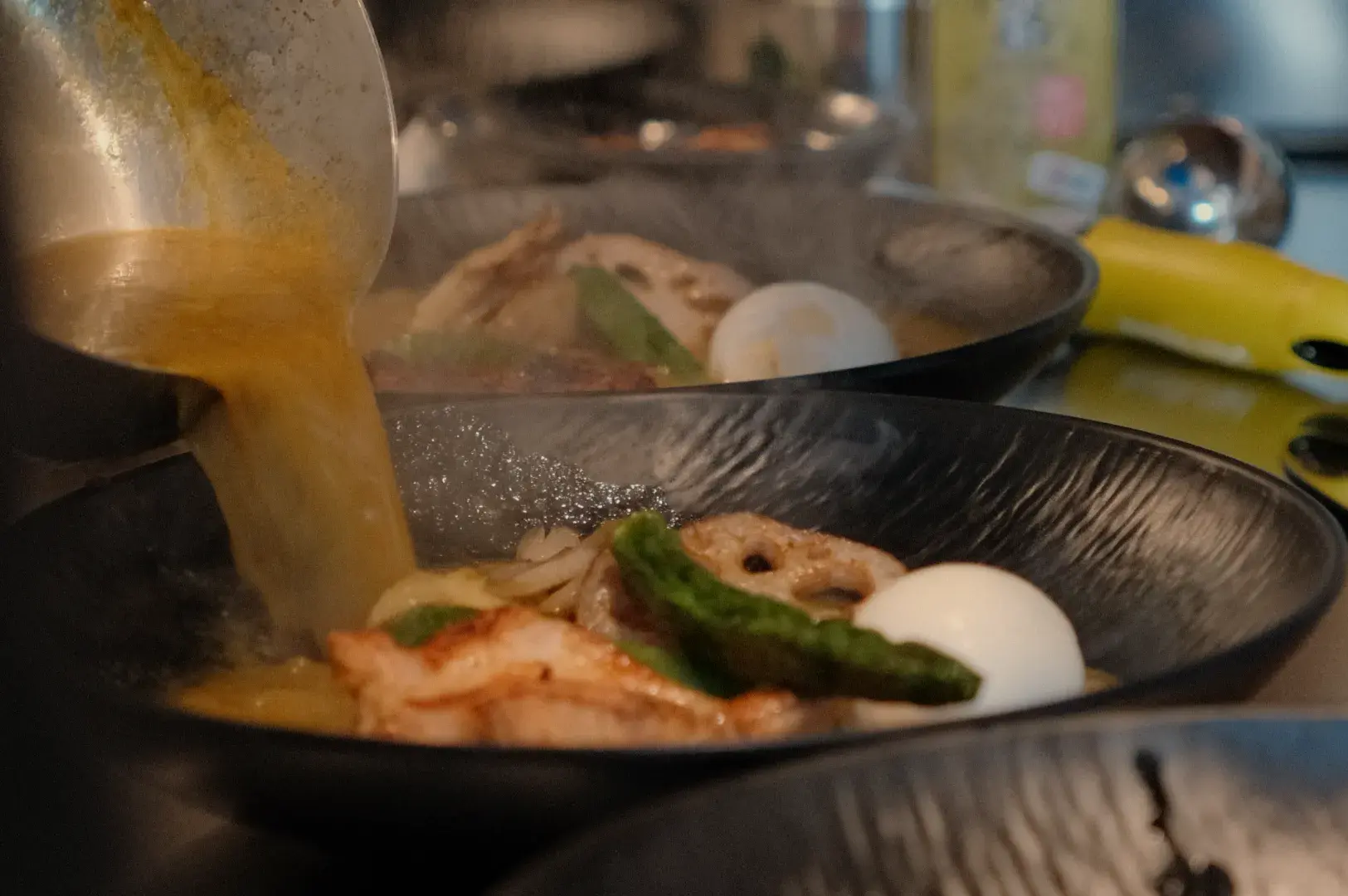
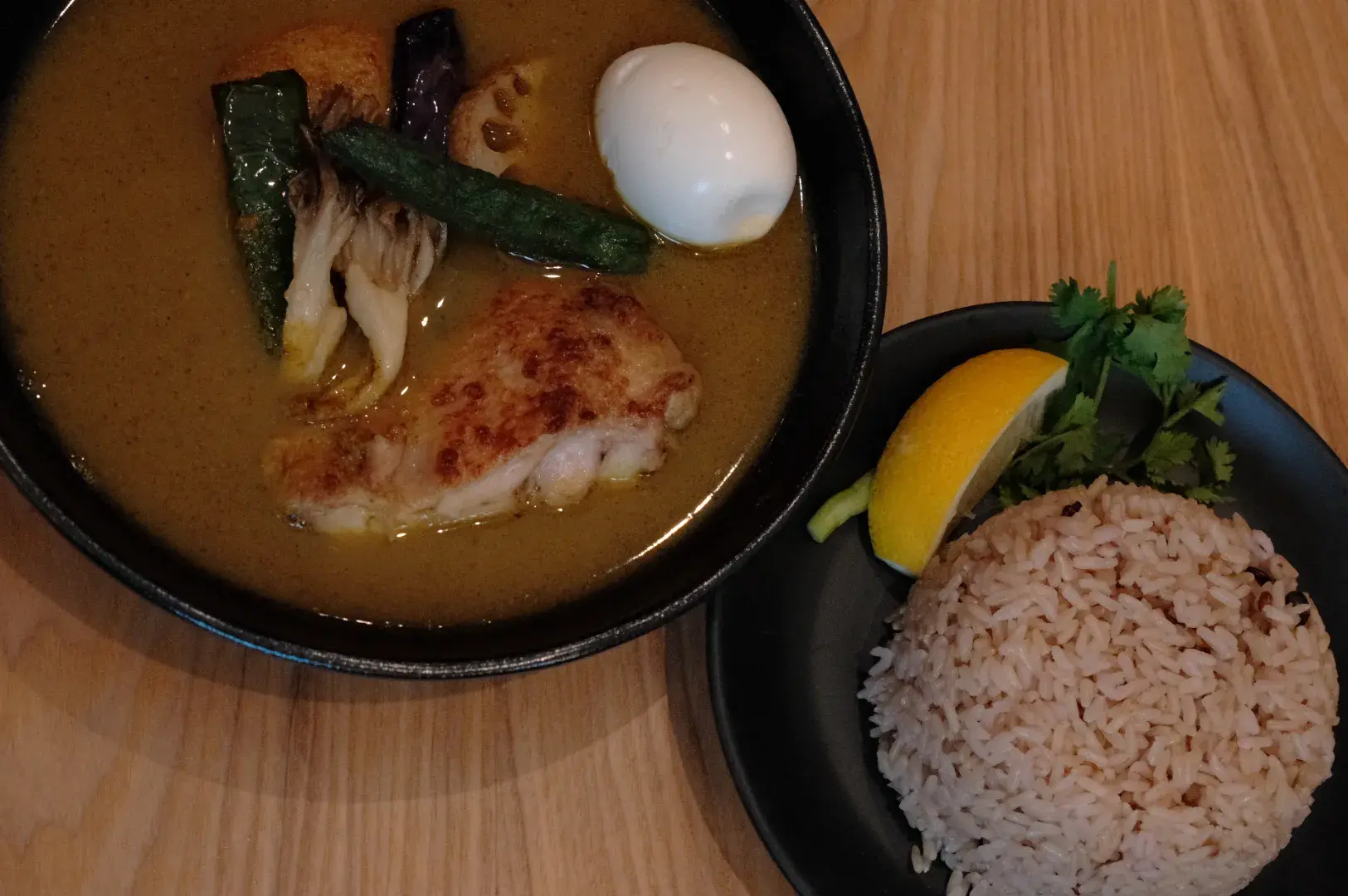
The broth. Bak Kut Teh is clear and peppery, a soup that behaves almost like a tonic. Soup Curry is deeper and more aromatic, with a curry character that is distinctly Japanese in its balance, lighter than many people expect but far more fragrant than a simple stock.
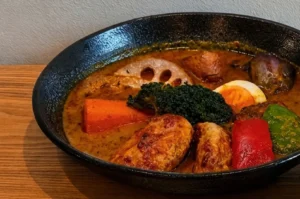
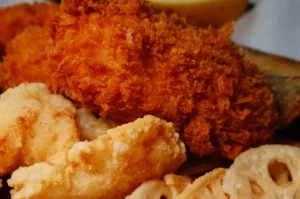
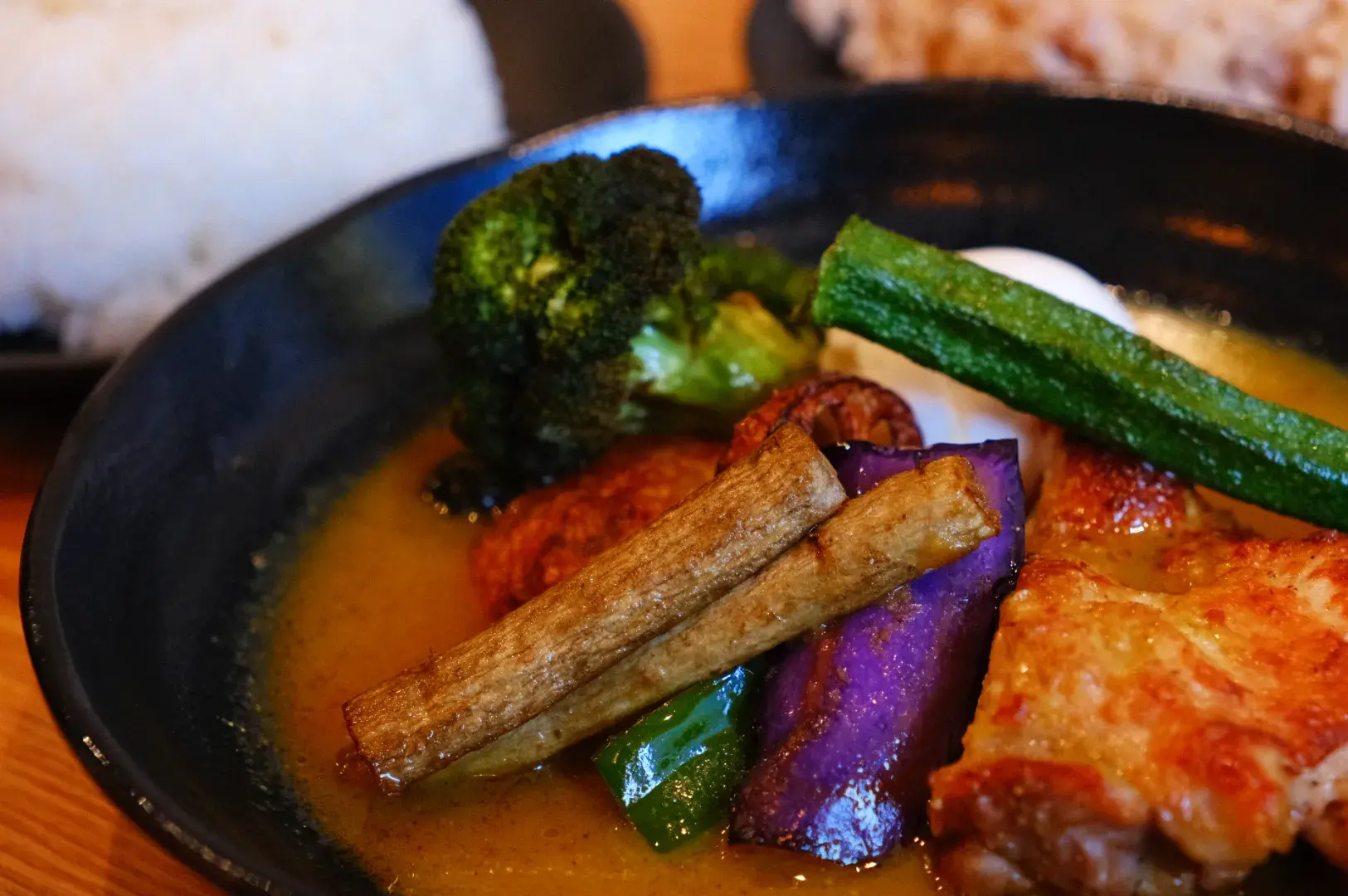
The vegetables. This is where soup curry really stands apart. At our restaurant, we serve deep-fried vegetables such as bell pepper, lotus root, aubergine and potato, each prepared using traditional Japanese cutting methods. The cut shapes texture and how the vegetable holds the soup. A crisp lotus root slice and a soft piece of aubergine soak up the broth in completely different ways. In Bak Kut Teh, vegetables tend to play a supporting role, often appearing as a simple leafy side.
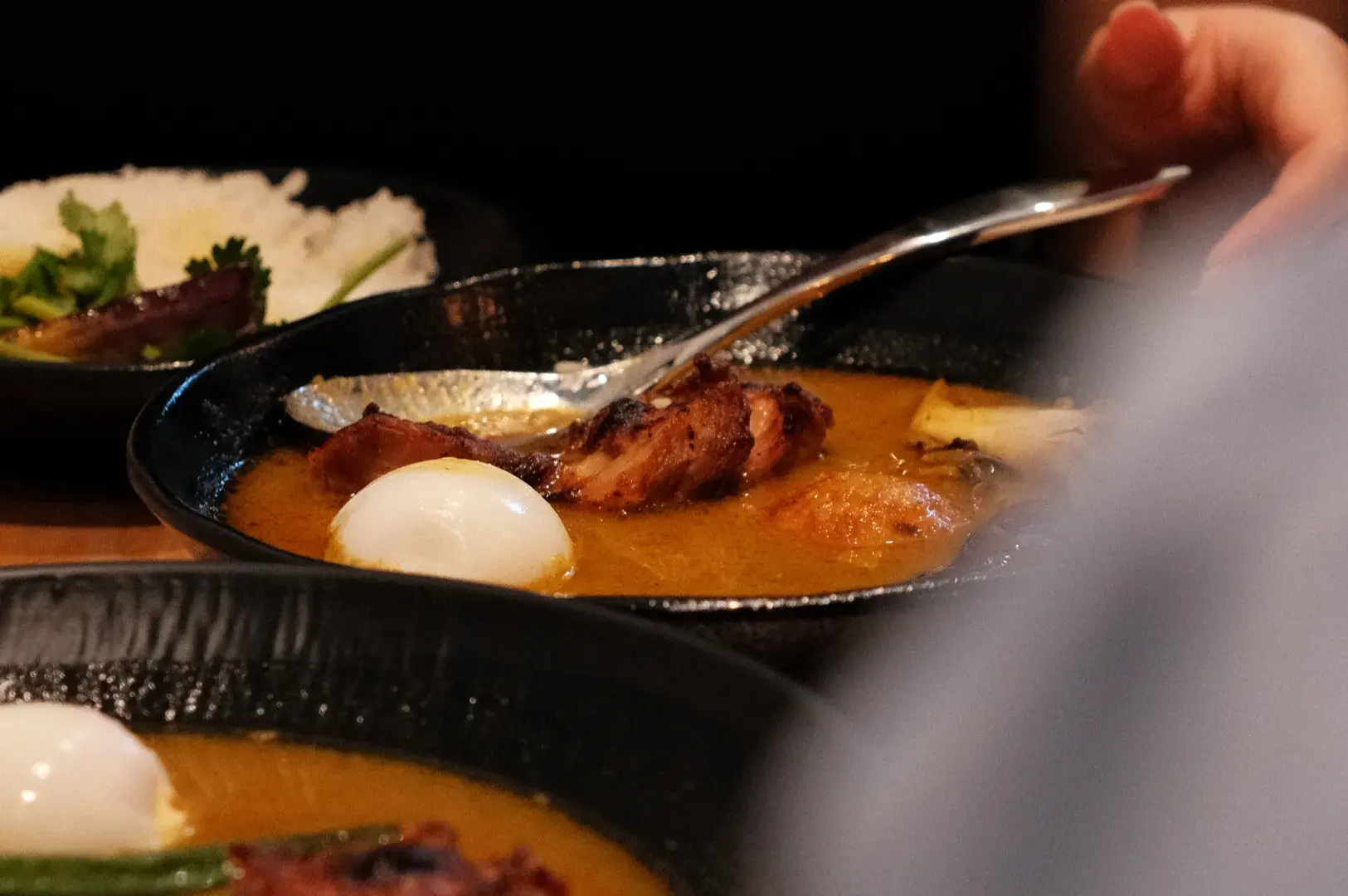
The protein. Where Bak Kut Teh celebrates pork ribs, our soup curry centres on tender chicken in rich, aromatic curry soup. Different animals, same principle: slow, careful cooking that rewards patience.
The customisation. Soup Curry invites you to tailor spice level and richness to your liking. Bak Kut Teh is more fixed in its identity, though diners certainly personalise it with chilli, soy sauce and extra garlic at the table.
How to Enjoy Both: A Guide for Singapore Diners
If you are a Bak Kut Teh devotee, start soup curry at a spice level that feels comfortable. You already appreciate soup as the main event, so you will know how to savour the broth. Notice how the flavour shifts from the first spoonful to the last. If you are new to Bak Kut Teh, approach it the way you would a good curry soup: slowly, with rice, and with curiosity. Let the pepper surprise you, and ask the people around you how they like to eat it, because every family has its own habits.
Two practical tips apply to both. Eat while the soup is properly hot, since aroma fades as it cools, and pair the meal with a warm drink or a light tea to refresh the palate.
In Hokkaido, the tail end of winter is still in the air by March, and people there reach for soup curry to hold off the last of the chill. Singapore may be warm year round, yet the craving for a restorative bowl is universal.
Stories Behind the Bowl
Every great soup has stories attached to it. Bak Kut Teh carries the stories of the people who built this city, the early-morning stalls, the family recipes and the arguments over whose version is best. Soup Curry carries the stories of Sapporo’s kitchens, where cooks experimented with spice to warm up long winters.
We have been fortunate to bring a little of that Sapporo warmth to Singapore. At Soup Curry by Ki-Setsu, we think of each bowl as a small invitation to discover a corner of Hokkaido without leaving the island. And because we transform into a cosy izakaya from 6 PM onwards, many guests find that a bowl of soup curry becomes the start of a longer, more relaxed evening.
It is a spot where conversation matters as much as flavour, which is exactly how a traditional Bak Kut Teh shop operates too. People linger, refill their tea, and talk.
Final Thoughts: Soup Curry vs Bak Kut Teh, Side by Side
When we step back, the question of soup curry vs bak kut teh dissolves into something much kinder. Two cultures, two climates and two very different sets of ingredients arrived at the same truth: a good bowl of soup is one of life’s simplest and most generous comforts.
Two such different-looking dishes can feel remarkably similar in spirit, and that is the family resemblance at work. Anyone who has left a comment under a post about a memorable pork rib soup, or kept a note in a food app about the next soup curry to try, already understands that both belong on the list.
Bak Kut Teh teaches us restraint and respect for the broth. Soup Curry shows us how spice, texture and vegetables can turn a bowl into a small celebration. Neither needs to win. The next time someone asks you to choose, we hope you will smile and say what we say: bring on both bowls, and take your time.