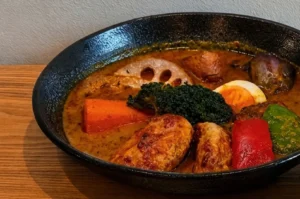
Most people walk into a Hokkaido soup curry restaurant and order the same bowl every time. It is a good bowl, but it is only the beginning of what soup curry meal pairing can offer. In Sapporo, Japan, where this dish was born as a warming answer to long winters, diners treat the order as a small act of composition. The broth, the toppings, the rice and the heat level all speak to one another, and a thoughtful choice can turn a familiar meal into something new.
Here in Singapore, we see guests settle into habits quickly. A familiar topping, a familiar spice level, a familiar portion of rice. We understand the comfort in that. Yet a few small changes can transform the experience. This guide shares how we think about pairing at our restaurant, allowing your next order to feel considered rather than automatic.
Why Soup Curry Meal Pairing Starts with the Broth
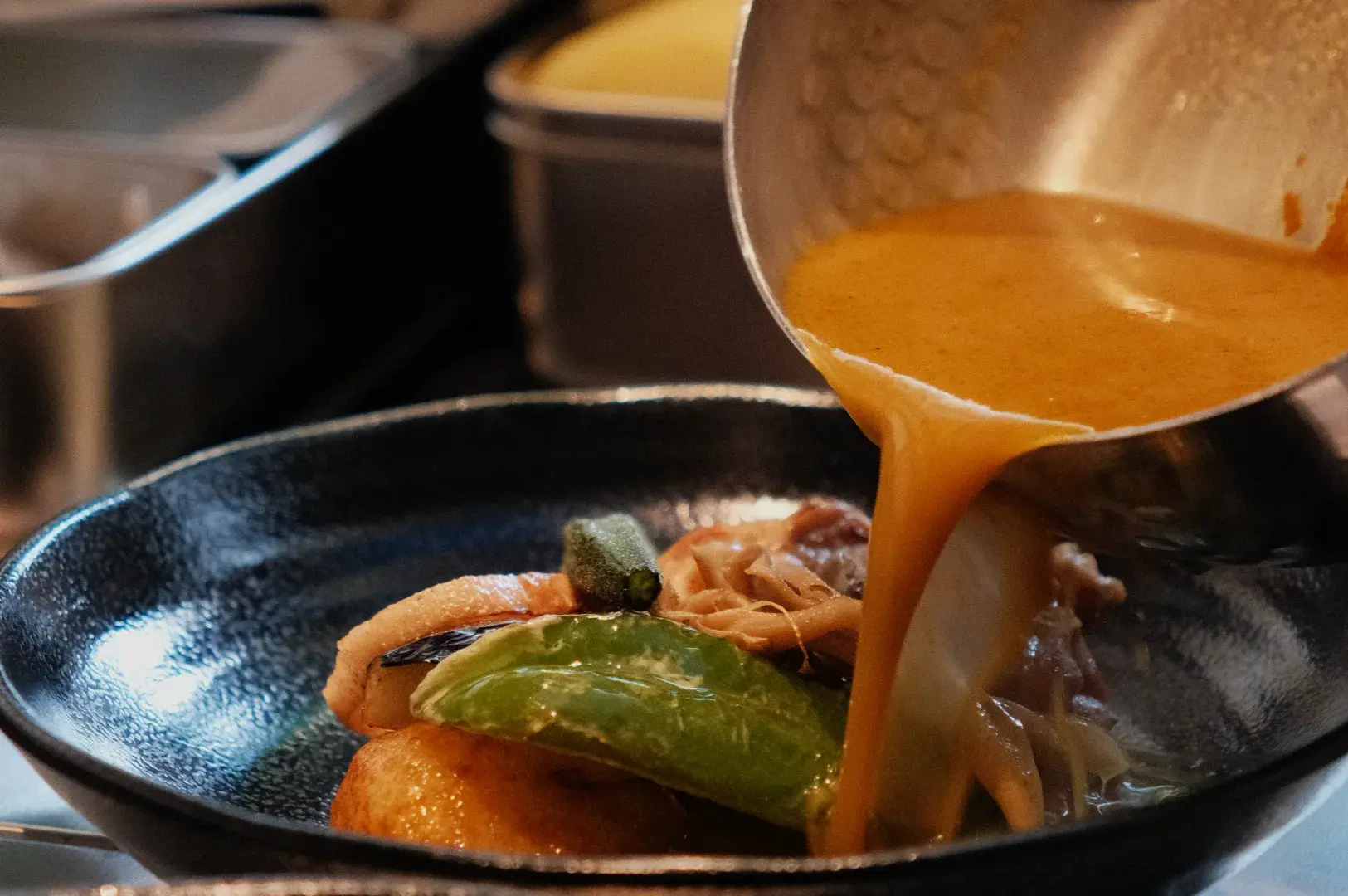
Every pairing decision begins with the broth, because the broth is the one part that never changes. Unlike thick Japanese curry, which coats ingredients in a heavy sauce, soup curry is thinner and clearer. It carries aromatic spices, a deep savoury base and a gentle sweetness, and it asks the other ingredients to hold their own.
That thinner body is the secret to good pairing. A thick sauce hides whatever sits beneath it, but a broth lets each ingredient keep its character. Vegetables soften at their own pace, chicken releases its juices into the soup, and rice absorbs flavour differently with every spoonful. Once you understand this, you stop asking what goes with curry and start asking what the broth needs.
Because there is no heavy roux to lean on, we tend to think in three questions. Does the bowl need richness or lightness? Does it need sweetness to balance the spices? Does it need texture to break up the soft elements? Answering these before you order is often enough to shape a far better meal.
Building Your Soup Curry Bowl with Vegetables That Do More Than Fill Space
With the broth in mind, the vegetables are the next place to make your order your own. Each one brings a different texture and level of sweetness, and the right mix can balance the spices and keep the bowl interesting from start to finish. Here is how we look at the choices.
Deep-Fried Vegetables for Texture
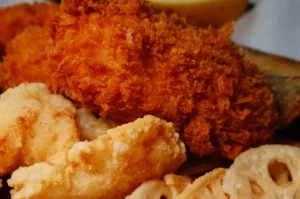
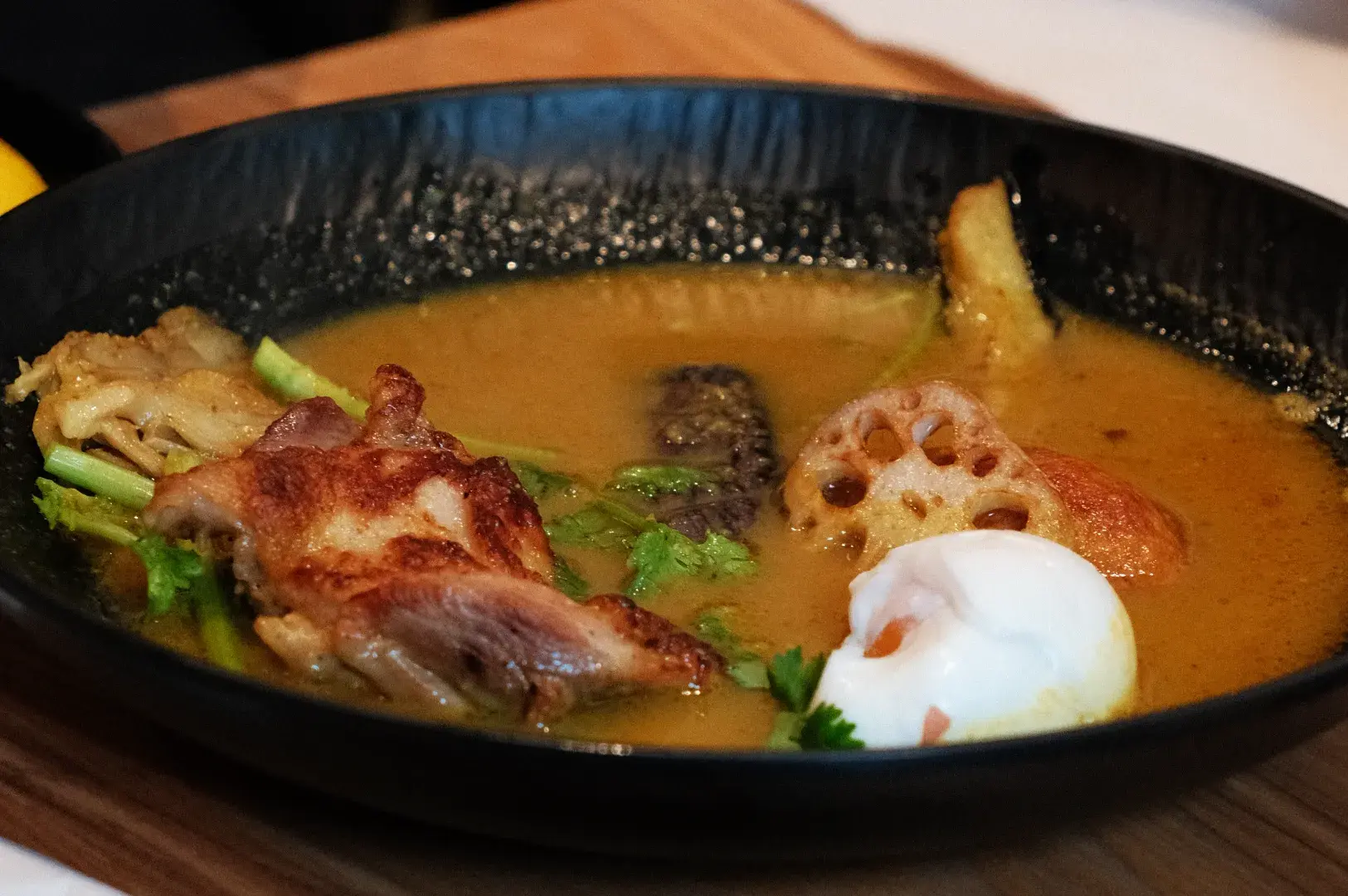
Texture is the most overlooked part of pairing. Because the broth is smooth, a crisp element makes each mouthful more interesting. This is why we deep-fry bell pepper, lotus root, aubergine and potato before they meet the soup, cutting each one with Japanese techniques so it holds its shape and cooks evenly. The surface turns lightly crisp, then softens slowly as it sits in the broth, which means the bowl changes from the first spoonful to the last.
Lotus root brings a pleasant snap and a faintly sweet, earthy note. Aubergine behaves like a sponge, soaking up the broth until it turns almost silky. Bell pepper offers brightness against the cumin and other spices, while potato gives a soft, comforting weight. Choosing a mix of these is usually better than loading up on one kind.
Pumpkin and the Question of Sweetness
Pumpkin deserves its own mention. Its natural sweetness softens the sharper edges of the spices and rounds out the heat, which makes it a smart choice for anyone ordering a spicier bowl. If a strong broth feels slightly overwhelming at first, pumpkin is a gentle way to bring balance without changing the character of the soup. It also adds a sense of depth, because its sweetness sits underneath the savoury notes rather than competing with them.
Chicken in Japanese Curry Soup: What to Pair with Tender Meat
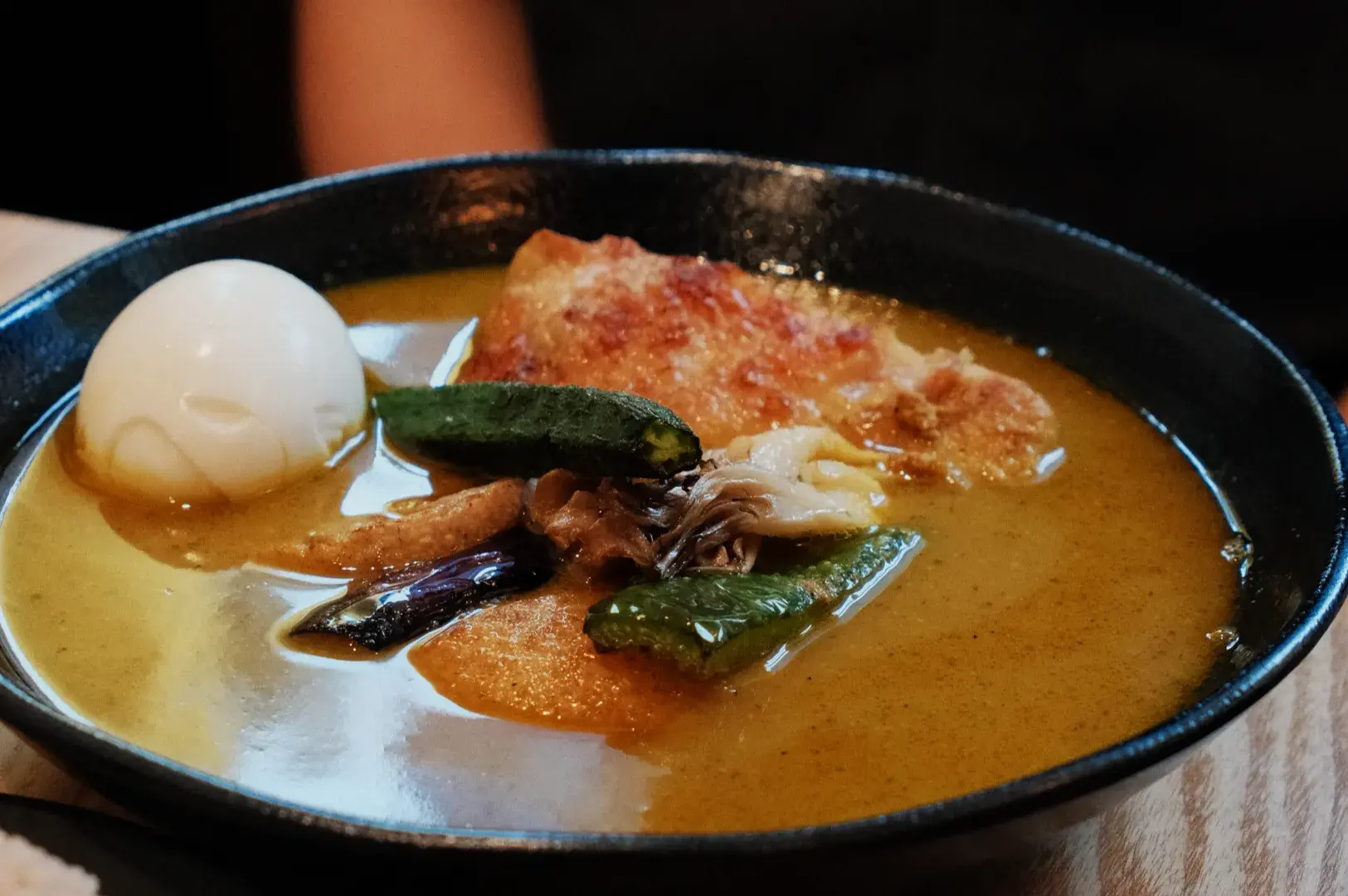
Chicken is the classic partner in a bowl of soup curry, and for good reason. Cooked until tender, it absorbs the aromatic broth while adding its own gentle richness. Because it is mild, it lets the spices lead, which is why it suits almost any heat level.
When chicken is the centrepiece, we suggest pairing it with vegetables that add contrast rather than more softness. Crisp lotus root and bell pepper work well, since the meat is already tender. If you prefer a lighter meal, chicken with a few vegetables and a modest portion of rice feels balanced and clean. If you want something more substantial, adding potato and aubergine gives the bowl more body, and the meal feels fuller without turning heavy.
This is where Japanese curry in its soup form differs from the thicker versions many people know. A thick sauce can make every topping taste alike. In a broth, tender chicken still tastes like chicken, and that clarity is exactly what makes pairing worthwhile. You do not need to rely on strong sauces to make a bowl exciting. The ingredients speak for themselves when the soup lets them.
Rice, Sides and the Right Amount of Everything
Once the broth, vegetables and chicken are settled, the supporting cast decides how the whole meal feels. Rice and sides do not get much attention at the table, yet they shape how heavy or how refreshing a bowl turns out to be. A few simple choices here keep the soup at the centre while everything around it plays its part.
How Much Rice Is the Right Amount
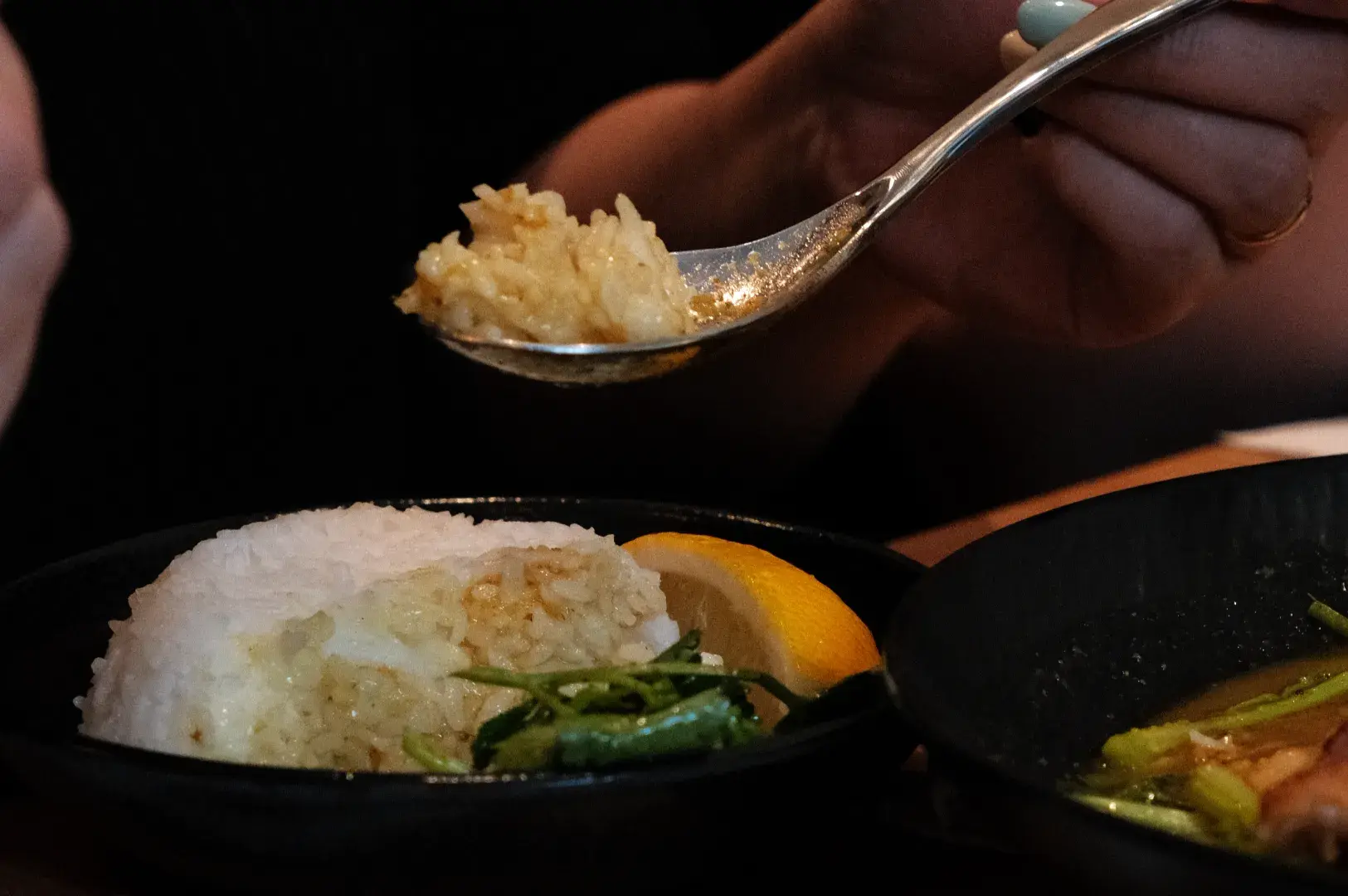
Rice is the quiet partner in every bowl. Some guests like to add it all at once, while others prefer to take a spoonful of rice, dip it into the broth and eat it in small pieces. Both ways are valid, but the second encourages a slower rhythm and lets the rice absorb the soup gradually. We find this keeps the broth tasting vibrant right to the finish.
Portion matters here. A large serving of rice can dull the broth and shift the meal towards heaviness, while a smaller portion keeps the focus on the soup. If you are adding several toppings, a modest amount of rice is usually enough. If you order fewer toppings, a larger portion helps the meal feel complete.
Rice also behaves differently depending on what else sits in the bowl. With richer toppings such as potato or tender chicken, a plain portion of rice gives the palate somewhere to rest between spoonfuls. A lighter bowl of crisp vegetables can handle a little extra rice without losing its clarity. On rainy days, many guests return to a fuller serving for the comfort it offers. Whatever you choose, build the bowl in stages: begin with a small amount, notice how the broth sits with it, and add more only when the meal asks for it.
Light Sides That Support the Soup
Sides should refresh rather than compete. Something cool, crunchy or lightly pickled clears the palate between spoonfuls and prepares you for the next. Heavy fried sides, on the other hand, stack richness on richness, and the soup loses its clarity. We prefer a simple, light companion so the broth remains the main event. If you are sharing with friends, a few small plates can feed the table without overwhelming the bowls at the centre.
Matching Heat and Spices to Your Soup Curry
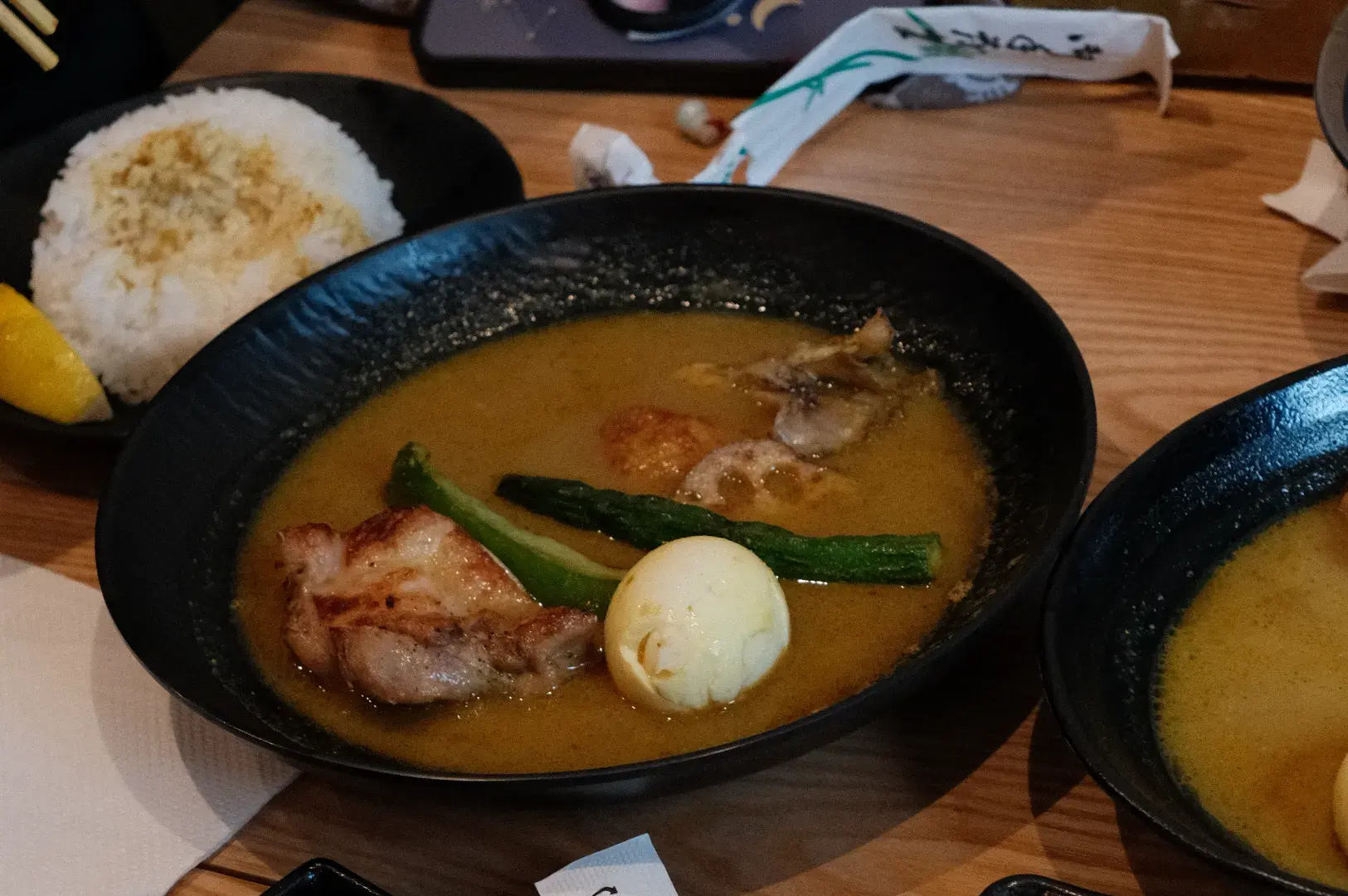
Heat is not just a number on a menu. It changes how you taste everything else. A milder bowl lets the cumin and other spices come forward, which suits delicate toppings like chicken and pumpkin. A hotter bowl calls for sweeter, softer partners, because strong heat can flatten subtle flavours.
A good rule is to treat heat as the last decision rather than the first. Choose your main ingredients, think about the balance of sweet, savoury and crisp, and then select a spice level that supports the whole picture. Guests who begin at a moderate level often find they can return and go a step higher once they understand how the spices behave in the broth.
Drinks matter too. Something cold and clean helps reset the palate between spoonfuls, while a warm drink suits a milder bowl on a cooler evening. Japanese barley tea and iced oolong tea are refreshing options that complement the spices nicely. Mango lassi, with its creamy texture, is particularly suited for spicy soup curry.
Rainy Days, Late Evenings and the Izakaya Hour
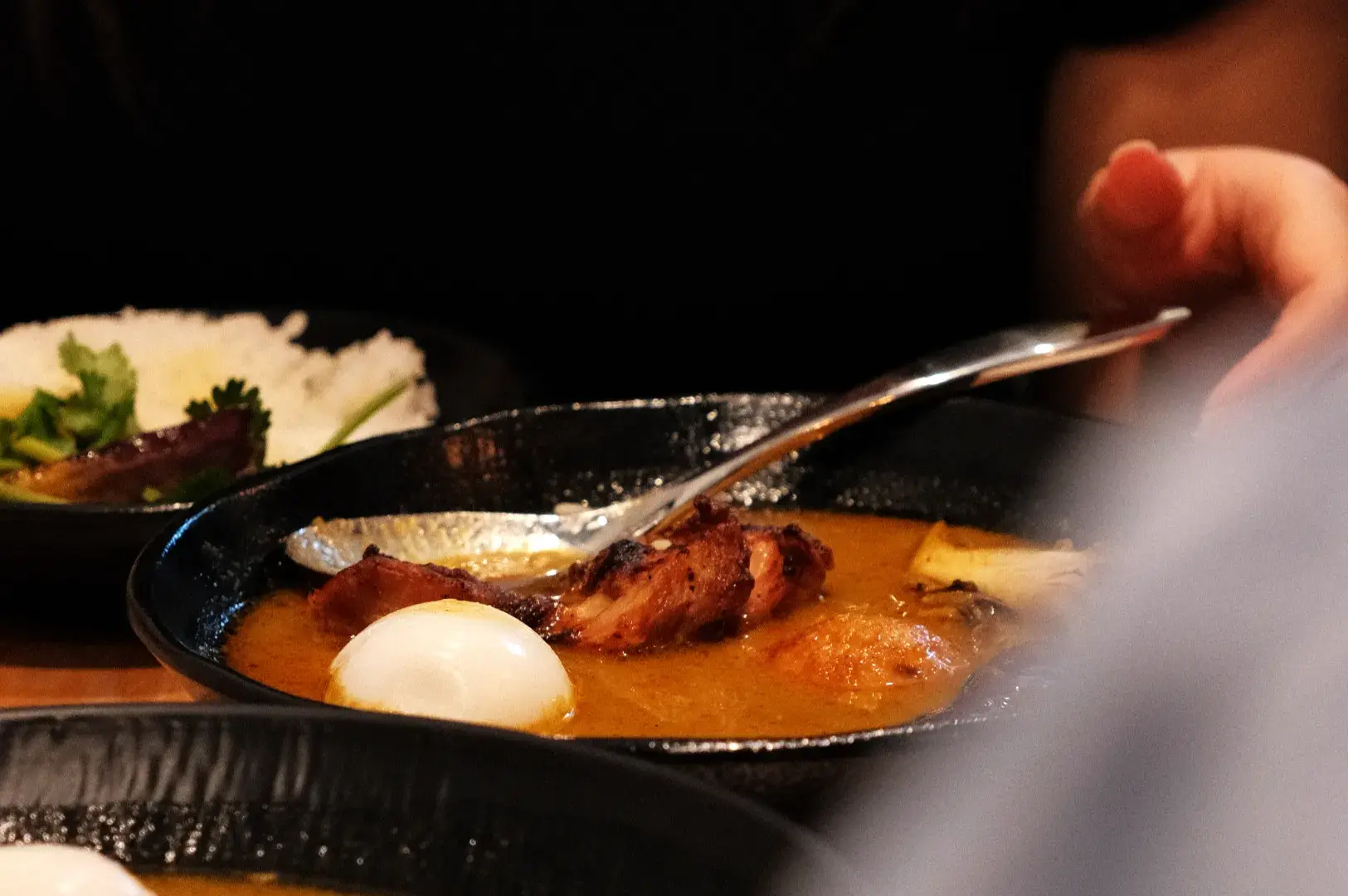
Pairing is also about timing. On rainy days, a richer bowl with potato, chicken and extra rice feels deeply comforting, the kind of meal that warms you from the inside. On hot afternoons, a lighter bowl with crisp vegetables and a gentler spice level feels easier to finish. The same dish can take a different form depending on the weather and your mood.
From 6 PM, our restaurant becomes a cosy izakaya, and the way people eat shifts with it. Guests tend to share, to sit longer and to treat the soup as one part of a wider evening. Smaller plates, drinks and conversation gather around the bowl. This is a lovely way to explore soup curry meal pairing, because the soup becomes a centrepiece rather than a single course. It also reflects the spirit of Hokkaido, where food is built around warmth and togetherness.
Traditional Japanese sides like agedashi tofu, Japanese-style fried chicken, cucumber sunomono salad, and pickled vegetables known as tsukemono often accompany the meal, allowing for a balance of textures and flavors.
Soup Curry Meal Pairing That Changes How You Order
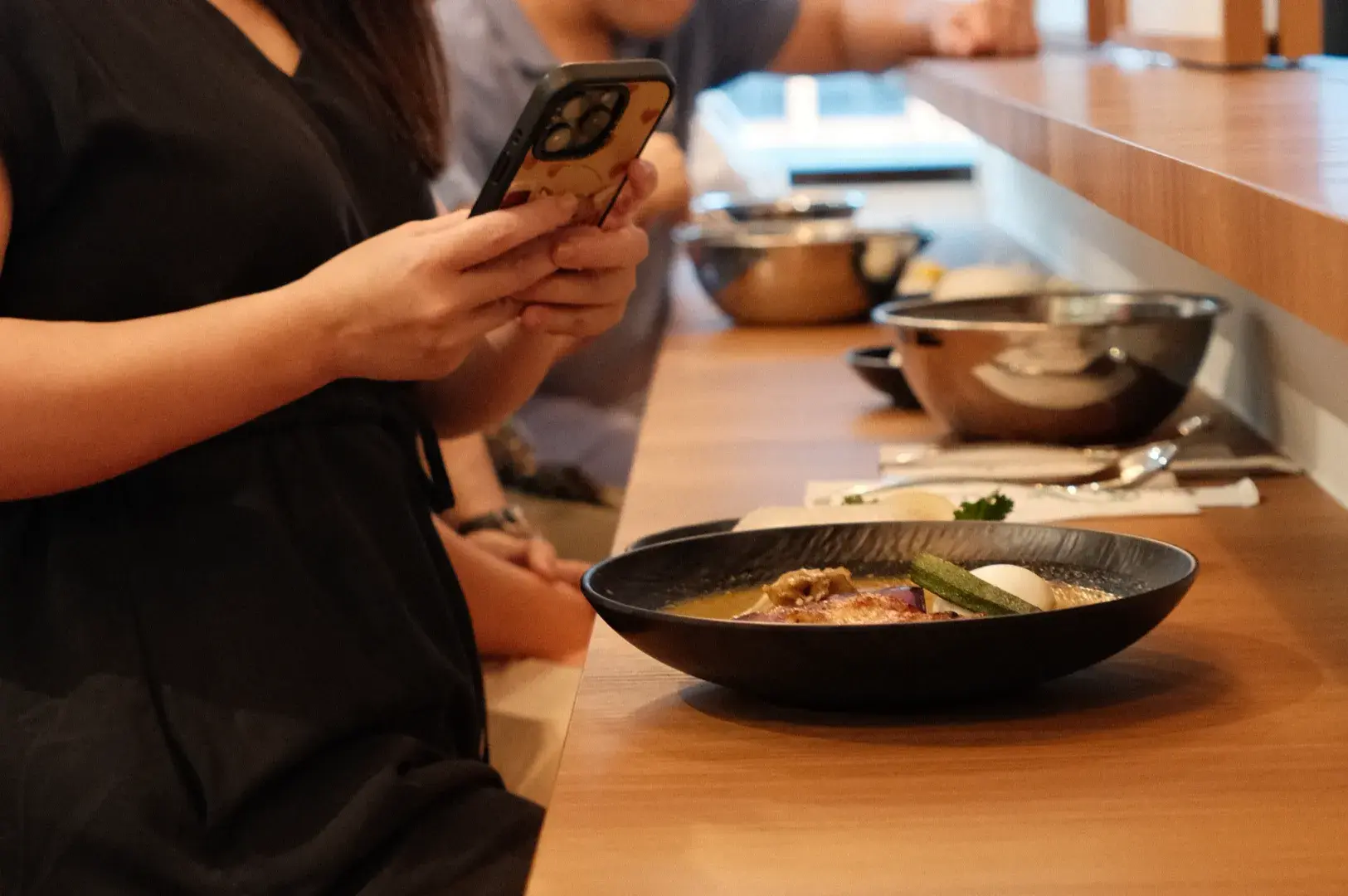
The next time you sit down, try thinking like a Sapporo regular. Start with the broth, consider the texture, balance the sweetness and choose your heat last. Small changes, such as swapping a topping, adjusting the rice or adding a lighter side, can change the whole meal. None of it requires a complicated plan. It only asks for a little attention at the beginning.
At Soup Curry by Ki-Setsu, we bring the warmth of Hokkaido to Singapore one bowl at a time, allowing you to find the combination that feels like yours. Pay attention to how each spoonful changes, and let the bowl guide you. Once you do, we think you will never order the same way again.