Walk into any soup curry shop across Sapporo and you will notice something that sets this dish apart from other curry traditions in Japanese cuisine: the ability to choose exactly how much heat lands in your bowl. Unlike traditional Japanese curry, which typically arrives at one fixed spice level, soup curry invites diners to decide for themselves how far they want to push their palate. This is one of the defining features of authentic soup curry, and it is a tradition we have carried with us from Hokkaido to Singapore.
For anyone new to this dish, the spice level system can feel a little mysterious at first. What actually separates mild from medium? What happens when a bowl is labelled Hokkaido hot? And how do spice lovers know when they have found their sweet spot? We want to walk you through exactly how spice levels work in Sapporo soup curry, why they matter, and how to choose the right one for your first visit.
Why Spice Level Matters So Much When You Eat Soup Curry
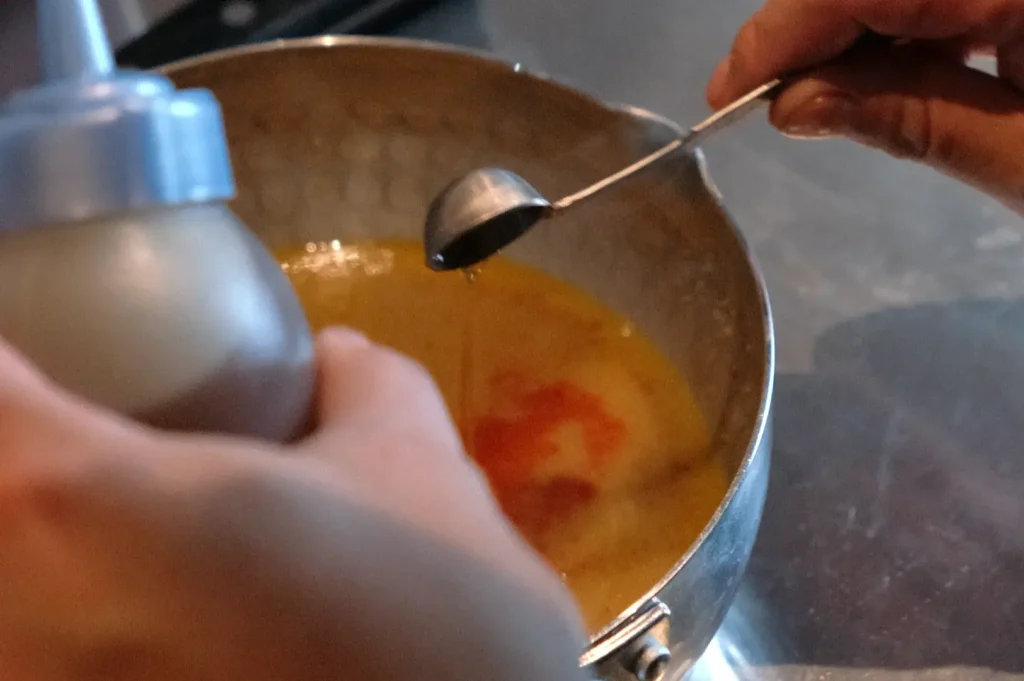
In many cuisines, spice is simply an intensity dial bolted onto an otherwise fixed flavour. In soup curry, the spice level is woven into the architecture of the dish itself. The broth is built slowly, often through hours of simmering chicken bones, pork bones, and aromatics, before a unique spice blend is layered in to create depth rather than just heat. This means that a mild bowl and a Hokkaido hot bowl are not simply the same soup dish with more chilli peppers thrown in. Each spice level is meant to showcase a different dimension of the same soup base.
This is part of what makes soup curry such a personal dish. Two people can order from the same menu, choose different spice levels, and walk away with entirely different impressions of what a bowl of soup curry should taste like. That flexibility is intentional, and it reflects how the dish evolved near Sapporo Station as a soul food meant to comfort locals through cold Hokkaido winters while still satisfying those who craved something fierier.
Breaking Down the Authentic Soup Curry Spice Levels
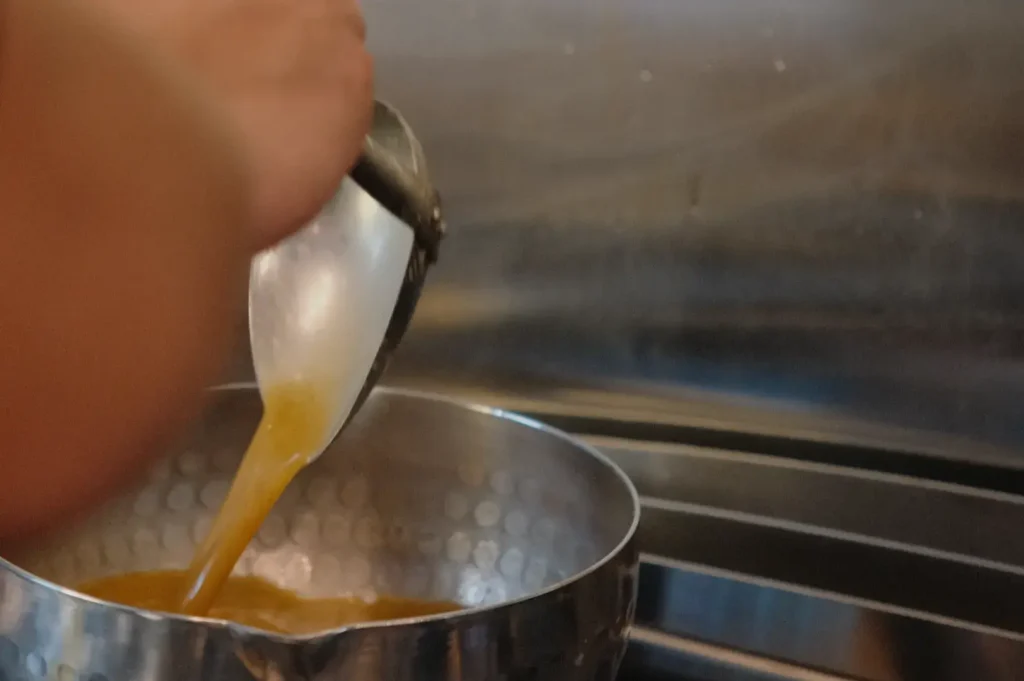
Every soup curry shop tends to structure its menu around three broad tiers of heat, even if the exact names differ slightly from place to place. Here is what each one typically delivers.
Mild: The Gateway to Soup Curry
Mild is where most first time guests begin, and for good reason. At this spice level, the broth’s natural sweetness takes centre stage. You will taste the vegetables, the meat, and the aromatic backbone of turmeric and black pepper before any real heat arrives. Garam masala and other warming spices are present, but they sit gently in the background rather than announcing themselves.
Mild soup curry is ideal if you want to understand the soup base itself, the way the chicken broth or pork based stock carries flavour, and how ingredients like kabocha pumpkin, carrots, and potatoes contribute their own natural sweetness. It is also the level we recommend if you are trying soup curry for the very first time, since it lets the dish’s craftsmanship shine without any heat competing for your attention.
Medium: Where the Spice Blend Begins to Speak
Medium spice level is often described as the point where soup curry starts to reveal its personality. The chilli peppers used in the spice blend become noticeable, though they still work in harmony with the broth rather than overpowering it. At this stage, you will likely start to feel warmth building in the back of the throat, a gentle reminder that this is, after all, a curry dish rooted in bold spice traditions.
Many regular guests settle into medium as their preferred spice level because it offers a perfect balance: enough heat to feel like a proper curry experience, while still allowing the rich broth, tender meat, and fresh vegetables to remain the stars of the bowl. If mild felt too gentle on a previous visit, medium is usually the natural next step.
Hokkaido Hot: For Serious Spice Lovers
Then there is Hokkaido hot, the spice level built for those who want their soup curry to fight back a little. This is where the full character of the spice blend comes forward. Layers of chilli, black pepper, and what some shops even call their own magic spice combine to create a heat that builds steadily rather than hitting all at once. It is not about overwhelming the dish with pure fire. It is about intensifying everything that already makes soup curry special, the broth, the aroma, the depth, and turning it up until it demands your full attention.
Spice lovers often describe Hokkaido hot as the level where soup curry finally tastes like it means business. It rewards diners who genuinely enjoy spicy food and who want the natural sweetness of the vegetables and the richness of the broth to contrast sharply against real heat. This is not a level to jump into on your first visit unless you already have a high tolerance, but for those chasing an authentic Sapporo soup curry experience at its boldest, it is often the most satisfying choice.
What Actually Changes Between Spice Levels
A common misconception is that moving up in spice level simply means more chilli powder is added at the end. In a well made soup curry, that is not quite how it works. The spice blend used across mild, medium, and Hokkaido hot levels shares the same core foundation, built from a careful mix of spices including turmeric, garam masala, and black pepper, but the proportion and preparation of the chilli component shifts as the heat increases.
This is why a well crafted soup curry should never taste like it is simply spicy for the sake of being spicy. Even at the hottest level, the broth’s depth, built from hours of simmering chicken bones or pork bones alongside aromatics like garlic and ginger, should still be detectable underneath the heat. If the spice overwhelms everything else, something has gone wrong in the balance. Getting that balance right across every spice level is, honestly, one of the harder parts of running an authentic soup curry kitchen, and it is something every soup curry shop develops its own take on over time.
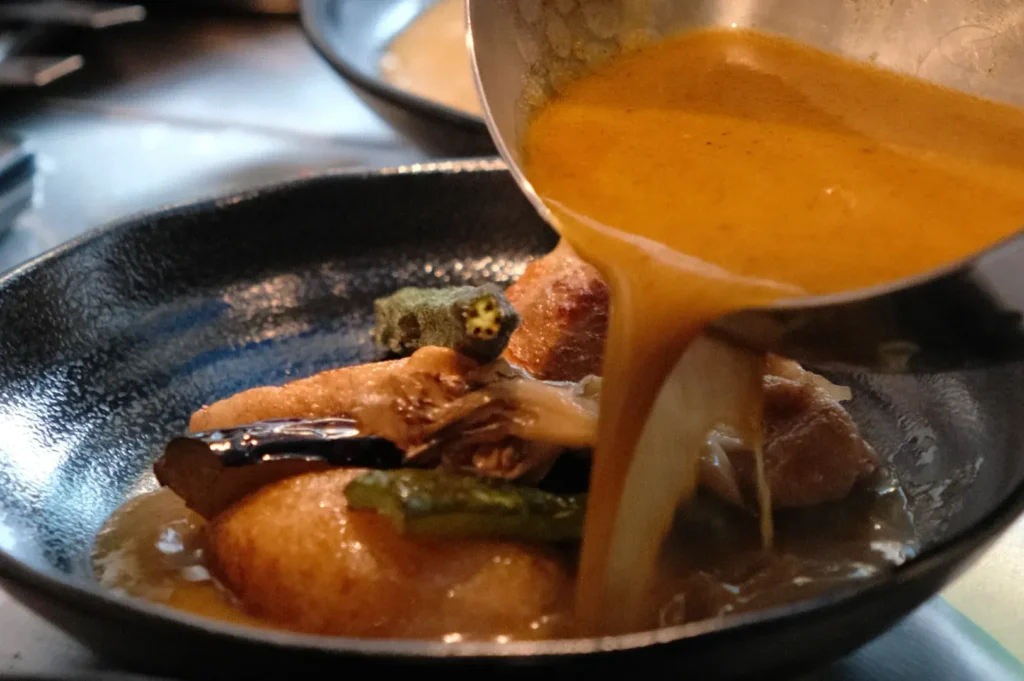
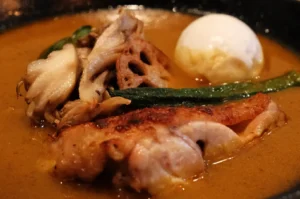
Spice level is not the only decision you will make when ordering soup curry. Most menus also let you choose your protein, whether that is crispy chicken, tender pork belly, or a vegetable forward option, along with the choice to add extra toppings such as quail eggs, deep fried lotus root, or bell peppers. How much rice you want alongside your bowl is another consideration, since rice helps balance out higher spice levels by giving your palate something neutral to return to between spoonfuls.
If you are unsure where to start, our advice as a team that has spent years serving authentic Hokkaido soup curry is simple: order one level lower than you think you want. Soup curry heat tends to build cumulatively as you work through the bowl, especially once the deep fried vegetables and meat have soaked up some of the broth’s spice. What feels manageable in the first few spoonfuls can intensify by the halfway point. This is especially true at Hokkaido hot, where the layered spice blend continues to develop on the palate throughout the meal.
The Role of Fresh Produce Across Every Spice Level
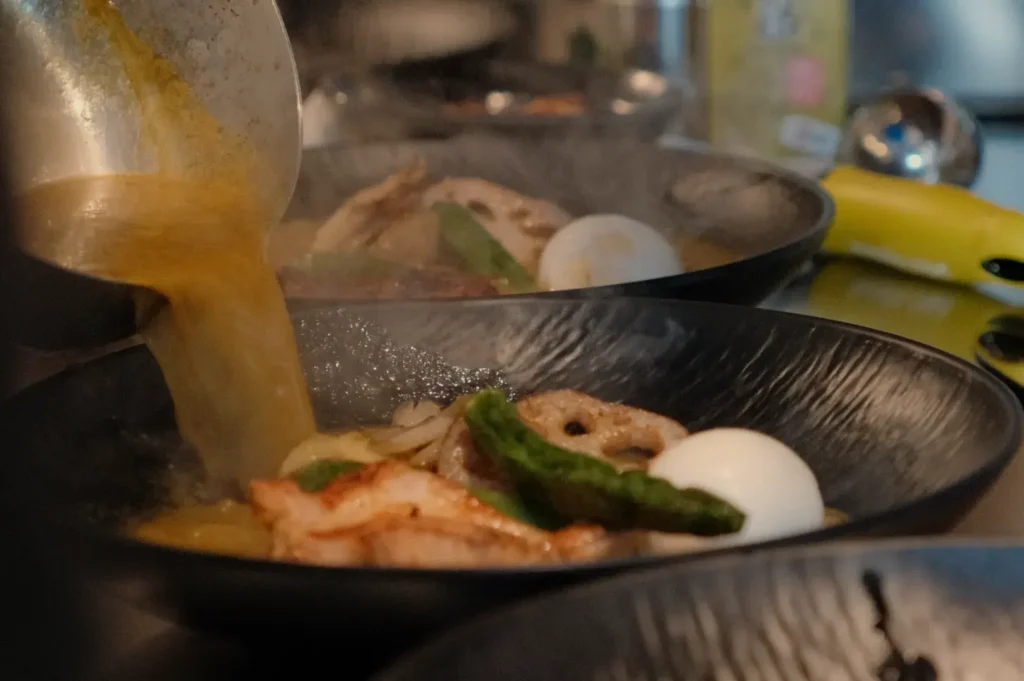
Regardless of which spice level you choose, the quality of the fresh produce and meat used in the dish makes an enormous difference to the final result. Okra, eggplant, tomato, and lotus root all bring their own textures and subtle flavours that either soften or sharpen depending on how much heat surrounds them. At Soup Curry by Ki-Setsu, we prepare our vegetables using Japanese cutting methods before deep frying them, a technique that helps preserve their natural sweetness so it can still shine through even at higher spice levels.
This is part of why we believe spice level should never be treated as an afterthought. It shapes how every other ingredient in the bowl is experienced, from the tomato paste and coconut milk sometimes used to round out certain soup bases, to the way chicken broth interacts with each spice blend. A thoughtfully calibrated spice level allows the entire dish, not just the heat, to be appreciated properly.
Health Benefits Behind the Heat
Beyond flavour, the spices layered into soup curry carry their own quiet reputation for wellness that spans much of Japan. Turmeric and black pepper, both staples of the spice blend, are often associated with anti inflammatory properties, while the chilli peppers used at higher spice levels are sometimes credited with supporting immune health during colder months, which is fitting given the dish’s origins in Hokkaido’s harsh winters. None of this is the main reason people order soup curry, but it is a pleasant reminder that a warming bowl of broth and spice can do more than just satisfy hunger.
Finding Your Own Spice Level Journey
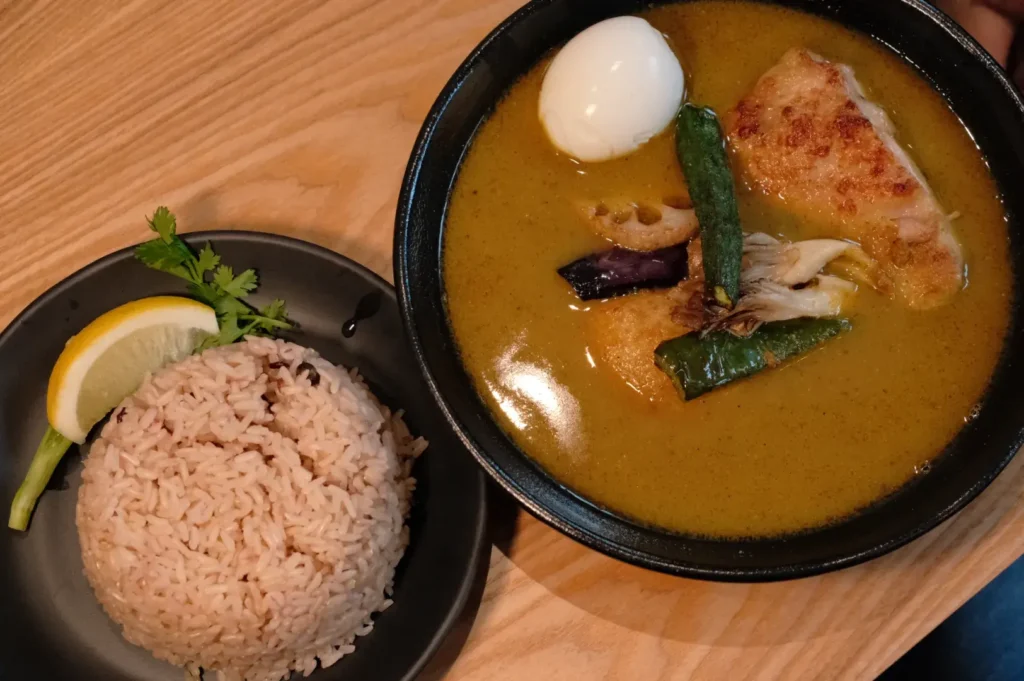
Ultimately, there is no single correct answer to whether mild, medium, or Hokkaido hot is the best spice level. What matters is understanding what each level is actually designed to do. Mild lets the soup base and its natural sweetness lead. Medium introduces the spice blend as a genuine flavour partner. Hokkaido hot pushes the full complexity of the curry powder and chilli peppers to the forefront for those who want an intense, warming experience reminiscent of a cold evening in the capital city of Hokkaido.
Many of our guests at Soup Curry by Ki-Setsu find that their preferred spice level changes depending on their mood, the season, or even how hungry they are that day. That is part of the joy of soup curry as a signature dish. It does not ask you to commit to one experience forever.
We simply hope that understanding the reasoning behind each level helps you eat soup curry with a little more intention next time, and perhaps encourages you to venture one step further up the spice scale than you normally would.