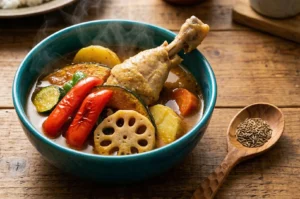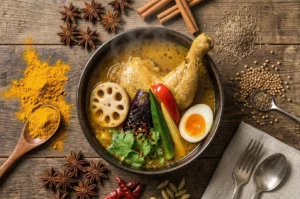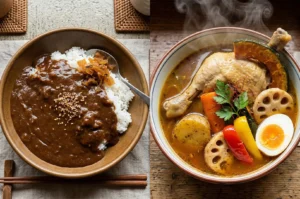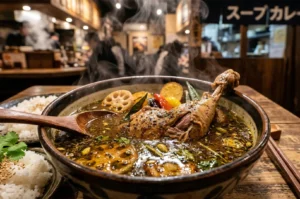
When you step into the snowy streets of Sapporo, the air is thick with the scent of spices promising a cure for the winter chill. For many travelers, finding an authentic soup curry is a top culinary goal. Yet, asking ten locals where to find the best Hokkaido soup curry often yields ten different answers, each reflecting a unique philosophy on the original soup curry. This is the first of many truths visitors must navigate: in Japan’s north, “authenticity” is a spectrum of personal expression.
Discrepancies often start with the soup base. While all agree it should be a spiced soup rather than thick gravy, ingredients vary widely. Some famous soup curry restaurants in Sapporo favor a light broth with bonito flakes and kombu for a clear, dashi-forward taste. Others insist on a rich, opaque broth simmered from pork bones and chicken bones for over twelve hours. At Soup Curry by Ki-Setsu, we see authenticity as a commitment to the soul food spirit and the meticulous preparation of fresh ingredients.
Defining the First Soup Curry: Why Every Sapporo Soup Curry Varies
The origins of this dish are rooted in the 1970s, with the first soup curry known as ‘Yakuzen Curry’ a local specialty intended to aid digestion and provide health benefits.
Invented by the cafe Ajanta, it was a medicinal soup that combined Indian spices with a Japanese aromatic broth. Some believe the essence lies in these medicinal spice blends like garam masala, while others focus on the evolution of the curry soup base itself.
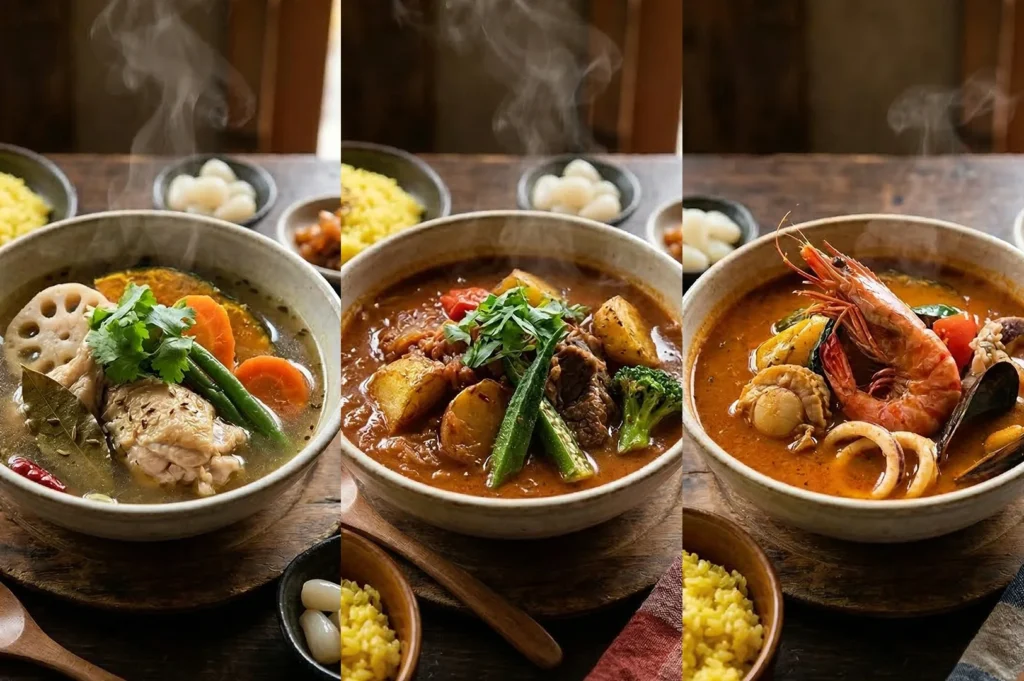
In the early days, the liquid was often a simple, herbal broth. Over time, three distinct schools of thought emerged among soup curry restaurants:
The Classic Clear School: Prioritizes the aroma of curry powder and individual spices like cardamom and cloves. This style is preferred by those who want the natural sweetness of the ingredients without the soup feeling heavy.
The Rich & Creamy School: Achieved by adding tomato paste or caramelized onions, creating a tangier consistency between a soup dish and a typical Japanese curry or curry roux. These soup curry tastes are often more approachable for those used to regular Japanese curry.
The Seafood School: Many famous soup curry restaurants now offer a signature dish made from crushed shrimp heads, creating an umami-rich experience.
The Art of Fresh Vegetables: Why the Best are Deep Fried
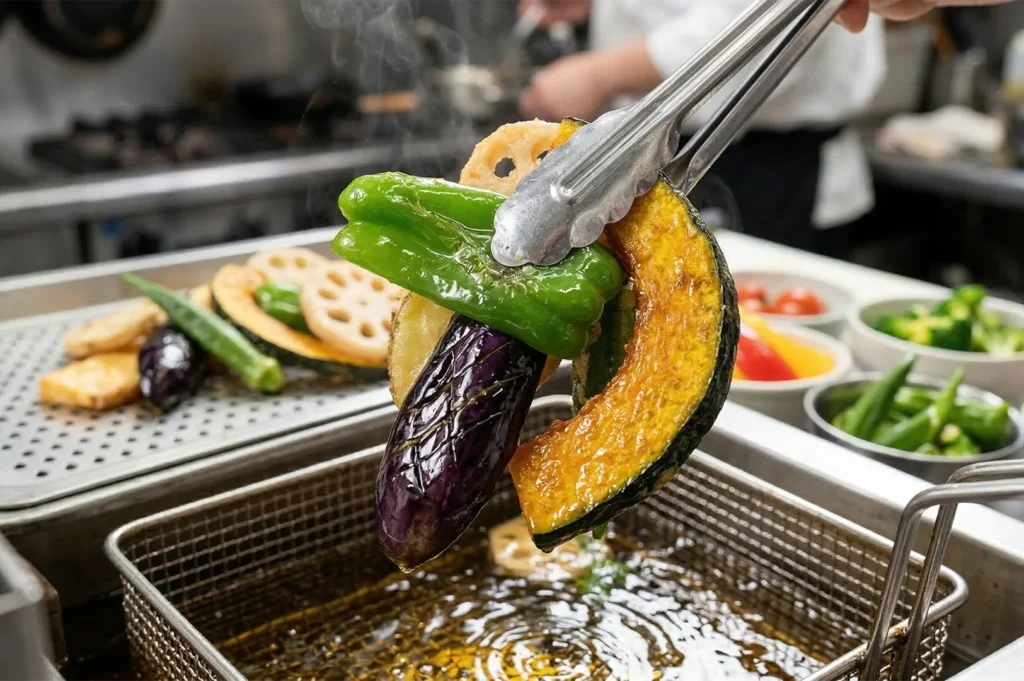
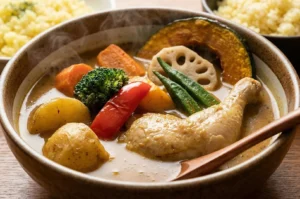
When you order a vegetable soup curry, you are not just getting a bowl of boiled produce. The “authenticity” of the dish is frequently judged by the texture of the root vegetables, such as the lotus root, potatoes, and carrots. In many kitchens, the philosophy is that ingredients should be cooked separately to ensure each reaches its peak consistency.
A hallmark of the region is the Japanese su age technique. This involves deep fried vegetables prepared without any batter or flour. By flash frying ingredients like bell peppers, kabocha squash, and aubergine, the chef locks in moisture while intensifying the flavor. However, some traditionalists argue that certain root vegetables should be steamed first to ensure they are fork tender. The fried vegetables are then added to the soup just before serving. At Soup Curry by Ki-Setsu, we use specific cutting methods to ensure every piece of lotus root or kabocha squash is a perfect bite.
How to Eat Soup Curry: Why Rice and Broth are Served Separately
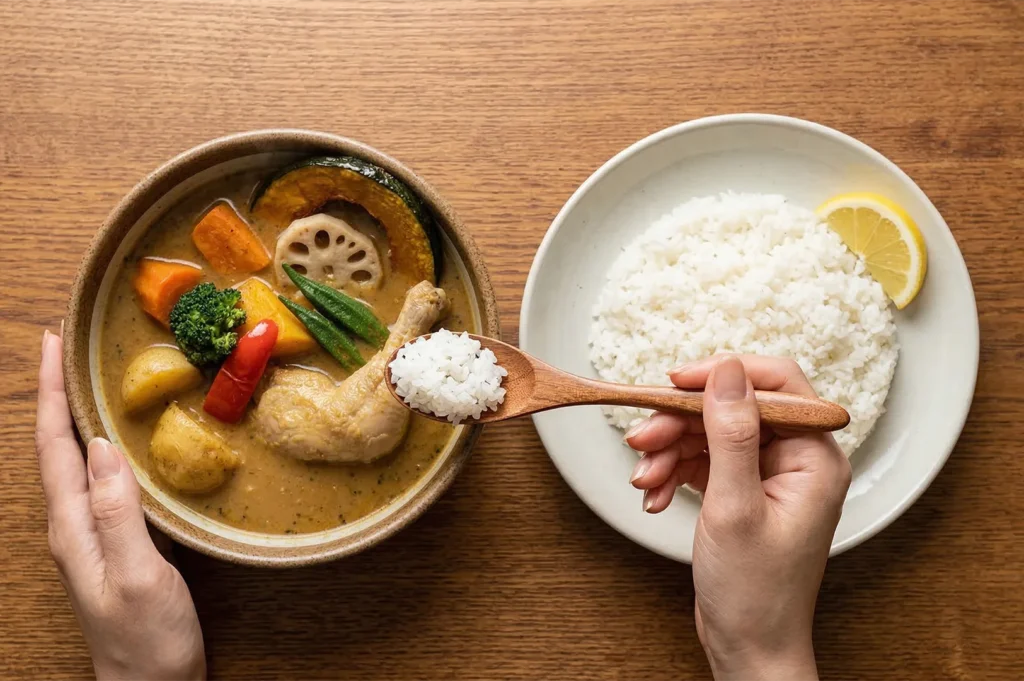
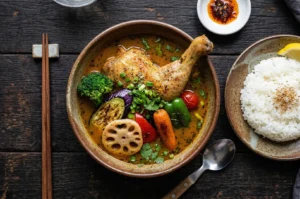
If you want to eat soup curry like a local, you must understand the ritual. A common Sapporo soup curry tradition is that the elements are served separately. You will receive a bowl of curry soup and a plate of steamed rice. A common soup curry truth is that pouring the soup over the rice is often seen as a tourist mistake.
Instead, you dip a spoonful of rice into the curry soup, allowing the grains to soak up the light broth for just a second. This method keeps the rice from becoming soggy and allows you to appreciate the textures of the chunky vegetables and the chicken leg. Many establishments provide a slice of lemon with the rice. Squeezing it over the rice provides an acidity that cuts through the pork bones and spices. Whether you are enjoying a bone in chicken leg or a bounty of other vegetables, this ensures the soul food experience remains balanced.
The Soul Food of Japan's North: Preserving an Iconic Food Tradition
The reason famous soup curry restaurants don’t always agree on a single recipe is that the dish is deeply personal. It is an iconic food born from a desire to create something restorative, blending the traditions of Indian curry with the precision of Japanese cuisine. Whether a restaurant uses soy sauce, pork bones, or a secret blend of spices, the “truth” lies in the intent.
An authentic soup curry must have a soul. It should feel like a warm hug on a cold night. Our approach involves fresh vegetables and a chicken leg that is truly fork tender, served in a broth where every spice has found its place.
Finding Your Own Truth in Every Bowl of Hokkaido Soup Curry
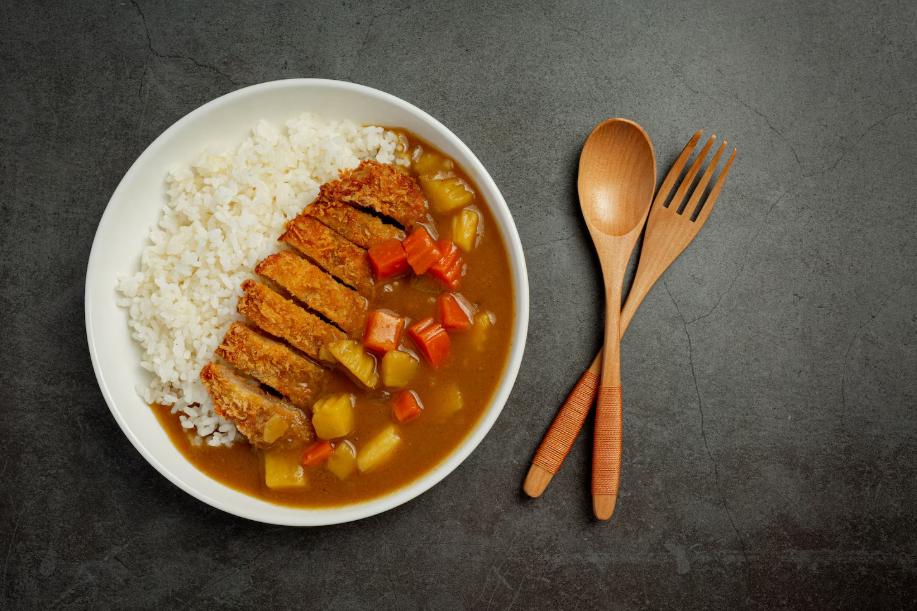
Navigating the world of Hokkaido soup curry is an adventure. From the Japanese su age technique used for fresh vegetables to the choice between a light broth and a rich one, every element is a choice made with passion. While not all soup curry restaurants agree on the specifics, they share a goal: to provide a meal that nourishes both body and spirit.
By exploring truths and debunking misconceptions, you are now prepared to dive into this world of flavor. Whether seeking the natural sweetness of kabocha squash or the heat of a custom soup base, there is a version for all spice lovers. The true authentic soup curry experience is the one that leaves you wanting to return to the large pot for one more spoonful.
From quail eggs and boiled eggs to the perfectly braised meat, every bowl tells a story of Japan’s north.