When guests first glance at a soup curry bowl containing eleven different vegetables, the reaction is often the same: surprise, followed by a quiet question. Is this too much? Does a single bowl really need aubergine, lotus root, pumpkin, bell pepper, potato and more, all swimming together in one aromatic broth? It seems like a fair question in a culinary world that often celebrates restraint, where minimalist plating and a handful of hero ingredients are considered the mark of sophistication.
But soup curry was never designed around restraint. It was built around abundance, and there is a very deliberate logic behind why so many vegetables belong in a single bowl. Far from being excessive, an eleven-vegetable composition reflects both the practical wisdom of Hokkaido’s harsh growing seasons and a genuine culinary philosophy about how flavour, texture and nourishment work together. This is what we want to unpack.
Why Abundance Is the Point, Not the Problem
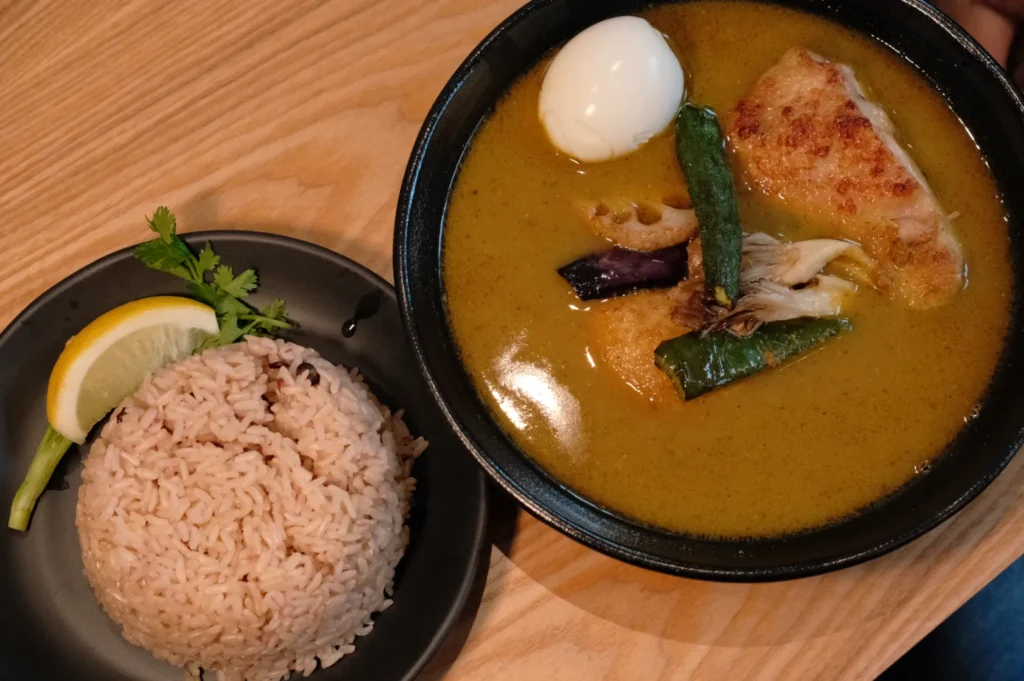
In many curry traditions, vegetables play a supporting role. A stew might feature two or three, cooked down until they melt into the sauce and lose their individual identity. Soup curry takes the opposite approach. Each vegetable is treated as its own contributor, cooked and cut in a way that preserves its shape, colour and character rather than dissolving it into the base.
This means that when we build a bowl with eleven vegetables, we are not padding the dish with filler. We are constructing a small landscape of textures and flavours that guests can taste individually, even while they blend together in the broth.
A piece of pumpkin should taste distinctly of pumpkin. A slice of lotus root should retain its gentle crunch. That level of individual integrity across so many ingredients is precisely what separates a thoughtfully composed bowl from an overloaded one.
The Hokkaido Logic Behind a Crowded Bowl
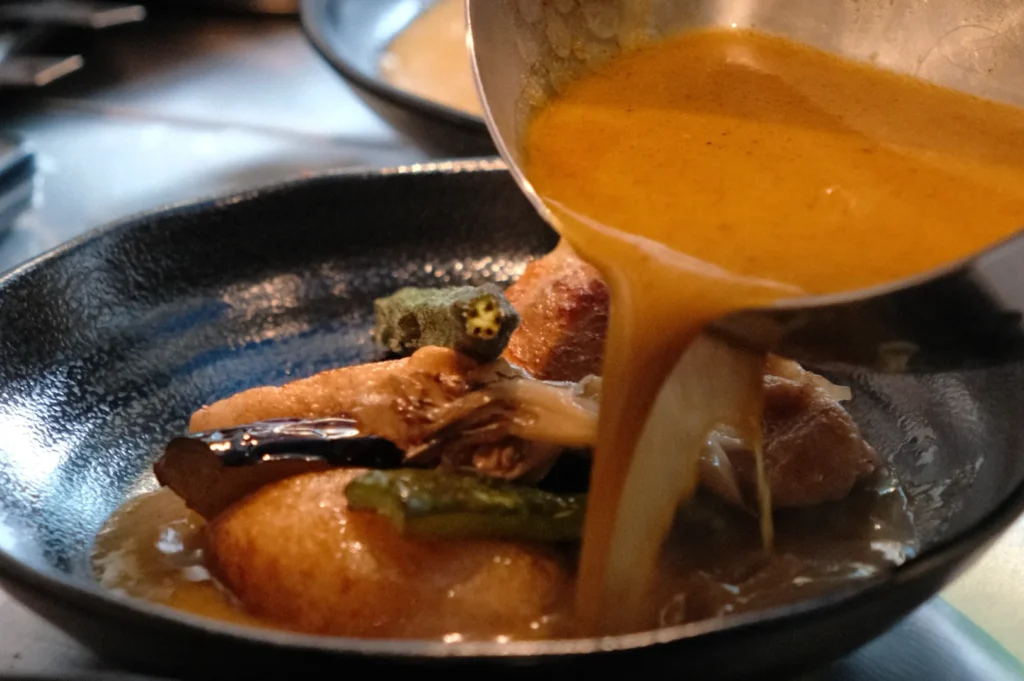
To understand why so many vegetables end up in one bowl, it helps to think about where soup curry comes from. Hokkaido’s growing season is short and intense, and its farmers have long grown a striking variety of produce within that narrow window: pumpkin, potato, carrot, aubergine, sweetcorn and leafy greens all ripen close together. Rather than letting this seasonal abundance go to waste, home cooks and restaurant kitchens alike found ways to use it all at once.
A soup curry bowl, in many ways, became a practical answer to a seasonal reality. Instead of choosing one or two vegetables to headline a dish, the region’s cooks learned to let a whole harvest share the same pot. That habit of welcoming variety rather than editing it down has carried through to how we think about building a bowl today, even far from Hokkaido’s fields.
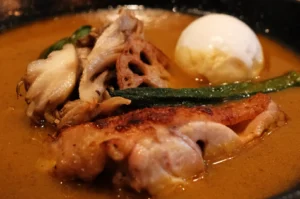
When we prepare our vegetables, several go through a light deep frying process, among them bell pepper, lotus root, aubergine and potato, each cut using traditional Japanese techniques designed to expose more surface area to the hot oil. This is not decoration. It is a method that lets each vegetable develop its own depth of flavour before it ever meets the curry broth, so that by the time eleven ingredients are gathered in one bowl, none of them taste like an afterthought.
How Eleven Vegetables Actually Work Together
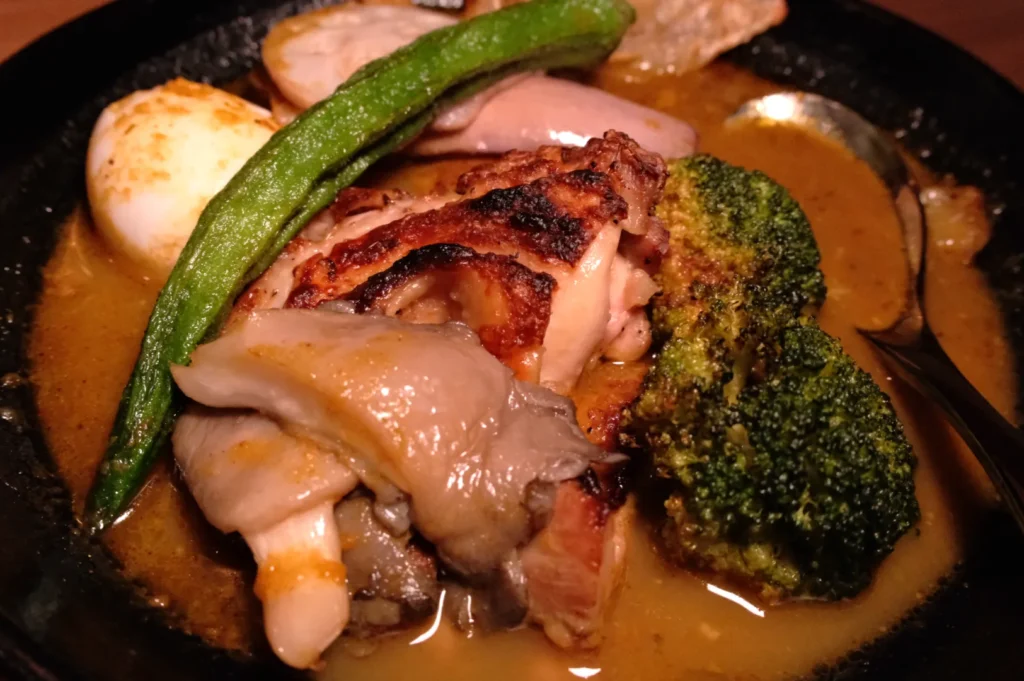
With so many components in one bowl, the real skill lies in how they are arranged to play off each other rather than compete. Two elements do most of the work here: the balance of flavour and the balance of texture. Both are worth looking at closely.
Balancing Sweetness and Earthiness
A well-composed vegetable bowl is really an exercise in contrast. Root vegetables such as potato and carrot bring a grounding starchiness and a natural sweetness that softens the spice of the curry. Alongside them, something like pumpkin adds a deeper, almost caramelised sweetness when it has been fried, while lotus root contributes a light, almost nutty earthiness with its distinctive texture.
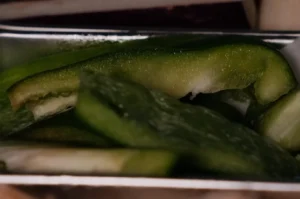
Aubergine plays a different role again. Once fried, it takes on a silky, almost custard like softness that contrasts beautifully with the crunch of a fresh bell pepper or the bite of blanched greens. None of these ingredients would create the same effect on their own. It is only when several are present in the same bowl that the sweetness, earthiness, bitterness and freshness can properly balance one another.
Building Texture Through Variety
Texture is arguably where an eleven-vegetable bowl earns its keep the most. A soup curry bowl with only two or three vegetables risks becoming texturally flat, everything soft, everything similarly cooked. When a wider range of vegetables is used, guests encounter crisp edges from freshly fried pieces, tender give from slow simmered root vegetables, and occasional crunch from something like blanched cabbage or a lightly cooked pod vegetable.
This deliberate range of textures is part of why soup curry feels so satisfying to eat, spoon after spoon. Rather than settling into one texture and staying there, the dish keeps offering something slightly different with each mouthful. That sense of discovery is difficult to achieve with a shorter ingredient list, however well executed it might be.
The Nutritional Logic of a Fuller Bowl
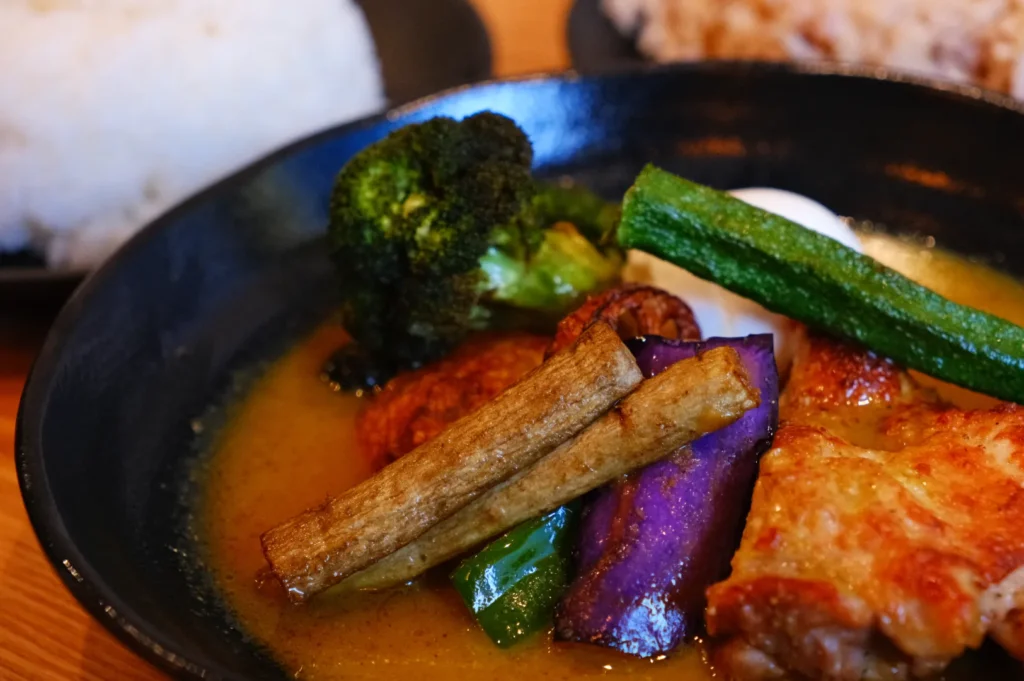
Beyond flavour and texture, there is a simple nutritional argument for including so many vegetables in one dish. A bowl built around eleven different vegetables naturally draws from a wider spread of vitamins, minerals and fibre than a dish relying on two or three staples. Pumpkin and carrot bring beta carotene, leafy greens contribute iron and folate, while root vegetables like potato provide steady, sustaining energy.
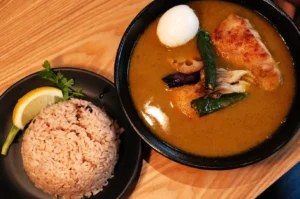
For many guests, a soup curry bowl effectively becomes a complete meal in itself, one that does not require a separate side of vegetables to feel balanced. This is part of why soup curry has long been regarded as comfort food with substance in Hokkaido, not merely a warming broth but genuine nourishment served in a single dish. The chicken simmered in the aromatic curry soup adds protein to round out that nourishment further, so the bowl works as sustenance from every angle rather than indulgence alone.
Why Fewer Ingredients Would Actually Miss the Point
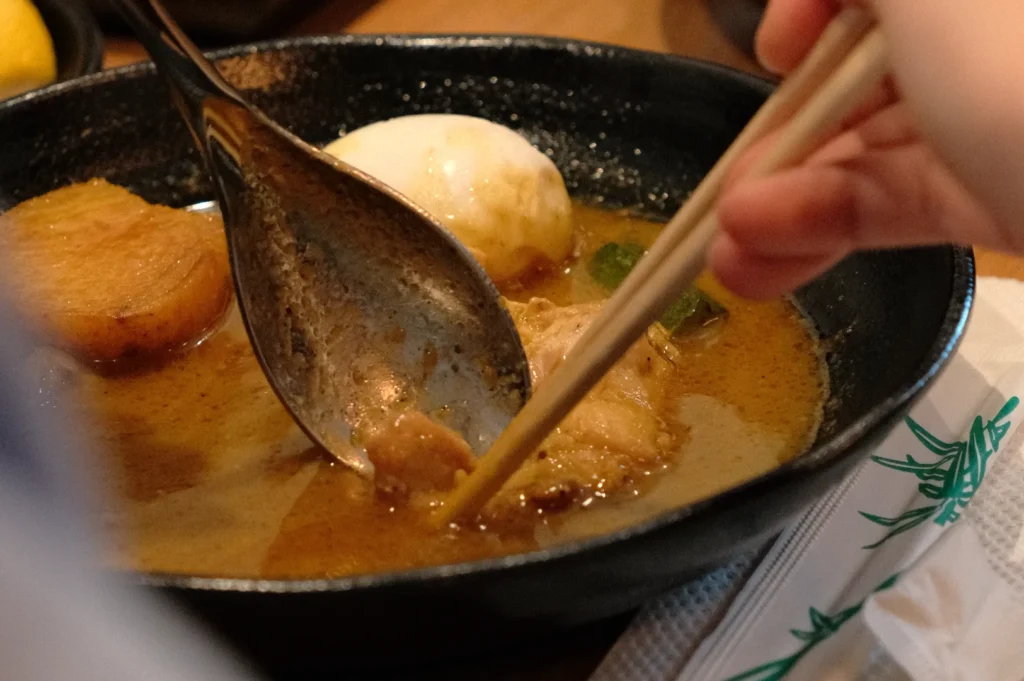
It might be tempting to assume that trimming a bowl down to four or five standout vegetables would create a more refined result, in line with the minimalist instincts that guide much of modern dining. In the context of soup curry, however, that instinct works against the dish rather than for it.
Part of the appeal of soup curry lies in its generosity, both visually and in terms of what guests receive for their meal. A bowl piled with colour, from the deep orange of pumpkin to the purple sheen of aubergine to the green of fresh herbs, communicates warmth and abundance before a single spoonful is tasted. Strip that down to a handful of ingredients and the dish loses much of what makes it feel like a proper Hokkaido meal rather than a curry served with a token vegetable garnish.
There is also a sequencing argument. With eleven vegetables in the bowl, guests naturally slow down, tasting one, then another, comparing textures and flavours as they go. A sparser bowl invites a faster, less exploratory way of eating. Soup curry, at its heart, is meant to be lingered over, and a fuller vegetable composition supports that pace.
How We Think About Composing a Bowl
When we put together a vegetable soup curry, the aim is never simply to fit as many items into the bowl as possible. Every vegetable earns its place because of what it contributes, whether that is colour, crunch, sweetness or a particular way of soaking up the broth. Some pieces are fried just before serving so they retain a slight crispness against the hot soup, while others are simmered longer so they soften into the base and carry more of the curry’s spice.
This kind of composition takes longer than simply tossing a few vegetables into a pot, but it is what allows a bowl with eleven components to still feel coherent rather than cluttered. A crowded bowl, done properly, should read as considered rather than chaotic.
The timing of the meal itself can shape how this abundance is enjoyed too. Many guests come by earlier in the evening purely for the soup curry experience, while others linger as our space eases into a more relaxed izakaya atmosphere later at night, treating the vegetable laden bowl as the anchor of a longer, more sociable meal shared over drinks and conversation.
What Guests Notice Once They Slow Down
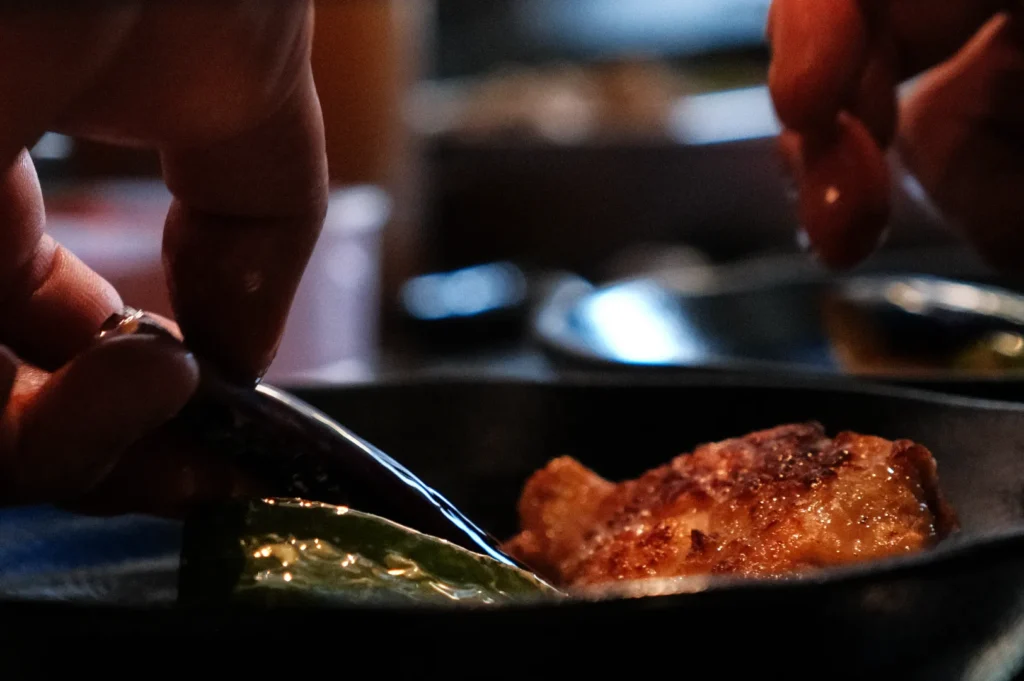
Interestingly, many guests do not consciously register that they are eating eleven separate vegetables until someone points it out to them. What they notice instead is that the bowl keeps surprising them, that no two spoonfuls taste quite the same. That subtle sense of variety, rather than an explicit ingredient count, is really the measure of whether a crowded bowl has been composed well.
It also changes the pace of the meal in a way that guests often comment on. Conversations tend to pause naturally as people work through the different vegetables, comparing notes on which piece they liked best, whether the pumpkin or the lotus root won them over. A bowl this generous almost invites that kind of shared attention, turning a solo meal into something worth discussing at the table.
A Bowl Worth Its Ingredient List
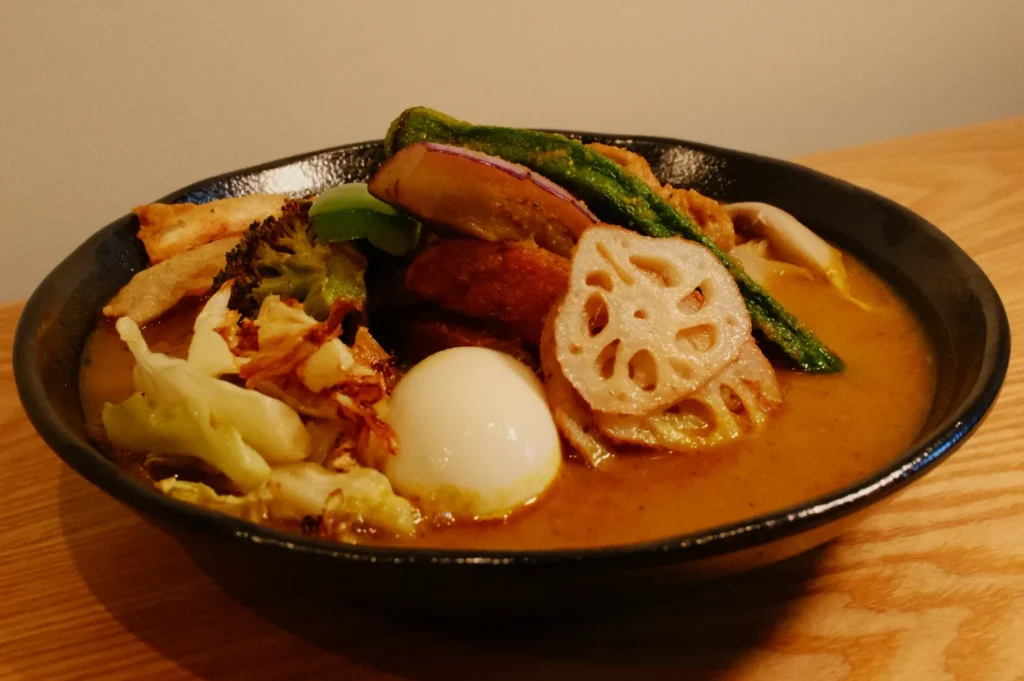
So the next time a soup curry bowl arrives with what feels like an unusually long list of vegetables, it is worth remembering that this abundance is not accidental. It reflects a genuine culinary logic built on seasonal generosity, textural contrast, nutritional completeness and a simple belief that a bowl of comfort food should feel generous rather than sparse.
An eleven-vegetable bowl is not too many ingredients. At Soup Curry by Ki-Setsu, it is, quite deliberately, exactly enough.