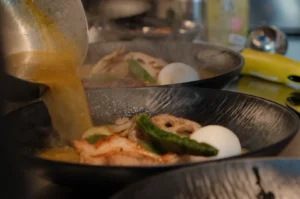
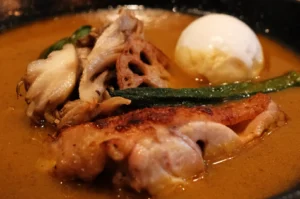
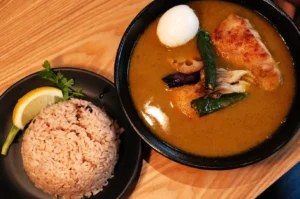
There is a moment in every proper bowl of Sapporo soup curry when a spoon meets a piece of vegetable that has been treated with real care, and the difference is immediate. The surface gives slight resistance before yielding, the inside stays warm and tender, and the flavour of the vegetable itself comes through clearly. This is not an accident. It is the result of a technique many curry soup kitchens skip entirely: deep frying the vegetables before they ever touch the broth.
For soup curry vegetables, boiling or steaming them directly in the pot might seem simpler, but it strips away texture, colour, and much of the character that makes this dish worth ordering. In our approach to vegetable curry soup, flash-frying is not an optional flourish. It is the technique that separates soup curry from an ordinary bowl of curried vegetable soup, and it sits at the heart of every soup recipe we build.
The Problem With Boiling Vegetables Directly in a Vegetable Curry Soup
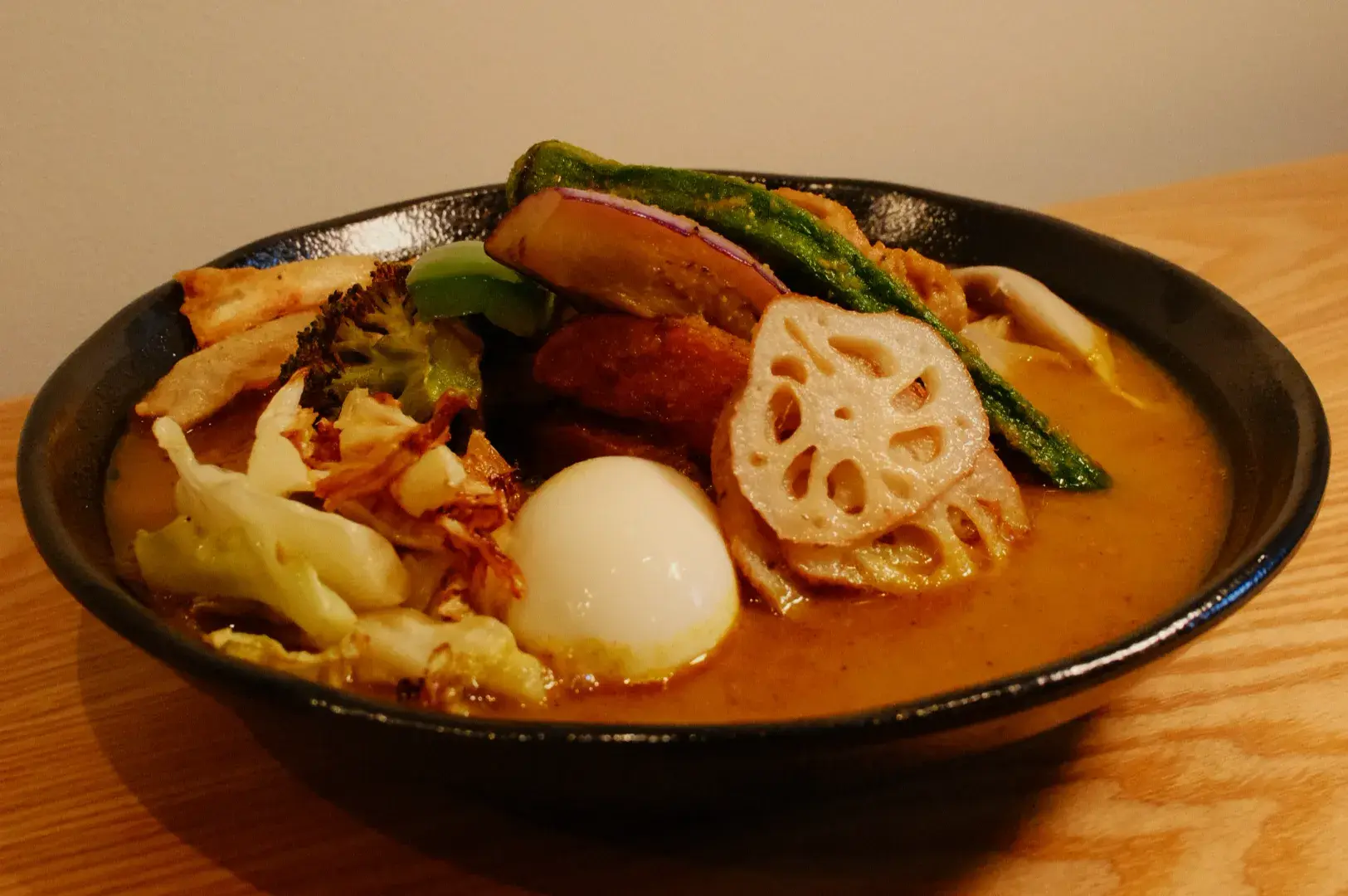
When vegetables go straight into a simmering pot of broth, several things work against the final dish. Sweet potato and kabocha squash break down at the edges, releasing starch and turning what should be a clean, aromatic curry soup cloudier and heavier. Bell peppers lose their snap within minutes. Green beans turn a dull, army green rather than staying vivid. Bok choy wilts unevenly, with the leafy parts collapsing long before the stems soften.
There is also the matter of flavour dilution. Vegetables simmered directly in a large pot of broth donate their flavour to the liquid while absorbing very little back in return. The result is a soup that tastes fine but vegetables that taste like almost nothing, just soft and vaguely curried. Unlike many ordinary vegetable soups, where vegetables are meant to melt into the base, soup curry asks its vegetables to hold their shape and speak for themselves.
This is where many typical curry restaurants fall short, treating vegetables as an afterthought rather than a component deserving its own preparation. We think about soup curry vegetables differently.
What Deep Frying Does for Soup Curry Vegetables
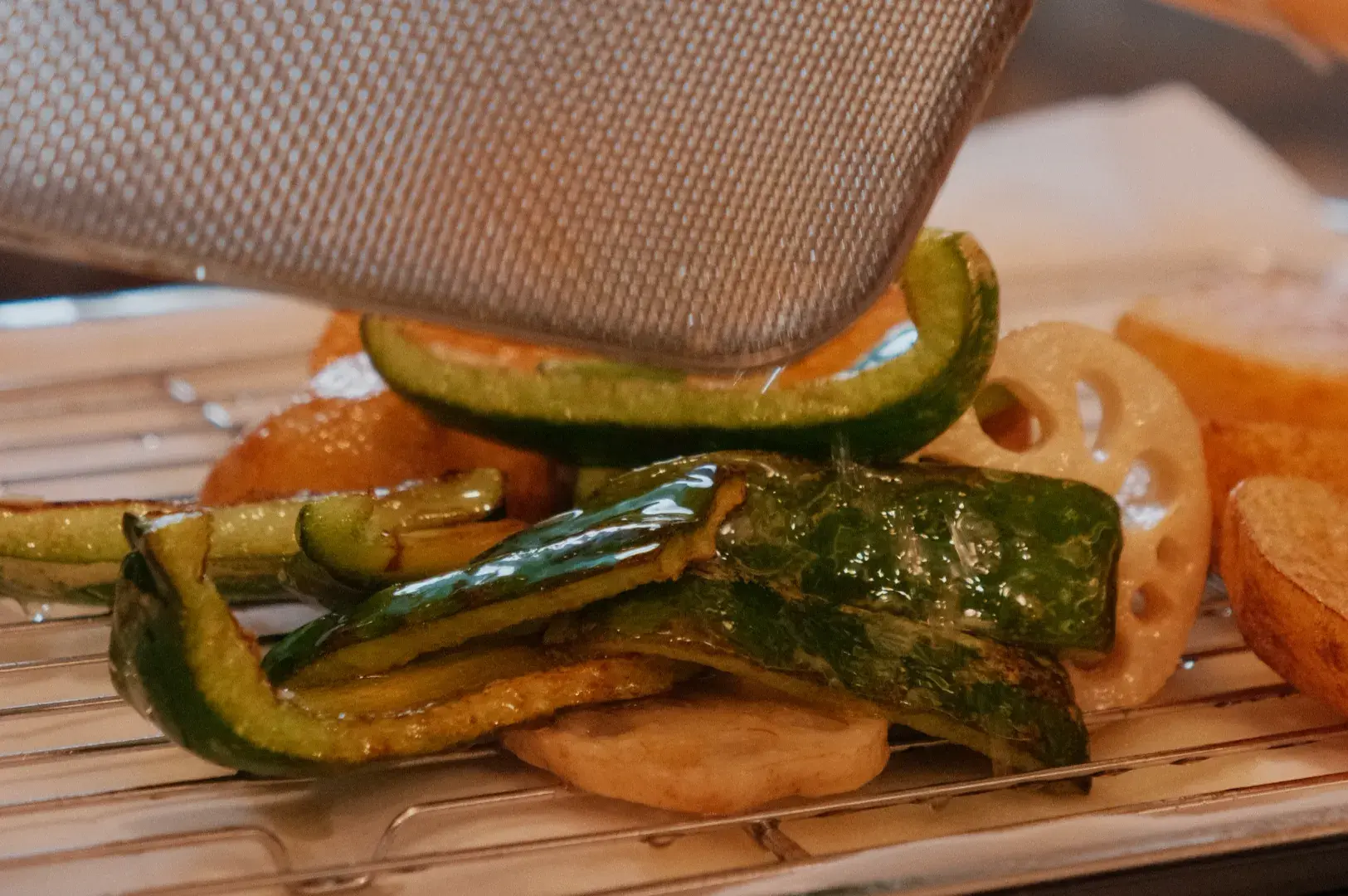
Deep frying vegetables before they meet the broth achieves something a simmering pot never can: it seals the exterior while allowing the interior to cook through gently. A hot oil bath, typically held at medium high heat, creates a light crust on each piece within seconds. This crust acts as a barrier, keeping moisture inside the vegetable rather than letting it leach into the liquid, and preventing the broth from softening the vegetable any further once combined.
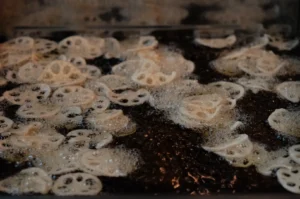
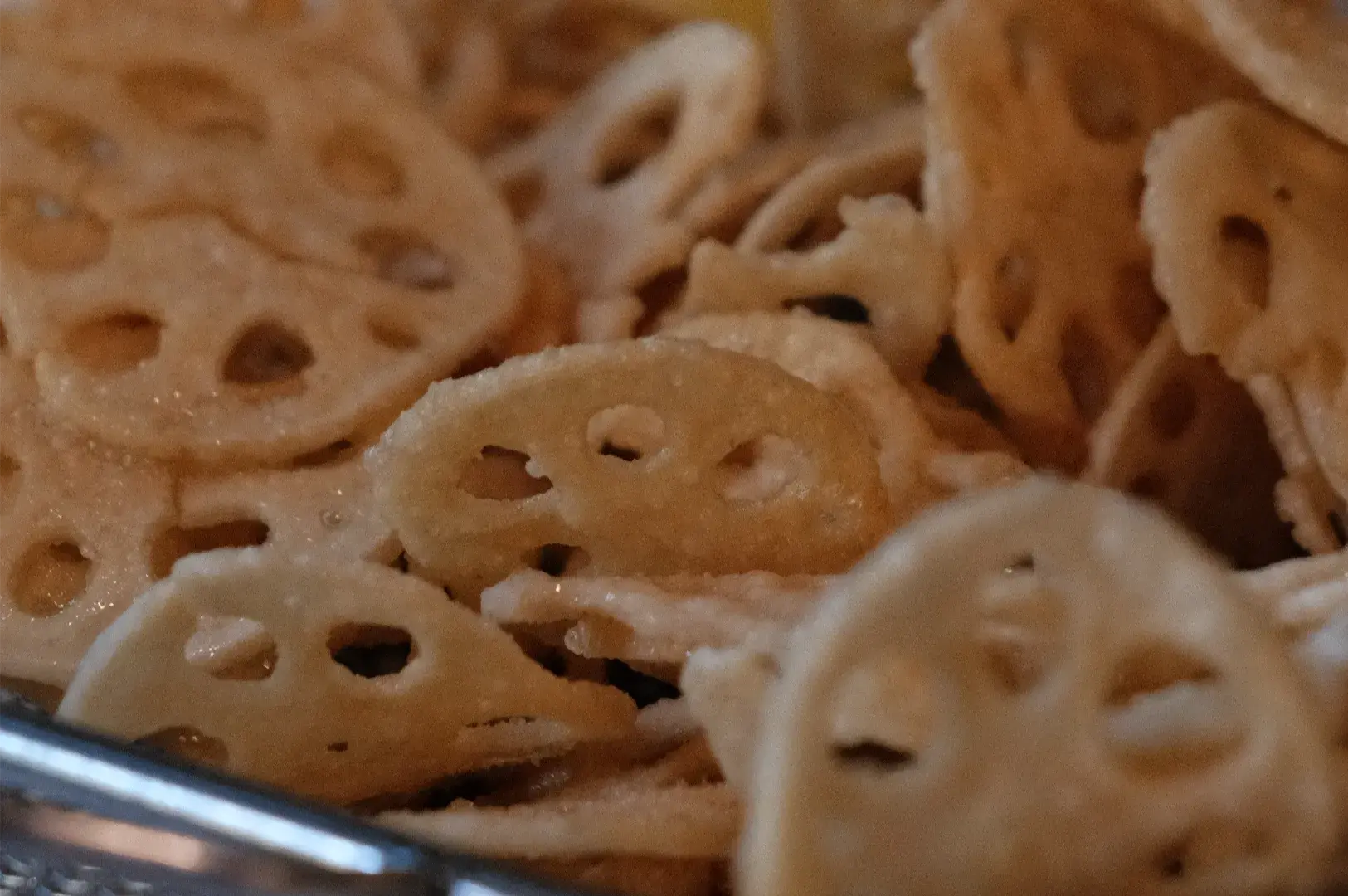
The result is texture with genuine contrast. Bite into a piece of deep fried aubergine or lotus root that has spent time in a warm curry soup, and you get a slightly firm, faintly crisp exterior giving way to a tender, almost custardy centre. That contrast does not exist when vegetables are boiled from raw, nor in a slow cooker, where hours of gentle heat soften everything to the same texture.
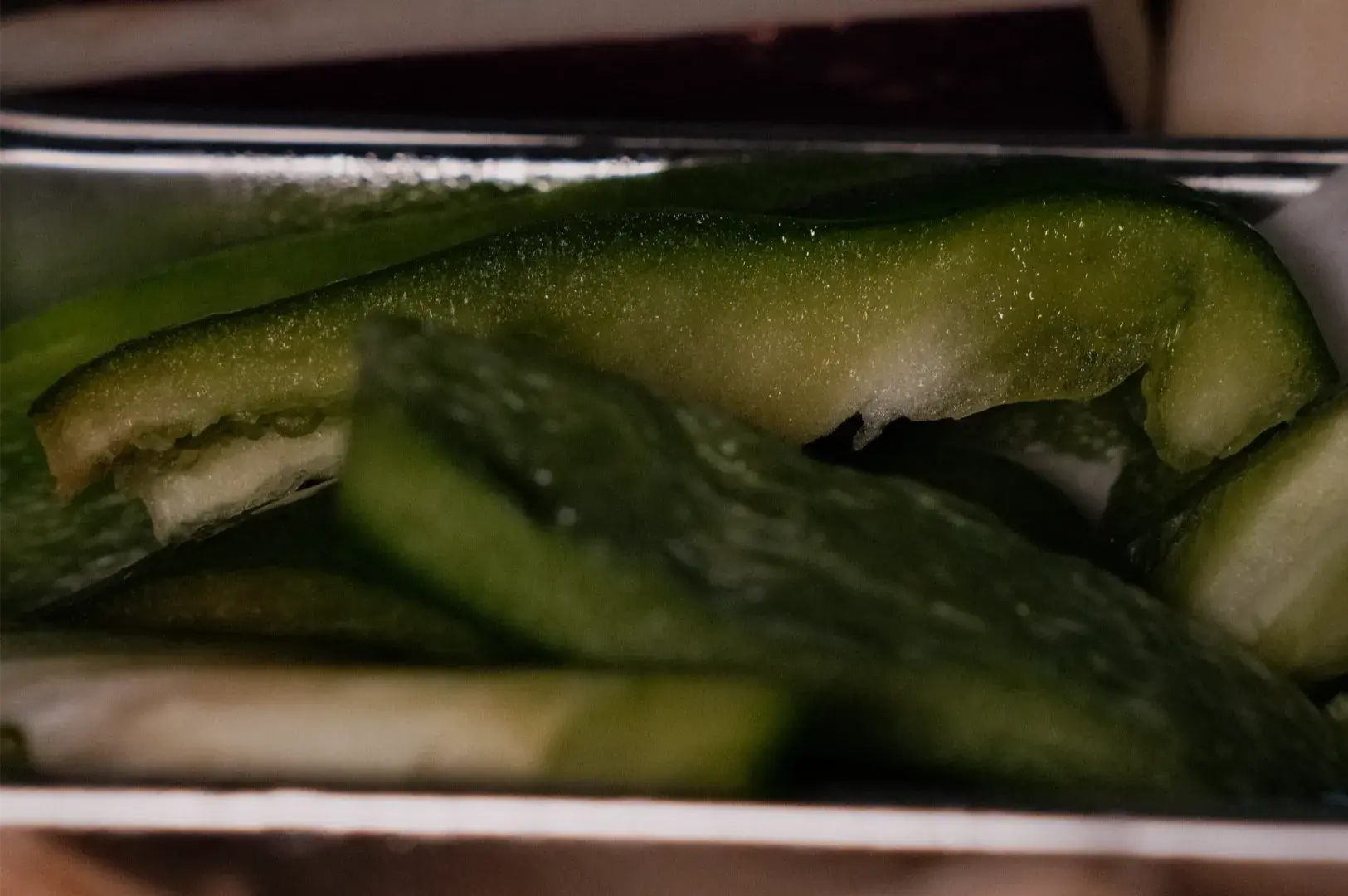
There is a colour benefit too. Bell peppers, both the red pepper and green varieties, keep much of their original brightness when flash-fried rather than boiled, because the short, high-heat cooking time does not break down the pigments the way a slow, gentle boil would. A bowl of soup curry should look vibrant, not muted, and the vegetables are largely responsible for that impact.
Read: Hokkaido Vegetables, Su-Age Style: Crisp, Colourful, Comforting
Sapporo Soup Curry Roots and the Flash-Fry Tradition
This method is not a modern shortcut. It traces back to how sapporo soup curry developed in Hokkaido, where the cold climate shaped a cuisine built around warming broths and vegetables prepared to hold their own against that broth rather than dissolve into it.
Traditional Hokkaido kitchens have long favoured deep frying vegetables separately before uniting them with the curry soup at the point of serving. Root vegetables like sweet potato and kabocha squash are dense and would need excessive simmering time to soften in broth alone, whereas a hot oil bath cooks them through more efficiently while preserving their natural sweetness and cutting down overall cooking time.
We follow this same principle because it produces a noticeably better bowl. The vegetables are fried separately in small batches, then added just before serving, so every piece retains its own identity rather than becoming an extension of the broth.
From Sweet Potato to Bell Pepper: Choosing What to Deep Fry
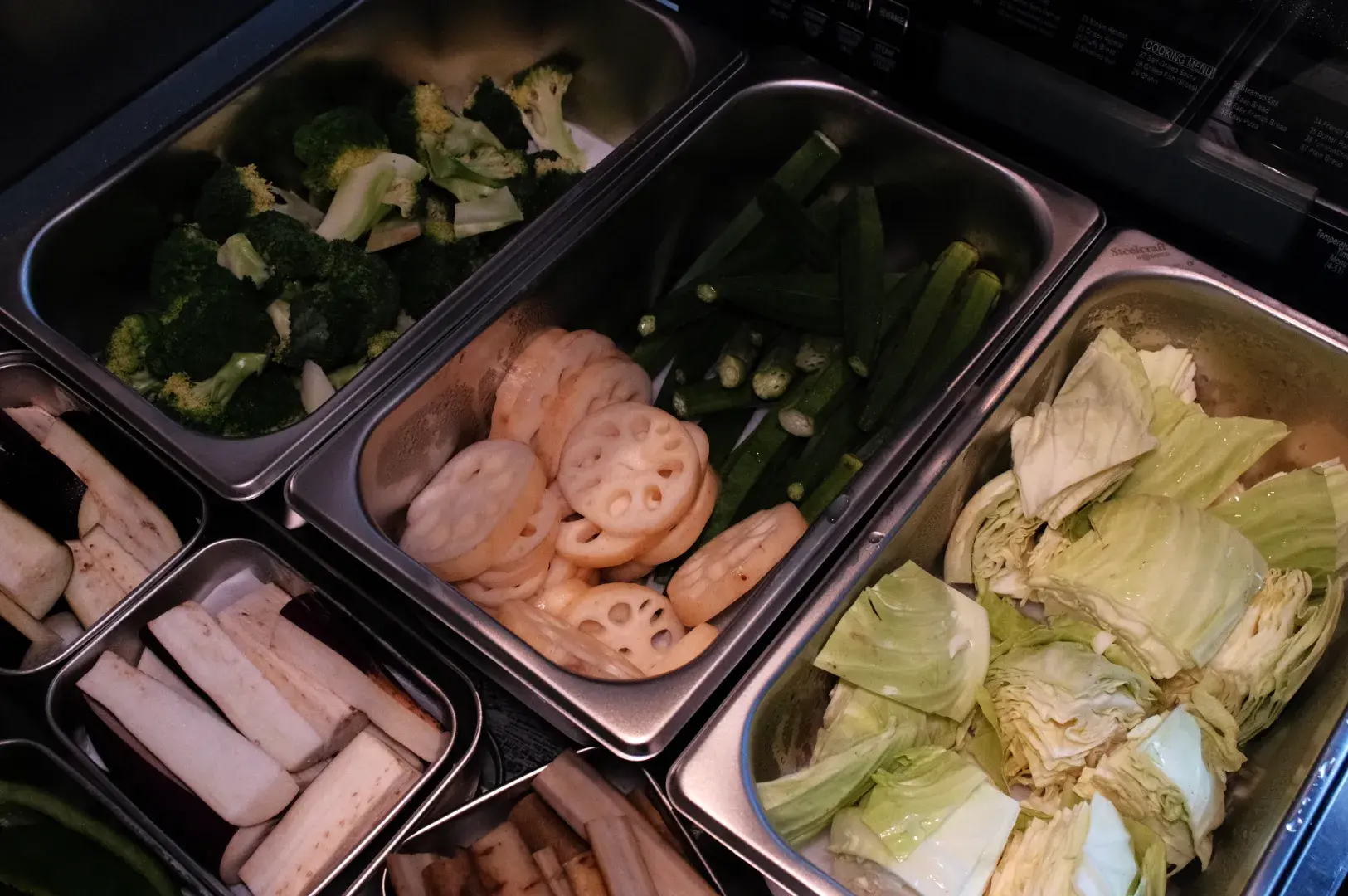
Not every vegetable behaves the same way in hot oil, so selection matters as much as method. Dense, starchy vegetables such as sweet potato, kabocha squash, and potato are ideal candidates. Their sugars caramelise slightly during frying, adding a faint sweetness that balances the heat of the curry flavour. Sweet potatoes in particular develop a beautifully nicely browned edge that holds up well even after sitting in a hot bowl for several minutes.
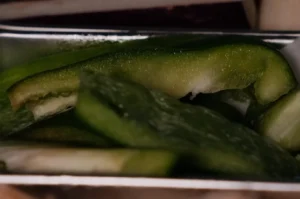
Bell peppers, whether red bell pepper or green, benefit from a quick flash fry that softens them just enough to lose their raw bite while keeping a slight crunch. Green beans and snow peas need an even shorter time in the oil, just enough to take the rawness off without overcooking them.
Lotus root and aubergine, both staples in an authentic approach to soup curry vegetables, are cut using specific Japanese methods that maximise surface area, letting more of each piece develop that light, crisp exterior. The cut affects how a vegetable fries and, later, how it interacts with the broth. Not all the vegetables need identical treatment, and knowing which piece needs thirty seconds versus two minutes comes from repetition, the kind of instinct any recipe developer builds over time.
How This Technique Elevates Every Curry Soup Bowl
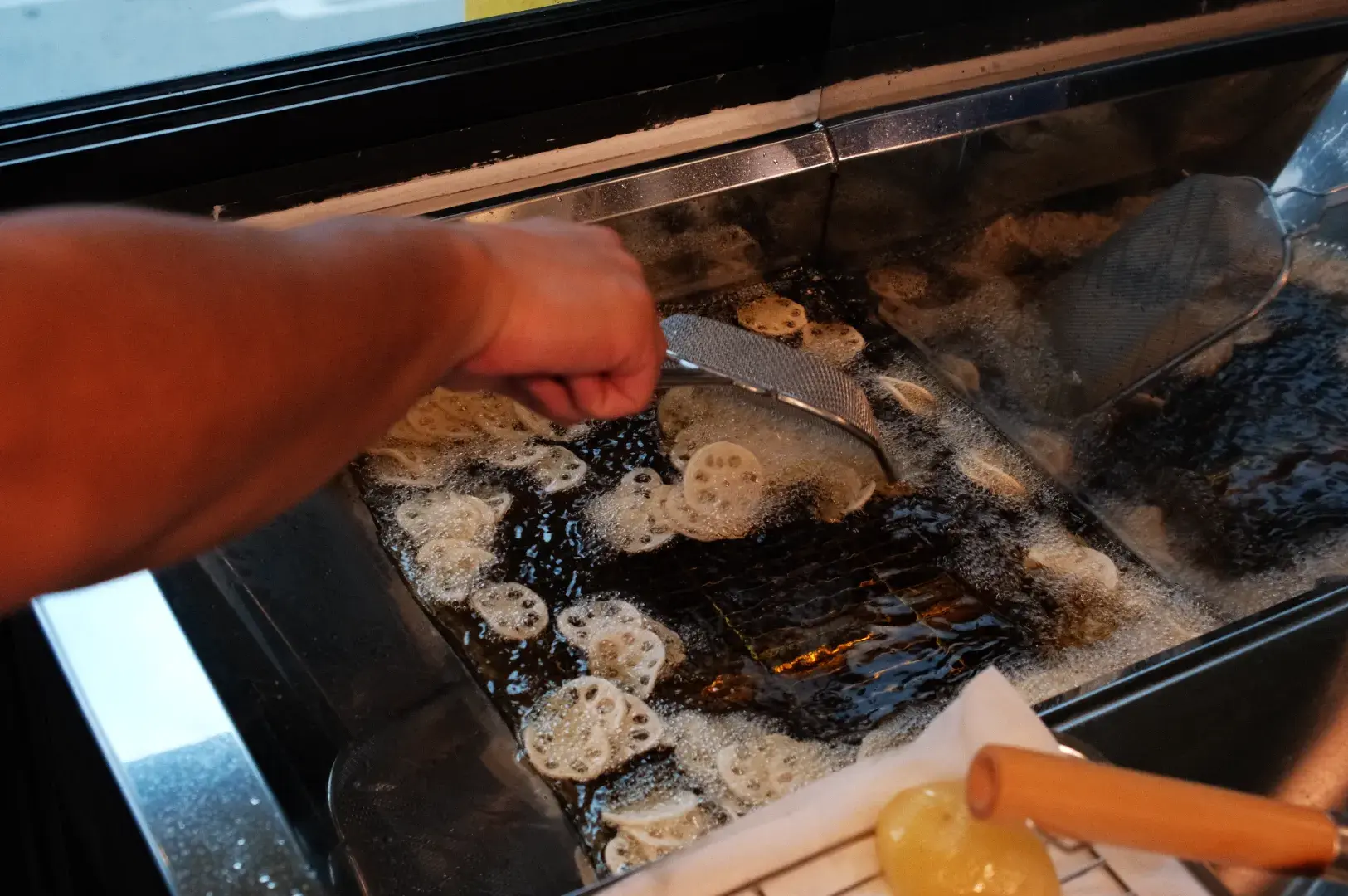
Once fried, the vegetables are added to the curry soup rather than cooked within it, and this final step is where the technique pays off. Because the vegetables have already been cooked separately, the broth can be built purely for depth of flavour. A base of yellow onion sautéed slowly in a touch of olive oil over medium heat forms the foundation, followed by curry powder, garam masala, ground turmeric, and often a pinch of cayenne pepper for warmth.
From there, chicken stock, chicken broth, or vegetable broth and vegetable stock all work, depending on whether the bowl includes meat or stays plant based. If chicken is part of the bowl, we add chicken early enough that it simmers gently alongside the aromatics, well before the fried vegetables join the pot.
Red Curry, Japanese Curry, and the Broth Question
There is sometimes confusion between the broth style used in Japanese curry soup and the profile associated with red curry or thai red curry paste. Japanese curry soup leans closer to a thick curry roux. Some curry soups instead lean on coconut milk for richness, whether creamy coconut milk, full fat coconut milk, or coconut cream. A proper Hokkaido style broth takes a different route. It favours a clear, savoury base built from bone in chicken, garlic and ginger, and fresh ginger and grated ginger worked into a garlic ginger paste.
A careful blend of spices goes in next, sometimes finished with soy sauce, fish sauce, or fresh cilantro for depth. Either direction benefits from the same principle, whether you reach for thai red curry paste or green curry paste. Vegetables should be prepared separately, then introduced at the end, so the curry flavour never overwhelms their own character.
This is also why we sauté onion and fresh garlic separately, then build the broth slowly over a gentle boil, stirring occasionally, in a dutch oven or any large pot. Every component is treated with its own method rather than thrown together.
Serving It Right: Steamed Rice and the Final Bowl
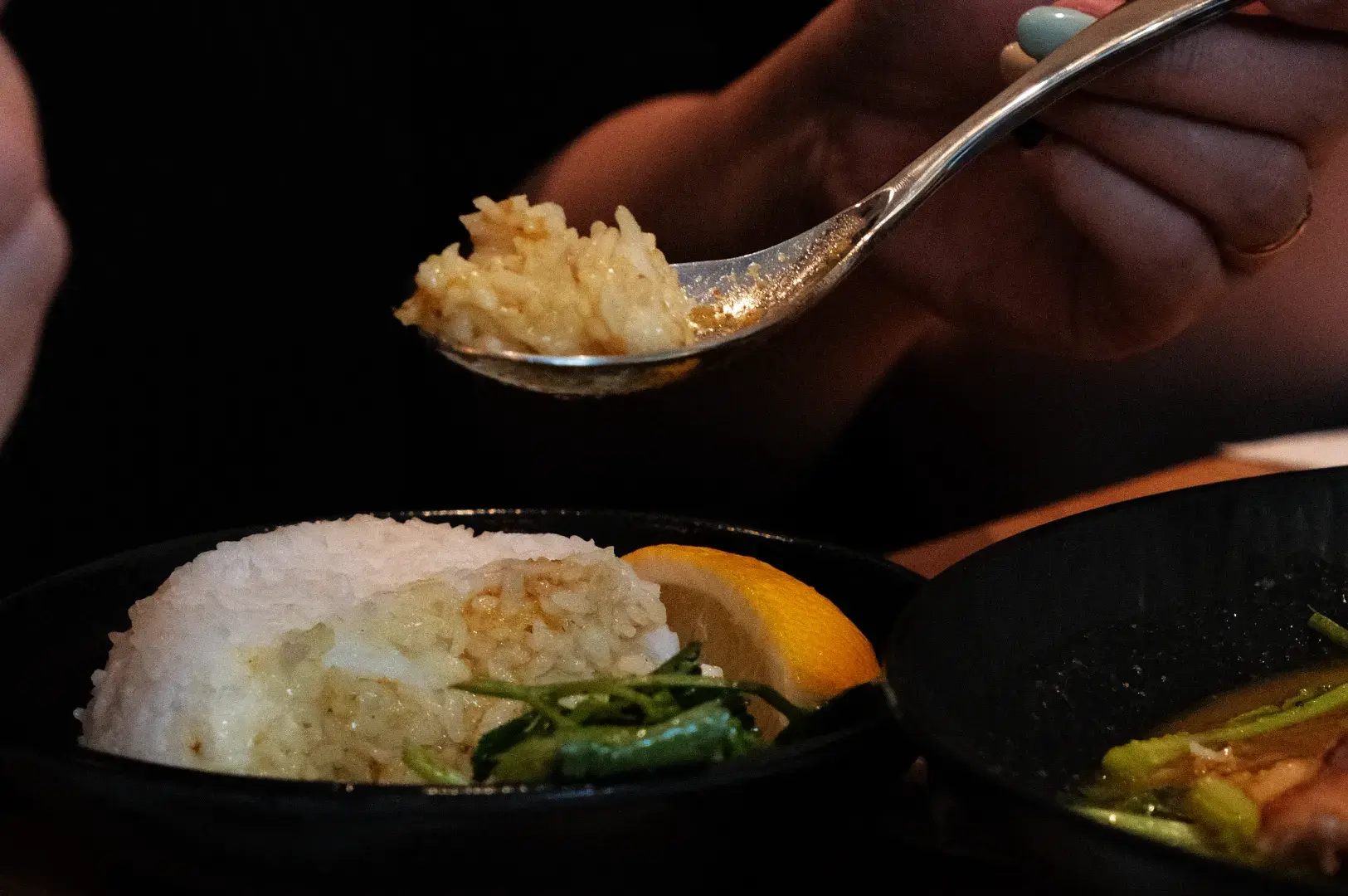
A bowl of soup curry vegetables is traditionally served alongside steamed rice or other cooked rice, kept separate rather than mixed directly into the broth. This is intentional. The rice acts as a counterpoint, something plain and warm to alternate with each spoonful of curry soup, and it gives diners control over how much broth they want per bite.
Some modern interpretations swap the rice for rice noodles or even ramen noodles, though the traditional Hokkaido approach keeps rice as the anchor. Dipping rice into the soup, rather than pouring broth over it, keeps the rice from becoming soggy and preserves the textural journey the deep fried vegetables were designed to offer. A scatter of green onion and fresh herbs just before serving adds a final layer of brightness, along with a squeeze of lime juice for anyone who wants extra lift.
Can This Approach Work for a Vegan Soup Too?
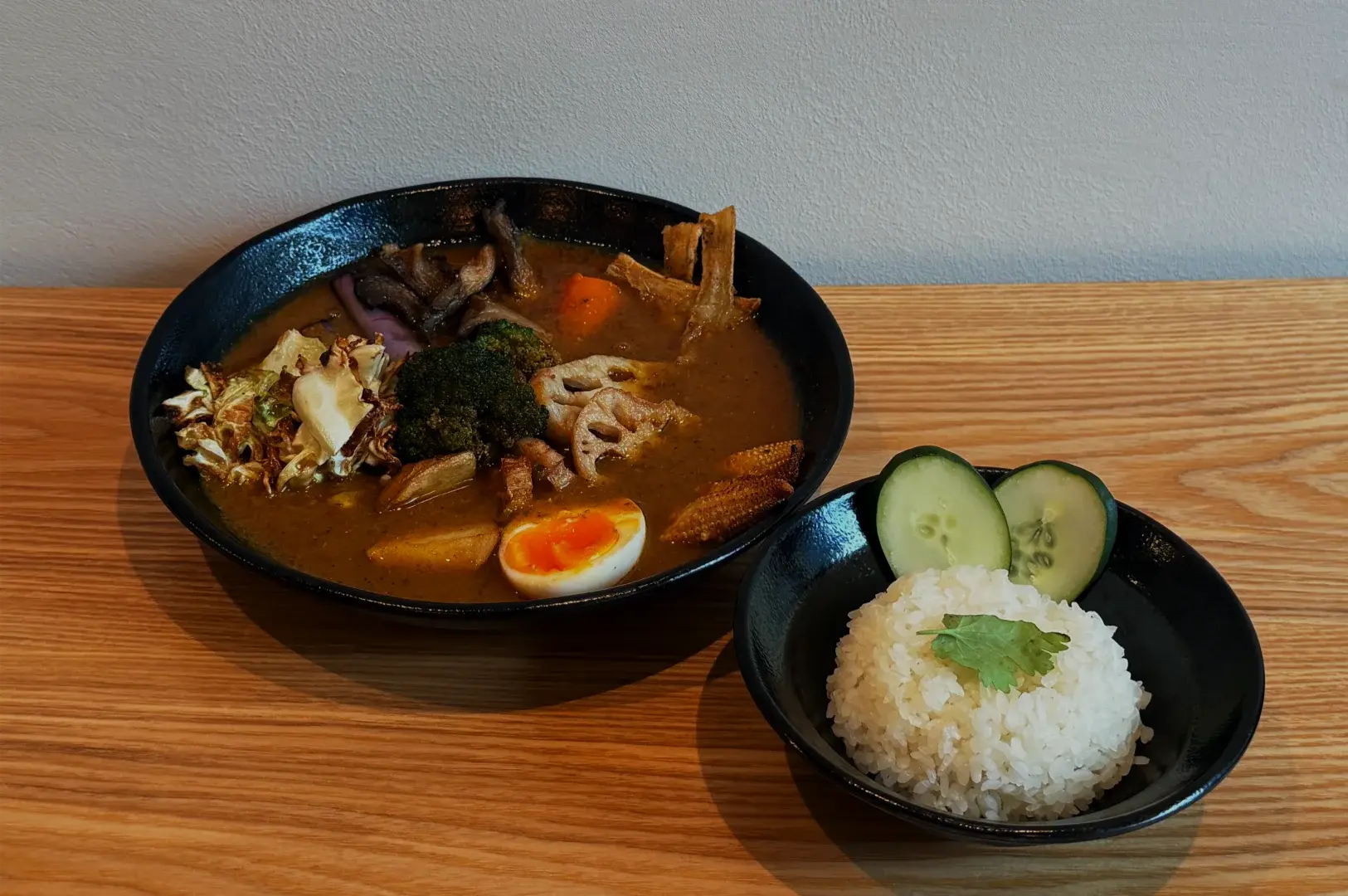
A common question is whether this technique translates to a vegan soup. It does, and arguably it matters even more in a plant based bowl. Without meat to provide textural variety, the fresh veggies carry the entire dish, so the contrast between a crisp fried exterior and a tender interior becomes essential rather than decorative.
A vegan version might lean on vegetable stock, garbanzo beans for added substance, and the same lineup of deep fried sweet potato, bell pepper, and green beans, finished with coconut aminos, brown sugar, and a pinch of red pepper flakes to round out the curry flavour. Flash-frying remains the technique that makes the vegetables worth eating on their own merit, regardless of whether meat is involved.
Bringing the Method Home
For anyone keen to test this as recipe inspiration at home, the principle holds regardless of scale. Fry the vegetables in small batches so the oil temperature does not drop, drain well, and keep the broth simmering separately. Leftover fried vegetables can be kept in an airtight container apart from the broth and combined again just before eating, which preserves far more texture than storing everything together.
It is a lovely recipe to revisit slowly, and switching your phone to cook mode while frying helps you keep track of timing. Once you review recipe notes and required recipe ratings from others who have tried it, you will likely land on your own version.
A Technique Worth Defending
Boiling vegetables into a pot of curry soup is faster, and for many kitchens, faster wins. But that approach loses the very qualities that make soup curry distinctive: colour, contrast, and the sense that every element was considered individually before being brought together.
At our restaurant, part of what makes this dish feel different from a typical vegetable soup is exactly this refusal to cut that corner. For anyone new to the format, whether through a soup recipe at home or a bowl ordered at Soup Curry by Ki-Setsu, the vegetables deserve the same attention as the broth they sit in.