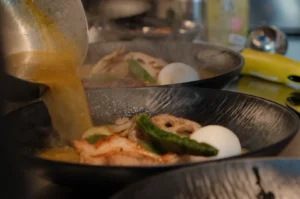
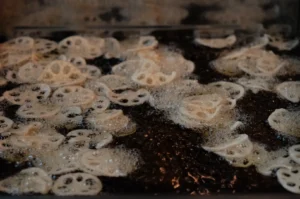
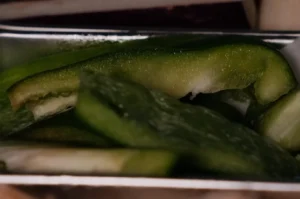
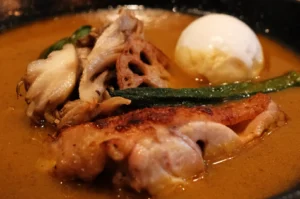
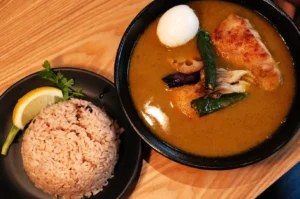
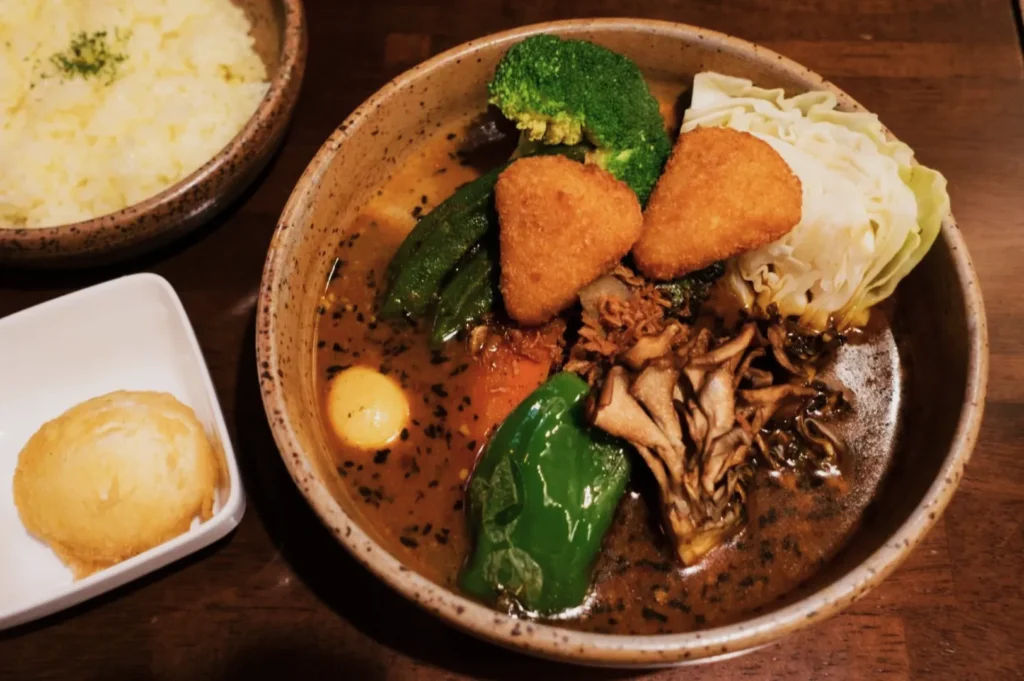
There is a moment in every bowl of authentic Hokkaido soup curry that catches people off guard. The vegetables arrive vibrant and almost luminous: a lotus root golden at its edges, aubergine with a tender interior that gives way with the lightest press of a spoon, bell peppers that hold their colour as though they had never touched heat at all.
What makes this possible is not magic, but mastery. It is a Japanese frying technique called su-age, traditionally used not only for vegetables but also for seafood, and once you understand it, you will never look at deep-fried vegetables the same way again.
What the Su-Age Actually Means
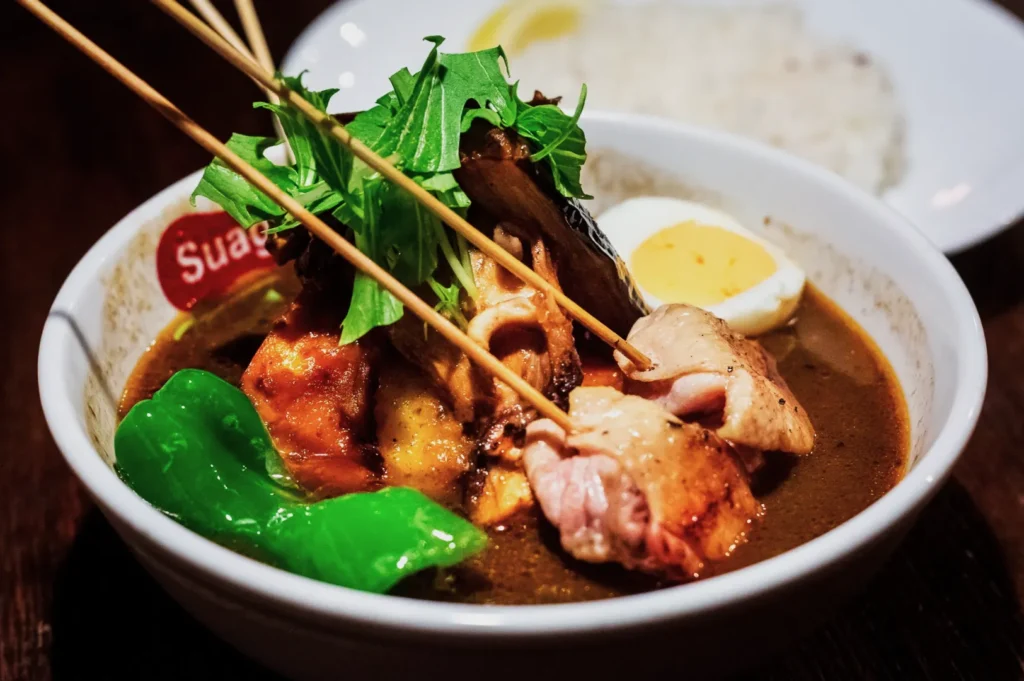
The term “su-age” translates roughly to “plain frying” or “naked frying” in Japanese. Unlike many other forms of deep frying, the su-age technique involves no batter, no coating, and no breadcrumbs. The vegetable goes directly into hot oil, unadorned and unshielded, and is flash-fried until its surface seals and its interior softens at its own pace.
This is a deceptively simple idea with a profound effect. Because there is no batter to absorb oil or trap moisture unpredictably, the vegetable interacts with the heat directly. The exterior crisps just enough to create a light, protective layer, whilst the inside steams gently in the vegetable’s own natural moisture. The result is food that is neither greasy nor soggy but exists in an entirely different category: clean, honest, and deeply flavourful.
Why the Absence of Batter Matters
Most people associate deep-fried foods with heaviness. That association exists for good reason. Traditional battered or coated frying creates a shell that, whilst delicious in its own right, often overshadows the ingredient inside. The batter becomes the main event, with the vegetable playing a secondary role.
Su-age flips this entirely. Without a batter, there is nothing to distract from the vegetable itself. Every bite delivers the ingredient’s natural sweetness, earthiness, or subtle bitterness without interference. For soup curry, where the vegetables are meant to complement and absorb a rich, spiced broth, this matters enormously. A battered vegetable would compete with the soup. A su-age vegetable becomes part of it.
How Flash Frying Differs from Conventional Deep Frying
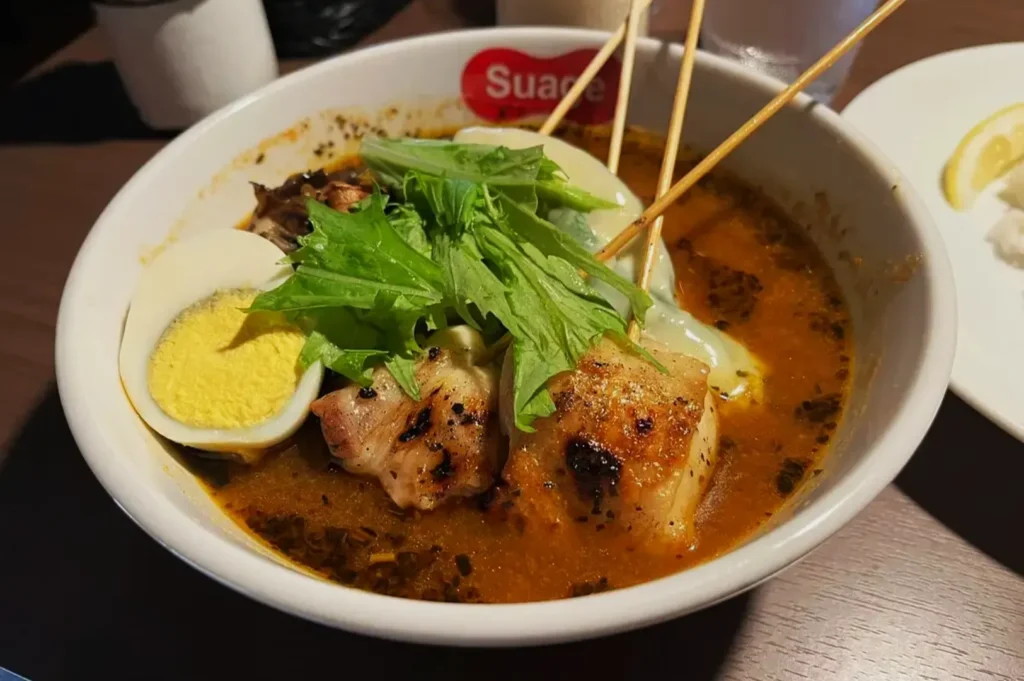
The su-age technique is closely associated with flash frying, and the distinction between this and standard deep frying is worth understanding clearly. Conventional deep frying tends to be a longer, lower-temperature process. Food is submerged in oil for several minutes, cooking through from the outside in, often at temperatures between 160°C and 175°C.
Flash frying, as used in su-age, involves significantly higher oil temperatures and shorter cooking times. The vegetable is introduced to oil that may be anywhere from 180°C to 200°C and removed within a minute or two, sometimes less depending on size and density. This speed is essential. It means the outside of the vegetable seals and colours quickly, but the inside retains moisture and texture rather than cooking to mush.
What Happens to the Vegetable at High Heat
At flash-frying temperatures, something interesting happens to the surface of an uncoated vegetable. The sudden exposure to intense heat causes the outer cells to dehydrate rapidly, creating a thin, slightly firm layer. This acts as a natural barrier, slowing further oil absorption and locking in the vegetable’s internal moisture. The flavour compounds that sit near the surface caramelise lightly, adding depth and a gentle sweetness that no amount of seasoning can fully replicate.
This is why deep-fried vegetables prepared with the su-age technique taste so alive. They have undergone a real transformation at the molecular level, one that concentrates rather than dilutes their character.
Why Su-Age is the Right Choice for Other Vegetables
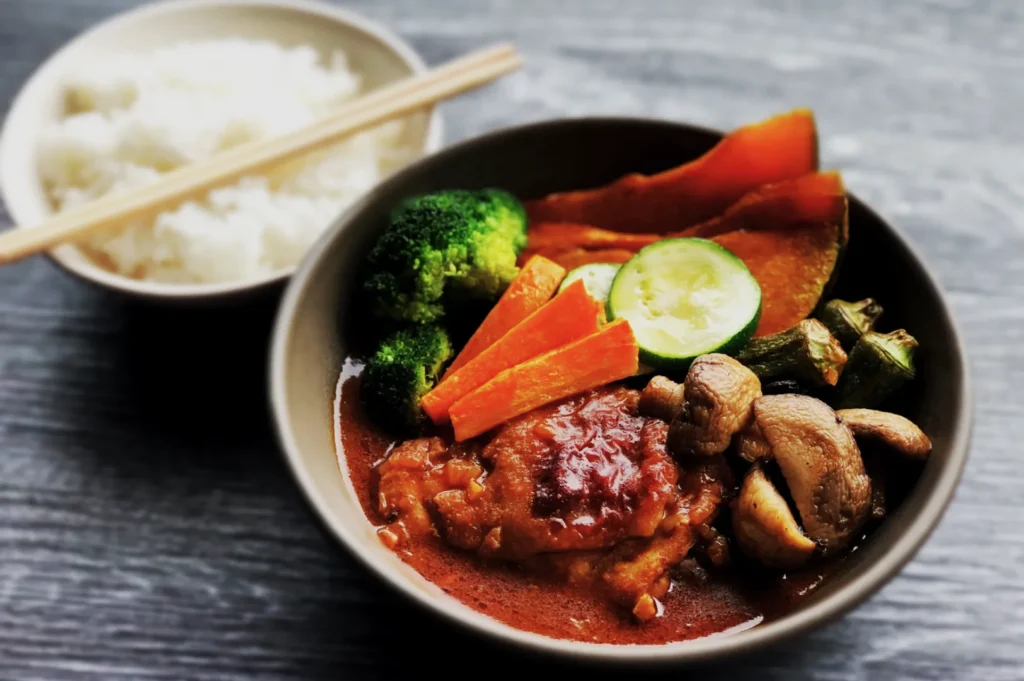
Soup curry is not a dish where the vegetables play a passive role. In Hokkaido-style soup curry, each component must be able to stand on its own whilst also functioning as part of a collective. The broth is fragrant and complex, built from chicken bones, garam masala, and aromatics simmered over time. The rice is separate. The proteins are substantial. And the vegetables must hold their own without disappearing into the soup or falling apart after five minutes.
This is precisely why the su-age technique is so well suited to this dish. The sealed exterior created by flash frying acts as a gentle shell that slows the absorption of liquid. When a su-age vegetable enters the soup curry broth, it does not immediately become waterlogged. Instead, it gradually takes on the flavour of the spiced broth whilst retaining enough structural integrity to offer a satisfying bite.
The Specific Vegetables We Use and Why They Work So Well
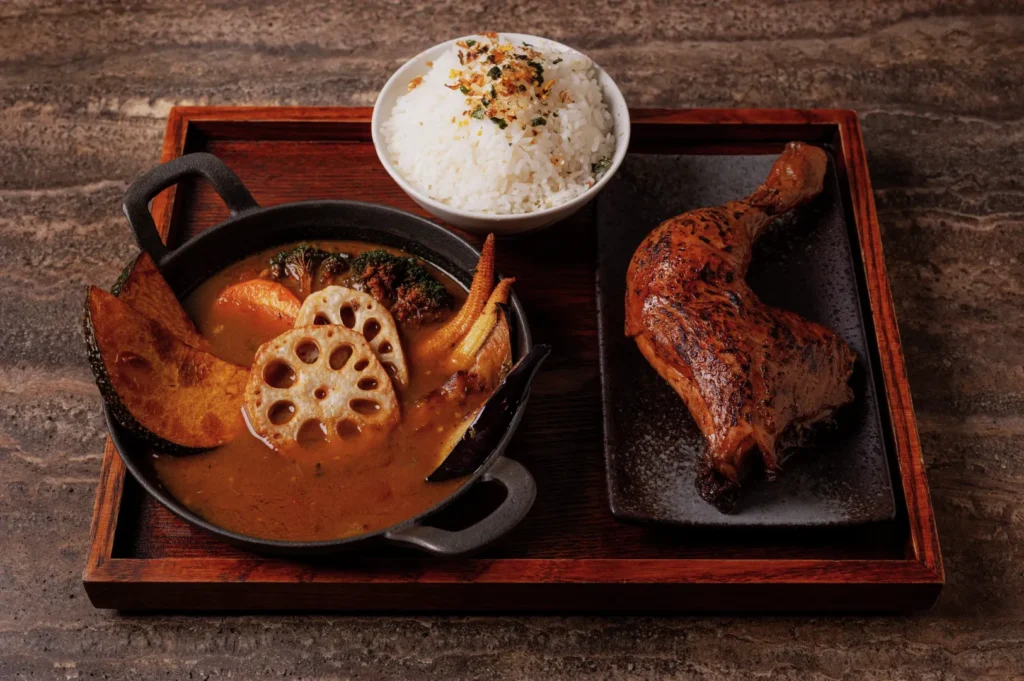
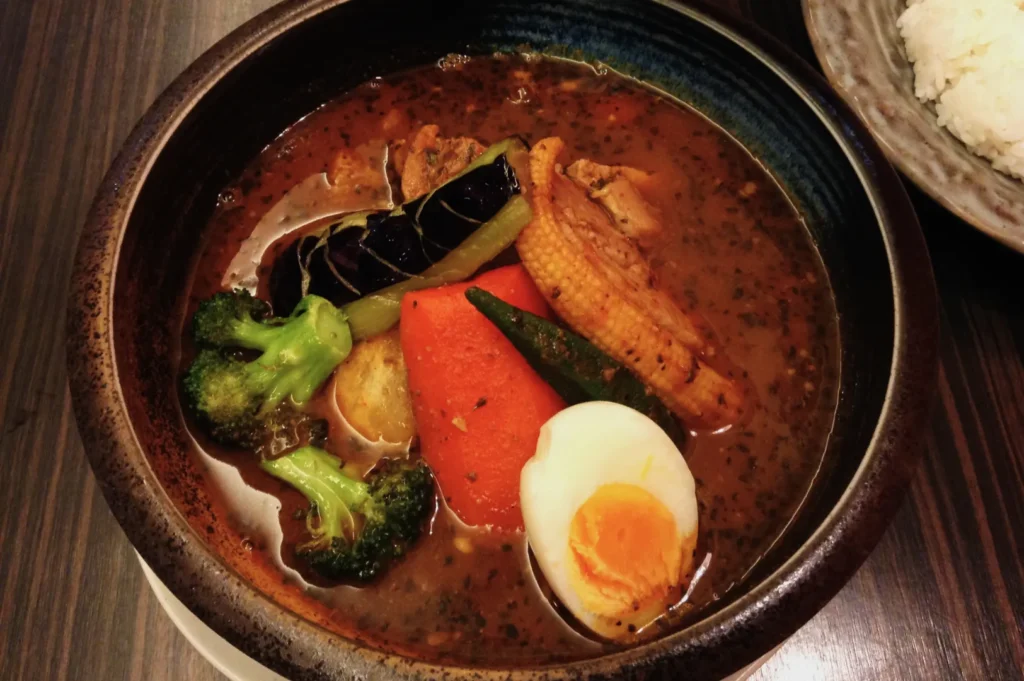
At our restaurant, the vegetables prepared with the su-age technique include bell peppers, lotus root, aubergine, potato, okra, carrots, and pumpkin. Each of these responds differently to flash frying, and understanding those differences is part of what our kitchen team has refined through practice.
Lotus root’s dense, starchy texture benefits from su-age by preserving a pleasant chew while converting some starches. Bell peppers maintain vibrant color and firm walls, avoiding limpness. Aubergine, usually greasy when deep-fried, becomes light and silky inside with a golden exterior. Pumpkin gains gentle caramelization that enhances sweetness, and okra retains a clean texture without becoming slimy. These results stem from a technique that respects both the vegetable and the cooking process.
Su-Age Versus Other Frying Methods: What Sets It Apart
It is worth placing su-age in context alongside other frying methods, not to diminish those techniques, but to understand why su-age is specifically appropriate for soup curry preparation.
Tempura uses a light batter creating an airy coating suited for immediate eating, not for broth, as the batter would dissolve and lose texture.
Karaage, typically for meat, involves marination and starch coating, producing a thick crust great for chicken but unsuitable for soup vegetables.
Su-age requires only brief, intense heat with no marinade or coating. The oil mostly drains off, leaving vegetables cooked, flavorful, and intact for further cooking in the soup. The best Agemono dishes worldwide are often praised by food critics for their culinary significance.
The Philosophy Behind Our Approach to Vegetables
At Soup Curry by Ki-Setsu, the decision to use the su-age technique for our vegetables was not made lightly. It reflects a broader belief that good food begins with respect for ingredients. Vegetables are not garnishes or afterthoughts in our bowls. They are central to the experience.
Hokkaido’s rich agricultural heritage inspires our use of the su-age technique in Singapore, reflecting a commitment to preserving vegetables’ natural flavors and vibrant colors while complementing our aromatic broth. Our team employs precise Japanese cutting methods to ensure each vegetable piece cooks evenly during flash frying, as consistent thickness guarantees consistent cooking and a consistently excellent bowl.
Why It Matters That the Vegetables Are Not Greasy
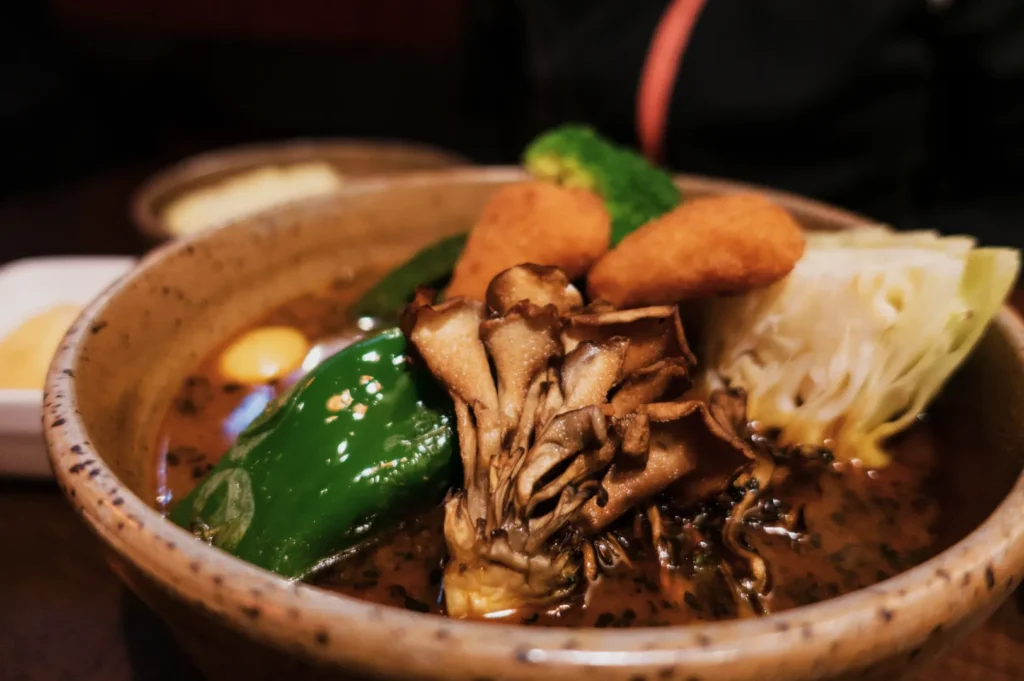
One of the most frequent observations guests make when they try our soup curry for the first time is that the deep-fried vegetables do not feel heavy. This surprises people who associate deep-fried foods with richness or fat. Su-age, done well, produces food that feels clean and light despite having been cooked in oil.
This is not an accident of perception. Flash frying at high temperatures reduces oil contact time, rapidly sealing the vegetable surface to minimise absorption. Any residual oil drains naturally before serving, resulting in a su-age vegetable with significantly less fat than battered or conventionally deep-fried ones.
In soup curry, this matters beyond health. A greasy vegetable would add unwanted fat, altering broth texture and clouding flavour. A clean su-age vegetable enriches the soup without overwhelming it.
A Technique That Earns Its Place
The su-age technique is quiet. It does not announce itself through dramatic presentation or complicated preparation. It works precisely because it removes rather than adds, strips away rather than layers on. And in doing so, it gives both the vegetable and the soup curry the space to express themselves fully.
For anyone visiting our restaurant and wondering why the vegetables taste so distinct, so present, and so well suited to sitting beside a bowl of rich Hokkaido broth, the answer lies in this single, elegant technique. Flash frying without batter, at high heat, with care and precision, produces something that no other method can replicate in quite the same way.
If you want to learn more about our approach or book a table, you can find info on our Facebook page or post your questions there. We agree that understanding the su-age technique enhances appreciation of the dish, and we encourage you to account for this when trying to recreate it at home or share it with friends.