Singapore’s dining scene has always been a canvas for the world’s great food cultures, and Japanese cuisine has long held a place of particular reverence here. From the familiar parade of ramen, sushi, and tonkatsu to the refined omakase counters tucked into hotel basements, Singaporeans have developed a genuine fluency with Japanese food. Yet for all that familiarity, one corner of Japan’s culinary map has remained largely invisible on this island: Hokkaido.
We think about this often. Hokkaido is Japan’s northernmost island, a place defined by cold winters, volcanic landscapes, and a culinary identity shaped by necessity and ingenuity. Its food is not delicate in the way Kyoto’s kaiseki tradition is, nor is it theatrical in the way Tokyo’s high-end dining can be. Hokkaido food is soul food. It is warm, generous, and deeply grounded in place. And it is finally beginning to find its footing in Singapore.
The Hokkaido Difference Within Japanese Cuisine
When most people think of Japanese food in Singapore, they picture a fairly consistent set of dishes: miso ramen, chirashi bowls, tempura, katsu curry. These are wonderful things, and they represent genuine traditions. But they also represent a narrowing of what Japanese cuisine actually is, one that has left Hokkaido’s contributions almost entirely out of the conversation.
Hokkaido’s food culture is distinct in ways that go beyond ingredient lists. The island’s climate and geography produced a style of cooking that prioritises warmth, depth, and the kind of comfort that carries you through a long winter. Dairy thrives there. Root vegetables grow exceptionally well. And the spice trade routes that shaped Japanese food over the centuries left a particular mark on Sapporo, the island’s capital, where a dish called soup curry emerged in the early 1970s and became one of the most beloved regional foods in all of Japan.
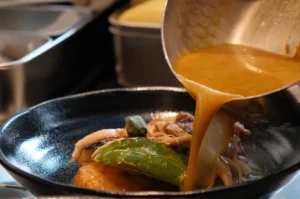
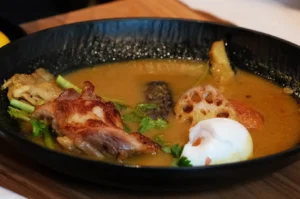
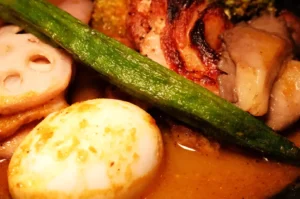
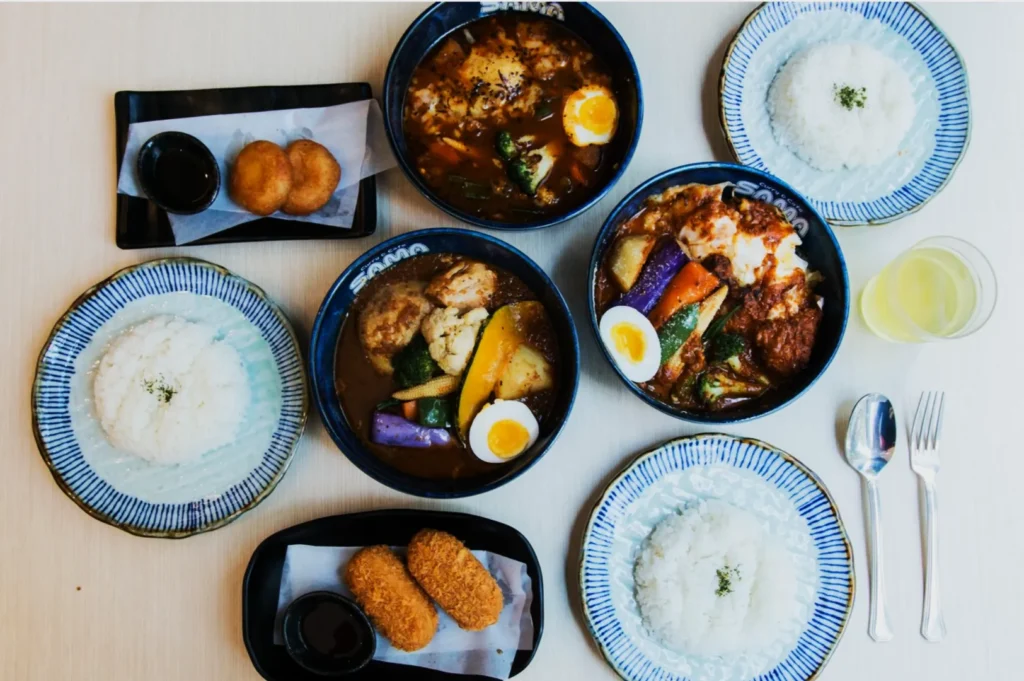
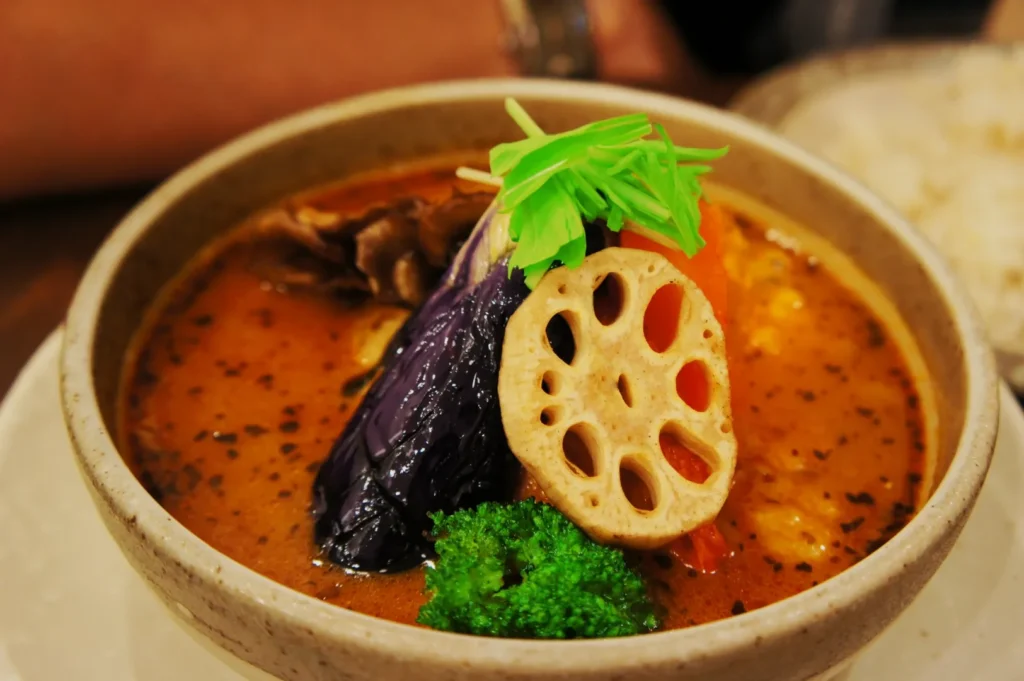
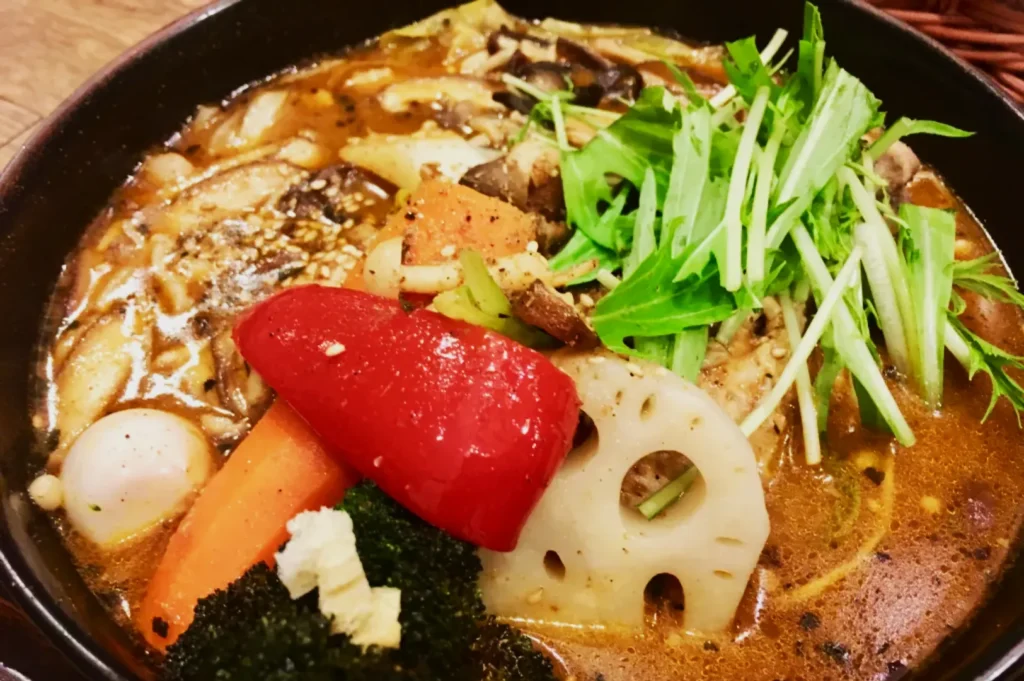
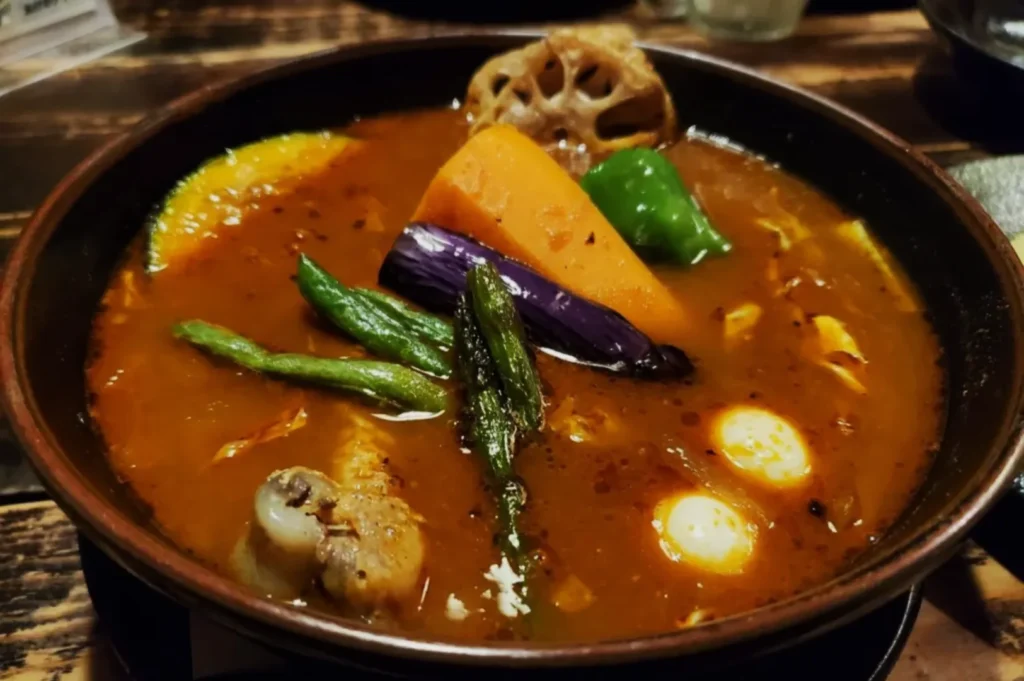
Soup curry is not a minor variation on Japanese curry. It is a different philosophy entirely. Where conventional Japanese curry is thick, sweet, and stew-like, poured over rice, soup curry is a light, aromatic broth built on chicken bones, spices like garam masala and curry powder, and a tomato base. The rice arrives separately. The vegetables are not cooked down into the sauce but preserved in their individual character, deep-fried using the Japanese su-age technique: no batter, just a flash in hot oil that locks in colour, texture, and flavour. Bell peppers stay vibrant. Lotus root keeps its crunch. Aubergine and pumpkin retain their natural sweetness.
This is the food we have brought to Singapore, and it represents something genuinely new here.
Why Hokkaido Food Has Taken Time to Arrive
The slower arrival of Hokkaido cuisine in Singapore is not a mystery. Regional Japanese food faces a particular challenge when it travels: it requires context. Sushi needs almost no explanation. Ramen has been globalised to the point where most diners already have a mental map of the dish before they sit down. But soup curry? It asks something of the guest. It asks them to set aside assumptions about what curry is, what Japanese food looks like, and what a bowl of something warm and spiced is supposed to feel like.
That context gap is also an opportunity. When we serve a bowl of Hokkaido soup curry to someone who has never encountered it before, we are not competing with memory or habit. We are offering something entirely new, and that newness carries its own excitement.
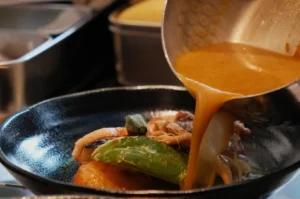
There is also the question of technique. Hokkaido soup curry is not complicated food, but it is precise food. The broth requires time. Onions, garlic, and ginger are caramelised carefully in a heavy-bottomed pot before the spices are introduced, building layers of flavour that cannot be rushed. The vegetables are cut using Japanese methods that consider not just size but how each cut will interact with heat and texture. The chicken is handled with the kind of attention that ensures tenderness without sacrificing the structural integrity that makes eating the dish so satisfying. This is the craft that makes authentic Hokkaido soup curry worth the effort.
Carving a Lane in Singapore's Japanese Food Scene
Singapore’s Japanese food scene has matured enormously over the past two decades. Diners here are sophisticated and genuinely curious, which makes this an ideal moment for Hokkaido food to emerge.
What Hokkaido cuisine offers is specificity, and specificity is exactly what the next chapter of Japanese food in Singapore calls for. The era of Japanese cuisine as a single, monolithic category is giving way to something more interesting: a growing appetite for regional identity, for the particular flavours of a particular place at a particular time of year.
At our restaurant, this philosophy shapes everything from the menu to the atmosphere. The space itself reflects the izakaya culture of Hokkaido’s city centres, warm and unpretentious, designed for lingering over a meal rather than moving quickly through one. From six in the evening, the room shifts into a more relaxed izakaya mode, the kind of setting where small plates and sake complement a bowl of soup curry, and where conversation tends to run long.
Soup Curry by Ki-Setsu sits at the centre of this movement, not as a novelty but as a genuine expression of a regional culinary tradition that deserves to be taken seriously. Chef Masa, who helms our kitchen, brings decades of experience focused specifically on Sapporo soup curry, having refined his understanding of the dish in Hokkaido itself before bringing it here. Every bowl reflects that commitment: the broth is built with precision, the vegetables are prepared to order, and the spice levels are calibrated to suit the individual diner without compromising the integrity of the dish.
What Hokkaido Food Offers Singaporean Diners
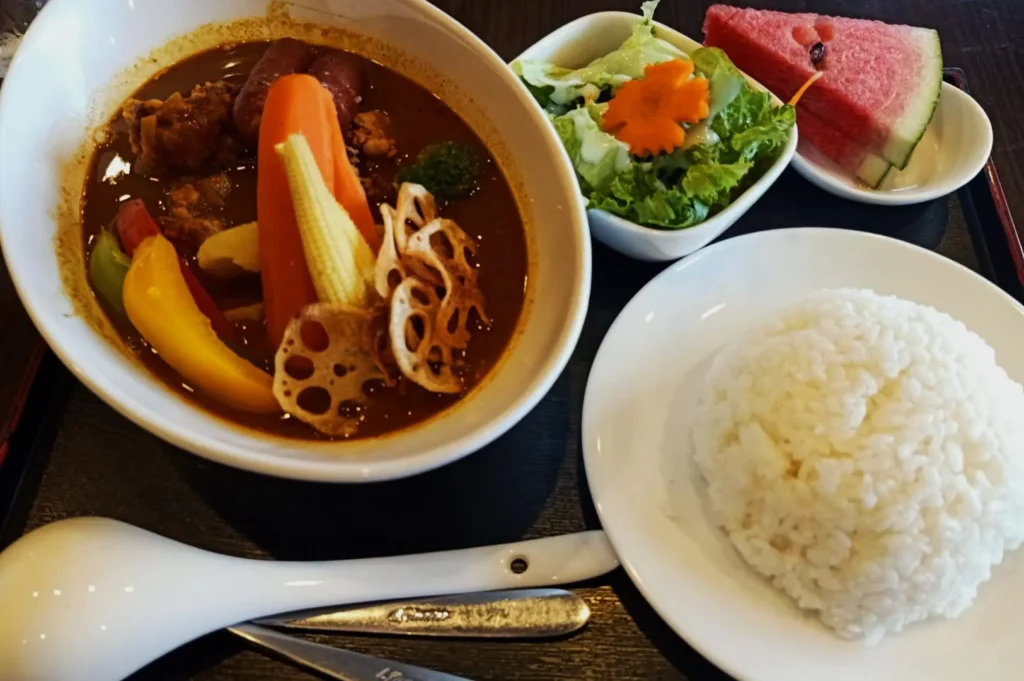
There is a practical dimension to this conversation that is worth naming directly. Hokkaido food is, in many ways, exceptionally well-suited to Singapore. The spice profile of soup curry is aromatic rather than punishing, complex rather than simply hot. The broth is light enough for the climate while rich enough to feel genuinely satisfying. The vegetables, prepared via su-age, are bright and texturally engaging in a way that rewards attention. Root vegetables like lotus root and potato anchor the bowl, while softer vegetables like bell pepper and aubergine add contrast.
The dish is also, in the best possible sense, interactive. Diners choose their spice level. They decide how much rice to incorporate and at what point in the meal. They move between the components in whatever order feels right. This is food that invites participation rather than demanding a fixed approach, which resonates with the way Singaporeans tend to eat: communally, curiously, and with genuine engagement.
Beyond the practicalities, Hokkaido food carries an emotional quality that we believe speaks directly to this city. Singapore has always understood comfort food. It knows what it means to eat something that makes you feel held by warmth. Soup curry is exactly that kind of dish. It is the food Sapporo reaches for when the cold comes. That same warmth translates here, regardless of the temperature outside.
A Cuisine Finding Its Moment
Japanese cuisine in Singapore is not a finished story. It is a living, expanding conversation, one that has always been enriched by the arrival of something unexpected and authentic. Hokkaido food is carving its own lane in this conversation not because it is fashionable but because it is genuinely distinct: a cuisine shaped by a specific place, a specific climate, and a specific understanding of what food is for.
We opened our restaurant because we believed Singapore was ready for this. The response has confirmed it. Diners here are not just willing to encounter something new. They are actively looking for it. Hokkaido’s turn has arrived, and we intend to make sure it is represented faithfully, warmly, and with the full depth of tradition that the cuisine deserves.