Few dishes carry the weight of an entire region’s identity quite the way Hokkaido soup curry does. Born from the cold, snow-heavy winters of Japan’s northernmost island and the creative energy of Sapporo’s café culture, this singular soup dish has spent decades quietly conquering palates far beyond its origins.
Today, it crosses oceans, adapts to new kitchens, and finds devoted followings in cities that could not be more different from the place that created it. This is the story of that journey, and of why soup curry continues to resonate so deeply wherever it lands.
The Sapporo Café That Started It All: Hokkaido Soup Curry History in the Early 1970s
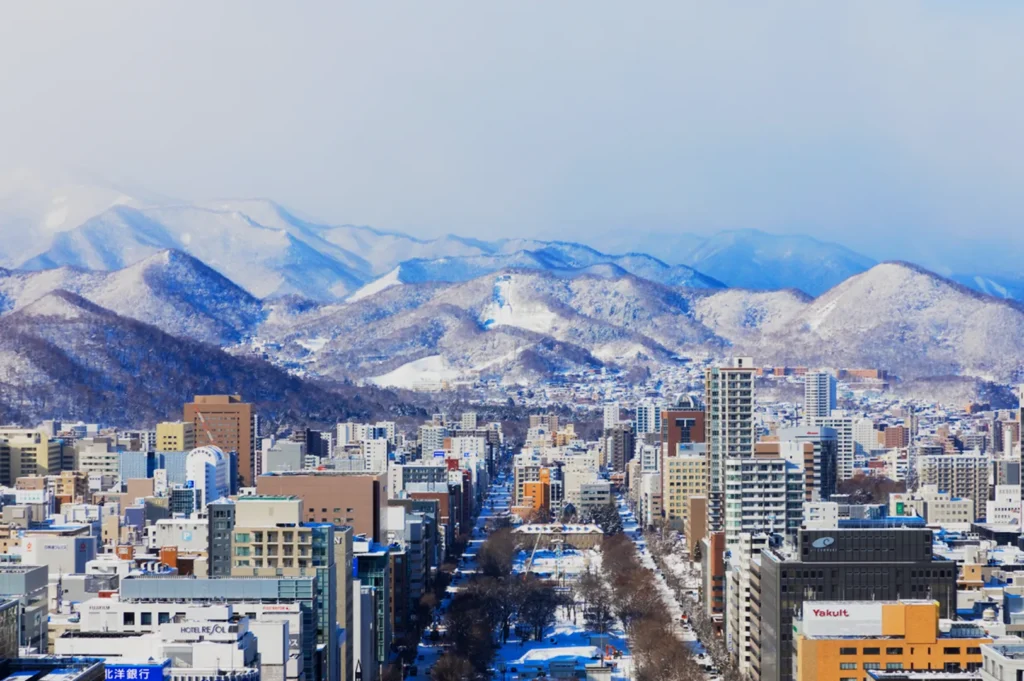
Understanding Hokkaido soup curry history means returning to a single, unassuming Sapporo café in the early 1970s. Sapporo, the capital city of Hokkaido, was already known for its distinctive food culture rooted in the island’s rich agricultural landscape and its biting winters, which made warming, nourishing meals not just pleasant but essential. It was in this context that a café owner began experimenting with a medicinal spice soup, drawing on Southeast Asian and South Asian spice traditions while grounding the dish firmly in Japanese sensibility.
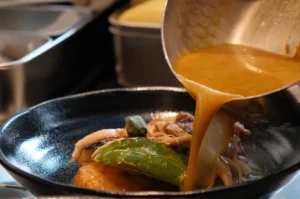
The resulting creation was unlike anything else in Japanese cuisine. Where traditional Japanese curry leaned thick, sweet, and built around a roux, this new preparation was light and broth-forward. The soup base was built on chicken bones simmered low and slow, perfumed with curry powder, garam masala, and aromatic spices including cumin and black pepper, then balanced with tomato paste and soy sauce. Vegetables were served not dissolved into the curry but preserved in their individual textures, many of them deep fried using the Japanese su-age technique that locks in colour and natural sweetness without batter. The result was a flavorful broth that was simultaneously spicy, complex, and deeply comforting.
From One Restaurant to a City's Identity: The Rise of Sapporo Soup Curry
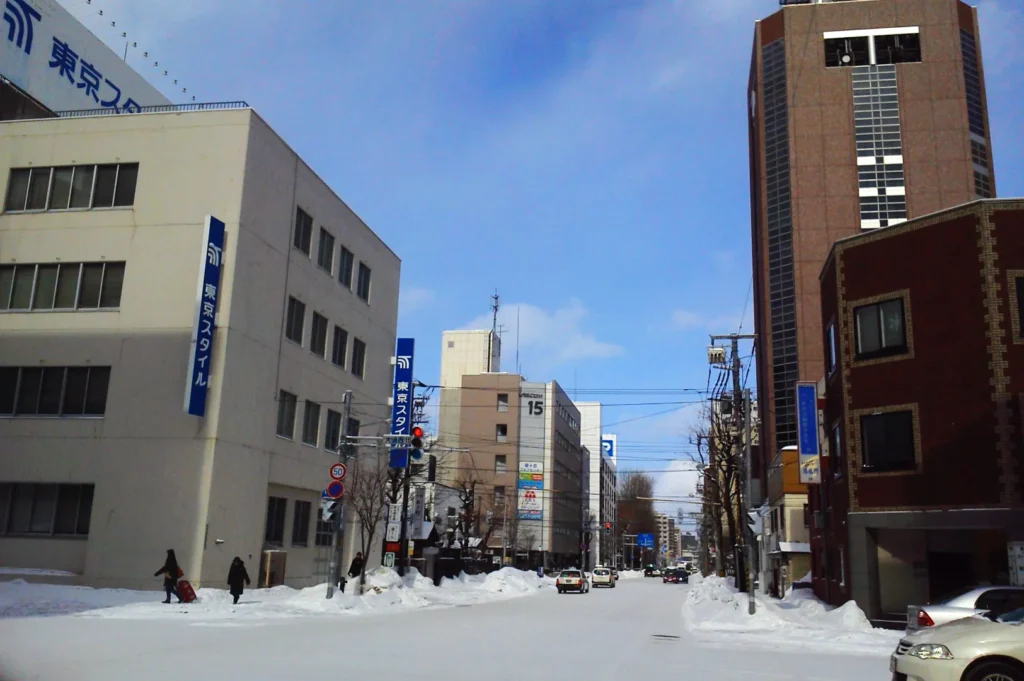
What happened next is part of why the Hokkaido soup curry history is so compelling. From that first Sapporo café, soup curry spread block by block through Sapporo’s dining neighbourhoods. By the 1990s, soup curry shops had become a defining feature of the city’s food landscape, particularly around the Chuo Ward and Susukino area.
Each establishment developed its own character: some leaned heavily on seafood, others built their reputation around lamb chops or slow-cooked chicken legs; some offered quail eggs and maitake mushrooms; others distinguished themselves through elaborate spice blends and adjustable spice levels that allowed diners to personalise every bowl.
This customisation culture was, and remains, central to how people eat soup curry in Sapporo. Rather than a fixed dish, each bowl is an expression of choice.
First, diners select their main meat, whether chicken, lamb, pork, or seafood, then choose their spice level, often ranging from mild to intensely fiery.
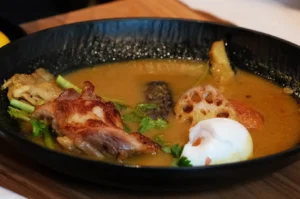
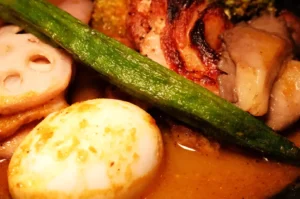
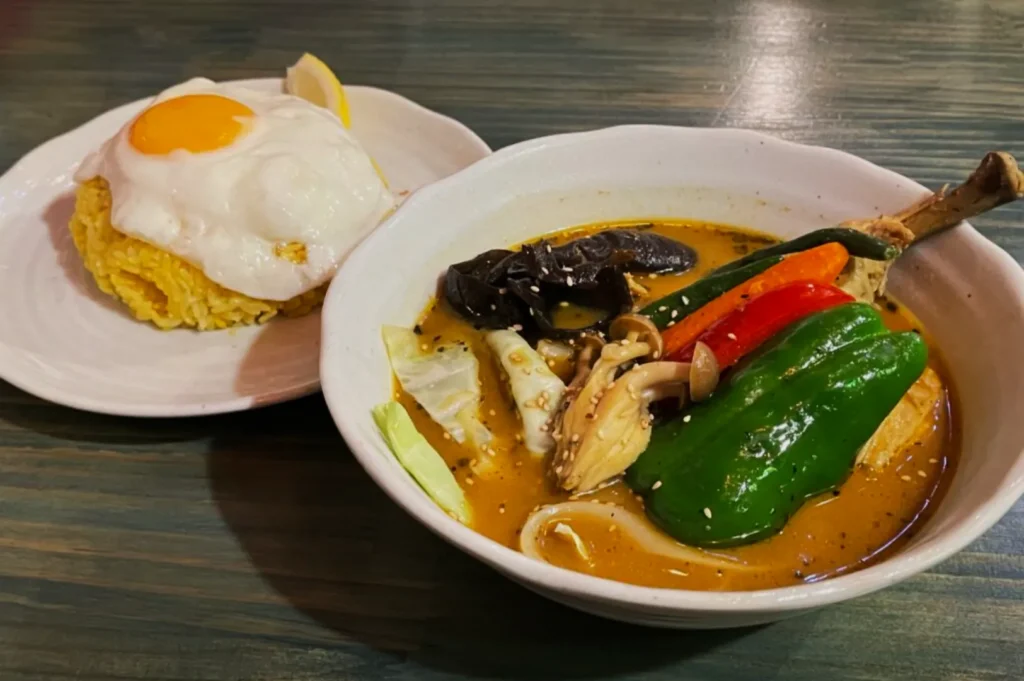
Fresh vegetables arrive vibrant and distinct: bell peppers, eggplant, potatoes, lotus root, carrots, kabocha pumpkin, okra, broccoli, and tomatoes, each prepared to preserve its individual character.
A bowl of white rice sits alongside, separate from the soup, allowing diners to dip, mix, or alternate between bites according to personal preference.
Lastly, soft boiled eggs or quail eggs nestle in the aromatic broth, and the combination creates something that functions less like a single plate and more like a complete sensory experience.
By the 2000s, famous soup curry restaurants in Sapporo were drawing visitors from across Japan. Hokkaido soup curry had become a local specialty that inspired culinary tourism, with travellers making specific journeys to Sapporo purely to eat soup curry.
Carrying Authenticity Across Borders: Japanese Cuisine Meets a Global Stage
The globalisation of Japanese cuisine created the conditions for soup curry to eventually travel. As Japanese food culture earned wider recognition internationally throughout the 2000s and 2010s, so too did curiosity about the regional specialities that sat beyond the familiar canon of sushi, ramen, and traditional Japanese curry rice. Hokkaido, in particular, attracted attention for its exceptional dairy, seafood, and agricultural produce. Soup curry began appearing in food media, travel writing, and culinary exploration guides as one of Hokkaido’s most distinctive contributions to Japanese cuisine.
For those of us who grew up with this dish or spent years in Sapporo absorbing its rhythms, the question of how to bring authentic soup curry to Singapore was never simply about replicating a recipe. It was about understanding why the dish works. The answer lies in balance.
A proper bowl achieves a perfect balance between the warming heat of spices, the deep savouriness of a well-constructed aromatic broth, the natural sweetness of fresh vegetables prepared with care, and the clean simplicity of steamed white rice. The choice and quality of ingredients are essential to this harmony. Strip away any one element and something essential is lost.
Why Singapore? Eat Soup Curry in Southeast Asia’s Food Capital
Singapore presented a unique opportunity. As a city with one of the world’s most sophisticated and curious food cultures, it offered an audience already attuned to bold spices, quality ingredients, and the nuances of Japanese cuisine. Its climate, warm and humid rather than cold and stark, might seem an unlikely match for a dish born from Hokkaido winters. Yet soup curry’s depth of flavour and its inherently customisable nature translate naturally for spice lovers in any climate.
There is also something in the way soup curry is served that appeals deeply to the way Singaporeans eat. The communal warmth of the bowl, the freedom to adjust spice levels, the parade of vegetables, all of it invites conversation and sharing. Diners are not passive recipients of a fixed dish. They are participants in building their meal.
Hokkaido Soup Curry in Singapore: Authentic Soup Curry at Last
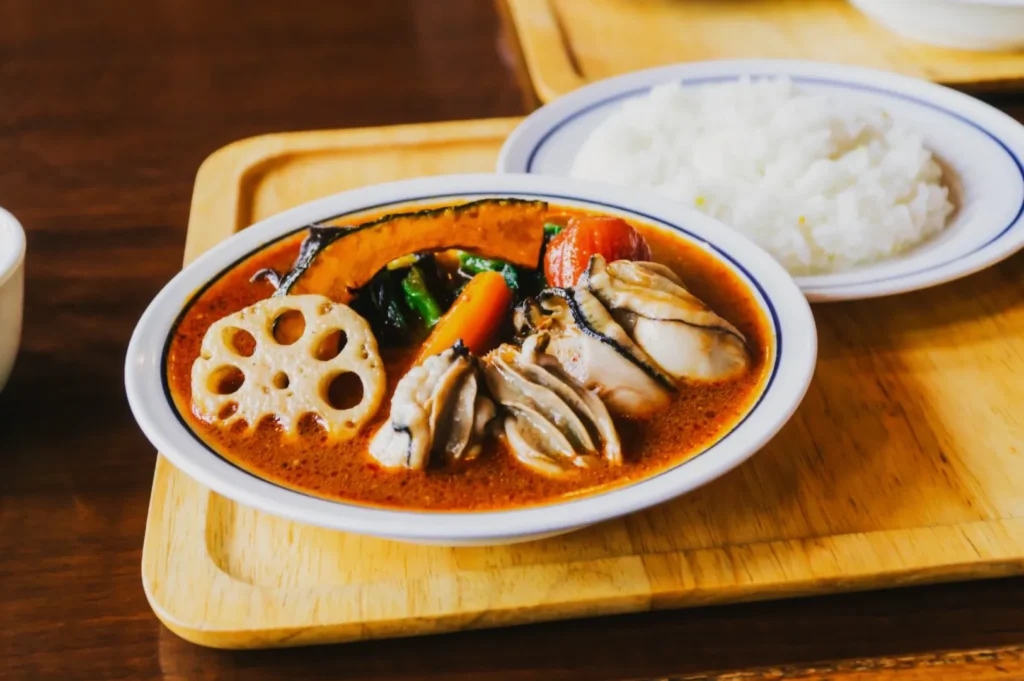
When Soup Curry by Ki-Setsu opened as Singapore’s first and only authentic Hokkaido soup curry restaurant, it was built on a commitment to bringing this history intact.
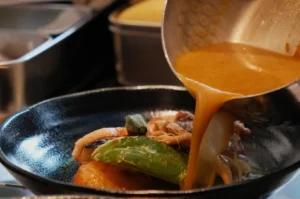
Our soup base follows the same foundational approach that defines Sapporo soup curry: chicken bones simmered to develop a rich, aromatic broth, layered with curry powder, garam masala, cumin, and a complex blend of spices that give the soup its characteristic depth.
Vegetables are prepared using the Japanese su-age deep fried technique, preserving their vibrant colours and natural sweetness. Chicken legs arrive tender and slow-cooked, and the full complement of vegetables, including bell peppers, lotus root, eggplant, kabocha pumpkin, and leafy vegetables, reflects the spirit of what Sapporo’s soup curry shops have always offered.
Our restaurant also honours the other half of Hokkaido’s food and social culture by transforming into a cosy izakaya from 6 PM onwards, offering Japanese small plates alongside the signature soup. This dual identity mirrors the way dining in Sapporo has always carried a warmth and sociability beyond the meal itself.
Spice levels, as with any authentic Hokkaido soup curry, are fully adjustable. Whether a guest is cautious about heat or a committed spice lover, the bowl meets them exactly where they are.
The Ongoing Journey: Why Hokkaido Soup Curry History Is Still Being Written
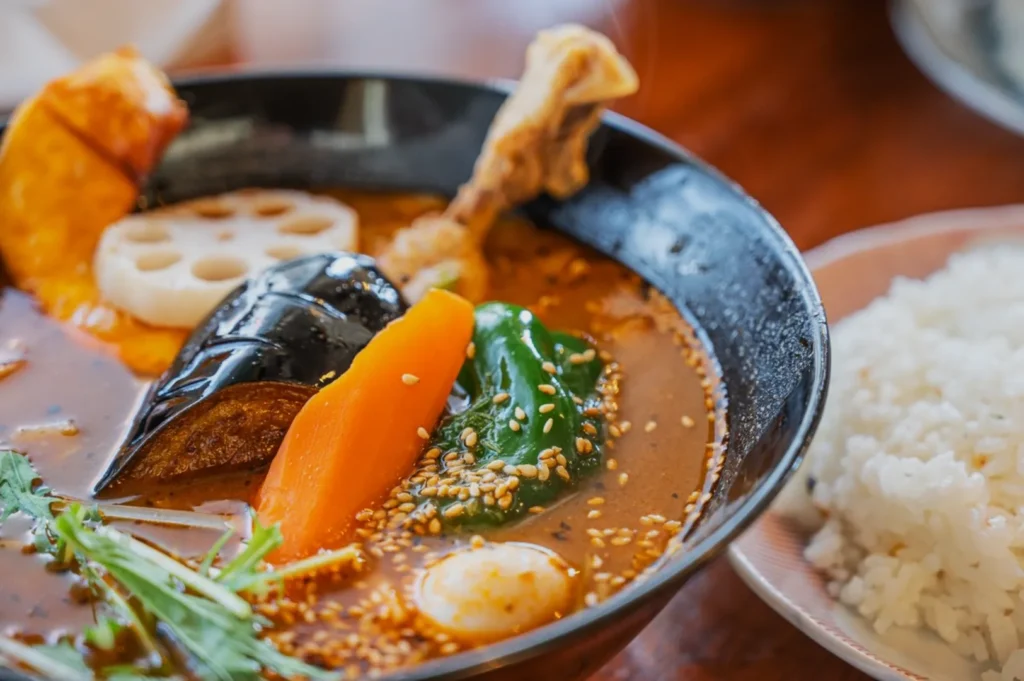
The global odyssey of soup curry is not a closed chapter. Each time a new diner encounters the dish for the first time, a part of its history is being written anew. The tradition that began in a Sapporo café five decades ago continues to evolve without losing its essential character, precisely because its foundations are so carefully constructed. When the spice levels are right, when the broth is deep and clear, when the vegetables arrive bright and distinct, and when the white rice sits ready on the side, every bowl of Hokkaido soup curry carries the full weight of that history.
We believe that authentic soup curry deserves to travel well. Sapporo gave the world a dish that is at once deeply local and effortlessly universal. Our work is to honour that, bowl by bowl, in a city far from Hokkaido’s snows but no less passionate about extraordinary food. To eat soup curry here is to take part in a tradition that has crossed continents, and one that, we hope, has only just arrived.