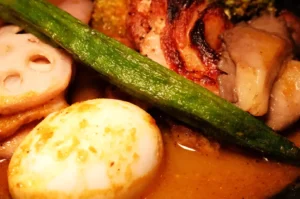
Embarking on a journey through the spicy landscapes of Hokkaido soul food is a thrilling pursuit for the senses. Many guests who visit us are initially struck by the aromatic complexity of our broth, but they often find themselves curious about the higher tiers of our spice scale. In our establishment, we believe that every level of spice offers a different perspective on the dish. As you climb the scale, the interaction between the heat and the savoury chicken broth evolves, revealing new nuances in the ingredients.
Training your palate to appreciate higher levels of soup curry heat is a patient and methodical journey. At Soup Curry by Ki-Setsu, we see it as a transition from simply tasting “spiciness” to identifying the warmth of garam masala and the earthy notes of cumin beneath the fire. By understanding how we build our flavours and how your taste buds respond, you can transform your dining experience from a mild comfort meal into a sophisticated exploration of heat.
The Incremental Approach to Heat Tolerance
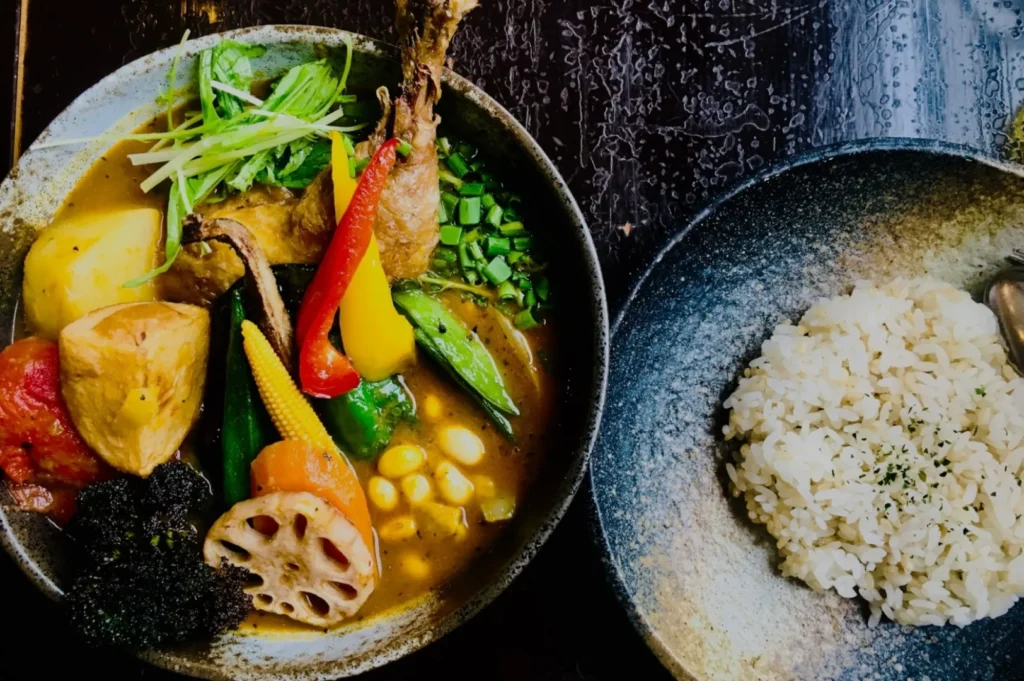
The most effective way to train your palate is through steady, incremental progression. If you usually opt for a mild or medium base, jumping straight to the highest level can overwhelm your senses, causing you to lose the ability to taste the delicate sweetness of our deep fried vegetables. Instead, we suggest moving up by a single increment during each visit. This allows your pain receptors, known as vanilloid receptors, to desensitise gradually.
During this process, pay close attention to the way the soup curry interacts with your tongue. At lower levels, the sweetness of the simmered onions and tomato paste might be more prominent. As you move up, you will notice that the heat begins to act as a flavour enhancer, making the savoury depth of the chicken stock feel more intense. This gradual climb ensures that you never sacrifice flavour for the sake of heat. We find that guests who take this route develop a much deeper appreciation for the “magic spice” that defines our signature bowls.
Utilising Rice as a Texture and Heat Buffer
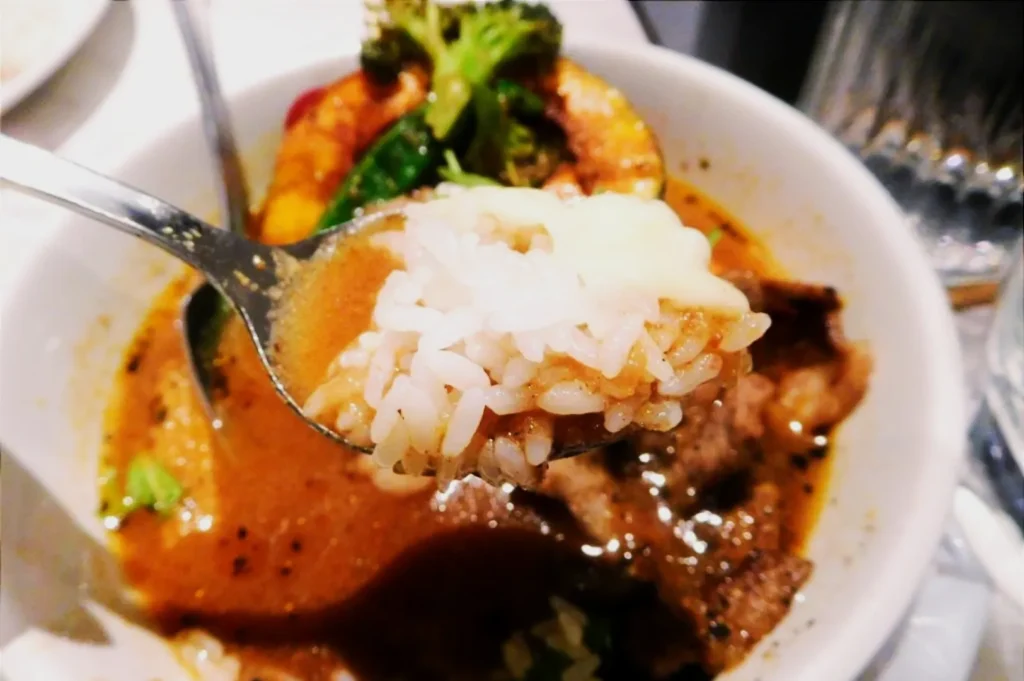
In the pursuit of higher spice levels, the way you utilise your side of Japanese short grain rice becomes a vital strategic tool. Rice is not just a neutral accompaniment: it acts as a physical and chemical buffer against the intensity of the broth. The starch in the grains helps to coat the tongue, providing a brief respite from the capsaicin molecules that cause the burning sensation.
To train effectively, try varying the ratio of rice to soup in each mouthful. If a particular level feels slightly too intense, take a larger portion of rice and dip only the very tip into the broth. This allows you to experience the high-level aromatics while the bulk of the grain absorbs the brunt of the heat. As your tolerance improves, you can gradually increase the amount of soup in each bite. This method, often practised by connoisseurs at Soup Curry by Ki-Setsu, provides a safety net that allows you to explore deeper waters without discomfort.
The Role of Fats and Oils in Managing Intensity
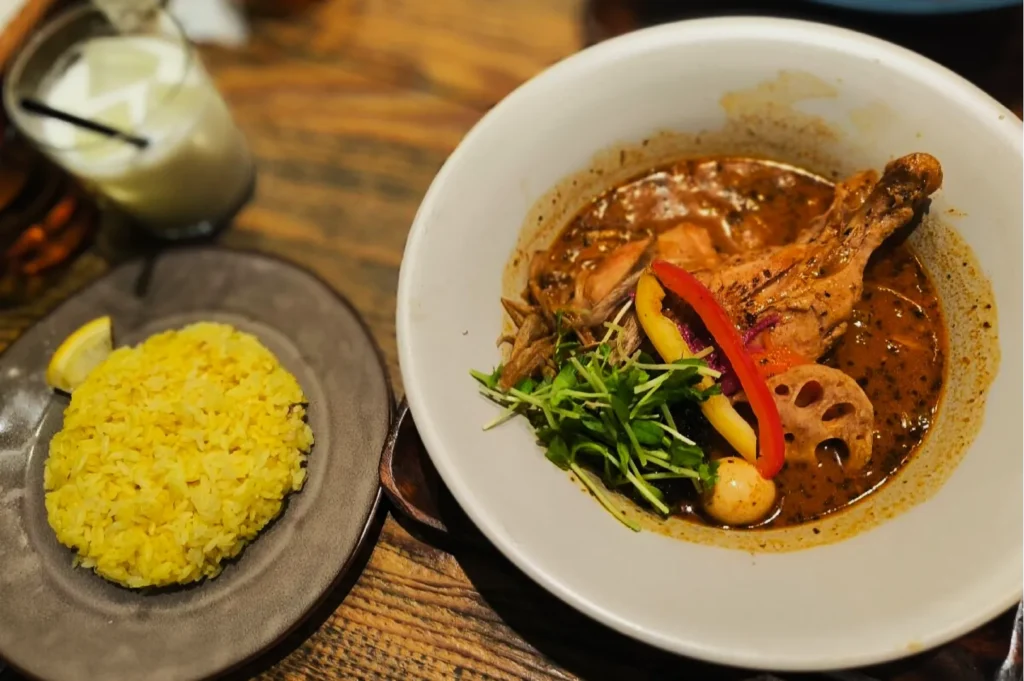
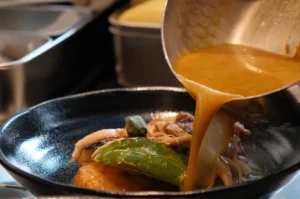
One of the secrets to handling high spice levels lies in the fat content of the dish. Capsaicin is fat-soluble, meaning it dissolves in oils rather than water. This is why drinking water often fails to soothe a spicy palate: it merely spreads the heat around. In our kitchen, we use the su-age technique to flash fry our vegetables, which leaves a light, flavourful film of oil on the surface of ingredients like aubergine and broccoli.
When you eat these deep fried vegetables, the healthy fats help to bind with the capsaicin, effectively “washing” it away from your receptors more efficiently than liquid alone. To train your palate, try alternating between a sip of the spicy broth and a bite of a tender, oil-kissed vegetable. The contrast in texture and the soothing nature of the fats will help you manage the spice level more effectively, allowing you to stay focused on the culinary nuances rather than the temperature of the spice.
Decoding the Aromatic Layers Beneath the Heat
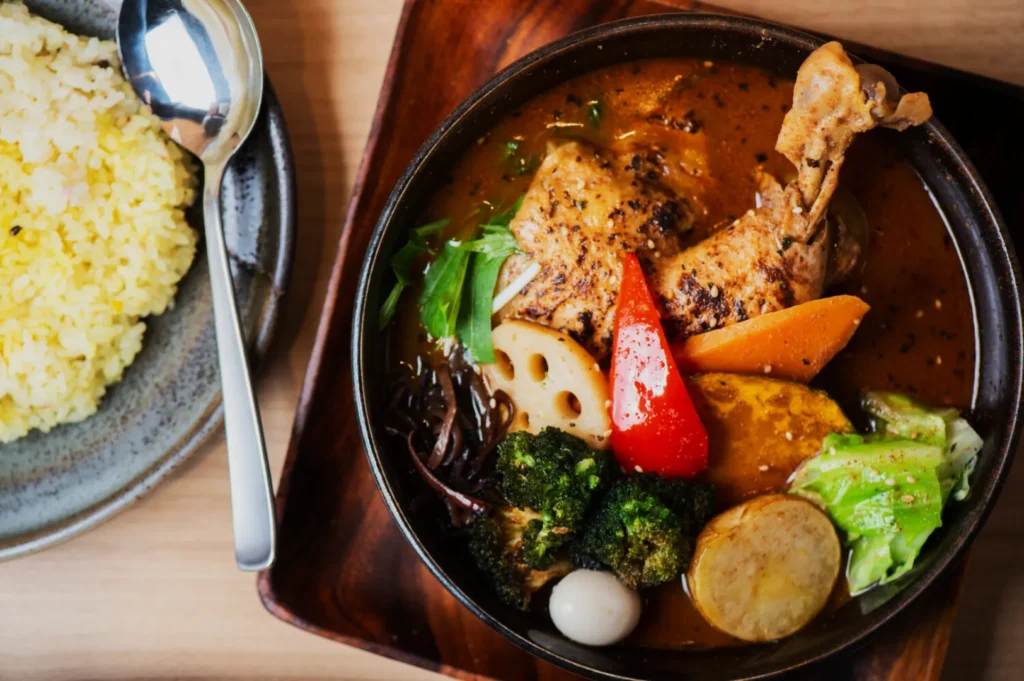
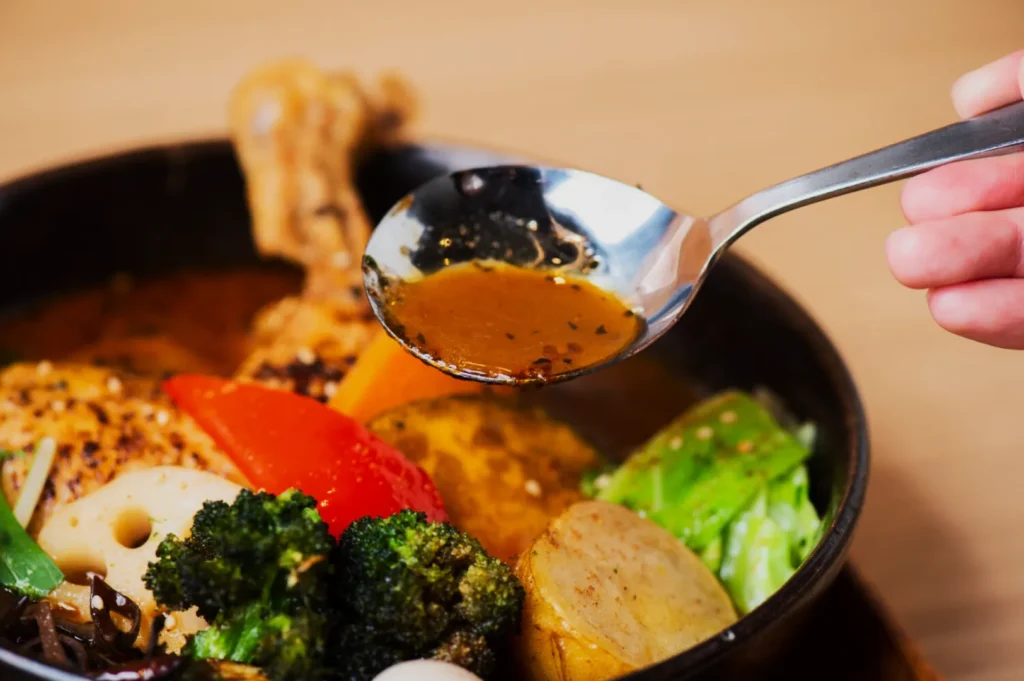
As you move into the higher tiers of spiciness, it is essential to keep your palate engaged with the aromatics. Heat should never be “hollow.” In an authentic soup curry, the spiciness is supported by a robust architecture of spices. When we bloom our curry powder and garam masala in hot oil, we are creating a foundation that can stand up to high levels of chili.
To train your palate to be more perceptive, try to “look” for specific notes through the heat. Can you still taste the woody scent of the bay leaf? Can you pick up the subtle tang of rice vinegar that we use to brighten the base? By focusing on these non-spicy elements, you distract your brain from the heat signal and train your taste buds to become more sophisticated. This mental shift is what separates a casual diner from a true soup curry enthusiast. It turns the meal into a puzzle where the goal is to find the harmony between the fire and the fragrance.
Incorporating Acidic and Sweet Counterpoints
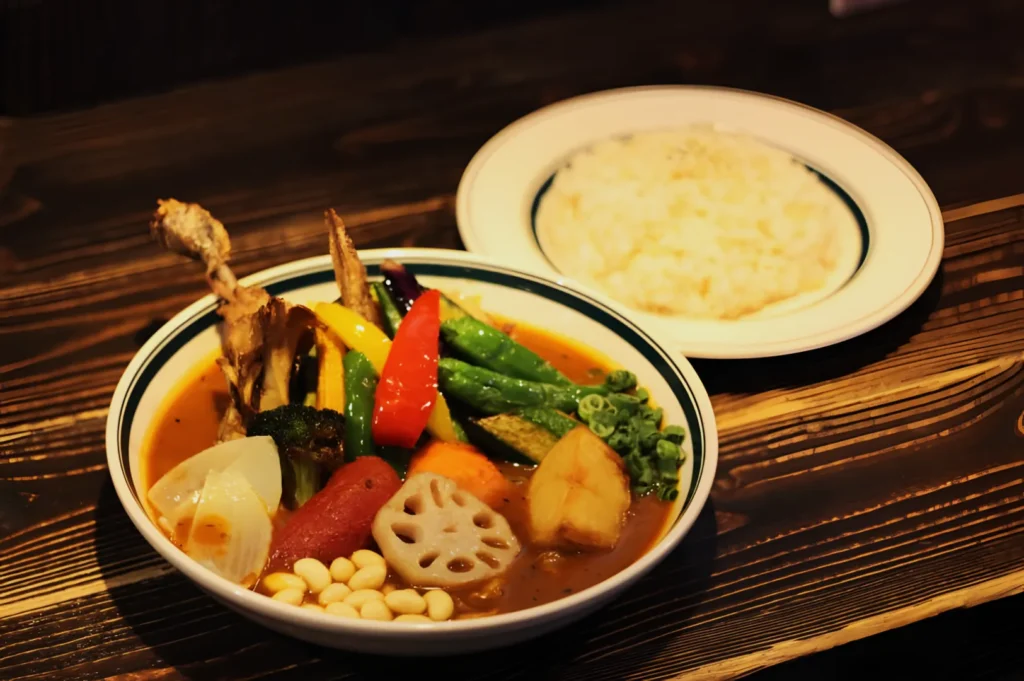
Another sophisticated way to manage a rising spice tolerance is the use of acidity. This is why we often serve our rice with a fresh wedge of lemon. The citric acid provides a sharp, clean contrast that cuts through both the richness of the chicken broth and the intensity of the spices. Squeezing lemon over your rice can reset your palate mid-meal, providing a “fresh start” for the next spoonful of soup.
Similarly, the natural sweetness of ingredients like kabocha squash and red bell peppers acts as a counter-balance. Sweetness and heat are classic partners in Japanese cuisine. When your palate feels like it has reached its limit, a bite of sweet, golden brown pumpkin can provide the necessary relief to continue. Learning to use these “safety” ingredients strategically is a hallmark of a seasoned diner who knows how to navigate a complex, high-heat bowl.
The Physicality of the Dining Experience
Another sophisticated way to manage a rising spice tolerance is the use of acidity. This is why we often serve our rice with a fresh wedge of lemon. The citric acid provides a sharp, clean contrast that cuts through both the richness of the chicken broth and the intensity of the spices. Squeezing lemon over your rice can reset your palate mid-meal, providing a “fresh start” for the next spoonful of soup.
Similarly, the natural sweetness of ingredients like kabocha squash and red bell peppers acts as a counter-balance. Sweetness and heat are classic partners in Japanese cuisine. When your palate feels like it has reached its limit, a bite of sweet, golden brown pumpkin can provide the necessary relief to continue. Learning to use these “safety” ingredients strategically is a hallmark of a seasoned diner who knows how to navigate a complex, high-heat bowl.
Consistency and the Memory of Taste
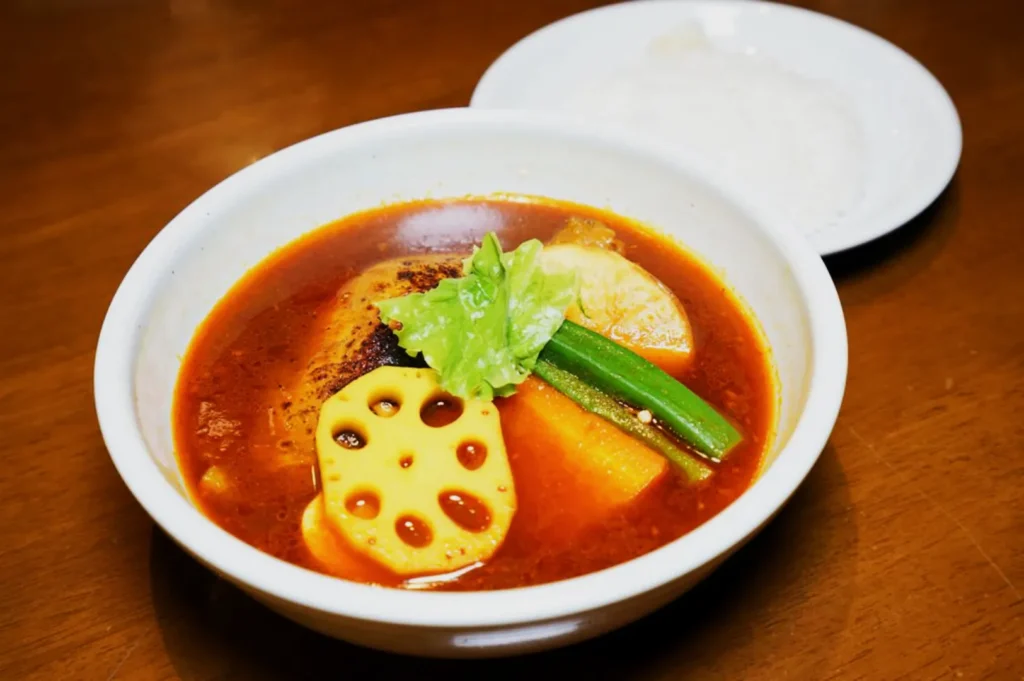
Like any form of training, consistency is key. Your palate has a “memory” for spice. If you only eat spicy food once a month, you will likely find yourself stuck at the same level. However, visiting our restaurant regularly and consistently challenging your limits, even by a small margin, will yield noticeable results over time. You will find that levels which once seemed daunting eventually become your new “comfortable” baseline.
This journey of improvement is one of the most rewarding aspects of being a soup curry fan. It mirrors the dedication we put into our kitchen: a constant refinement of technique and a pursuit of deeper, more resonant flavours. As you become more proficient at handling the heat, you will discover that the highest levels of our broth offer a unique, concentrated intensity that is incredibly satisfying. It is a bold, unapologetic expression of the Hokkaido spirit.
Embracing the Soul of the Spice
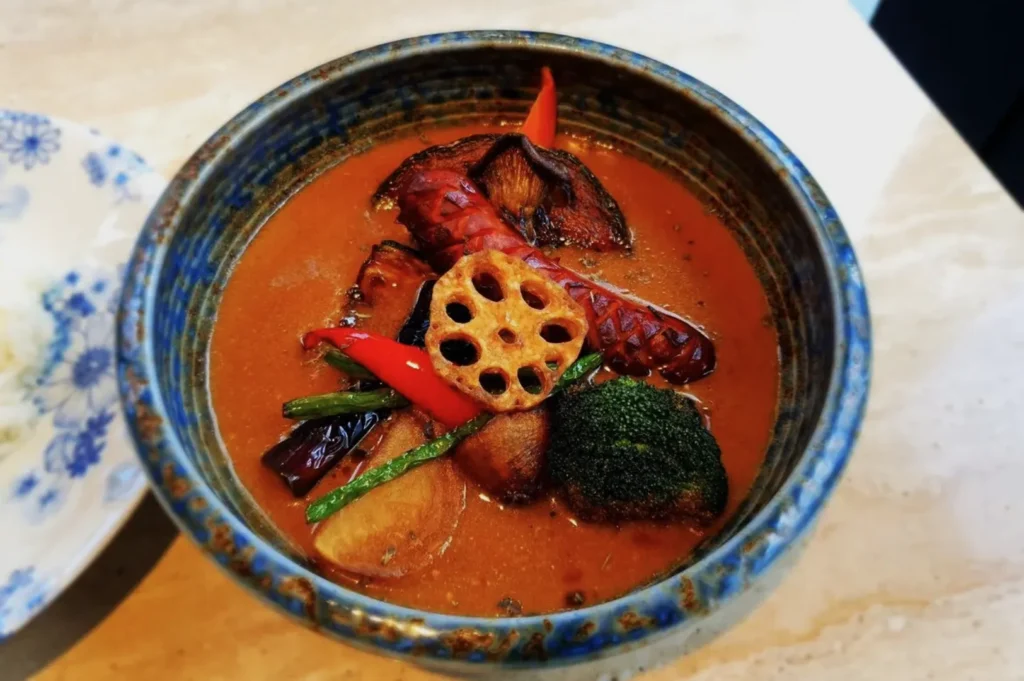
Ultimately, training your palate is about more than just showing off: it is about deepening your connection to the food. The spices we use are a tribute to the Sapporo traditions that we bring to Singapore. When you can handle the heat, you are able to fully experience the “soul” of the dish as it was intended to be enjoyed. The spice is not an obstacle: it is the medium through which the story of the ingredients is told.
We invite you to visit us at Soup Curry by Ki-Setsu and begin your own progression. Whether you are starting at level one or are ready to push into the highest reaches of our scale, our team is here to guide you. Every bowl we serve is crafted with the hope that you find both comfort and excitement in the flavours we provide. Take your time, use your rice wisely, and let the aromatic heat of the north transform your palate.
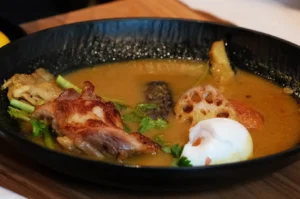
The path to a higher spice tolerance is a delicious one, filled with the snap of lotus root, the tenderness of chicken, and the intoxicating fragrance of bloomed spices. As you master each level, you will find that your appreciation for the complexities of Japanese cuisine grows alongside your tolerance. If you’re curious to learn more about our unique spice scale, we recommend reading our guide: Understanding Soup Curry Spice Levels: From Mild to Extreme.
We look forward to seeing you at our table, perhaps a level or two higher than your last visit, as you continue to discover the vibrant, spicy heart of Hokkaido soul food.