If you have been exploring Japanese food in Singapore and keep encountering the phrase “soup curry,” you are not alone. Singaporeans who grew up eating Japanese curry know it as that thick, glossy, deeply sweet sauce served over steamed rice. So when someone mentions Japanese soup curry, or more specifically Hokkaido soup curry, the natural first question is: what exactly makes it different, and why is everyone suddenly talking about it?
We are here to answer that, as comprehensively as we can. This is your complete handbook.
“We built this restaurant because Singapore had ramen, katsu, izakaya, everything except real Hokkaido soup curry. That gap is why Ki-Setsu exists.” — Chef Masa
What Soup Curry Singapore Is Really About
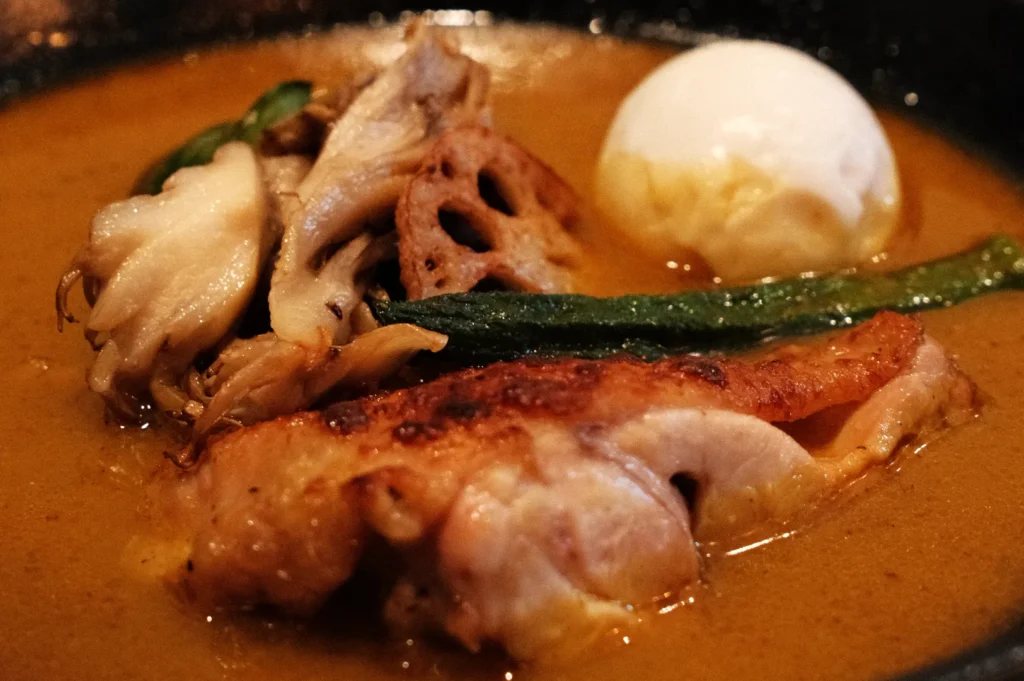
Soup curry is not a variation of traditional Japanese curry. It is its own dish entirely, and the distinction matters. Where traditional Japanese curry is built on a thick roux base, producing a dense and often sweet sauce that clings to your Japanese rice, soup curry works the other way around. The broth is light, deeply aromatic, and complex, built on a foundation of chicken bones, curry powder, garam masala, and tomato paste, simmered until it develops a layered warmth that you taste in stages.
The rice does not sit under the curry in a single unified bowl. Instead, the soup arrives separately, and the Japanese rice is served on the side. You dip the rice into the soup, eat the vegetables and meat directly from the bowl, and control how much broth accompanies each spoonful. It is a more interactive, more personal meal than most Singaporeans expect from Japanese comfort food.
This is Hokkaido soup curry, and it originated in Sapporo, the capital city of northern Japan, in the early 1970s. Sapporo’s cold climate gave rise to a soup culture that prized warmth, richness, and depth. Over the decades, Sapporo developed a thriving scene of soup curry restaurants, each with their own broth recipes and spice philosophies, making it the home of Japanese soup curry in the truest sense.
The Anatomy of a Proper Soup Curry Bowl
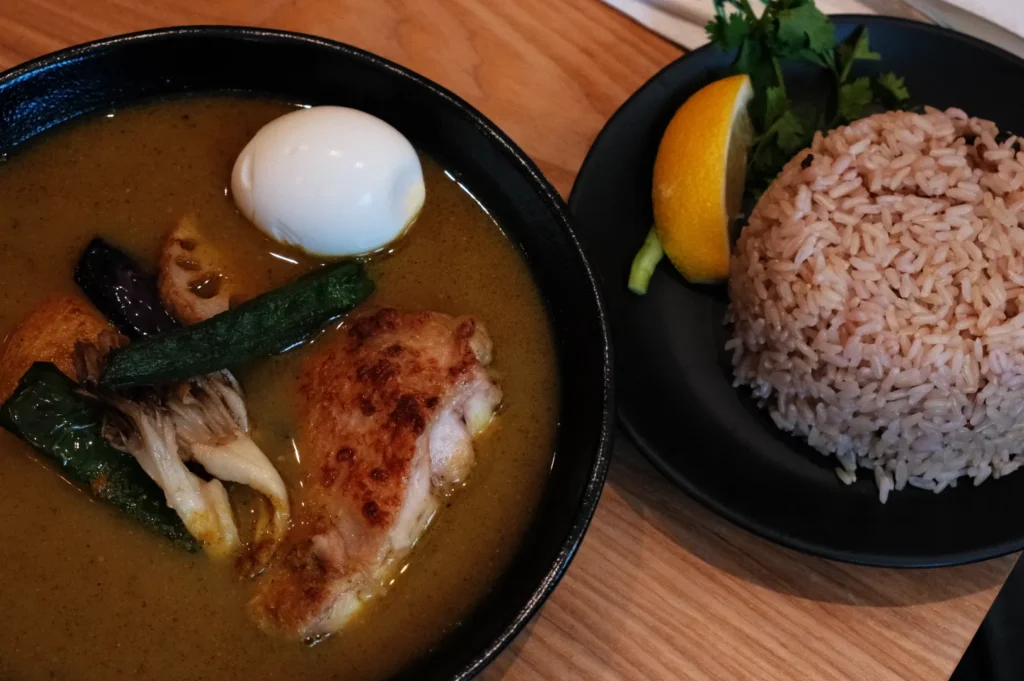
Understanding what goes into a bowl is the fastest way to appreciate why this dish has endured for over fifty years in northern Japan.
The Broth
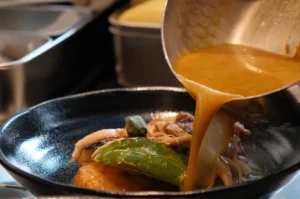
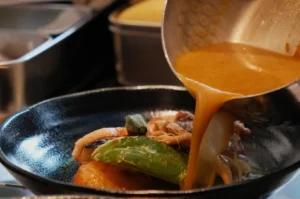
The soul of any soup curry is its soup base. Our broth begins with caramelised onions, garlic, and ginger, cooked slowly until they develop a natural sweetness that forms the backbone of the curry. To that base, we add chicken broth, chicken bones, curry powder, garam masala, and a carefully measured blend of spices that produce the aromatic flavours characteristic of Hokkaido style soup curry. The result is a soup that is simultaneously light enough to drink and rich enough to carry every vegetable and protein placed within it.
Curious about What Happens When You Skip the Chicken Broth?
The Vegetables
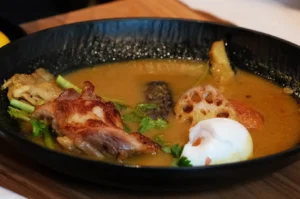
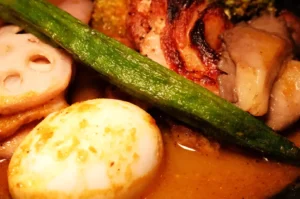
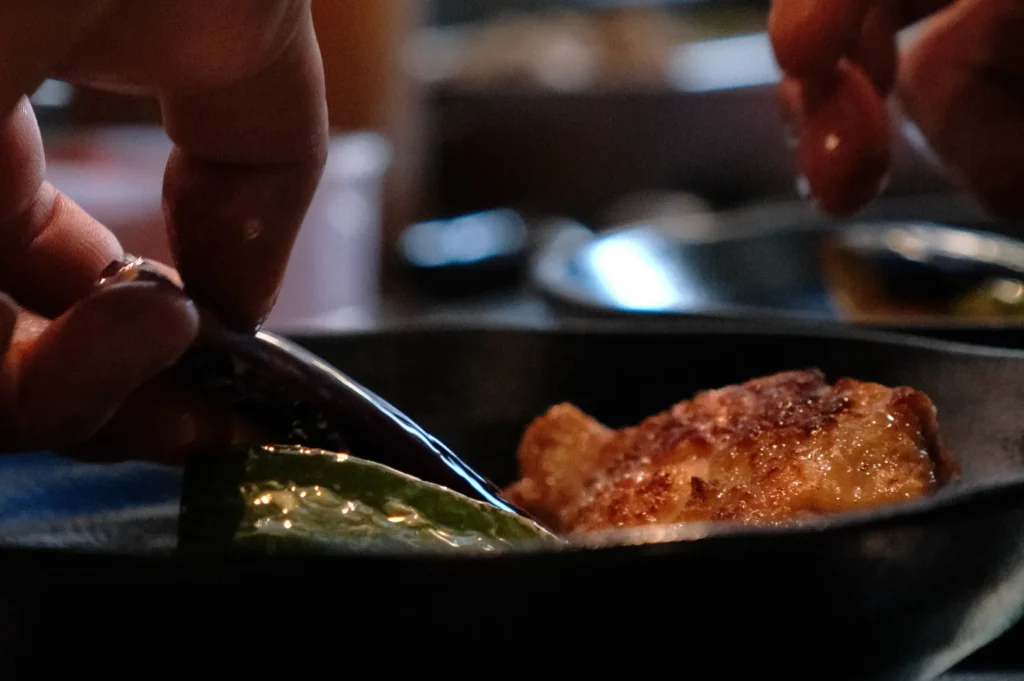
Fresh vegetables are not an afterthought here. They are central to the dish. Bell pepper, lotus root, aubergine, potato, carrot, broccoli, baby corn, eggplant and pumpkin: each is prepared using a Japanese su-age technique, which means deep fried without batter. This method preserves the vegetable’s natural colour, locks in its texture, and creates a slight crispness on the outside that holds even after the fresh vegetables are placed into the hot broth. The contrast between that outer bite and the warm, spice-infused interior is one of the textures that makes a proper bowl memorable.
It would be faster to just fry everything the normal way. We don’t, because the moment you skip su-age, the vegetables turn soggy in the broth, and that’s not a bowl we’re willing to serve.
The Chicken Leg
A whole chicken leg, braised until tender, is the centrepiece of our signature soup curry. It is not shredded or portioned down. It arrives whole, nestled in the bowl alongside the assorted vegetables, so you can pull the meat directly from the bone as you eat. The chicken absorbs the aromatic flavours of the broth during cooking, which means every bite carries the same depth as the soup itself.
Choosing Your Spiciness Level
One of the most personalised aspects of the Japanese soup curry experience is the spiciness level system. Unlike many curry dishes where the spice is fixed at preparation, soup curry allows guests to select their preferred heat before the bowl is made.
At our restaurant, you can choose from multiple spiciness levels, ranging from mild for those who prefer the full flavour of the broth without significant heat, through to intensely hot for guests who want that slow, building burn that intensifies with each dip of rice. The spicy level you choose does not mask the underlying complexity of the soup. It layers on top of it. Even at a mild setting, you will notice the warmth from the spices, the sweetness of the caramelised vegetables, and the richness of the chicken broth. At higher spiciness settings, the same flavours come forward, sharpened and heightened.
For first-time visitors, a moderate spiciness level is often the best entry point. It lets you appreciate what makes this style of curry unique before you begin experimenting with heat.
The Ki Setsu Experience: Where to Get Soup Curry in Singapore
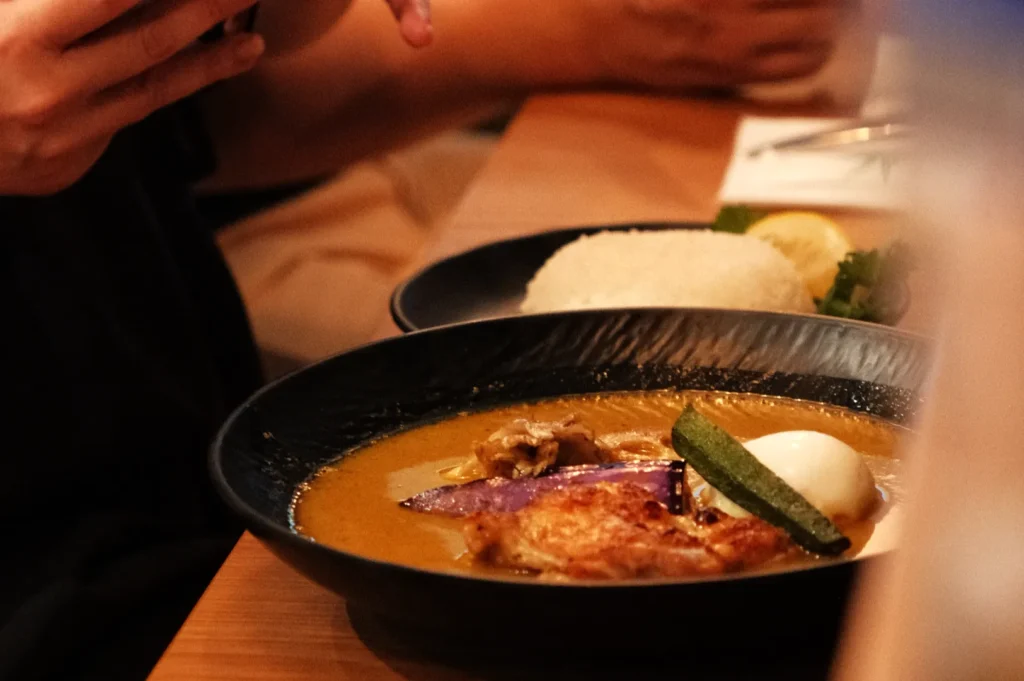
For a long time, the only way to experience authentic Hokkaido soup curry was to travel to Sapporo. The dish never quite made it to Southeast Asia in an authentic form, partly because it requires a specific set of techniques and a commitment to sourcing the right ingredients, and partly because it is a niche dish even within Japan.
Soup Curry by Ki-Setsu changed that. Helmed by Chef Masa of the Ki Setsu Group, our restaurant is Singapore’s first and only establishment dedicated to this cuisine. Chef Masa brings decades of expertise focused specifically on mastering the balance of a Sapporo-style soup curry broth, and every bowl that leaves our kitchen reflects that commitment.
For us, authenticity isn’t a marketing word. It means the same su-age technique, the same broth ratios, the same patience Chef Masa learned in Sapporo, nothing simplified for a Singapore audience. If we couldn’t do it properly, we wouldn’t have opened.
We are located at Fortune Centre, and walk-ins are welcome for lunch without a reservation. For dinner, a cozy izakaya experience awaits from 6 PM, where Japanese small plates and sake join the soup curry menu in a warm, intimate setting. The concept is faithful to how evening dining works in Sapporo itself: the day’s soup curry transitions into a more relaxed, social affair as the evening deepens.
Why Singaporeans Are Falling for Japanese Soup Curry
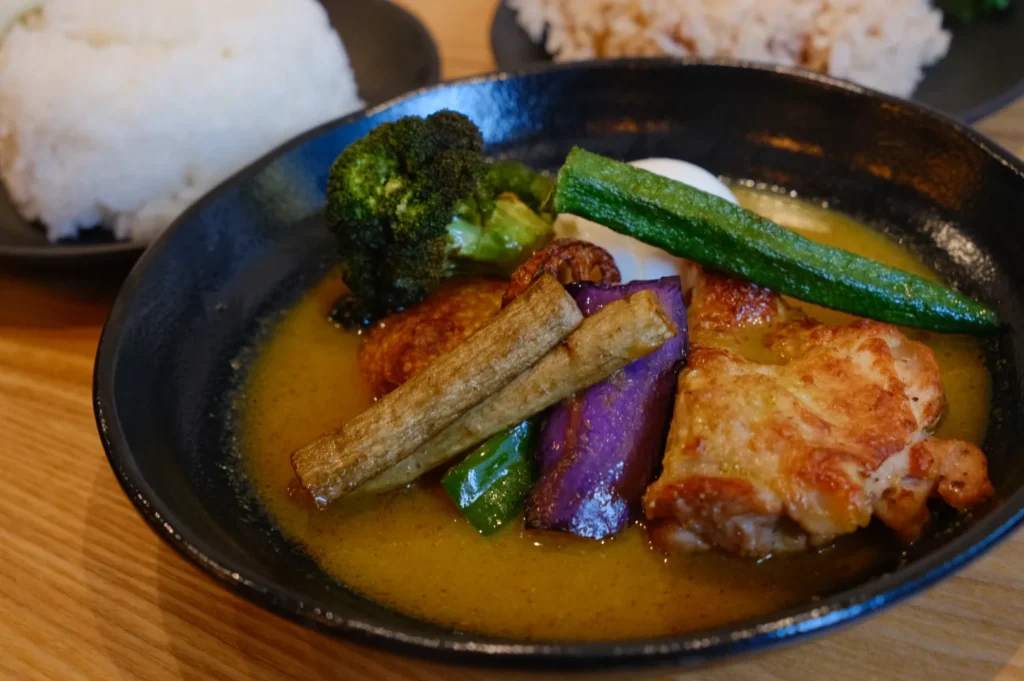
The appeal of soup curry in Singapore makes complete sense once you taste it. Singaporeans already love bold, complex soups. We grew up with laksa, bak kut teh, and rich tonkotsu ramen. Soup curry slots naturally into that appreciation for broths that have been cooked down over hours, layered with spice and technique.
What surprises most people is how light it feels. Despite its depth of flavour, the soup is not heavy. You can finish a full bowl with a generous serving of Japanese rice and still feel satisfied rather than weighed down. That quality, warmth without heaviness, richness without excess, is what makes this dish so enduring as a meal in northern Japan, and why it is finding a devoted audience in Singapore.
The seasonal ingredients approach also resonates. Each bowl reflects what is at its best: vibrant vegetables cooked to preserve their colour and taste, a broth that is adjusted and refined with care. For Singaporeans who care about quality and freshness in their food, that attention to detail is immediately noticeable.
Your First Bowl of Hokkaido Soup Curry: What to Expect
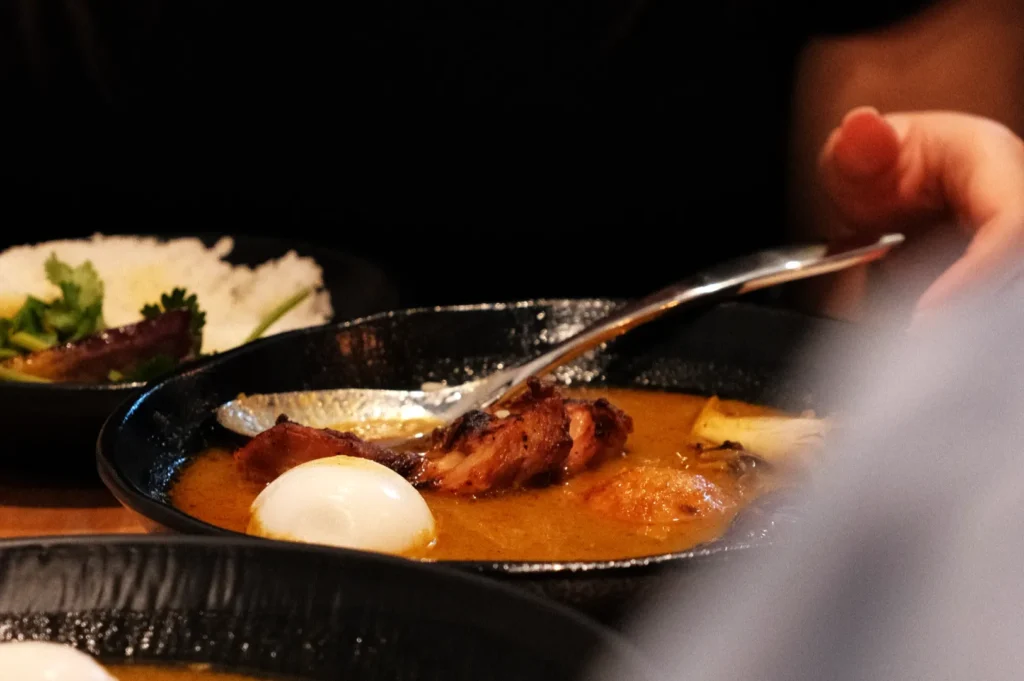
When you sit down and order for the first time, expect a moment of adjustment. The format is unfamiliar if you are used to traditional Japanese curry, and that is part of the pleasure. Your soup arrives hot and deeply aromatic. The bowl holds your chicken leg, your assorted vegetables, and your broth. The Japanese rice comes alongside.
Start by tasting the broth on its own. Notice the layers: the gentle sweetness from the onions, the warmth from the curry powder, the sharpness from the ginger, and the depth from the chicken bones. Then begin to dip, eat, and discover your own rhythm with the dish.
Soup curry is soul food. It is meant to be eaten slowly, in a warm room, with good company. Whether you visit for a weekday lunch or an evening dinner at our cozy izakaya experience, the bowl is the same in its intention: to bring a little of Hokkaido’s warmth to your table in Singapore.
This is the bowl we’d want to eat ourselves, and the only one we’re interested in serving.