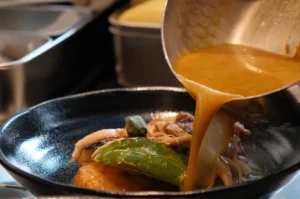
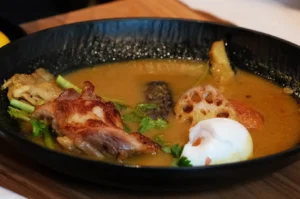
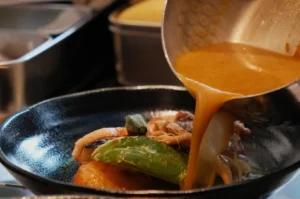
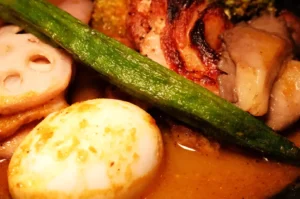
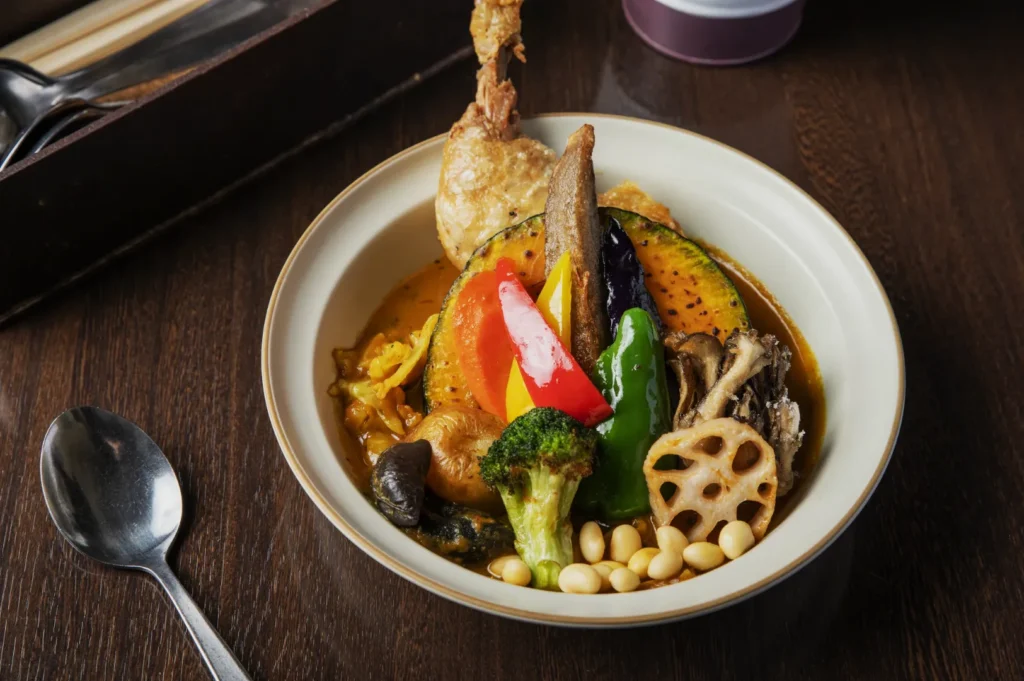
When you look into a traditional bowl of Hokkaido soup curry, your eyes are immediately drawn to the vibrant, colourful toppings resting on the surface. The perfectly crisped produce and succulent proteins create a striking visual display, yet the true soul of this legendary comfort food lies completely submerged beneath them. The broth is the foundation, the unifying element, and arguably the most important part of the entire dish. Without a masterfully crafted liquid base, the meal ceases to be an authentic northern culinary experience and becomes a mere collection of disconnected ingredients.
Originating in Sapporo in the early 1970s as a restorative, medicinal comfort food, this iconic dish was built entirely around the therapeutic properties of an aromatic broth. Understanding why the broth holds the crown of importance requires looking past the individual ingredients and focusing on how the liquid acts as the master conductor of flavour, warmth, and texture for the entire bowl.
The Broth Defines the Fundamental Identity of Soup Curry
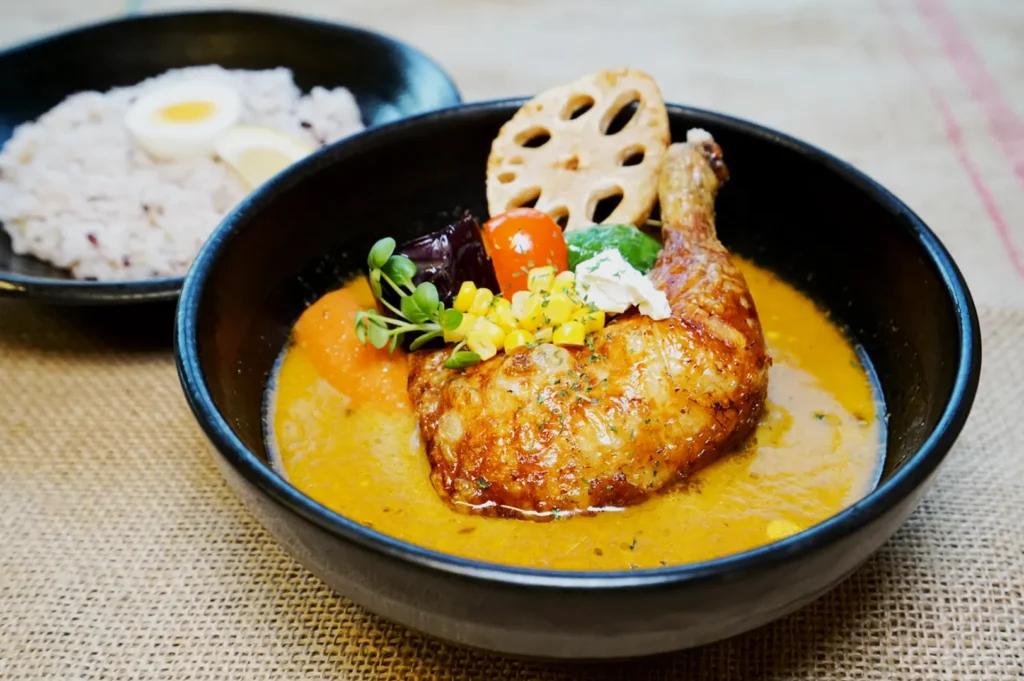
The primary reason the liquid base holds such unparalleled importance is that it establishes the very definition of the dish, separating it entirely from typical Japanese curry. Many establishments outside of Hokkaido serve a version of curry that is thick, sweet, and heavily reliant on a flour-based roux. That style of curry functions as a dense sauce meant to sit heavily on top of rice.
In stark contrast, our northern specialty relies on a light curry-flavoured soup base made with chicken broth, curry powder, and garam masala. Because the base is clear and drinkable, the broth itself must carry an immense amount of structural integrity. It cannot hide behind the mask of thickeners or heavy starches. If the broth lacks depth, the entire dish falls flat, tasting watery rather than rich and complex. It is the complex, unhurried extraction of flavours during the simmering process that gives this light soup its remarkable body, establishing a unique identity that provides immediate comfort and nourishment.
It Acts as the Textural Guardian for Premium Ingredients
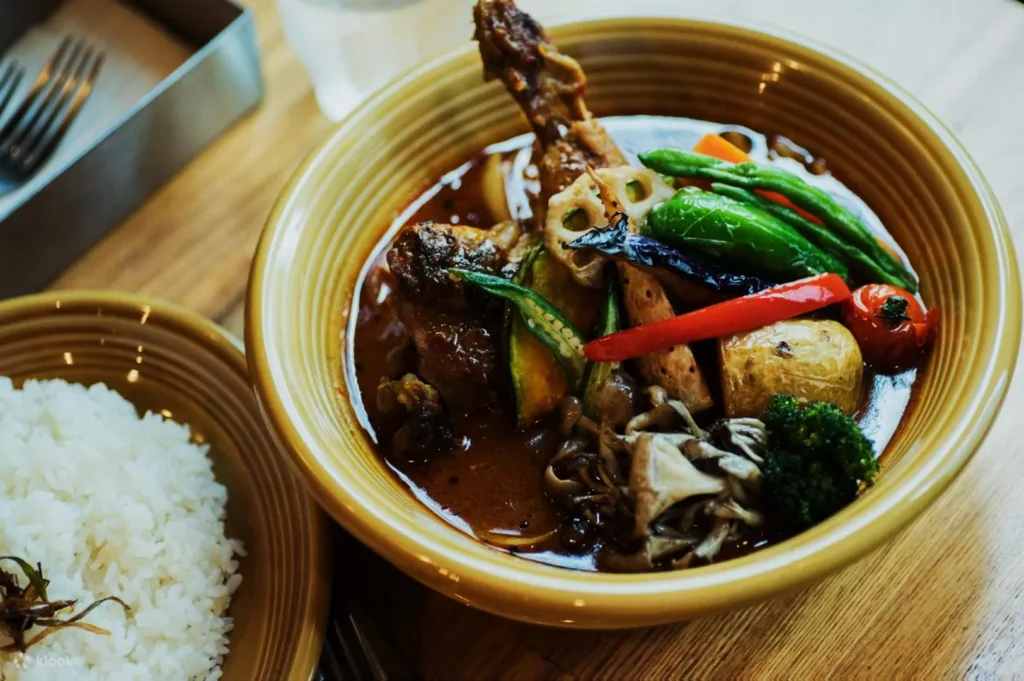
A truly spectacular bowl of soup curry relies on a beautiful contrast of textures, and the broth plays a silent, critical role in protecting that sensory balance. Our approach to creating a memorable bowl involves floating a vibrant mix of deep-fried vegetables, such as bell pepper, lotus root, aubergine, and potato, on top of the liquid. These vegetables are prepared using traditional Japanese cutting methods to ensure optimal surface area for caramelisation.
Because the broth is uniquely light and fluid rather than thick and sticky, it allows these carefully fried elements to retain their distinct structural crispness. When you dip a piece of flash-fried lotus root or a fork-tender chicken leg into the liquid, the light soup base clings subtly to the surface without saturating or weighing down the ingredient. A heavier sauce would immediately smother the crispness of the su-age vegetables and turn the entire bowl into a uniform texture. The clarity and lightness of the broth ensure that every bite delivers a deliberate play between crunchy, tender, and beautifully fluid sensations.
The Liquid Base Is the Stage Where Spices Must Bloom
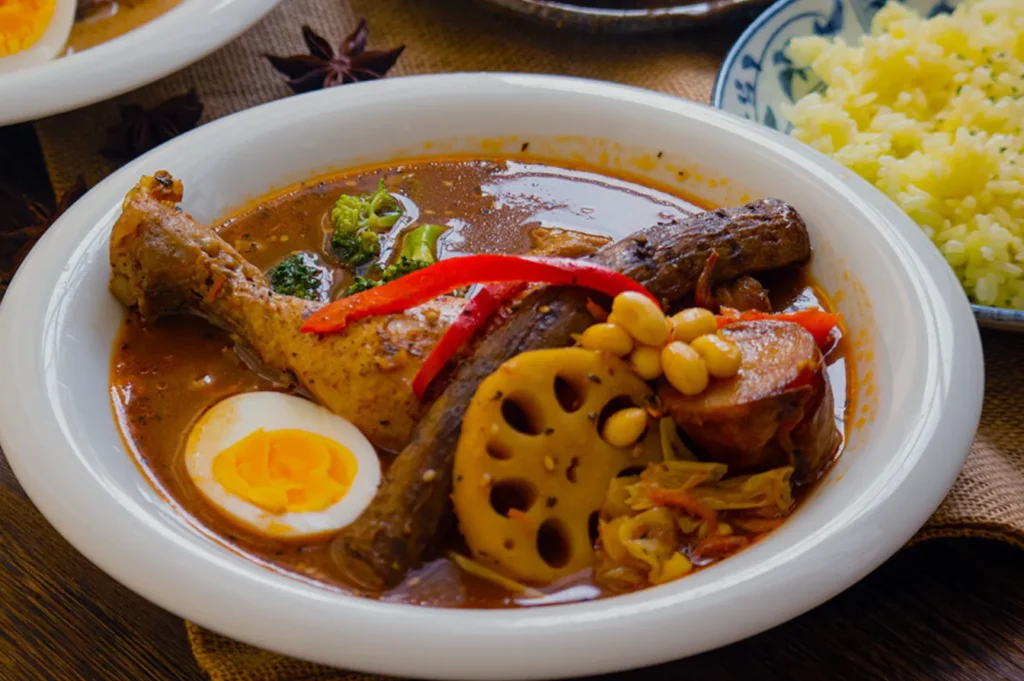
The true magic of northern soul food lies in its spice profile, and the broth is the exclusive medium through which these complex aromatics are delivered to your palate. Creating this iconic Sapporo profile is not as simple as stirring spices into hot water. To unlock their full potential, the curry powder and garam masala must be carefully bloomed in warm oil before being integrated into a rich chicken broth.
This intricate process allows the fat-soluble flavor compounds within the spices to awaken, distributing an even, multi-layered warmth throughout the liquid canvas. As you enjoy the meal, the broth carries these microscopic flavor notes straight to your taste buds, revealing subtle hints of tomato paste, the earthiness of cumin, and the uplifting aroma of bay leaf. The liquid behaves like a finely tuned delivery system, ensuring that the heat is never one-dimensional or overwhelmingly harsh. Instead, the warmth builds gradually with each sip, providing a deeply satisfying, full-body comfort that can only be achieved when spices are given the perfect fluid environment to shine.
It Dictates the Shared Ritual of the Dining Experience
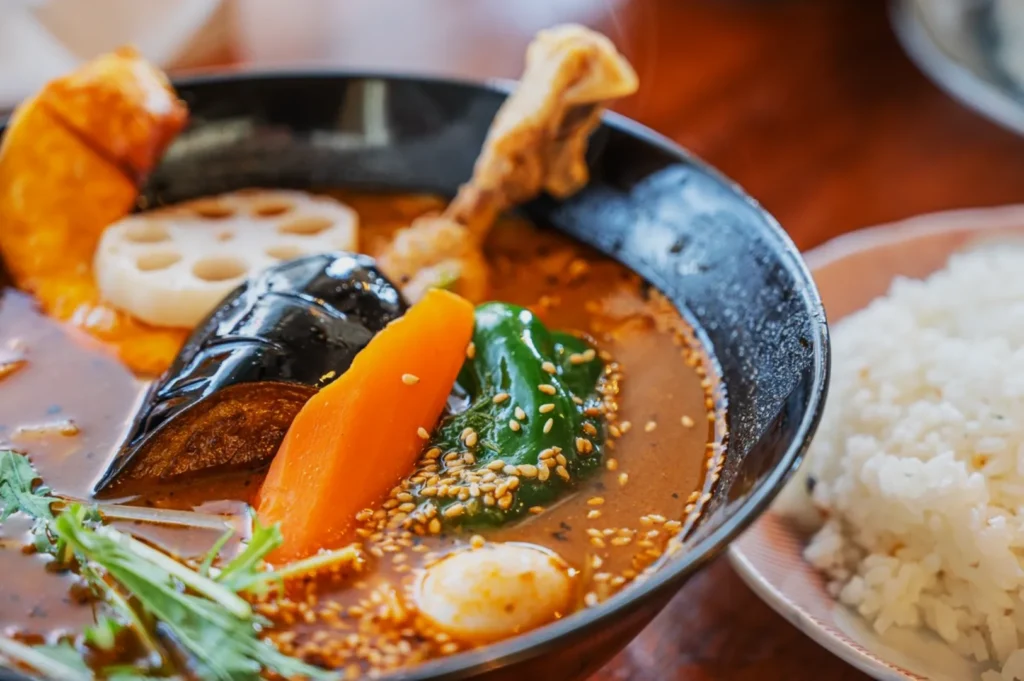
The fluid nature of the broth directly influences the traditional etiquette and rhythm of how this meal is consumed. In our dining place, we often guide guests away from the habit of pouring their food together, encouraging them instead to experience the traditional “dip and sip” method used by locals in Sapporo. The presence of a clear, aromatic soup requires you to take a spoonful of steamed rice from your side plate, dip it halfway into the broth, and let the grains absorb the liquid like a sponge.
This interactive process turns the meal into a mindful, leisurely ritual. As daylight fades and our space transforms into a cosy izakaya-style atmosphere after 6 PM, this slower pace of dining becomes the perfect anchor for an evening of relaxation. The act of scooping up the fragrant broth, alternating between a bite of tender chicken and a sip of spiced liquid, encourages conversation and shared connection. The broth demands that you slow down, savor the warmth, and enjoy the progression of flavours at a relaxed, unhurried pace.
Honoring the Craftsmanship of the Northern Broth at Soup Curry by Ki-Setsu
Because the liquid base carries the weight of the entire dish’s history and character, we refuse to take shortcuts in its preparation. We believe that an exceptional broth requires patience, respect for traditional Japanese techniques, and a deep understanding of flavor balance. Every batch of soup that leaves our kitchen represents hours of meticulous simmering, ensuring that the natural umami of our ingredients is fully extracted and harmonised with our signature spice blends.
At Soup Curry by Ki-Setsu, we are incredibly proud to share this authentic, soul-warming tradition with diners in Singapore. We understand that the broth is not merely a liquid to cook things in, it is the defining element that brings the true warmth of Hokkaido’s culinary heritage to life. By keeping our focus centered on the complexity and clarity of our signature soup base, we offer a dining experience that honors the original creators of this comfort food from decades past.
Our establishment operates from 11:30 AM to 10:00 PM, Monday to Sunday, making it easy to seek out comfort whenever you need it. We do not accept lunch reservations, welcoming daytime guests on a walk-in basis to enjoy a casual, nourishing bowl. We invite you to sit down with us, lift your spoon, and discover the incredible depth of flavour that can only be found when the broth is treated with the ultimate respect it deserves.
For those looking to transition into the evening later in the hours, our dinner reservations are available exclusively at 6:30 PM, with tables held for a maximum of 15 minutes to preserve the intimate, relaxed flow of our nightly service.