There are decisions in cooking that look like preferences but are actually principles. The choice between bone-in and boneless chicken in a bowl of soup curry is one of them. It appears, on the surface, to be a matter of convenience or personal taste.
Ask for a boneless portion and the eating is tidier. Keep the bone in and things get a little more involved. But when you understand what soup curry is built to do, and what it requires from every ingredient inside the pot, the answer becomes less a preference and more an inevitability. We choose bone-in. We have always chosen bone-in. And the reasons go all the way down to the marrow.
The Broth Is the Argument
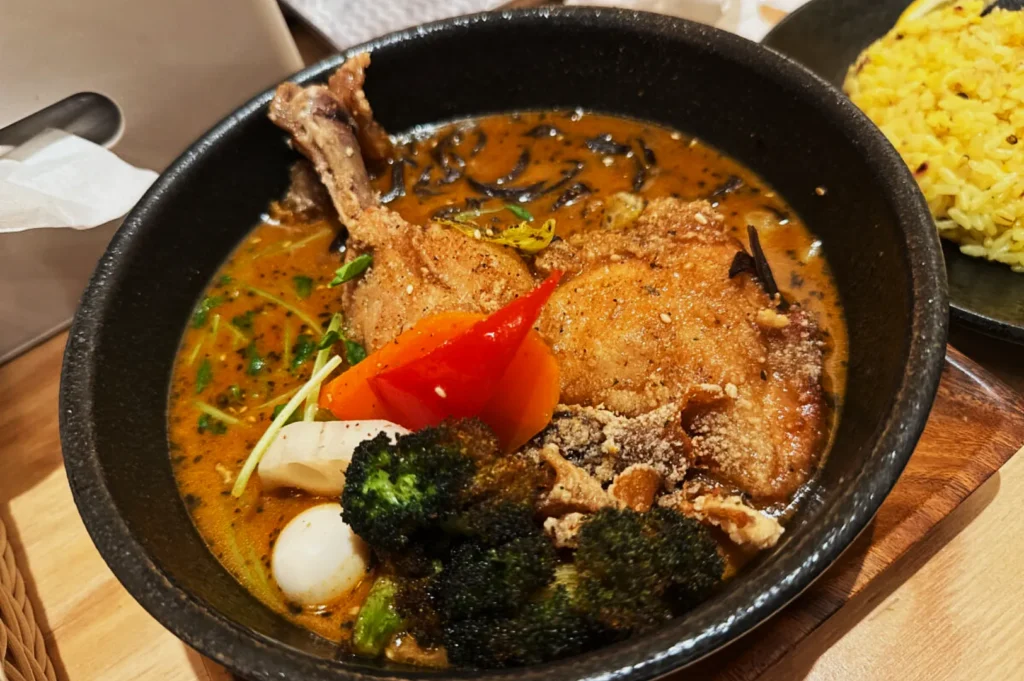
Every discussion about bone-in versus boneless chicken soup curry has to begin with the broth, because in soup curry, the broth is not a backdrop. It is the point. Unlike a thick, paste-driven chicken curry where the sauce clings to the meat and carries the flavour on the surface, soup curry presents the broth openly, inviting you to drink it, to taste it in layers, to notice what it has become over the course of a long, patient cook.
This complexity doesn’t happen on its own. It’s built from aromatics, curry paste, vegetables, and, most importantly, the chicken. Bone-in chicken releases collagen, which converts to gelatin during the long, slow cook. This gives the broth a subtle body and richness: the difference between a broth that feels nourishing and one that merely tastes spiced.
Boneless chicken cannot do this. Without bones, cartilage, and connective tissue, the broth lacks the gelatin and depth that a long simmer would naturally create. While the muscle fiber adds some flavor, it’s not enough. You can add chicken stock or bone broth to compensate, but you’re just replacing what the bone provides for free.
What the Bone Does During the Cook
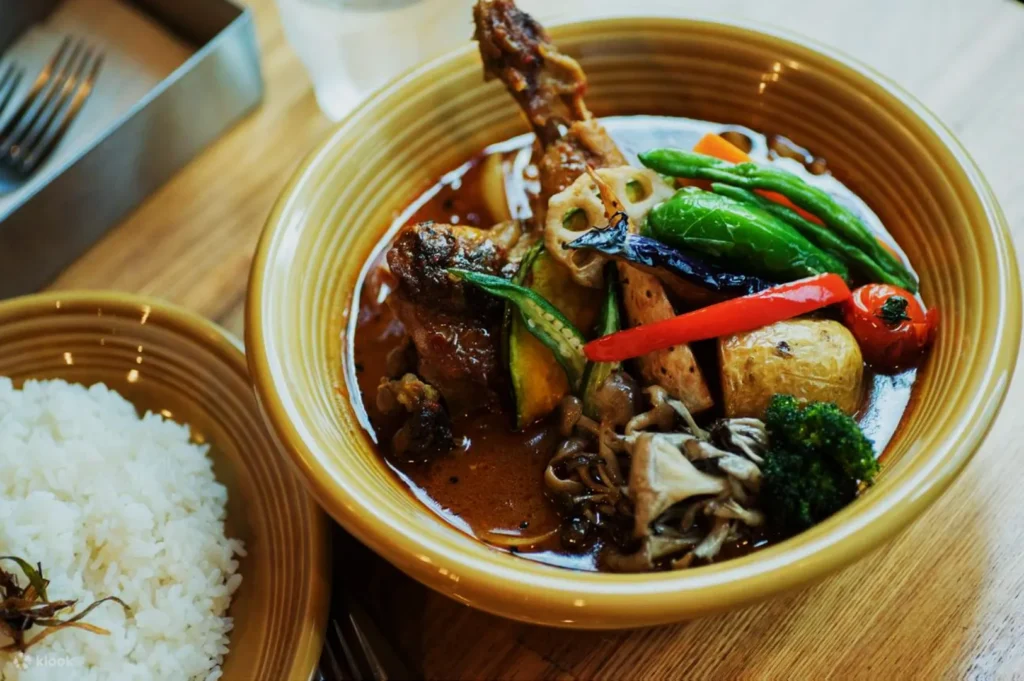
To appreciate why bone-in chicken is so central to a proper curry chicken soup, it helps to think about what is actually happening inside the dutch oven or large pot during the cook.
Gelatin and Body
As bone-in chicken thighs or whole legs simmer, the collagen in the joints and cartilage begins to break down. This is a slow process, which is why soup curry is never rushed. The heat extracts what the bone holds, and what it holds, released gradually into the chicken broth, is the foundation of a bowl that feels complete.
The gelatin produced is not visible in the finished broth; it does not make the liquid thick or opaque. But it is present in every spoonful, in the way the broth lingers on the tongue rather than disappearing immediately.
Fat Distribution and Flavour Carry
Bone-in chicken, particularly with the skin on, releases fat into the broth as it renders. This matters because fat is the vehicle for fat-soluble flavour compounds. The spices in a Hokkaido-style soup curry, the warming layers of the curry paste, the earthiness of garlic and the brightness of fresh ginger, all carry more effectively through fat than through water alone.
A boneless, skinless piece of chicken in the same broth would be surrounded by the same aromatics but would carry them less efficiently. The flavour in a bone-in bowl is more integrated. It feels like the chicken and the broth have genuinely become part of each other, which, after a long cook, they have.
The Case Against Boneless, Honestly Considered
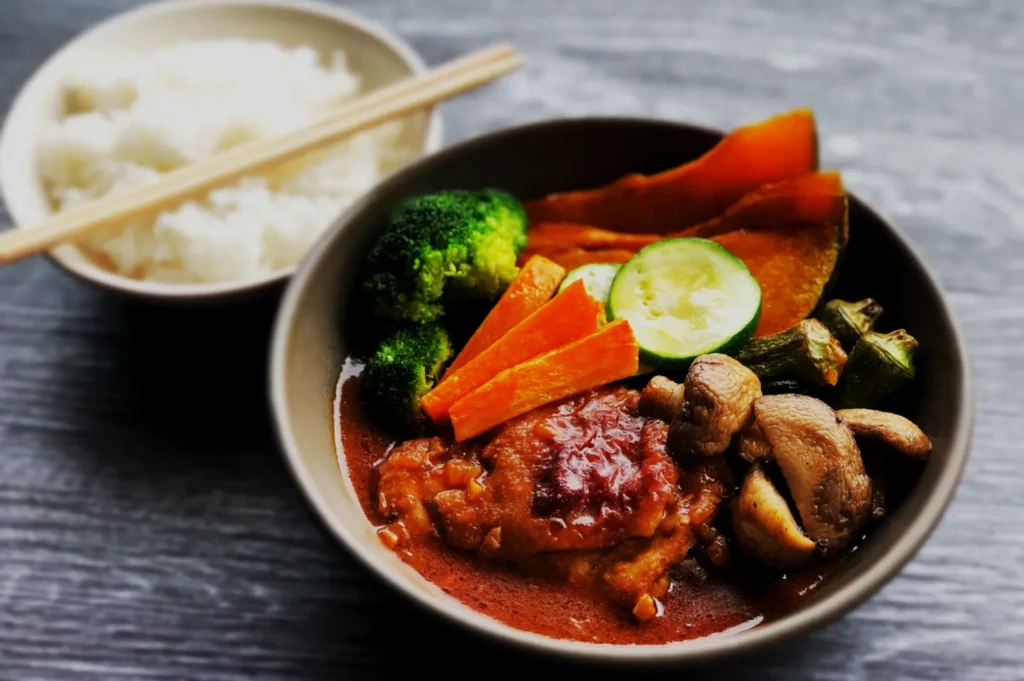
We are not dismissive of the argument for boneless chicken. Boneless, skinless chicken has practical advantages that are worth acknowledging. It cooks faster. It is easier to eat without any special technique. It portions cleanly. In a chicken soup recipe designed for speed, boneless chicken makes sense. In a weeknight chicken curry thrown together in under an hour, boneless thighs or chicken breasts are perfectly reasonable choices.
But soup curry is not designed for speed. It is not a weeknight shortcut. It is a style of cooking that emerged from Hokkaido, Japan, shaped by the long winters of Sapporo and the tradition of building warmth through patient, layered cooking. The soul of the dish is inseparable from its method. And its method, done properly, rewards the bone-in cut in ways that no amount of added chicken stock or adjusted curry paste can replicate when the bone is absent.
There is also the question of texture. Tender chicken that has been cooked bone-in retains a different quality from boneless meat cooked the same way. The bone conducts heat differently, and the meat closest to it cooks at a slightly different rate, producing a result that is juicier toward the center and more flavorful throughout. Shredded chicken pulled from a boneless breast cooked in the same broth is a different product entirely: softer in a less interesting way, without the slight pull and resistance that makes eating a piece of bone-in chicken so deeply satisfying.
How This Philosophy Shapes What We Serve
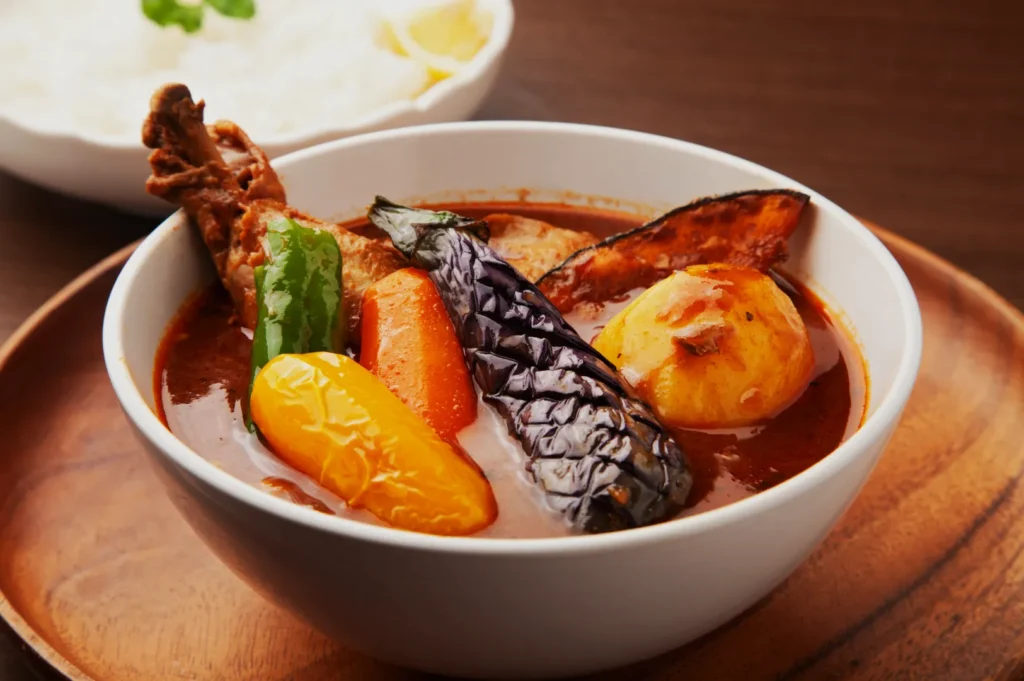
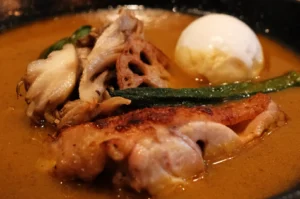
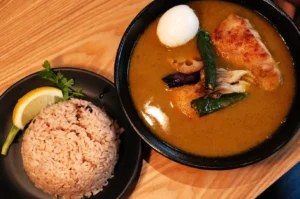
At our restaurant, the bone-in choice is not a selling point we lead with. It is simply how the dish is made. The whole chicken leg arrives in the bowl because that is the cut that belongs there. It has been cooked until the meat is ready to ease from the bone with very little encouragement, but it holds its shape. It is substantial. It anchors the bowl.
The Bowl as a Whole
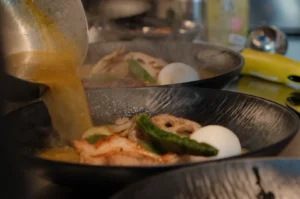
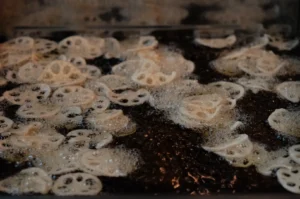
The bone-in chicken is surrounded by vegetables that are deep-fried separately before being added to the bowl. This technique preserves their individual texture and stops them from dissolving into the broth. The contrast between the tender, bone-in chicken and the crisp vegetables is intentional. It is the result of treating each component with care.
The broth itself reflects what the bone has given it. The garlic and ginger are present but not sharp, and the spice is layered and warm. The taste has a roundness that is characteristic of a broth made with bone-in chicken and time. We do not use coconut milk in our Hokkaido style, which keeps the broth clear and allows every flavour to come through without interference. This also means the bowl is naturally dairy-free, a quality that comes from tradition, not modification.
Fresh herbs, a careful amount of salt, and a restrained use of lime or lemon juice finish the broth, lifting it without changing its essential character. What you taste in the bowl is what the process produced, and the bone-in chicken is at the center of that process.
The Eating Experience Is Different
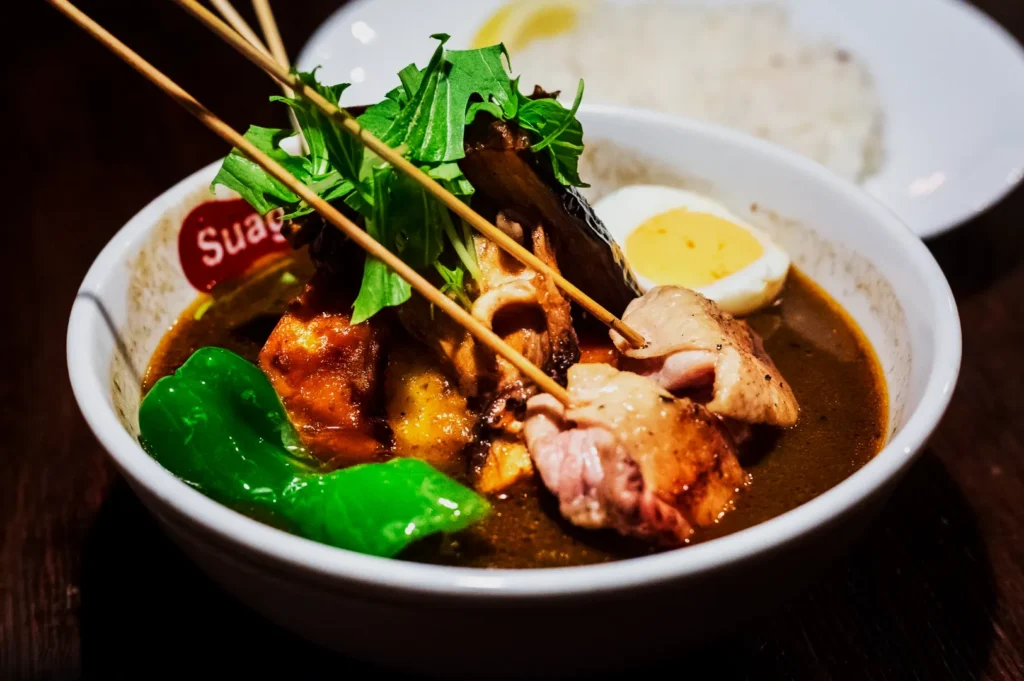
There is something the bone-in cut does to the act of eating that the boneless cut simply cannot replicate. It slows you down. It requires a small amount of engagement, a slight turn of the bowl, a moment of attention. You are not consuming a uniform cube of protein. You are working with something that has a shape, a structure, a presence in the bowl.
This quality, the quality of a meal that invites you to be present while eating it, is central to what soup curry offers as a soup cuisine. It is comfort food in the truest sense: not food that requires no effort, but food that rewards the effort of sitting down, being unhurried, and eating with some attention. A bowl of chicken soup built around bone-in chicken is a bowl that asks something of you. In return, it gives you one of the most satisfying eating experiences the format allows.
One Choice, One Direction
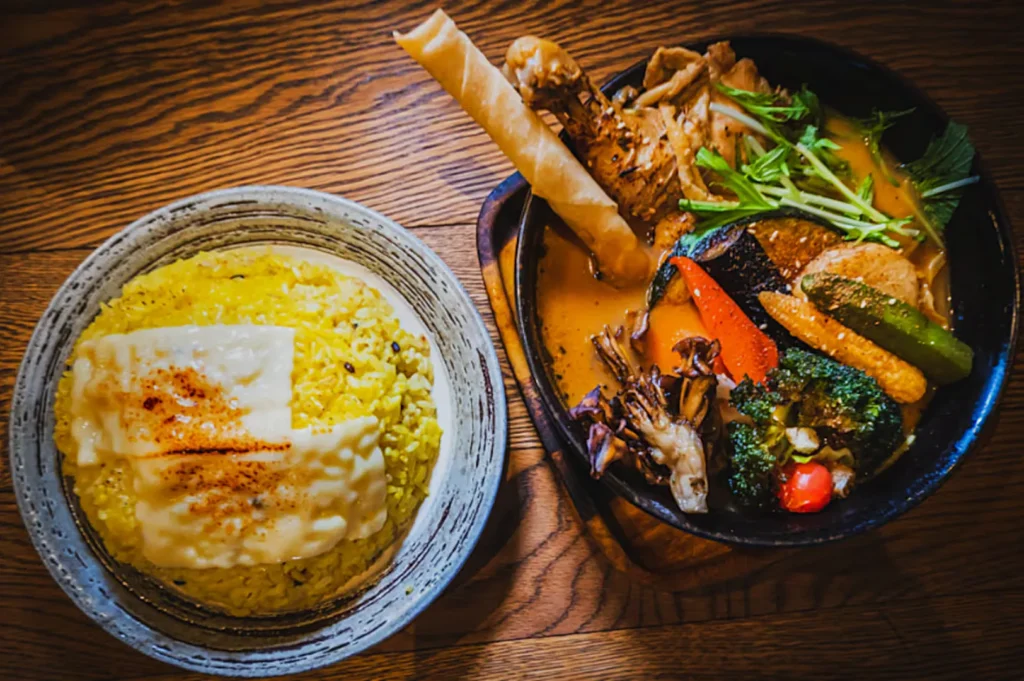
The debate between bone-in and boneless in curry soup is, in the end, a debate about what kind of bowl you want to make. If the priority is speed and uniformity, boneless wins on practicality. But if the priority is depth of broth, richness of flavour, and an eating experience that is grounded and complete, bone-in is not a preference. It is a prerequisite.
At Soup Curry by Ki-Setsu, we made this choice long before the first bowl left our kitchen, and it is not one we revisit. The bone is in the bowl because it belongs there. Every aspect of what we serve, from the broth to the texture to the warmth that lingers after the meal, traces back to that single, specific decision.
Some choices in cooking define everything that follows. This is one of them.