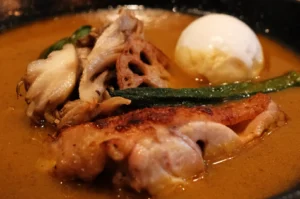
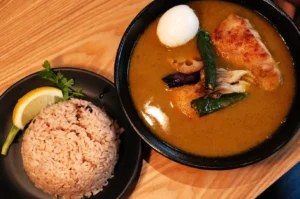
There is a moment, unique to a proper bowl of soup curry, when you lift a piece of cooked chicken from the broth and it surrenders completely, falling clean from the bone without any coaxing. That is not an accident. It is the result of choosing the right cut from the very beginning.
At Soup Curry by Ki-Setsu, this is not a decision we take lightly. The whole chicken leg, comprising the thigh and drumstick still attached, is the only cut we serve, and every reason for that choice comes down to what soup curry is fundamentally about: depth, texture, and the kind of warmth that lingers long after the last spoonful.
Why Cut Matters More in Soup Curry Than in Any Other Chicken Curry Soup
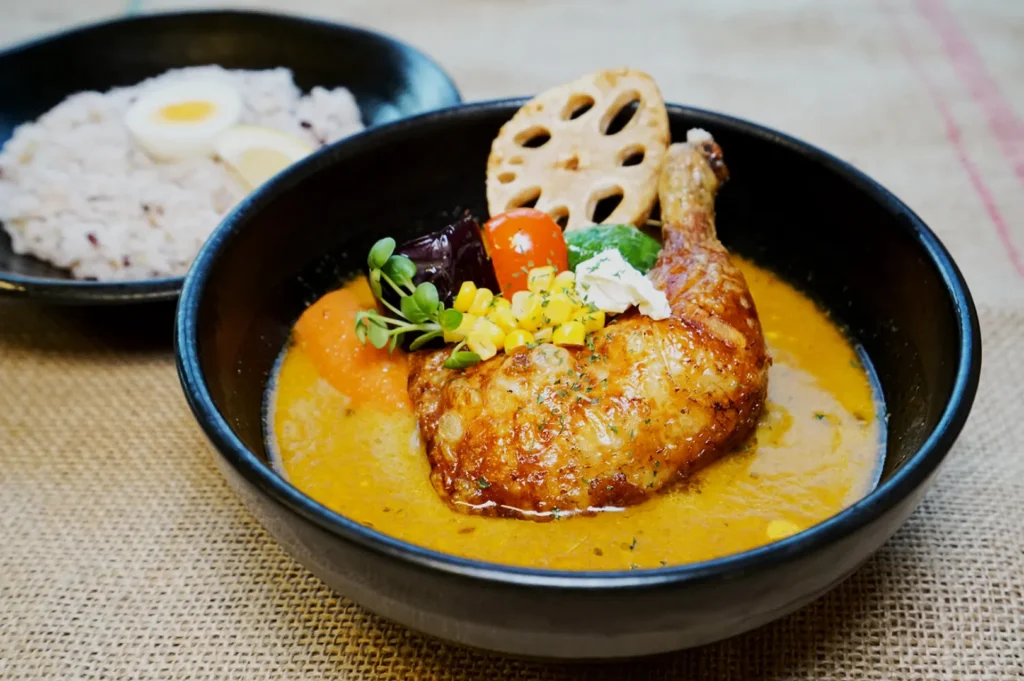
In a thick, paste-heavy chicken curry, the sauce clings to the surface of the meat and carries all the flavor. The chicken itself can afford to be a secondary character. But curry soup is a different discipline entirely. The broth is the centrepiece. It is light enough to be drunk, layered enough to be studied, and every ingredient submerged in it both gives and receives. The chicken must be able to hold its own in that liquid environment for an extended cook, releasing collagen and fat slowly into the soup while absorbing the aromatics of curry powder, garlic, ginger, and spice.
Chicken breasts simply cannot do this. They are lean by nature. Without connective tissue or meaningful fat, they tighten and dry out in a long, simmering soup pot. What you are left with is pale, fibrous meat floating in a broth that never quite reached its potential. The breast gives nothing back to the soup and takes little from it. In a chicken soup recipe built around quick cooking, that might be acceptable. In soup curry chicken, it is a compromise that undermines everything.
The Thigh Alone Is Better, But Still Not Enough
Skinless chicken thighs have earned a well-deserved reputation among cooks who care about flavour. They tolerate medium high heat, they stay moist, and they have enough fat to contribute meaningfully to a broth. Used in a curry chicken soup, boneless thighs yield shredded chicken that is tender and flavourful. We understand the appeal.
But the whole leg goes further. The drumstick, attached and bone-in, introduces a structural element that the thigh alone cannot replicate. Bone marrow and cartilage dissolve gradually into the chicken broth, producing a natural richness that no amount of added chicken stock can fully imitate. This is the same principle behind the appeal of bone broth: time plus bones equals depth. In our curry soup, the whole leg is not merely a serving portion. It is an active ingredient in the soup itself.
What the Whole Leg Does to the Broth
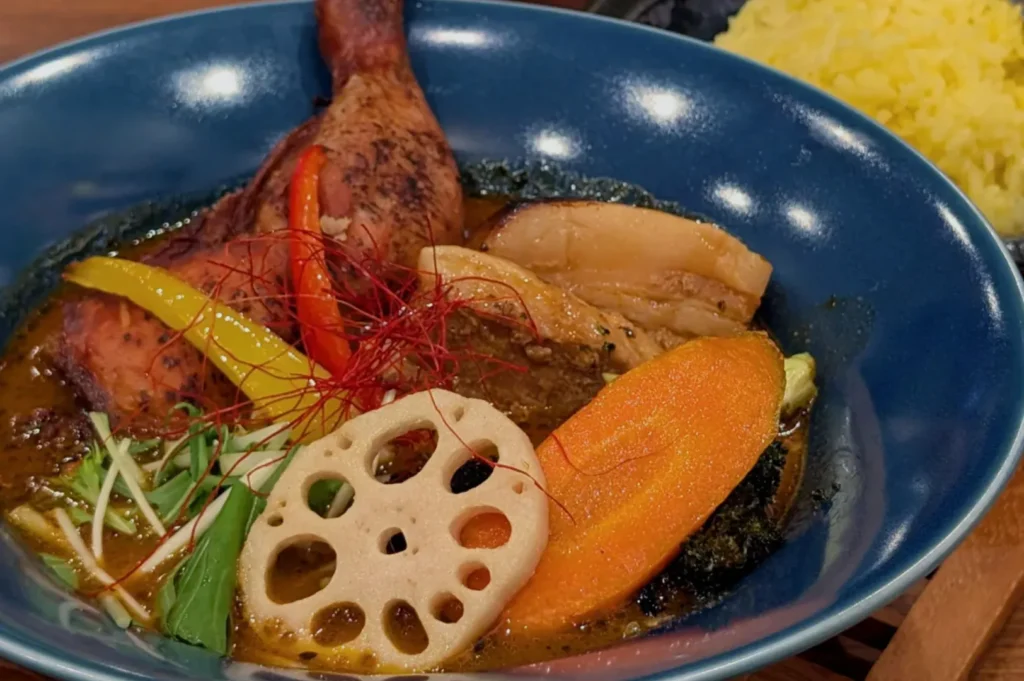
Consider the mechanics of a proper soup curry simmer. The chicken pieces go into the large pot or Dutch oven early, cooking at low heat. As the skin renders fat into the broth, it carries fat-soluble compounds from curry powder, ginger, and garlic, dispersing flavor in ways lean cuts cannot. Collagen breaks down into gelatin, giving the broth a subtle body that coats the palate without thickening it.
Stirring occasionally, skimming, and adjusting the heat are all part of managing a broth built around bone-in chicken. The patience required is part of the philosophy. A good chicken curry soup made with whole legs is not fast food. It is a commitment to a process that produces something the shortcut version cannot.
By the time the chicken is cooked through and the meat begins to ease away from the bone, the broth has become a wonderful soup greater than the sum of its parts. The taste is rounded, the body is present, and the tender chicken carries the memory of everything it has been cooking alongside. That quality of flavour is what makes the bowl feel complete, a complete meal in a way that a breast-based version rarely achieves.
How We Build Around the Whole Leg
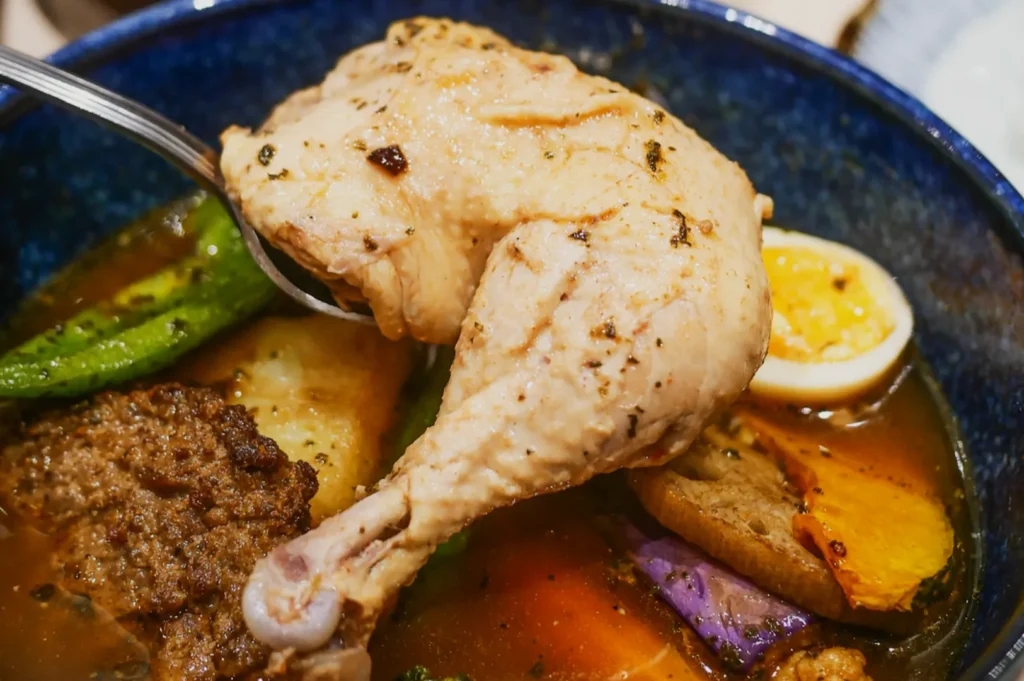
At Soup Curry by Ki-Setsu, the whole chicken leg is the anchor of the bowl, but it does not stand alone. The surrounding elements are chosen to complement both the meat and the broth it has helped create.
Vegetables as Contrast, Not Filler
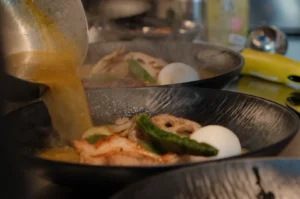
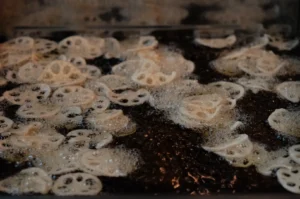
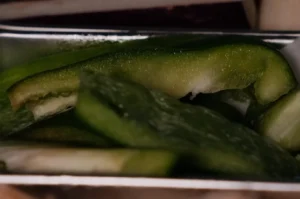
Our approach to vegetables in soup curry chicken draws on Japanese cutting methods and a commitment to frying each piece separately before it enters the bowl. Bell pepper, lotus root, aubergine, and potato are deep-fried to order, arriving with their own textural identity intact: a crisp exterior that softens as it meets the curry soup but never disintegrates into it. Sweet potatoes and added sweet potatoes in their prepared form bring a natural sweetness that balances the heat of the spice blend. We also add frozen peas for bursts of color and nutrition calories.
This matters because the whole chicken leg, with its richness and weight, benefits from vegetables that push back. A soft, overcooked vegetable medley disappears against the density of a well-made leg. The contrast is intentional. It keeps the bowl dynamic from the first bite to the last.
The Spice Base and the Broth Together
Our curry paste is built for a broth, not a sauce. That distinction shapes everything about how the spices behave. Garlic and ginger are foundational, providing the base note over which layers of warming spice are added. We do not use coconut milk in the Hokkaido style, which keeps the broth clear and clean rather than creamy, allowing the full complexity of the spice blend to read without interference. This is also what makes our chicken curry soup naturally dairy free, a quality that emerges from the tradition, not from a deliberate health positioning.
Fish sauce, used with restraint, adds an umami depth that resonates with the gelatin from the bone. A careful balance of salt and lemon juice or lime juice at the end of cooking lifts the broth and sharpens its edges without making it sharp. Fresh herbs and, where appropriate, kaffir lime leaves or red pepper flakes are used to finish rather than to build, preserving their volatile aromatics.
Olive oil is used to sauté the onion and other aromatics over medium high heat before adding the broth. We add chicken broth or veggie broth depending on availability to build the base of the soup. Bay leaf is included during simmering to infuse subtle herbal notes.
The Experience of Eating a Whole Leg
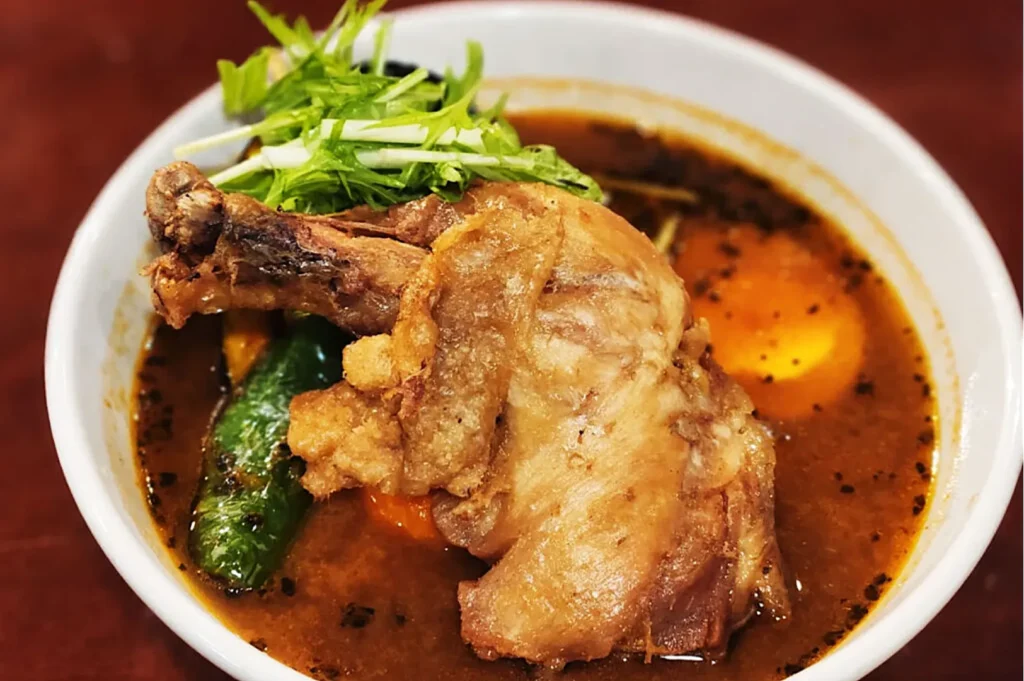
There is something deeply satisfying about being served a whole chicken leg in your bowl. It communicates, without words, that the kitchen has not taken shortcuts. The cut is generous. It requires engagement. You are not handed a tidy cube of meat on a skewer; you are invited to eat in a way that is slightly tactile, a little involved, and thoroughly rewarding.
This is central to why soup curry, as practised in Hokkaido and carried here to Singapore, feels like comfort food at its most considered. The bowl is substantial. The chicken soup component is something you drink as much as eat. The whole leg is the anchor that makes the entire experience feel grounded and honest.
Rice noodles or steamed rice on the side offer a way to pace the meal, absorbing the broth as you work through the chicken and vegetables. The bowl is structured to be explored, not consumed in a rush. That is the nature of the whole leg: it slows you down in the best possible way.
Why We Will Not Change the Cut
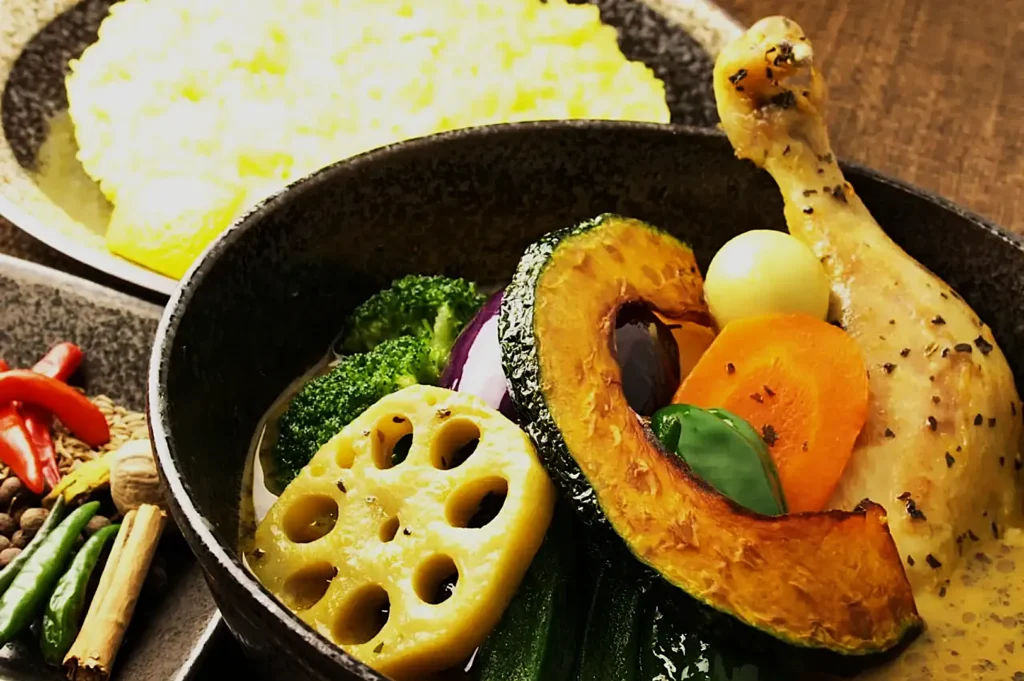
We are sometimes asked whether we offer options, whether a guest might substitute boneless skinless chicken, a breast, or rotisserie chicken. The honest answer is that changing the cut would change the soup. The broth we serve is made possible by the whole leg. It is not a garnish or an add-on; it is the engine of the bowl.
This is the position we hold not out of rigidity but out of respect for what the dish is. Soup curry as a soup cuisine is already a niche category, a specific and particular style of cooking that does things its own way. The whole chicken leg is one of those ways. It is also, we believe, the most absolutely delicious one.
When you sit down with a bowl of soup curry chicken and that leg is in front of you, fragrant and falling-tender in a broth that has taken hours to develop, we hope you understand why nothing else would have done. Some choices in cooking are made for simplicity. This one is made for flavour, for texture, for the soul of the dish. It is the only cut that makes sense.