It happens more often than you might think. A guest walks through our doors, glances at the menu, and says something along the lines of: “Oh, so it’s like Japanese curry, right? With that thick brown sauce?” We smile, because we understand the confusion.
But the truth is, ordering Japanese soup curry expecting the familiar, gravy-like experience of traditional Japanese curry is a bit like ordering ramen and expecting udon. Both are Japanese dishes, and yet they are entirely different in texture, philosophy, and feeling.
The mix-up is understandable. Both dishes carry the word “curry.” Both are warm, comforting, and deeply rooted in Japanese food culture. But the similarities end there, and understanding why these two dishes diverge so dramatically is the key to truly appreciating what makes soup curry so special.
The First Clue Is in the Bowl: Liquid vs. Roux
The most immediate and obvious difference lies in consistency. When most people think of Japanese curry, they picture a thick, glossy sauce, rich with a curry roux that has been cooked down until it coats every grain of Japanese rice with a heavy, sweet warmth. This is the curry rice format that became a staple across Japan, a dish beloved for its deeply satisfying, almost stew-like quality. Typical Japanese curry is often paired directly with steamed rice on the same plate, the sauce merging with the rice into a unified, hearty serving.
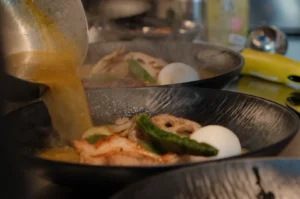
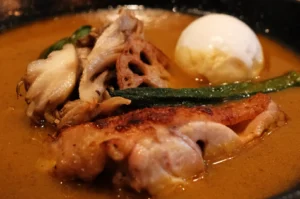
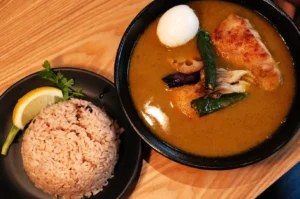
Hokkaido soup curry, by contrast, is a soup dish first and a curry second. The base is an aromatic curry broth, light and deeply flavoured, built on a foundation of chicken broth, chicken stock, and a blend of spices including curry powder and garam masala, often enriched with tomato paste for depth and body. There is no curry roux thickening the liquid. Instead, the broth remains clear enough to see through, fragrant enough to smell from across the room, and complex enough to sip slowly like a proper Japanese soup. The rice arrives in a small bowl on the side, served separately, so that each element maintains its own character.
This is not a stylistic quirk. It is a fundamental difference in culinary logic.
Why the Spice Blend Matters: Curry Powder vs. Garam Masala
Another source of confusion stems from spice. Both dishes use curry, but the spice profiles diverge in meaningful ways. Regular Japanese curry leans on a commercially blended curry roux, which tends to be milder, sweeter, and more uniform in flavour. It is engineered for consistency and approachability, a mass-market version of curry that made the dish ubiquitous in Japanese home cooking and cafeteria settings.
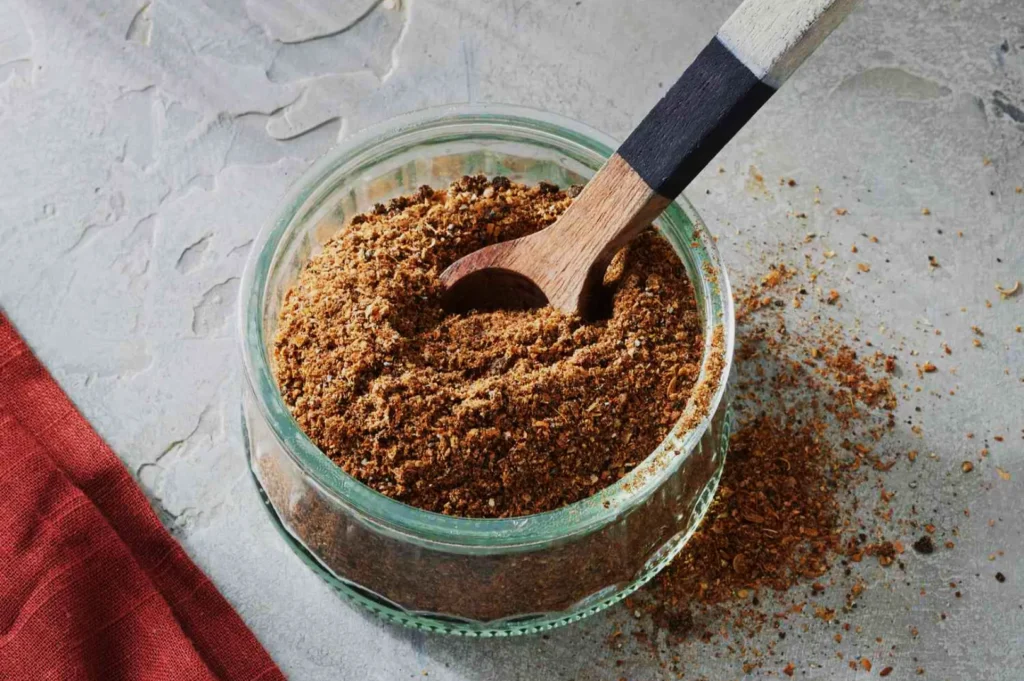
Soup curry takes a more nuanced approach. The spice base typically combines curry powder with garam masala, layering warm, earthy aromatics with subtle heat and complexity. When this is built into a broth alongside chicken bones and root vegetables like kabocha squash, the result is something far more medicinal in spirit, closer to the traditional Southeast and South Asian curry soups that likely inspired the original soup curry developers in Sapporo during the early 1970s.
There is nothing mass-produced about it. Each batch of curry broth has a character of its own, shaped by the balance of spices, the quality of the chicken broth, and the time given to develop flavour over medium high heat. This is why we treat our broth as the heart of everything we do. It is the element that makes our soup curry distinctly Hokkaido and unmistakably different from the curry udon or curry rice that most people grew up with.
The Question: Deep-Fried Vegetables vs. Simmered
If the broth is the soul of soup curry, the vegetables are its personality.
Traditional Japanese curry simmer carrots and potatoes in the sauce until soft.
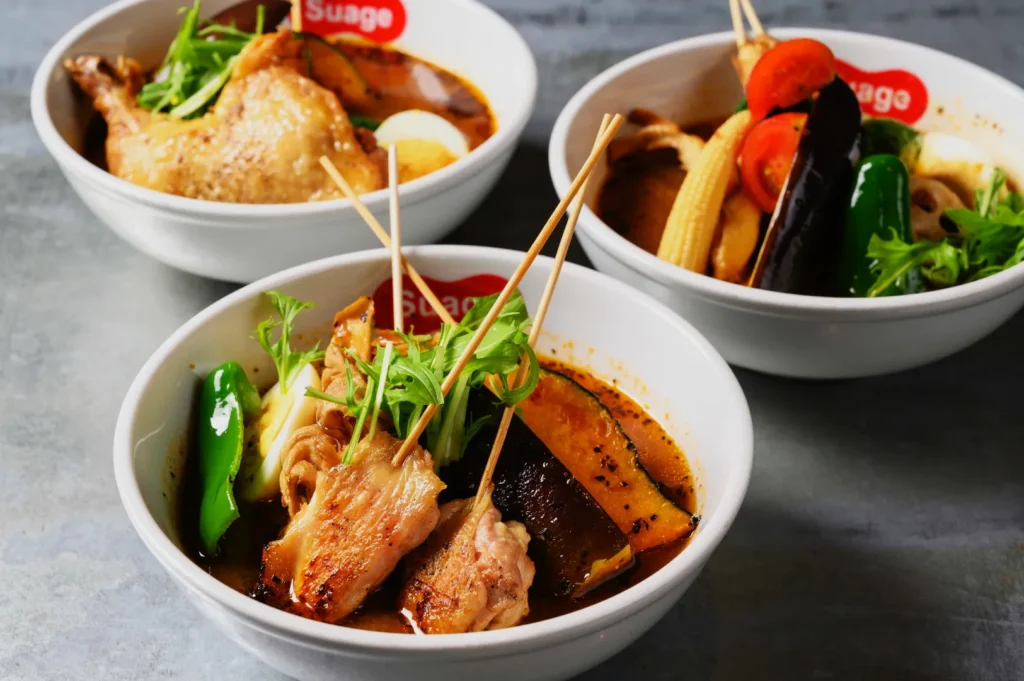
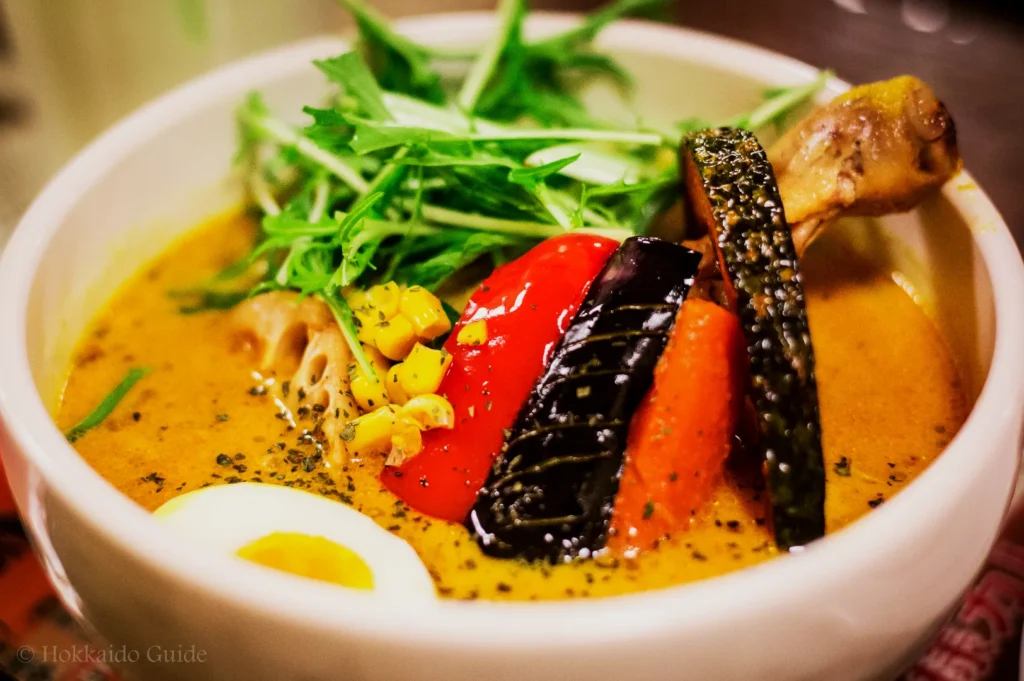
Soup curry uses the Japanese su-age technique flash-frying vegetables without batter.
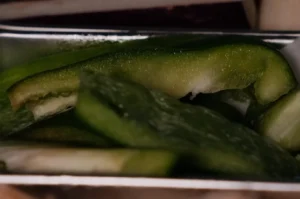
This preserves their natural colors, textures, and flavors. Bell peppers stay vibrant, lotus root keeps a satisfying bite, and aubergine softens while holding its shape. These deep-fried vegetables are added to the curry broth just before serving, rather than cooked in it.
This method yields vegetables that are golden brown outside, tender inside, and visually striking. Each bite contrasts the warm curry broth, crisp vegetables, and steamed rice served separately. To keep textures ideal, vegetables are drained on paper towels or wire racks before serving. Su-age cooking times vary, from 30 seconds for bell peppers up to 3 minutes for potatoes.
Sapporo Soup Curry and the Local Dish That Became a Phenomenon
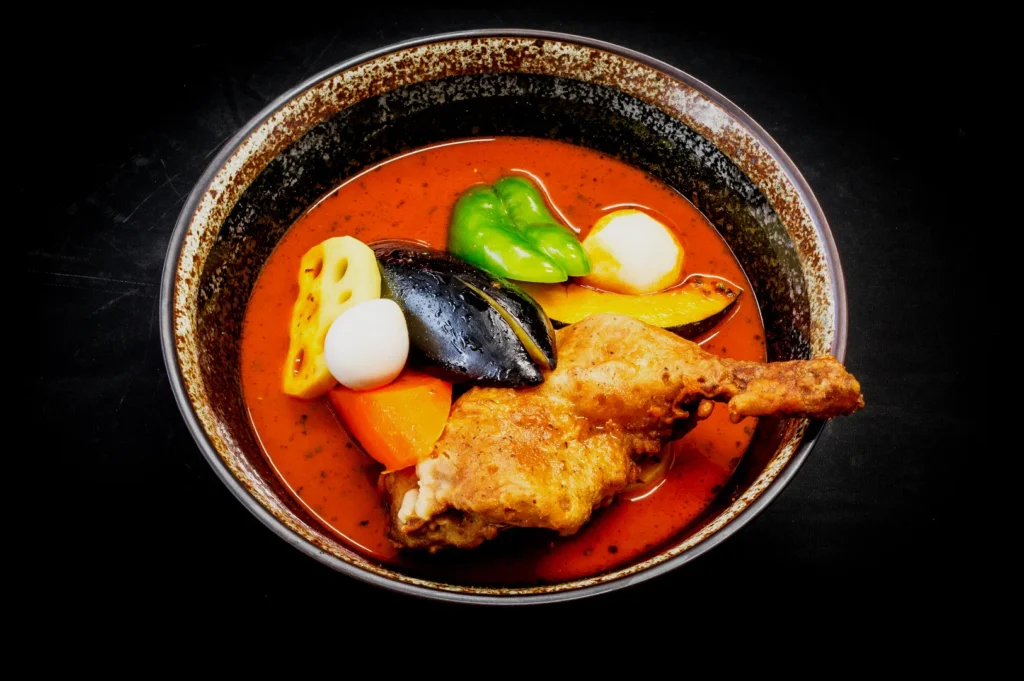
Part of the confusion also comes from the relatively recent arrival of Hokkaido soup curry outside Japan. While Sapporo soup curry has been a beloved local specialty in Hokkaido since the early 1970s, growing from a handful of soup curry restaurants like Soup Curry Garaku into a full-blown regional institution, it remained largely unknown to diners outside Japan for decades. Traditional Japanese curry, by contrast, spread internationally through Japanese emigration, convenience food exports, and the global popularity of Japanese cuisine.
The result is a knowledge gap. Diners in Singapore, for example, have had decades of exposure to curry rice in Japanese restaurants, but almost none to classic soup curry or Hokkaido soup curry. So when the term “Japanese curry” comes up, the brain defaults to the familiar version.
At Soup Curry by Ki-Setsu, we work to close that gap, not by dismissing traditional Japanese curry (which we hold in great affection), but by showing guests what they have been missing. The Hokkaido style soup curry we serve is built on seasonal ingredients, bone in chicken legs that develop deep flavour during cooking, and assorted vegetables prepared with genuine care for texture and presentation.
How the Rice and Soup Interact Differently
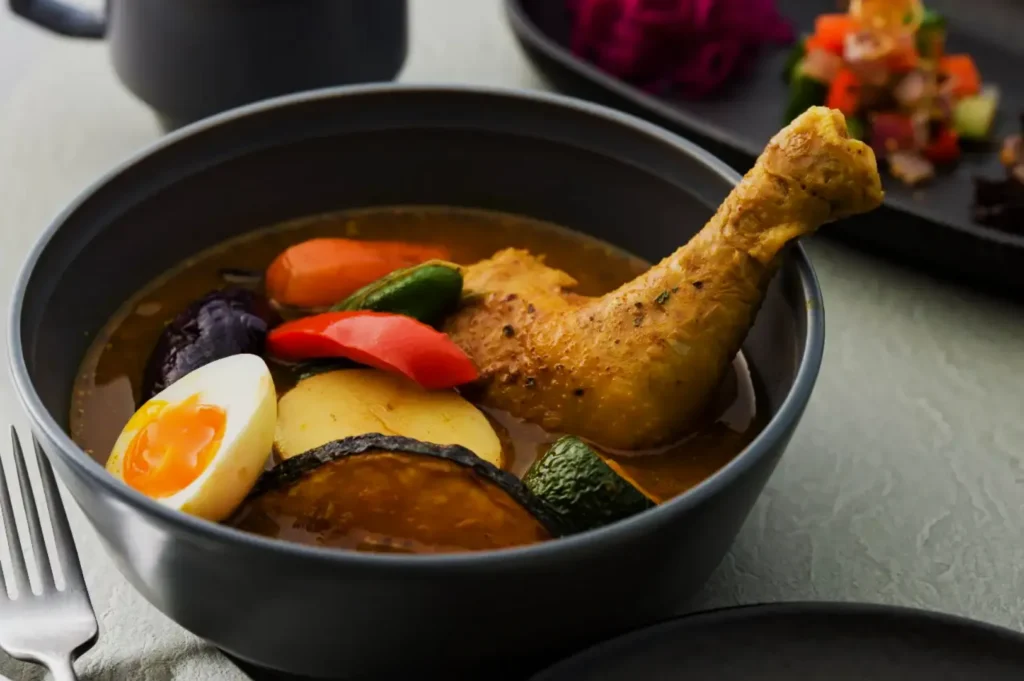
One detail that surprises many first-time guests is the way you eat soup curry compared to curry rice. With typical Japanese curry, the rice and sauce are one. You scoop both together, and the bite is rich, coating, satisfying.
With soup curry, the steamed rice and curry broth remain separate throughout the meal. Some guests spoon the curry broth over the rice in the small bowl. Others eat them in alternation, a spoonful of broth, a mouthful of rice, then a bite of lotus root or bell pepper. There is no single correct way. The point is that the two components retain their independence, which means the curry broth can be tasted on its own terms, without the starch of the rice altering its flavour.
This is the elegance of the dish. And it is also why describing soup curry as simply a light curry flavored soup would be selling it short. It is a complete meal system, thoughtfully composed, where nothing is incidental.
Why the Confusion Persists, and Why It Is Worth Resolving
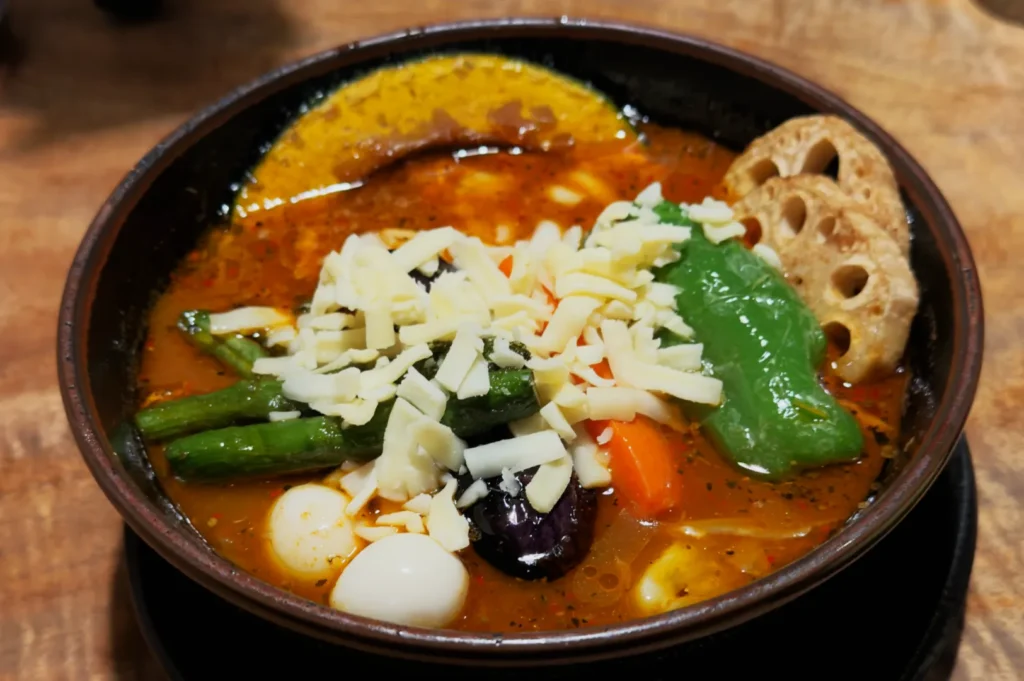
Japanese soup curry and Japanese curry are often confused because they share a name and warmth but differ greatly. One features a thick, roux-based sauce over rice, while the other offers a fragrant, spice-forward broth served alongside rice. One blends its components; the other highlights their separateness.
Knowing this difference enriches your dining experience. At our restaurant, understanding what to expect lets you appreciate the Hokkaido soup curry tradition: centered on ingredient integrity, complex broth, and a meal where the soup shines.
That, more than anything, is why these two dishes deserve to be understood on their own terms. They are both extraordinary. They are just extraordinary in very different ways.
To deepen your appreciation and make the best choice, we invite you to explore our guide on How to Choose the Best Soup Curry Singapore: What to Look for Before You Order.