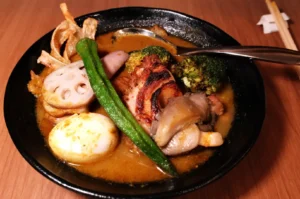
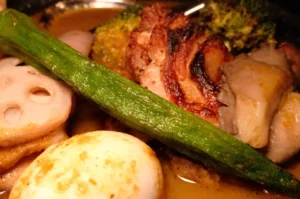
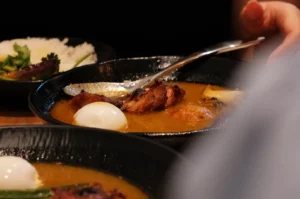
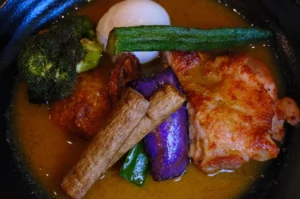
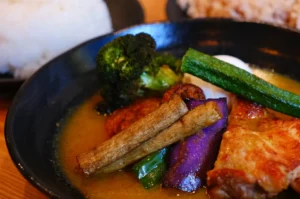
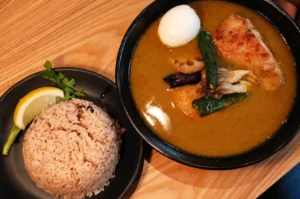
Anyone who has tucked into a bowl of chicken soup curry knows the appeal instantly: tender chicken thighs bathing in a fragrant, spice-laden broth, alongside vegetables that somehow taste brighter than they do anywhere else. It is the kind of dish that built Hokkaido soup curry as the beloved comfort food.
But a question we hear more and more often at our restaurant is whether a vegetable-based bowl can hold its own against the classic chicken curry soup. Our answer, after years of perfecting both versions, is a confident yes, and we would like to explain exactly why.
The Soul of Chicken Curry Soup Was Never Just About the Meat
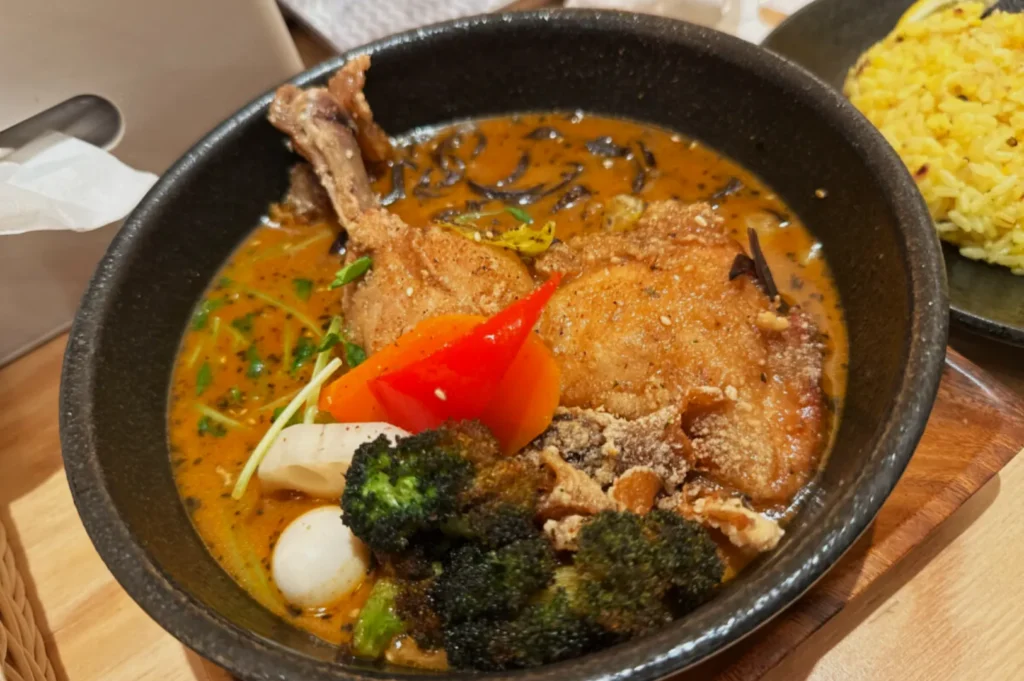
When people think of soup curry, chicken often takes centre stage in their minds. Yet the true character of soup curry has always come from the broth itself and the way vegetables are treated within it. Hokkaido’s harsh winters shaped a cuisine that leans heavily on root vegetables, squash, and whatever seasonal produce the land could offer. Chicken soup, in this tradition, was simply one protein choice among several, not the defining feature.
At our restaurant, we treat the vegetable component of every bowl with the same seriousness as the protein. Bell peppers, aubergine, lotus root, and potato are cut using Japanese techniques, often thinly sliced by hand on the cutting board before deep-frying, so each piece retains its own texture and flavour before it meets the soup. This approach means that when we remove chicken from the equation entirely, the dish does not feel like it is missing something. It feels complete on its own terms.
Building a Dairy Free Broth That Does Not Rely on Chicken Stock
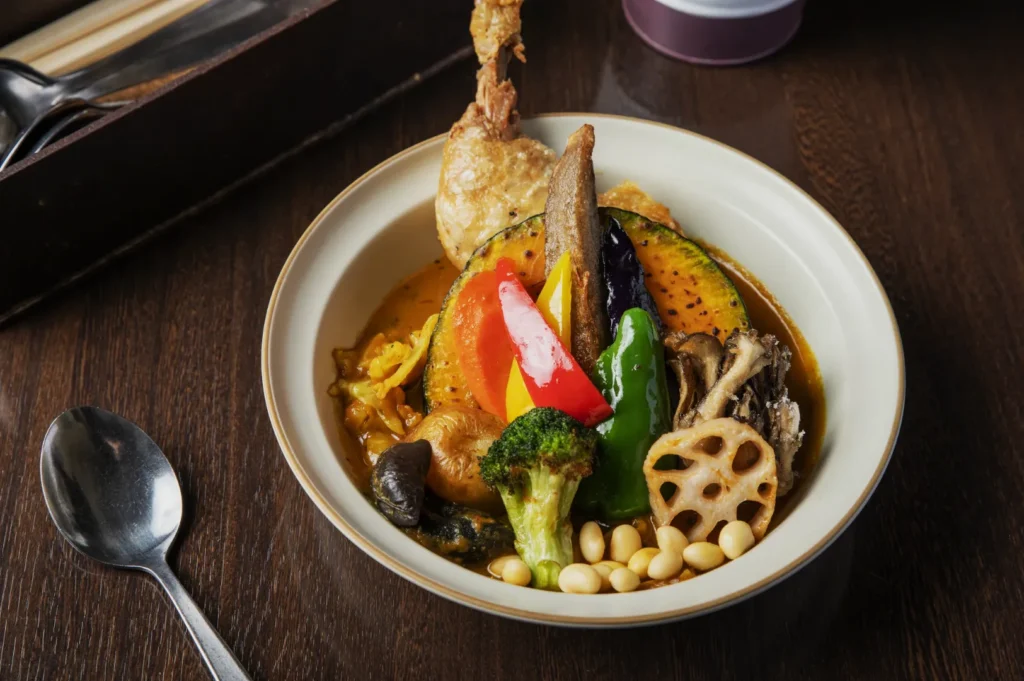
One of the biggest misconceptions about soup curry is that its depth of flavour comes primarily from chicken stock or chicken broth. In reality, the base of a well-made soup curry is built from a long list of aromatics: garlic and ginger, onion, curry powder, and a carefully balanced curry paste that often includes lemon grass and warming spices layered over hours of simmering.
Vegetable-forward versions are not a modern shortcut. Hokkaido’s tradition has long made room for lighter renditions built without a heavy roux, proving the broth itself carries the dish’s identity, not any single ingredient. A dairy free veggie broth, simmered slowly in a large pot with root vegetables and dried mushrooms, follows that same logic, with vegetable oil helping the aromatics bloom before boiling water goes in.
Sweet potatoes and butternut squash suit this well. Kabocha pumpkin, in particular, is prized for its natural sweetness. Adding these toward the middle of cooking lets them soften and balance the spice level without needing dairy.
Garlic ginger paste remains the backbone across both chicken and vegetable bowls, working just as hard for a plant based version as for one built around chicken thighs.
Behind the Soup Pot: How Curry Paste Brings Each Version Together
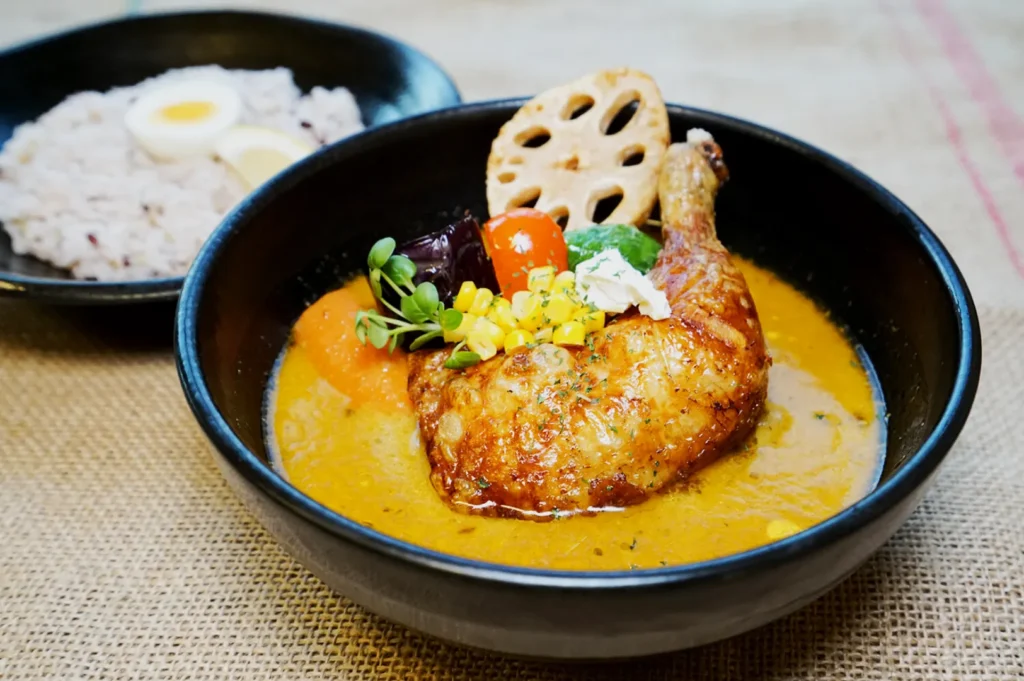
Guests are often curious about what actually happens in the kitchen once an order for curry chicken or vegetable curry comes through, so it is worth explaining the process behind both.
For the chicken version, we start with fall-off-the-bone chicken, usually thigh meat for its ability to stay tender rather than dry out. The chicken pieces are seared over medium high heat in a splash of olive oil until the surface takes on a little colour, which locks in more flavour before the meat ever meets the broth. Once the chicken is browned, we add chicken broth and bring the pot down to a gentler simmer. A quick check with an instant read thermometer ensures the chicken is properly cooked through without being left in the pot any longer than necessary, since overcooked chicken loses its texture quickly.
The vegetable version follows a similar rhythm but without the searing step for meat. Vegetables go into the pot in stages according to how long each one takes to soften, and we reduce heat once everything is combined so the broth can develop slowly rather than boil aggressively. Stirring occasionally keeps the vegetables from settling and scorching at the bottom of the pot, and a pinch of salt at the right moment draws out the natural sweetness of the root vegetables far more effectively than adding it too early or too late.
Both versions rely on the same instinct: build the broth patiently, add the chicken or vegetables only when the base is ready, and never rush the boil.
A few things stay consistent across both bowls, regardless of protein:
The curry paste is always made fresh, never from a shortcut jar.
Vegetables are cut and cooked separately before joining the broth.
The broth is simmered low and slow, not boiled hard.
Seasoning, including salt, is adjusted gradually rather than all at once.
Fresh herbs and a squeeze of citrus go in only at the very end.
Where Vegetable Curry Soup Genuinely Outshines Chicken Versions
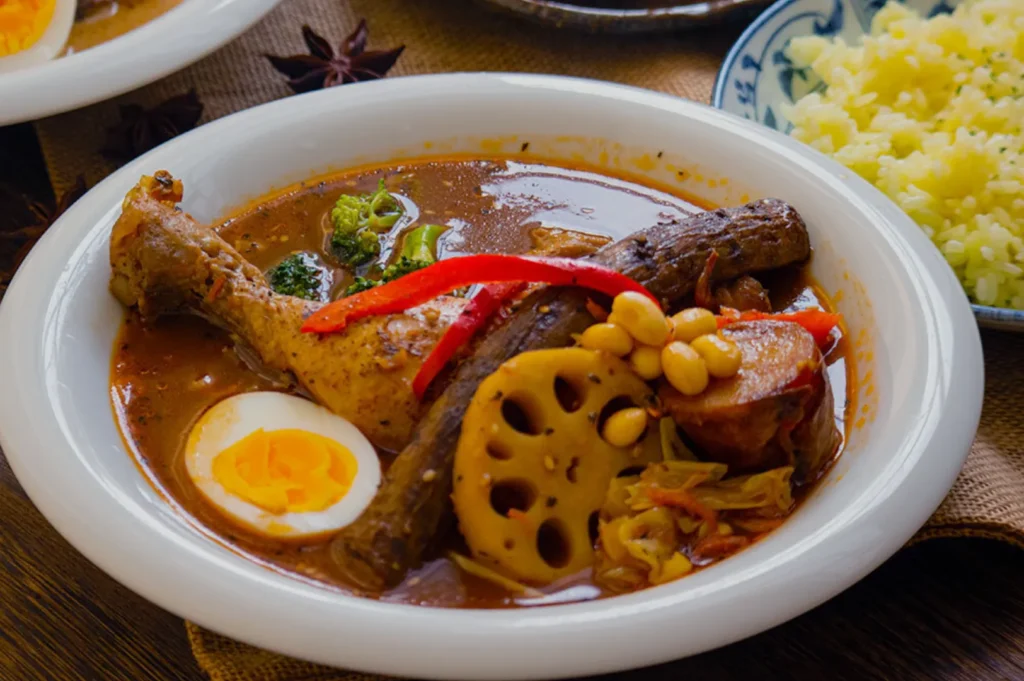
There are a few areas where we believe seasonal vegetable soup curry actually has the edge over its chicken curry soup counterpart.
Layered Textures in Every Spoonful
A typical chicken soup curry offers two main textures: the broth and the chicken itself, whether that is cooked chicken thigh, or chicken breast.
A well-constructed vegetable bowl, by contrast, offers far more textural variety. Crisp deep-fried lotus root, soft roasted pumpkin, silky aubergine, and firm potato all sit together in the same broth, each holding its shape differently. This variety keeps every mouthful interesting in a way that a single protein cannot always match.
Seasonal Flexibility
Chicken curry, however well prepared, tends to taste fairly similar throughout the year because the protein itself does not change with the seasons. Vegetables do.
In late spring we might lean on fresh asparagus and new potatoes, while autumn brings pumpkin, chestnut, and root vegetables into the pot. This seasonal rotation means our vegetable soup curry rarely tastes the same twice across a full year, giving regular guests a reason to keep returning and discovering something new.
A Lighter, Brighter Finish
Chicken broth carries a richness that can feel heavy, especially in Singapore’s climate. Our veggie broth, while flavorful, finishes lighter on the palate. A squeeze of fresh lime or lemon juice brightens the bowl, and freshly chopped cilantro adds a herbal lift that complements the sweetness of squash and added sweet potatoes. Red pepper flakes or a dash of fish sauce can enhance depth and spice without overpowering. Bean sprouts and kaffir lime leaves add fragrant nuance.
Nutritionally, vegetable-forward bowls offer more vitamin C and fiber than protein-heavy dishes, making our vegetable soup curry an excellent recipe for a satisfying, complete meal without feeling heavy.
Where Classic Curry Chicken Still Wins
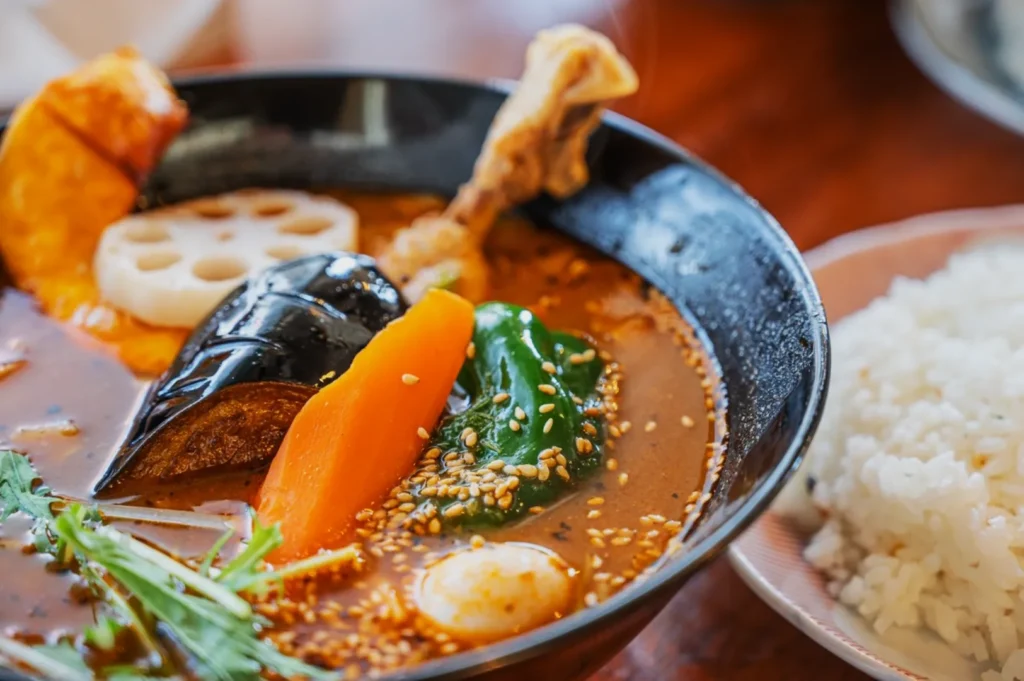
To be fair to the classic, chicken soup curry has strengths that a vegetable bowl cannot fully replicate. Chicken thighs, particularly when cooked to that stage where they are tender and cooked through without drying out, offer a satisfying protein bite that some guests simply crave. The slight char from a quick sear before the chicken pieces go into the pot adds a layer of smokiness that vegetables alone will not produce in quite the same way, and it genuinely gives the finished bowl all the flavour that fans of a wonderful soup have come to expect.
There is also something to be said for the tradition itself. Many guests come to us specifically for chicken curry because it is the version most associated with Hokkaido soup curry’s origins, and we respect that heritage deeply. We are not suggesting one version should replace the other. Rather, we believe both deserve equal consideration on their own merits, particularly for anyone reassessing how often they eat meat.
Read: What to Expect When You Order Our Chicken Hokkaido Soup Curry
Practical Tips for Chicken Thighs, Vegetables, and Meat Free Bowls Alike
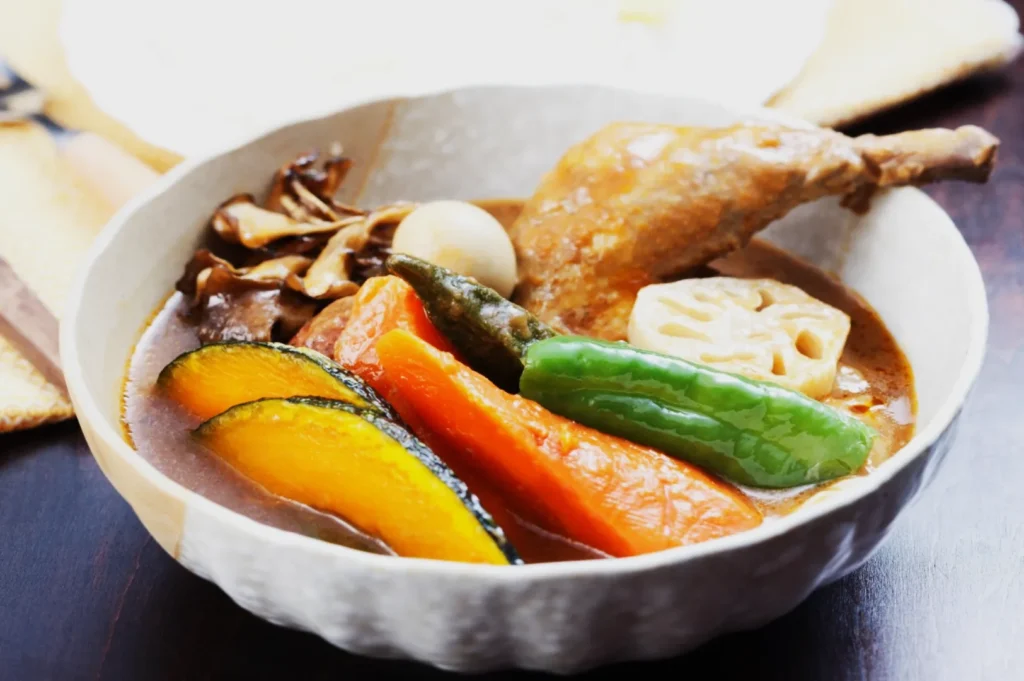
If you are trying vegetable soup curry for the first time, here are a few things worth knowing.
Ask about the spice level before ordering. Curry soup at our restaurant, much like traditional Hokkaido preparations, can be adjusted from mild to properly spicy on medium heat, and this applies equally to vegetable and chicken bowls.
Order rice on the side rather than mixed in. It is how soup curry is traditionally served. This lets you control how much rice meets each spoonful of broth.
Do not rush the meal. Soup curry, whether built around chicken thighs or vegetables, rewards a slower pace that allows the broth to cool slightly and the flavours to settle. This is one reason why, once evening arrives, our restaurant naturally shifts in atmosphere into a more relaxed, izakaya style space where guests linger over their bowls and small plates well after 6pm.
Chicken Curry or Vegetable: A Question of Preference, Not Compromise
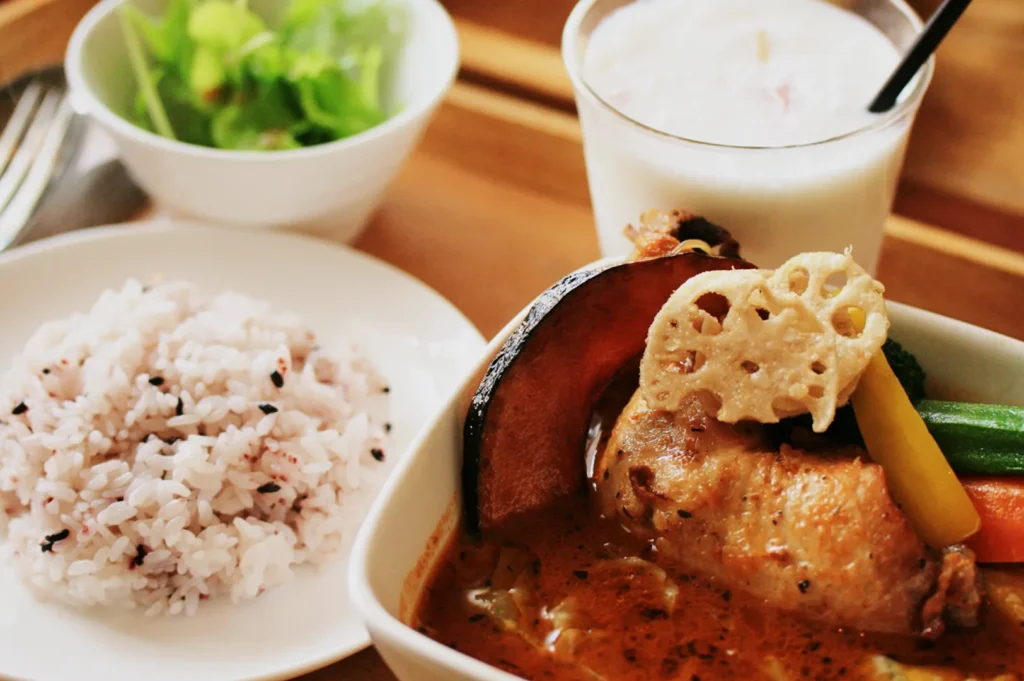
The idea that going meat free means settling for less flavour simply does not hold up once you taste a properly made seasonal vegetable soup curry. The broth, the paste, the balance of spice and sweetness, all of it can stand entirely on its own without chicken playing any role. What matters most is not the protein choice but the care taken in building the soup itself, layer by layer, the same philosophy we bring to Soup Curry by Ki-Setsu every single day.
Whether you are a committed vegetarian, someone easing into fewer meat based meals, or simply curious about trying something different from your usual chicken curry order, we would encourage you to give the vegetable version a proper try. You may find, as many of our guests have, that it does not feel like an alternative at all. It feels like its own great recipe, absolutely delicious in its own right, deserving of a place alongside the classic, not beneath it.