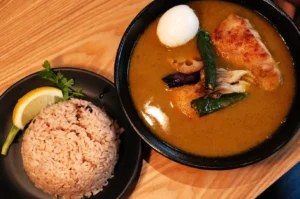
When guests sit down at our restaurant for the first time and order our soup curry, there is often a moment of curiosity before the bowl even arrives.
What exactly will this dish look like? Will it taste like the typical Japanese curry they have had before, with its thick, glossy roux poured over rice? Or will it be something else entirely? Ordering this dish for the first time often comes with questions, and we want you to feel completely at ease before your bowl even reaches the table.
A Different Kind of Curry Soup
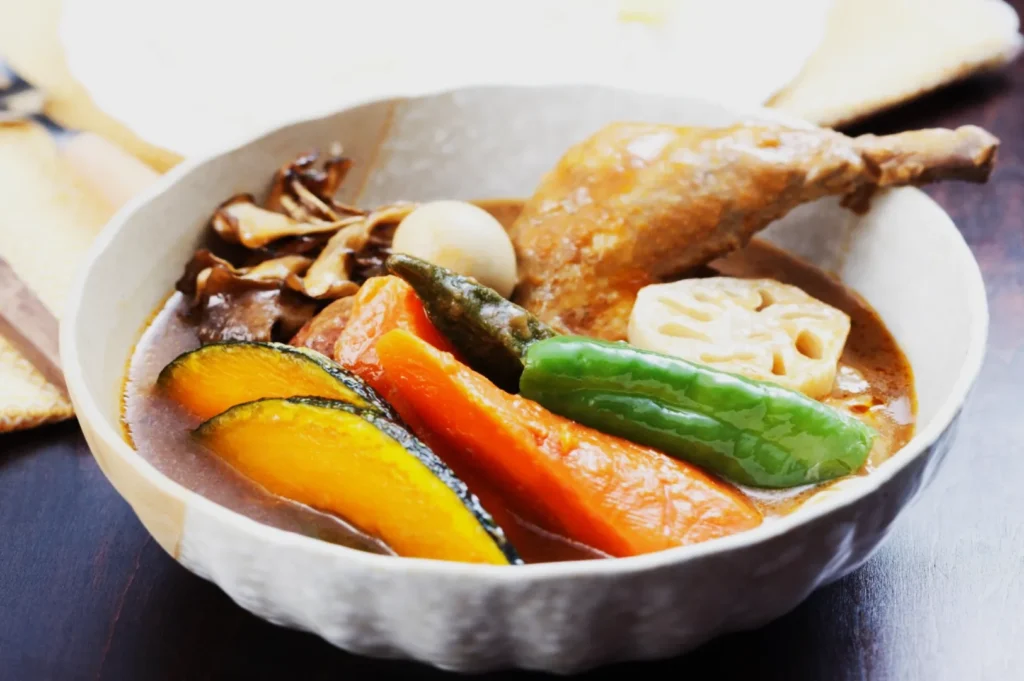
The first thing to understand is that soup curry is not a thinner version of traditional Japanese curry. It is its own distinct dish, with its own soul. Where classic curry rice relies on a curry roux to create a thick, stew-like consistency, our soup curry is built around a clear, deeply flavoured broth. The base is simmered for hours using chicken bones, aromatic spices, and a careful blend of vegetables, resulting in a soup that is light in texture but rich and complex in taste.
When your bowl arrives, you will notice the soup is more fluid than what you might associate with Japanese curry. It has movement, almost like a consomme, yet it carries layers of spice that build with every spoonful. This is the original soup curry experience, born in Sapporo, the capital city of Hokkaido, where the cold winters called for something warming, nourishing, and full of depth.
The Chicken: Bone In and Full of Flavour
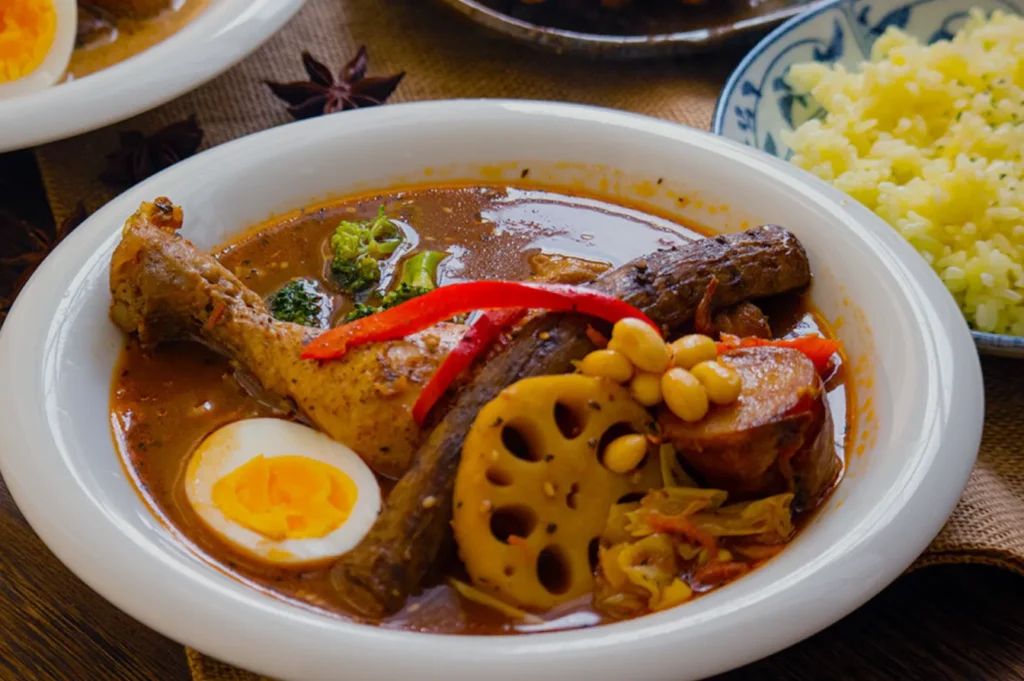
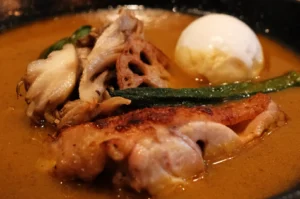
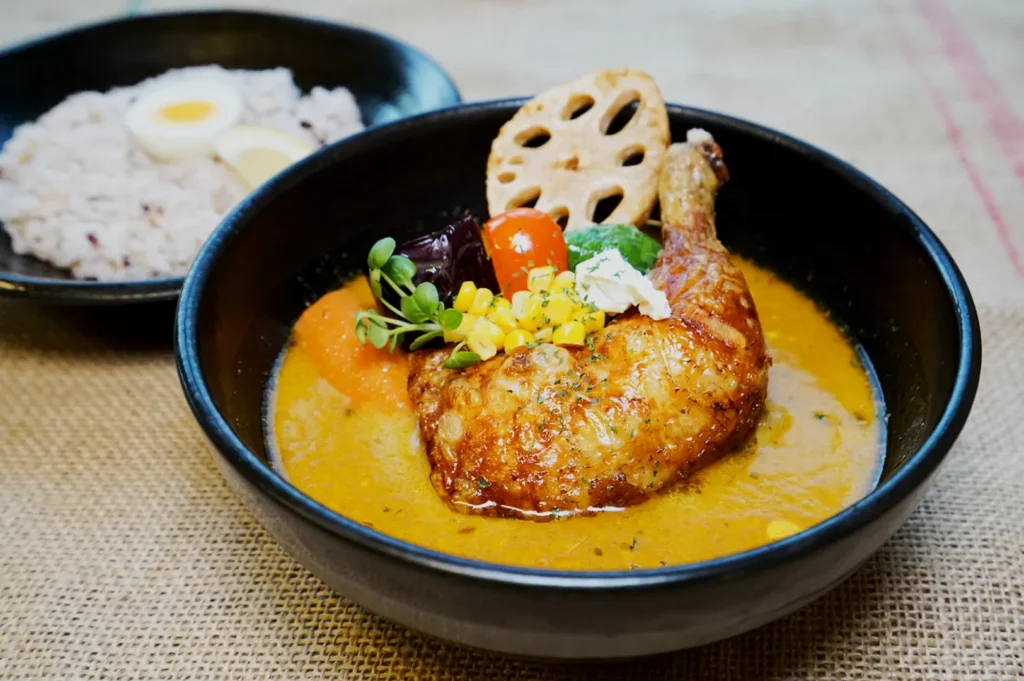
One of the first things you will notice about our chicken Hokkaido soup curry is the chicken leg itself. We use bone-in chicken, which is a deliberate choice rooted in tradition. The bone-in chicken leg is cooked slowly within the soup base, allowing the marrow and connective tissue to release their flavour directly into the broth. This is part of why our soup tastes so rich, even without the heaviness of a roux.
The chicken leg arrives tender, almost falling away from the bone with the gentlest pressure from your spoon. Some guests are surprised to see the bone still in the dish, but this is intentional. It is part of the local specialty that defines Hokkaido soup curry, and it is one of the clearest signals that you are eating something prepared the traditional way, not a shortcut version.
Why Your Fresh Vegetables Are Served Separately
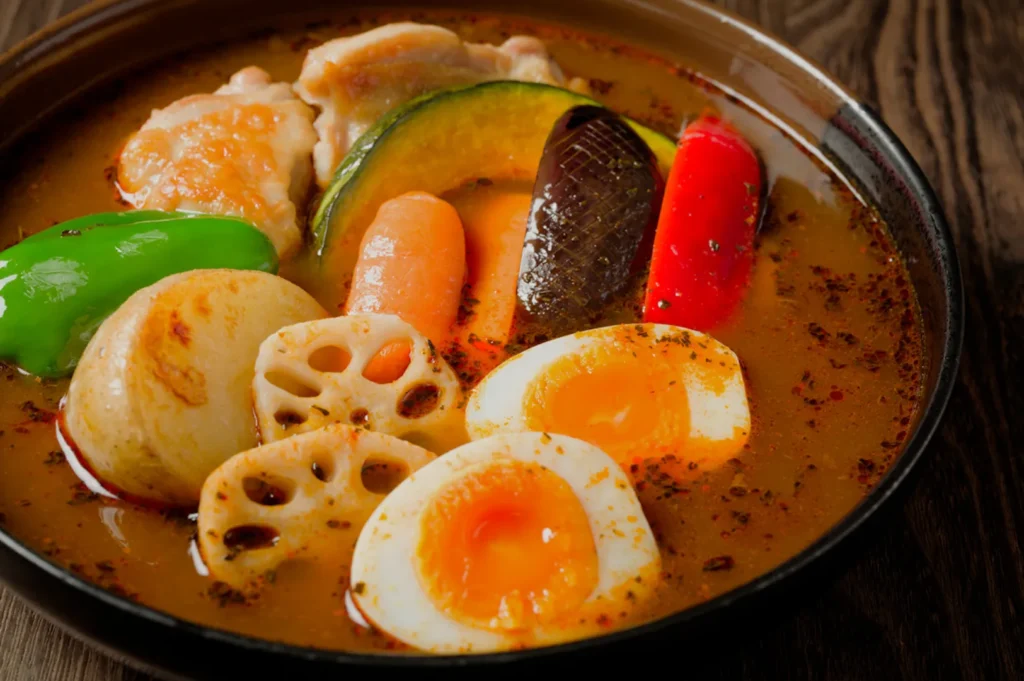
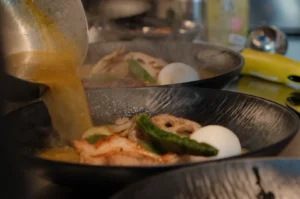
Perhaps the most visually striking part of your bowl is the array of vegetables, often arranged on top of the soup rather than submerged within it. This is not simply for presentation. There is a reason the vegetables are cooked separately and only combined with the soup at the very end, just before the dish reaches your table.
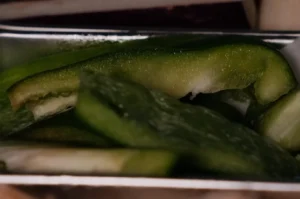
Each vegetable, whether it is lotus root, kabocha squash, eggplant, bell peppers, or potato, has its own ideal cooking time and texture. If everything were simmered together in the soup base for hours, the vegetables would turn soft, lose their shape, and blend into a muddy uniformity. By preparing them individually, often using a Japanese su-age technique of flash frying, we preserve their natural texture, colour, and flavour.
This is also why, in many versions of this dish across Hokkaido, the rice is served separately from the soup itself. The rice sits in its own small bowl, allowing you to control exactly how much you add to your curry soup with each bite. Some guests prefer their rice to remain fluffy and separate until the very end, while others like to spoon it directly into the broth from the start. Either way, having the rice served separately gives you that choice, which is part of the charm of this dish.
The Deep Fried Vegetables: A Closer Look
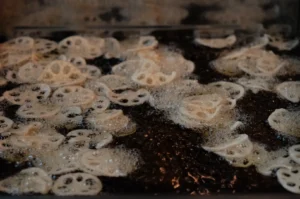
When your bowl arrives, take a moment before you start eating to look at the vegetables. You will likely see vibrant colours, the deep purple of aubergine, the bright orange of pumpkin, the pale cream of lotus root, and the green of bell peppers. These are not boiled or steamed. They have been through a careful deep fry process, using a technique that ensures the exterior develops a light crispness while the inside remains tender.
The process begins with fresh vegetables, cut using specific methods that maximise surface area without compromising structure. Root vegetables like lotus root and potato are sliced to a thickness that allows them to cook through during flash frying without becoming greasy. After frying, the vegetables typically rest briefly on a wire rack or paper towels to remove excess oil, ensuring that what reaches your bowl is light, not heavy.
This deep fry method is central to what makes soup curry restaurants in Hokkaido so beloved. The combination of a light, spiced soup with vegetables that retain a slight bite creates a contrast in textures that you simply do not get with traditional Japanese curry, where everything tends to soften into a single consistency.
Understanding the Spice Profile
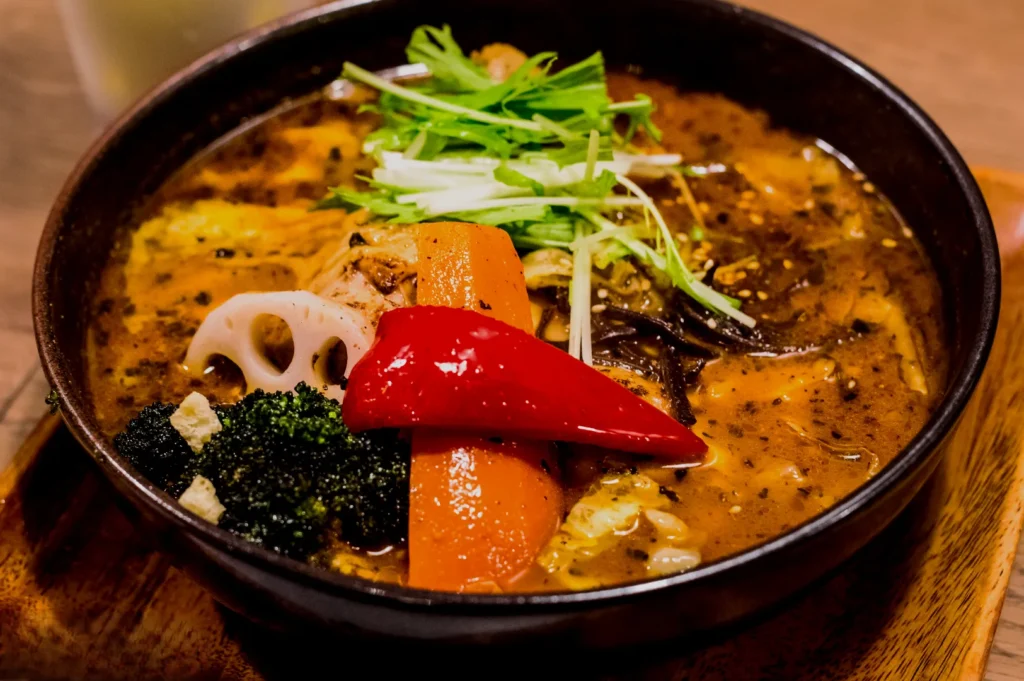
Many guests who order our chicken Hokkaido soup curry for the first time expect a spice level similar to what they have experienced with curry powder-based dishes elsewhere. While our soup curry does use a blend of spices, including elements reminiscent of garam masala, the flavour profile is built differently.
Rather than relying on a single curry powder blend mixed directly into a thick sauce, our soup base is developed by simmering chicken bones with a combination of spices, vegetables such as carrots, garlic, and ginger, and sometimes a touch of tomato paste to add depth and a subtle tang. The spices are not overwhelming. Instead, they unfold gradually, starting with warmth, moving into a gentle heat, and finishing with a lingering aromatic quality.
If you are someone who enjoys adjusting your spice level, you will be pleased to know that soup curry traditionally allows for this. Many establishments, ours included, offer the option to select how much heat you would like in your bowl, ranging from mild to quite fiery. This flexibility is part of what makes soup curry such an accessible dish, even for those who might find typical Japanese curry restaurants intimidating in terms of spice.
The Soup Base Itself
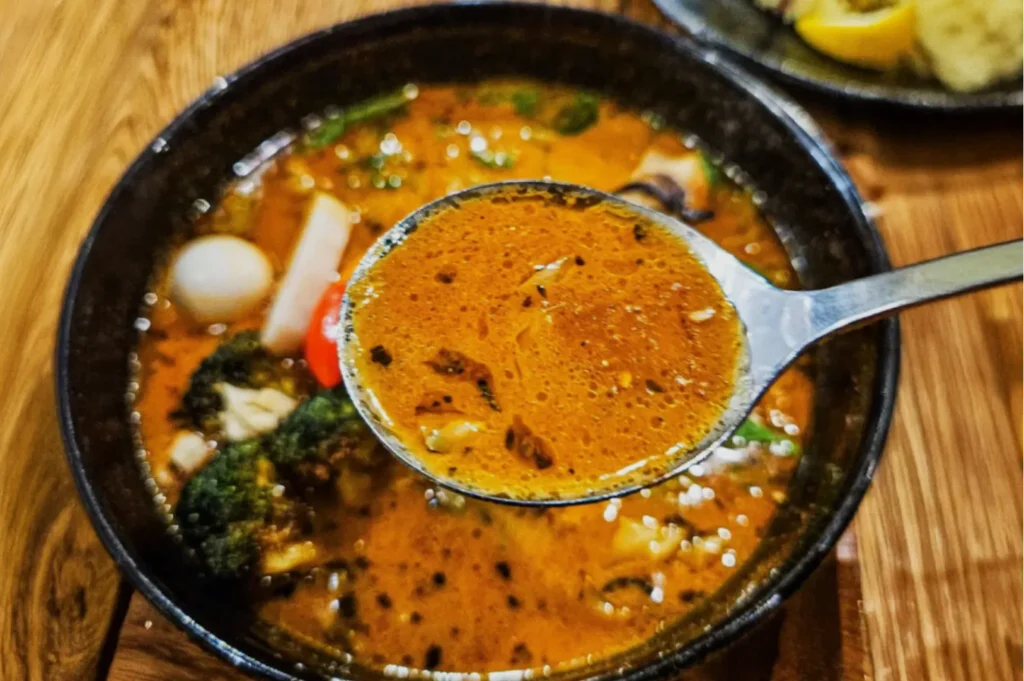
At the heart of every bowl is the soup base, and this is where much of the cooking time and care goes. Unlike a quick curry sauce, a proper soup base for Hokkaido soup curry requires hours of simmering. Chicken bones release collagen and flavour slowly, and this process cannot be rushed.
In a heavy-bottomed pot, the bones are combined with aromatics and left to simmer gently, allowing the broth to develop its signature richness without becoming cloudy or greasy. This is a far cry from the instant curry roux many people associate with Japanese curry, where flavour comes primarily from a pre-made block dissolved into water.
The result is a soup that tastes layered. You might notice the savoury depth from the bones first, followed by the warmth of the spices, and finally a subtle sweetness from the vegetables and tomato paste that have been incorporated into the base. This complexity is part of why soup curry has such a devoted following, and why, once you taste it properly made, it is difficult to go back to a thinner, less considered version.
Rice, Bowl, and the Full Picture
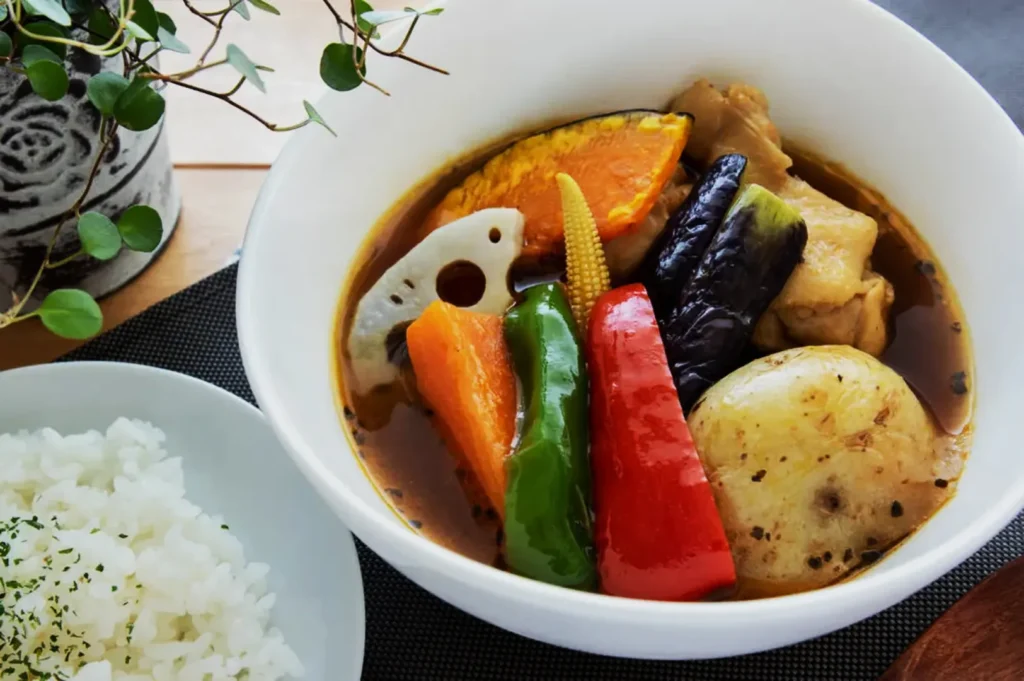
When everything arrives at your table, you will typically have your curry soup with chicken and vegetables in one bowl, and your Japanese rice served separately in a small bowl alongside it. This presentation is intentional. It allows you to enjoy the soup on its own first, appreciating its clarity and spice, before deciding how to incorporate the rice.
Some guests like to take small spoonfuls of rice and dip them into the soup, almost like a curry udon experience but with rice instead of noodles. Others prefer to add rice gradually throughout the meal, watching as it absorbs the broth and takes on the flavours of the curry soup. There is no wrong way to do this, and that flexibility is part of the appeal.
The overall dish is designed to be interactive. You are not simply presented with a finished plate where everything has already been combined. Instead, you are given the components: a rich, spiced soup, tender bone-in chicken, a colourful array of deep-fried seasonal vegetables, and a bowl of white rice, and invited to bring them together in whatever way suits your appetite.
What Makes This Experience Distinct
If you have spent time exploring soup curry restaurants, whether in Susukino Station in Sapporo or elsewhere, you will notice certain consistencies, but also room for each establishment to bring its own take. At Soup Curry by Ki-Setsu, our approach draws directly from what we have learned about authentic preparation methods from Hokkaido, particularly around the Chuo ward area where soup curry culture is especially strong.
We aim to recreate that experience as closely as possible, from the bone-in chicken leg simmered for hours, to the vegetables prepared through careful deep frying, to the soup base that takes real cooking time to develop properly. When you order our chicken Hokkaido soup curry, you are getting a dish that respects these traditions rather than cutting corners.
For guests new to this style of curry, it can take a moment to adjust expectations. This is not curry rice in the conventional sense. It is a soup dish first and foremost, with curry as its defining flavour rather than its defining texture. Once that shift in expectation happens, most guests find themselves enjoying the dish far more than they anticipated, often returning specifically for this bowl.