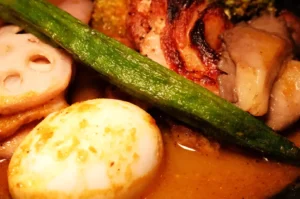
Choosing between two beautifully prepared bowls can be a genuinely difficult decision, especially when both are rooted in the same authentic tradition. At our restaurant, guests often pause at the counter, torn between the tender chicken thigh and the roasted pork soup curry, unsure which one will suit their appetite and mood that evening.
This article is here to help you decide, by looking closely at how each protein is prepared, how the spices settle into the broth, and what to expect once the bowl finally lands in front of you, hot and ready to eat.
Chicken Thigh vs Pork Soup Curry: Two Ways to Experience Hokkaido Comfort

Sapporo soup curry, as we prepare it, is not a quick weeknight dish thrown together with whatever is in the fridge. It is a slow, deliberate process that begins with a broth built over hours in a large pot, using bones, aromatics, and a careful balance of spice. Chicken thigh and pork soup curry share this same foundation, yet they diverge in almost every other respect: cooking time, texture, depth, and even the way the spices settle on the palate.
Chicken thigh is the more classic choice for those new to Hokkaido style soup curry. It is gentle, forgiving, and lets the broth take centre stage. Pork, on the other hand, is roasted first, which introduces caramelisation and a deeper, almost smoky note that changes the entire character of the bowl. Neither is better in an absolute sense. The right choice depends on what you are hoping to taste.
The Base of Every Great Curry Soup
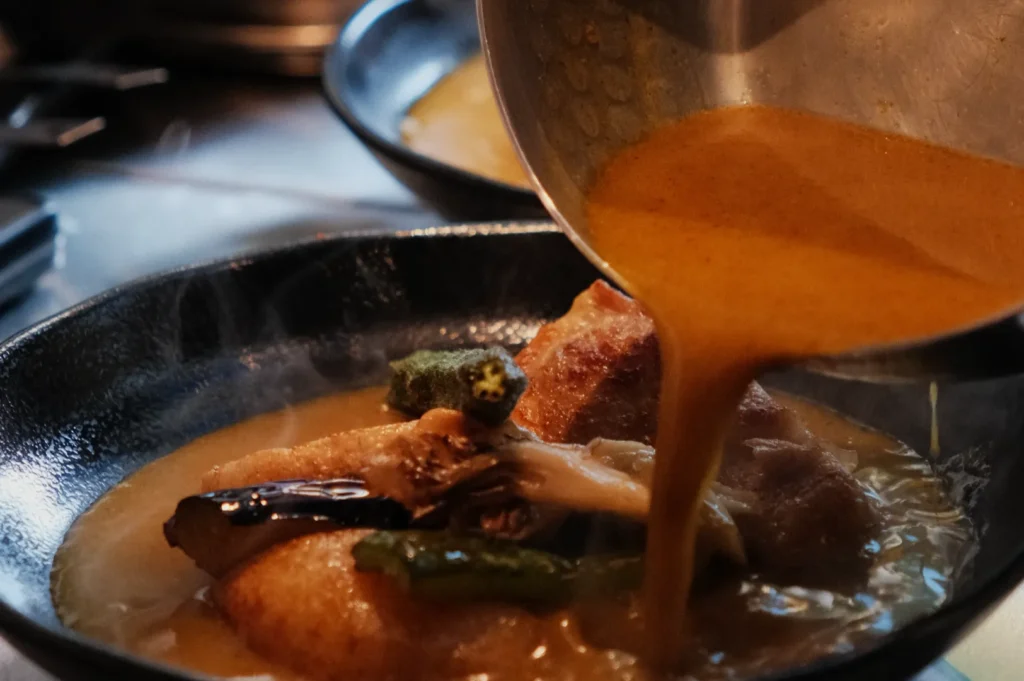
Before comparing the proteins directly, it helps to clear up a common misconception about what makes an authentic soup curry so distinctive. Many people assume that a rich, warming bowl must involve coconut milk, since a number of coconut soup curry styles have become popular across the region. Our approach is different. The soup curry we prepare relies on a clear, well seasoned broth rather than a coconut milk base, and this is intentional. The thinner consistency allows the spices, the vegetables, and the protein to each retain their own identity.
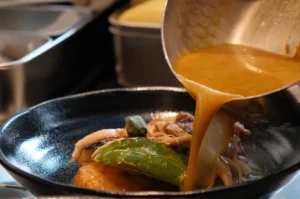
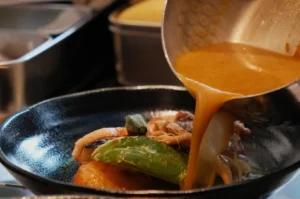
The process itself is not complicated, though it does require patience. We heat oil in a wide saucepan, then add curry powder in stages, allowing the spices to bloom gently rather than scorch. Garlic and peeled ginger, finely chopped, go in next, followed by onions cooked low and slow until soft. Once the aromatics are ready, chicken broth is poured in, sometimes topped up with a bit of cold water to reach just the right amount of body. The whole pot is left to simmer, occasionally covered, so the flavours can rest and deepen without reducing too quickly.
Why We Choose Not to Use Coconut Milk
It would be easy to soften the curry soup with coconut milk, and plenty of establishments do exactly that to create a smoother, sweeter bowl. We prefer to keep our soup curry closer to its Sapporo roots, where the emphasis has always been on a clean, spice forward broth rather than a coconut curry soup profile. This means the flavour of the chicken thigh or the roasted pork comes through clearly, unmasked by added sweetness.
There is a practical benefit to this as well. Because our soup curry does not depend on coconut milk, it is naturally dairy free across the board, and many guests also ask whether it can be made gluten free, which is worth checking with our team depending on the accompaniments chosen.
Roasted Pork Curry: Bold, Smoky, and Deeply Savoury
Pork curry, when done properly, starts long before it ever touches the soup. The pork is seasoned, then roasted at high heat until the exterior is browned and slightly crisp. Only once this stage is complete do we add pork to the simmering soup curry, where it continues to soften gently, absorbing the spices without losing its structure.
This method is what separates a truly memorable pork soup curry from something more ordinary. Cabbage, carrots, and mushrooms are added around this stage, simmering until tender. Everything is left to boil briefly before we reduce heat and let the pot rest on a gentle simmer, stirring occasionally with a wooden spoon so the spice distributes evenly. A pinch of salt at the end brings all the flavours into balance, adjusted to liking rather than following a fixed measure.
The result is a bowl that many guests describe as spicy, hot, and genuinely delicious, with the roasted pork holding its shape well against the softened vegetables. It is a heartier option, best suited to those wanting a filling, warming meal.
A Soup Curry Built on Spice, Not Sweetness
When pork is the star, the soup curry surrounding it needs to be assertive enough to stand up to the meat’s richness. We find that a slightly higher ratio of curry powder works well here, along with extra ginger to cut through the fattiness of the roasted pork. Because there is no coconut soup curry sweetness to balance against, the seasoning can be layered more boldly.
Chicken Thigh: Tender, Balanced, and Comforting
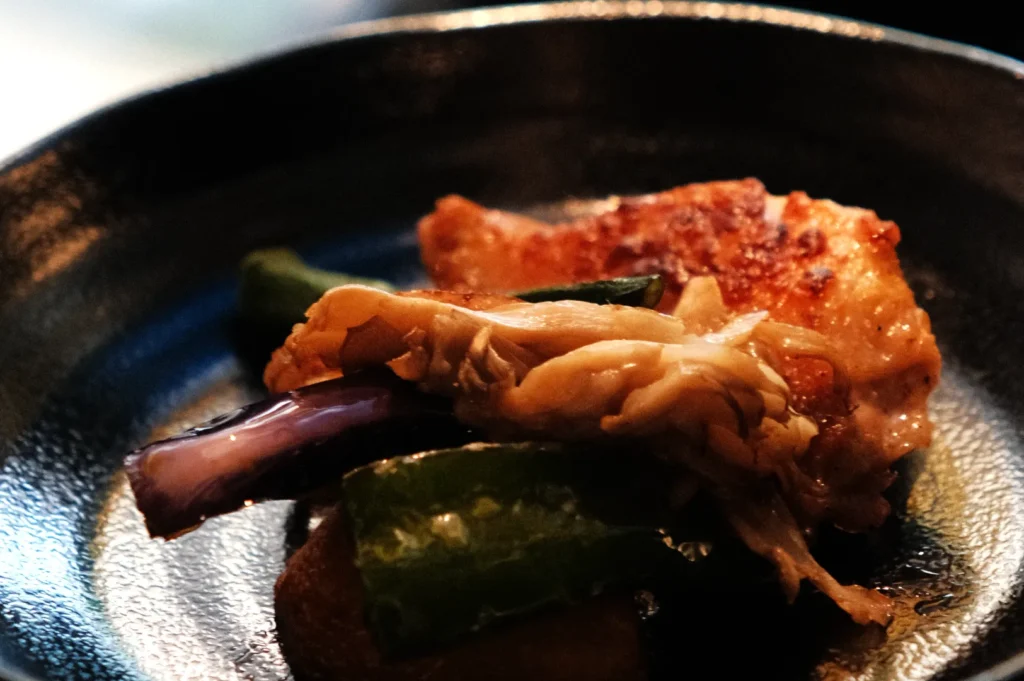
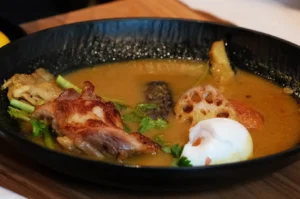
Chicken thigh takes a gentler path. It is browned briefly in oil over medium high heat, just enough to seal in the juices, before finishing directly in the soup curry. This allows the meat to absorb the broth’s flavour from the inside, resulting in a piece of chicken that is tender and thoroughly infused with spice.
Because chicken thigh has a naturally milder flavour than pork, it allows the curry powder and aromatics to shine more clearly against a light, dairy free broth. Vegetables prepared alongside it include lotus root, bell pepper, and other seasonal greens, each finely chopped using traditional Japanese cutting methods.
What Comes With Each Bowl
Both the chicken thigh and pork soup curry are served with a side of freshly cooked rice. A wedge or two of lime is placed on the side, along with a scattering of coriander for garnish, and those who enjoy a touch of citrus and herb brightness often find that a squeeze of lime, combined with fresh coriander, lifts the whole bowl. A subtle hint of lemongrass sometimes runs through the broth as well, adding a fragrant lift without overpowering the spice.
Read: What to Expect When You Order Our Chicken Hokkaido Soup Curry
Is It Dairy Free? What to Know Before You Order
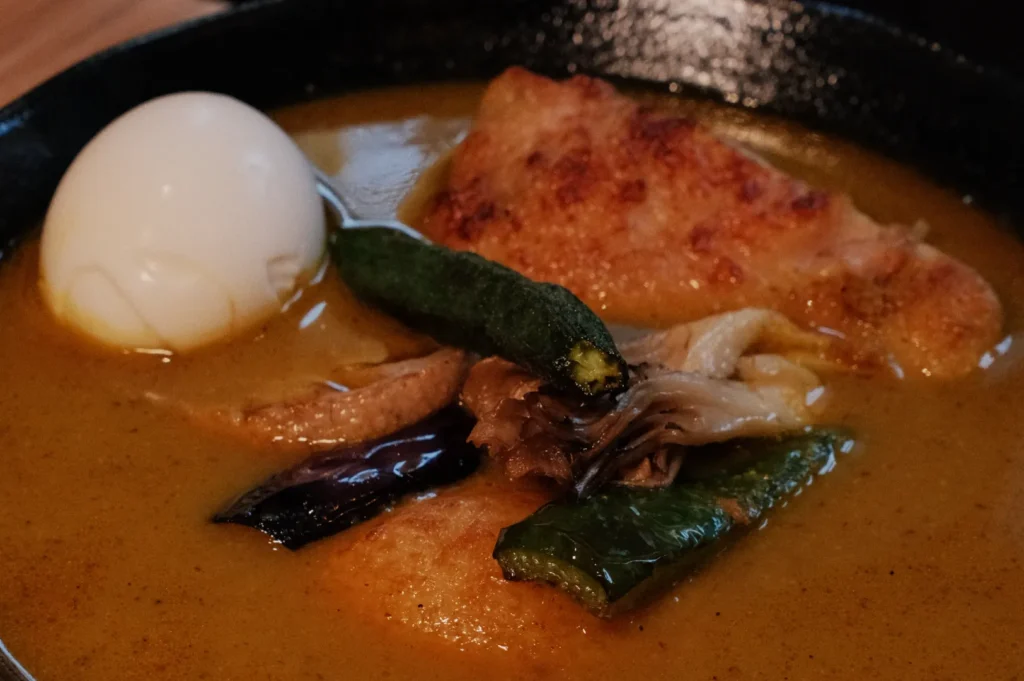
Since our soup curry does not use coconut milk or any cream based thickener, both the chicken thigh and roasted pork soup curry are dairy free by design. This sets our approach apart from typical curry restaurants that rely on a coconut curry soup style to achieve richness. Guests with lactose sensitivities can order either bowl with confidence, knowing the depth of flavour comes entirely from broth, roasting, and spice.
For guests curious about nutrition, both options are built on a broth rich in protein and vegetables rather than added fat, though portion sizes and specific accompaniments can affect the overall balance. We always recommend checking with our team about specific preparations, as garnishes or side dishes may vary.
Texture and Flavour Differences at a Glance
If you are still undecided, consider what you are in the mood for that day. Chicken thigh offers a softer, more balanced bite. It is comforting in a quieter way, ideal for a lighter lunch or for those easing into soup curry for the first time.
Roasted pork curry, by contrast, delivers boldness. The caramelised exterior, combined with the deeper seasoning often used for pork based bowls, creates a dish that feels more substantial and warming. Many guests find themselves returning for the pork option once they have grown accustomed to the flavour profile, often describing their first bowl as an amazing introduction to Hokkaido cooking.
Which Should You Choose at Ki-Setsu?
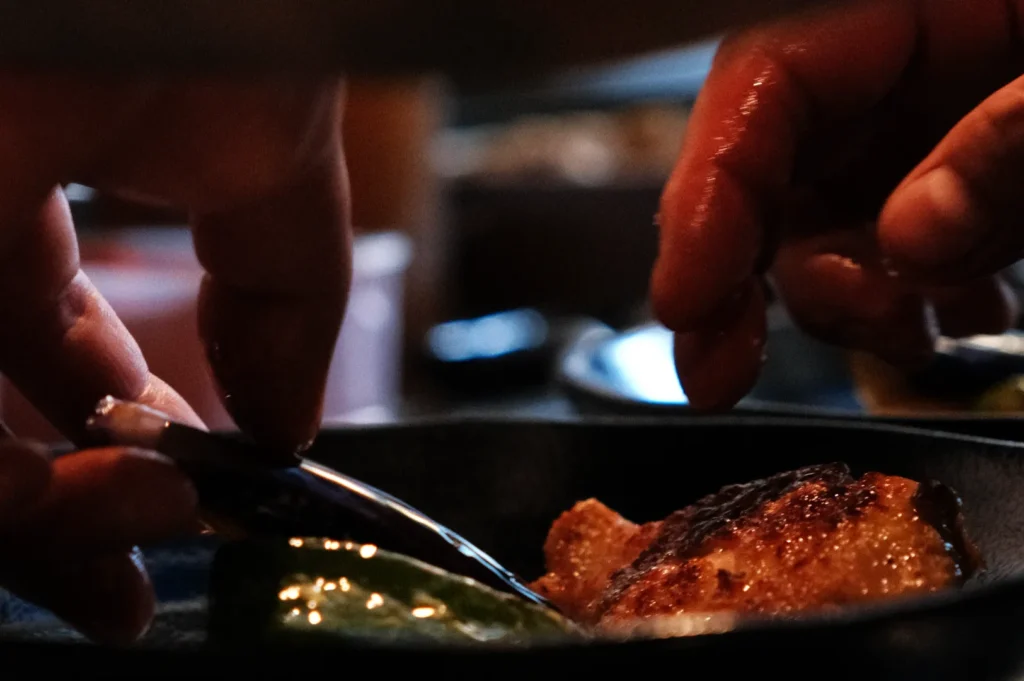
There is no universally correct answer, only what suits your appetite and mood on a given day. If you want something gentle, comforting, and beautifully balanced, chicken thigh is the ideal starting point. If you are after something bolder, richer, and spicier, the pork soup curry will likely be more satisfying.
At Soup Curry by Ki-Setsu, we prepare both with the same care and attention, staying true to a broth based, dairy free tradition rather than reaching for coconut milk shortcuts. Whether you arrive for a comforting lunch or stay on as the space transforms into a cosy izakaya later in the evening, we hope your bowl of soup curry, whichever protein you choose, feels like a small, delicious taste of Sapporo brought to Singapore.