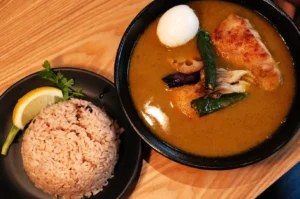
There is a moment on a cold, rainy evening when only a bowl of something warm and Japanese will do. For many, the instinct is to reach for ramen. For others, it is a deep, spiced bowl of soup curry that calls out instead. Both dishes come from Japan, both are served piping hot, and both have devoted followers who will argue passionately for their favourite. But when you actually put soup curry vs ramen side by side, the differences run far deeper than broth colour or noodle choice.
This comparison matters because these two dishes are often lumped together simply because they are both “Japanese soup dishes.” In truth, they satisfy very different cravings, use different techniques, and leave you feeling different by the time you scrape the bowl clean. We want to walk through exactly where soup curry and ramen diverge, and where, occasionally, curry ramen brings them together.
Soup Curry vs Ramen: What Sets These Two Japanese Bowls Apart
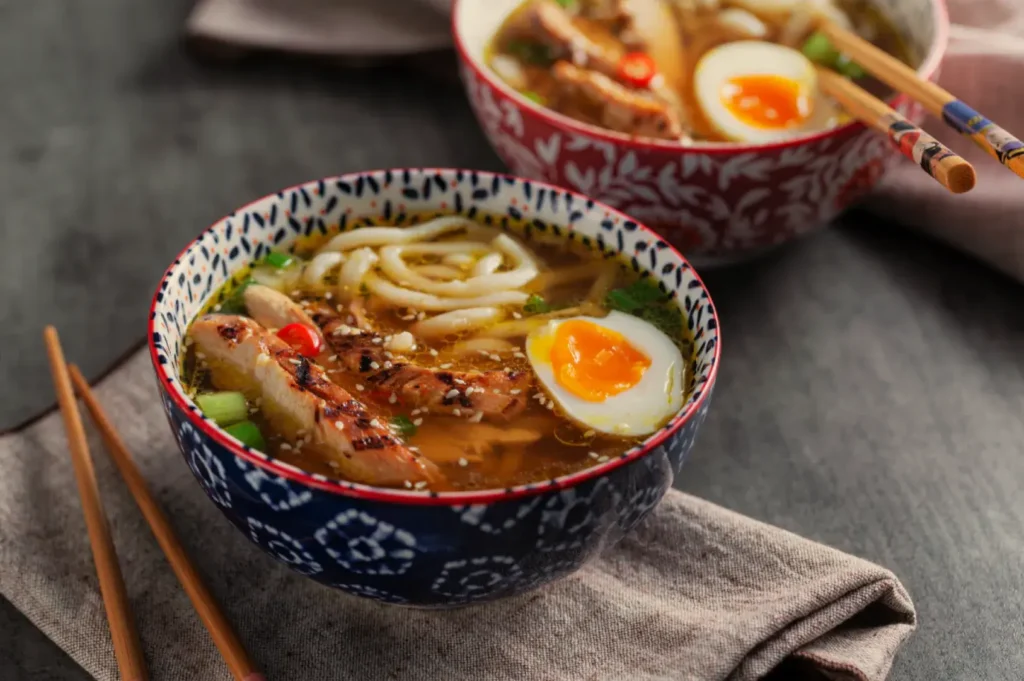
The clearest distinction starts with the base itself. Ramen is built around a broth, usually simmered for hours from pork bones, chicken, or a combination of both in a large pot, then finished with a seasoning such as soy sauce, miso, or salt. That broth is designed to coat thin wheat noodles, and the whole bowl is meant to be eaten quickly, often within minutes, while the noodles retain their bite.
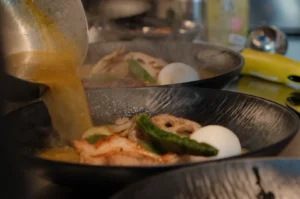
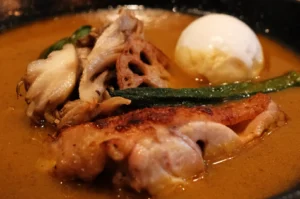
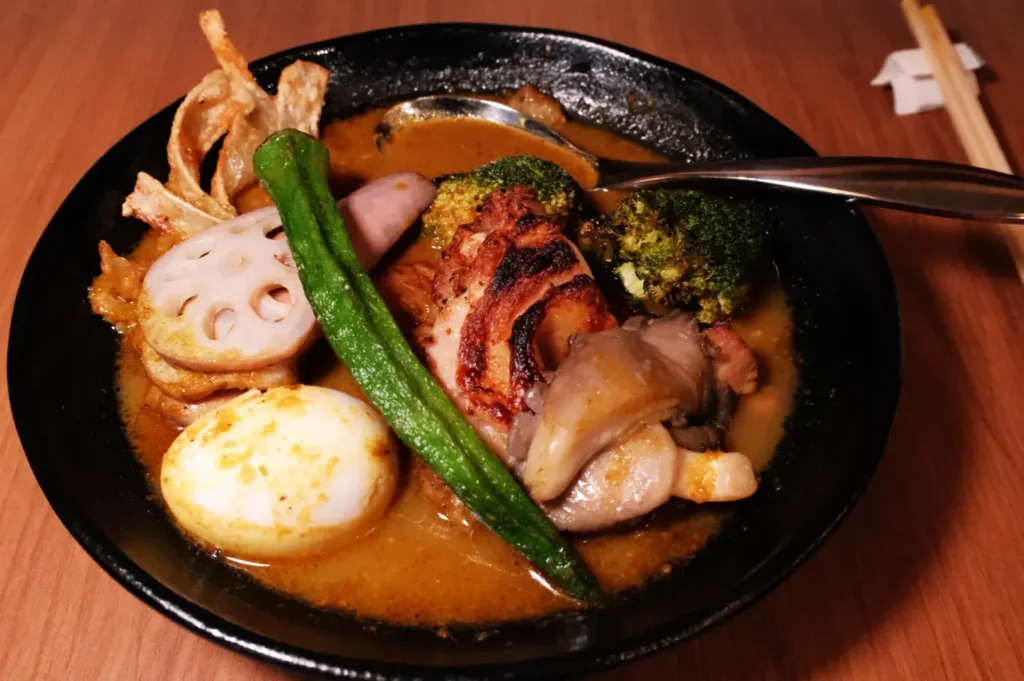
Soup curry, by contrast, begins with a spiced stock rather than a pure bone broth. Curry powder, aromatics, and sometimes coconut milk are simmered together into a fragrant, thinner curry soup that is closer to a spiced consommé than the thick, flour-based gravy of regular Japanese curry. There are no noodles at all. Instead, the resulting soup surrounds tender chicken legs, root vegetables cut into small pieces, and other vegetables that have been cooked separately and added to the bowl just before serving.
This is the fundamental split. Ramen is a noodle dish with broth as support. Soup curry is a soup dish with rice as support, usually a small bowl or cup of white rice served on the side rather than mixed directly in.
The Soul of Sapporo Soup Curry
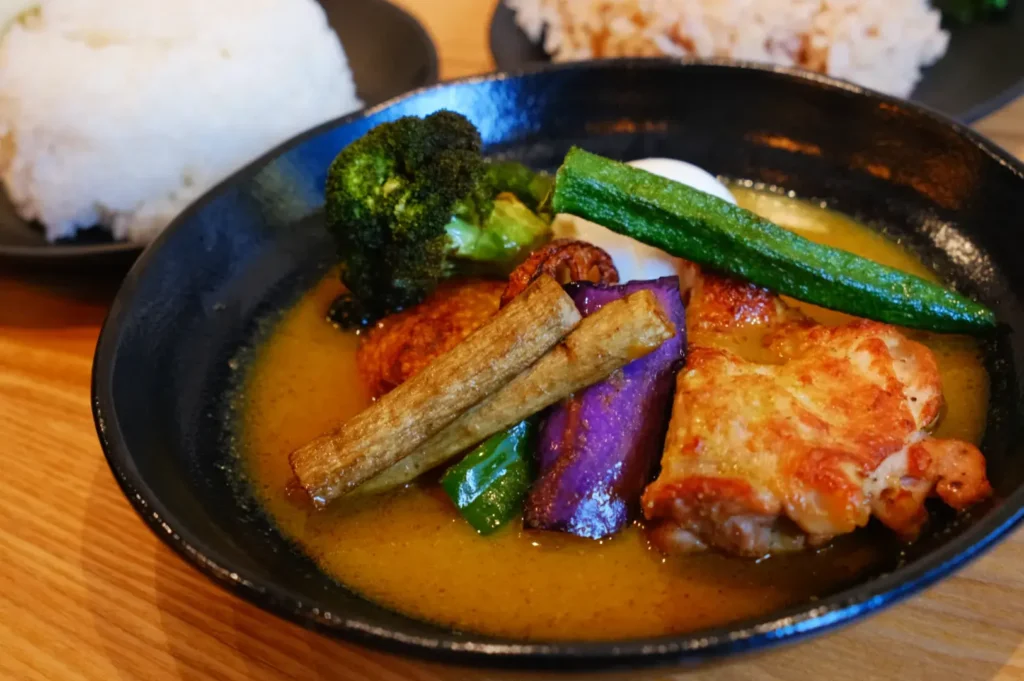
To understand why soup curry feels so different from ramen, it helps to know where it comes from. Sapporo soup curry originated in Hokkaido, where the long, harsh winters demanded something that could warm the body from the inside out without weighing it down. Unlike regular Japanese curry, which relies on a thick curry roux to create a stew-like consistency, Sapporo soup curry keeps its broth light and spoonable, letting the spices shine rather than hiding them under starch.
This is where our own approach draws its inspiration. When we prepare our curry soup, we simmer whole spices slowly in a large pot over high heat to build a layered flavour profile, then we deep fry vegetables such as lotus root, potato, and eggplant separately so they arrive at the table with their texture intact, rather than turning soft and waterlogged inside the soup itself.
It is a technique passed down from Hokkaido kitchens, where the goal has always been contrast: a hot, silky soup against crisp, freshly fried vegetables.
Why Curry Soup Feels Different From a Bowl of Ramen
Texture is the biggest giveaway. Ramen noodles are meant to be uniform, springy, and consistent from the first slurp to the last. Soup curry, on the other hand, is a study in contrast. One spoonful might carry a piece of stewed meat that has been simmered for hours until it falls from the bone, while the next carries a crisp piece of deep fried broccoli or carrot that still has bite. Ramen asks you to focus on the noodle and broth pairing. Curry soup asks you to explore, bowl by bowl, ingredient by ingredient.
Ramen's Comfort: Instant Ramen and Beyond
Part of ramen’s global popularity comes from its accessibility. Instant ramen noodles brought the dish into homes worldwide, and even now, instant noodles remain many people’s first introduction to Japanese food culture. That accessibility is not a flaw. It speaks to how flexible ramen is as a format. A packet of instant ramen and a proper bowl from a specialised ramen restaurant share the same DNA, even if the depth of flavour differs enormously.
Soup curry has no real equivalent to instant ramen. Its preparation resists shortcuts. A proper soup curry needs time for the spices to bloom and the stock to develop depth, and the vegetables need to be fried fresh rather than reconstituted. This is part of why soup curry has remained a more specialised, slower dish, enjoyed as an occasion rather than a quick fix.
Curry Ramen: When the Two Worlds Blend
Interestingly, there is a hybrid dish called curry ramen, which takes a curry-spiced broth and pairs it with ramen noodles instead of rice. It is worth mentioning here because it illustrates just how distinct the two original dishes are.
Curry ramen essentially borrows the spice profile of curry soup and forces it into the ramen format, thickening the broth slightly so it clings to noodles the way a proper ramen broth would. Fans of curry ramen often describe it as the best of both worlds, but purists on either side will point out that it is neither a true soup curry nor a true ramen. It exists precisely because the two dishes are different enough that combining them creates something genuinely new.
Fresh Vegetables vs Instant Ramen Noodles
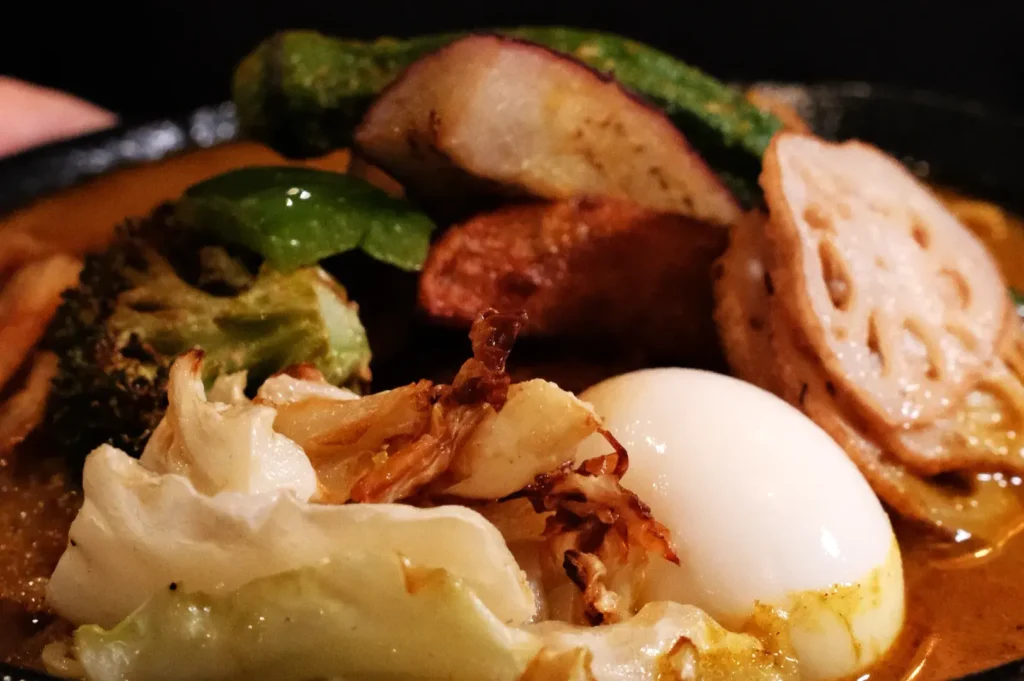
If you compare the two dishes ingredient by ingredient, the contrast becomes even sharper. A great bowl of ramen depends heavily on the noodle itself, its thickness, chew, and how well it holds up in hot broth. Toppings such as a soft egg, chashu pork, or green onion enhance the bowl, but the noodle remains the anchor.
Soup curry puts fresh vegetables at the centre instead. A typical bowl might include cabbage, okra, carrots, potato, and lotus root, each prepared with attention to how it should be cooked. Some vegetables are simmered directly in the soup base to absorb the spice, while others are deep fried separately using the su-age technique to preserve their natural sweetness and crunch.
This is a meaningful difference from instant ramen noodles, which are designed for speed and convenience rather than showcasing individual ingredients. In a bowl of soup curry, every vegetable is meant to be noticed.
Which Bowl Wins for Spice Lovers?
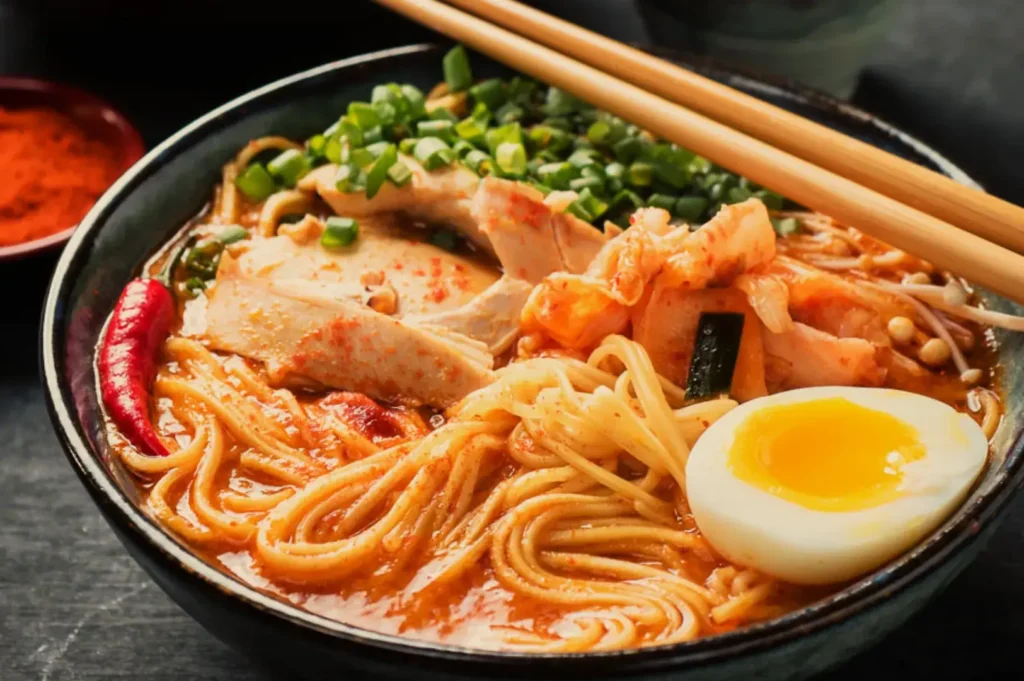
For spice lovers, this comparison usually settles quickly in favour of soup curry. Ramen’s flavour profile, whether soy sauce based, miso based, or salt based, tends to prioritise umami and richness rather than heat. Even spicy ramen variations typically add chilli as an accent rather than building the entire broth around a spice blend.
Soup curry is built for those who want to control and explore heat. Most soup curry kitchens, including our own, offer a range of spice levels, sometimes called magic spice, allowing guests to choose everything from a mild, aromatic curry soup to something considerably fierier. This flexibility means soup curry can flex from a gentle, comforting bowl to a genuinely fiery challenge, all using the same base recipe. For anyone who finds ramen’s flavour satisfying but its heat underwhelming, soup curry offers a far more direct route to that craving.
How to Eat Soup Curry (And Why It's Different From Slurping Ramen)
Even the act of eating these two dishes differs. Ramen is traditionally eaten quickly, with noodles slurped to cool them slightly and to draw in aroma, all before they overcook in the hot broth. Speed is part of the ramen experience.
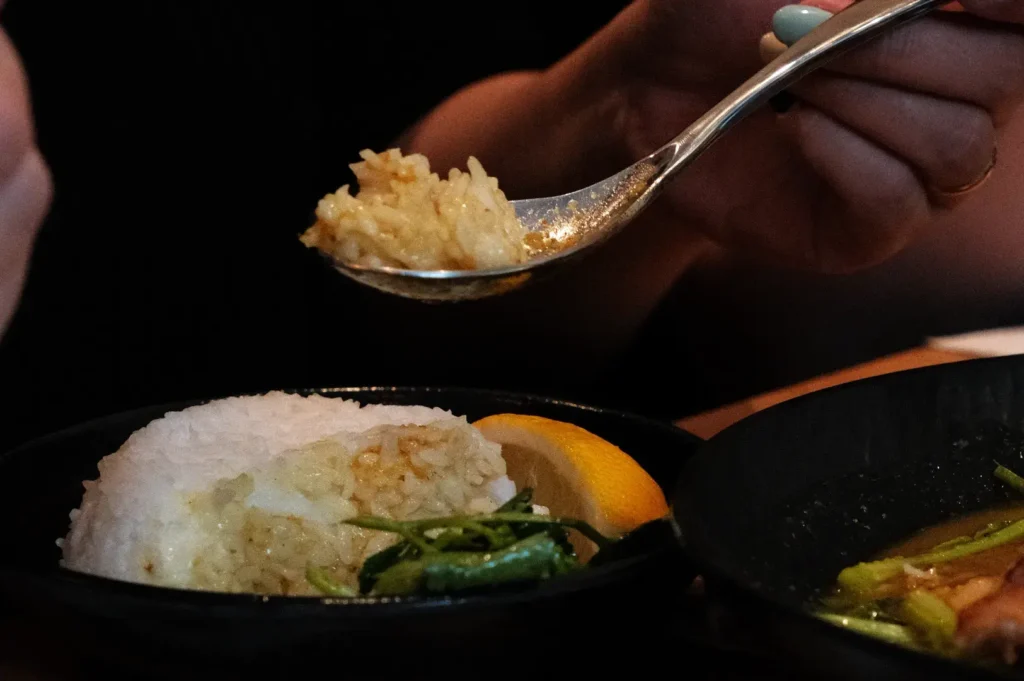
Eating soup curry follows a slower rhythm. Because the vegetables and chicken are meant to be enjoyed individually, and because the rice is kept separate rather than mixed straight into the soup, most guests move between spoonfuls of curry soup, bites of vegetable, and small mouthfuls of rice, essentially building each bite themselves.
Some prefer to keep the rice separate throughout the meal, dipping small amounts as they go, while others pour it in gradually toward the end. There is no single correct way to eat soup curry, and that openness is part of what makes it feel like a personal, comforting meal rather than a fast one.
This is also where our dual identity comes into play. During the day, we serve soup curry as a warming, standalone meal. From six in the evening, the space shifts into a cosy izakaya restaurant, where the same spice-forward philosophy carries through to small plates meant for lingering rather than rushing, a pace that mirrors how soup curry itself is meant to be enjoyed.
A Different Kind of Comfort Food
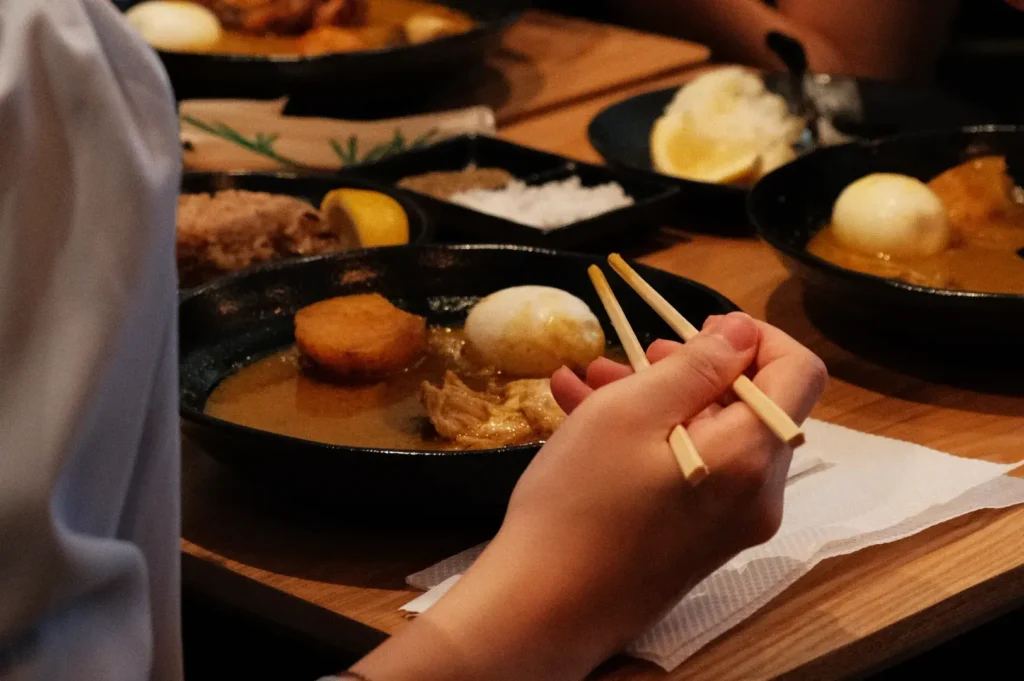
Ultimately, soup curry and ramen are not really competing for the same bite. They are competing for the same craving, the desire for something warm, restorative, and distinctly Japanese, but they answer that craving in very different ways. Ramen offers speed, consistency, and the satisfaction of noodles done well. Soup curry offers exploration, contrast, and a spice journey that unfolds bowl by bowl.
If you have only known ramen so far, a bowl of soup curry is worth experiencing at least once. We first brought this popular dish from Hokkaido to Singapore as Soup Curry by Ki-Setsu, and we still believe the best way to understand the difference between soup curry and ramen is simply to sit down with a proper bowl, spice level chosen, vegetables arranged, and rice on the side, and taste what makes this dish so different for yourself.