There is a particular kind of magic that happens when a vegetable meets hot oil. Fried for just long enough, it turns crisp outside while staying tender within. In Hokkaido, this technique is known as su-age. It is a method of frying without a heavy batter, so the true colour, texture and natural sweetness of each vegetable remains the star of the dish.
At our restaurant, this is not simply a cooking method we admire from afar. It is central to how we think about hokkaido vegetables, and why they belong, unapologetically, at the heart of a bowl of soup curry.
The Su-Age Tradition: Frying Without Losing the Soul of Hokkaido Vegetables
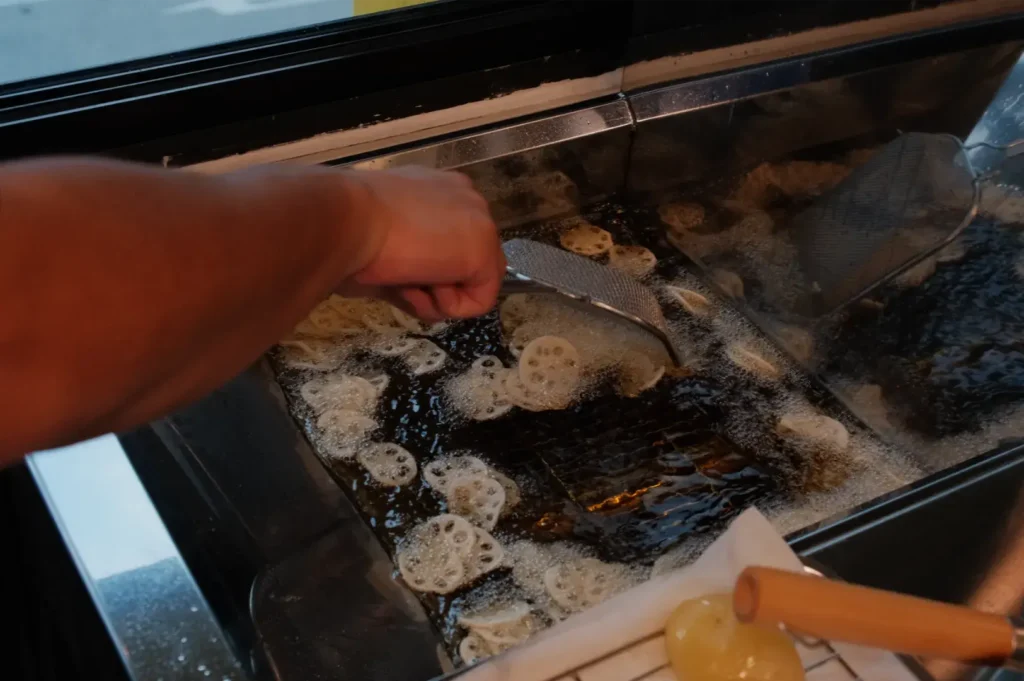
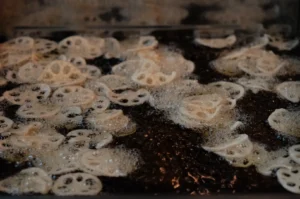
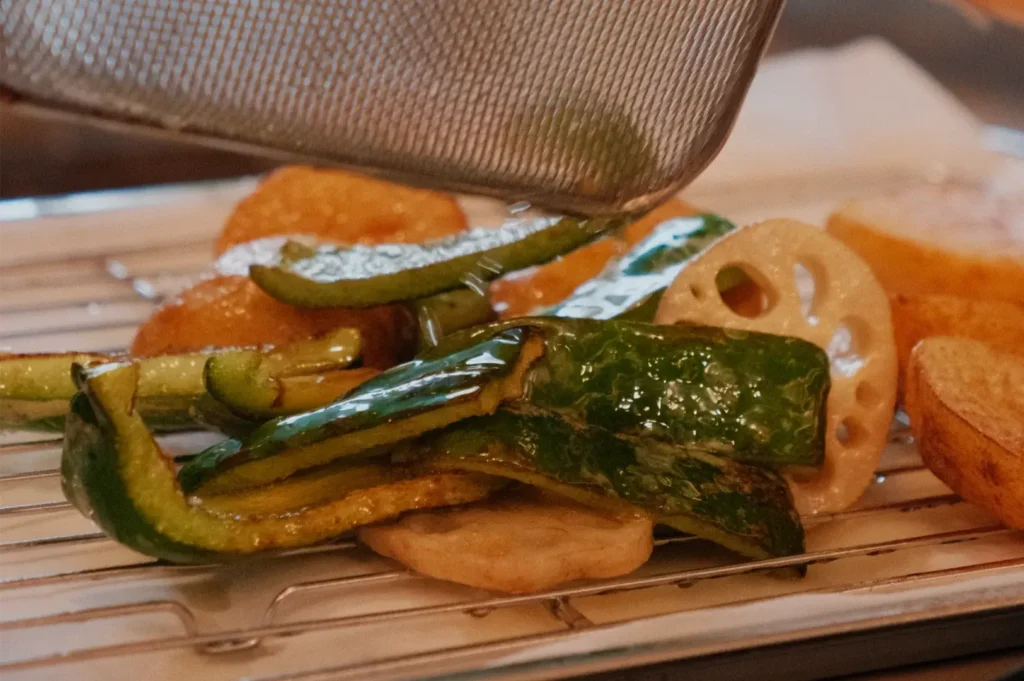
Su-age is deceptively simple. Vegetables are cut into thin strips or generous chunks, depending on their shape. They are then fried briefly in clean oil, without the thick, starchy coating used in many other frying styles. The result is a lighter, more honest bite. You taste the carrot as carrot, the pumpkin as pumpkin, each with its own slightly sweet, delicious character intact rather than masked under batter and grease.
This matters enormously when the vegetables themselves are exceptional, and Hokkaido’s are. The island’s cool climate, mineral rich soil and long winter, followed by a short, intense growing season, concentrate sugars and flavour into produce in a way that mainland Japan’s warmer regions rarely replicate.
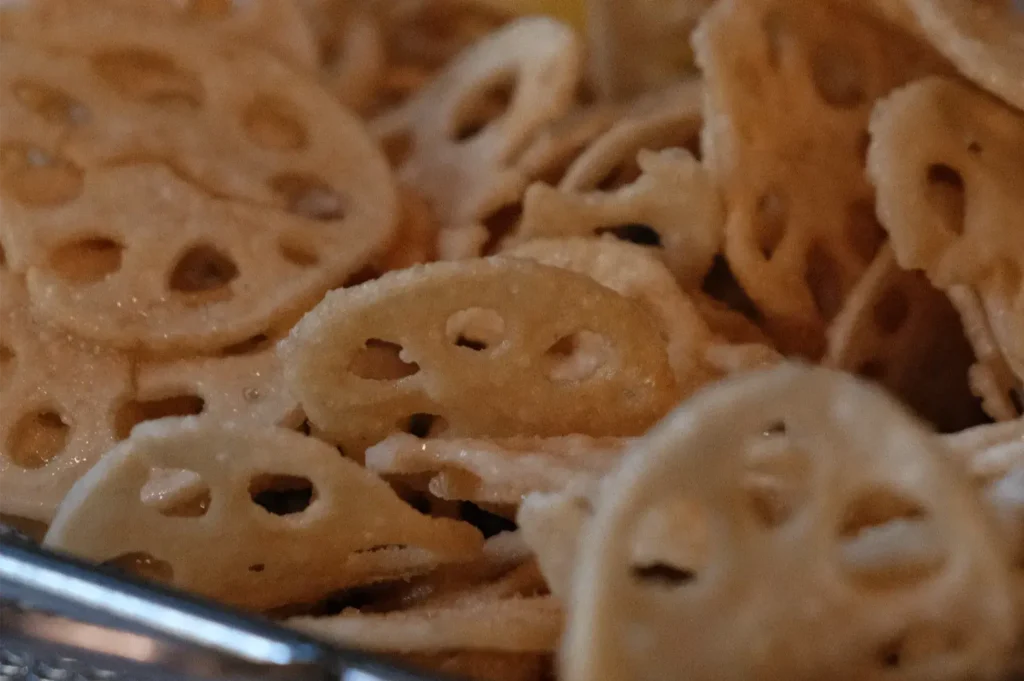
Hokkaido is often described as Japan’s leading producer of potatoes, pumpkin and other root vegetables. Planting for many of these crops begins as early as late April, giving the plants a long, unhurried stretch of daylight to build up sweetness before harvest. When we fry potatoes, carrots, pumpkin, aubergine and lotus root using su-age, we are not trying to disguise anything. We are trying to protect what is already there.
Why the Cut Matters as Much as the Heat
In Japanese cuisine, the cutting method is never an afterthought. Vegetables destined for su-age are typically sliced into thin strips or wedges. This maximises surface area for a quick, even fry, while keeping the centre soft. A carrot cut too thick will scorch outside before it softens within. Cut correctly, it emerges with a faintly caramelised edge and a core that still tastes of the earth it grew in. This precision is part of why su-age vegetables hold their own in a rich, spiced broth rather than turning soggy or bland. It is a key ingredient in what separates a memorable bowl from an ordinary one.
Why Eastern Hokkaido Produces Vegetables Worth Frying This Way
Not all of Hokkaido farms the same way. Eastern hokkaido, in particular, has built a reputation, something of a hidden gem outside Japan, for producing some of the island’s most robust root vegetables and pumpkins. The region’s dairy farms and open fields benefit from cold nights and warm days during the summer growing months. This combination pushes vegetables to develop deeper sugars, a kind of natural defence against the chill. It is this same climate logic that gives Hokkaido’s dairy its richness, its butter its distinctive depth, and its seafood its incredible sweetness. It should come as no surprise, then, that the vegetables share the trait.
Potatoes from this part of the island often carry a starchy, almost buttery quality that holds up beautifully to frying. Pumpkin develops a dense, sweet flesh that turns almost custard like once it hits hot oil. These are not vegetables that need salt, sauce or seasoning to taste good. They need a technique that gets out of their way, which is precisely what su-age offers.
Peak Season and the Case for Eating Some Vegetables Raw
Timing plays a significant role in how good su-age vegetables can be. Peak season, widely regarded as the best season for harvesting, typically runs from late spring through to early autumn, depending on the crop. During this window, Hokkaido vegetables arrive at grocery stores and restaurant kitchens at their most flavourful, requiring almost no intervention. Some root vegetables, thanks to careful storage, are available year round, but nothing quite matches the taste of produce picked at its peak.
Japanese mustard spinach, harvested young, is often best eaten raw, or lightly blanched in dishes like goma ae, where its slightly bitter, mineral edge is allowed to shine rather than being cooked away. Cabbage too is frequently eaten raw in Hokkaido, shredded fine into salads as a crisp counterpoint to heavier dishes. Just as often, though, it is boiled gently before being folded into soups and stews.
Su-age vegetables sit at the other end of that spectrum. Where raw preparations celebrate a vegetable’s freshness in its most unaltered state, su-age celebrates what happens when that same freshness meets careful, brief cooking. Both approaches, in our view, come from the same underlying respect for local ingredients and seasonal ingredients specifically. Each lets the produce itself set the terms of the dish, rather than forcing it into a preconceived flavour profile.
From Field to Bowl: How Su-Age Vegetables Find Their Place in Soup Curry
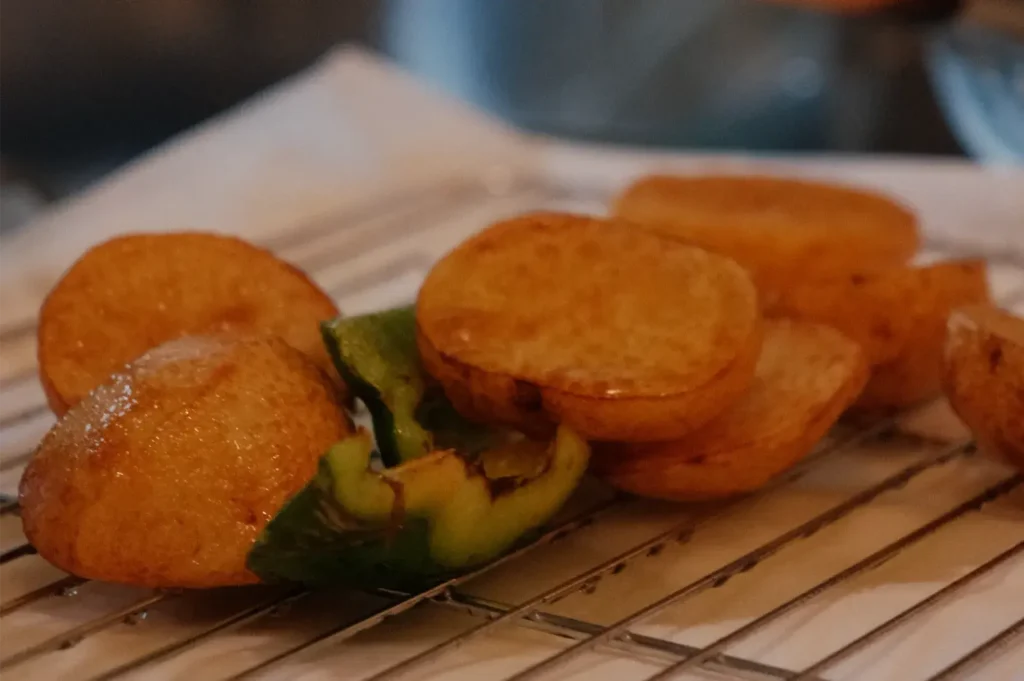
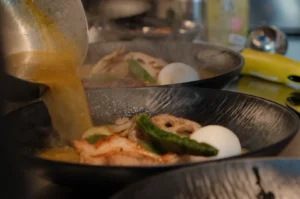
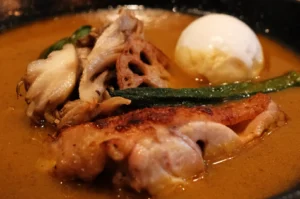
This is where the technique finds its truest expression on our menu. Soup curry, Hokkaido’s signature dish and arguably Sapporo’s most recognisable culinary export, was built around the idea of variety and colour in a single bowl. Unlike a thick, roux based curry that blankets everything in a single texture, soup curry is a thinner, more aromatic broth that allows individual components to retain their identity. Su-age vegetables are, quite simply, made for this format. They appear across various dishes on our menu, from simple vegetable only bowls to heartier versions built around meat or seafood.
When a piece of su-age pumpkin or aubergine is lowered into the soup, it does not dissolve or lose its structure. The crisp edge softens slightly as it absorbs the broth’s umami flavour, while the interior stays tender and true to its own sweet taste. Carrots keep their snap. Potatoes turn silky without falling apart. The vegetables become part of the soup’s story rather than simply floating in it. This is exactly why our team insists on frying each component separately, rather than boiling everything together in one pot.
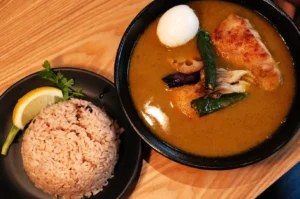
There is also a visual dimension that should not be overlooked. Part of what makes a bowl at our restaurant so recognisable is the deliberate arrangement of colour: the deep orange of pumpkin, the purple sheen of aubergine skin, the pale green of a blistered pepper. Everything is served over rice, or alongside a rice bowl of seasoned rice on the side, with the vegetables themselves acting as the main toppings rather than an afterthought. This is not decoration for its own sake. It reflects a genuine Hokkaido philosophy that a dish should be as comforting to look at as it is to eat.
A Nod to Miso Ramen and Other Hokkaido Comfort Foods
It would be inaccurate to suggest soup curry exists in isolation from Hokkaido’s other great comfort dishes. Miso ramen, born in Sapporo and now recognised across Japan and beyond, shares a similar philosophy: a rich, warming broth designed to counter the island’s long winter.
Where miso ramen leans on fermented soy bean paste, butter and noodles for its depth, soup curry leans on spice blends and, in our case, on the vegetables themselves to carry much of the flavour and texture. Both dishes emerged from the same practical need: to create something substantial and warming that could sustain people through Hokkaido’s harshest months. Both continue to represent the island’s food culture on menus far from home.
Beyond the Vegetables: Yubari Melon, Genghis Khan, and Hokkaido's Wider Table
No discussion of Hokkaido’s produce would be complete without mentioning the island’s other seasonal treasures, even if they sit outside the soup curry bowl itself. The yubari melon, grown in a specific pocket of the island and prized for its natural sweetness, is often served as a palate cleanser or dessert, sometimes alongside soft serve for a simple but memorable finish to a meal.
It represents the same principle we apply to our vegetables: when local ingredients are genuinely exceptional, minimal intervention is the best form of respect. Some of the island’s more indulgent kitchens even pair delicate vegetables with richer additions such as foie gras, though that remains far from the everyday, homely spirit that soup curry itself represents.
Genghis khan, the grilled mutton and vegetable dish cooked on a domed skillet, offers another useful point of comparison. Like soup curry, it relies on fresh, often simply prepared vegetables, onions and cabbage among them, cooked quickly over high heat and served alongside meat rather than beneath it. The techniques differ, grilling rather than frying, but the underlying respect for seasonal ingredients and their natural flavour connects both dishes to the same Hokkaido food philosophy that shapes everything we serve.
Fresh seafood, of course, remains central to Hokkaido’s identity too. Fresh salmon, king crab, fish and other catches from the surrounding sea are staples on menus across the island. Sometimes served raw as sashimi or sushi, sometimes grilled, sometimes folded into rice bowls with a touch of soy sauce. While seafood is not the focus of our su-age vegetables, it is worth noting that the same waters and climate that produce Hokkaido’s incredible seafood also shape the vegetables we work with. All of it is part of one interconnected food system.
A Technique Worth Understanding, Not Just Tasting

Su-age is easy to overlook because it produces something that looks, at first glance, like ordinary fried vegetables. But the health benefits of a lighter frying method, combined with the natural sweetness of genuinely good produce, mean the result is far from ordinary. It is a technique that trusts the ingredient. In Hokkaido, where seasonal ingredients are treated with something close to reverence, that trust is well placed.
For those curious to taste this approach for themselves, our menu and philosophy await at Soup Curry by Ki-Setsu, where every su-age vegetable is fried with the same care described above. Whether you come for the vegetables, the broth, or the wider sense of Hokkaido’s food traditions carried across dishes from miso ramen to genghis khan, we hope what you find is a bowl that feels, above all, like comfort done properly.
Hokkaido’s long winter may have shaped this style of cooking out of necessity, but its legacy is something worth savouring in any season, in Sapporo, in Tokyo, or here in Singapore.