Sapporo does not eat the way the rest of Japan eats, and the reasons are not really about individual dishes, whether that is a bowl of miso ramen or a steaming plate of soup curry, at all. They are about geography, indigenous knowledge, and a set of historical accidents that pushed this one island city towards a food culture built on warmth, patience, and self sufficiency. Sapporo food culture is easiest to understand not as a list of famous plates, but as a set of answers to a single question locals have faced for generations: how do you eat well in a place this cold, this isolated, and this far from the rest of the country’s food supply chains.
What Actually Shapes Sapporo Food Culture
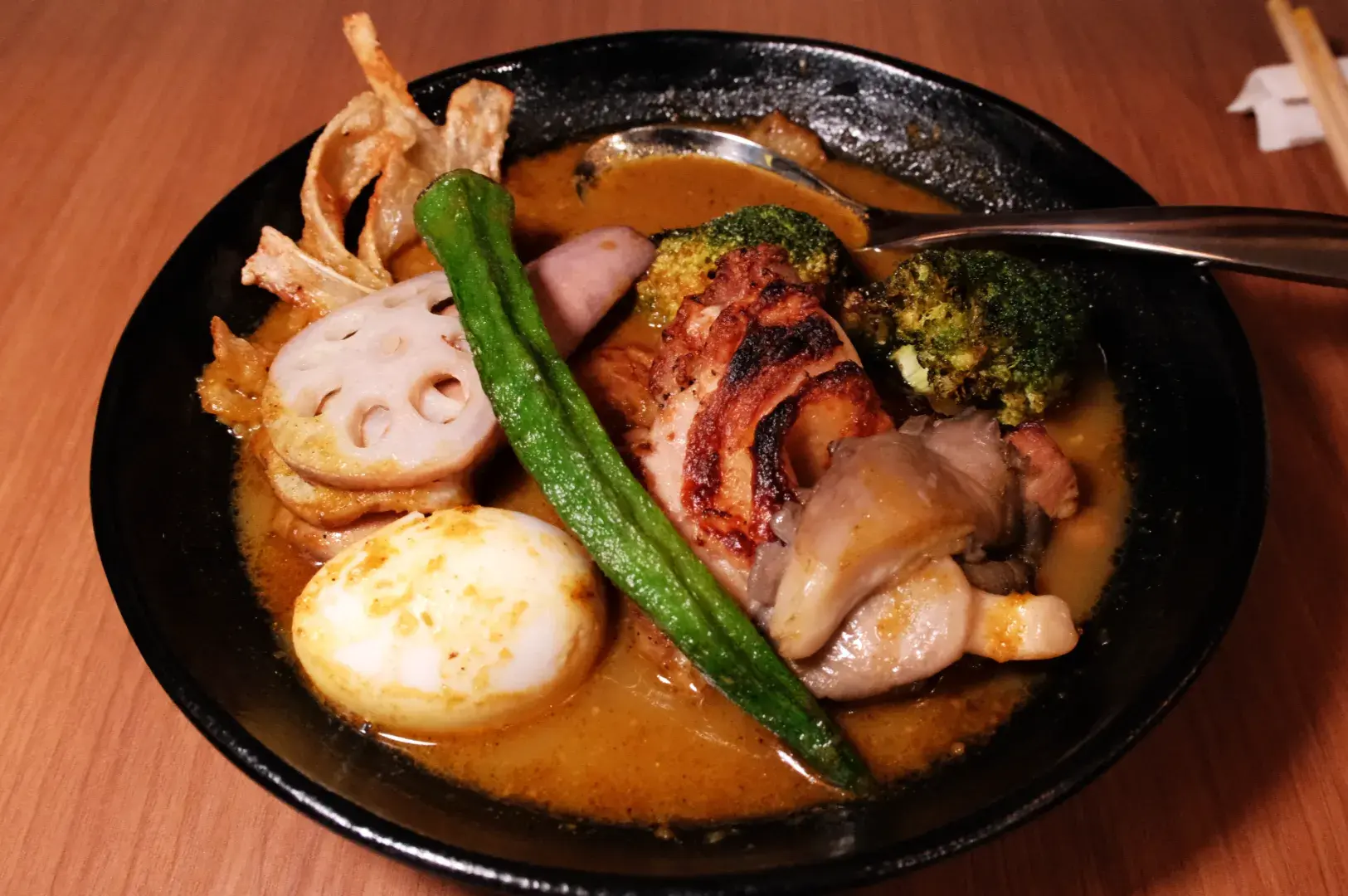
As the capital city of Japan’s northernmost island, Sapporo occupies a position unlike anywhere else in the country. Long winters, short growing seasons, and a cool climate meant that early residents could not rely on the same rhythms of fresh produce and quick cooking that shaped cuisine further south. Food had to be built to last, to warm, and often to be shared, because isolation made communal eating a practical necessity rather than a lifestyle choice.
Hokkaido’s landscape itself plays a quiet role in this story too. Beyond the city, natural features like Lake Kussharo reflect just how untouched and resource rich the wider island is, a reminder that Sapporo’s food culture did not develop in a vacuum but alongside a landscape still largely shaped by nature rather than industry. Hokkaido was also settled and developed later than much of Japan, and that history brought Western influences into the region earlier and more directly than elsewhere.
The result is a food culture that never fits neatly into the idea of a single, unified Japanese cuisine. It absorbed dairy farming, livestock rearing, and European technique, then filtered all of it through existing Japanese and, crucially, Ainu knowledge of the land. Understanding this layering is the real starting point for understanding Hokkaido’s food, and it is why a bowl of soup curry or a plate of grilled lamb here carries a different history than it would anywhere else.
Ainu Food Culture: The Origin Point Most Guides Skip Past
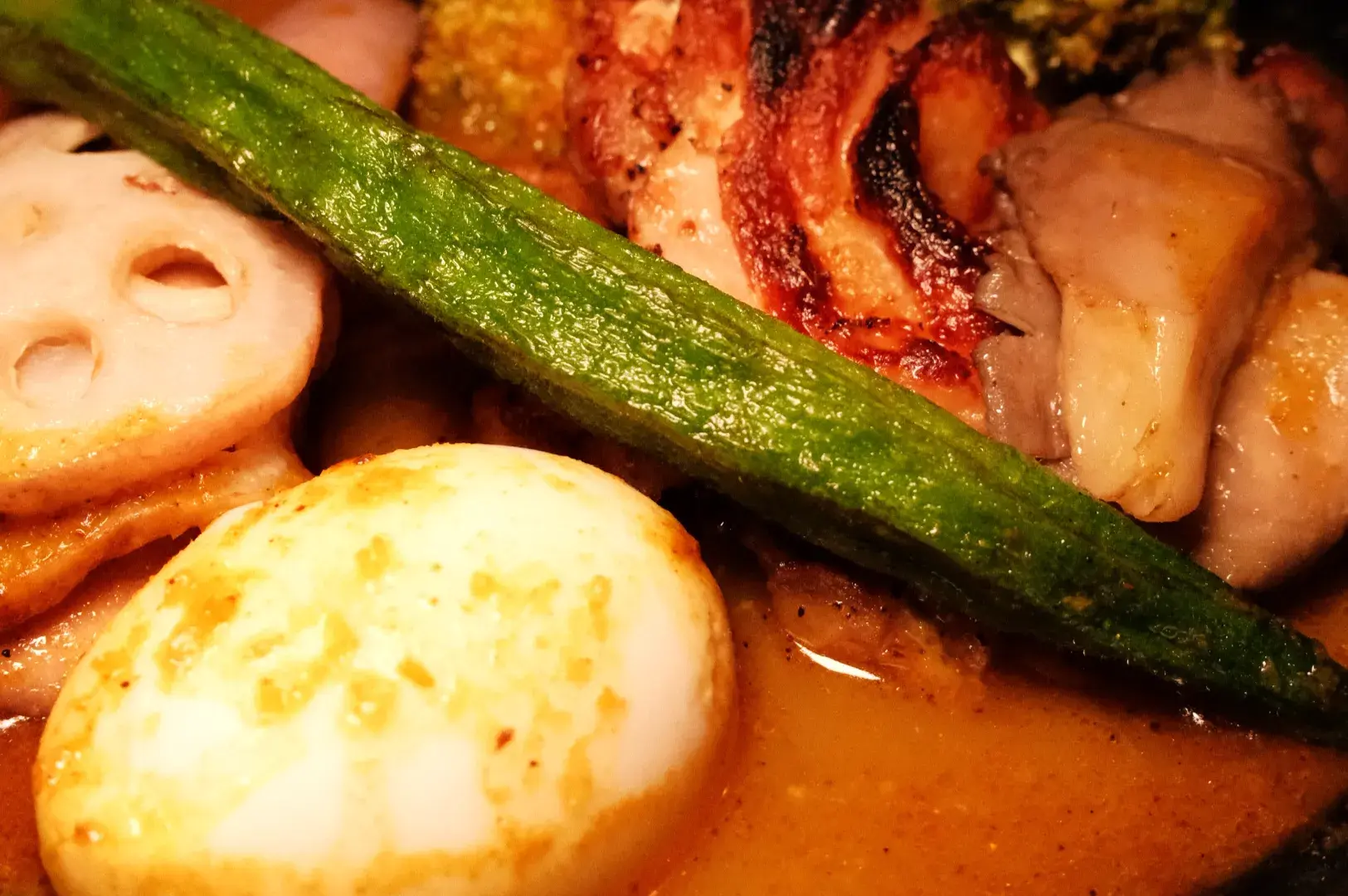
Long before Sapporo existed as a modern city, the indigenous Ainu people had already developed an intricate relationship with this land’s food sources. Ainu food culture was never about abundance for its own sake. It was built on a precise understanding of seasonal availability, foraging ethics, and preservation, shaped by centuries of hunting, fishing, and gathering across Hokkaido’s forests and coastlines.
Ainu Food as the Root of Local Sourcing Philosophy
What makes Ainu food genuinely important to understanding Sapporo today is not nostalgia. It is that many of the sourcing instincts still visible in the city’s kitchens, including seasonal eating, minimal waste, and reliance on what the land and sea provide rather than what can be imported, trace directly back to Ainu practice. Wild garlic, foraged mountain vegetables, salmon, and venison formed the backbone of many local dishes long before ramen shops or dairy farms existed.
That knowledge continues to shape the region’s kitchens rather than sitting as a footnote in the wider story of Japanese cuisine. Any serious attempt at a Sapporo food guide has to start here, not as an afterthought, but as the philosophical root of everything that followed.
Miso Ramen and the Logic Behind a Whole City’s Comfort Food
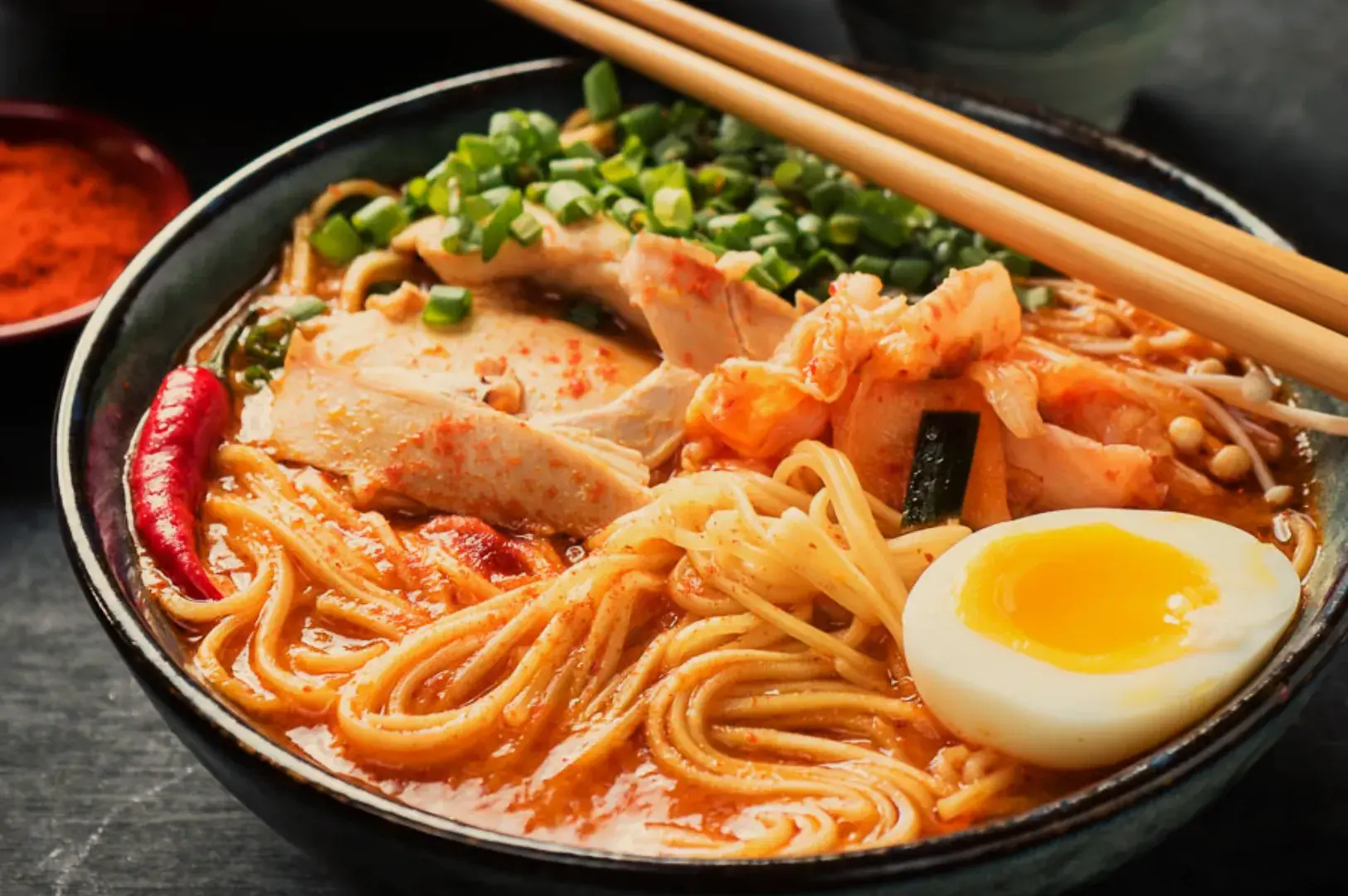
By the time miso ramen became Sapporo’s most famous dish, the reasoning behind it was already centuries in the making. This is not simply a dish that happened to taste good. It is a direct response to a climate that demanded density, fat, and warmth in a single bowl. Where much of Japan favoured a lighter soy sauce broth, Sapporo leaned into miso paste, whose fermented, savoury depth delivered a richness that thinner broths never could.
What is easy to miss is why ramen alley itself became such a defining feature of the city, beyond simply serving good food. These narrow strips of tightly packed counters reflect a very Sapporo idea about specialisation: a single shop mastering one bowl, one broth, one method, for decades, rather than chasing variety. That same instinct towards narrow, deep mastery over broad, shallow choice shows up again and again across the city’s food culture, and it is one of the clearest signs that Sapporo treats eating as a discipline rather than a convenience.
From Classic Japanese Curry to Sapporo’s Own Interpretation
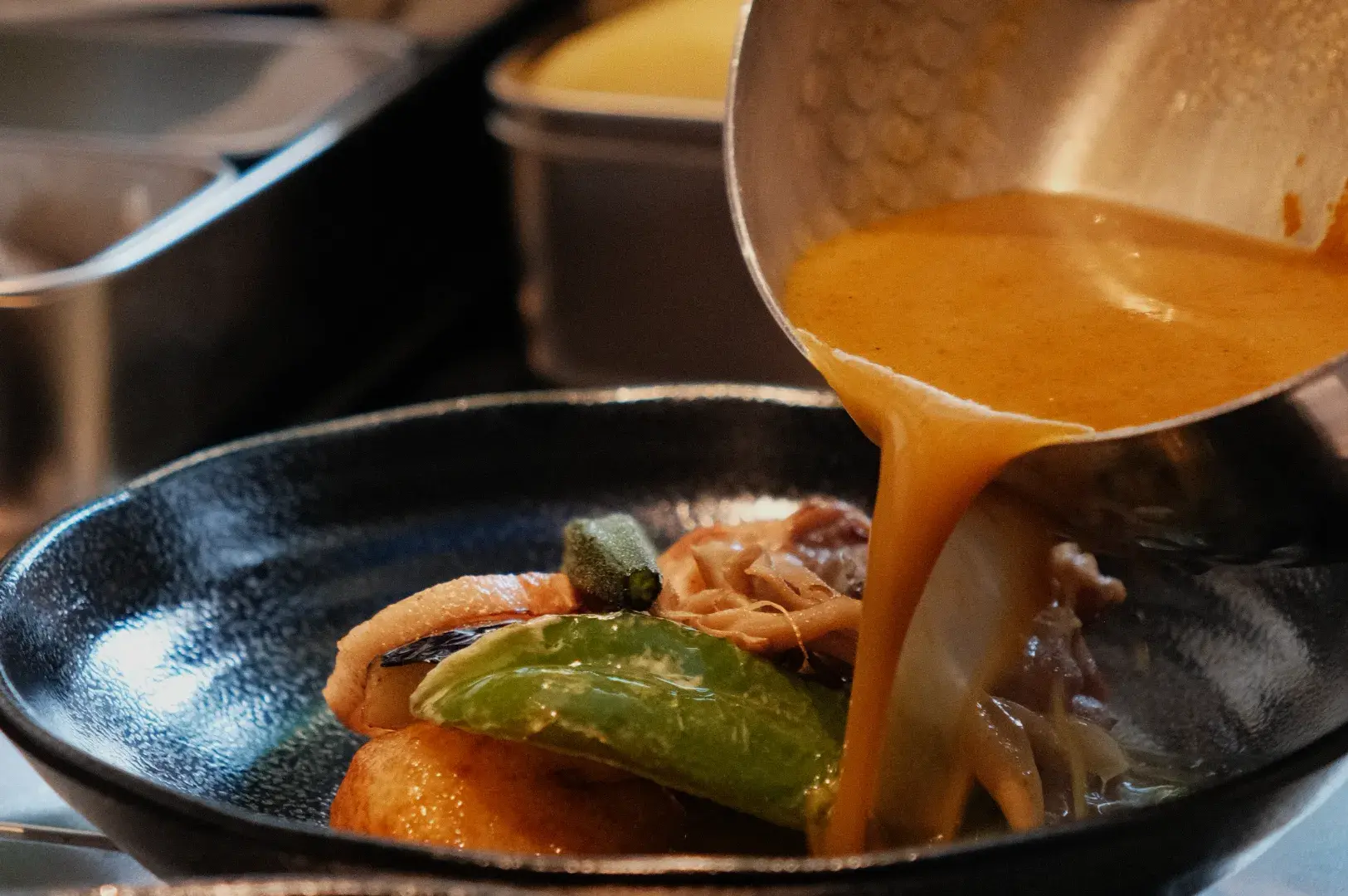
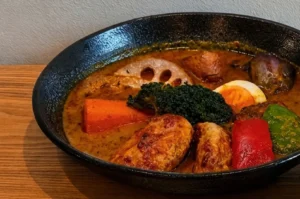
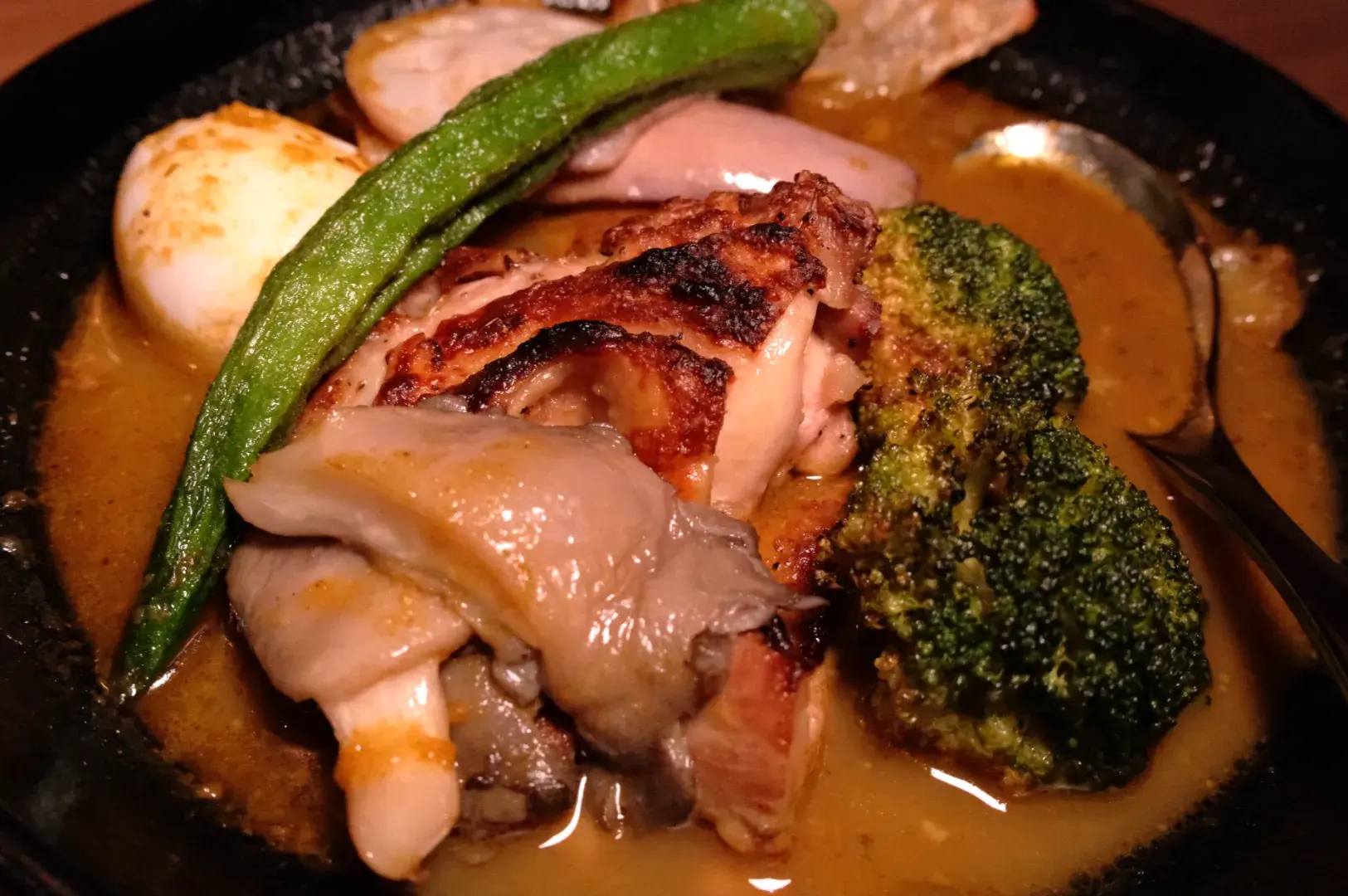
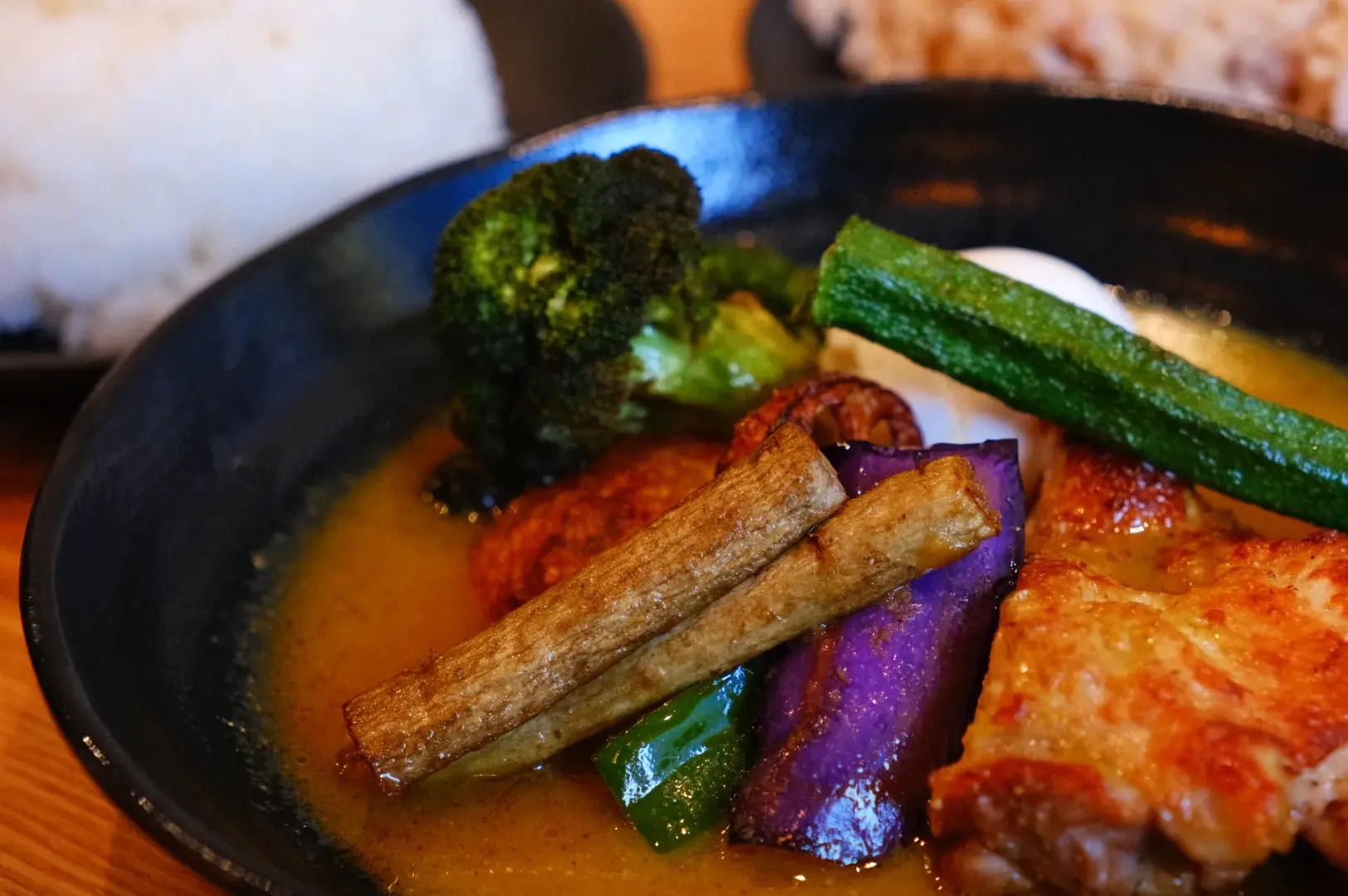
It helps to understand where soup curry sits in relation to classic Japanese curry more broadly. Traditional Japanese curry across the rest of the country tends to be thick, roux based, and almost stew like, poured generously over rice. Sapporo’s version broke from that formula entirely, choosing a clear, spiced broth over a heavy roux.
That departure was not stylistic for its own sake. It reflects the same climate driven logic behind miso ramen, a belief that a bowl should warm you through rather than simply fill you up, and it is one of the clearest examples of how Sapporo tends to take a familiar format and rebuild it around its own conditions.
Read: How Seasonal Soup Curry Compares to Japan’s Other Beloved Soups
Hokkaido Milk and the Agricultural Story Beneath the City’s Richness
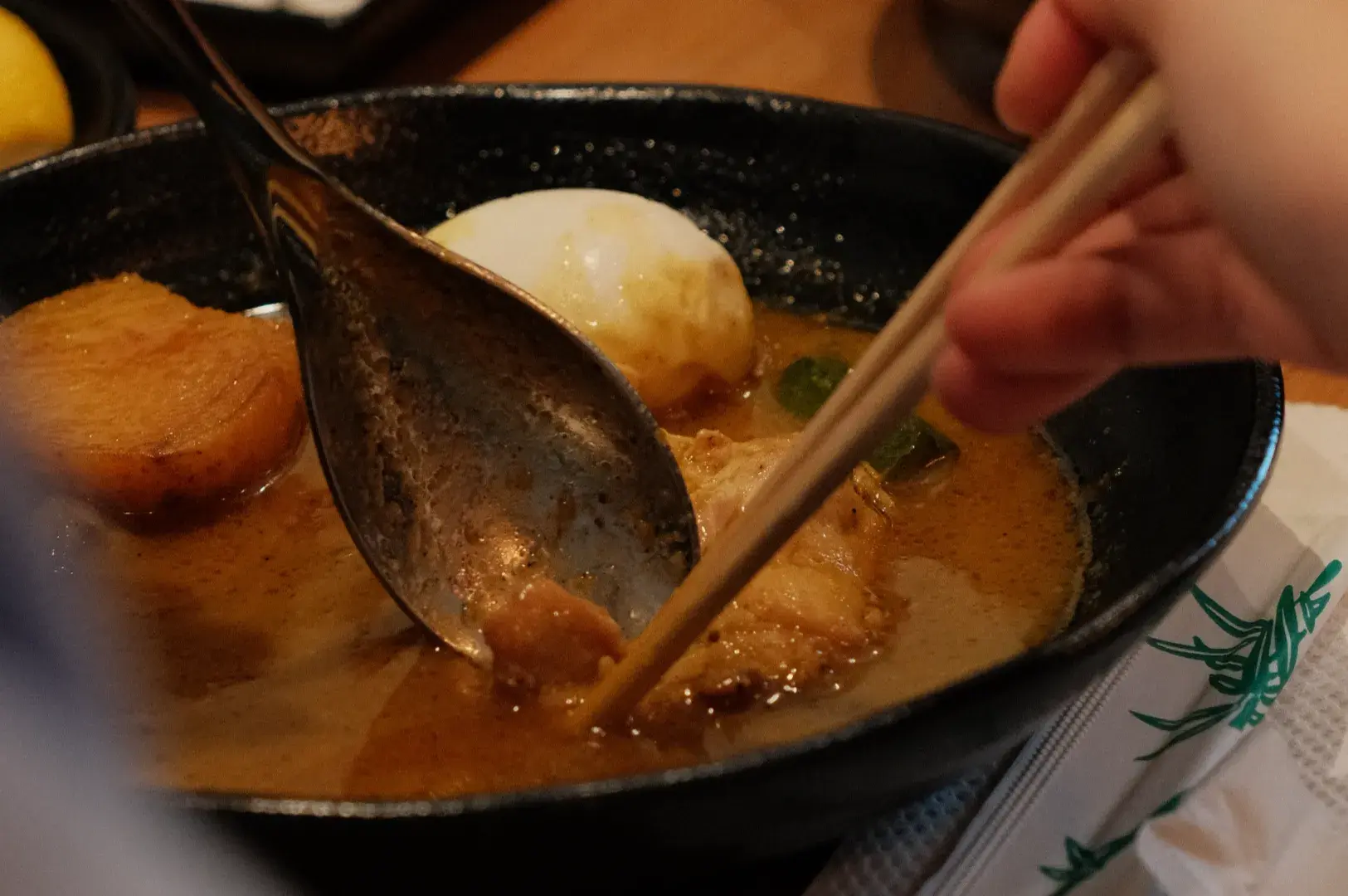
Hokkaido milk did not become a national byword for quality by accident. It is the outcome of a specific agricultural gamble taken generations ago, when settlers introduced dairy cattle to a landscape that Japan’s traditional rice based agriculture was never suited to. Cooler pastures and a longer window of grazing produced milk with a different fat composition, and over time, dairy farming became one of the defining economic and culinary pillars of the entire island.
This matters to Sapporo food culture for a reason that goes beyond desserts or soft serve. It explains a broader tendency across the city’s kitchens to lean on richness, whether that is butter worked into a broth, cream folded into a simple dish, or milk and other dairy products used as a base ingredient rather than a garnish. Hokkaido’s food identity was quite literally built on an agricultural experiment that succeeded far beyond what anyone expected, and that success still shapes how heavy, how comforting, and how dairy forward the region’s cooking remains.
Fresh Seafood and Hokkaido’s Food Relationship With the Sea
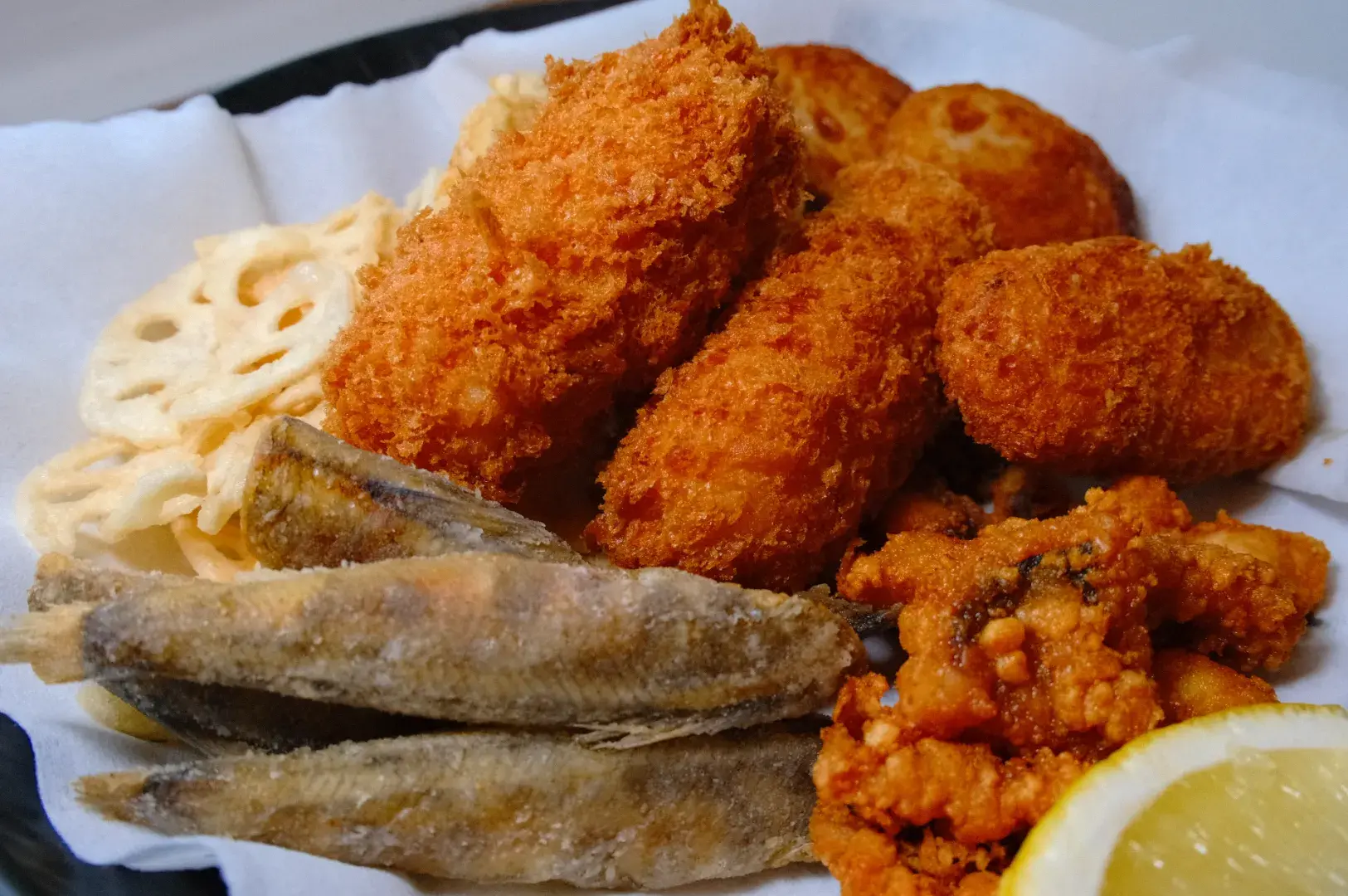
Hokkaido’s cold, nutrient dense waters give Sapporo access to seafood that behaves differently on the plate than seafood caught in warmer regions. Snow crab, scallops, sea urchin, and salmon roe are treated here as everyday ingredients rather than delicacies reserved for celebration, often served simply over a rice bowl or as sushi with nothing more than a touch of wasabi, and that casual familiarity says a great deal about how locals relate to the ocean.
Nijo Market and the Ainu Instinct Still Running Through It
Nijo Market is often framed simply as a place to buy fresh crab or salmon, but its deeper significance lies in what it represents. The rhythm of buying directly from the source, cooking with minimal intervention, and respecting whatever the season provides is a continuation of the same instincts that shaped Ainu food practice centuries earlier.
Vendors here are not curating an experience for outsiders. They are maintaining a relationship with the sea that predates the market itself, and that continuity is part of why fresh seafood in Sapporo tastes, and feels, different from seafood served elsewhere.
Genghis Khan, Grilled Lamb and Sapporo’s Beer Garden Ritual
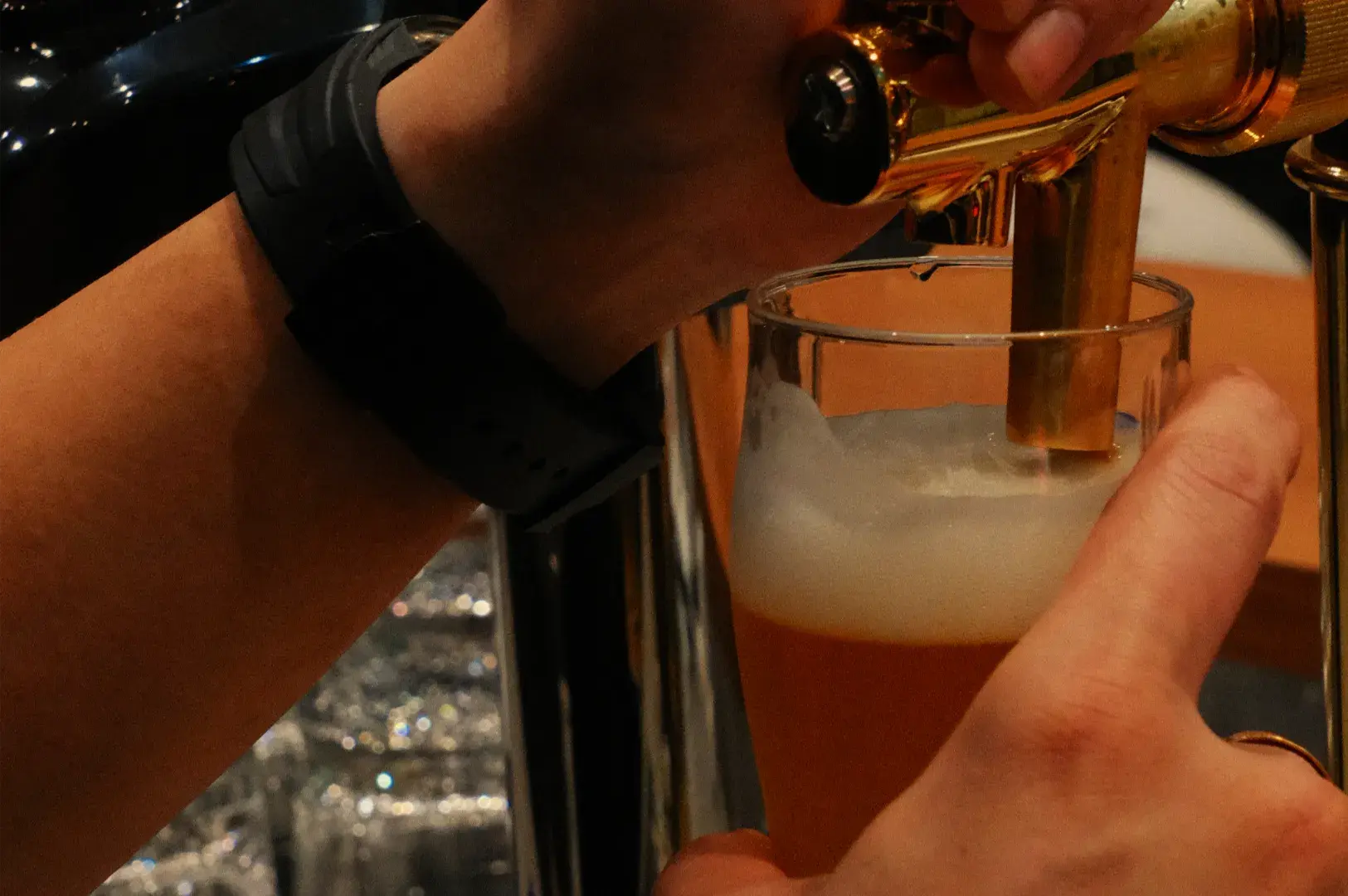
Genghis Khan, the grilled lamb dish cooked at the centre of a shared table, is often treated as a novelty because of its name and its post war origins as an effort to popularise lamb as an affordable protein. But its real significance to Sapporo food culture lies in its format. This dish is designed to make people slow down, cook together, and share a single pan rather than individual plates.
That communal instinct is inseparable from Sapporo’s brewing heritage. The city has produced beer for over a century, and the tradition of gathering at open-air beer gardens, sharing plates of grilled lamb and corn, clearly shows how seriously the city treats shared meals. Visitors can explore this history at the city’s brewing museums, which highlight the close ties between local beer and food culture. Whether at family tables or beer garden gatherings, grilled lamb turns eating into a shared, patient act, a philosophy that quietly shapes much of Sapporo’s food culture, including its slow-simmered, deeply spiced bowls known beyond the city.
Odori Park and the Seasonal Calendar That Governs How Sapporo Eats
If there is one place that makes Sapporo’s relationship with seasonality visible, it is Odori Park. During the Sapporo Autumn Fest, this long green corridor becomes a condensed map of the island’s harvest, bringing together corn, seafood, and dishes from many cities across Hokkaido into a single walkable space.
What this reveals is that Sapporo food culture was never meant to be static. Menus shift with the calendar, favouring different vegetables, different seafood, and different cooking methods depending on the season, and Odori Park is where that shift becomes something you can walk through rather than simply read about. It is less a food festival in the conventional sense and more a public demonstration of how deeply the city’s eating habits are tied to what the land is willing to give at any given time of year.
Why Food Lovers Should See Sapporo as a Philosophy, Not a Menu
For food lovers who take the time to look past the headline dishes, what makes Sapporo compelling is not any single bowl or plate. It is the consistency of a worldview: eat according to season, respect what the land and sea provide, favour depth over variety, and treat meals as something shared rather than solitary.
That same worldview is what drew our attention to soup curry long before we opened our doors in Singapore. It is a dish born from the same climate, the same instinct towards warmth, and the same respect for vegetables and broth that defines so much of Hokkaido’s food. As Soup Curry by Ki-Setsu, we have tried to carry that philosophy into our own kitchen rather than simply replicate a recipe, and it is a perspective we think is worth understanding regardless of where you encounter it.
Sapporo does not eat differently because of one dish, one market, or one festival. It eats differently because centuries of climate, indigenous knowledge, and agricultural history taught it to. That is the real story behind Sapporo food culture, and it is one that continues well past the city limits.