Walk into a Japanese home at dinner time, a school canteen at noon, or a bakery on a busy station concourse, and there is a good chance curry is somewhere nearby. What began as a foreign import has become one of the most flexible dishes in the country, and it keeps changing shape. At our restaurant, we think about this constantly, because the way people in Japan treat curry today is far broader than the single plate most visitors expect.
This article looks at the many faces of curry in Japan now, and where our own Hokkaido soup curry Singapore bowl fits among them.
Why Japanese Curry Culture Looks So Different Today
When people talk about Japanese curry culture, they often imagine one thick, brown sauce poured over rice. That picture is only the starting point. Curry arrived in Japan during the Meiji era, when foreign influences were reshaping the country’s food, and it came by way of British naval kitchens rather than directly from India. The Japanese then adapted it patiently to suit Japanese tastes: milder heat, a gentle sweetness, and a body that clings to rice.
Today the culture around curry has split into several distinct strands. There is the nostalgic home version, the quick convenience version, the specialized restaurant version, and the playful street-food version. What ties them together is a shared feeling: curry means warmth, generosity and a table that everyone can gather around.
How Japanese Curry Differs from Indian Curry
An Indian curry usually begins with whole spices bloomed in oil, and the flavor is built through layers of technique. The Japanese style curry we know from households relies on a different foundation. Curry powder, a blend of turmeric, coriander, cumin and other curry spices, is combined with a roasted flour base to create a smooth, glossy sauce. The result is rounder and more savory than sharp, which is why it sits so comfortably beside plain rice.
Curry Rice at the Heart of Japanese Households
Ask almost anyone in Japan about curry rice and they will describe a childhood memory. It is a staple of Japanese households, often made in a large pot so that it can be eaten across two or three days. The flavor is said to deepen overnight, and many families will tell you the second serving is the best one.
A typical home pot contains potatoes, carrots, onions and a choice of chicken, pork or beef. The vegetables are cut into generous chunks, and the stew simmers until everything is soft. It is served beside a mound of steamed rice, often with a small spoonful of pickled vegetables on the side. The bright, slightly sweet crunch of those pickles cuts through the richness and makes the whole plate feel balanced.
What Makes Japanese Curry Rice So Satisfying
A good plate of Japanese curry rice works because every element has a job. The rice carries the sauce, the potatoes thicken it, the onions bring sweetness, and the meat adds depth. It is a satisfying meal that asks very little of the cook but gives a great deal back. This is exactly why it has become a perfect comfort food for rainy evenings, exam seasons and long working weeks.
Curry Roux and the Blocks Behind the Home Kitchen
The quiet hero of the home kitchen is curry roux. In its traditional form, roux is a mixture of fat and roasted flour that thickens the sauce and carries the spices. Modern households often use a compact block of roux that dissolves into the simmering pot, which is one reason curry is so approachable. A beginner can make a respectable pot with almost no experience.
Many home cooks like to personalize the pot. A grated apple or a spoonful of honey can add a soft sweetness. A little butter gives a rounder finish. A dash of soy sauce deepens the savory notes, and fresh ginger lifts the aroma. These small adjustments are part of what makes each family’s recipe feel personal.
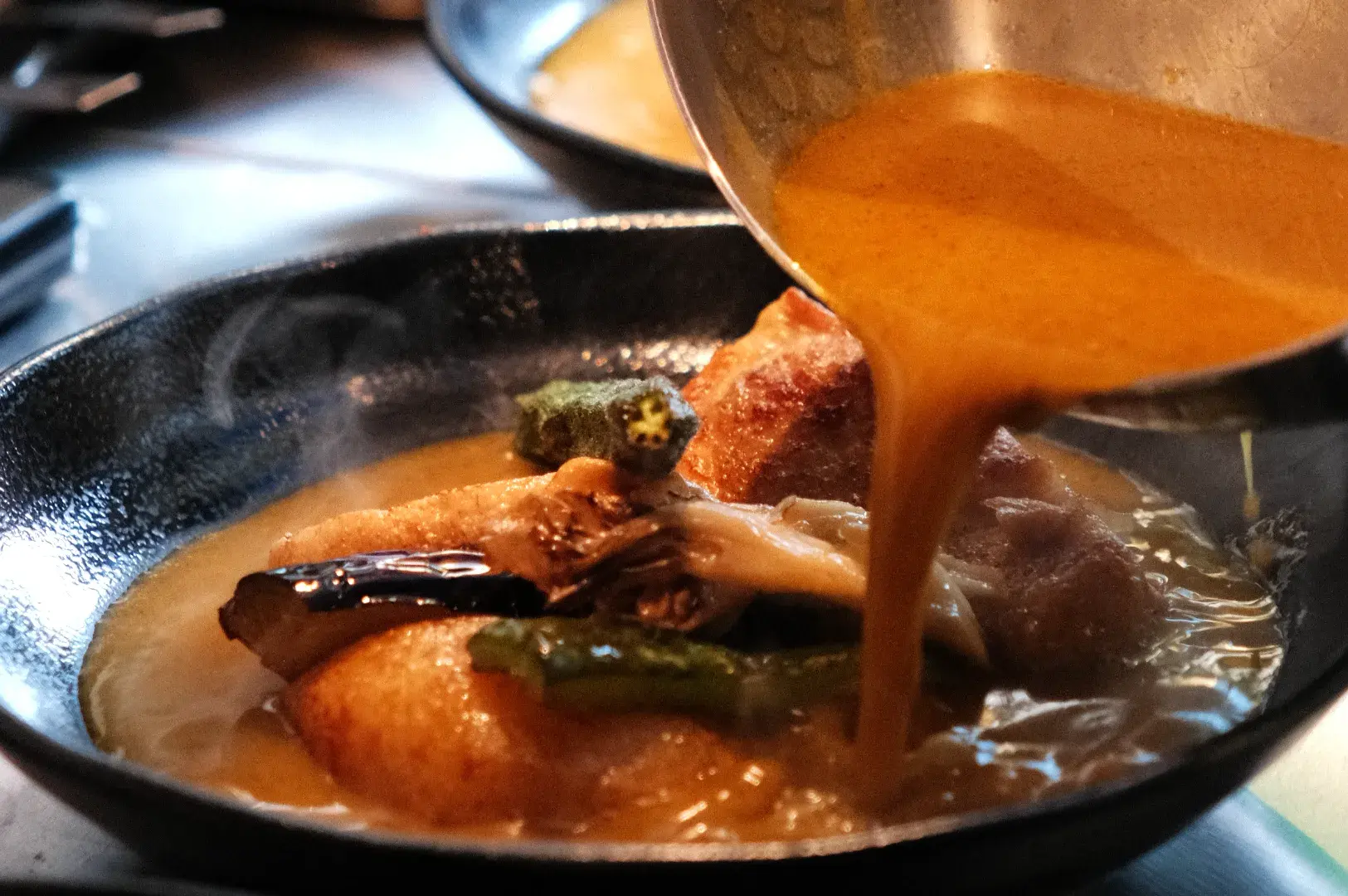
For us, the lesson from the roux tradition is that depth comes from patience and from layers. At our restaurant, we build our curry soup from aromatic spices and a carefully simmered base rather than a heavy thickener. The goal is a rich, fragrant broth that carries flavor without weighing you down, but the instinct is the same: respect the fundamentals and let time do some of the work.
Ready Made Curry and the Convenience Boom
No honest look at curry today can skip ready made curry. Japanese supermarkets are lined with retort pouches that can be warmed in a few minutes, and convenience stores sell single portions alongside packaged rice. For busy students and office workers, this is a reliable and surprisingly good option.
The quality of these products has improved enormously. Makers now offer regional specialties, vegetable-heavy versions, and spicier blends for those who want more heat.
Convenience has not replaced the home pot or the restaurant bowl. Instead, it has widened the audience.
Kare Pan and Other Ways Curry Escapes the Plate
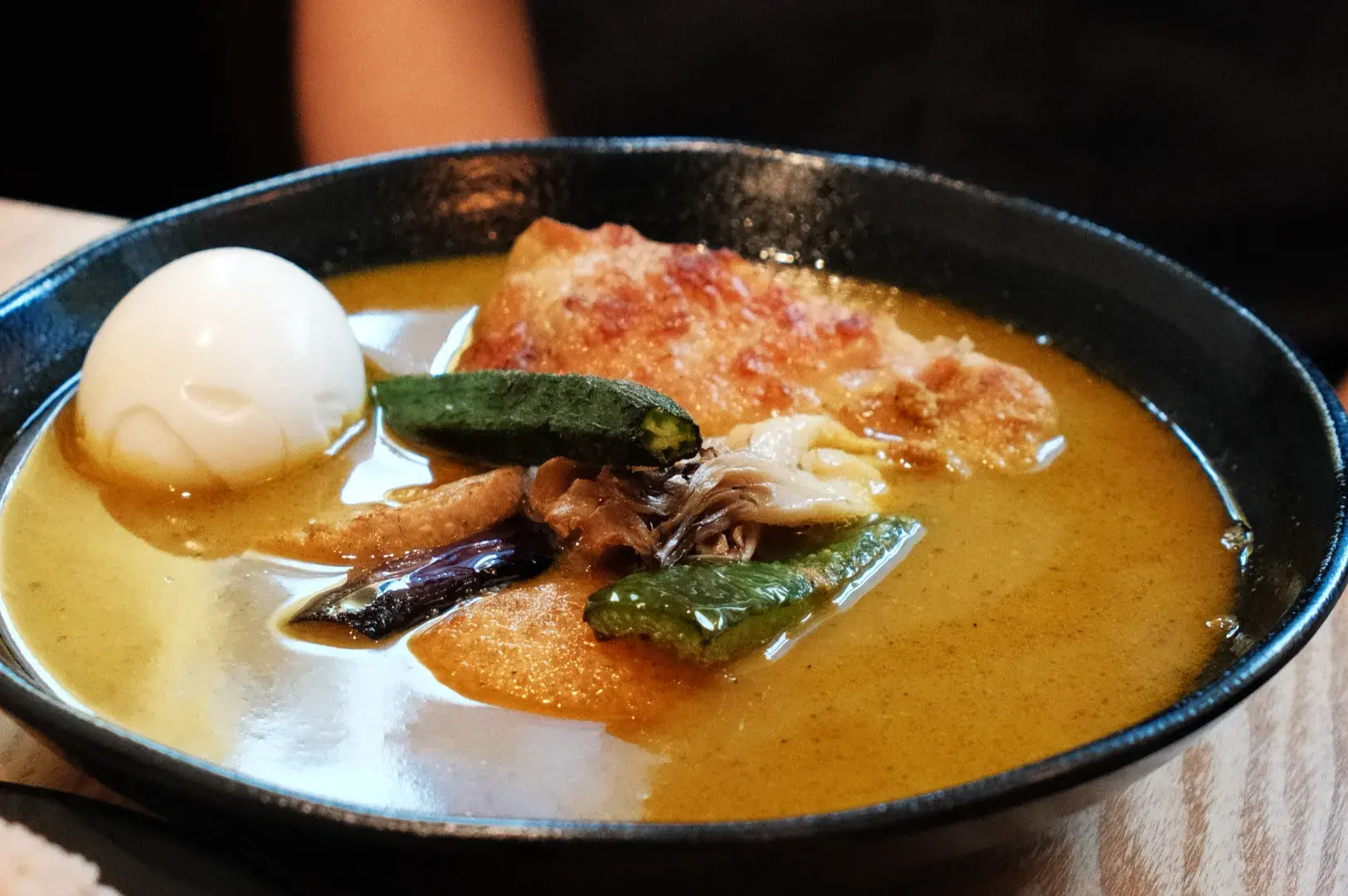
One of the most delightful faces of curry today is kare pan, a soft bread roll filled with thick curry, coated in crumbs and deep fried until golden. Bakeries across Japan sell it, and you will see commuters grabbing one on the way to work.
Kare pan shows how flexible the flavor has become. Curry now appears in many other forms too. Udon noodles are served in a thick curry broth, and the heat of the soup is ideal for a cold day. Katsu curry pairs a crisp breaded cutlet with a ladle of sauce. The common thread is a delicious taste that people already trust, applied to new formats.
A Unique Twist on Familiar Flavors
Each of these creations offers a unique twist on the same comforting idea. A savory sauce, aromatic spices and a satisfying carbohydrate are combined in a different shape. This is part of what makes Japanese curry so endlessly adaptable, and why chefs and home cooks alike keep experimenting.
Popular Foods Built on a Curry Foundation
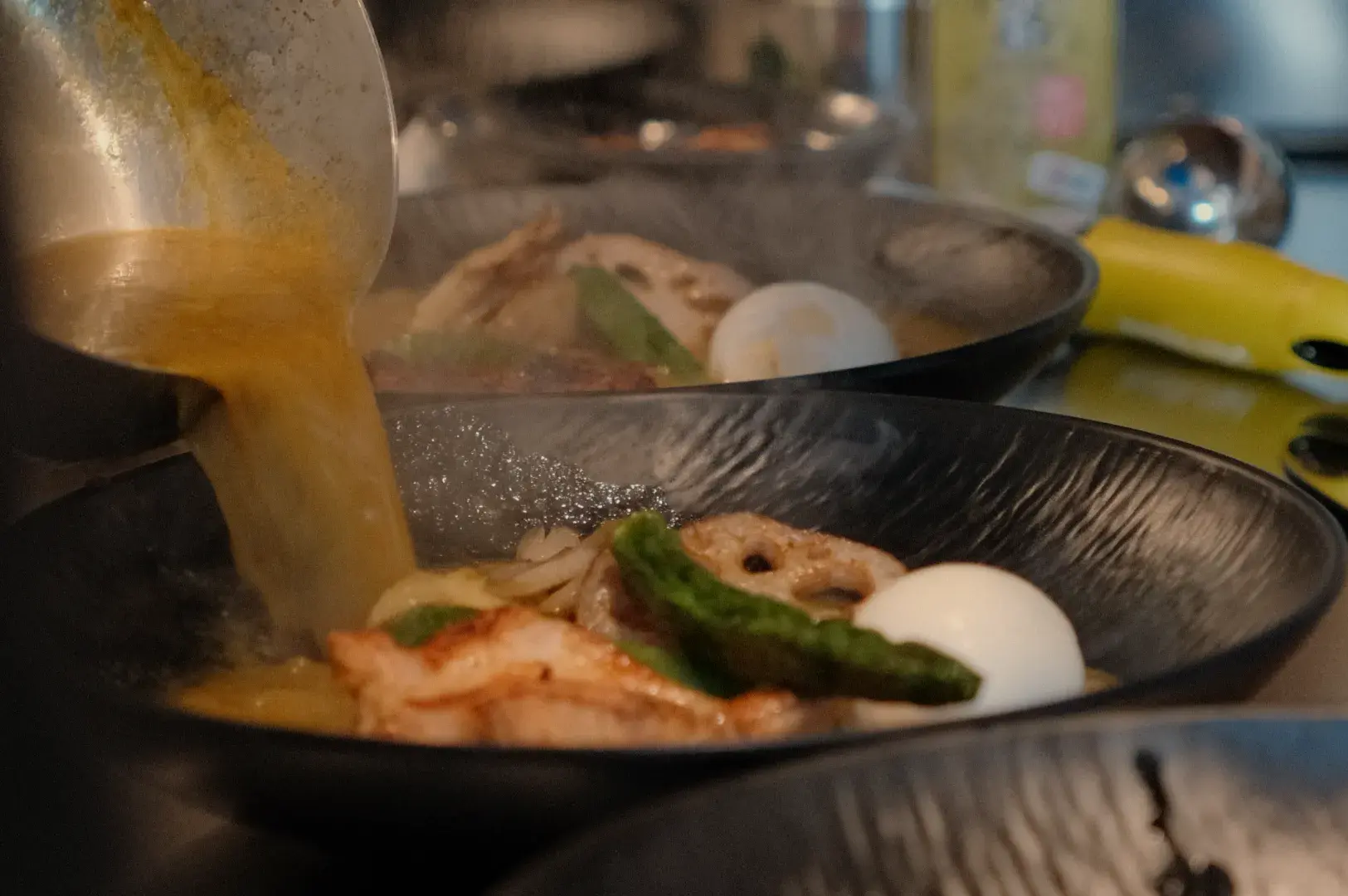
Curry has become one of the most popular foods in Japan, often appearing in polls of the nation’s favorite meals. Its reach is wide. School lunches serve it regularly, and for many children it is one of the first dishes they learn to love.
Seen this way, curry is more than just a meal. It is a cultural phenomenon that crosses generations. Grandparents, parents and children may each have a different favorite style, yet they can all sit at the same table and enjoy the same pot. For food lovers, that universality is part of the charm.
Regional Specialties, from Tokyo Diners to Hokkaido Soup Curry
Japan’s regions each bring something different to the bowl. Tokyo is known for its classic, balanced plates served in small, long-running dining rooms. Hokkaido, with its cold winters and abundant produce, developed a style all its own.
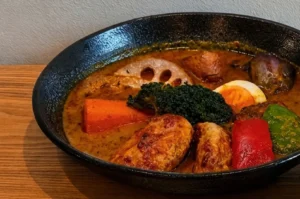
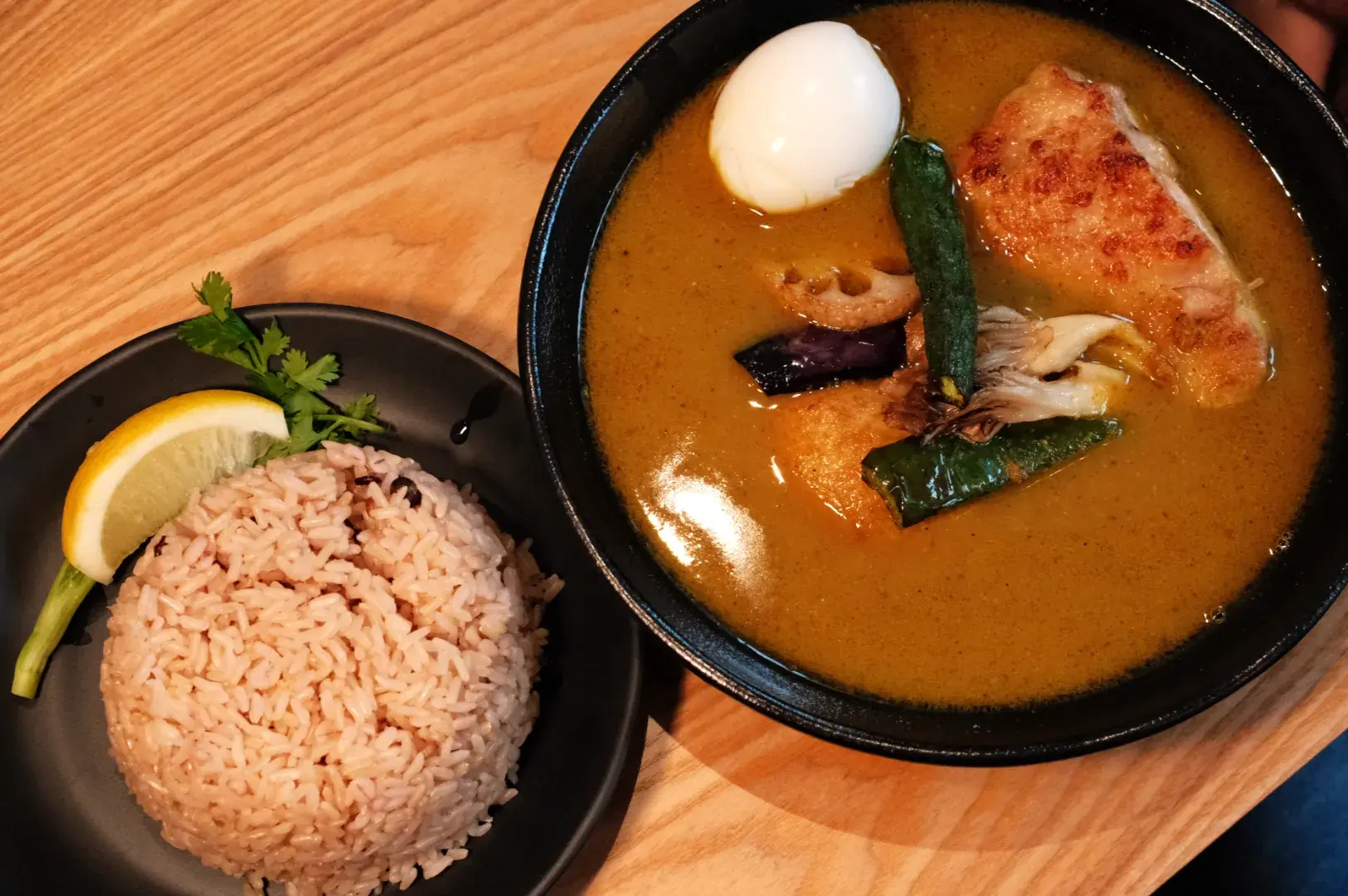
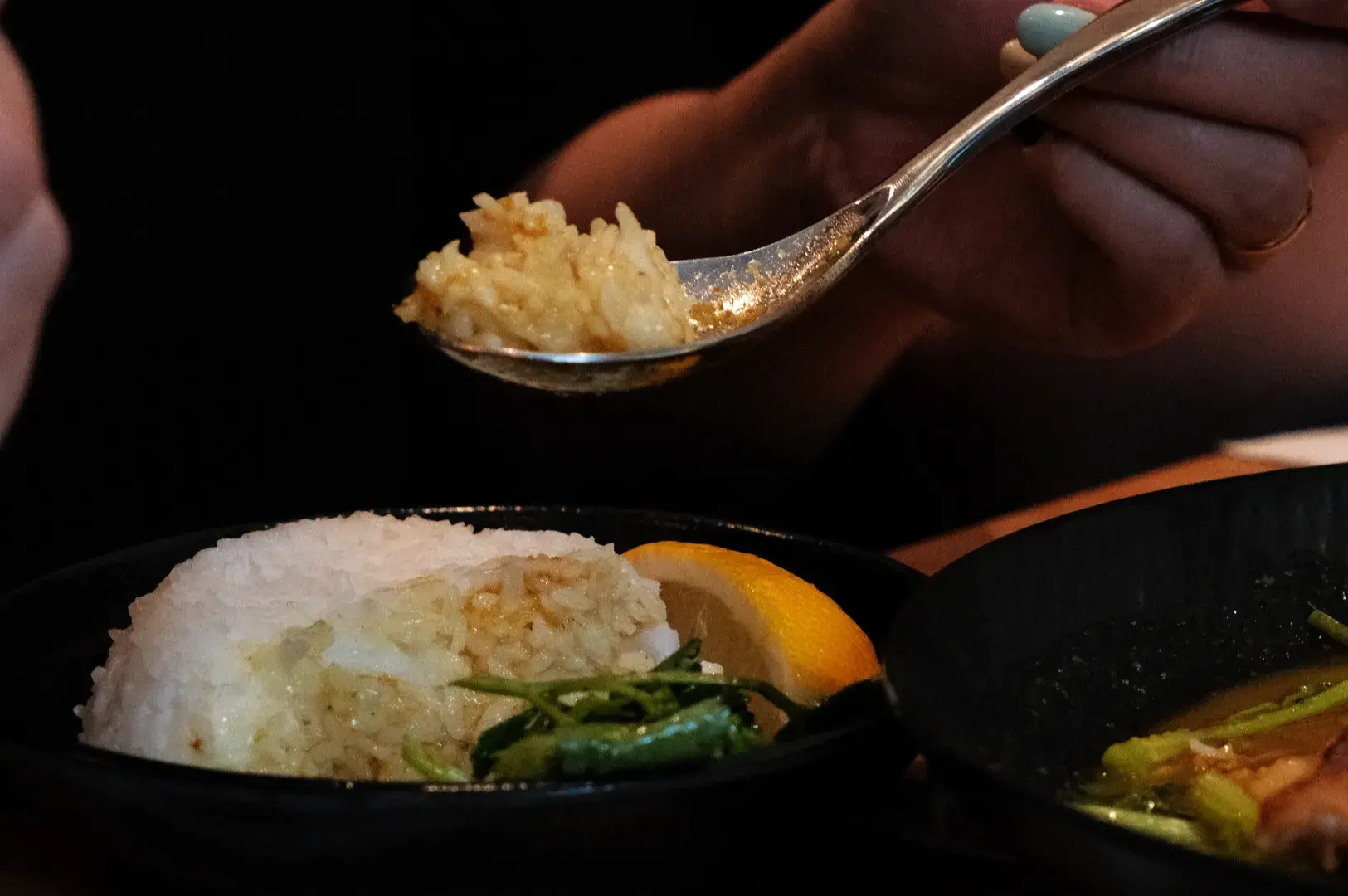
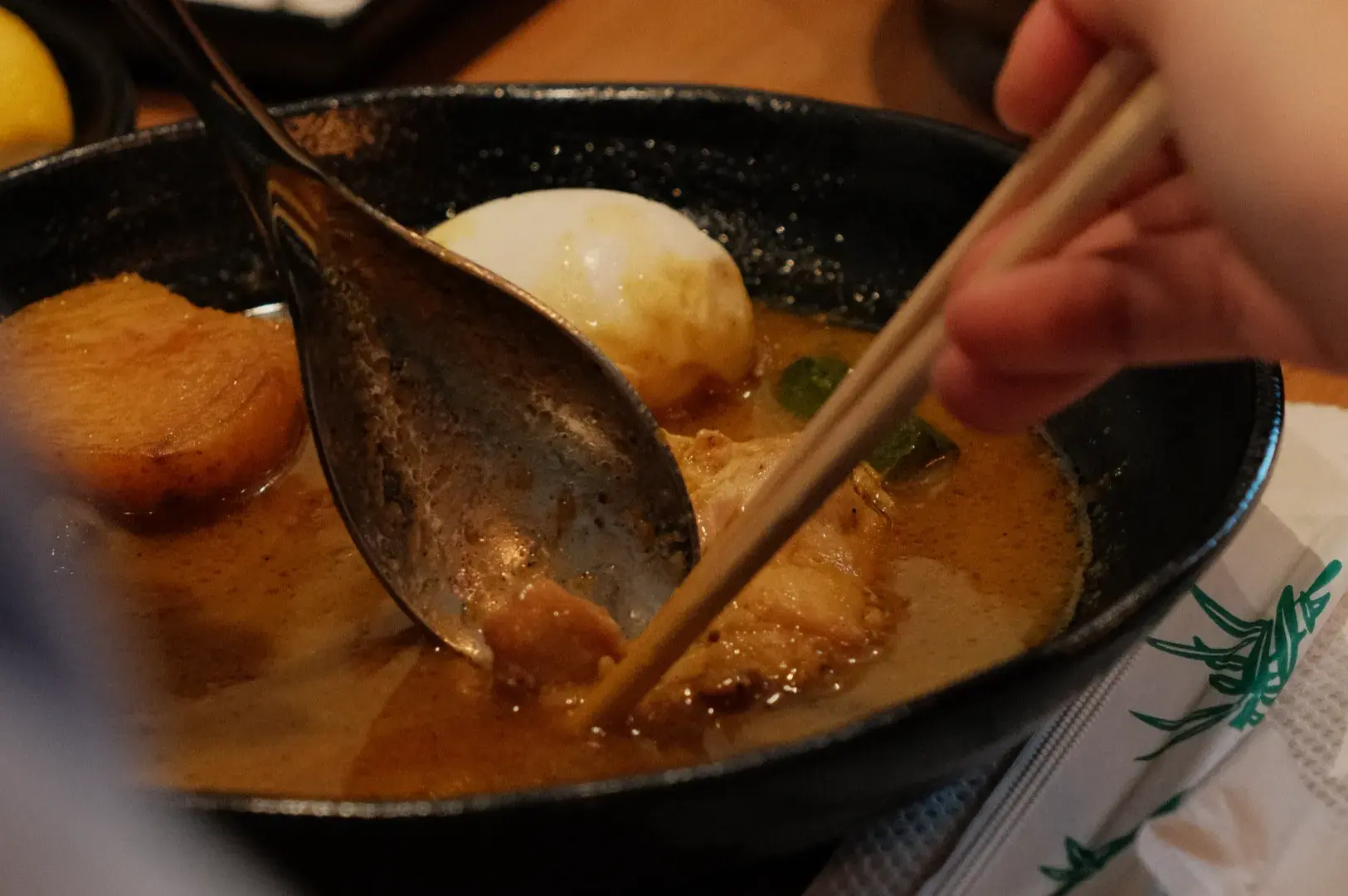
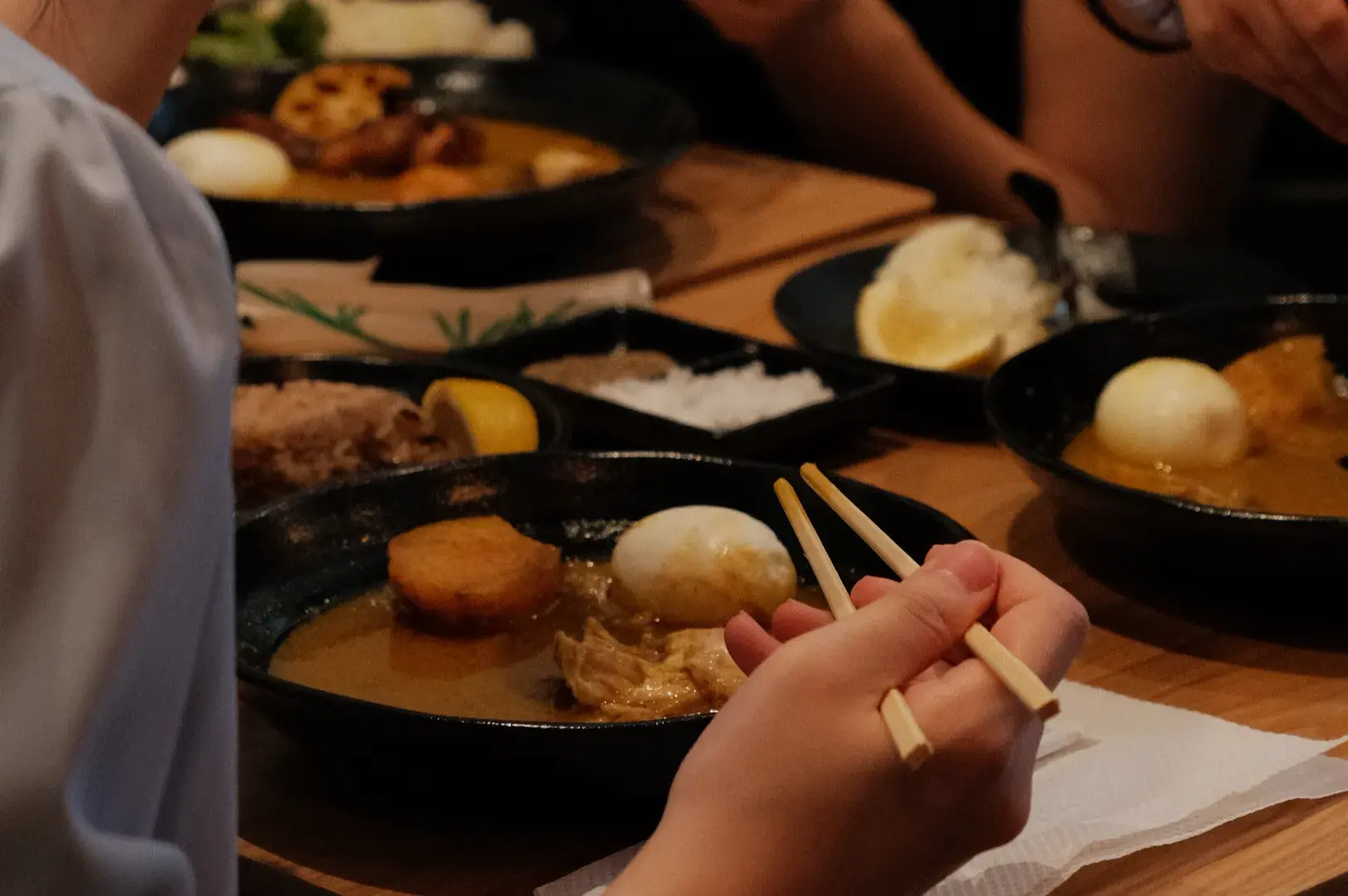
In Sapporo, curry took the form of a spiced soup rather than a thick stew. The broth is thinner, more aromatic and layered with spices, and it is served with a generous portion of vegetables and tender chicken. Rice sits in a separate dish so that each diner can control how much goes into each spoonful. It is lighter on the palate than a roux-based curry, yet it is just as comforting.
Read: Why People Keep Confusing Japanese Soup Curry with Japanese Curry (And Why They Shouldn’t)
Vegetables Take Centre Stage
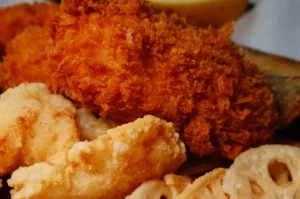
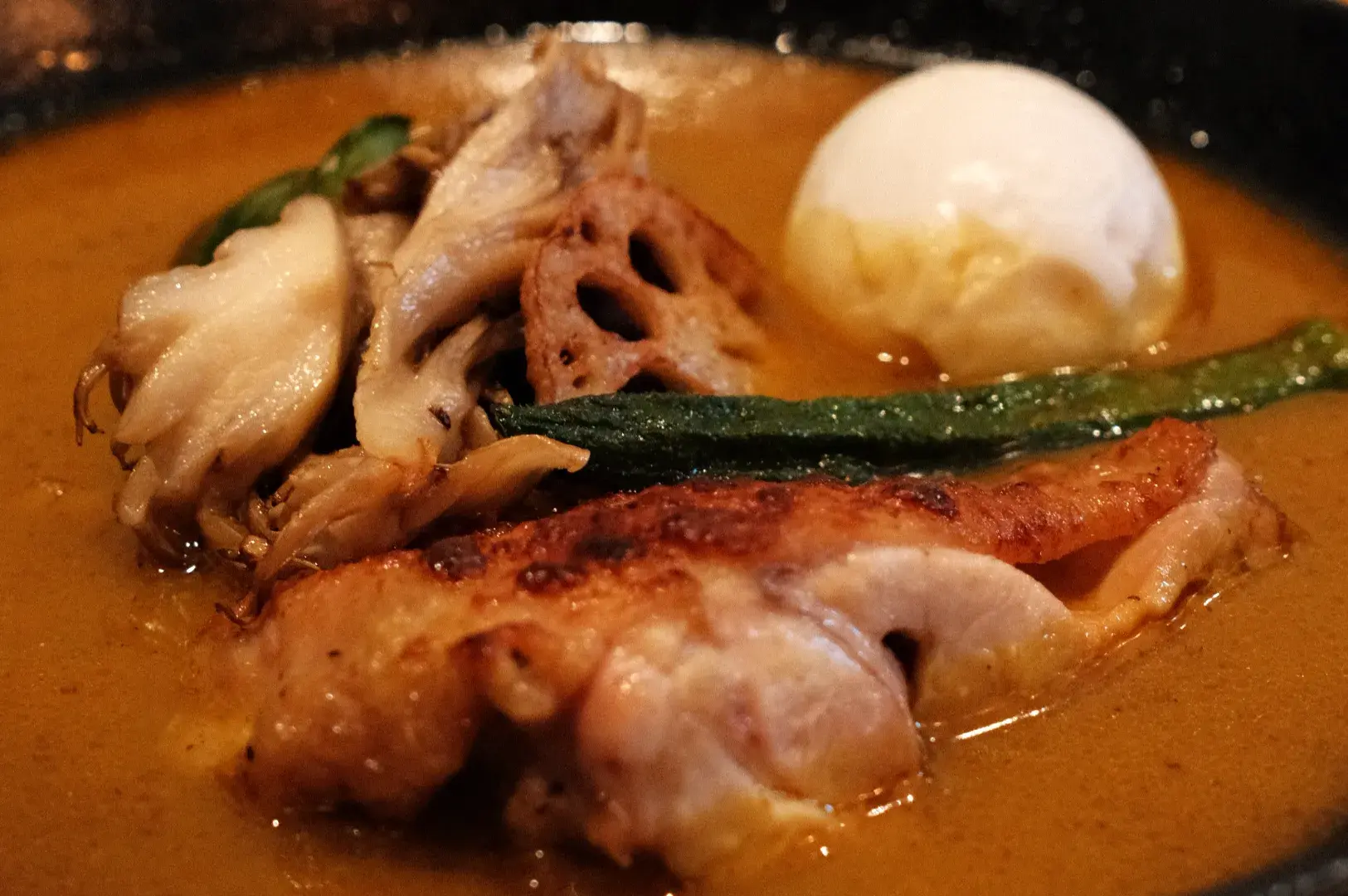
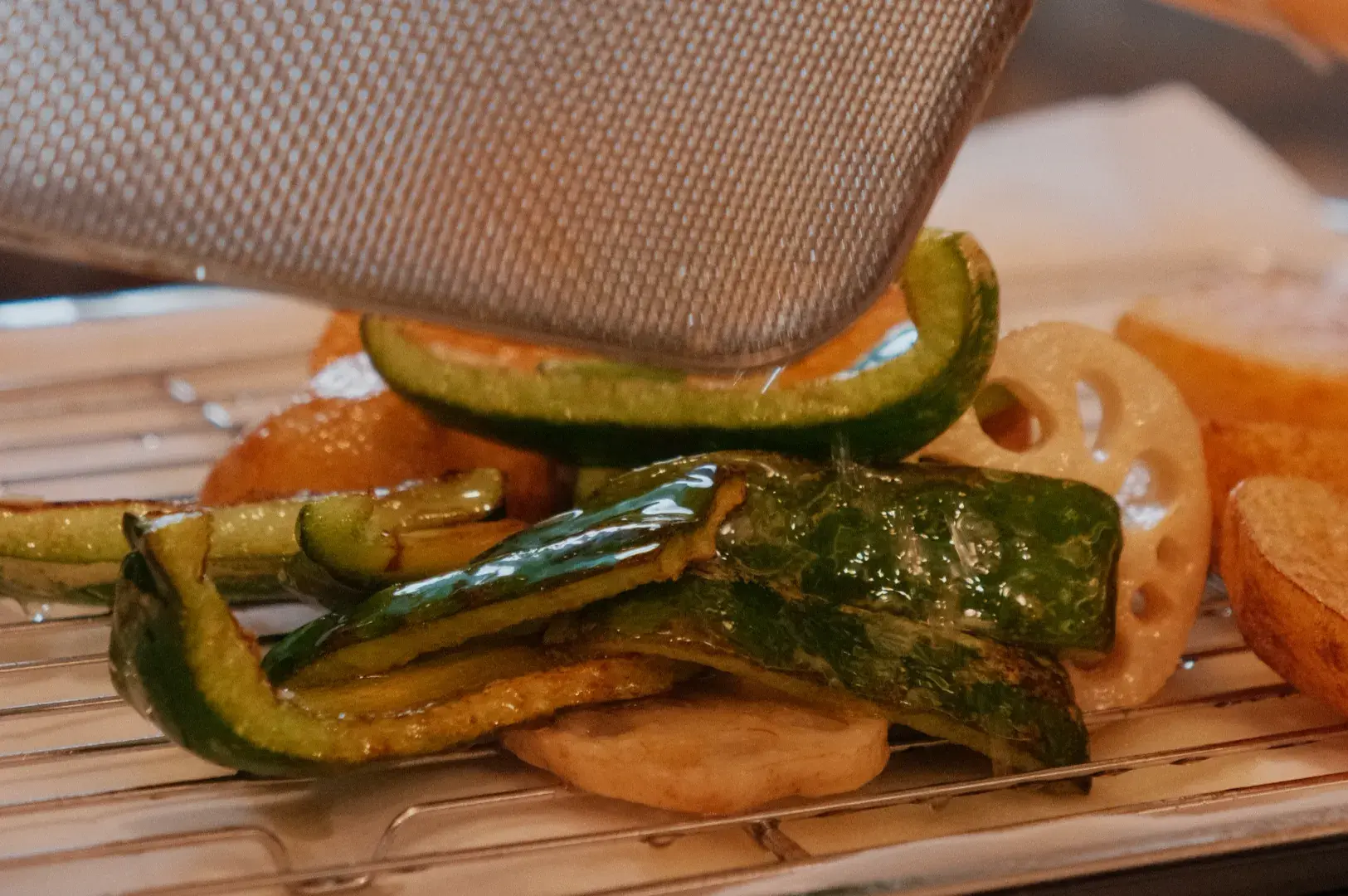
What we love most about this style is how much attention it gives to vegetables. At our restaurant, we deep fry bell pepper, lotus root, aubergine and potato, each prepared with Japanese cutting methods that shape the texture and help the pieces cook evenly. The lotus root stays crisp, the aubergine turns silky, and the potato becomes soft and golden. They sit beside chicken that has been simmered until tender in rich, aromatic curry soup.
For us, this is how a regional dish earns its identity: through care for ingredients that grow well in the place it comes from.
Why We Eat Curry Differently in Hokkaido
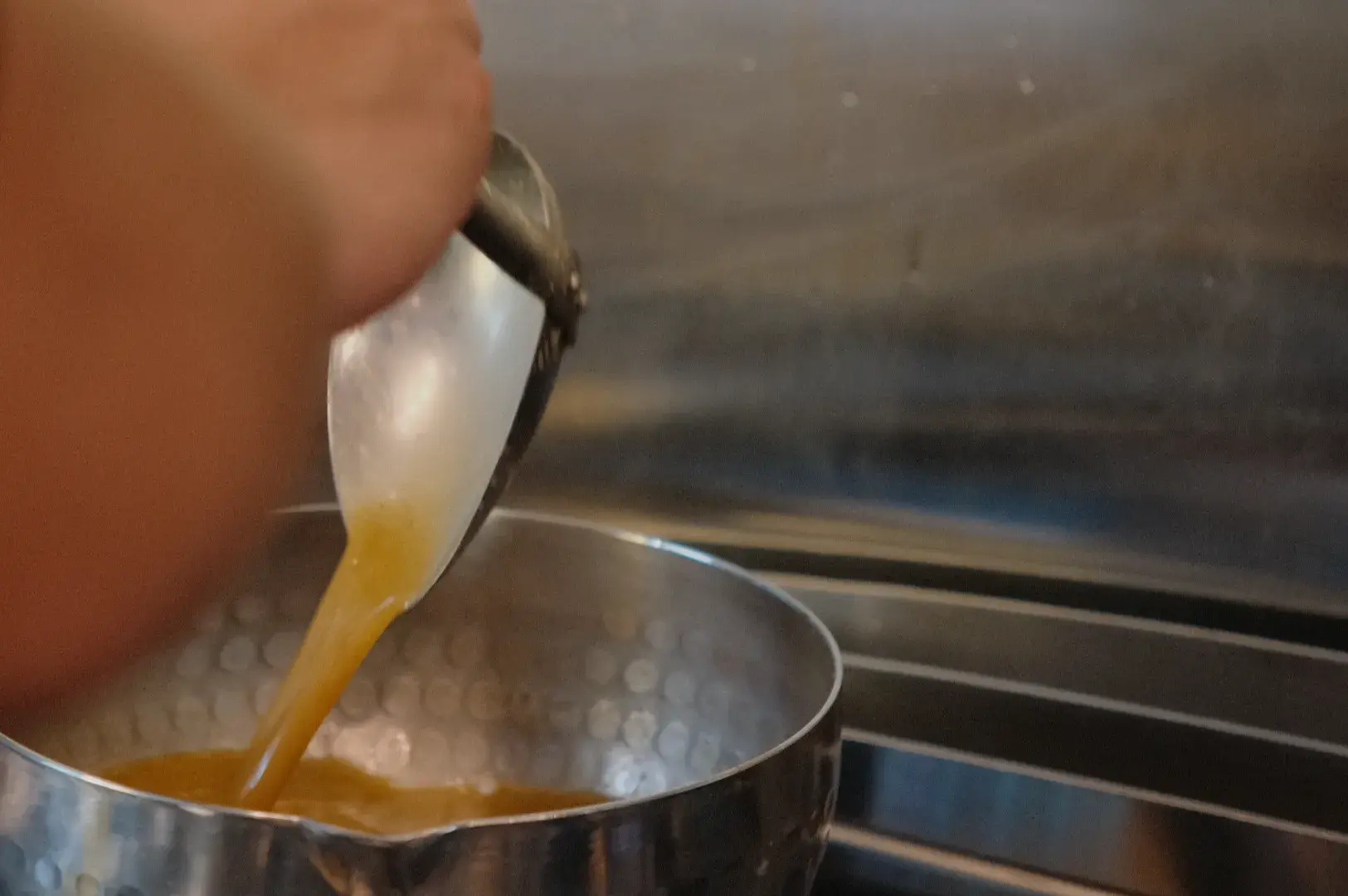
When we invite guests to eat curry in the Hokkaido way, we start by asking them to slow down. The broth is meant to be tasted first, on its own, so that the spices reveal themselves. Then the vegetables, then the chicken, and then the rice, spooned in a little at a time. The meal unfolds in stages rather than arriving as one uniform plate.
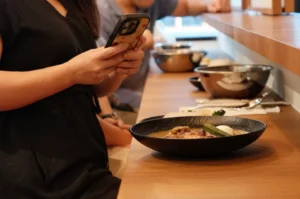
We also think about the room around the food. Our space is warm and unfussy, and from 6 PM it transforms into a cozy izakaya, where the same flavors sit comfortably beside drinks and conversation. That dual personality mirrors the way curry works in Japan: it is a lunchtime staple, an evening comfort and a late-night treat, depending on who is eating it and when.
Curry restaurants across Japan each have their own rhythm, and we welcome that variety. What we hope to offer in Singapore is a faithful picture of one particular face of the dish, shaped by Sapporo and prepared the way people there would recognize. If you are curious about it, you can find us at Soup Curry by Ki-Setsu, where the broth is simmered with the same patience that has defined this tradition.
The Cultural Significance of a Humble Bowl
The cultural significance of curry in Japan lies in how naturally it holds together very different ideas. It is foreign and local, humble and celebratory, simple and endlessly adjustable.
This is also why it feels like more than just a meal. It carries memory, habit and a sense of belonging. People return to it when they want to feel looked after. A spoonful of rice soaked in a flavorful sauce can bring back a school canteen, a family kitchen or a winter evening in the north.
Bringing It All Together
The many faces of Japanese curry culture today show a dish that refuses to stay still. It travels from pot to pouch to pastry, and from Tokyo to Sapporo, absorbing local tastes at every stop. Yet the heart of it never changes. Curry is a comforting dish, made to be shared, and built on care for simple ingredients.
For us, soup curry is our way of honoring that heart. We offer it in Singapore with respect for where it comes from, and with the hope that each bowl feels like a small gift from Hokkaido. Whether you prefer the thick comfort of a home pot, the crunch of a kare pan, or the aromatic depth of a spiced broth, there is a face of Japanese curry waiting for you.