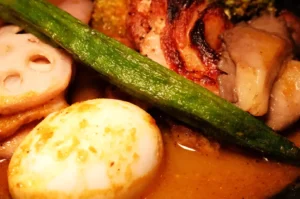
Long before soup curry became the celebrated dish it is today, curry in Japan meant something quite different. It meant a thick, glossy roux, slow simmered until it clung to rice like a blanket. Sweet, starchy, and deeply comforting in its own right. So when cooks in Hokkaido decided to rebuild curry from the ground up, they were not simply thinning out an existing recipe. They were questioning every assumption that Japanese curry had been built on for decades.
This is the story of what actually changed, and why those changes matter to anyone who sits down to a bowl of Hokkaido soup curry today.
Starting With the Base: From Roux to Broth
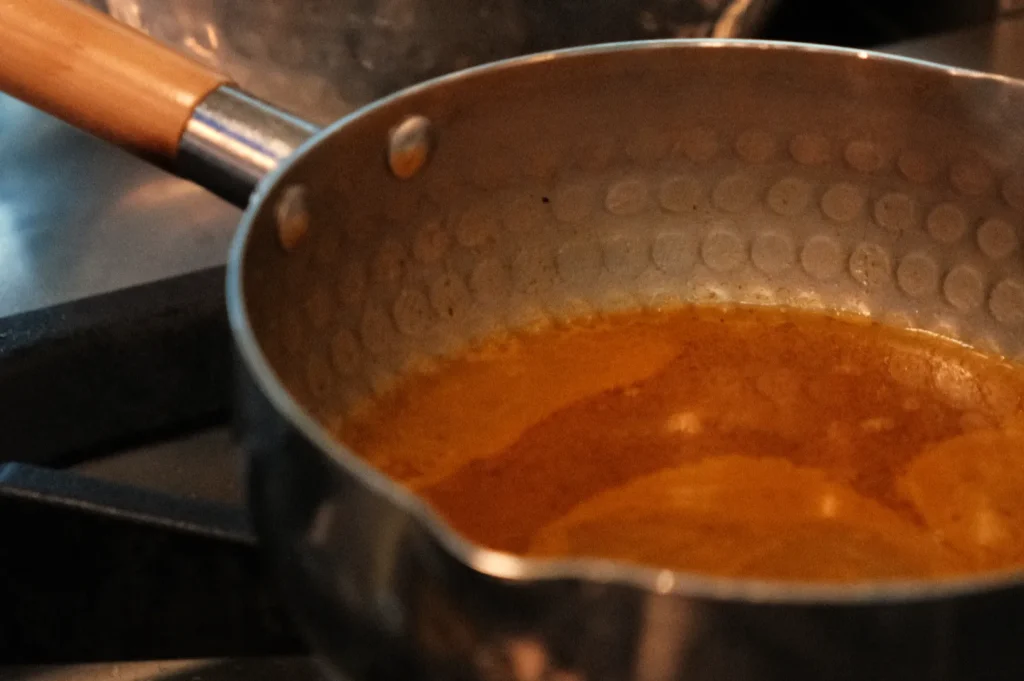
The first and most fundamental shift happened at the very foundation of the dish. Traditional Japanese curry relies on a roux, flour and fat cooked together until thick, then blended with stock and left to reduce until it coats a spoon. That thickness is the entire point. It is a sauce built to sit heavily on rice.
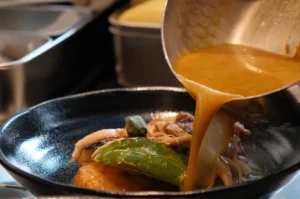
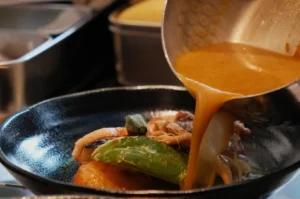
Hokkaido cooks abandoned the roux altogether. In its place, they built a clear, savoury broth using chicken bones and chicken stock as the backbone, then layered in curry powder, garam masala, and tomato paste for depth. The result is a soup that pours rather than clings, with a lightness that lets individual spices announce themselves instead of blurring together into one thick, sweet note.
This is not a minor tweak. Removing the roux changes how the dish behaves in the mouth, how quickly it cools, and how the other ingredients need to be prepared to work with it. Every other change that follows was made necessary by this first decision.
Rethinking How Vegetables Are Cooked
Once the base became a thin broth instead of a thick sauce, the vegetables could no longer be treated the way they were in classic curry. In a roux based curry, vegetables are typically simmered directly in the sauce until soft, taking on its colour and losing much of their own character in the process.
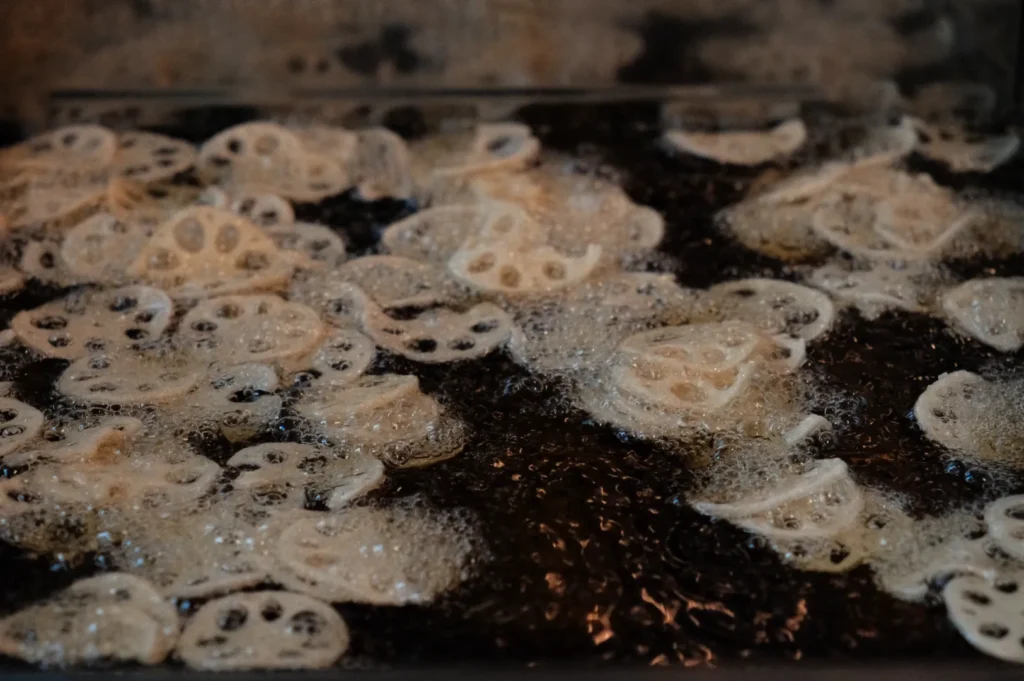
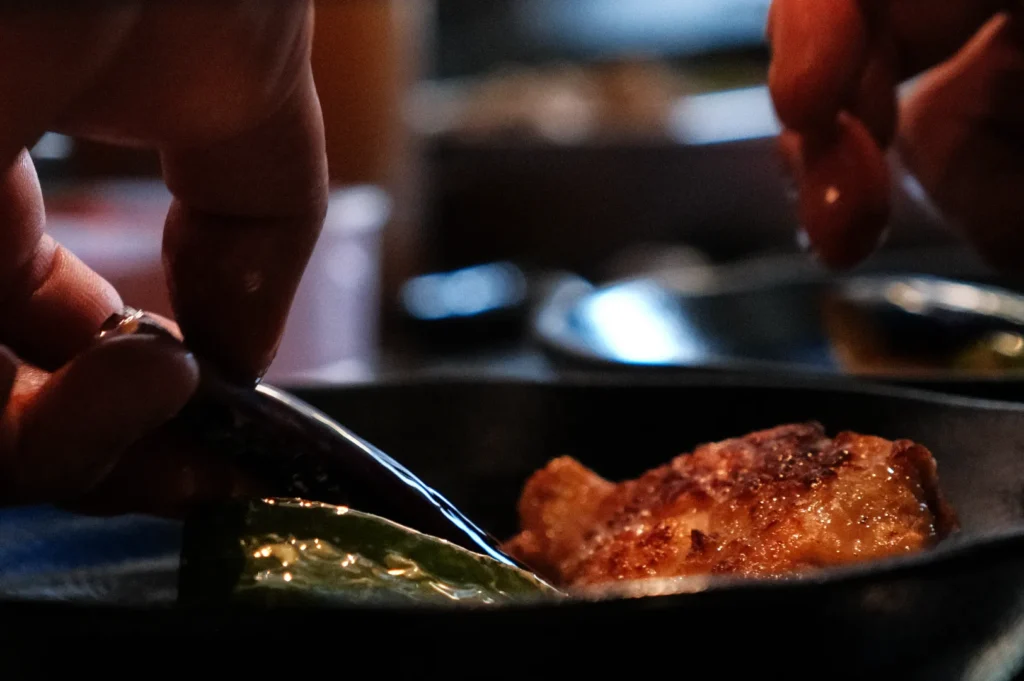
Hokkaido cooks took a completely different path. Rather than stewing vegetables in the broth, they turned to su-age, a Japanese frying technique in which vegetables are flash fried without batter. Bell peppers, lotus root, aubergine and potato are fried quickly at the right temperature until their natural colours become more vivid, not duller. The vegetables are then set aside on a rack lined with paper towel to keep their texture crisp before being placed into the soup at the very end.
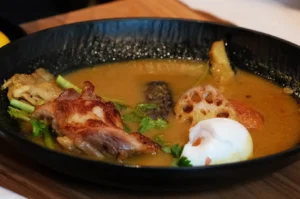
The effect is striking. A bowl of soup curry does not look like a stew where everything has melded into a single hue. It looks like a still life, with pumpkin, lotus root and pepper each holding their own shape and colour, sitting in the broth rather than dissolved into it. We follow this same principle in our own kitchen, treating each vegetable as a separate element to be cooked on its own terms before it ever meets the soup.
A New Relationship Between Rice and Sauce
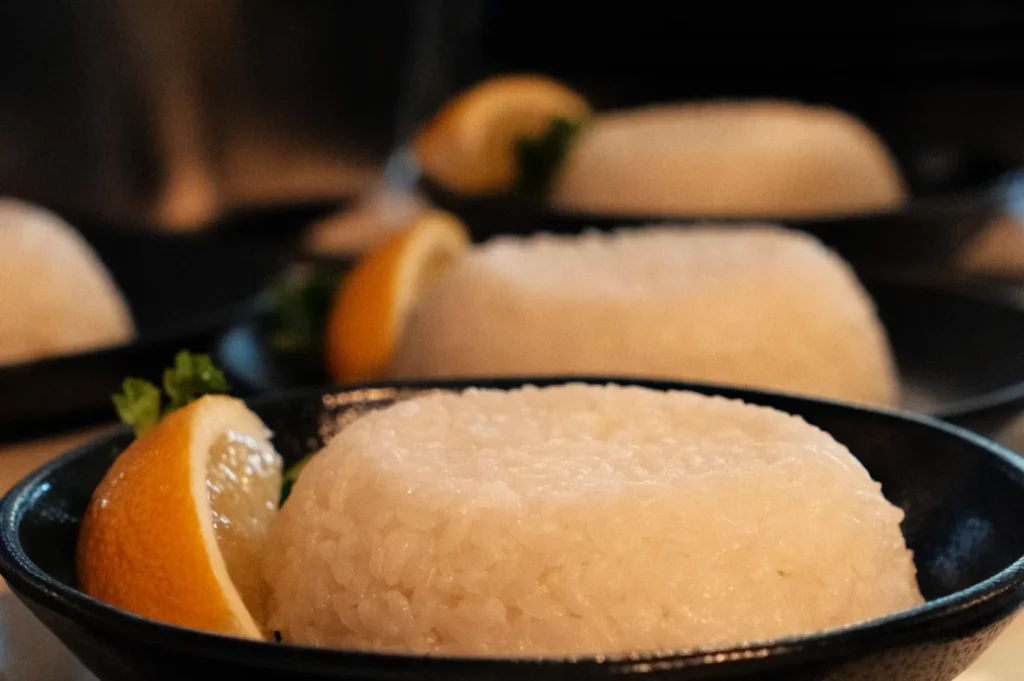
In classic Japanese curry, rice and sauce are served together, the curry poured directly over a mound of rice so that the two become one dish on the plate. Hokkaido cooks changed this relationship entirely. Soup curry is served with the rice on the side, in its own bowl, untouched by the broth until the diner chooses to combine them.
This might seem like a small detail, but it reflects a genuine shift in how the dish is meant to be eaten. Keeping the rice separate means the diner controls the pace and the ratio. A spoonful of soup on its own, a bite of rice, perhaps rice dipped briefly into the broth rather than drowned in it. The dish becomes interactive rather than fixed, and the rice keeps its own texture from the first mouthful to the last.
Why This Matters for Flavour
Because the broth in soup curry is thinner and more aromatic than a thick roux, keeping it separate from the rice also protects its clarity. Pour a thin, spiced broth over rice and let it sit, and the rice will absorb the liquid and dull the spice profile within minutes. Serving them apart preserves the integrity of both.
Adjusting the Spice Profile for a Lighter Base
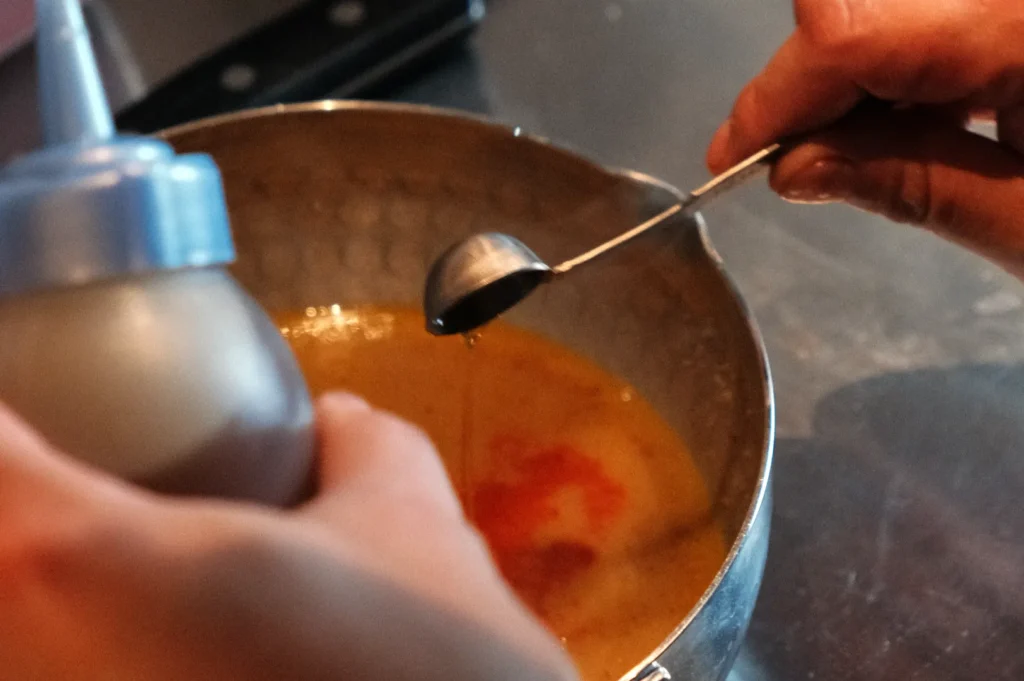
Thick curry sauces can carry heavier, sweeter spice blends because the fat and starch mellow everything out. Strip away that thickness and the spices have nowhere to hide. Hokkaido cooks had to recalibrate their spice work for a base that would show every note clearly.
The result leans on layered aromatics rather than blunt sweetness. Onions, garlic and ginger are caramelised slowly in a heavy bottomed pot to build a rounded, savoury foundation, before curry powder and garam masala are introduced to bring warmth without heaviness. Meanwhile, tomato paste adds a gentle acidity that keeps the broth bright rather than muddy.
The final soup is spiced with intention rather than simply sweetened, aromatic and warming in a way that a thick curry sauce, by its very nature, cannot quite achieve.
The Protein Had to Change Too
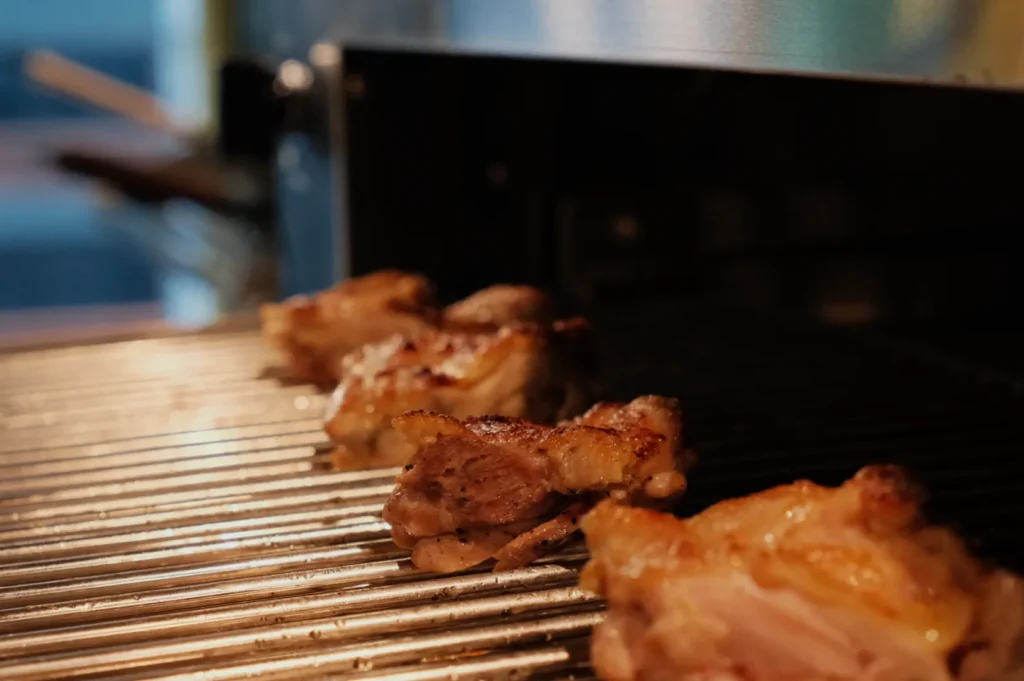
Chicken remains a natural partner for soup curry, much as it was in classic curry, but how it is prepared shifted alongside everything else. Rather than simmering for hours directly in a thick sauce until the meat falls apart, chicken legs in soup curry are cooked to stay tender and intact, then rested on that same wire rack before being added to the finished broth. The aim is a piece of chicken that still has structure and bite, not one that has surrendered entirely to the sauce around it.
This mirrors the same logic behind the vegetables. When the base is thin and clear, every component in the bowl is visible and distinct, so each one has to be cooked with its own final texture in mind rather than left to soften indefinitely in a simmering pot.
Why Hokkaido Cooks Made These Changes At All
None of this happened by accident. Hokkaido’s long, cold winters created a demand for something warming that still felt fresh and vivid, a contrast to the heavier, richer curry that had become standard across the rest of Japan. Sapporo soup curry emerged in the early 1970s as this local answer, eventually becoming one of the region’s most recognised soul foods.
What began as a regional variation grew into something closer to a full reconstruction of the dish. The broth replaced the roux. The frying technique replaced the simmer. The separate rice replaced the poured sauce. Each change solved a problem created by the change before it, and together they produced a dish that shares curry’s spice heritage but very little of its texture or presentation.
Bringing These Changes to Singapore
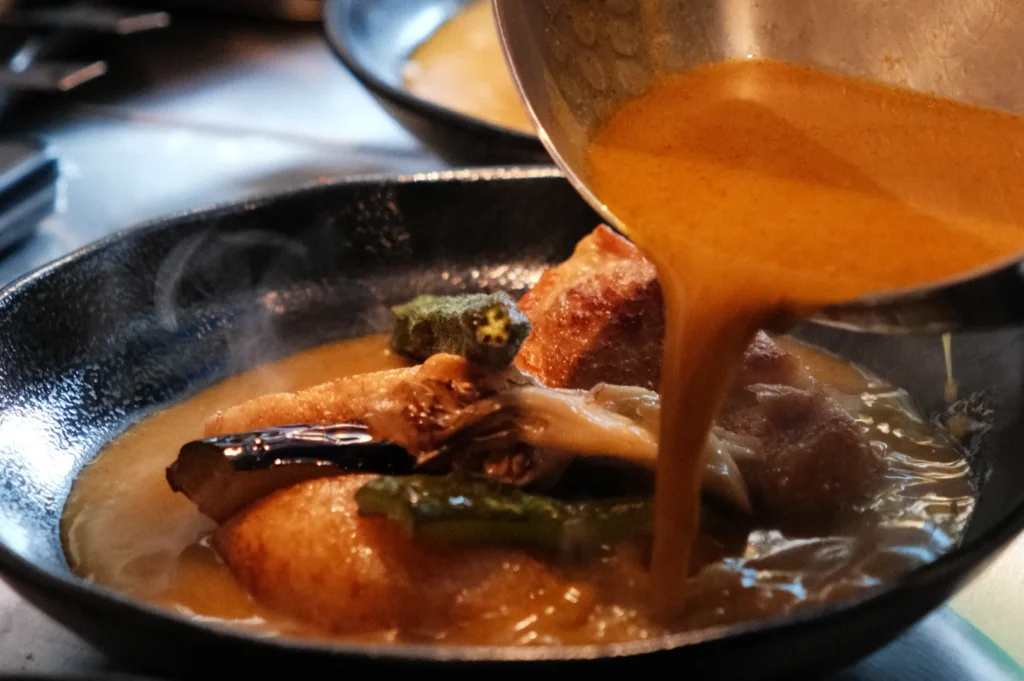
At Soup Curry by Ki-Setsu, we follow this same lineage of decisions rather than treating soup curry as simply a thinner version of familiar curry. Our broth is built from chicken bones and chicken stock, our vegetables are fried using the su-age method to keep their colour and bite, and our chicken is rested rather than over-simmered. Rice is served separately, exactly as it would be in Sapporo, so guests can find their own rhythm with the dish.
We are Singapore’s first restaurant dedicated entirely to this style, and by the evening, our dining room shifts into a cosy izakaya, offering small plates and a relaxed setting for those who want to linger over their bowl a little longer. It is a small window into how food culture in Hokkaido actually works, where soup curry and izakaya dining often share the same easy, unhurried evening.
The Bowl Tells the Story
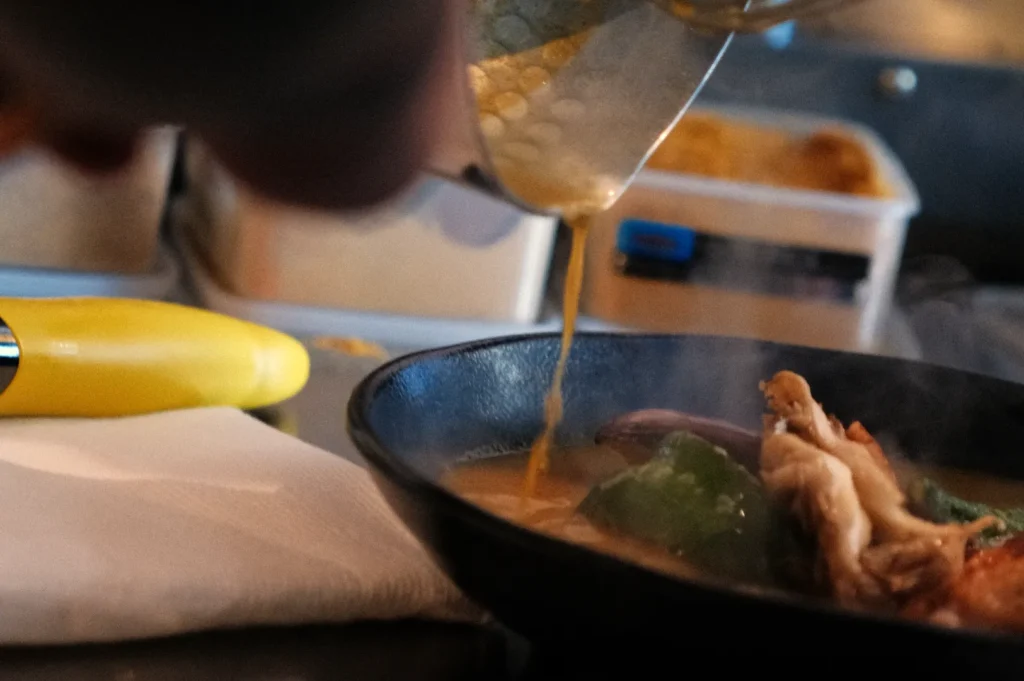
Every element inside a bowl of soup curry carries a decision that Hokkaido cooks made deliberately, not by accident. The broth over the roux. The fried vegetable over the stewed one. The separate rice over the poured sauce. Once you know what changed and why, the dish stops looking like a lighter curry and starts looking like what it actually is: an entirely different way of thinking about what curry could be.