The evolution of Japanese curry is not a straight line. It is more like a river that keeps finding new paths, picking up new textures and flavours as it moves further from its origin. Most people who think of Japanese curry picture curry rice: a thick, mildly sweet roux (thickened sauce base) poured generously over white rice, carrots and potatoes bobbing somewhere underneath.
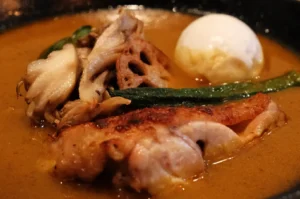
Japanese curry rice, in its many forms, has become a unique Japanese dish unlike anything found elsewhere in Asia, though that is only one chapter. Further north, in Hokkaido, curry took a different turn entirely, trading the roux for a clear, spiced broth known as soup curry. At our restaurant, we spend a lot of time thinking about that turn, because it is the one we chose to follow.
From India to the British Navy: The Roots of Curry Powder
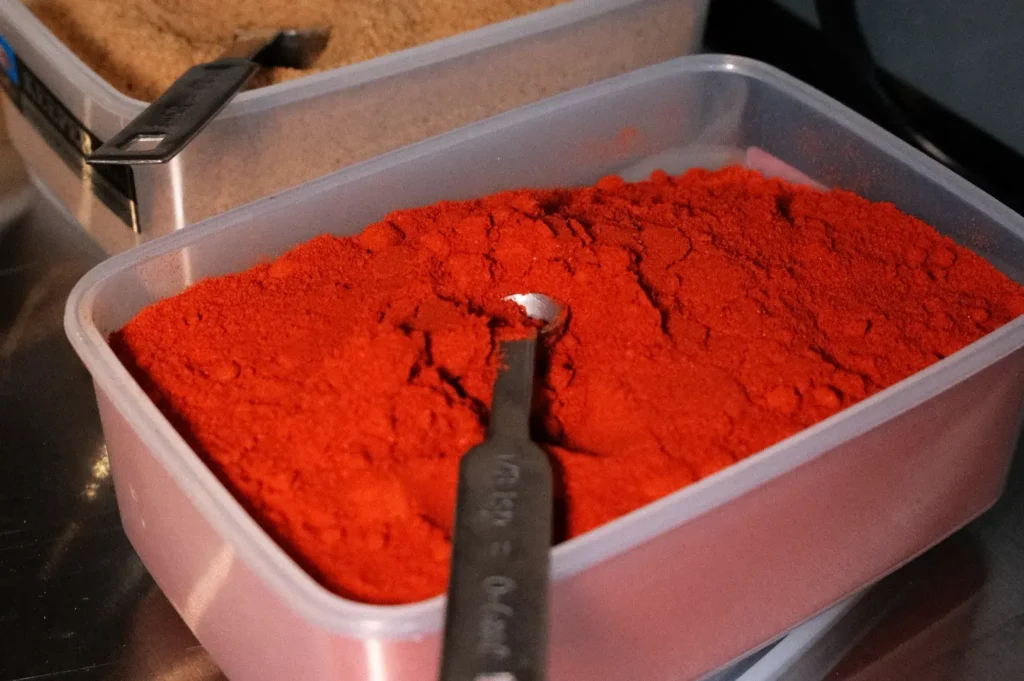
To understand where Japanese curry is heading, it helps to know where curry appeared from in the first place. Curry, as a general term for a spiced stew, comes from Indian cuisine, where regional spice blends have been used to flavour rice, meat and vegetables for centuries. It did not travel to Japan directly from India, though. It arrived by way of the British navy, and curry was introduced to Japan largely through military routes rather than trade in spices alone.
British colonial rule in India exposed British sailors and officers to Indian curry, and they brought a simplified version home, seasoned with a pre-mixed curry powder rather than fresh, hand-ground spices. Long before curry rice existed as a household staple, sailors already ate curry as a practical shipboard meal, since it kept well, added flavour to whatever vegetables and meat were on hand, and required no specialised knowledge of Indian cuisine to prepare.
How the Meiji Era Welcomed a New Spice
Japan opened its ports to foreign trade and ideas during the Meiji era, and with that openness came a wave of interest in Western food. The Japanese navy, closely modelled on the British navy at the time, adopted what sailors simply called curry as a shipboard meal for much the same reasons the British had: it was filling, it used basic vegetables like carrots, potatoes and onions, and it could be made in large quantities without much fuss.
This is often referred to as navy curry, and it marks the true beginning of curry’s Japanese story. From there, curry moved off the ships and into ordinary homes, setting the stage for the next transformation.
The Roux Revolution: Curry Rice Becomes a National Dish
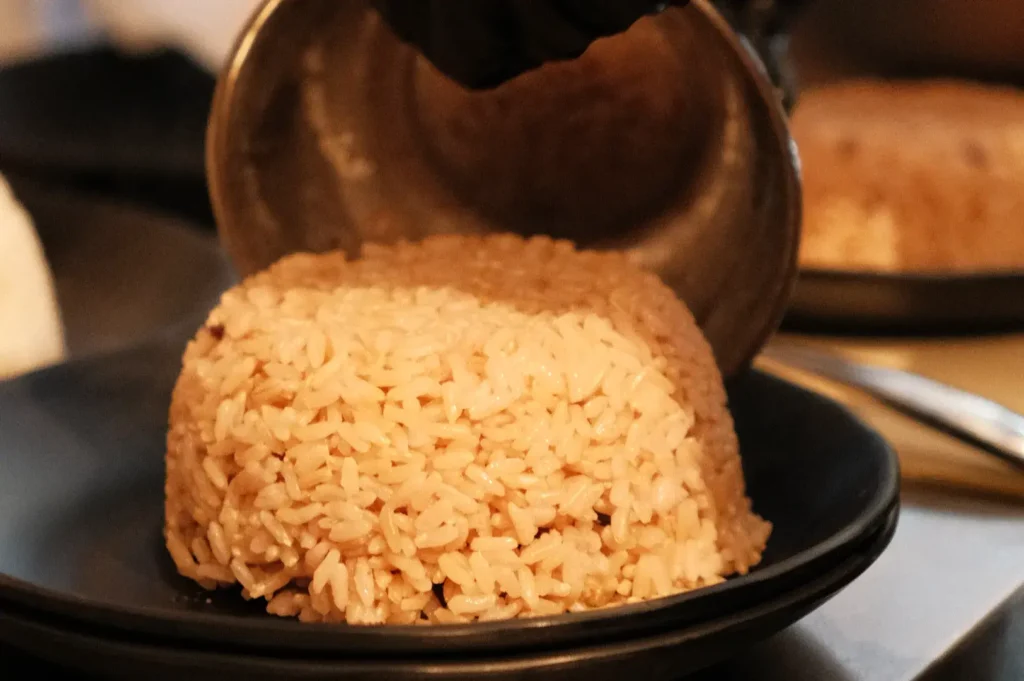
Once curry reached Japanese kitchens, home cooking began to reshape it. Rather than relying on loose curry powder, Japanese food companies developed solid curry roux, blocks of flour, fat and spices that could be dissolved into a pot of simmering stock.
This innovation made curry approachable for anyone, and it is arguably the single biggest reason curry rice, sometimes still called rice curry in older households, became such a favourite dish across the country. Unlike chicken tikka masala, which builds its identity around a rich cream and tomato base, Japanese curry took its character almost entirely from the roux itself.
The Rise of Ready-Made Roux and Home Cooking
Food companies played a defining role here, with products introducing a touch of apple and honey sweetness that softened the spice for the Japanese palate. This mild roux became the version most associated with school lunch menus, family dinners and comfort food generally. Home cooks were free to add meat of their choice, whether chicken, beef or pork, depending on what the household could afford, and though many spices go into a typical roux blend, the overall effect stays mellow rather than fiery. Curry rice, made this way, is arguably Japan’s most recognisable home cooked dish, and for many households it remains a weekly staple built around local ingredients that were easy to find in any Japanese market.
A few features distinguish this roux-based style:
A thick, glossy curry sauce that clings to rice rather than pooling around it
A noticeably milder spice profile than Indian curry, designed for a broader palate
Reliance on basic vegetables: carrots, potatoes and onions, with chicken meat, beef or pork added depending on the household
A strong association with school lunch and everyday home cooking rather than restaurant dining
This is the version most people mean when they say “Japanese curry,” but it was never the final form.
Beyond the Roux: Japanese Curry Finds New Forms
Once curry rice became embedded in Japanese cuisine, cooks began adapting the same base flavours into other formats. This is where the evolution of Japanese curry becomes genuinely interesting, because the roux itself starts to disappear from some of these dishes, replaced by other textures and delivery methods entirely. These adaptations owe as much to British curry traditions as they do to homegrown Japanese ingenuity, layering familiar curry spices into noodle broths and bread fillings rather than a poured sauce.
Curry Udon and Curry Bread: Everyday Reinventions
Curry udon takes the familiar curry flavour and pairs it with thick noodles in a lighter, more soup-like sauce, closer in texture to a broth than a roux. Karē udon, as it is known, is commonly served in noodle shops and home kitchens alike, sometimes alongside simple side dishes such as pickles, offering the same warming spice in a completely different bowl. Karē pan, or curry bread, goes further still, encasing a curry filling inside deep fried or baked dough, turning curry into a portable snack rather than a plated meal.
Other adaptations layer curry into katsu dishes, rice bowls and even fusion dishes that borrow ideas from Worcestershire sauce and soy sauce to deepen the savoury base. Curry has always lent itself to being made in one big batch and eaten over several days, and each of these forms shows that Japanese style curry was never treated as a fixed recipe. It was treated as a flavour profile, flexible enough to be reshaped again and again depending on what people needed from a meal, whether that was speed, comfort or something to eat on the go.
Going North: How Hokkaido Rewrote the Recipe with Soup Curry
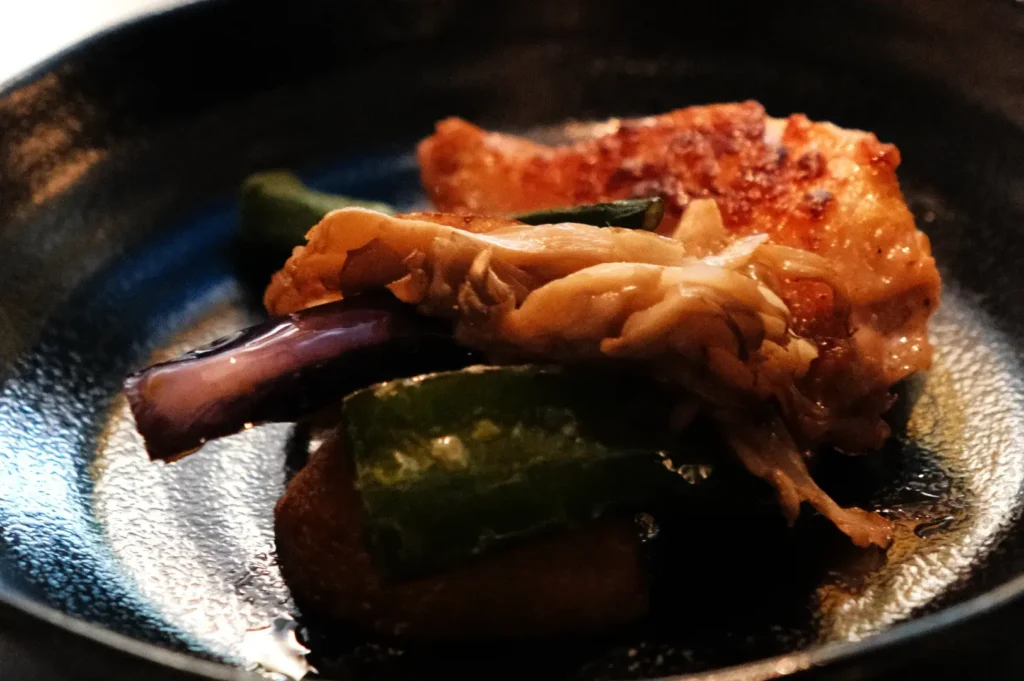
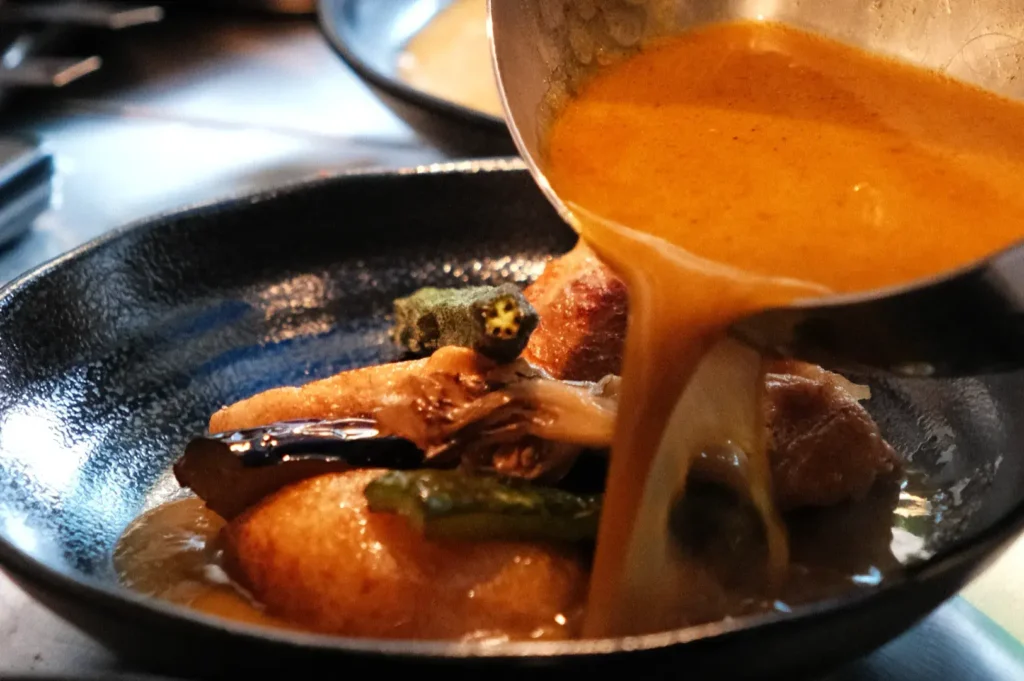
The most significant departure from curry rice did not happen in Tokyo or Osaka. It happened in Sapporo, in Hokkaido, where a distinctly different approach to curry took shape. Instead of thickening the sauce into a roux, Hokkaido cooks kept it as a clear, deeply spiced soup, closer in spirit to the original spiced stew that curry began as, but transformed into its own distinctly Japanese dish with a regional identity of its own.
Why Soup, Not Roux
Hokkaido’s cold climate and strong local produce culture shaped this shift. A soup bowl full of hot, fragrant broth suits a region known for long winters far better than a thick curry sauce ever could. Vegetables are typically left larger and more distinct, rather than simmered down into the sauce, letting the character of each ingredient come through.
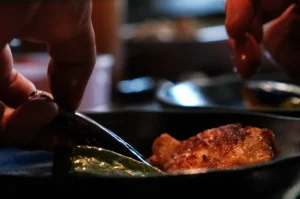
At our restaurant, we prepare vegetables such as bell pepper, lotus root, aubergine and potato using Japanese cutting techniques and deep fry them separately, so they arrive vivid and crisp rather than soft and blended into a roux. Chicken, cooked slowly in the aromatic soup itself, takes on the spice from the inside rather than being coated by a thick sauce. Learning how to make curry this way takes patience, since the broth is built in stages rather than thickened all at once.
The table below sets out how this Hokkaido style compares with the more familiar roux-based version many people already know.
Feature | Curry Rice (Roux Style) | Hokkaido Soup Curry |
|---|---|---|
Sauce texture | Thick, roux based | Thin, clear, spiced broth |
Vegetable preparation | Simmered into the sauce | Kept whole or large, often fried separately |
Spice character | Mild, rounded, family friendly | Layered, aromatic, closer to original spice blends |
Typical setting | Home cooking, school lunch | Restaurant dining, regional speciality |
Serving style | Poured over white rice | Served in a bowl, rice on the side |
This is not a rejection of curry rice. It is simply a different answer to the same question of how curry should be eaten, shaped by a different region’s climate, produce and taste. Between them, curry rice and soup curry represent two of the main forms curry has taken since it first landed on Japanese shores.
What Soup Curry Says About the Evolution of Japanese Curry
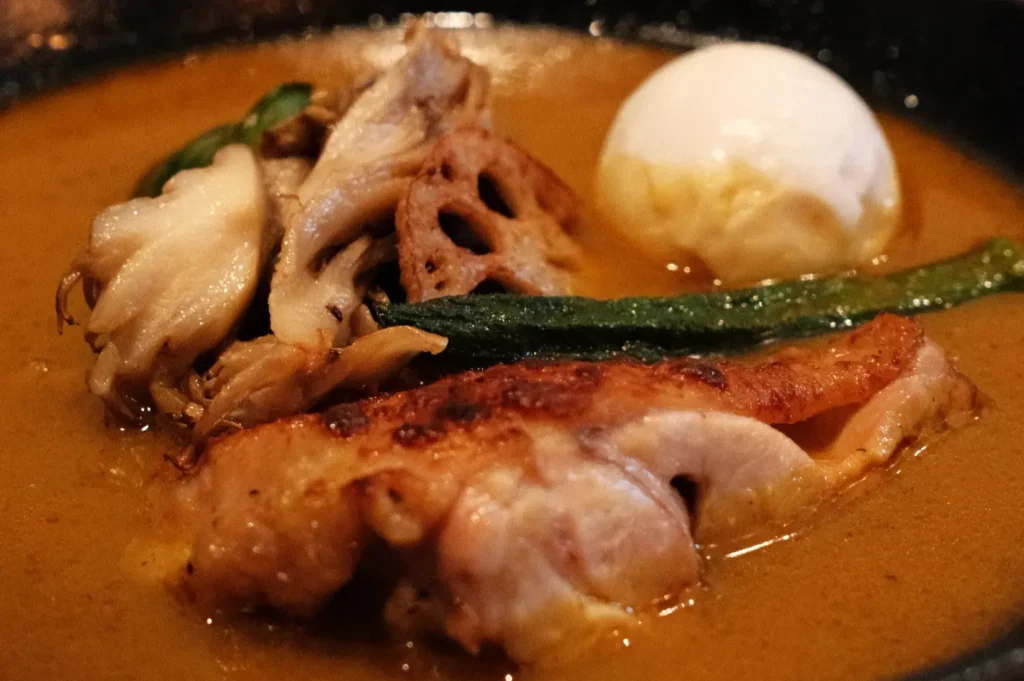
Soup curry demonstrates that Japanese curry was never destined to stop at the roux. The dish absorbed influences from Indian curry and Britain’s colonial kitchens, was reshaped by the Japanese navy for practicality, softened by home cooks and style roux products into a beloved national comfort food, then stretched into curry udon and curry bread as everyday variations. Hokkaido’s soup curry represents the furthest point of that journey so far, returning to a lighter, spicier, broth based format that still carries every influence that came before it.
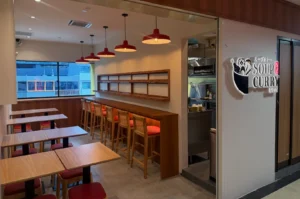
When we serve soup curry at Soup Curry by Ki-Setsu, we are not offering a novelty. We are presenting the version of Japanese curry that grew furthest from its roux based cousin while remaining unmistakably part of the same family. The layered spices, the distinct vegetables, the hearty meal built around a warming bowl rather than a poured sauce, all of it reflects Hokkaido’s particular answer to a dish that has been evolving in Japan for well over a century.
Understanding this history changes how the dish tastes. Once you know that curry travelled from India, through the British navy, into Japanese home cooking and school lunch menus, and eventually north into Hokkaido’s soup based tradition, a bowl of soup curry stops being just another Japanese style dish. It becomes a specific dish with its own place in a much longer story, one that shows curry in Japan was always evolving, and still is.