Every cuisine that travels faces the same quiet temptation. Someone suggests the dish would sell better if it were a little sweeter, a little thicker, or a little closer to what diners already know. We have heard these suggestions many times, and we have politely declined most of them.
At our restaurant, we think of our cooking as an accent rather than a translation. A translation swaps each word for its nearest equivalent and often loses the meaning on the way. An accent keeps the original words intact and lets them be spoken in a new place. That is how we approach Hokkaido soup curry in Singapore. The dish stays true to Sapporo, and only the surroundings change.
Below, we explain the parts we refuse to localise, the few things we gladly adapt, and why we believe guests deserve the real thing.
Why Accent Matters More Than Translation
When a dish is translated, it is usually flattened. The edges that made it distinctive are sanded down so that nobody finds it unfamiliar. The result is food that offends no one and is remembered by no one.
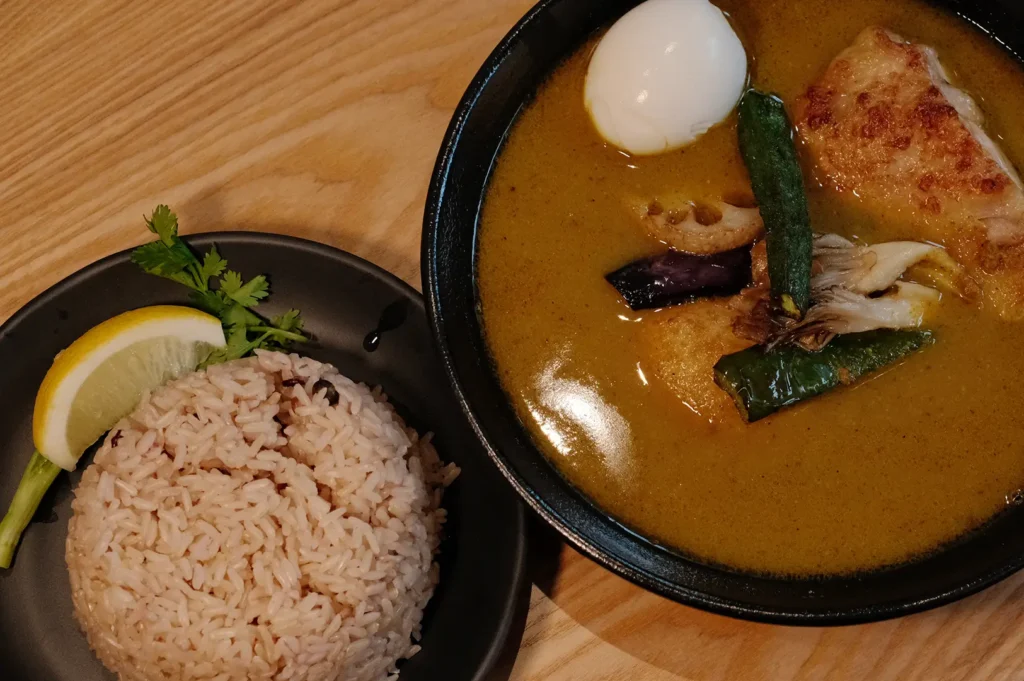
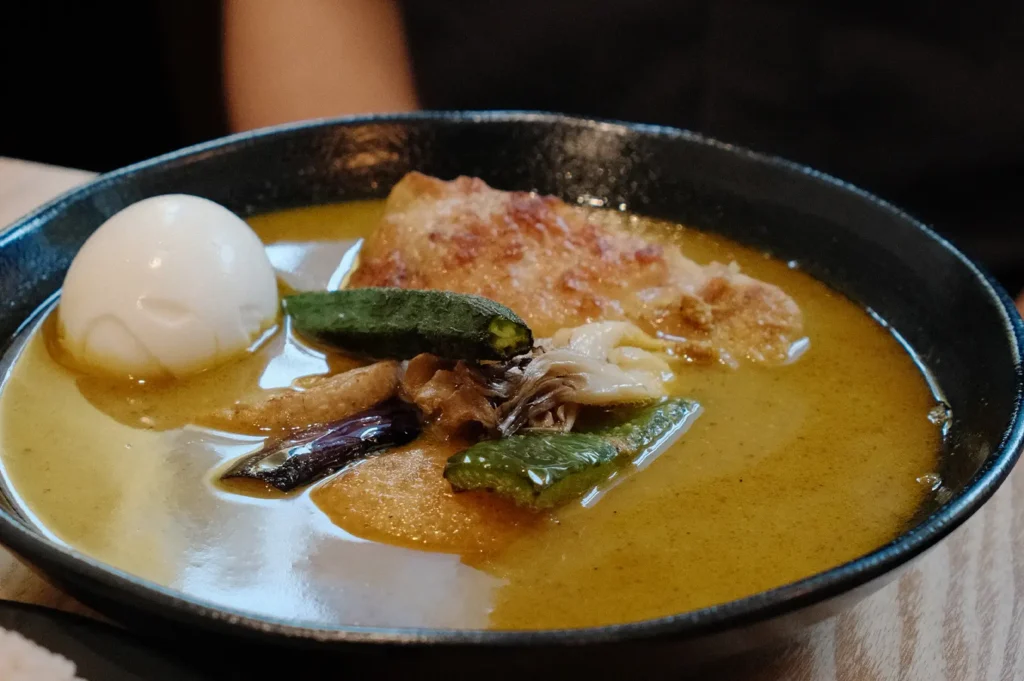
Soup curry from Hokkaido is distinctive because of those edges. It is a thin, aromatic, deeply spiced soup served with large pieces of vegetables and tender protein, eaten with rice on the side. It is not a stew and it is not a thick sauce. Anyone expecting a heavy curry gravy will find something quite different, and that difference is the whole point.
Guests in this city are well travelled, adventurous and quick to notice when something has been quietly watered down. Authentic soup curry in Singapore does not need to apologise for being itself. It needs to be explained warmly and served well.
The Soup We Will Not Soften
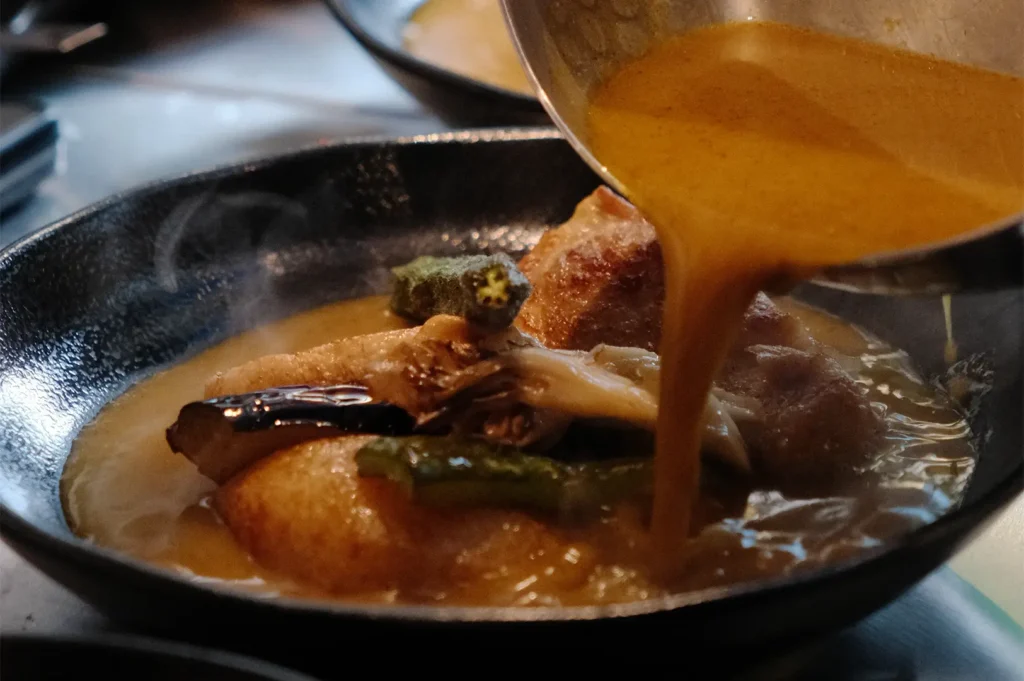
The soup is the heart of the bowl, and it is where the pressure to localise is strongest.
Depth Before Sweetness
Many curries abroad lean on sweetness to feel approachable. A touch of fruit, a dose of sugar, or a thickened base can make a curry comforting at first taste, but it also covers the layers underneath. Hokkaido soup curry is built differently. The soup is meant to be savoury and aromatic first, with spice and fragrance unfolding as you eat.
We keep the soup light enough to drink and rich enough to linger. That balance is the signature of the Sapporo style, and it is easy to lose by adding body that was never part of the original. When a guest tastes the soup on its own, we want them to taste the spices and the stock, not a sauce designed to hide them.
Heat That Builds From Within
Spice is another place where a dish can lose its accent. Some kitchens reduce heat until it disappears, while others add chilli on top as a blunt instrument. Neither respects the soup. In authentic soup curry, warmth comes from the spices simmering inside the broth, so the heat feels like part of the flavour rather than an attack on it.
That is welcome even in a climate like ours, where people sometimes assume hot soup is only for cold weather. Anyone who has sat down to a steaming bowl after a long day in an air-conditioned office will tell you comfort has little to do with the temperature outside.
The Vegetables We Refuse to Simplify
If the soup is the heart of the dish, the vegetables are its personality. They are also the first thing a kitchen is tempted to compromise, because fresh vegetables take time, skill and care.
Deep-Fried and Cut with Intention
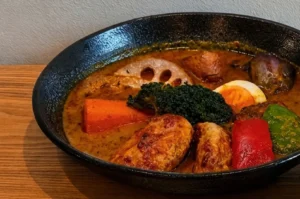
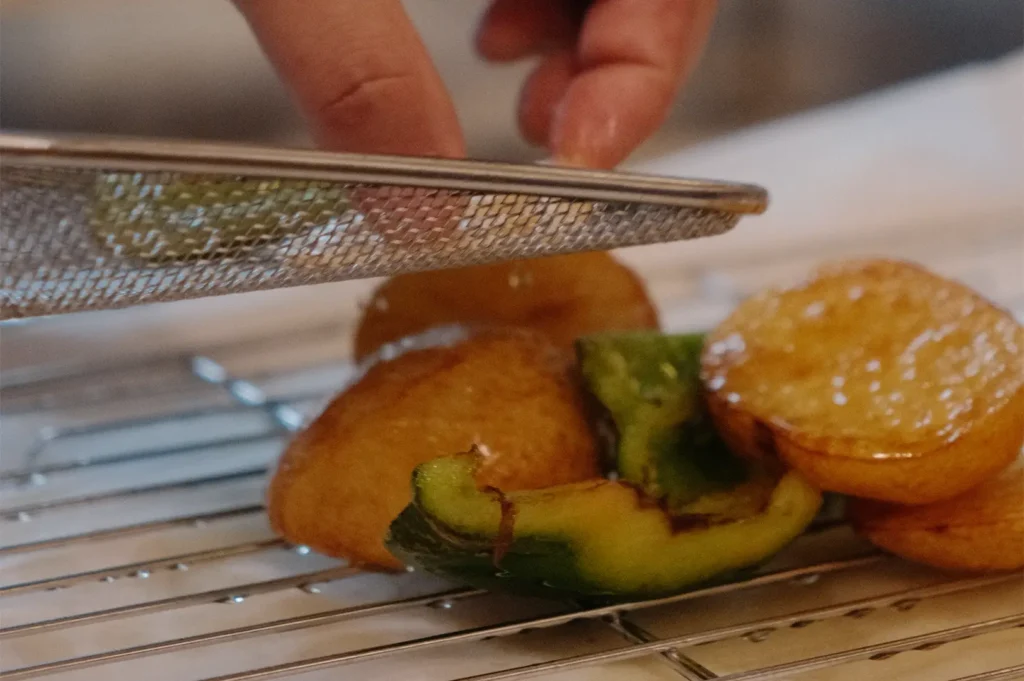
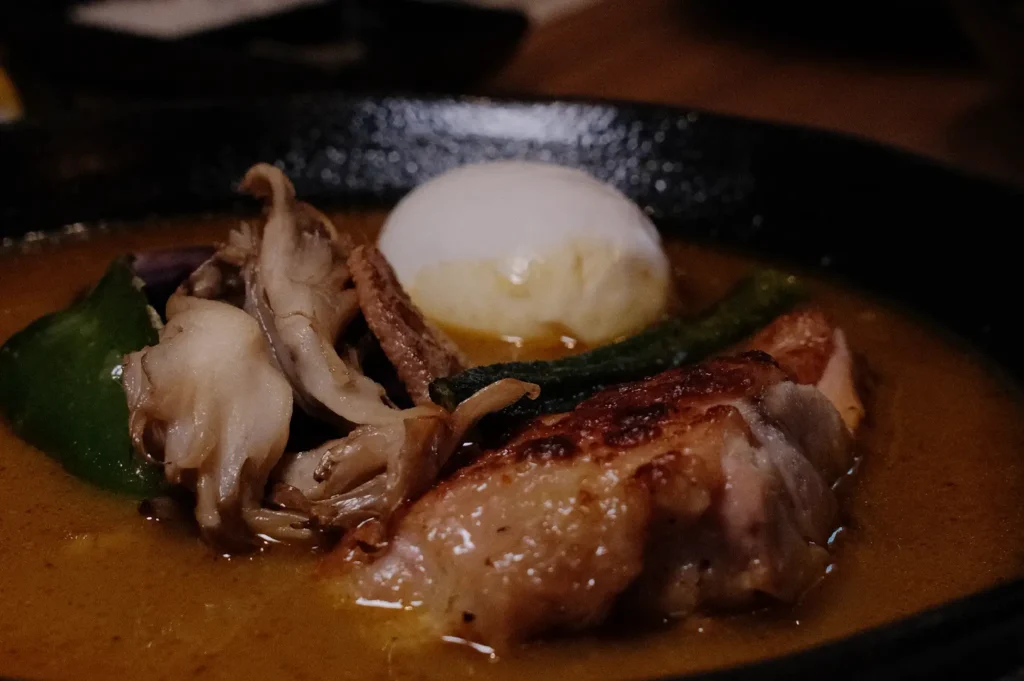
In our bowls, vegetables are not boiled into submission or dropped in as an afterthought. We deep-fry bell pepper, lotus root, aubergine and potato, each prepared with Japanese cutting methods. Frying gives every piece a delicate outer layer and seals in its natural sweetness, so the vegetable holds its character when it meets the hot soup.
Each vegetable plays a different role:
- Bell pepper brings a bright, slightly sweet freshness that lifts the richness of the soup.
- Lotus root adds a satisfying crunch and an elegant look, with its distinctive pattern of holes.
- Aubergine drinks up the broth like a sponge, so each bite carries the flavour of the soup.
- Potato offers a soft, comforting centre that balances the crisper textures around it.
This is not decoration. It is how the dish is meant to eat, and the contrast between textures keeps the meal interesting from the first mouthful to the last.
Why Cutting Method Matters
The way a vegetable is cut changes how it cooks, how it looks and how it feels in the mouth. Japanese cutting traditions pay attention to surface area, thickness and shape so that each piece cooks evenly and presents beautifully. A lotus root sliced thin behaves differently from one cut thick. An aubergine cut with care absorbs soup differently from one chopped carelessly.
We could save time by cutting everything uniformly, but we would lose the quiet craftsmanship that makes the dish feel like it came from Hokkaido. For us, the knife is part of the accent.
The Chicken That Stays Tender
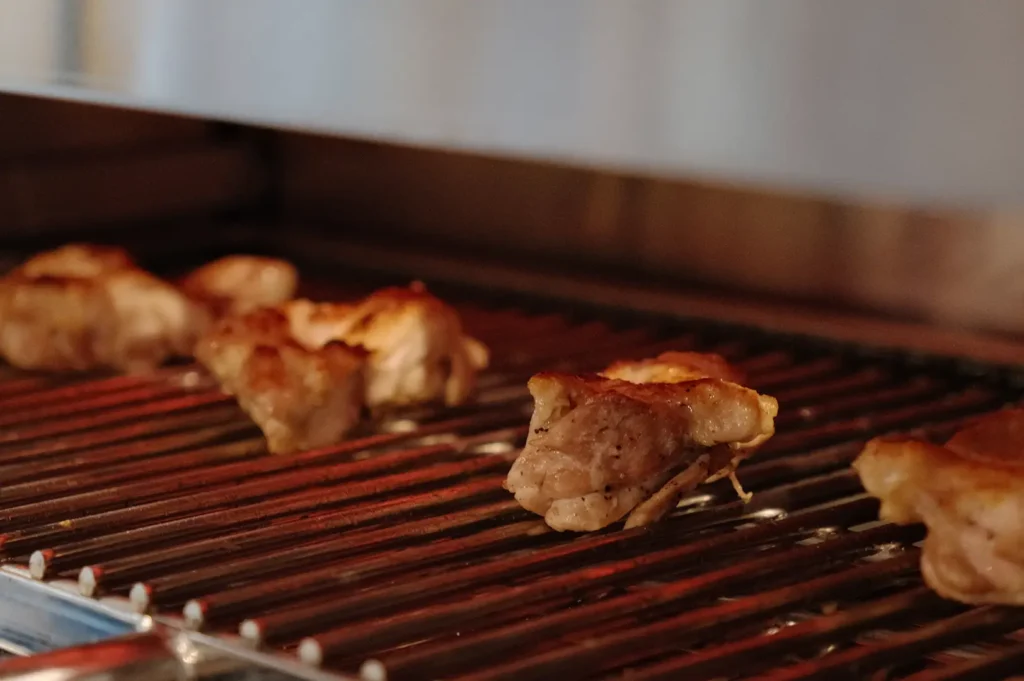
In a thin soup, there is nowhere for poorly cooked meat to hide. If the chicken is dry or tough, the whole bowl suffers.
We cook our chicken until it is tender and let it sit in the rich, aromatic curry soup, where it takes on the flavour of the spices. The meat should fall apart gently under a spoon, not fight back. Many guests tell us this is the moment they realise soup curry is a different experience from the thick curries they know. A good bowl is slow food served simply, and we think guests can taste the patience.
How the Bowl Is Meant to Be Eaten
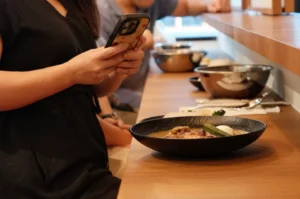
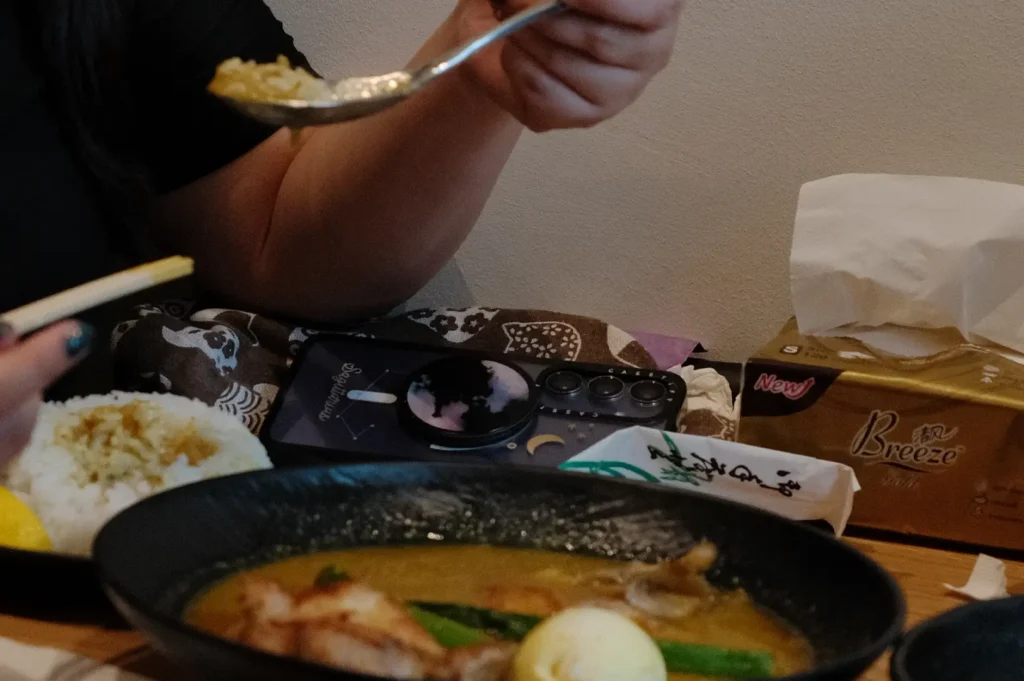
A great deal of the soup curry experience lies in the ritual of eating it. Because the soup is thin, rice is served alongside rather than buried under a sauce. Diners take a spoonful of rice and dip it into the soup, then follow it with a piece of vegetable or chicken. Every mouthful can be a slightly different combination.
We do not rearrange this to look more familiar. It would be easy to pour the soup over the rice, but the separation is intentional. It lets you control how much soup each bite carries, and it keeps the rice from turning heavy and soggy.
When first-time guests look unsure, we simply show them. A short, friendly explanation at the table is far better than changing the dish to suit a misunderstanding.
The Izakaya Evening
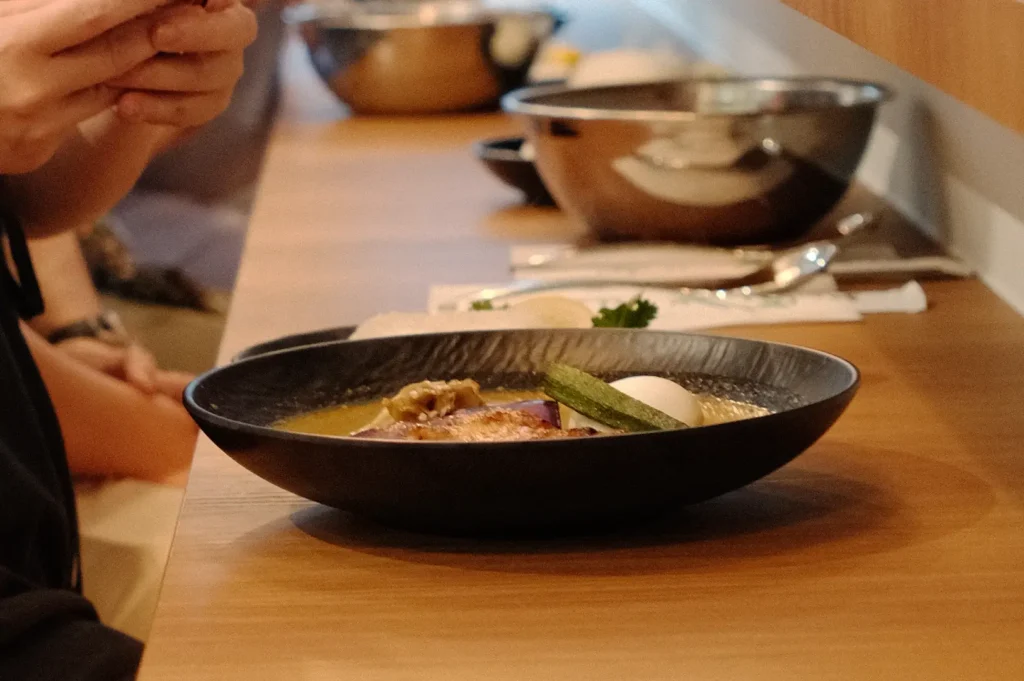
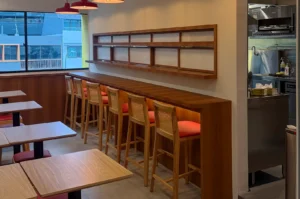
From 6 PM onwards, our restaurant transforms into a cosy izakaya. This is not a gimmick. It reflects how Japanese dining actually works, where the same space can host a quick, satisfying lunch and a slow, convivial evening.
We hold firm on this because the izakaya spirit suits soup curry so well. Soup curry is soul food, the kind of meal that invites conversation, a second helping and an extra moment at the table. In an izakaya setting, a warm bowl sits naturally beside small plates and drinks shared with friends.
What We Do Adapt
An accent is not stubbornness, and we want to be honest about that. We explain more than a restaurant in Sapporo might need to, because many of our guests are meeting soup curry for the first time. We care about sourcing so that vegetables arrive in good condition in our climate. We pay attention to how guests like to customise their meal, because comfort should feel personal.
The test we use is simple. If a change helps someone understand or enjoy the dish, we consider it. If a change alters what the dish actually is, we leave it alone. The first kind of change is hospitality. The second is translation, and it is the one we resist.
Why Guests Reward Honesty
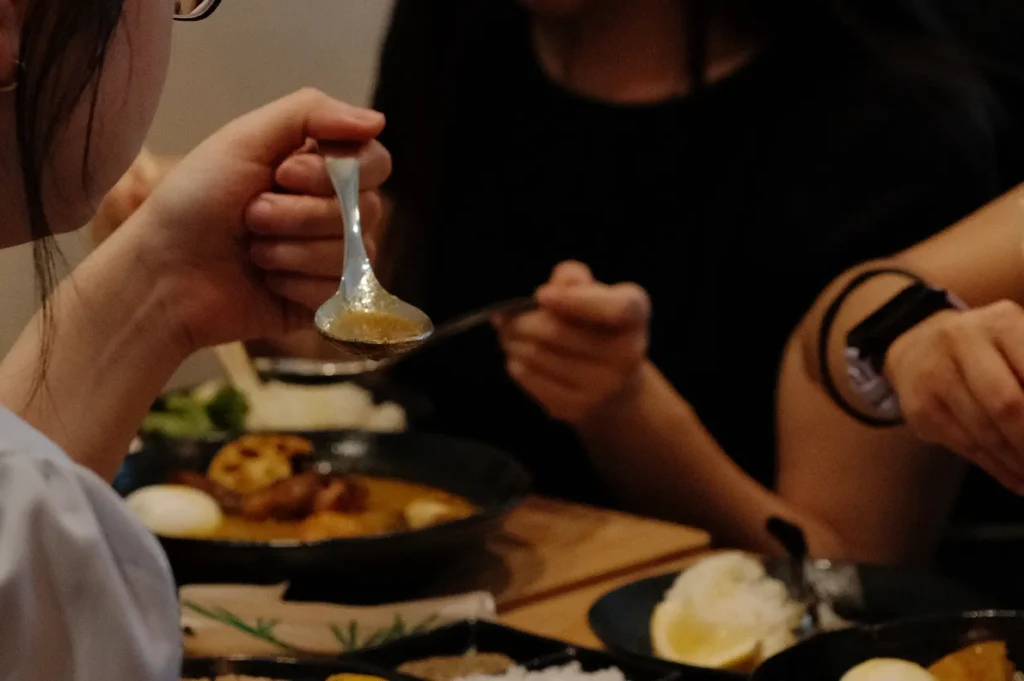
There is a common worry that authentic food will be too unfamiliar for a broad audience. Our experience has been the opposite. People are hungry for food that has a clear identity, a real origin and a story they can taste.
Guests often tell us they came out of curiosity and stayed because the bowl felt honest. They noticed the aroma of the soup, the contrast between the crisp vegetables, and the quiet care in the cutting. That is why we believe Hokkaido soup curry in Singapore can thrive without compromise. The city has a mature, discerning food culture, and it respects cooking that knows what it is.
Keeping the Accent for the Long Term
Preserving a cuisine’s accent takes discipline, particularly when trends shift and tastes change. It would be simpler to chase whatever is popular this season. Instead, at Soup Curry by Ki-Setsu, we ask one question whenever we face a decision: would a cook in Sapporo recognise this as soup curry?
If the answer is yes, we keep it, and if the answer is no, we think again. That question has guided our choices about the soup, the vegetables, the chicken and the way we serve the meal. It has also kept us humble, reminding us that we are guests in the tradition ourselves, borrowing something precious and handing it on with care.
We believe that food travels best when it does not pretend to be something else. A bowl of soup curry can sit comfortably in a Singapore evening, among friends and conversation, while still tasting unmistakably of Hokkaido. It speaks with an accent, and we hope that accent stays clear for a very long time.