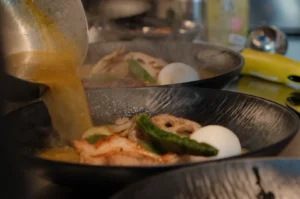
At Soup Curry by Ki-Setsu, we believe that soup curry is more than a dish. It is a feeling, a memory, and a reflection of Hokkaido’s seasons served in a steaming bowl. For many guests in Singapore, soup curry is a discovery. For us, it is a lifelong passion rooted in Sapporo, where this iconic comfort food was born in the early 1970s. At the heart of it all is the soup curry broth, the soul of the dish that carries warmth, aroma, and tradition with every spoonful.
In this article, we invite you behind the scenes of soup curry, sharing its origins, philosophy, and the thoughtful craft that goes into creating a broth that is light yet deeply satisfying. This is our way of welcoming you into the world of authentic Hokkaido soup curry, as we serve it every day at Soup Curry by Ki-Setsu.
Understanding the Sapporo Roots of This Iconic Curry Soup
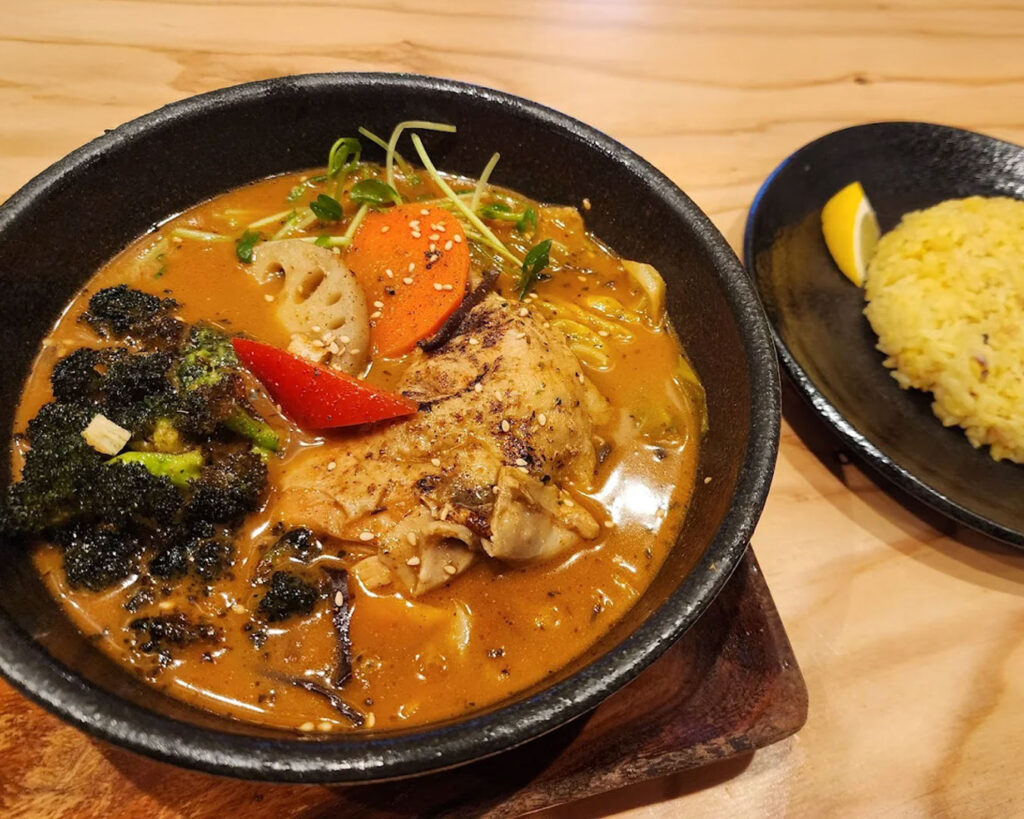
Soup curry emerged in Sapporo as a nourishing response to Hokkaido’s long, cold winters. Unlike thick and sweet curry commonly found in many Japanese homes, soup curry was designed to warm the body gently while celebrating seasonal produce. It is a curry soup, clear yet aromatic, where spices, chicken broth, and vegetables come together in balance rather than heaviness.
Over time, soup curry became beloved soul food in northern Japan. Families, students, and workers gathered around bowls of hot soup, customising spice levels and ingredients. That spirit of comfort and choice remains central to the dish today, and it guides how we cook and serve at Soup Curry by Ki-Setsu.
How Soup Curry Differs from Typical Japanese Curry and Standard Chicken Curry
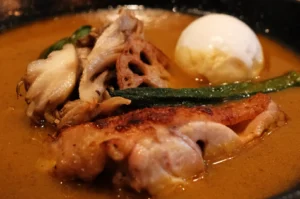
Traditional Japanese curry is often thickened with roux and served over rice. Soup curry takes a different path. While a standard chicken curry might be dense and sauce-like, our version is a light, curry-flavored base served with steamed rice on the side. This allows each ingredient to shine, from tender chicken thighs to vibrant vegetables.
The result is a soup curry broth that feels lighter on the palate yet offers depth and clarity. It allows each ingredient to shine, from tender chicken thighs and legs to vibrant vegetables prepared with care.
A Refined Approach: Why We Avoid Coconut Milk and Heavy Fats
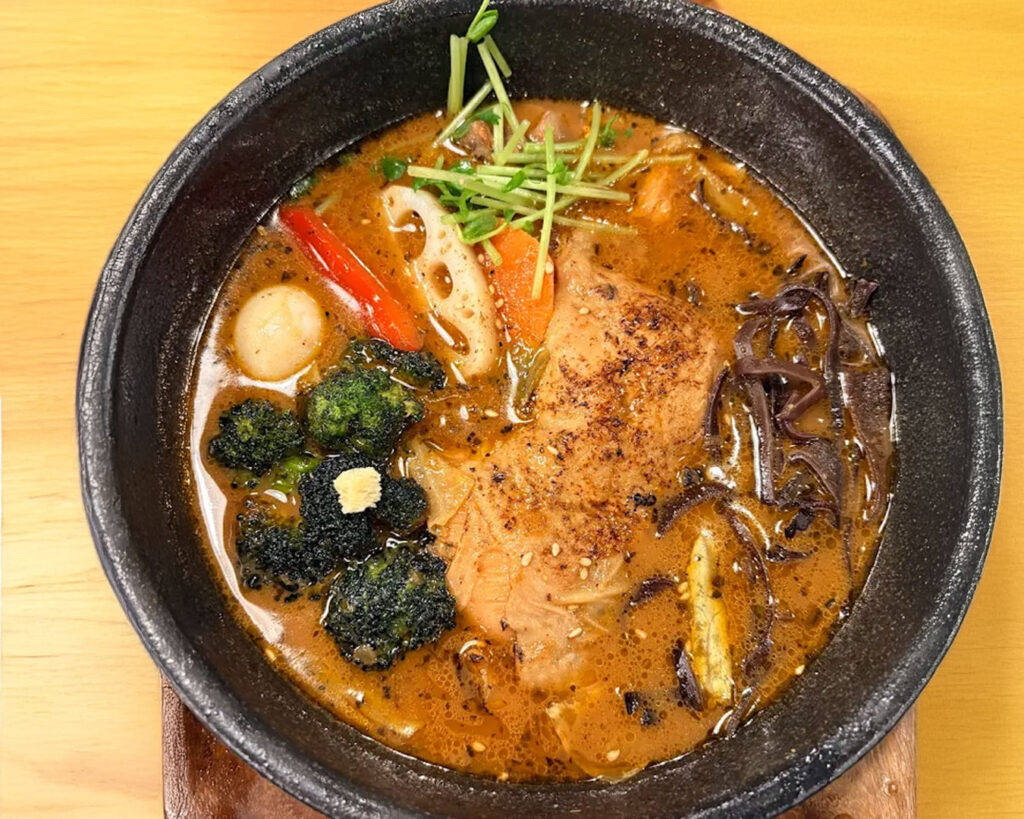
When we talk about the perfect soup curry broth, we are not chasing richness for its own sake. In Hokkaido tradition, the broth should be clear, fragrant, and nourishing. Chicken stock or vegetable stock forms the foundation, simmered gently in a large pot or soup pot to draw out natural flavours.
Unlike many Thai curry soup or Thai coconut curry soup styles that rely on creamy coconut milk, full fat coconut milk, or red curry paste for body, soup curry focuses on clarity. Coconut milk, whether creamy coconut milk or dairy free alternatives, belongs to a different culinary lineage. We respect Thai cooking and Thai inspired recipes, from Thai red curry to Thai chicken curry soup, but soup curry walks its own path.
The Role of Spices: Beyond the Use of Curry Paste
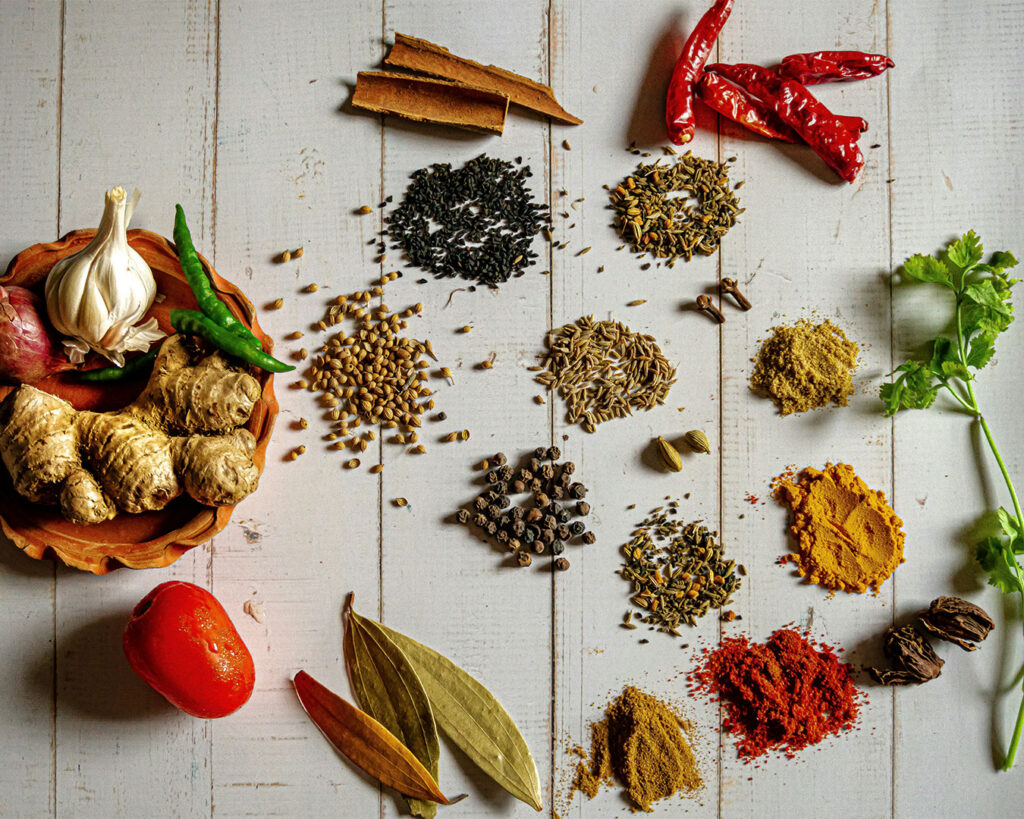
Spice in soup curry is about warmth, not aggression. We work with curry powder, carefully selected spices, and fresh ginger to create a medium heat that comforts rather than overwhelms. The soup base is built patiently, stirring occasionally, allowing garlic, ginger, and spices to bloom without bitterness.
This approach differs from many curry soup or chicken curry soup recipes that may call for curry paste, Thai curry paste, or even shrimp paste and fish sauce. While those ingredients create bold profiles in Thai soup and red curry soup, soup curry broth relies on restraint, clarity, and balance.
Ingredients That Define the Experience
In authentic Hokkaido soup curry, chicken is often the hero. At Soup Curry by Ki-Setsu, we use tender chicken thighs and legs, simmered gently so the meat remains succulent while enriching the broth. Chicken broth, sometimes referred to as chicken stock, is added gradually to build flavour without clouding the soup.
For guests who prefer a lighter or vegetarian option, vegetable broth, veggie broth, or vegetable stock can offer a clean, satisfying alternative. These broths celebrate the natural sweetness of vegetables and maintain the naturally gluten free character of soup curry.
Vibrant Vegetables Prepared with Care
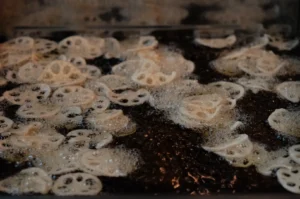
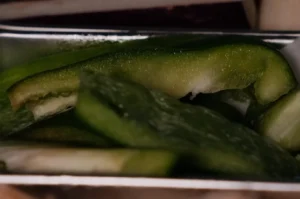
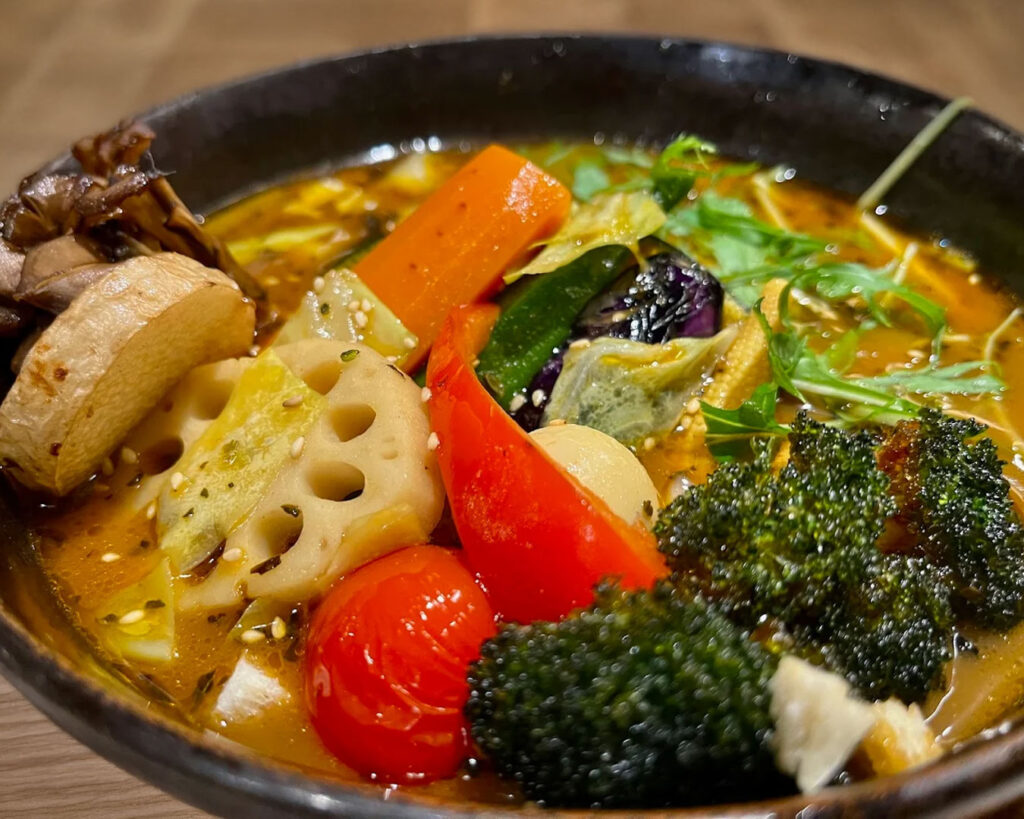
One of the joys of soup curry is its colourful presentation. Vegetables are not an afterthought. They are essential. Bell pepper, lotus root, eggplant, and potato are deep-fried separately using Japanese cutting methods. This technique seals in flavour and texture before the vegetables are placed into the hot soup.
Other vegetables, such as sweet potato or kabocha squash, may appear depending on seasonality. Garnishes like green onions, fresh herbs, or even a hint of fresh cilantro add brightness and vitamin C, while maintaining harmony with the broth.
Soup Curry in the Wider Curry Soup Landscape
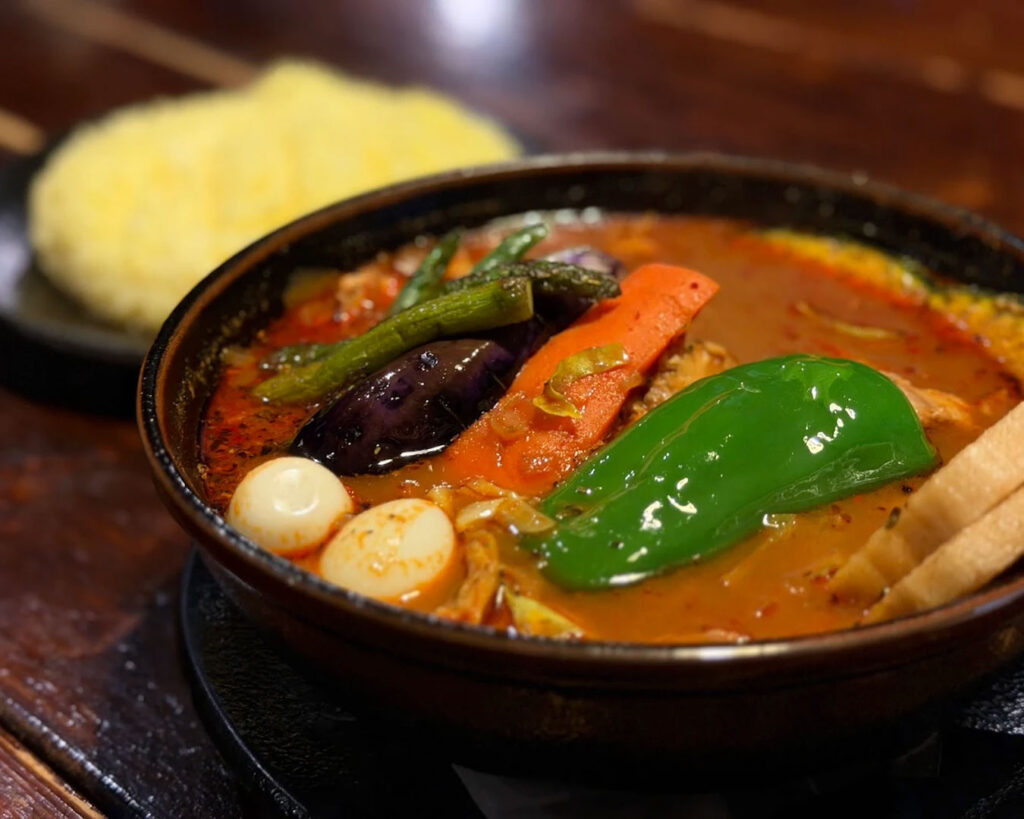
In today’s food culture, many establishments experiment with soup curry across cuisines. You may encounter Thai red curry paste, red curry, or Thai basil in recipes that lean towards a creamy texture. Some soup recipes use olive oil, lime juice, lime leaves, lime wedges, light brown sugar, or even rice noodles and udon noodles to create comforting bowls of hot soup.
There are also slow cooker and Dutch oven methods, recipe cards, and recipe instructions that encourage home cooks to explore soup curry at medium high heat or medium heat. These dishes often come with serving bowls filled with shredded cooked chicken, shredded carrots, red bell pepper, and chili peppers, finished with fresh herbs and lime juice.
We appreciate this diversity. At the same time, we remain grounded in what makes soup curry distinct. Our soup curry broth does not aim for the creamy coconut milk profile. Instead, it celebrates clarity, aroma, and balance.
Health, Comfort, and Balance
Because soup curry relies on broth rather than cream, it often feels lighter. Discussions around saturated fat, polyunsaturated fat, and monounsaturated fat matter to modern diners, and soup curry naturally fits a balanced lifestyle. It is dairy free, gluten free, and nourishing without feeling heavy.
The focus on fresh vegetables, aromatic spices, and carefully prepared chicken creates a delicious bowl that satisfies both body and soul.
The Dining Experience at Soup Curry by Ki-Setsu
When guests step into Soup Curry by Ki-Setsu, we hope they feel transported to Hokkaido. Soup curry is meant to be savoured slowly, with rice enjoyed separately so each bite can be customised. Some prefer dipping rice into the soup. Others alternate spoonfuls of broth and rice. There is no single correct way.
From 6 PM onwards, we also transform into a cozy izakaya-style experience. Alongside our signature soup curry, guests can enjoy Japanese small plates, sake, and good company. Dinner reservations are available exclusively at 6:30 PM, and tables are held for a maximum of 15 minutes past the reserved time. This evening atmosphere reflects the communal spirit of Sapporo dining, warm, relaxed, and unhurried.
Authenticity Without Excess
While we are proud to share Hokkaido’s culinary heritage, we are careful not to overstate ourselves. Soup curry speaks for itself. Our role is to honour tradition, use quality ingredients, and welcome guests with sincerity. The soup curry broth remains the quiet hero, tying everything together.
Soup Curry Beyond the Restaurant
Many guests ask how soup curry compares to home cooking or popular online soup recipes. There are countless review recipe posts and Thai inspired recipes that explore soup curry in creative ways. Some include cooked noodles, store leftovers in an airtight container, or cool completely before reheating. Others highlight cook mode prevent tips or required recipe ratings for online sharing.
We encourage curiosity, but we also believe that some flavours are best experienced where tradition lives. Soup curry is one of those dishes. Its subtlety can be lost when simplified into a generic curry soup or chicken curry.
Experience the Soul of Hokkaido
The art of making the perfect soup curry broth lies in intention. It is about respecting ingredients, understanding history, and cooking with care. From the early days of Sapporo in the 1970s to our kitchen today, soup curry remains a dish shaped by climate, culture, and community.
At Soup Curry by Ki-Setsu, we are grateful to share this beloved comfort food with Singapore. Whether you are new to soup curry or returning for another bowl, we hope our soup curry broth offers warmth, clarity, and a sense of home. Join us, and experience the soul of Hokkaido, one spoonful at a time.