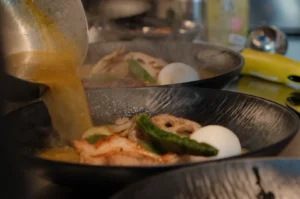
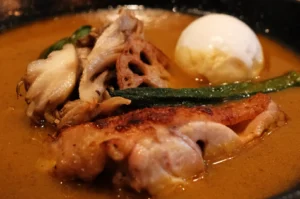
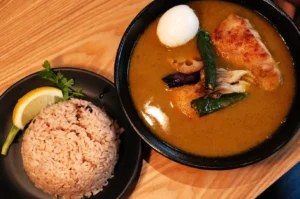
When a bowl of soup curry arrives at the table, the first thing guests notice is the colour: deep amber, almost burnished, with rings of chilli oil catching the light. The aroma follows immediately, warm and spiced, earthy from curry powder and lifted by something brighter underneath. This is not regular Japanese curry. There is no thick roux, no heavy sweetness. This is soup curry, a light curry flavored soup that highlights clarity over weight.
At our restaurant, every element has a role. Understanding soup curry ingredients is the best way to appreciate why this dish has become one of Hokkaido’s most enduring comfort foods. This curry flavored soup served with precision reflects decades of refinement in Sapporo.
The Broth: Where Every Sapporo Soup Curry Begins
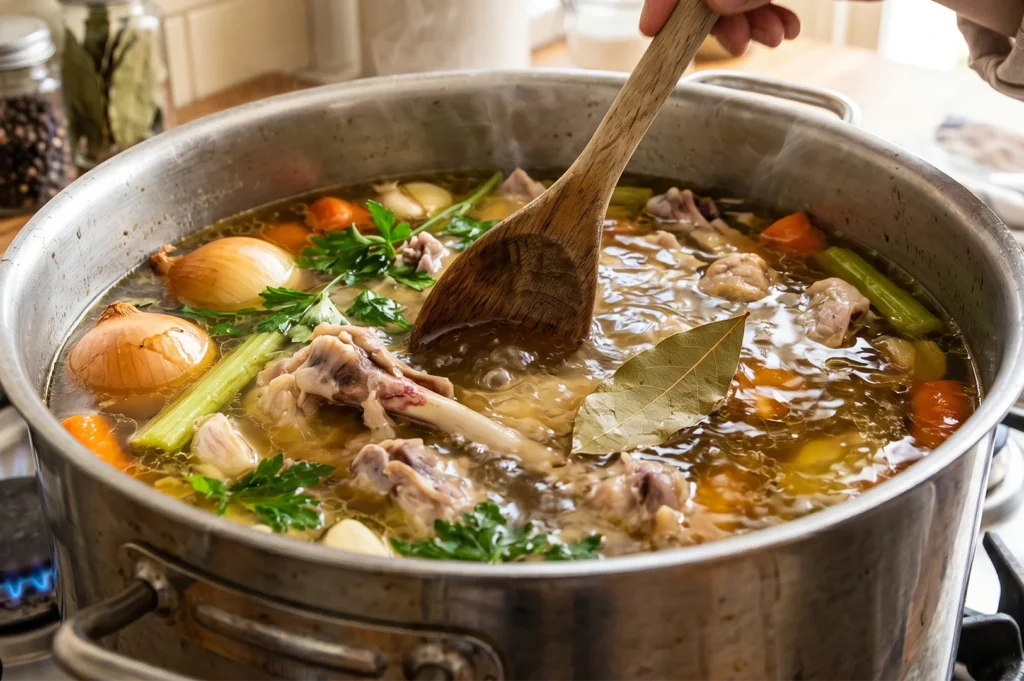
The foundation of any Sapporo soup curry is the broth, and ours begins with a rich chicken broth built from chicken bones simmered over low heat with aromatics, a bay leaf, and time. This is not a shortcut base. It is patient cooking that produces the kind of depth you can taste in every spoonful of the finished curry broth.
A good chicken stock is the backbone of this dish. We use chicken stock made from scratch, allowing the collagen from the bones to dissolve slowly into the liquid, giving the broth a natural body that no powder or concentrate can replicate. A second bay leaf is added partway through to keep the aroma clean and herbal without overpowering the spices that come later.
Unlike some curry soup styles, this base does not rely on coconut milk. That choice keeps the flavour clean and focused.
Curry Powder and Garam Masala: The Spice Foundation
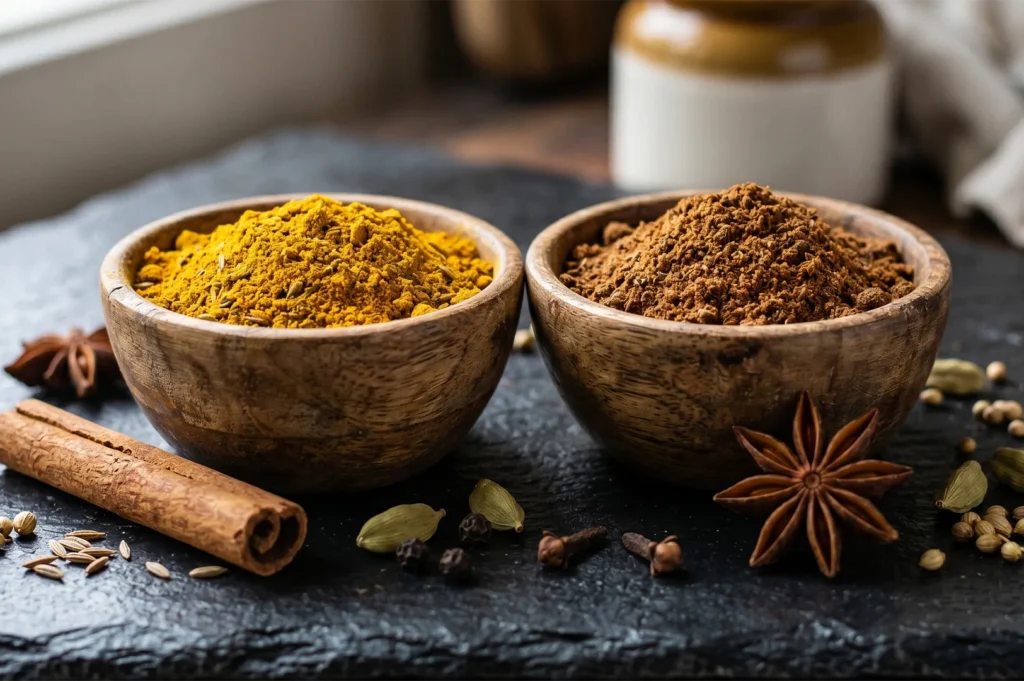
Once the base is ready, the spices are introduced. Curry powder is the primary seasoning, stirred in carefully to give the broth its golden colour and warm, rounded heat. We do not rely on a Japanese curry roux or any curry roux block here. Instead, garam masala is added alongside the curry powder to layer in the more complex, fragrant top notes.
The balance of curry powder garam masala is what separates a flat broth from one that evolves with each spoonful. This is the difference between soup curry and traditional Japanese curry or curry rice.
This approach defines a proper soup curry recipe. Using a Japanese curry roux produces a heavier result closer to curry udon or regular curry formats, not the original soup curry style from Sapporo.
Tomato Paste and Aromatics: Building the Curry Soup Base
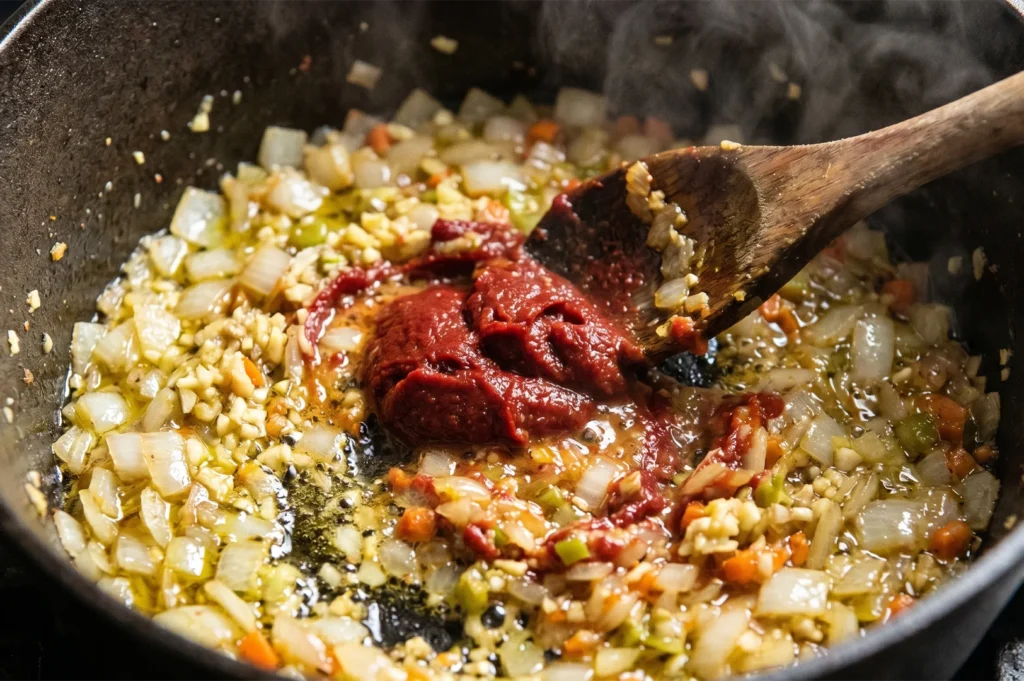
Tomato paste goes into the pot early, cooked out in neutral flavored oil alongside diced onion, garlic, and ginger over medium heat. This step builds the curry soup base from the ground up.
The tomato paste adds acidity and body. The diced onion adds sweetness. Together they form the aromatic base of the curry broth. Kosher salt is added and adjusted as the soup develops.
A small bowl of seasoning may be prepared ahead for consistency, especially in some high-volume kitchens.
The Chicken: Tender, Bone-In, and Central to the Bowl
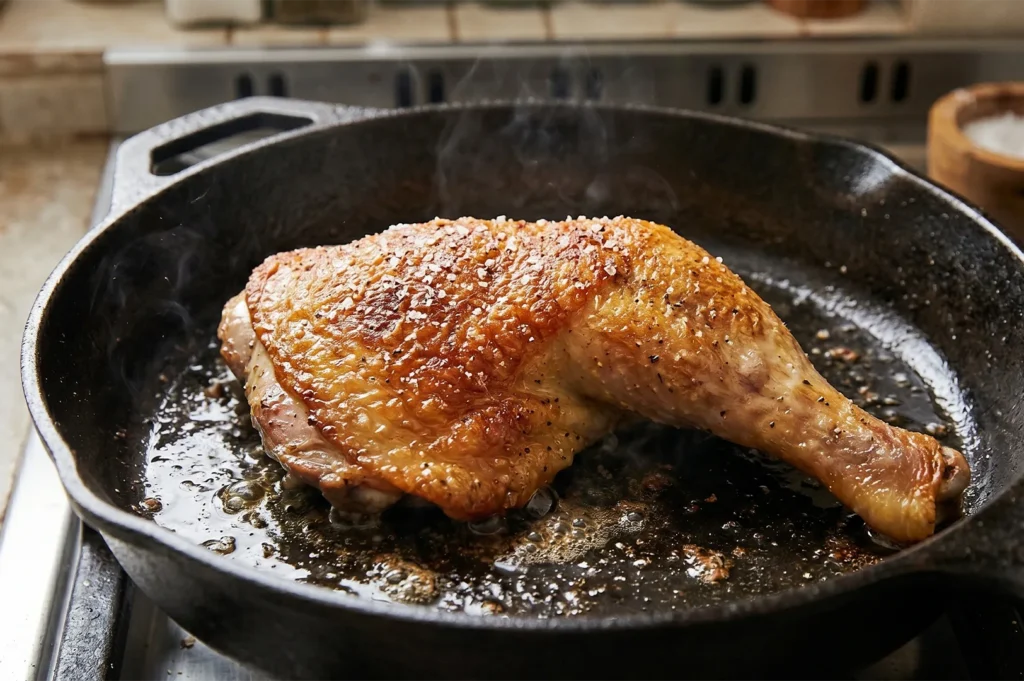
In an authentic bowl of Japanese soup curry, the protein matters as much as the broth. We use bone in chicken, specifically chicken thighs and a full chicken leg.
Chicken thighs hold moisture well. The chicken leg adds structure and presentation. Before cooking, the chicken is seasoned with kosher salt and dried with paper towels. This step ensures proper browning fry results.
The pieces go into a frying pan or cast iron pan with neutral flavored oil over medium high heat. The goal is a nicely browned surface. Once golden, the chicken rests briefly on paper towels to remove excess oil before entering the soup.
Deep Fry, Done Right: Why This Soup Curry Recipe Calls for Fried Vegetables First
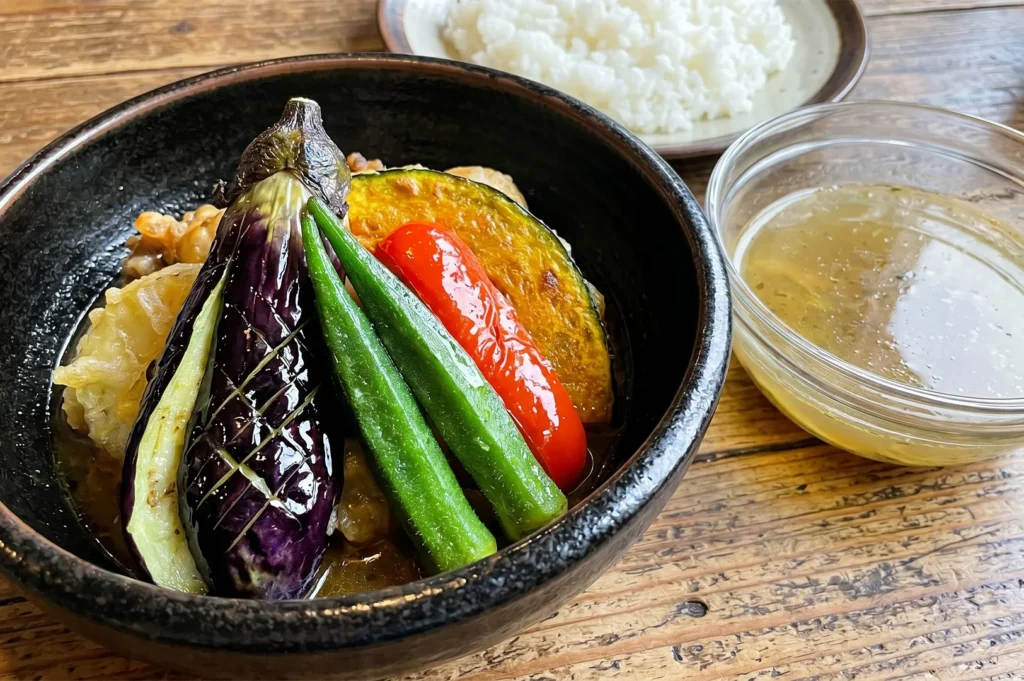
This is where the Sapporo soup curry recipe parts ways with almost every other Japanese curry preparation, and it is the step that surprises most people discovering this dish for the first time. The vegetables are not simmered in the broth. They are prepared separately using a deep fry method before anything else.
The Su-Age Technique and What It Does
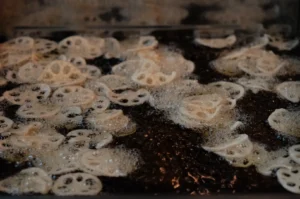
The method used is su-age, a flash fry technique done without batter. Vegetables are placed in hot oil and cooked briefly, then transferred to a wire rack to drain.
This deep fry process locks in moisture and creates a golden brown exterior. The result is deep fried vegetables that stay structured even after being added to the soup.
This is not the same as roasted vegetables. Roasted vegetables soften fully. Fried vegetables keep contrast. They remain distinct in both flavour and texture.
The Vegetable Selection and Japanese Cutting Methods
The vegetables are selected carefully and prepared using Japanese cutting method techniques. Each piece is cut to ensure even cooking.
These include:
Bell peppers, including red bell pepper, sliced half lengthwise
Lotus root, cut into rounds
Kabocha squash in thick wedges
Aubergine, halved
Potato, carrot, and okra
Shimeji mushrooms for added depth
Bell peppers benefit most from this method. They stay vibrant and slightly firm.
All the vegetables are cooked separately before assembly. This preserves their identity in the final bowl.
The Stir Fry Step: Developing Flavour Before the Simmer
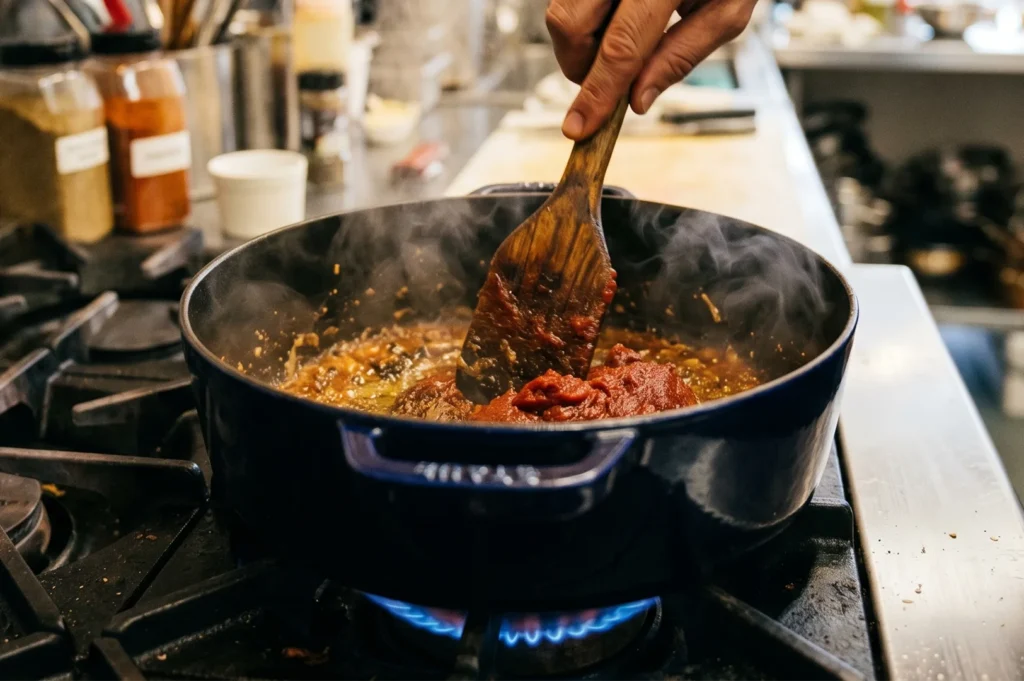
Before the broth is added, there is a stir fry stage that defines the dish.
In a Dutch oven or heavy pot, diced onion is cooked over medium heat. Garlic and ginger follow. Curry powder and garam masala are added and toasted. Tomato paste is stirred in, then liquid is introduced gradually add half at a time to control consistency. The mixture is gently mixed to avoid clumping.
The soup is brought to a gentle simmer. This step builds the foundation of the curry.
Unlike the flash frying technique used for the vegetables, which preserves their texture and color by cooking them separately in hot oil without batter, this stir fry stage focuses on developing deep, layered flavors directly in the broth base. While flash frying ensures the vegetables remain crisp and vibrant, the stir fry of aromatics and spices creates the rich, aromatic foundation that infuses the soup. Together, these techniques balance texture and flavor, defining the unique character of soup curry.
Optional Methods and Variations: Pressure Cooking and Multi Cook Options
Some kitchens adapt the process using pressure cooking or a multi cook system. These methods reduce cooking time but require careful control to maintain clarity in the broth.
Instant pot directions can replicate parts of the process, though traditional methods still produce better depth.
Steamed Rice: The Companion, Not the Container
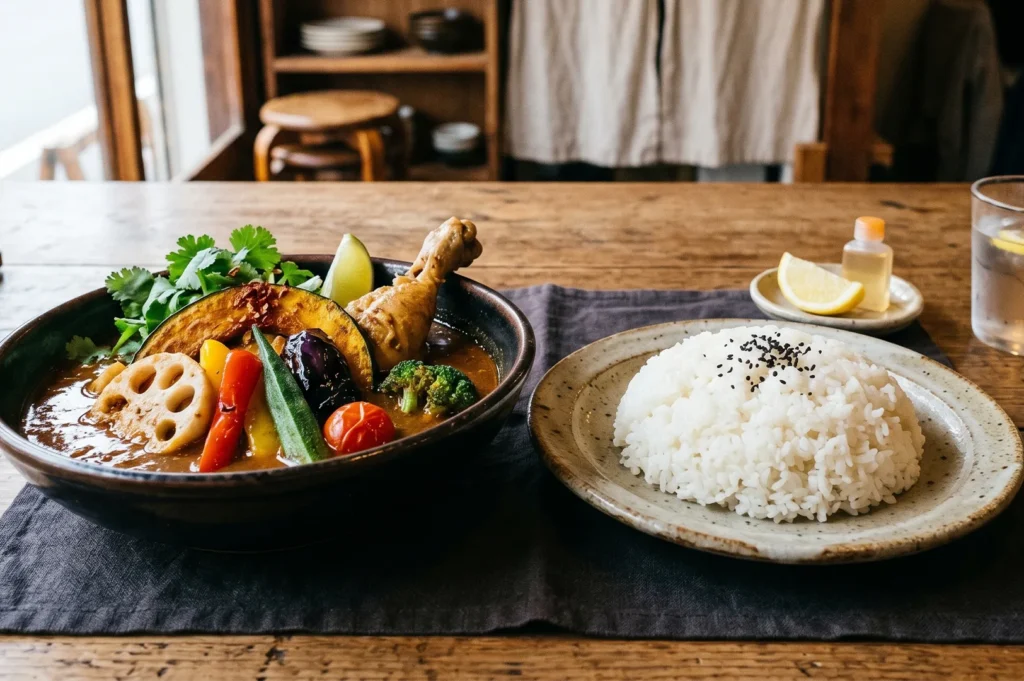
One of the clearest differences between soup curry and Japanese curry is how steamed rice is served. In soup curry, the rice is served separately, typically using Japanese short grain rice. This method prevents the rice from becoming soggy and allows diners to control each bite, enhancing the overall dining experience. In some preparations, a touch of rice vinegar may be added lightly to the rice to sharpen its flavour.
Serving the rice separately emphasizes the light, brothy nature of soup curry, distinguishing it from the thicker, roux-based Japanese curry where rice is often mixed in. This approach preserves the distinct textures and flavors of both the curry and the rice, making each spoonful a balanced combination of the rich soup and the tender grains.
What Sets This Hokkaido Soup Curry Apart from Regular Japanese Curry
The ingredients alone do not define Hokkaido soup curry. It is the philosophy behind them that matters. This dish emerged from Sapporo, Hokkaido’s capital, in the early 1970s, shaped by the cold northern climate and the island’s tradition of hearty, warming food.
What distinguishes the version we serve from what most people encounter in a typical curry restaurant in Singapore is this commitment to authenticity. We do not use a premade curry roux. We do not simmer the vegetables into softness. We build the broth from scratch with chicken bones and whole spices, prepare the fried vegetables using the su-age method, and serve everything as it would be served in Chuo Ward near Susukino Station in Sapporo itself.
At Soup Curry by Ki-Setsu, Singapore’s first and only authentic Hokkaido soup curry restaurant, these principles are the foundation of every bowl we send out. Chef Masa, who helms the kitchen, brings decades of expertise shaped entirely by this tradition. His approach to the soup curry reflects years of understanding not just what goes into the bowl, but why each element belongs there.