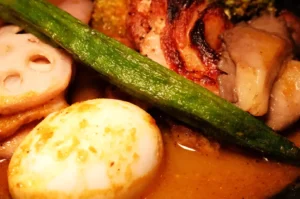
If you have never encountered soup curry before, you are in for a revelation. This is not the thick, stew-like Japanese curry most people are familiar with. Soup curry is its own distinct dish: a fragrant, light broth deeply infused with spices, served alongside generous portions of vegetables and tender chicken, with steamed rice on the side. It is comfort food at its most refined, and it has been warming the souls of people in northern Japan for over five decades.
At our restaurant, we believe soup curry deserves to be known, understood, and savoured properly. So here is everything you need to know.
What Is Soup Curry, Really?
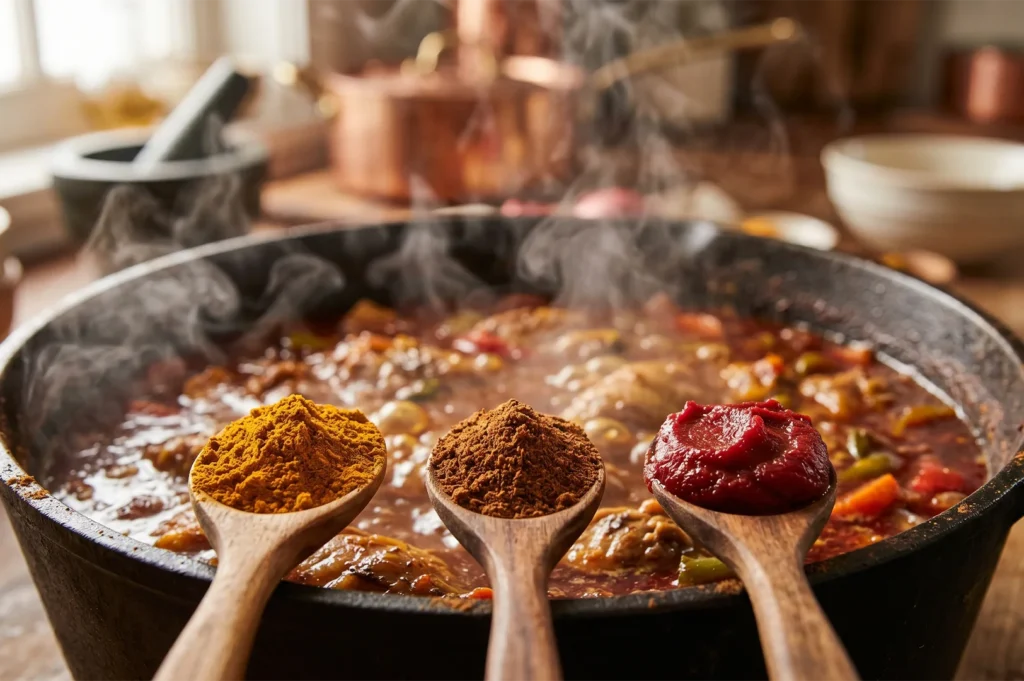
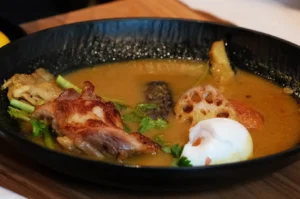
At its heart, soup curry is a Japanese soup dish where the curry element lives entirely in the broth rather than in a thick roux. Where regular Japanese curry is dense and clinging, soup curry is clear and aromatic, behaving far more like a deeply spiced soup than a gravy. The rice is not mixed in but served separately, and each spoonful is meant to be enjoyed with deliberate intention: dip, sip, savour.
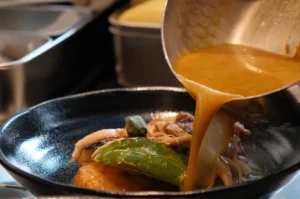
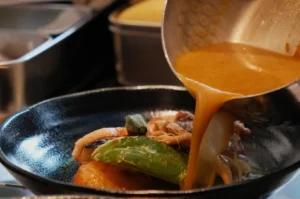
The soup base is typically built from chicken bones and pork bones, slow-simmered for hours to develop body and depth. Into this foundation go layers of spice: curry powder, garam masala, tomato paste, and a careful balance of aromatics. The result is a curry soup that is simultaneously bold and elegant, with a clarity of flavour that a typical Japanese curry simply cannot achieve.
Unlike a curry roux-based dish, soup curry does not rely on starch for texture. The richness here comes entirely from the quality of the spices and the stock. This makes it a lighter experience overall, even when the flavour is intensely satisfying. It is the kind of soup curry meal that leaves you feeling nourished rather than heavy.
The Soul Food of Sapporo: Where Soup Curry Was Born
To truly understand soup curry, you need to understand its home. Sapporo soup curry was born in Hokkaido, Japan’s northernmost and coldest island, in the early 1970s. The capital city of Hokkaido, Sapporo, is where the first soup curry restaurants began drawing regular customers from across the region, particularly in Chuo Ward, which remains the heart of the city’s soup curry scene to this day.
What began as an original soup curry concept at a single establishment became, over the following decades, an iconic soul food that defines Hokkaido’s culinary identity. The dish is deeply embedded in the local culture, the way ramen is to Fukuoka or okonomiyaki is to Osaka. For residents of Sapporo, soup curry is home.
Today, famous soup curry restaurants in Sapporo have built loyal followings by refining this soul food across generations. Each establishment brings its own take on the classic soup curry formula, but the foundation remains the same: an honest, warming bowl built on great stock, vibrant spices, and fresh ingredients.
How Sapporo Soup Curry Differs from Traditional Japanese Curry
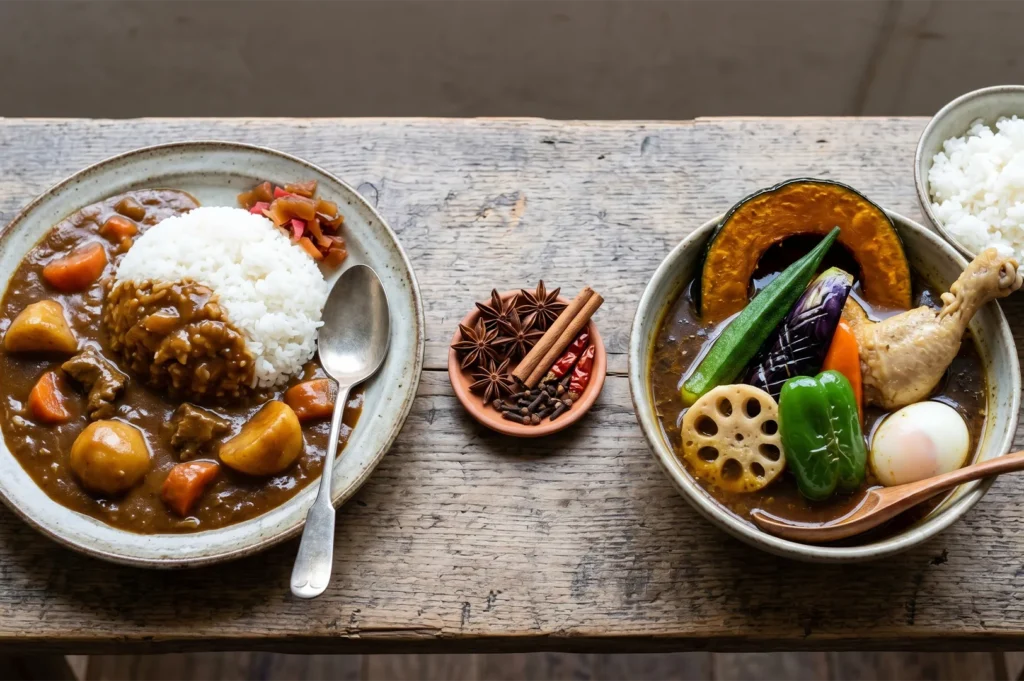
This is the question we hear most often, and it deserves a thorough answer. Traditional Japanese curry, sometimes called Japanese curry or kare raisu, is one of the most popular dishes in the country. It features a thick, sweet, mildly spiced sauce made from a curry roux, typically poured over white rice with soft root vegetables and meat cooked into the sauce. It is deeply comforting in a different way: familiar, approachable, and quite sweet by global curry standards.
Soup curry diverges fundamentally from this model. Rather than a curry roux, it uses an intricate spice blend built from scratch. Rather than blending the vegetables into the sauce, it presents them proudly and whole. Rather than mixing the rice in, it keeps it separate. The eating experience is completely different: you are engaged with each element individually, appreciating the texture of each vegetable, the tenderness of the chicken, and the complexity of the soup as distinct sensations.
The spice levels also differ markedly. A classic soup curry invites customisation in heat, typically offering a range from mild to intensely hot, catering to spice lovers and beginners alike. This personalisation is part of what makes eating soup curry such a satisfying ritual.
Curry Udon and Other Japanese Curry Dishes
It is worth noting that Japanese cuisine has long celebrated curry in many forms: curry udon, vegetable curry, and the classic soup dish format all exist alongside one another. Each serves a different mood and occasion. But among these variations, soup curry occupies a singular position because of its depth of preparation and its insistence on showcasing fresh, seasonal ingredients rather than concealing them in sauce.
Why Fresh Vegetables Are Central to an Authentic Soup Curry
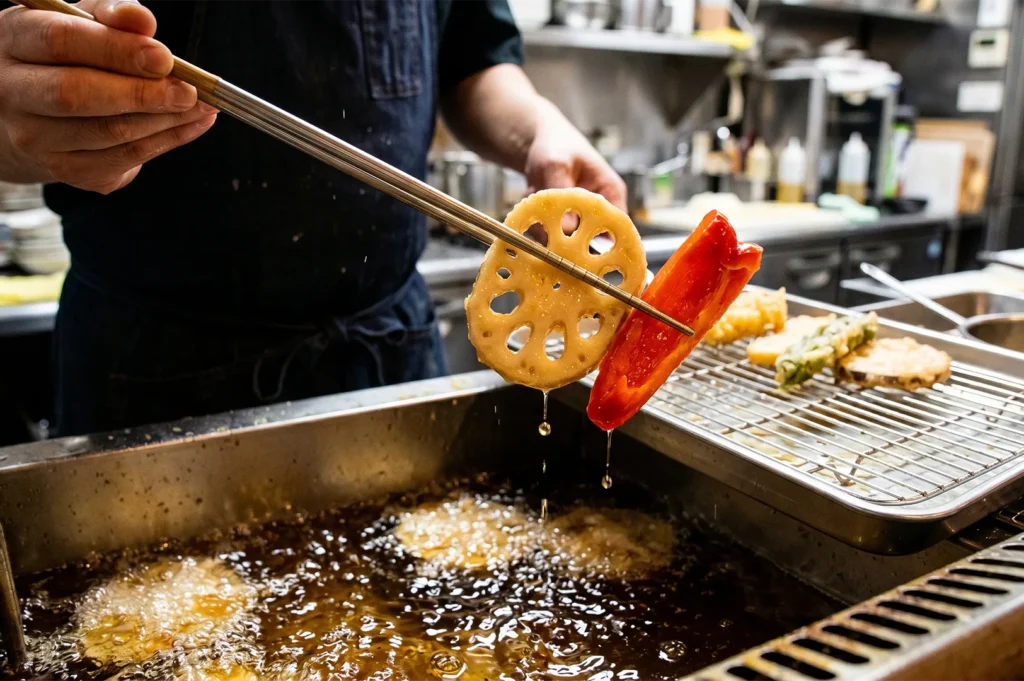
One of the most distinctive aspects of an authentic soup curry is the treatment of its vegetables. In a typical Japanese curry or a standard vegetable curry, carrots, potatoes, and onions are simmered directly in the sauce until soft and integrated. In soup curry, the vegetables are treated as individual centrepieces, each prepared to highlight its own natural sweetness, colour, and texture.
We prepare our fresh vegetables using the Japanese su-age technique: flash frying without batter to lock in colour and flavour before the vegetables meet the soup. This method, sometimes called the Japanese su age technique, seals the outside of each piece so that when it is served in the hot broth, it retains its texture and does not become waterlogged. The vegetables are then placed on a wire rack lined with paper towels to drain before serving, ensuring that every element arrives in the bowl exactly as it should.
The deep fried vegetables we work with include bell peppers, lotus root, eggplant, carrots, potato, okra, and pumpkin. Each is cut using traditional Japanese methods: bell peppers halved lengthwise, lotus root sliced to reveal its beautiful cross-section, eggplant prepared so that it becomes silky in the soup without losing its form. The result is a bowl where the vegetables are vibrant, nicely browned in places, and visually stunning.
Using seasonal ingredients is equally important. When vegetables are at their peak, their natural sweetness intensifies and their textures improve. This is why a classic soup curry, made with deep fried fresh vegetables in season, tastes different and better at different points throughout the year. We source the freshest ingredients we can find, because the quality of the produce is inseparable from the quality of the bowl.
The Chicken, the Bones, and the Art of the Soup Base
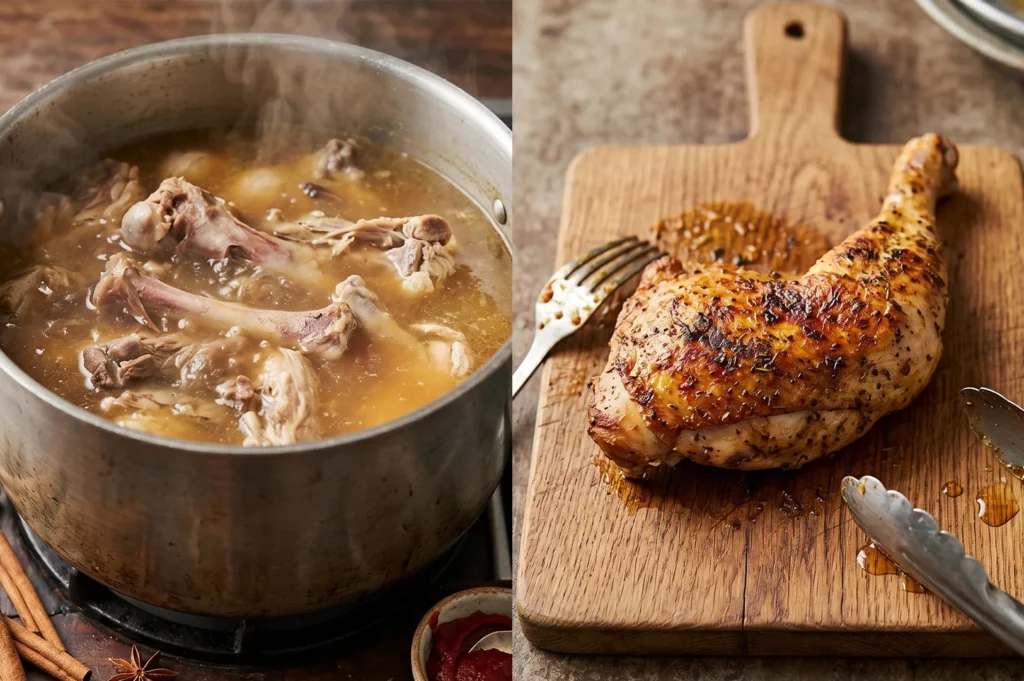
The chicken leg is the centrepiece protein in most classic soup curry bowls. It is not simply poached or boiled. It is cooked to develop deep colour and flavour before being placed in the soup, contributing its richness to the broth while remaining tender and yielding. The care taken with the chicken is a reflection of the care taken with the entire dish.
The soup base itself begins with chicken bones and pork bones, simmered low and slow in a heavy bottomed pot to extract every bit of collagen and flavour. Into this stock goes the spice foundation: curry powder, garam masala, tomato paste, and other spices layered in sequence. The onions are caramelised separately before being incorporated, providing the natural sweetness that balances the heat. This is not a process that can be rushed.
What emerges is a light broth that is somehow intensely complex. It coats the palate without weighing it down. It invites the next spoonful without demanding it. This is the soul of a first soup curry experience: the moment when someone accustomed to regular Japanese curry realises that something entirely different, and entirely wonderful, is possible.
How to Eat Soup Curry the Right Way
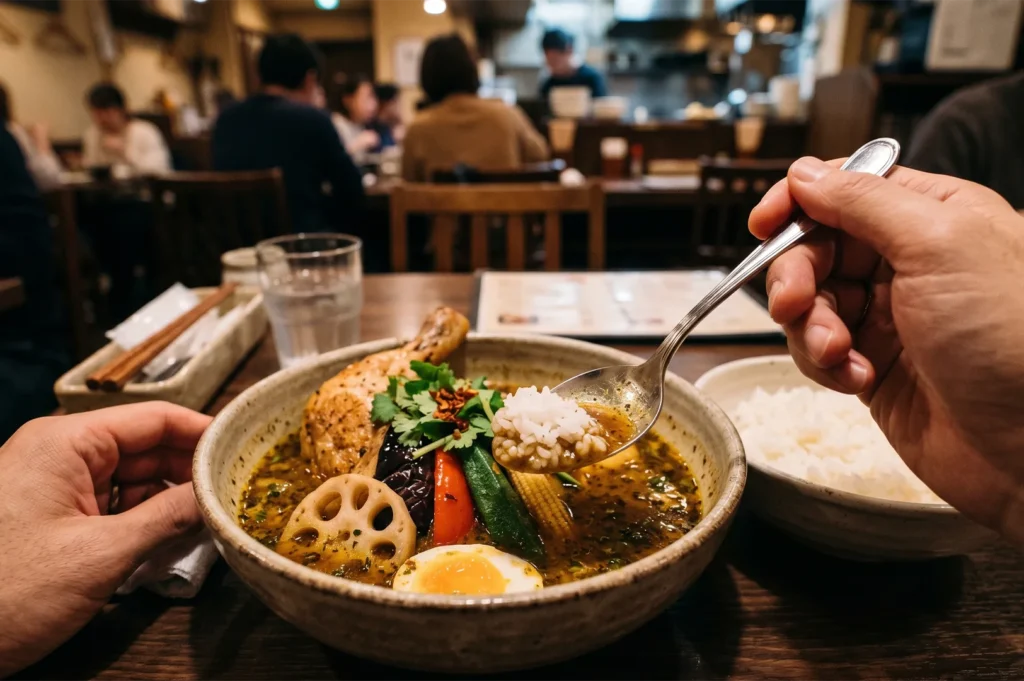
If you are wondering how to eat soup curry for the first time, the approach is part of the pleasure. The rice and the soup are served separately. You decide how much rice accompanies each spoonful, either dunking a small spoonful into the broth or spooning the soup over the rice in a small bowl to your own preference. There is no wrong method, only your method.
Some guests prefer to eat the vegetables and chicken first, appreciating each component before introducing the rice. Others immediately begin combining everything. We always suggest tasting the soup on its own first, so that you can appreciate the full depth of the spice blend before the rice changes the dynamic. The question of how much rice to use is entirely personal, and most soup curry restaurants offer rice in varying portions so that you can calibrate precisely.
Quail eggs, okra, and other additions are common in many soup curry meals, each bringing a different texture or flavour contrast to the bowl. At our restaurant, every element is chosen to serve the whole.
Experiencing Soup Curry by Ki-Setsu's Signature Dish
For many people in Singapore, the first soup curry encounter comes as a surprise. There are no other soup curry restaurants in Singapore offering the full Hokkaido experience: the su-age vegetables, the long-simmered bone broth, the customisable spice levels, the cosy atmosphere that feels like stepping briefly into Sapporo’s Chuo Ward.
Soup Curry by Ki-Setsu, Singapore’s first and only authentic Hokkaido soup curry restaurant, was established to bring this iconic soul food directly to Singapore, without compromise and without adaptation.
Our approach is rooted in the belief that authentic soup curry, the kind born in Sapporo and refined over fifty years, should be experienced whole. That means no shortcuts in the broth, no compromises on the fresh vegetables, and no dilution of the spices that give this dish its character. From lunch through to our cosy izakaya transformation from 6 PM onwards, every bowl we serve carries the warmth and intention of a genuine Hokkaido kitchen.
A Final Word for the Curious
Soup curry is, at its core, a dish about intention. It is built slowly, ingredient by ingredient, spice by spice, from chicken bones and fresh vegetables and time. It is designed to nourish, to warm, and to surprise. Whether you are a lifelong fan of Japanese curry or someone encountering a curry soup for the very first time, soup curry asks only that you approach it with an open palate and a little patience.
It will do the rest.