There is a moment that every first-time guest at our restaurant experiences: they look at the spice level menu and pause. Some laugh nervously. Others lean forward with quiet confidence. A few ask the staff for a recommendation. That pause, that moment of deliberation, is one of the most telling signs that soup curry spice levels are not a trivial matter. Choosing your heat is part of the ritual, and understanding what each level means, for your palate and your bowl, makes all the difference between a good meal and an unforgettable one.
Soup curry is not simply spicy food. It is a nuanced, layered experience where heat plays one specific role within a much larger flavour conversation. The broth already carries the weight of simmering chicken bones, the earthiness of garam masala, the brightness of turmeric and black pepper, and the depth of curry powder. Spice levels, therefore, are not about overwhelming the bowl. They are about calibrating where the heat sits within all of that richness.
How Soup Curry Spice Levels Are Structured
Most authentic soup curry restaurants, including ours, organise spice levels along a numbered or named scale. At the lower end, you have gentle, warming options that allow the natural sweetness of fresh vegetables and the savoriness of the soup base to come through cleanly. At the upper end, you have heat that challenges even seasoned spice lovers, where chili peppers dominate and every sip demands your full attention.
At our restaurant, we offer multiple spice levels to accommodate everyone from first-time diners to those who eat soup curry regularly and crave intensity. Here is how to think about the range:
Level 0 to 2: The Warm Welcome
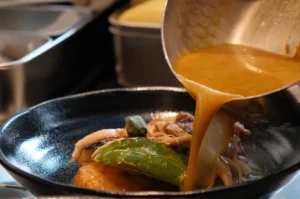
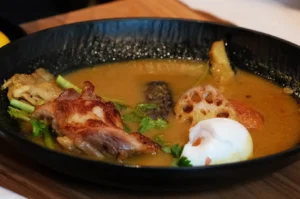
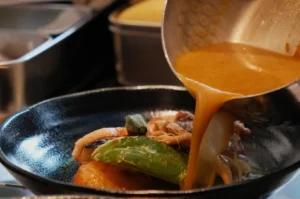
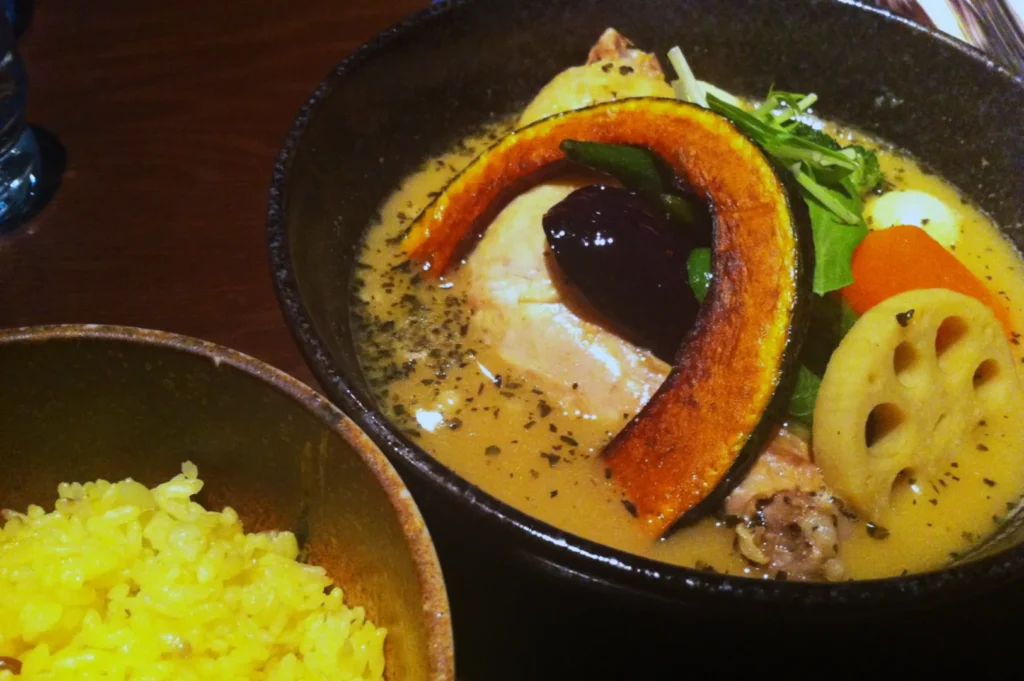
These entry-level spice levels are designed for guests who want to experience the full flavour of authentic soup curry without the distraction of significant heat. At this range, the soup base shines. You taste the delicate balance of the broth, the natural sweetness of kabocha pumpkin and carrots, and the umami richness developed from caramelised onions and garlic. The deep-fried fresh vegetables, prepared using the Japanese su-age technique without batter, retain their vibrant colours and individual flavours. Nothing is masked. Everything is present.
This is also a good entry point for those unfamiliar with how this soup dish differs from traditional Japanese curry. Unlike traditional Japanese curry, which is thick and sauced, authentic soup curry is a light, aromatic broth served alongside steamed rice. At mild spice levels, that distinction becomes especially clear.
Level 3 to 5: The Everyday Balance
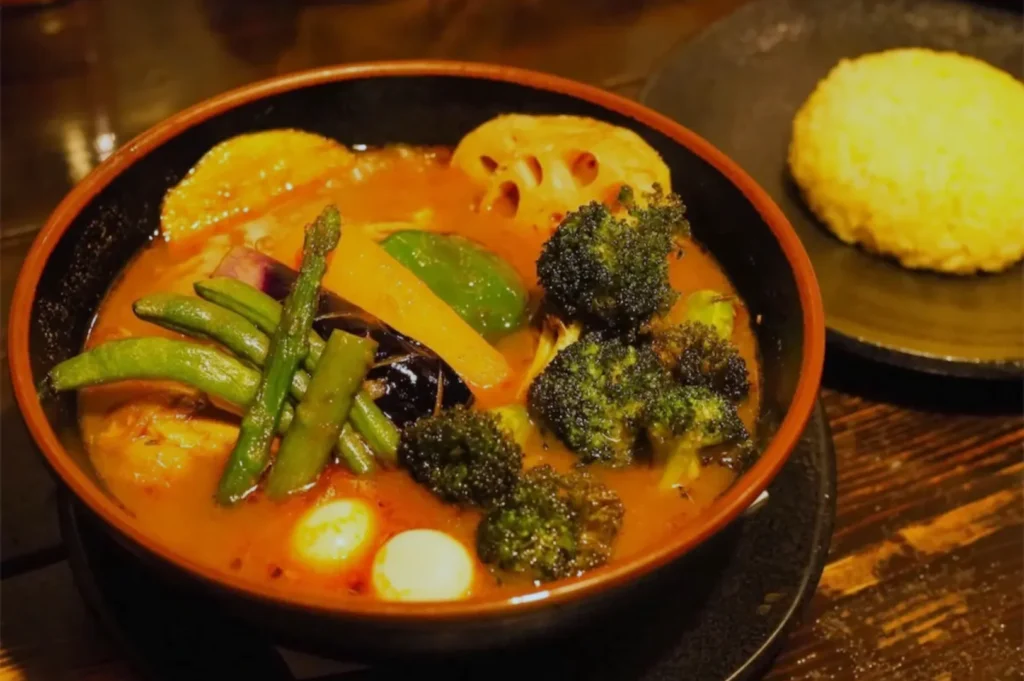
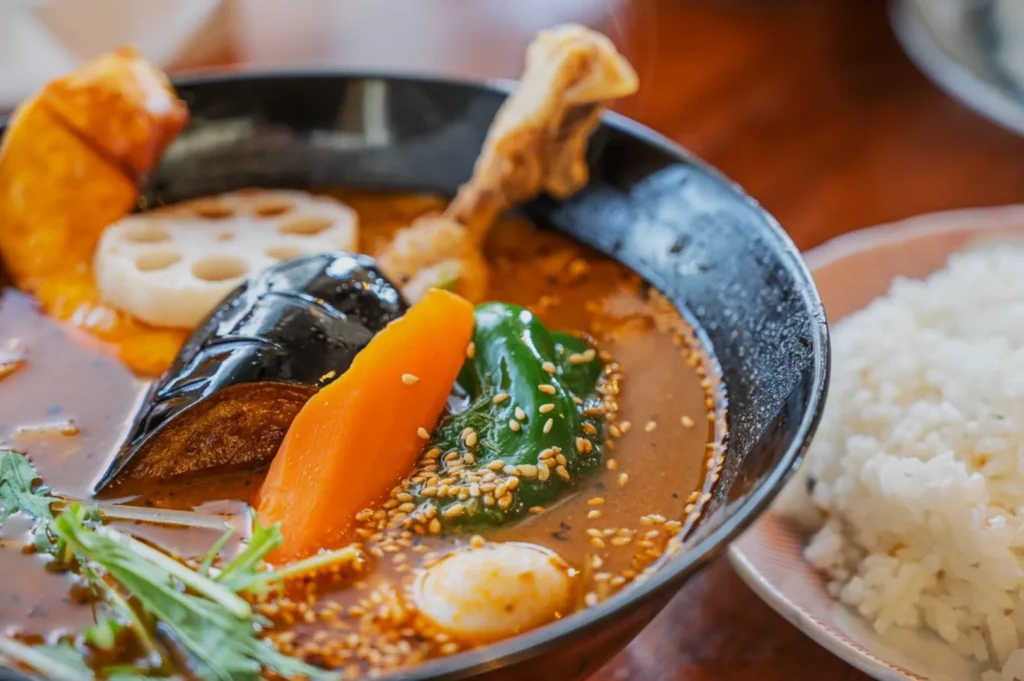
This is where most regular guests settle. The heat is present and noticeable, adding a pleasant warmth that builds gradually. Fresh ingredients like bell peppers, lotus root, eggplant, okra, and potato continue to hold their character, and the spicy sensation enhances rather than competes with the soup’s natural depth. The broth carries the black pepper and curry powder with more assertiveness, and the meal develops a comfortable glow that makes you want to keep eating.
At this range, spice lovers who also appreciate complexity find their footing. The heat is not yet the main event, but it contributes meaningfully to the experience. This is also where the pairing of the bowl with steamed rice feels most intuitive: a spoonful of rice between sips of soup tempers the heat just enough to keep the rhythm going.
Level 6 to 8: For Serious Spice Lovers
Here, the character of the bowl begins to shift. Chili peppers become a central flavour component rather than a background note. The warmth from black pepper and the aromatic quality of the spice blends are still present, but heat takes a more prominent role. Guests who eat soup curry frequently and have built up a tolerance find this range deeply satisfying. It creates a sustained, full-bodied heat that does not let up, encouraging slower, more deliberate eating.
Our staff often recommend this range to guests who describe themselves as confident with spicy food in other cuisines. Sapporo soup curry at this level reflects how some of the most beloved soup curry restaurants in Japan’s northern capital serve their more adventurous regulars: bold, confident, and unapologetic.
Level 9 to 11: The Extreme End
These levels are reserved for the genuinely committed. At the extreme end of the soup curry spice levels scale, heat is the dominant experience. The broth still carries its foundational complexity, but the chili presence is intense and immediate. Guests who choose these levels often do so as a personal challenge, and many find real satisfaction in completing the bowl. Our team never discourages curiosity, but we do recommend that guests work their way up rather than starting here.
It is worth noting that even at the highest levels, the quality of the fresh produce and the integrity of the soup base remain intact. A bowl of soup curry at maximum heat is not a different dish: it is the same dish with a more demanding personality.
Why Spice Levels Matter in Authentic Soup Curry
In Sapporo, the capital city where this style of curry was born, spice level customisation became a defining feature of the soup curry shop culture. Part of what makes a visit to a soup curry shop so personal is this degree of choice. Guests are not passive recipients of a fixed dish. They participate in building their bowl by selecting their spice level, choosing their protein, and adding extra toppings like quail eggs, broccoli, tomato, seafood, or additional fresh vegetables.
This interactivity is part of what draws people back repeatedly. You can eat soup curry at level three on a Tuesday when you are tired and want comfort, and at level seven on a Friday when you are feeling adventurous. The dish adapts to your mood without losing its soul.
The Relationship Between Heat and Health
There is a meaningful connection between the spice blends used in authentic soup curry and the health benefits they carry. Turmeric and black pepper together enhance absorption of beneficial compounds. Garlic and ginger, both central to the soup base preparation, are known for their immune health and anti-inflammatory properties. Chili peppers, the primary driver of heat at higher spice levels, have long been associated with metabolic benefits. The fact that this cuisine is built on fresh ingredients and vegetable-forward preparation only adds to its nutritional value.
This does not make soup curry a medical prescription, but it does mean that when you choose your spice level at our soup curry shop, you are engaging with a dish that has genuine depth: culturally, flavourfully, and nutritionally.
Choosing Your Level at Our Restaurant
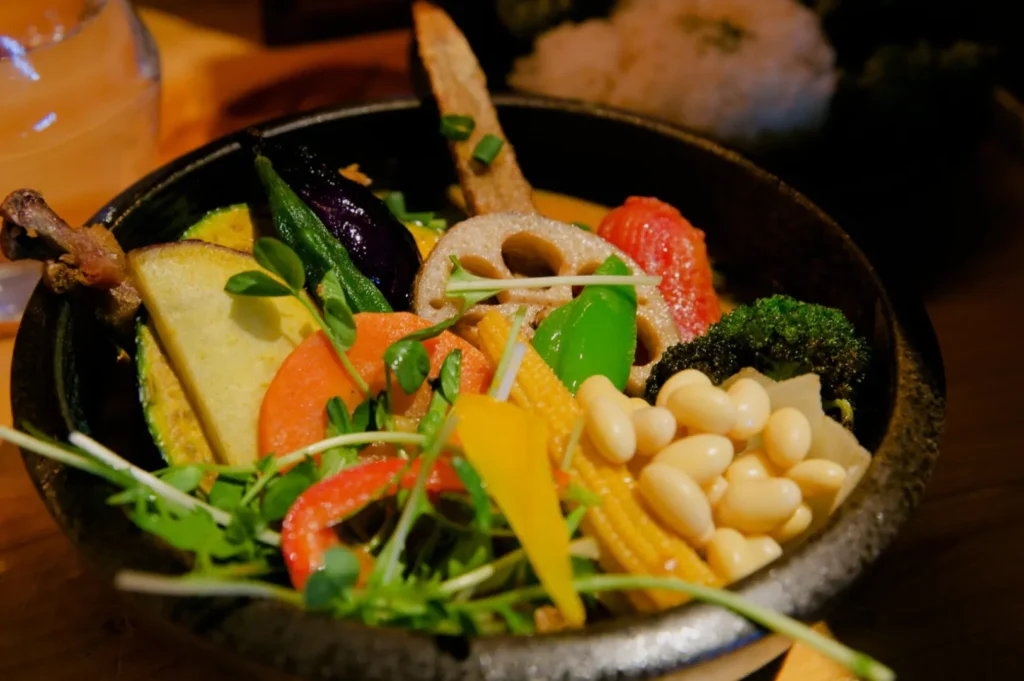
If you are new to soup curry, our recommendation is to start at level two or three. This gives you a genuine taste of the dish’s full character without pushing your heat tolerance to its limits on a first visit. Once you understand the soup base, the texture of the deep-fried fresh vegetables, and the way the broth interacts with steamed rice, you will be better placed to decide how much heat you actually want to add on your next visit.
For returning guests and confirmed spice lovers, the middle and upper ranges offer real excitement. And for those determined to push to the extreme, we respect that ambition entirely. Just make sure you leave room to enjoy the meal, because even at its most intense, a bowl of soup curry from Soup Curry by Ki-Setsu deserves to be savoured.
Soup Curry Garaku in Sapporo helped cement the idea that soup curry samurai, those devoted regulars who know exactly what they want and how hot they want it, are a proud part of this cuisine’s culture. We carry that spirit here in Singapore. Whatever your spice level, there is a bowl here that is yours.