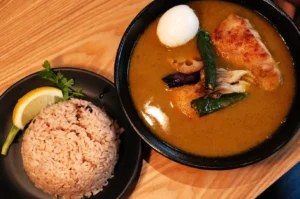
Ask most people in Singapore what Japanese curry tastes like and the answer is often the same: thick, mildly sweet, and served from a packet. It is one of the most beloved comfort foods to travel out of Japan, yet it is also one of the most misunderstood.
Behind the familiar bowl of curry rice at a casual eatery lies a much richer story involving regional variations, historical accident, and a surprising amount of culinary debate. At our restaurant, we spend a great deal of time explaining these Japanese curry misconceptions to guests who are trying Hokkaido soup curry for the first time.
This article looks closely at the assumptions diners commonly carry into Japanese restaurants, and where those assumptions fall apart.
The Biggest Japanese Curry Misconceptions We Hear at the Table
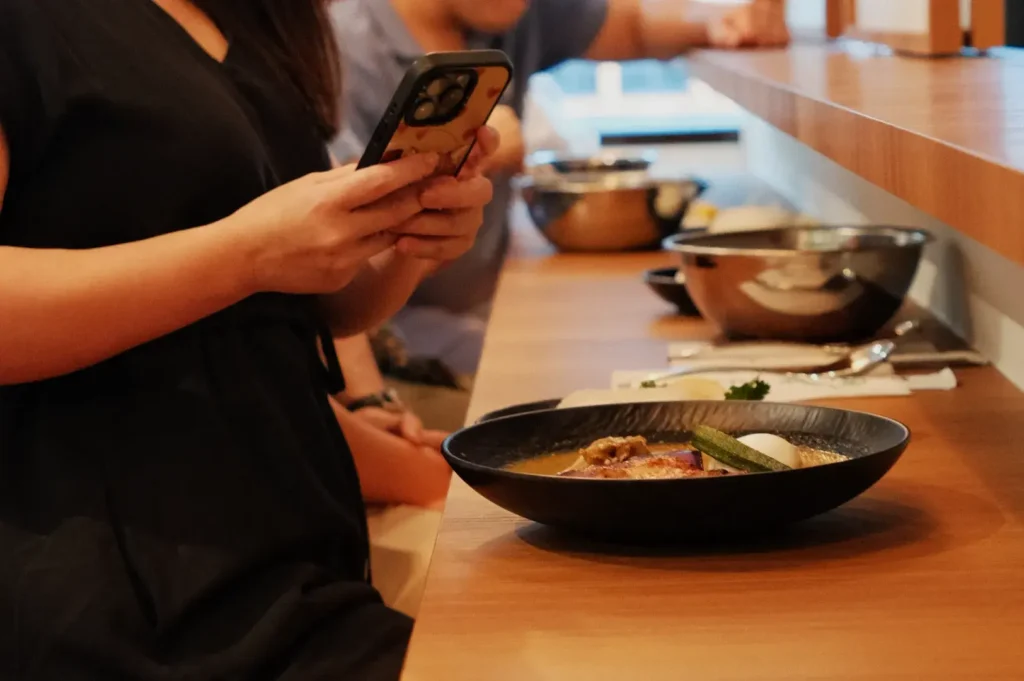
When guests walk in expecting a bowl of thick curry rice and instead find a light, fragrant soup base, the questions start immediately. Is this even curry? Why is it not gloopy? Where is the roux? These questions reveal just how deeply the boxed, thickened version of the dish has shaped public expectations of what typical Japanese curry should look and taste like.
The truth is that curry in Japan was never a single fixed formula. It evolved, splintered into regional styles, and continues to change today. Soup curry itself, born in Sapporo on the northern island of Hokkaido, is proof that this Japanese dish was always more diverse than the standard curry rice most people know.
Curry Powder Versus Curry Roux
One of the most persistent misconceptions is that curry powder and curry roux are the same thing. They are not.
Curry powder is a dry spice mix, similar in spirit to garam masala, made from a blend of turmeric, cumin, coriander, and sometimes a touch of cayenne pepper. Curry roux, on the other hand, is a solid curry roux block made by cooking flour, fat, and Japanese curry powder together until it forms a paste that hardens into cubes.
Most households and many casual restaurants in Japan today rely on instant curry roux rather than building a sauce from raw spices. This is a significant departure from how curry was originally prepared, and it explains why so much of what people call typical Japanese curry actually tastes remarkably similar from one bowl to the next.
When preparing our soup base, we follow a spice-forward tradition using authentic Japanese ingredients. We layer in aromatics and stock instead of relying solely on pre-made blocks, which is why the flavor often surprises diners expecting something more typical.
Misconception: All Japanese Curry Tastes Like It Comes From a Box
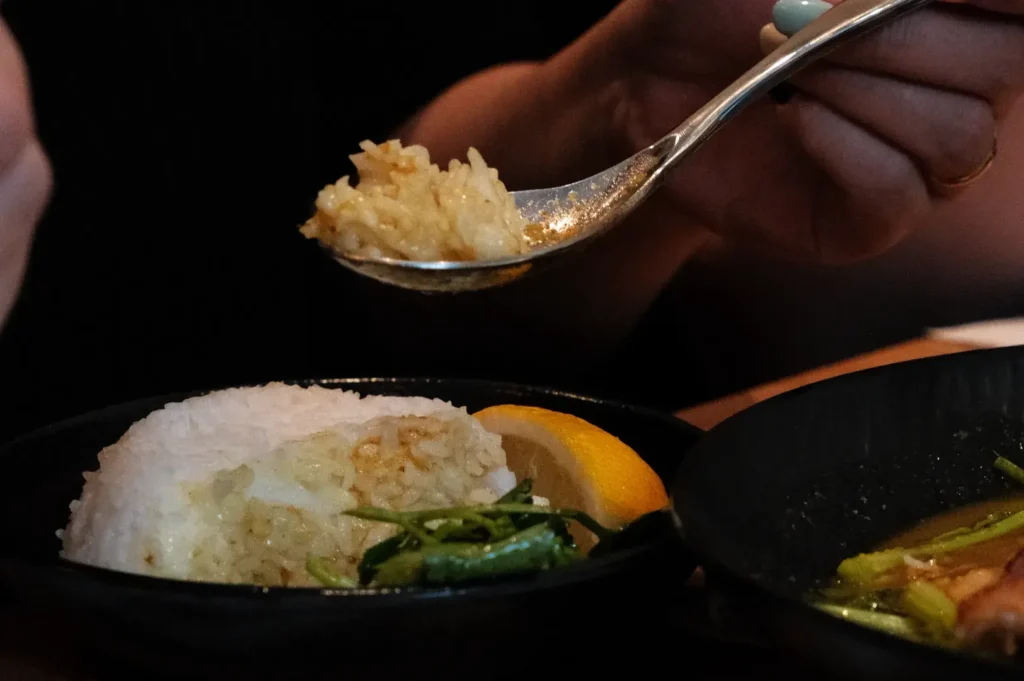
Certain solid curry roux blocks, sold as instant lines with milder and spicier variants, have become so widely used in Japan and abroad. Many diners now assume this is simply what Japanese curry tastes like everywhere. This assumption is understandable. These products are convenient, affordable, and consistent, which is exactly why they became household staples for anyone making curry on a weeknight.
However, treating instant roux as the definitive version of Japanese curry overlooks generations of regional and restaurant specific interpretations that existed before mass production took over home kitchens. Curry made with hot water and a cube of solid roux is fast and reliable, but it also flattens the flavour profile into something predictable.
Restaurants that specialise in a particular style, whether that is dry curry, curry udon, or soup based versions like ours, are often working from a completely different starting point. This approach is closer to how curry was cooked before instant products dominated the market.
Misconception: Curry in Japan Has Always Looked Like This
Many diners assume that curry rice is a native Japanese creation with roots stretching back centuries, similar to miso soup or other staples of Japanese cuisine. In reality, curry arrived in Japan during the early Meiji period, brought over not directly from India but through English sailors serving in the British Royal Navy.
These sailors had already adapted Indian food into a thickened, stew-like format for shipboard meals. Japan absorbed this British interpretation of curry rather than the dish as it existed in India, which is why Japanese curry originated as something quite far removed from most Indian curries in terms of spice complexity and texture.
Over the following decades, Japanese cooks softened the spice levels to suit the Japanese palate. They incorporated local ingredients like carrots, potatoes, and onions. Eventually, they developed the thickened roux style most people recognise today.
What began as a naval ration became one of the most popular dishes in the country, reinvented so many times that its origins in India are barely part of the public conversation. Even so, a warm, spiced sauce over a bowl of rice remains a perfect pairing that Japan borrowed and made entirely its own.
From Early Meiji Period Adaptation to Modern Comfort Food
This history matters because it explains why curry in Japan diverged so dramatically from its Indian and Thai counterparts. Thai curry generally relies on fresh curry paste, coconut milk, and curry leaves, while most Indian curries build layered heat using whole and ground spices simmered slowly.
Japanese curry, shaped by its British detour, prioritizes a mellow, slightly sweet flavor profile that feels more like comfort food than the spicier cuisines it originated from. Malaysian curry falls somewhere in between, balancing the sweetness of Japanese curry with the heat of its regional neighbors.
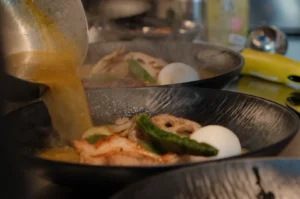
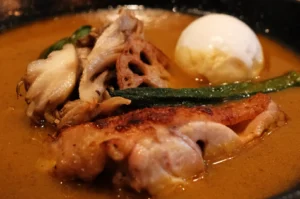
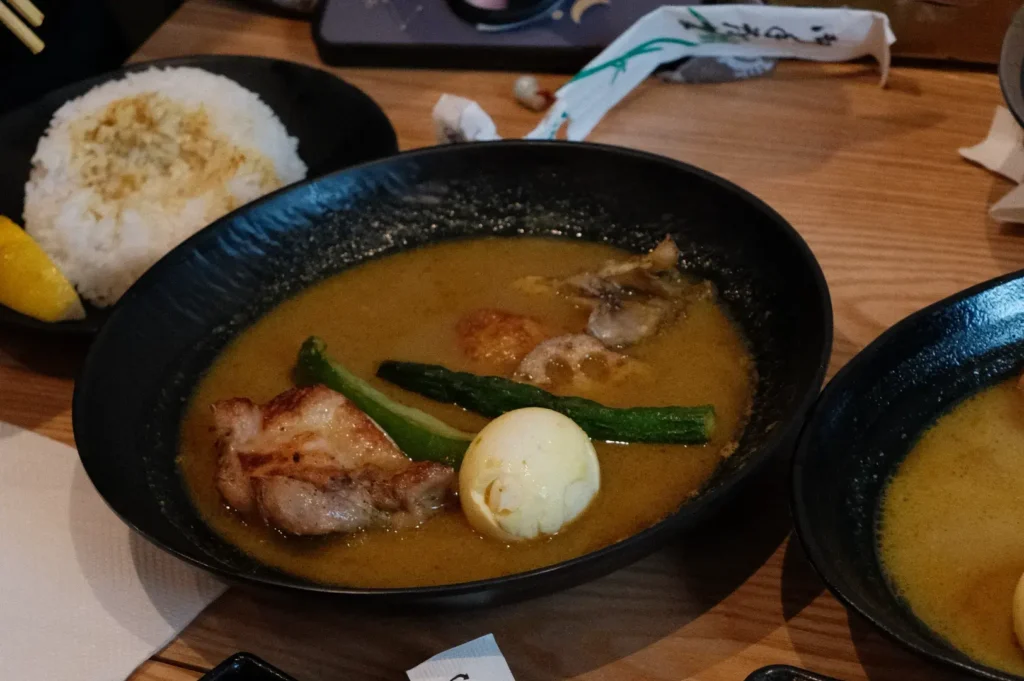
Soup curry represents a different evolution. Instead of thickening the base with roux, it keeps the broth light and clear, allowing the vegetables and spices to shine. This style is closer in spirit to the dish’s earlier, less processed days before instant roux became common. Among Japanese restaurants in Singapore, this format remains a hidden gem, since most menus default to the thicker, more familiar style.
Misconception: Chicken Curry Is the Only Real Version Worth Trying
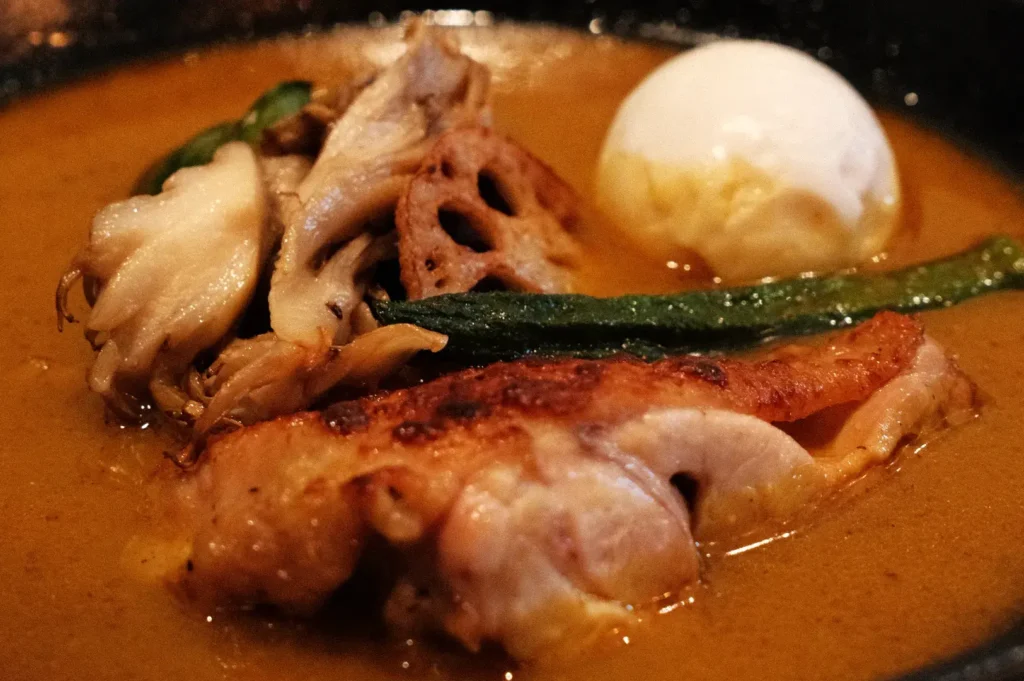
Japanese chicken curry, made with tender chicken thigh simmered in a rich sauce, is undeniably one of the most popular dishes in the category, but treating it as the sole authentic option ignores the sheer range of formats curry takes across Japan.
There is curry udon, where a thinner curry broth coats slippery noodles. There is curry bread, a deep fried pastry filled with thick curry paste. There is dry curry, closer to a spiced minced meat dish served over rice with barely any sauce at all.
Curry Udon, Curry Bread, and Endless Possibilities
This is where the endless possibilities of Japanese curry become obvious. The base spice mix stays recognisable, but the format changes entirely depending on region, restaurant, and even the season.
Soup curry belongs firmly in this same spirit of reinvention. Rather than treating curry as a fixed dish with one correct format, it treats curry as a flavour foundation that can be reshaped depending on what a cook wants to highlight, whether that is noodles, pastry, rice, or a bowl of vegetables in fragrant broth.
At our restaurant, this shows up in the vibrant deep fried vegetables we prepare using Japanese cutting methods, from bell pepper and lotus root to aubergine and potato, served in a bowl of aromatic soup rather than folded into a thick sauce.
Guests can choose between fluffy white rice, short grain rice, or occasionally jasmine rice, since the grain matters just as much as the sauce when making Japanese curry properly. It is a format that surprises first time guests because it does not match the single narrow image of curry rice most people expect.
Misconception: The Best Japanese Curry Is the Spiciest One
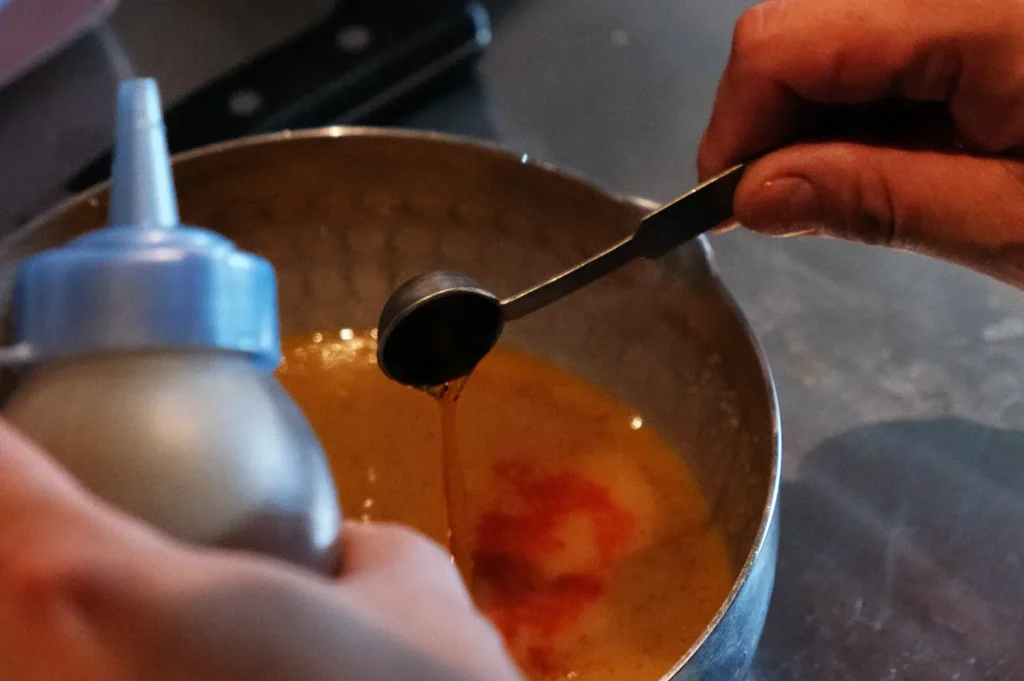
Spice level is another area of confusion. Because curry as a broader food category is associated with heat, some diners assume that the best Japanese curry experience should come with a serious kick. In practice, traditional Japanese curry, even in its more elevated restaurant forms, tends to prioritise depth and warmth over aggressive heat. Spice levels are usually adjustable, allowing guests to choose their own intensity rather than having it dictated by the dish itself.
This is very much how we approach our own soup curry. Guests can select their preferred spice level, which allows the layered aromatics, the tomato paste, the stock, and the vegetables to remain the focus rather than being overwhelmed by chilli alone. It is a small detail, but it reflects a broader truth about curry in Japan: heat was never really the point, and neither is nutritional value alone, since the appeal of this specific dish has always been comfort first.
Why Understanding These Misconceptions Changes How You Order
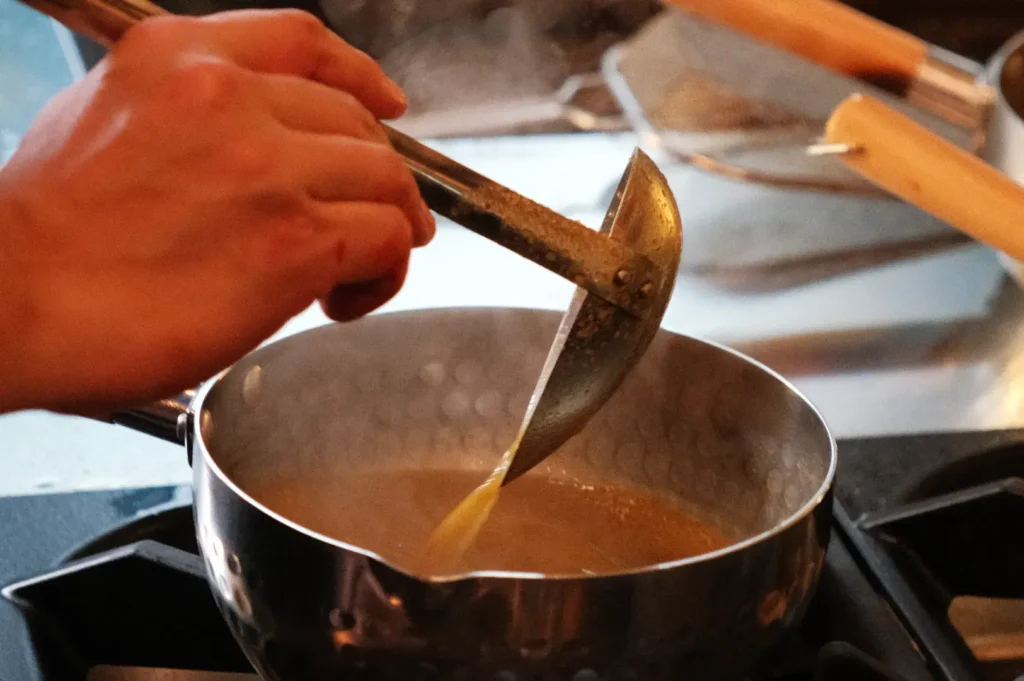
Once diners understand these distinctions, ordering becomes a very different experience. Instead of expecting a single predictable bowl, they start recognising curry as a wide and adaptable category shaped by history, regional taste, and individual technique.
We built Soup Curry by Ki-Setsu around the belief that curry deserves this kind of nuance, and that a lighter, broth based approach can sit comfortably alongside the thicker, roux driven curry rice most diners already know.
Bringing the Misconceptions Together
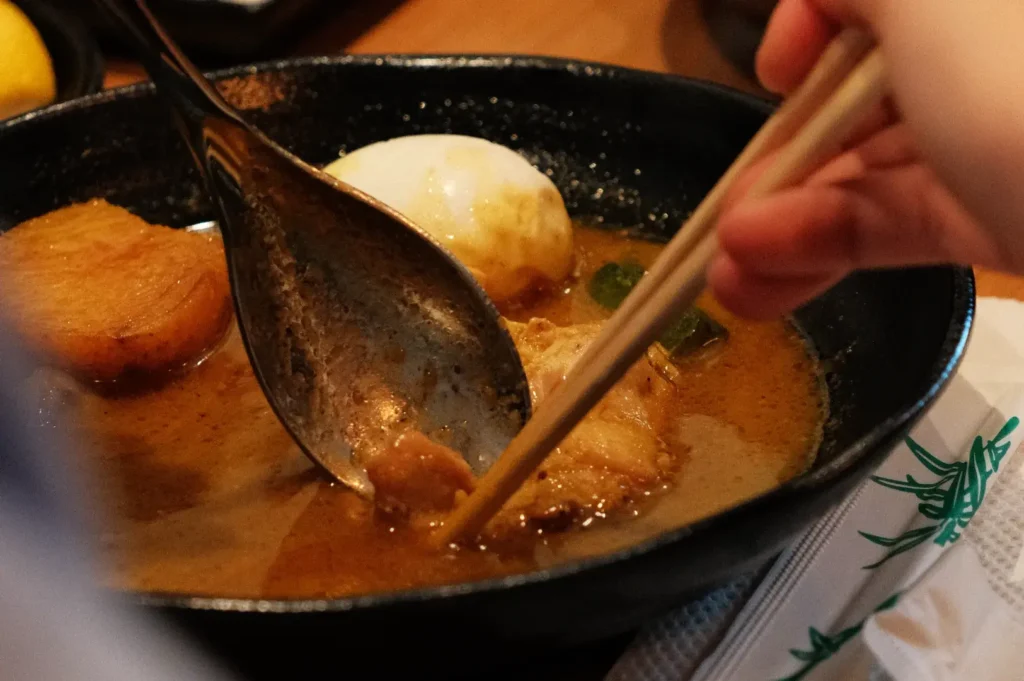
Japanese curry is not one dish. It is a category shaped by naval rations, home cook shortcuts, regional creativity, and decades of reinterpretation. Understanding this helps explain why a bowl of soup curry looks so different from the curry rice found at a typical curry restaurant, and why that difference is not a departure from tradition but a continuation of it.
The next time you sit down with a bowl of curry, whether thick or light, spiced generously or gently, it is worth remembering that Japanese curry was always meant to be reinvented.