Choosing between chicken and pork in a bowl of Hokkaido soup curry is not a small decision. It shapes the entire eating experience, from the richness of the broth to the way the meat holds up against the heat of the spices. For anyone new to this style of curry soup, the soup curry chicken vs pork question often comes down to more than simple preference. It touches on texture, cooking technique, and even how the dish is meant to be paired with rice.
This article breaks down exactly what separates these two proteins so you understand what you are tasting, whichever bowl you eventually order.
Soup Curry Chicken vs Pork: Why the Choice Matters
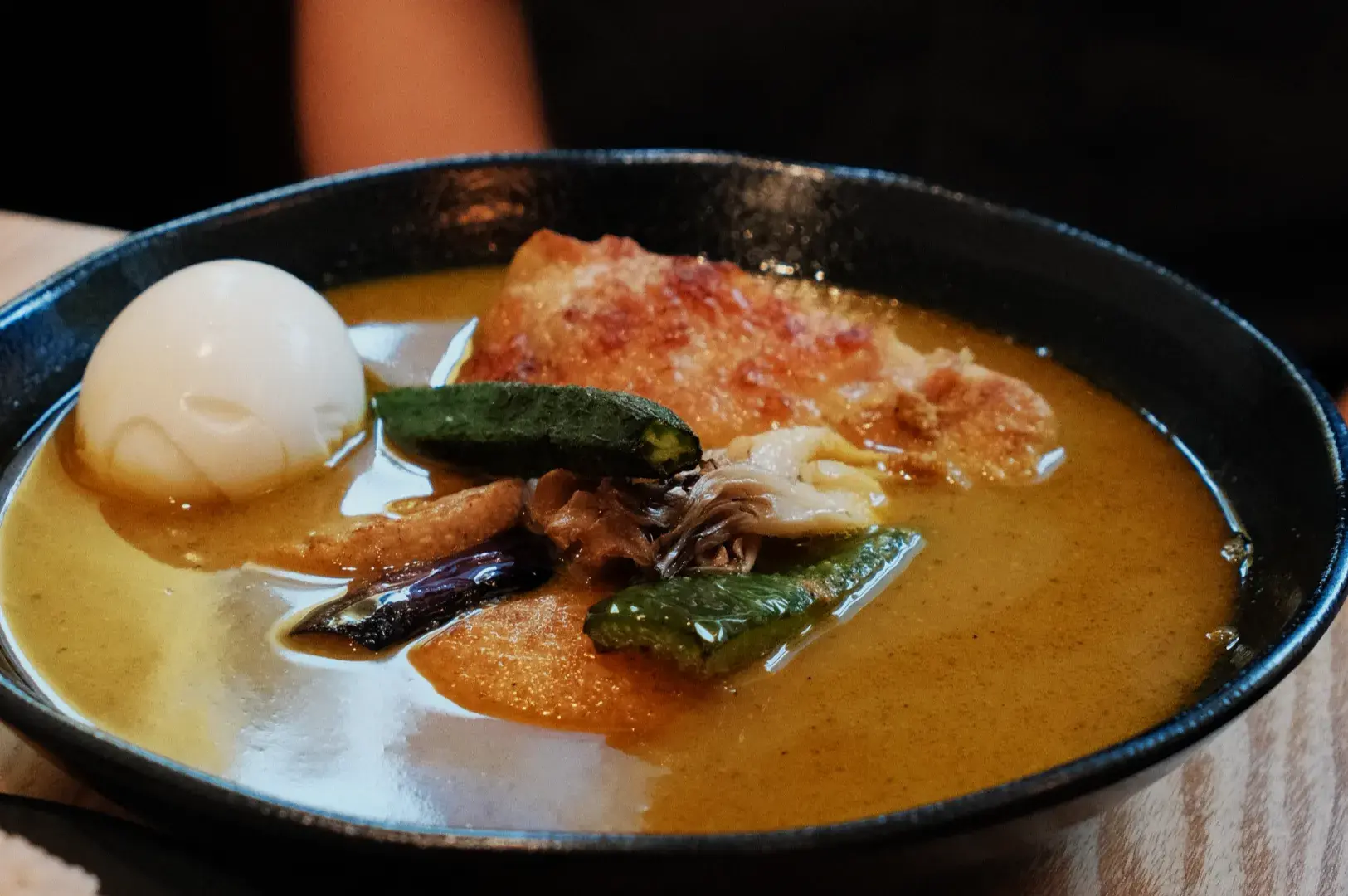
Unlike a thick, stew like Japanese curry that clings to a spoon, soup curry is a thinner, more aromatic broth built around layers of spices, vegetables, and a carefully cooked protein. Because the broth itself is lighter and more transparent in flavour, the meat used plays a much bigger role in how the final bowl tastes. A chicken curry version leans toward something delicate and comforting, while a pork based bowl, where available, tends to carry more depth and a slightly fattier finish.
This is not a case of one protein being objectively better than the other. It is about understanding what each brings to the dish. Some diners want something light enough to eat on a warm evening, while others crave a bowl that feels heartier and more indulgent. Knowing the differences helps you appreciate exactly what you are eating, and why certain kitchens choose to specialise in one protein over offering both.
Understanding Curry Soup: The Base That Shapes Every Bite
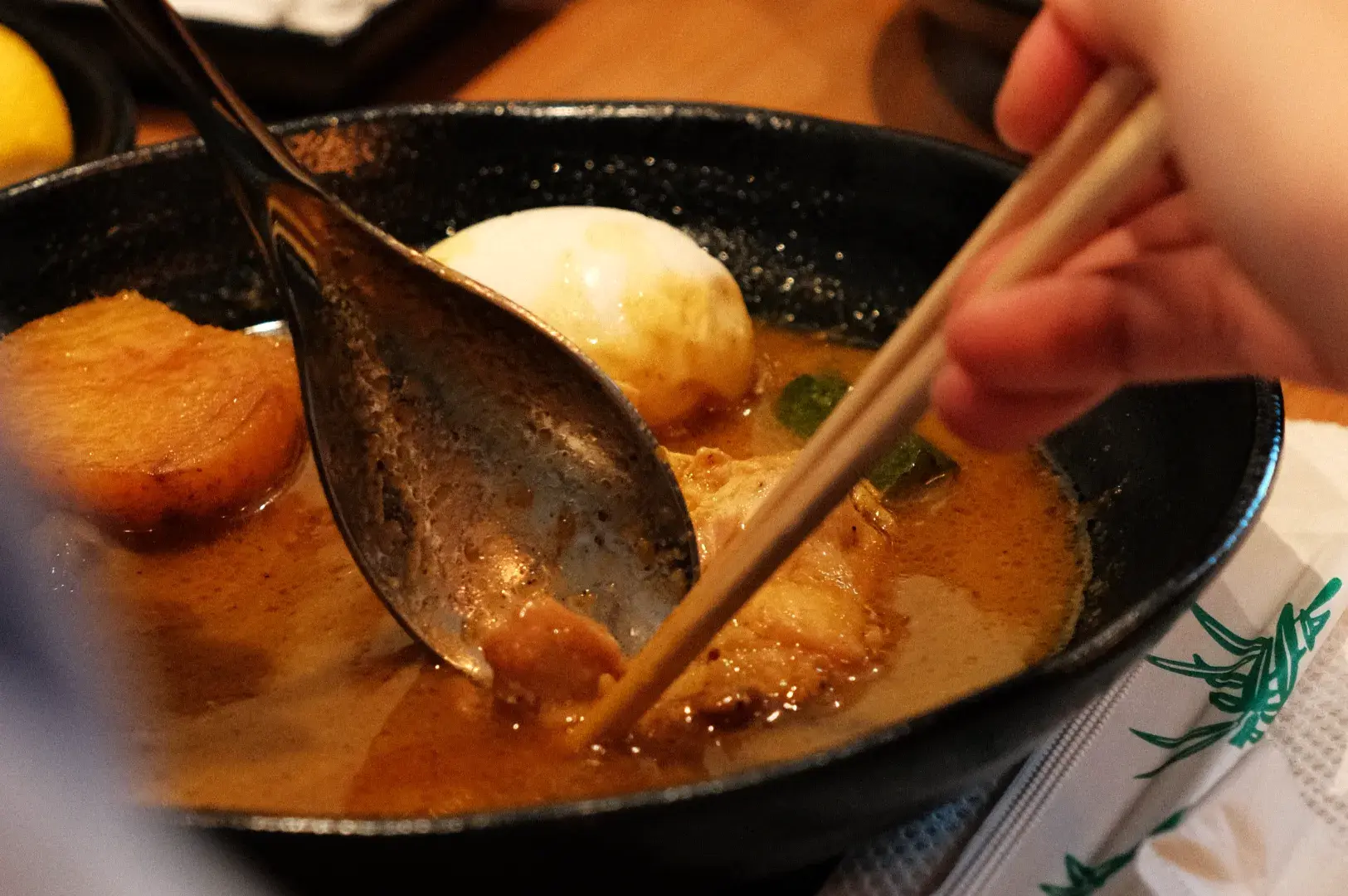
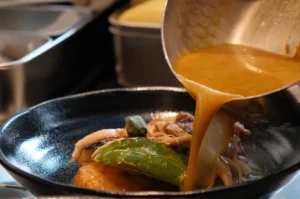
Before comparing the proteins directly, it helps to understand what curry soup is actually built from. A proper broth begins in a heavy bottomed pot, where whole spices are roasted briefly to release their aroma, then simmered over medium high heat, stirring occasionally, before garlic and ginger are added along with a blend of curry powder that often includes garam masala for warmth and complexity.
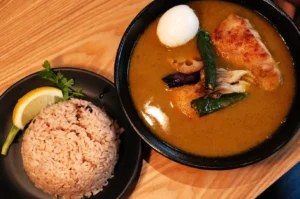
Vegetables like potato, carrots, pumpkin, and okra are typically cooked separately and added into the bowl, preserving their individual ingredients and textures rather than letting them dissolve into a thick sauce. A touch of tomato paste is sometimes stirred in toward the end, deepening the colour and adding a subtle savoury sweetness that balances the heat of the spices. Curry powder itself carries a long history, travelling from South Asian kitchens through Southeast Asian trade routes before finding a distinct identity within Japanese cuisine.
This is a key difference from other curry styles. In many typical curry restaurants, everything is stewed together until soft and blended. In an authentic soup curry, however, the broth remains a broth, thin enough to sip, and every ingredient retains its own character. This method affects how any protein behaves once added, since neither chicken nor pork is masked by a heavy sauce. Whatever texture and flavour the meat brings, it comes through clearly, which is precisely why the choice between the two matters so much to those who know the dish well.
Read: Soup Curry Singapore Handbook: What It Is, Where to Get It, and Why You Should Try It
Chicken Curry in a Hokkaido Style Bowl
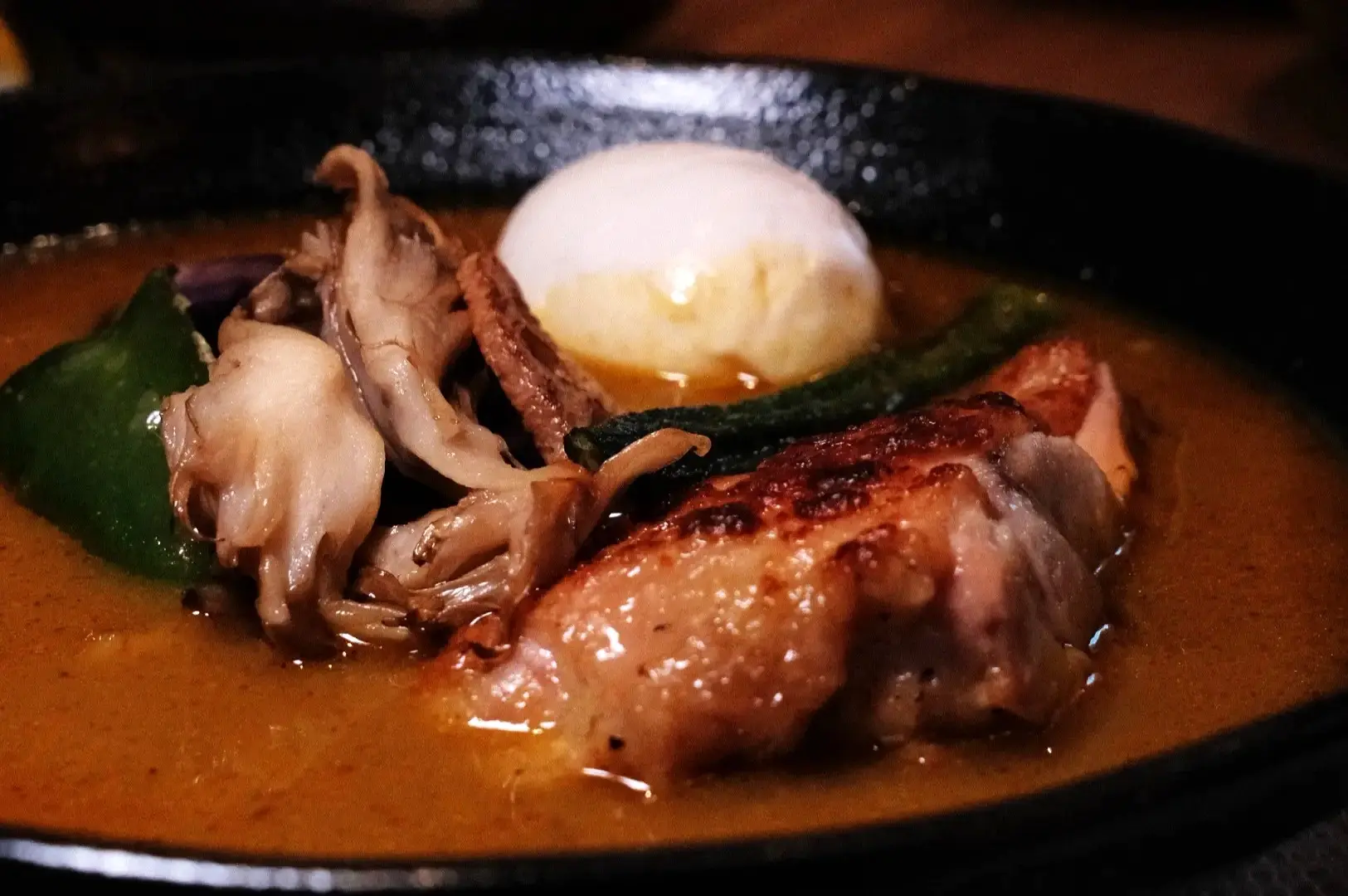
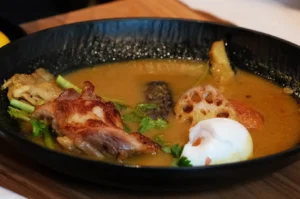
Chicken is often the more approachable choice, particularly for those trying soup curry for the first time. In most preparations, a bone in chicken leg or thigh is used, simmered gently within the curry soup itself so the meat absorbs the spices from the inside while staying moist. This differs from a quick sauté or stir, since low and slow cooking allows the chicken to remain tender without drying out.
Texture and Tenderness
The texture of chicken in this style of curry is soft and falls easily from the bone. Because chicken carries less natural fat than pork, the broth tends to taste cleaner, letting the aromatic spices take centre stage. For those who enjoy tasting the individual notes of ginger, garlic, and curry powder without a heavier, fattier backdrop, chicken curry is usually the preferred match, and it is this clarity of flavour that has made chicken the singular focus of some kitchens dedicated to the craft.
There is also a practical side to this choice. Chicken cooks relatively evenly and pairs well with a wide range of vegetables without competing for attention the way a richer meat might. This is part of why it remains one of the most popular proteins across curry soup menus, and why a kitchen might choose to master it exclusively rather than divide its attention.
Pork Chops and Pork Belly: The Bolder Bowl
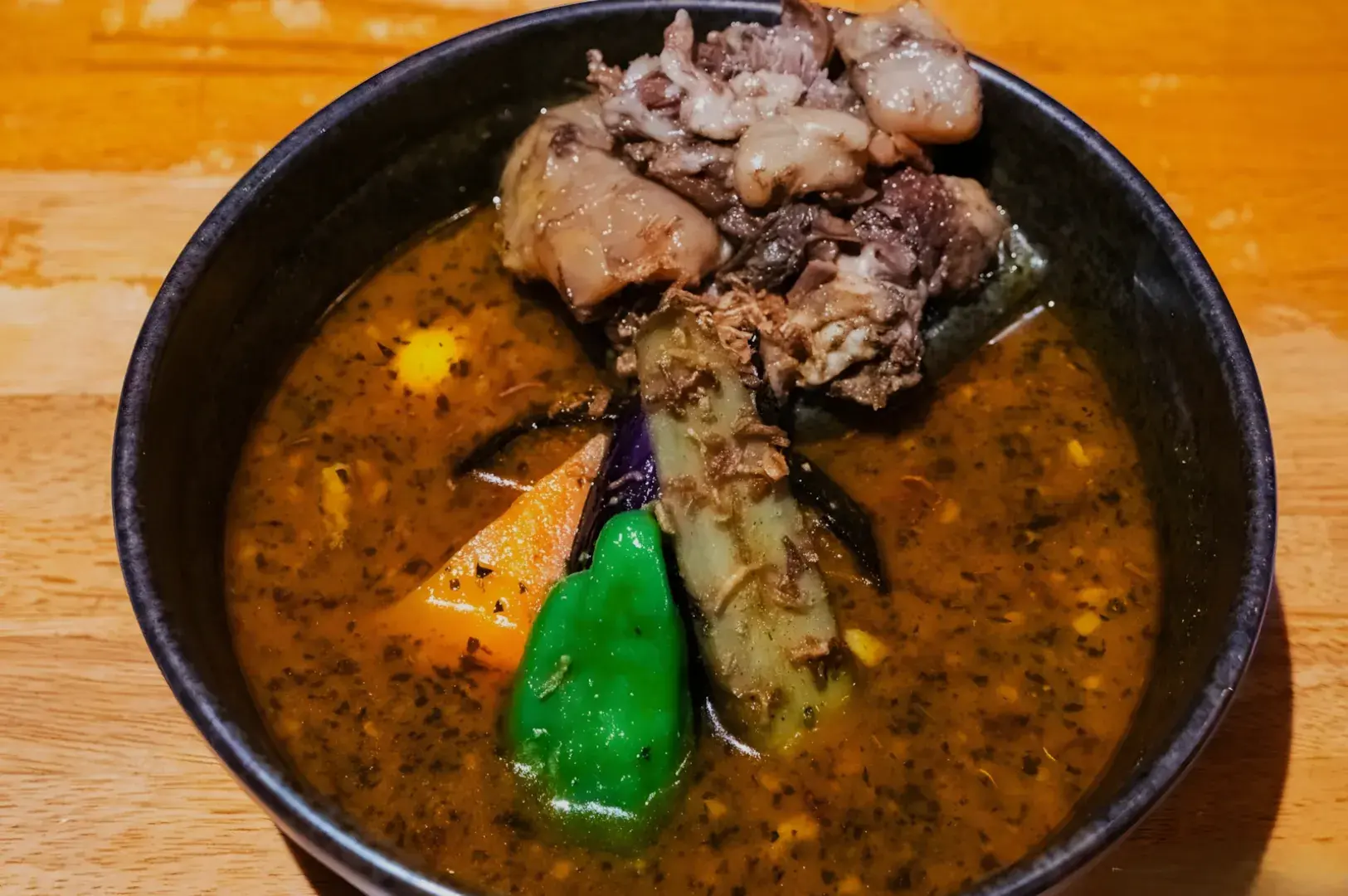
Pork, where it appears on a soup curry menu, brings a completely different character to the bowl. Depending on the cut, whether pork chops or pork belly, the flavour and texture shift dramatically. Pork belly, cut from the underside of the pig, carries a higher fat content that renders slowly during cooking, releasing richness directly into the curry soup. This creates a broth with more body and a slightly sweeter undertone, especially when the natural sweetness of the meat meets the warmth of the spices.
Pork chops, by comparison, offer a leaner bite while still contributing more richness than chicken. The key with pork chops is careful preparation. If overcooked, the meat can turn tough, so many kitchens sear it first in a little oil at high heat, seasoned simply with salt to let the pork’s natural flavour shine, before letting it finish cooking gently within the broth. This locks in juiciness while still allowing the curry to penetrate the meat.
Why Pork Works Differently in Curry Soup
Because pork carries more natural fat, it changes the mouthfeel of the entire dish. The broth clings slightly more to the palate, and the overall bowl feels heartier. This makes pork an appealing choice for diners who want a more substantial, warming meal, particularly during cooler months or after a long day. It also holds its own against bolder spice blends, since the richness of the meat balances out heat rather than being overwhelmed by it. For those who prefer things spicier still, additional chilli can usually be requested at establishments offering this option to raise the heat further.
Katsu Curry vs Soup Curry: A Quick Distinction
It is worth briefly addressing a common point of confusion. Katsu curry, a well known style of Japanese curry, features a breaded cutlet, often chicken or pork, prepared using a deep fry method rather than being simmered within a broth. The meat is typically coated and cooked using a technique similar to the Japanese su age approach, resulting in a crisp exterior that contrasts against a thick, glossy curry sauce poured over the top.
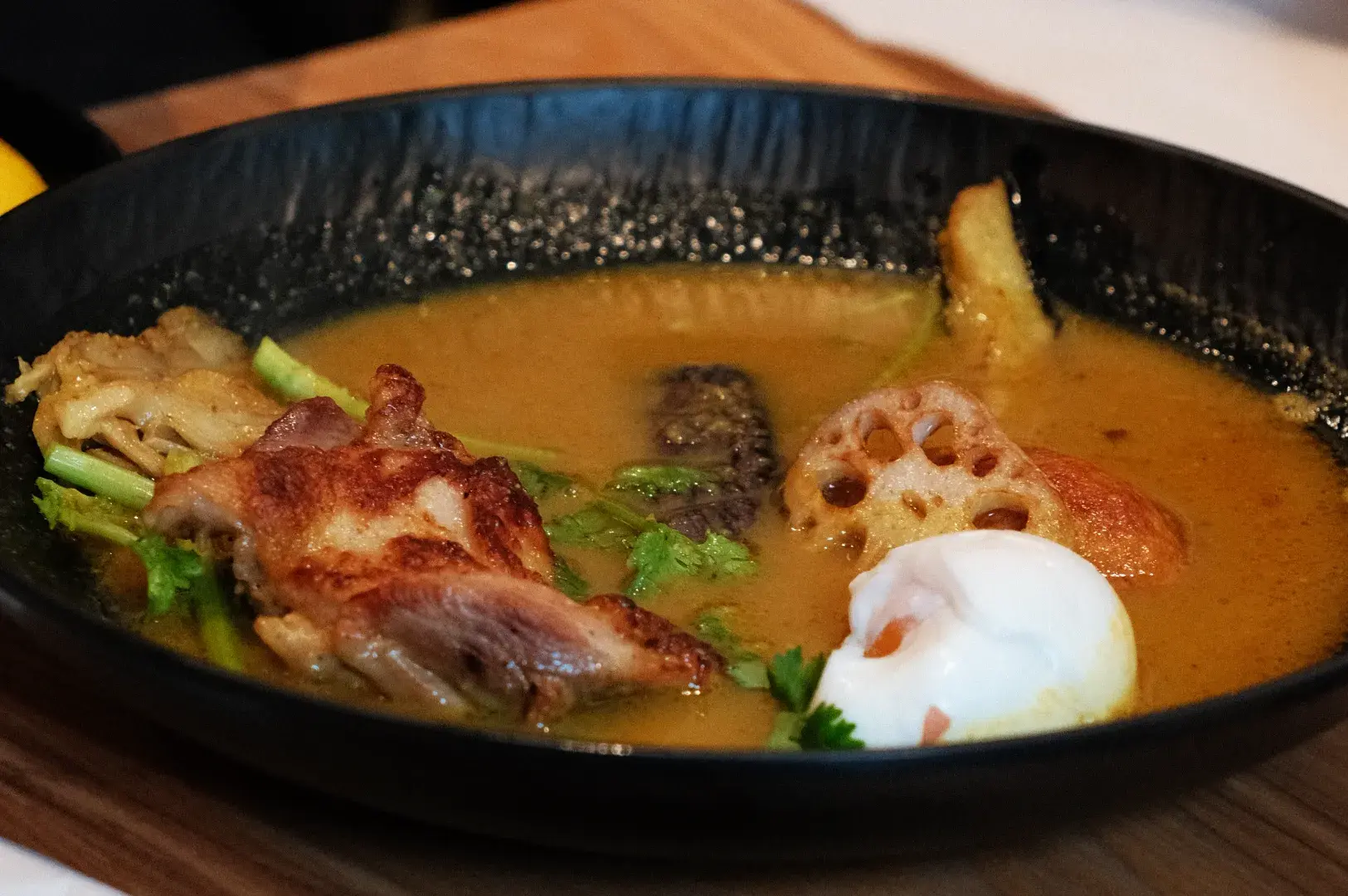
Soup curry takes an entirely different route. Rather than coating and flash frying the protein, the meat is either simmered directly in the broth, as is common with chicken, or seared and gently cooked, as is often done with pork chops or pork belly where offered.
Some soup curry preparations do incorporate a lightly fried element among the vegetables, such as deep fried lotus root or other seasonal produce, but the protein itself is rarely breaded in the way katsu curry demands. Recognising this distinction helps clarify why soup curry chicken vs pork comparisons focus so heavily on how the meat is simmered or seared, rather than how it is fried.
What Pairs Best: Curry Rice or Steamed Rice
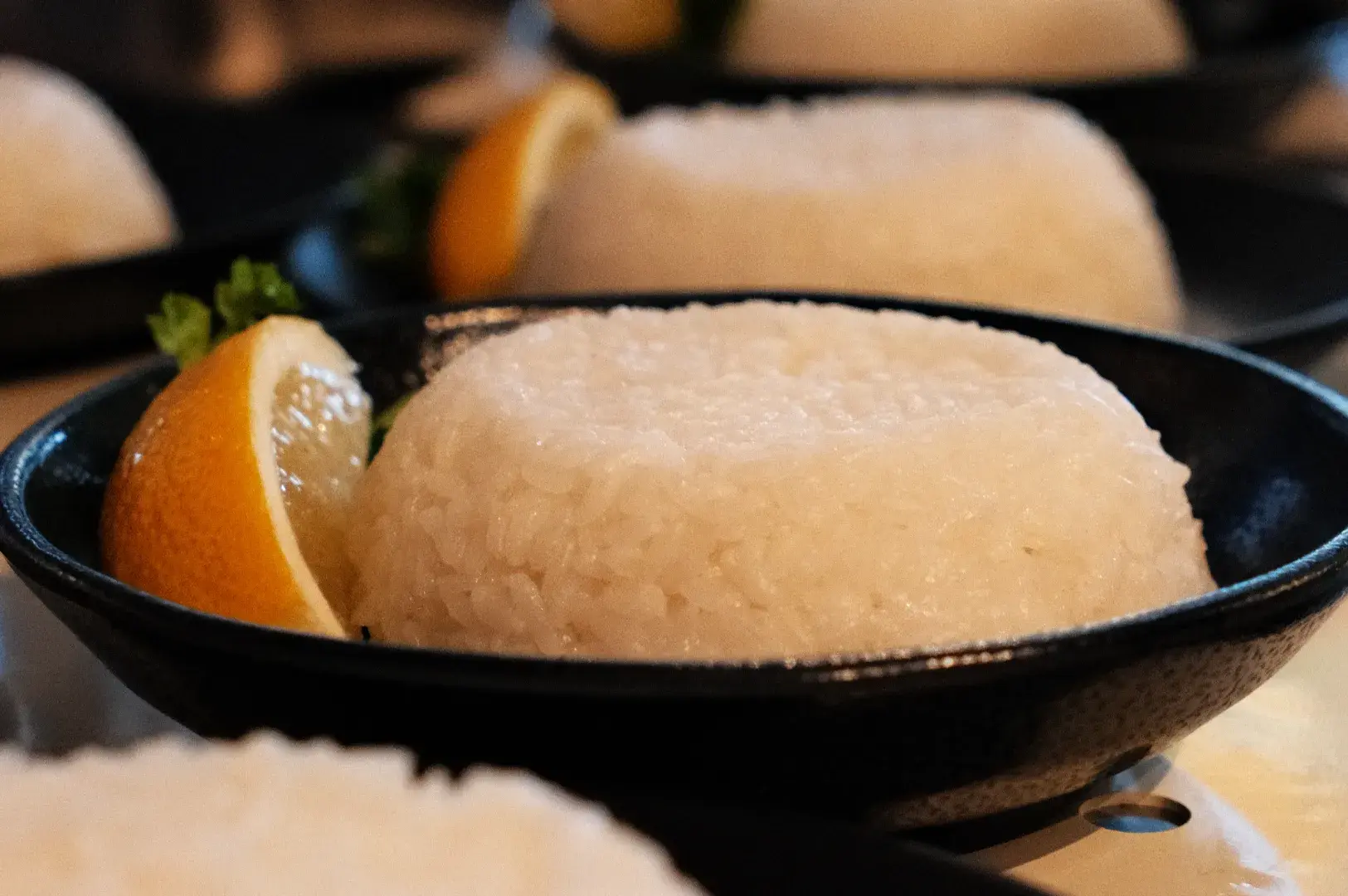
Rice plays a supporting but important role in this comparison. Traditional curry rice, where rice and sauce are combined on the same plate, is common in many Japanese curry styles. Soup curry, however, is almost always served with steamed rice on the side, allowing diners to control exactly how much rice touches the broth with each spoonful.
This separation matters more than it might seem. Because chicken curry tends to produce a lighter, thinner broth, steamed rice added gradually helps balance each mouthful without diluting the aromatic spices too quickly. Pork based bowls, where available, carry a richer, slightly heavier broth that can often handle a bit more rice per spoonful without losing flavour, since the richness of the meat and sauce stands up well against the starch. Unlike a bowl of ramen, where the broth is often built for hours atop bones and served piping hot alongside noodles, curry soup achieves its depth more quickly through spice layering, which is part of what makes the rice pairing so important to get right regardless of protein.
Either way, the steamed rice is meant to be a companion to the soup curry, not a base soaked in it from the start. Many home recipes across Hokkaido follow this same principle, finishing the bowl with a simple garnish of spring onion or a soft boiled egg for those wanting extra richness. This is part of what makes soup curry a distinct eating experience compared to more familiar Japanese curry rice dishes.
Making Your Choice at Soup Curry by Ki-Setsu
At the heart of this comparison is a simple truth: soup curry chicken vs pork is not about right or wrong, but about understanding what each preparation brings to the table, even if only one ends up on your plate at a given restaurant. If you want something lighter, cleaner, and gently spiced, chicken curry remains a dependable choice, and it happens to be the exclusive focus of our own kitchen.
Why We Focus on Chicken
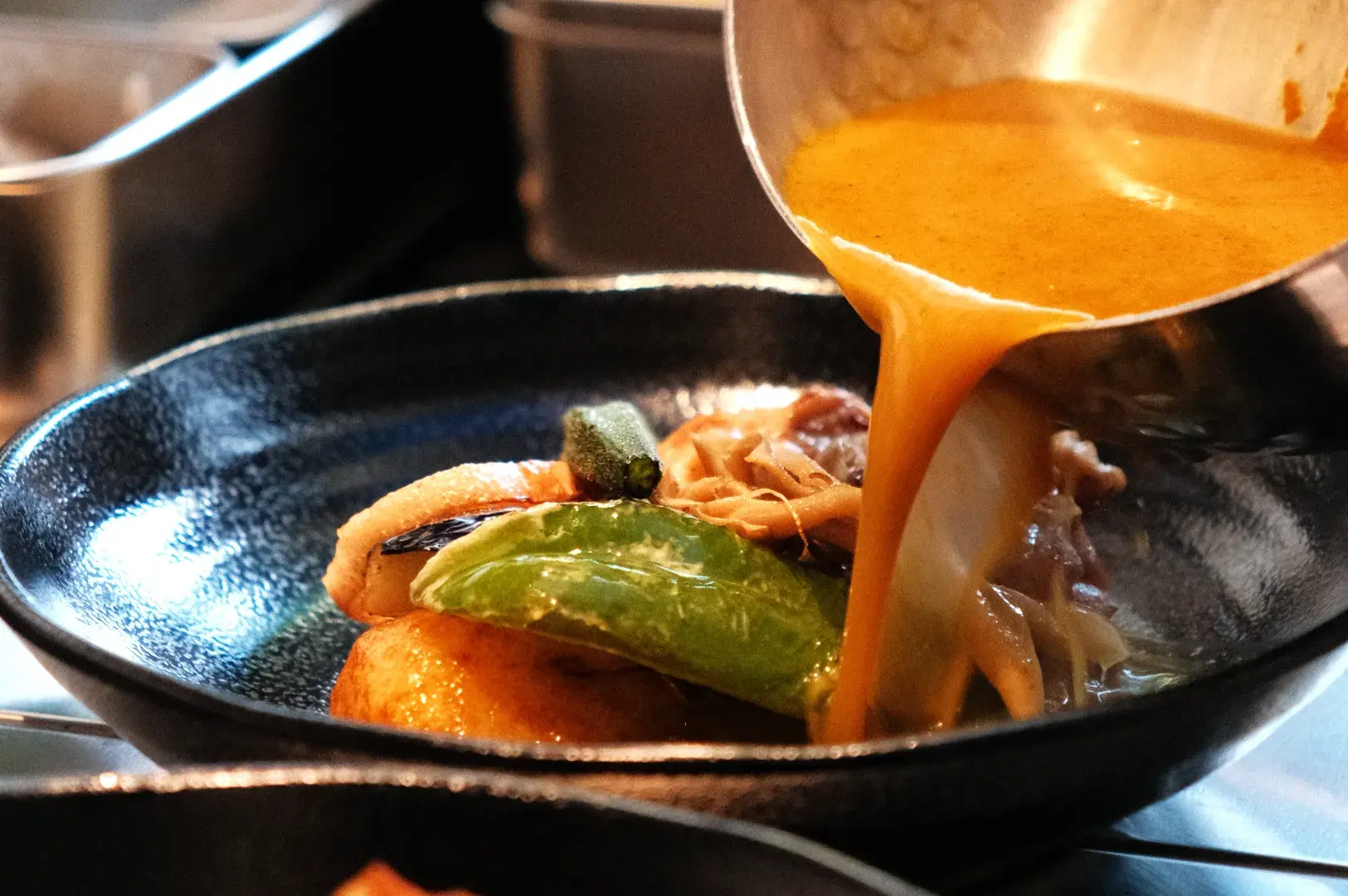
Our approach draws directly from Sapporo, northern Japan, where soup curry became a beloved comfort food. We simmer chicken slowly in the broth, letting it absorb aromatic spices while staying tender and moist. Alongside the meat, fresh, vibrant deep fried vegetables like bell pepper, aubergine, potato, and lotus root are prepared using traditional Japanese methods, adding color and texture without overwhelming the broth. While pork chops and pork belly have their place in soup curry, our kitchen focuses entirely on chicken, refining every element of the broth and technique around this single protein.
For those curious about the full experience, including how our menu shifts into a cosy izakaya style setting from 6pm onwards, Soup Curry by Ki-Setsu welcomes guests looking to explore Hokkaido style soup curry as it was meant to be enjoyed, one thoughtful bowl at a time.
Ultimately, whether your curiosity leans toward chicken or pork, the goal remains the same: a bowl that feels warm, comforting, and true to its Hokkaido roots. The next time you find yourself weighing soup curry chicken vs pork, know that here, that choice has already been made with care. Our chicken is cooked with dedication, honouring the same broth and spice tradition that defines this dish, offering a genuine taste of what makes this flavourful bowl such an enduring soul food.