Every bowl of soup curry begins long before the vegetables are fried or the rice is steamed. It begins with a curry broth that has been given time, patience and attention that most diners never see. At our restaurant, we believe the soup curry base is the true measure of whether a bowl is authentic or simply dressed up to look the part.
This article takes you behind the counter to show exactly how a proper Sapporo soup curry base is built, layer by layer, and why rushing any part of that process changes the final taste entirely.
What Makes a Sapporo Soup Curry Base Different
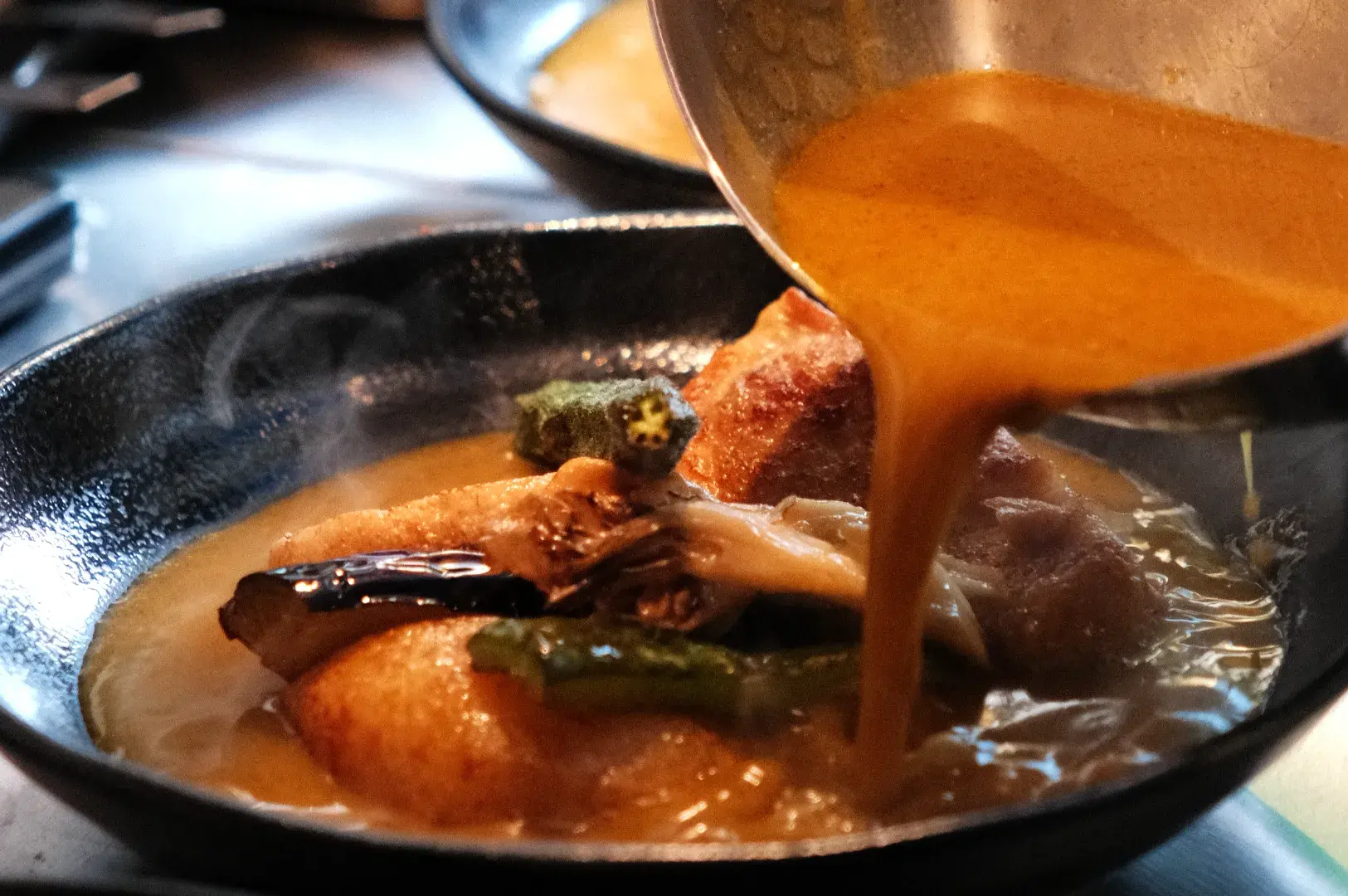
A typical Japanese curry relies on a thick curry roux, often pressed into blocks and melted straight into a pot of vegetables and meat. It is comforting, familiar and quick to prepare, which is exactly why it has become the regular Japanese curry found in most households across Japan. Sapporo soup curry takes a different path entirely.
Instead of a roux that thickens the pot into a stew, our soup curry base stays light, clear and pourable, closer to a light curry flavored soup than a gravy. This is the defining trait of Hokkaido soup curry, and it is also the hardest part to get right. Without a roux to mask weak flavours, every element of the broth has to earn its place. There is nowhere for a shortcut to hide.
Building the Curry Broth from Chicken Bones Up
Our curry broth starts with chicken bones, usually a mix of bone in chicken pieces and chicken legs, simmered slowly in a large pot until the liquid turns rich and slightly golden. We favour a heavy bottomed pot or dutch oven for this stage because even heat distribution matters when a broth is left to develop over several hours.
A bay leaf, a portion of grated ginger and aromatics go in early, while we bring the pot to medium heat rather than a rolling boil. Boiling too aggressively clouds the broth and can make the chicken stock taste flat. A gentle simmer draws out flavour without breaking down the collagen too quickly, which keeps the curry soup silky rather than greasy.
Some seasonal ingredients, such as root vegetables and onion skins, are added purely for depth and removed before serving. This is not a soup dish meant to carry chunky vegetables in the base itself. That job is reserved for later.
Why We Cook the Curry Soup Separately from the Vegetables
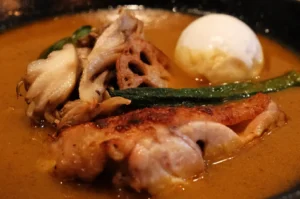
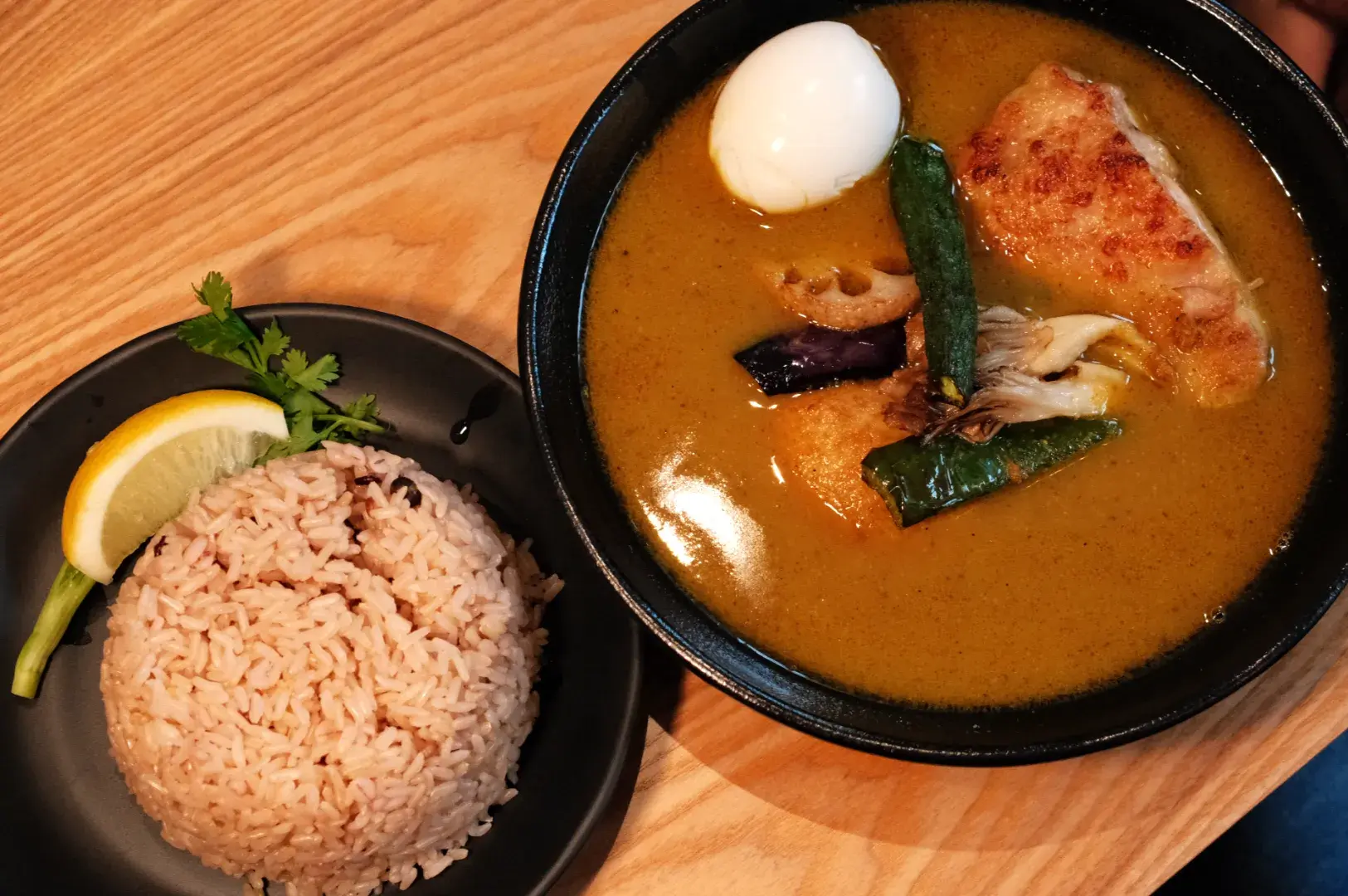
One detail that surprises many first time guests is that the vegetables in their bowl are never simmered inside the curry broth. The soup base is prepared entirely on its own, then the vegetables are cooked separately and only combined at the point of serving. Occasionally, elements such as a soft boiled egg or a portion of steamed vegetables are even served separately alongside the bowl, allowing guests to control how the flavours mix.
This separation is not a stylistic choice. It exists because chunky vegetables such as kabocha squash and lotus root release starch and moisture when simmered for long periods, which would dull the clarity of the curry soup. Keeping the components apart until the final moment preserves both the lightness of the broth and the integrity of each ingredient.
The Japanese Curry Powder and Garam Masala Blend Behind Our Depth
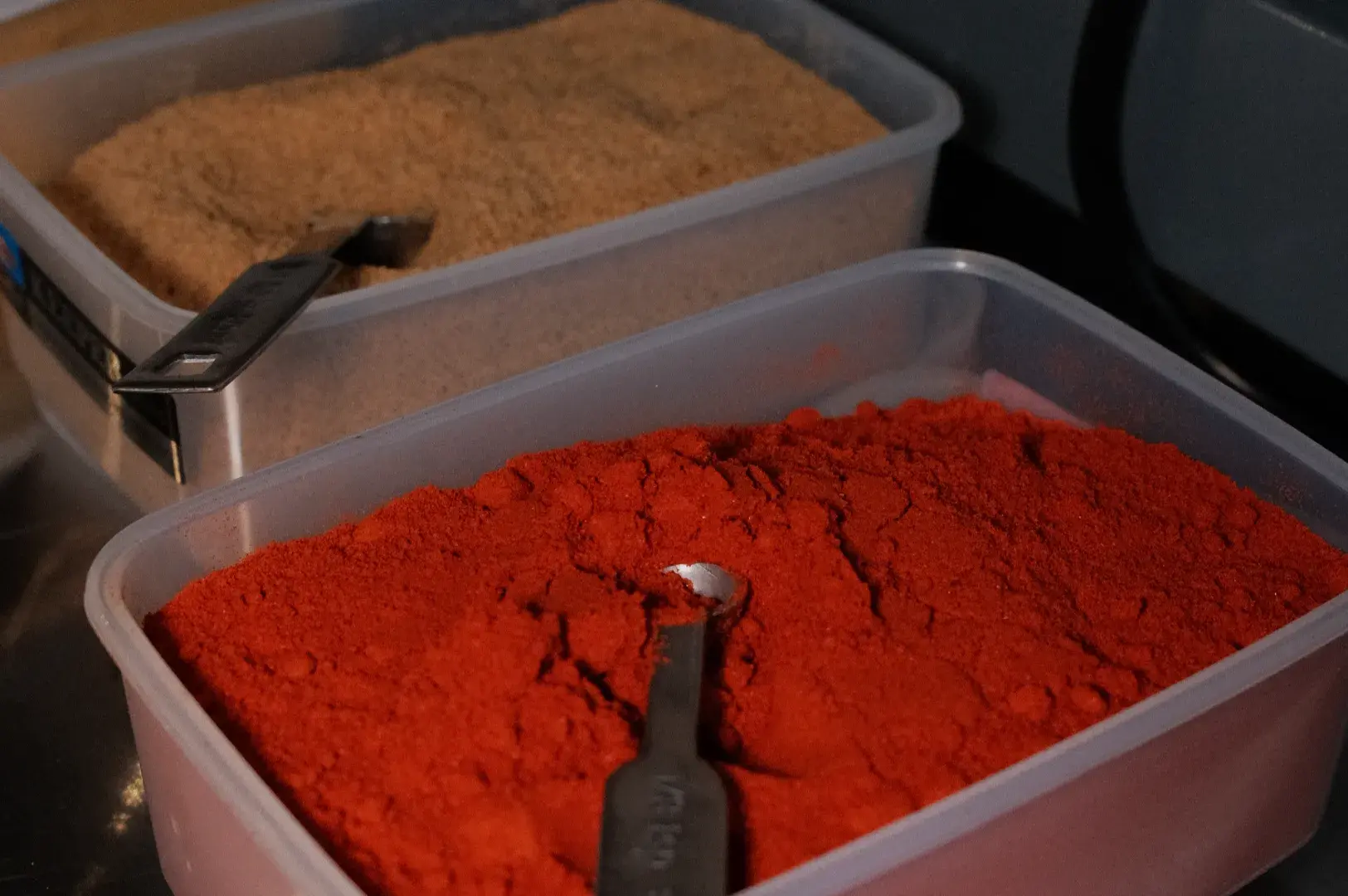
Once the chicken stock has been strained, the spice work begins. We combine traditional Japanese curry powder with a portion of garam masala, layering in warmth without pushing the broth towards a heavier, more typical traditional Japanese curry profile. Tomato paste is stirred in at this stage too, adding a subtle sweetness and depth of colour that balances the spice blend.
A touch of soy sauce, and occasionally a small amount of instant coffee, are used sparingly to round out bitterness and add a barely perceptible savoury note. These additions are measured in small bowl quantities, tested and adjusted, because a curry flavoured soup this transparent leaves no room for imbalance.
Heat to medium once the spices are incorporated, then let the mixture rest at a gentle simmer. This is where the vegetable soup and chicken based versions begin to diverge in aroma, even though the base method remains largely the same.
Deep Frying Fresh Vegetables the Su-age Way
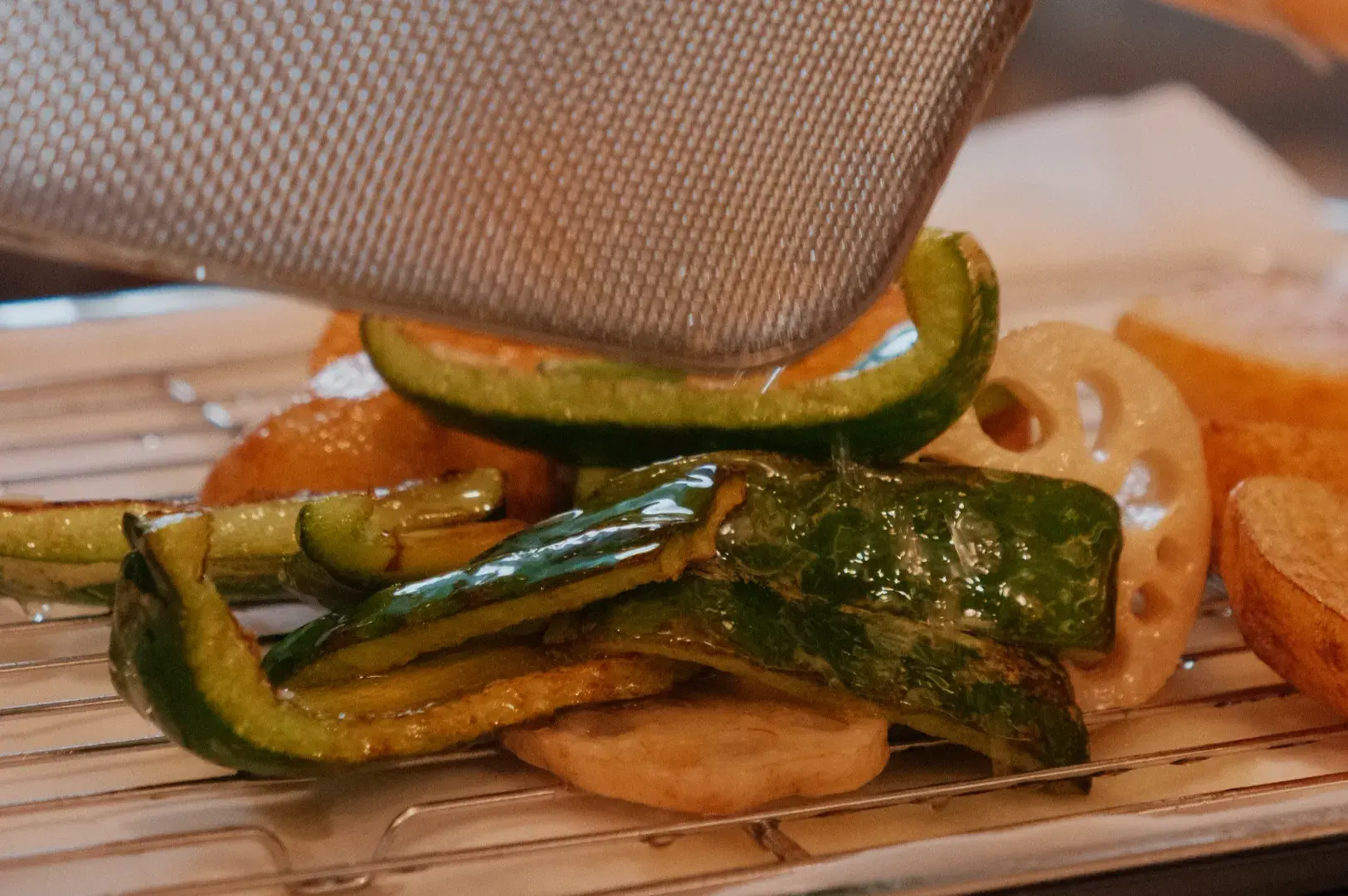
While the broth develops, our attention turns to the vegetables. Fresh vegetables, particularly bell peppers, lotus root and kabocha squash, are prepared using the Japanese su-age technique, a form of deep frying that uses no batter or coating. The vegetables are simply cut, often halved lengthwise, and lowered into hot oil at medium high heat.
This method of deep fry cooking allows the natural sugars in root vegetables to caramelise, producing a golden brown finish without the heaviness of a battered fried vegetable. Bell peppers in particular benefit from a quick flash fry, just long enough to soften slightly while retaining their bite and colour.
Once nicely browned, the vegetables rest briefly on a wire rack lined with paper towels, or occasionally on a sheet pan, to shed excess oil before they meet the curry soup. This step matters more than it might seem. Fried vegetables that sit in their own oil too long lose the very crispness that makes them worth cooking this way in the first place.
How the Hokkaido Soup Curry Base Comes Together Before Serving
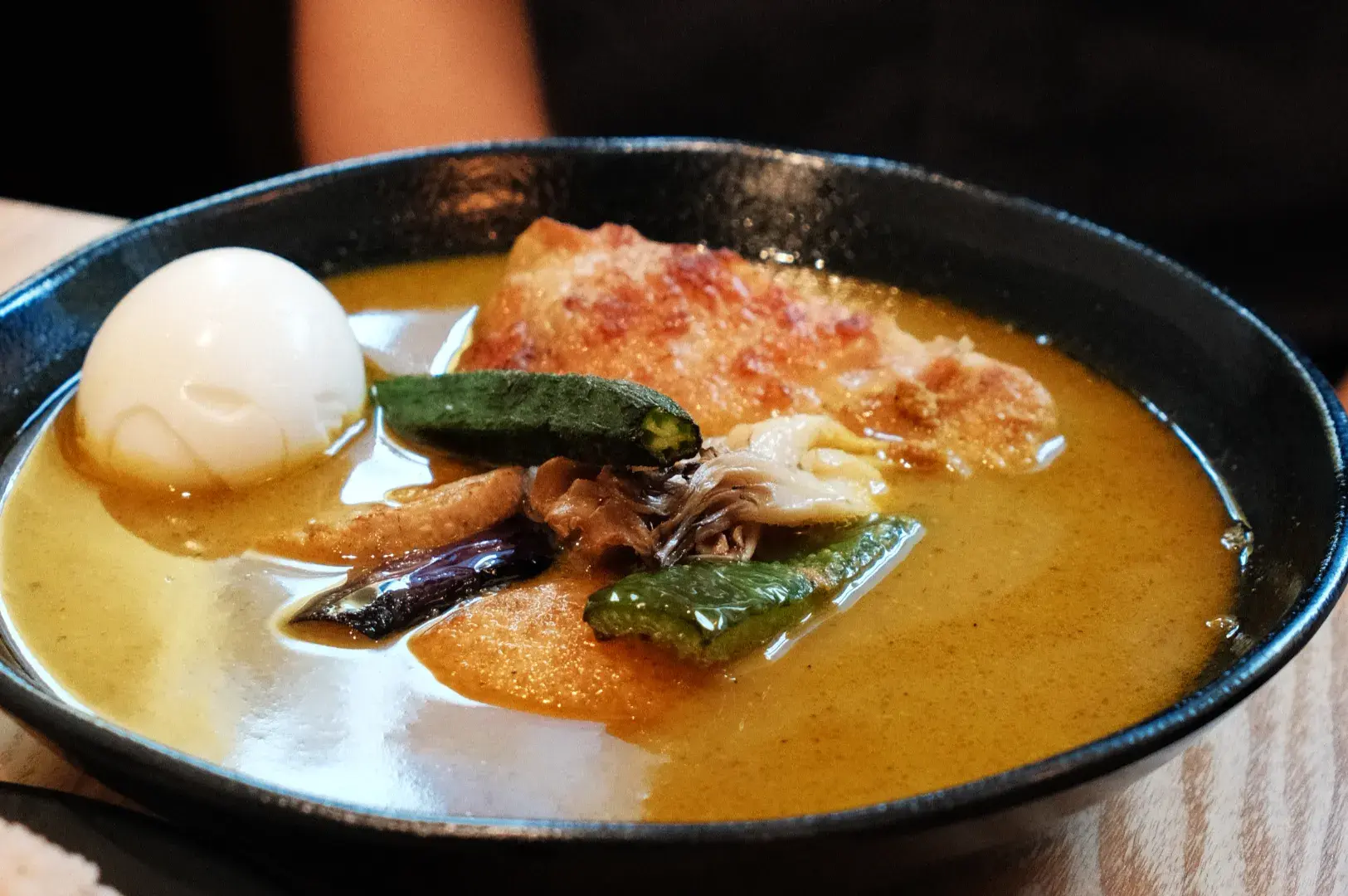
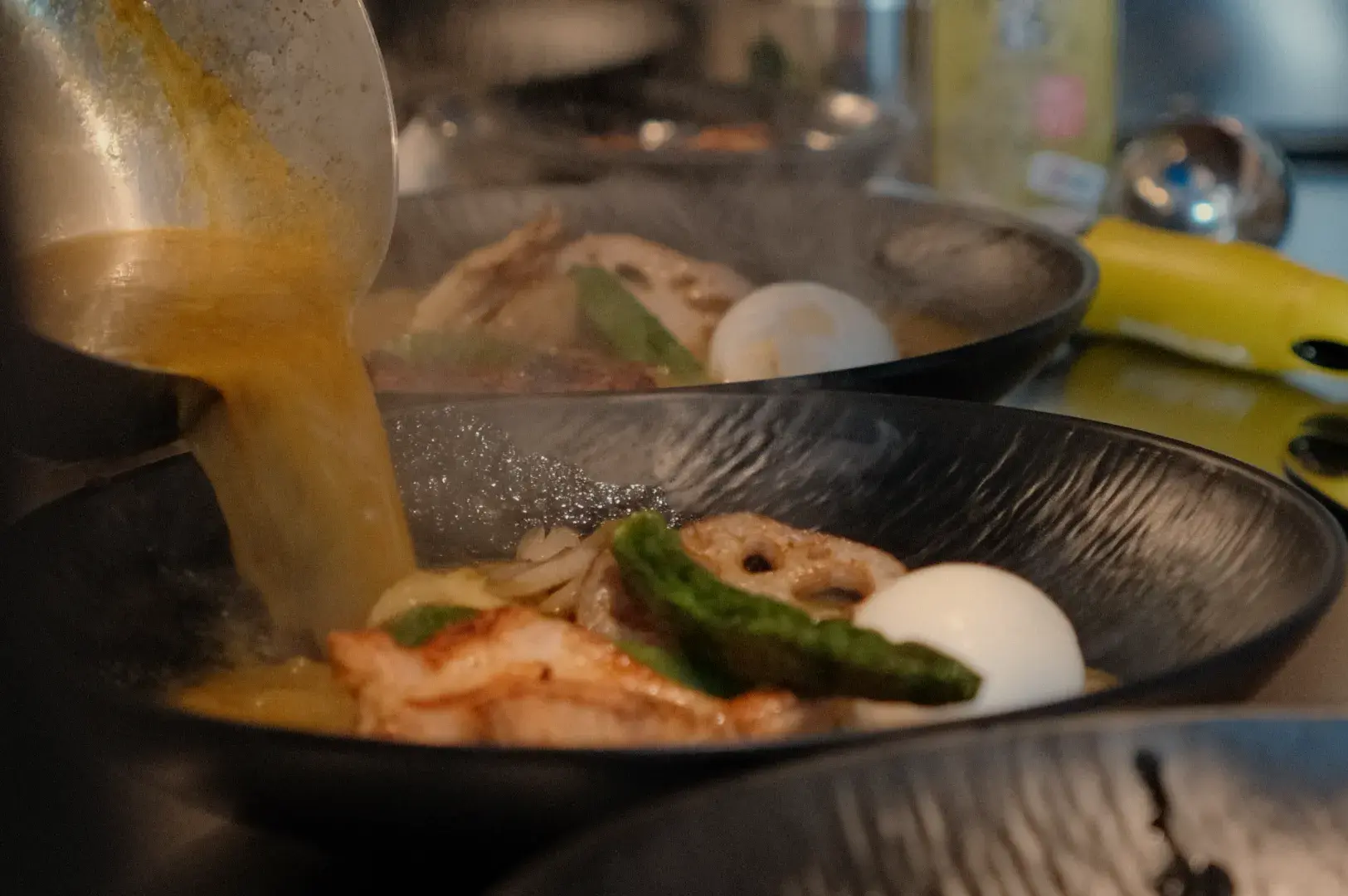
Assembly happens only at the very end. The curry broth is ladled hot into the bowl, the deep fried vegetables are arranged on top, and any additional elements, whether roasted vegetables, boiled eggs or extra chicken, are placed with care rather than stirred in. This is what separates a soup curry bowl from most curries served in Singapore, where the components are typically cooked together from the start.
Because the soup base and the vegetables are cooked separately, each component reaches the table at its intended texture. The broth stays clear and warming. The vegetables stay vibrant rather than waterlogged. It is a small operational choice, but it is the reason the dish reads as a genuine local dish from Hokkaido rather than a reinterpretation.
Steamed Rice and the Final Bowl
Steamed rice, prepared as proper Japanese rice rather than a generic side, is served alongside rather than inside the bowl. Guests are encouraged to dip spoonfuls of rice directly into the curry broth, controlling how much soup each mouthful carries. This is part of why the base has to be strong enough to stand on its own. When rice is served separately rather than mixed in, the soup carries the full weight of the flavour experience.
Read: Soup Curry Rice Pairing and Why the Bowl Stays Separate From the Plate
A Sapporo Soup Curry Recipe Philosophy: Slow, Not Rushed
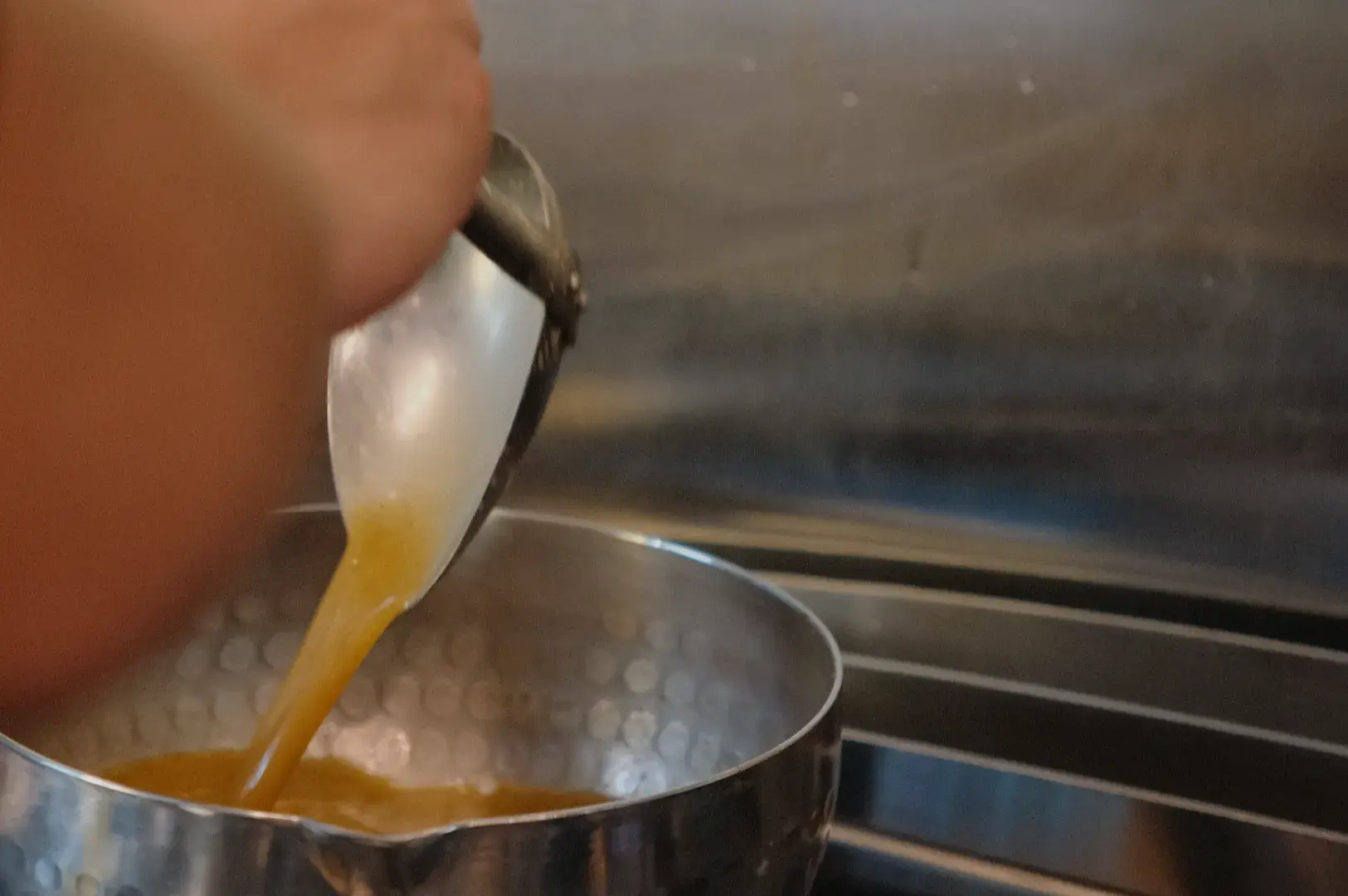
If there is one principle that defines our approach, it is that the recipe takes time and that time cannot be skipped. A proper Sapporo soup curry recipe is not built for speed. The chicken broth needs its full cooking time to develop character. The vegetables need to be fried individually, in batches, rather than crowded into a single pan. Leftover soup base, when stored, is kept in an airtight container so the flavour holds rather than fades before its next use.
This is a popular dish precisely because it rewards patience with clarity of flavour, something a rushed version of the same ingredients simply cannot replicate.
Achieving an Authentic Taste Without Shortcuts
There are faster ways to arrive at something resembling soup curry. A commercial curry roux can be thinned with extra stock, and pre-fried vegetables can be bought frozen. Neither produces an authentic taste, because the character of this dish lives in the details that only slow cooking and separate preparation can deliver.
Every element, from the gently cooked broth to the individually fried vegetables, is part of a single continuous philosophy. We built our approach around bringing that process to Singapore as faithfully as possible, which is why, at Soup Curry by Ki-Setsu, the base is never treated as an afterthought. It is the entire point.
The next time a bowl of soup curry arrives at your table, look past the vegetables and the rice for a moment. The real work, and the real flavour, is sitting quietly underneath.