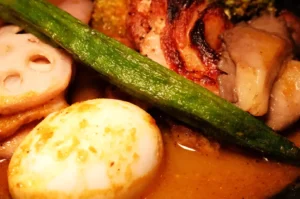
Singapore has fallen hard for the izakaya. Walk through Robertson Quay, Duxton, or the older shophouse stretches near Fortune Centre on any weeknight and you will find groups of friends hunched over shared plates, a bottle of house sake sweating on the table, skewers coming off the grill in waves.
The Izakaya Singapore scene has grown from a handful of niche spots into a genuine dining category, and for good reason. But growth is not the same as fidelity to the original spirit, and after years of watching this cuisine take root here, we think it is worth asking honestly: what has Singapore actually captured about traditional izakaya cuisine, and where does it still fall short?
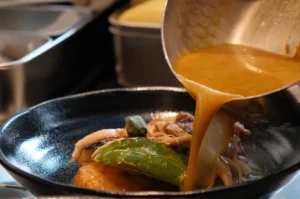
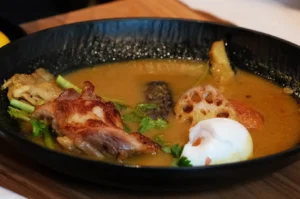
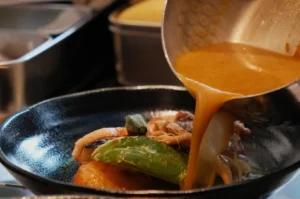
We ask this not as outsiders but as fellow travellers in Japanese regional cooking. Our own kitchen deals in Hokkaido soup curry, and from six in the evening we shift into a cosy izakaya format ourselves, so we spend a lot of time thinking about what separates a friendly traditional izakaya from a restaurant that has simply borrowed the aesthetic.
What Makes a Friendly Traditional Izakaya Feel Authentic
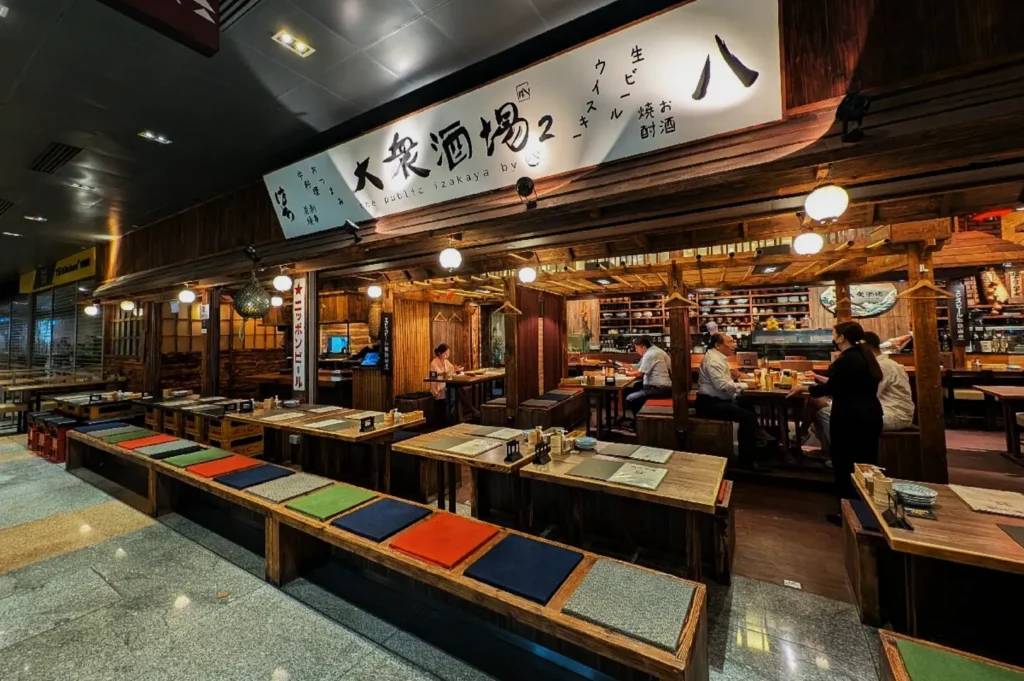
At its core, an izakaya is not a concept, it is a mood. The word itself points to a place you stay and drink, somewhere between a sake bar and a home kitchen. A friendly traditional izakaya, the kind of public izakaya anyone can walk into off the street without a reservation, should feel unhurried. Staff pour your first drink without ceremony, the menu is read aloud as much as it is read on paper, and dishes arrive whenever they are ready rather than in a rigid course sequence.
Singapore gets pieces of this right. Many Japanese bar counters and public izakaya rooms have nailed the visual language: dim lighting, wooden counters, lanterns, handwritten specials boards. What is harder to replicate is the pacing. Local dining habits favour efficiency, tables turning, orders arriving quickly and together. A genuine izakaya spirit resists that. The best izakaya dishes are meant to be eaten slowly, in no particular order, alongside conversation rather than around it, in a room built for a proper chill night rather than a quick turnover.
The Search for Fresh Seafood Beyond the Basics
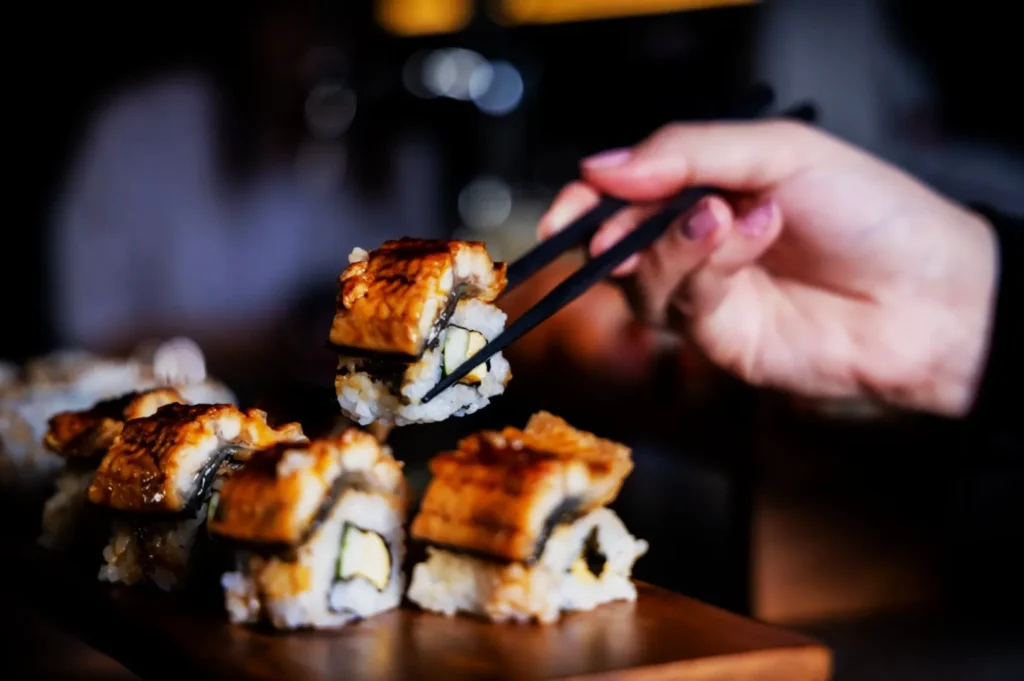
Fresh seafood is where the city’s ambitions and its supply chain sometimes pull in different directions. Singapore imports the vast majority of its seafood, and while that has not stopped kitchens from offering fresh sashimi, bara chirashi, and the occasional grilled yellow tail head for the more adventurous table, the range can feel narrower than what you would find in a Japanese port town.
That said, several kitchens have worked hard to close the gap. Fresh sashimi platters here are frequently excellent, sourced through relationships with Japanese suppliers who fly product in several times a week. A properly done bara chirashi, rice scattered generously with cuts of the day’s catch, remains rarer here than it should be given how many kitchens now have the sourcing to attempt it. Where the city still lags is variety of preparation.
In Japan, a single fish might appear raw, salt grilled, simmered, and cured within the same evening’s menu, with rich flavours drawn from technique rather than volume. In Singapore, fresh seafood tends to be presented in fewer forms, which is satisfying but not always representative of how varied traditional izakaya cuisine can be with the same ingredient.
Charcoal Grilled Classics: Where Singapore Excels
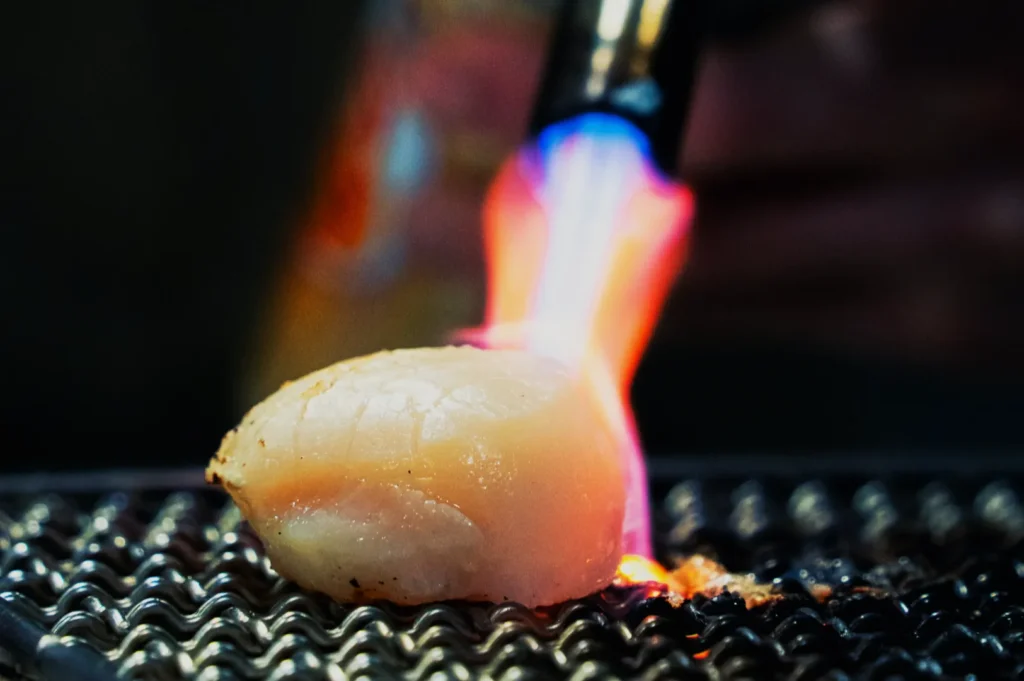
If there is one category where the city genuinely holds its own, it is the grill. Charcoal grilled skewers, grilled meats, grilled nasu, and other yakitori staples have found a real audience here, and the technique behind them is frequently sound.
Binchotan charcoal is not cheap or easy to source consistently, yet a number of kitchens have committed to it anyway, because the smoky depth it gives to charcoal grilled skewers simply cannot be faked with a gas flame.
A well-charred beef shortrib, rested properly and sliced with care, is one of the clearest signs of skilled chefs at work.
This is also where the yakitori tends to shine brightest. Grilled chicken skin, thigh, and skewered vegetables done well require patience: a slow, even char rather than a quick sear. A good buta kakuni, pork belly braised until it barely holds its shape, takes hours of unglamorous work that never shows up on a menu description but is obvious the moment it is eaten. Chicken nanban, fried chicken finished in a tangy sauce with tartare, has also found a comfortable home on plenty of local menus, and when the batter is done properly it stands up well against anything served in Japan. When a kitchen gets this right across its yakitori, you can taste the difference immediately.
The Hidden Gem Problem: Great Food, Low Visibility
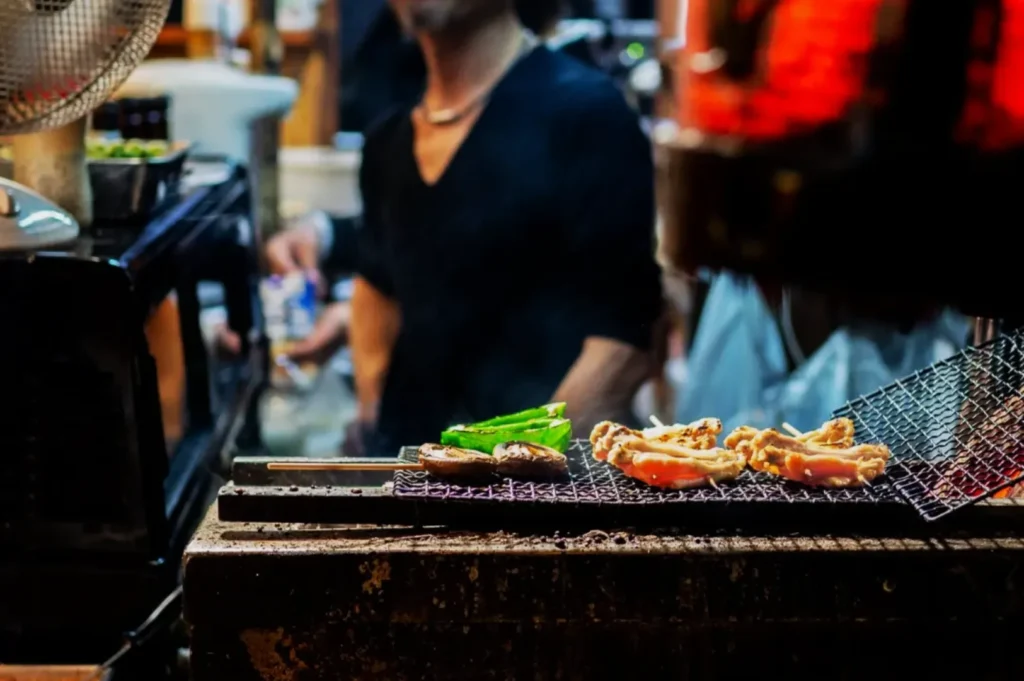
For every well-known name, there is a hidden gem tucked into a shophouse or a quiet corner of a mall that few people outside the neighbourhood know about. Some of the most rewarding izakaya in Singapore are not the ones with queues, but the small, family-run rooms where the owner still mans the grill personally. These places often serve the most classic izakaya fare, simple grilled meats, a good miso soup, unfussy small plates, without any pretence, and often at prices that make casual dining genuinely casual.
The trouble is discoverability. A hidden gem stays hidden partly because good food does not always translate into good marketing. Many of these kitchens rely entirely on word of mouth, and in a dining scene as saturated with options as Singapore’s, that is a slow way to build recognition. It is a shame, because these smaller rooms are often closer to the authentic izakaya experience than their flashier counterparts, and their must try dishes rarely make it onto anyone’s list.
An Extensive Menu Isn't Always a Good Thing
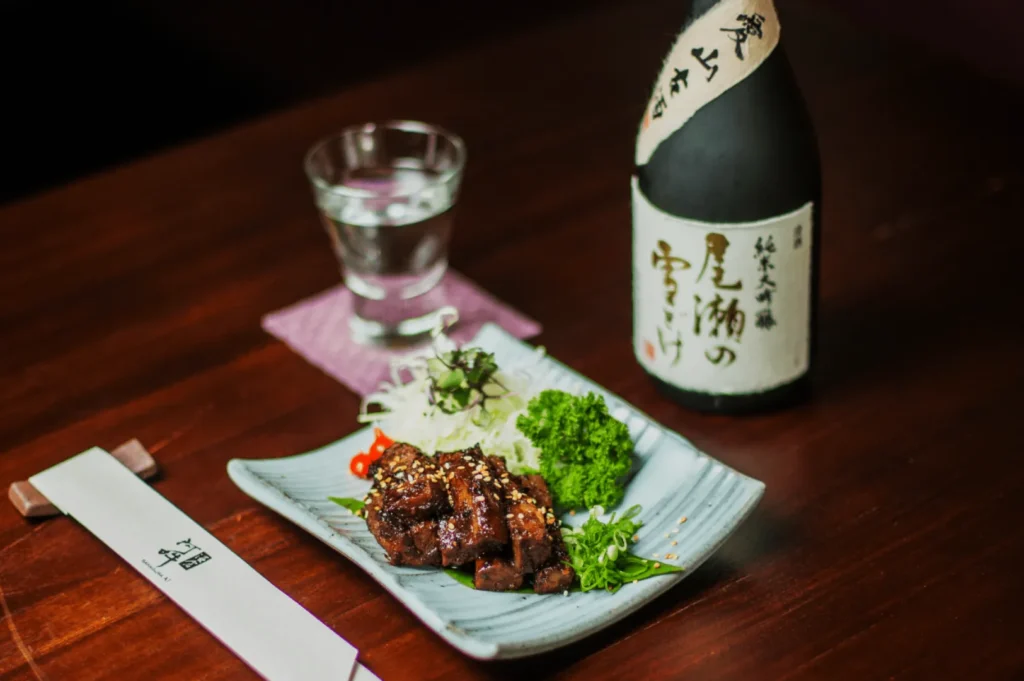
There is a temptation, especially for newer entrants to the izakaya in Singapore category, to offer an extensive menu that tries to cover every base: sushi, wagyu steak, foie gras, hot dishes, Japanese style cocktails, and a wine list, all under one roof. On paper this looks generous. In practice it often dilutes the kitchen’s focus.
Traditional izakaya are rarely trying to be everything. A shokunin grilling skewers for twenty years does not also claim to be a sushi master or a Japanese style cocktails specialist, and a kitchen built around foie gras and wagyu steak is often chasing a different, more expensive crowd entirely. When a menu built around too many disciplines tries to stretch across sushi, small plates, and dishes finished with a pasteurised egg yolk on top, quality control becomes harder to maintain across the board.
The restaurants that impress us most tend to do the opposite: a tighter list of izakaya favourites, all the izakaya favourites you actually came for rather than a menu built to look impressive on paper, executed with real consistency across every one of its dishes.
From Fortune Centre to Robertson Quay: Singapore's Izakaya Map
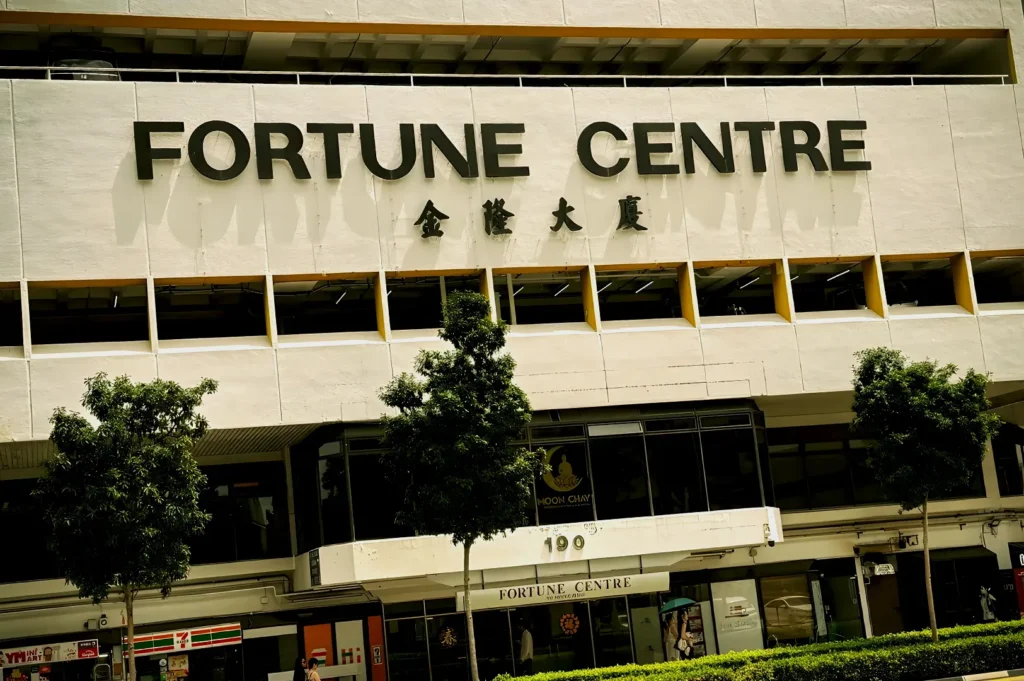
Geography has shaped the scene in an interesting way. Fortune Centre, long known for its no-frills Japanese eateries, still holds some of the most unpretentious, budget-friendly izakaya dishes in the city, closer in spirit to a Tokyo backstreet bar than anything polished. Robertson Quay, by contrast, has become the address for the sleeker end of the category: mood lighting, curated house sake and junmai ginjo lists, a lively atmosphere built as much for the crowd as for the cooking, and the kind of room suited to bigger group dinners.
Neither approach is wrong. But they represent genuinely different interpretations of what an izakaya is for. Fortune Centre leans toward function, a cheap, reliable meal with a cold beer. Robertson Quay leans toward occasion, a night out with a lively atmosphere that happens to be Japanese in theme, drawing on fresh seasonal produce and rotating seasonal specials to keep the room interesting through the year. Some kitchens lean into a Kyushu style broth or grill as a point of difference, sourcing seasonal produce the way a smaller regional restaurant would rather than running a generic pan-Japanese list.
What's Still Missing: Buzzing Atmosphere vs Genuine Warmth
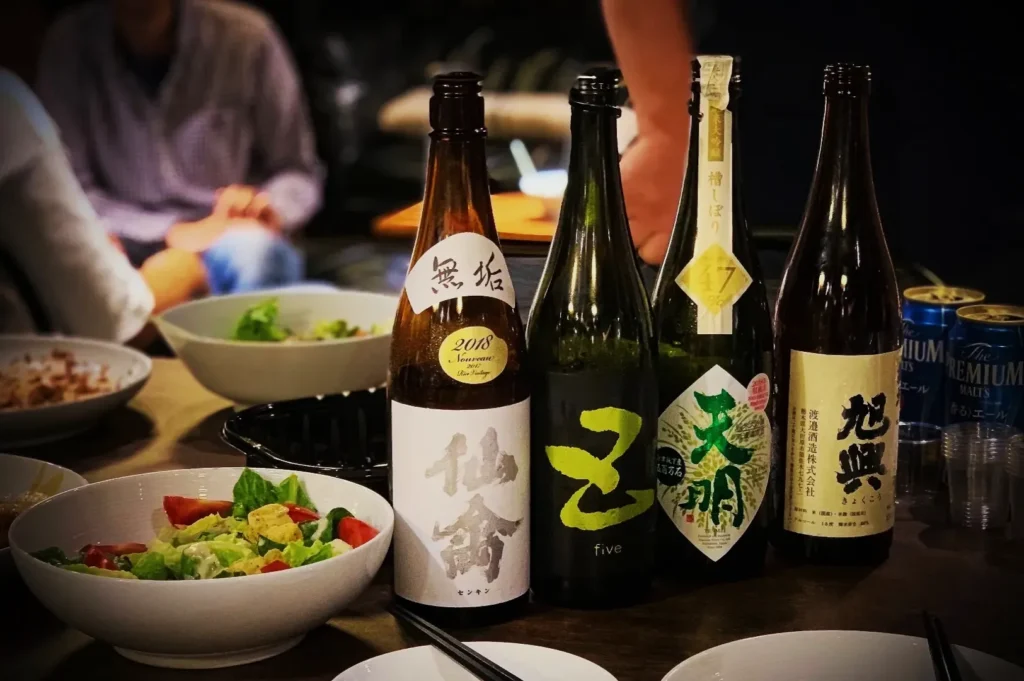
A buzzing atmosphere is easy to manufacture. Good speakers, warm bulbs, a full room. What is harder to manufacture is the specific warmth of a traditional izakaya, the sense that the chef genuinely wants you to eat well and stay a while, rather than simply wanting the table filled again in ninety minutes. That is the izakaya spirit at its core, and no amount of buzzing atmosphere substitutes for it.
We notice this most in the small gestures. A chef who remembers a regular’s usual order. A server who suggests the dish that just came off the grill rather than pushing the most expensive item. Free corkage nights and free flow drinks packages have become common tools across the city, and after work drinks promotions in particular have turned dinner service on quiet weeknights into something closer to a proper draw.
But a good after work drinks deal is not the same thing as a good izakaya, and the two get conflated more often than they should. The best rooms treat work drinks as a convenience rather than the main event, because the food still has to hold its own once the discounted carafes stop flowing and the work drinks crowd has thinned out. That is the relaxed hangout feeling that makes someone want to return on a Tuesday, not just for the next round of work drinks.
So, What Makes the Best Izakaya in Singapore?
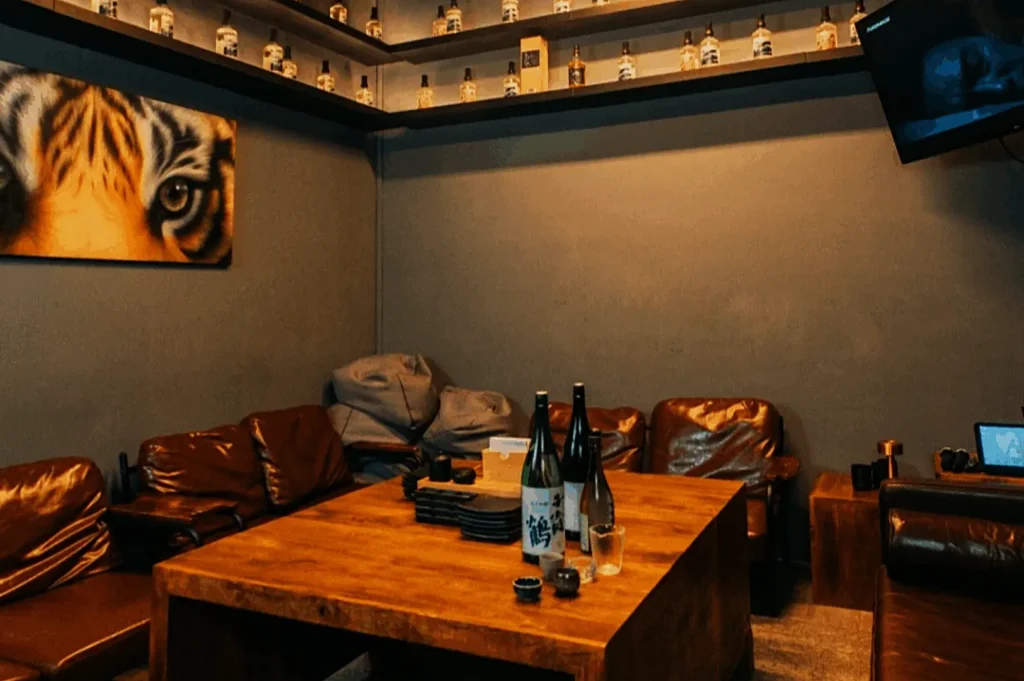
The best izakaya in Singapore are not necessarily the busiest or most photographed but those where charcoal grilled skewers, proper miso soup, and a concise list of izakaya dishes are the focus, not just a lifestyle backdrop. They serve dishes like kumquat miso glaze or golden mushroom rolled skewers, showing a kitchen focused on balance over volume. They prioritize authentic flavours over trends and treat classic izakaya fare with the seriousness of a fine dining tasting menu.
This reflects our own approach at Soup Curry by Ki-Setsu, where evenings shift from Hokkaido soup curry to izakaya without becoming a different restaurant. We extend the same values: honest ingredients, unhurried cooking, and a room designed for lingering. This standard defines an authentic izakaya experience and guides our expectations dining out.
Singapore’s izakaya scene has matured, from traditional cuisine at Fortune Centre to polished rooms at Robertson Quay. The city embraces the grill, miso soup, and shared plates sincerely, with Japanese food reaching a wider local audience. Yet, there is still room to grow in embracing patience, restraint, and genuine warmth that can’t be manufactured or plated, only offered.