There is a moment, usually somewhere around the third spoonful, when the heat of a proper Sapporo soup curry catches up with you. It is not the sharp, immediate burn of chilli oil. It is something slower and deeper, built from layers of spices that unfold as the broth cools just enough to taste.
That kind of heat, bold, warming, and a little unpredictable, is exactly what makes this soup dish feel so at home in an izakaya setting, where food is meant to be shared, lingered over, and paired with a cold drink in hand.
A Local Specialty Born in Japan's Northern Capital City
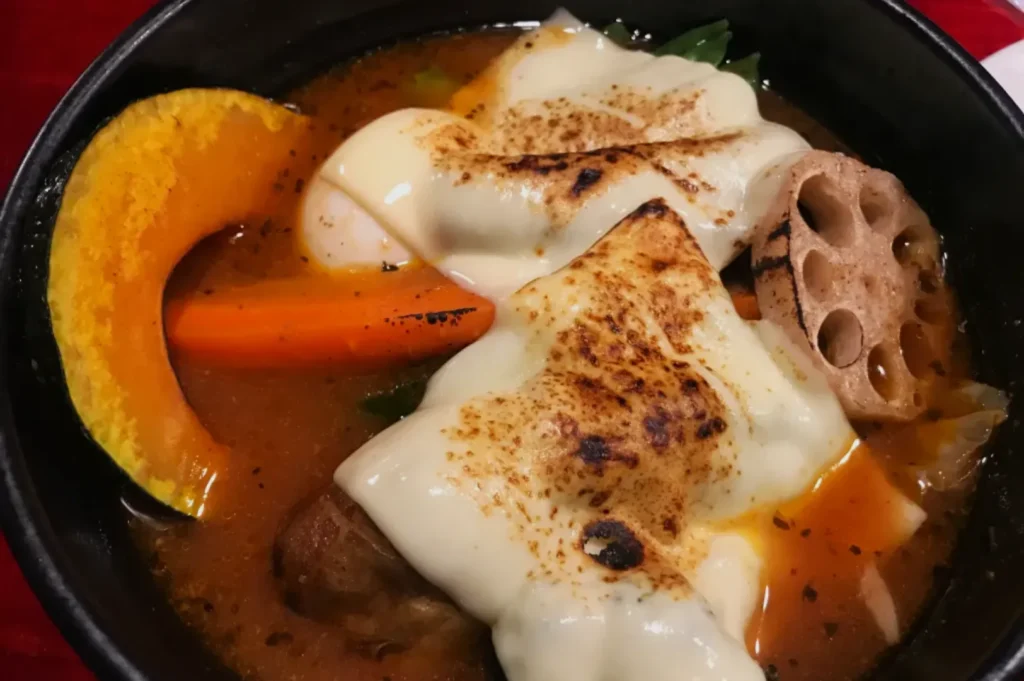
Sapporo soup curry did not emerge from a test kitchen or a marketing campaign. It grew out of the streets of Hokkaido’s capital city, particularly around Chuo Ward and the area near Susukino Station, where small, independent eateries began experimenting with a curry soup that broke every rule of what typical Japanese curry was supposed to be. Instead of a thick, glossy roux poured over rice, cooks in Sapporo let their curry stay thin and brothy, closer to a spiced soup than a sauce, until it became a genuine local specialty rather than a passing trend.
Two names are often credited with shaping this movement into what it is today. Soup Curry Garaku became known for balancing bold spice with a broth so rich it could stand entirely on its own, while Soup Curry King leaned into generous, chunky vegetables and hearty portions that made the dish feel like a full meal rather than a side dish to rice. Both are still known for long lines that form well before opening, a sign of how deeply this style of curry soup is woven into daily life in the city. Neither approach was shy. Both understood that the original soup curry needed to be bold to earn its place in a city known for cold winters and even colder appetites.
We take that same conviction seriously. Ours is Singapore’s first and only restaurant dedicated to authentic Hokkaido soup curry, and we have never seen the point in softening the spice or the personality of the dish to make it more palatable. Bold is the whole idea.
What Makes Sapporo Soup Curry So Bold and Hot
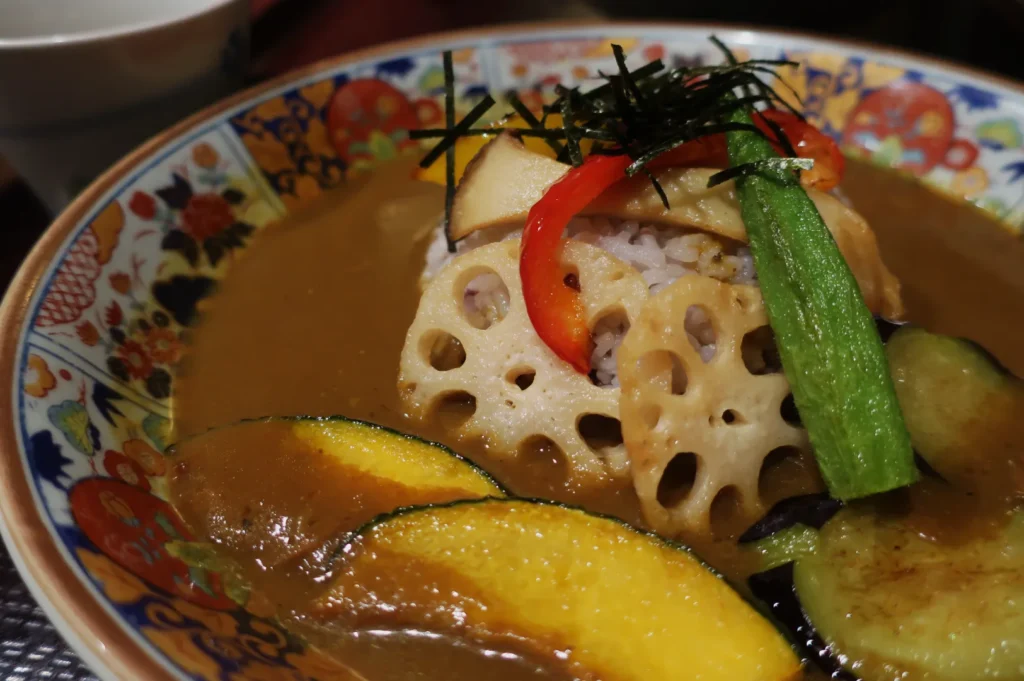
The heat in a good bowl of soup curry rarely comes from a single source. It is built, deliberately, from a blend of curry powder, garam masala, and a handful of aromatic spices that are toasted before they ever meet the broth. This is a world away from the flavour profile of typical Japanese curry, which tends to be sweeter, thicker, and gentler on the palate. Traditional Japanese curry is comfort food in the quiet sense. Sapporo soup curry is comfort food with an edge.
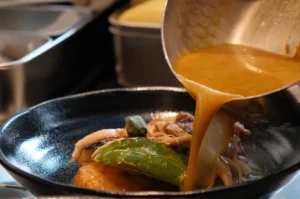
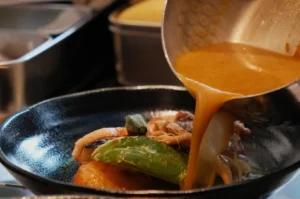
The broth itself does a lot of the heavy lifting. A proper soup base starts with chicken bones simmered for hours in a heavy bottomed pot until the liquid turns rich and almost silky, long before any spice is added. Tomato paste and soy sauce often go in to round out the depth, giving the finished soup a savoury backbone that carries the spice without letting it overwhelm everything else. The result is a bowl that tastes hot, but never one-dimensional.
For diners used to typical soup curry restaurants elsewhere serving thicker, milder sauces, that first taste of a genuinely bold curry soup can be a small revelation. It is spicier than most expect, but it is also more complex, with the spice level calibrated to build rather than simply sting.
From Daytime Comfort to Izakaya-Approved Evening Fare
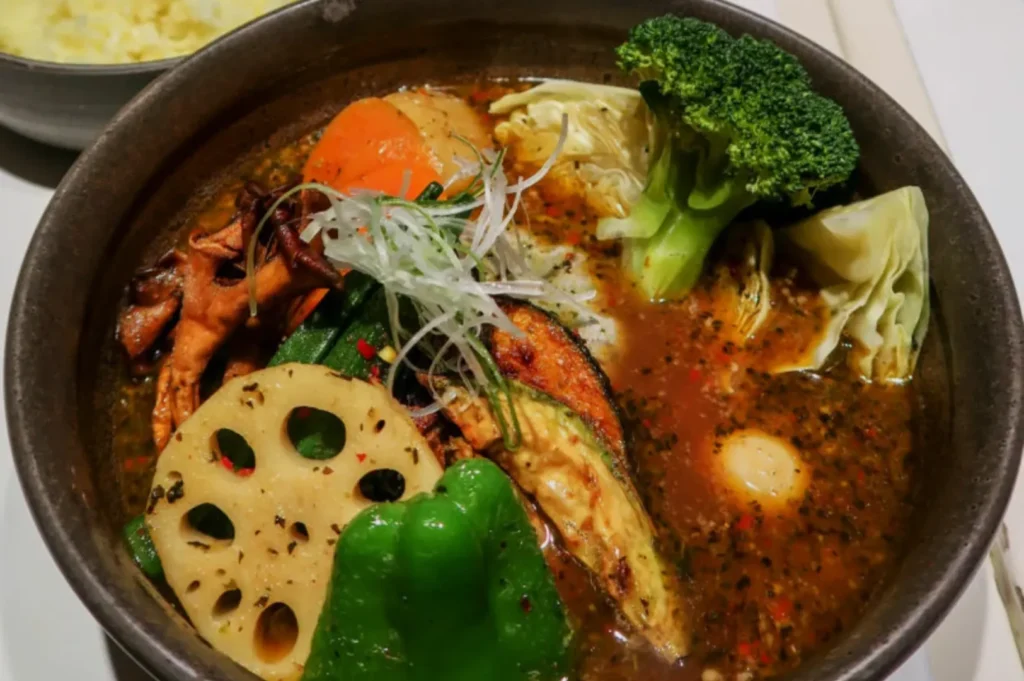
What makes this dish particularly well suited to an izakaya setting is its versatility. During the day, a bowl of vegetable soup curry works as a satisfying, standalone meal. Come evening, that same boldness of flavour makes it a natural match for small plates, cold beer, and the unhurried pace of izakaya-style dining.
This is part of why our own space is designed with a dual concept in mind, functioning as a soup curry destination through the day before shifting into a cosy izakaya atmosphere from six in the evening onwards. The transition is not just about lighting and music. It reflects something true about the dish itself: soup curry has always had the flexibility to move between contexts, from a quick lunchtime bowl to the centrepiece of a slower, more social evening.
Deep Fry Textures That Suit a Drinking Menu
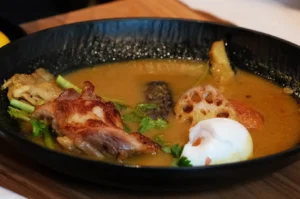
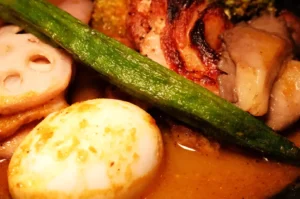
A significant part of the dish’s izakaya appeal comes down to texture. Vegetables in Sapporo soup curry are typically deep fried before they go into the bowl, a Japanese style technique that locks in colour and gives each piece a slight crispness on the outside while keeping it tender within. Bell peppers, lotus root, kabocha squash, and other root vegetables are usually cut into large cut vegetables and fried separately, then arranged on top of the broth rather than simmered into it.
This method matters because it means the vegetables retain their individual character. A piece of deep fried aubergine or potato in soup curry does not turn soft and one-note the way it might in a slow-cooked stew. It keeps a bit of bite, which happens to be exactly the kind of texture that works well alongside drinks and shared plates in an izakaya setting.
Fresh Vegetables and Protein That Hold Their Own Against the Heat
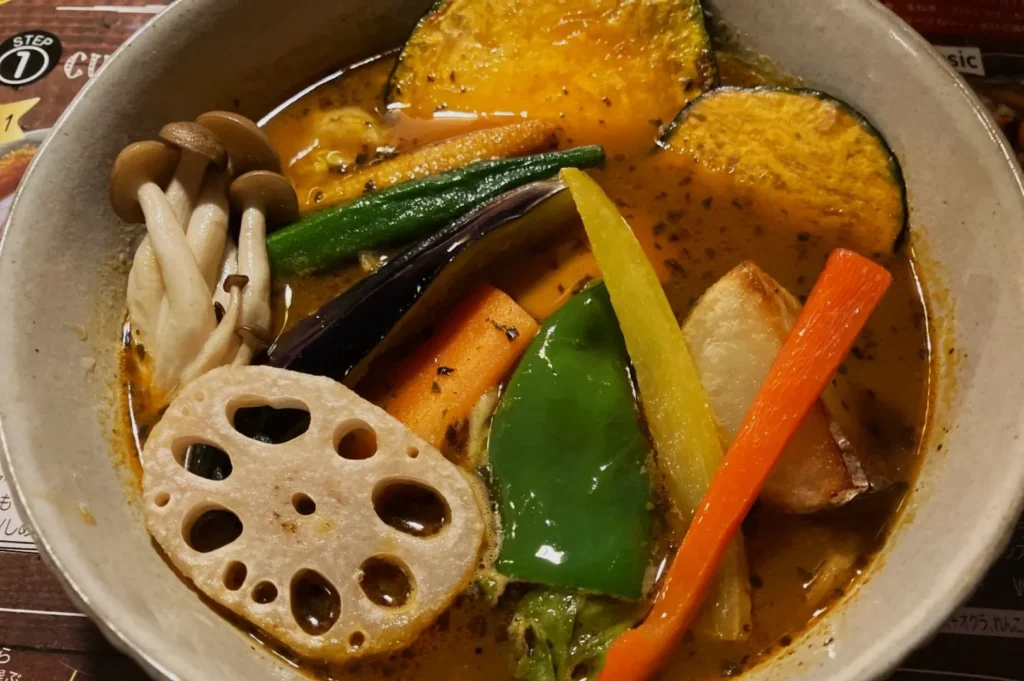
Bold heat needs something substantial to balance it, and this is where the vegetables and protein in Sapporo soup curry earn their place. Fresh vegetables, carrots, tomatoes, onion, garlic, and potato among them, are chosen and prepared with care, often left in large, chunky cuts specifically so they can stand up to a long simmer and a fair amount of spice without disintegrating.
Chicken is the most common protein choice, and bone in chicken leg is favoured over boneless cuts for good reason. Cooking the chicken on the bone keeps the meat moist and adds further depth to the broth as it cooks, reinforcing the same savoury base that started with chicken bones in the soup itself. Pork is sometimes used as an alternative, offering a slightly richer, fattier note that pairs well with a heavier hand of spice. Boiled eggs are another common addition, their mild, creamy centre offering a small pocket of relief between mouthfuls of a genuinely hot broth.
Vibrant colours are almost a signature of the dish. A well made bowl of soup curry looks as bold as it tastes, with orange kabocha, green pepper, and deep purple aubergine sitting against a rich, reddish broth. That visual boldness is not an accident. It is a direct result of using fresh, whole vegetables prepared with proper technique rather than relying on shortcuts.
How to Eat Soup Curry the Bold Way
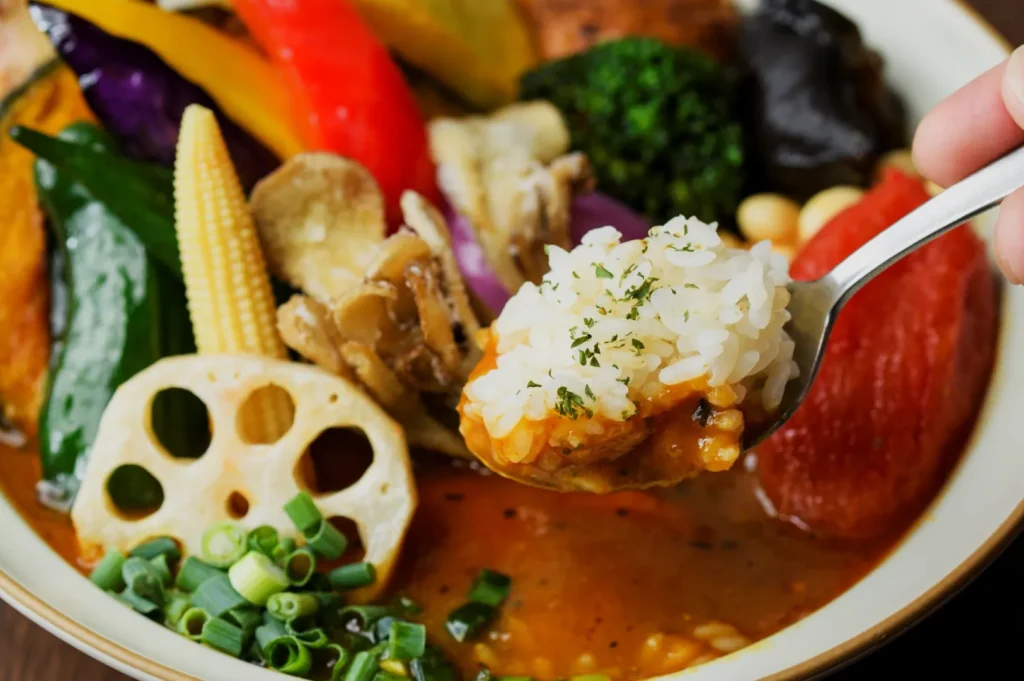
Part of what makes soup curry distinct from more familiar versions of Japanese curry is how it is served. Rather than being poured over rice, the soup and rice are typically served separately, with a bowl of Japanese rice placed alongside the curry so diners can control exactly how much rice goes into each spoonful. This is a small but meaningful difference. It means the broth stays hot and properly brothy rather than being diluted by rice sitting in the bowl, and it gives diners more control over the balance of heat and comfort in every bite.
There is no single correct way to eat soup curry, but most regulars develop a rhythm: a spoonful of broth first, to register the spice level, followed by rice, other vegetables, and chicken in whatever order suits their appetite that day. Some diners ask for more spices as they go. Others prefer to let the dish’s natural heat build gradually across the bowl. Either approach is part of the appeal.
For those keen to understand the mechanics behind the bowl, the cooking time involved is longer than most home cooks expect. A serious recipe developer working on this dish will usually simmer the broth for several hours before it is even ready for the spice blend, then keep leftover soup base in an airtight container for a day or two, since the flavour tends to deepen with rest. If following a recipe at home, a cook mode setting on a phone or tablet that keeps the screen awake through a long simmer can be a small but genuinely useful tool, so the process is not interrupted halfway through.
Why Bold Heat Is Part of Hokkaido Soup Curry's Soul
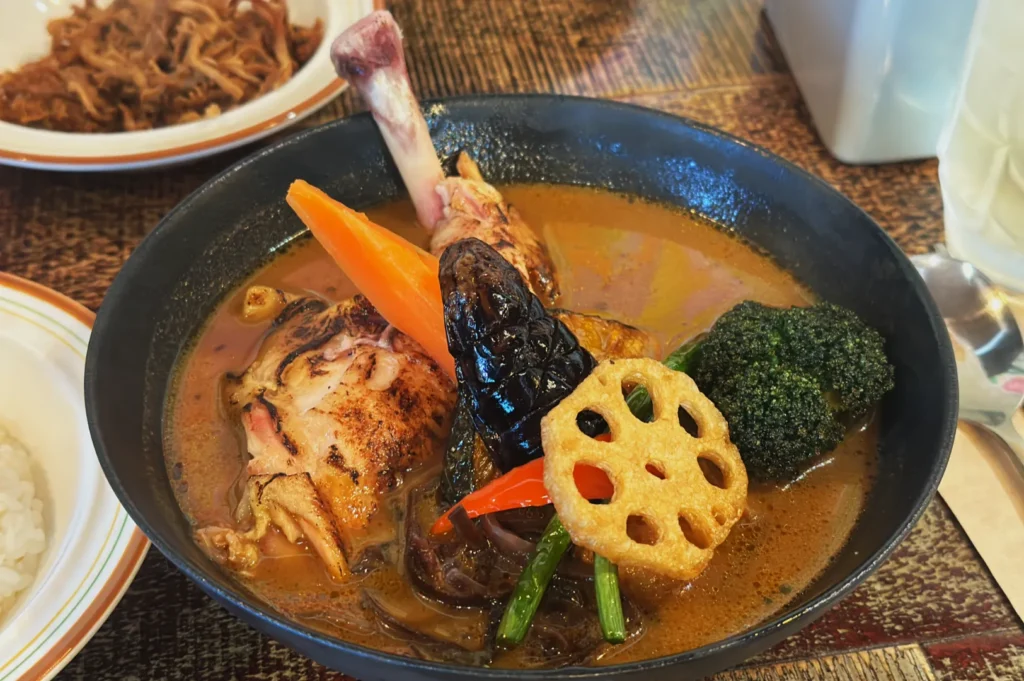
None of this boldness exists for its own sake. In Hokkaido, where winters are long and genuinely cold, a hot, spiced curry soup was never meant to be a novelty. It was practical, warming food, built to be eaten often and enjoyed fully. That practicality is still at the heart of what makes hokkaido soup curry feel different from lighter dishes like miso soup or a simple vegetable curry. It is heartier, spicier, and more assertive by design.
At Soup Curry by Ki-Setsu, we have tried to carry that same intention into our approach in Singapore, treating spice level and depth of flavour as essential rather than optional. Soup curry, done properly, should never feel like a watered down version of Japanese curry made milder for a broader audience. It should taste like what it has always been: bold, hot, and completely at home whether eaten as a warming daytime meal or as the anchor of a long, easy evening among friends.