There is a particular kind of magic that happens in a kitchen when the light outside starts to change. The pots that simmered through lunch keep simmering. The same broth that filled a bowl at half past noon fills another at half past seven.
Yet everything about the room feels different. This is the quiet transformation that happens in our restaurant every single day, and it is one of the things we find most fascinating about running a soup curry establishment with a dual identity.
By day, we are a place for a proper, focused meal. A bowl of soup curry, steaming and fragrant, eaten with intention. By evening, from 6pm onwards, the same tables become the setting for something looser and more social: a cosy izakaya where the soup curry now shares the spotlight with small plates, drinks, and conversation that stretches on. Understanding why this shift matters, and how it changes the way people experience the same food, is what we want to explore here.
Why the Hour Changes the Meal

Soup curry, at its heart, is a dish built for warmth and comfort. It does not rush. The chicken broth needs time to develop depth, the curry powder and garam masala need time to bloom, and the vegetables need to be treated with care so they retain their colour and bite. This is true whether it is served at noon or at night, but what changes is the context in which people receive it.
At lunchtime, soup curry tends to be a solitary or quick shared pleasure. Office workers on a break, friends meeting for a fast catch up, someone treating themselves to something hearty before an afternoon of errands. The pace is efficient. People want the meal itself to be the main event, arriving hungry and leaving satisfied, often within a defined window before they need to be elsewhere.
After six, the mood softens considerably. Diners linger. The same bowl of soup curry becomes less about efficient nourishment and more about settling in. It sits alongside other dishes rather than standing entirely on its own. Conversation slows down. People are not checking the clock in quite the same way.
This is not a coincidence, it reflects something deeply rooted in how soup curry functions as a comfort food in Hokkaido, where it has always straddled the line between a proper meal and something enjoyed as part of a longer, more social evening.
The Vegetables Tell a Different Story at Night
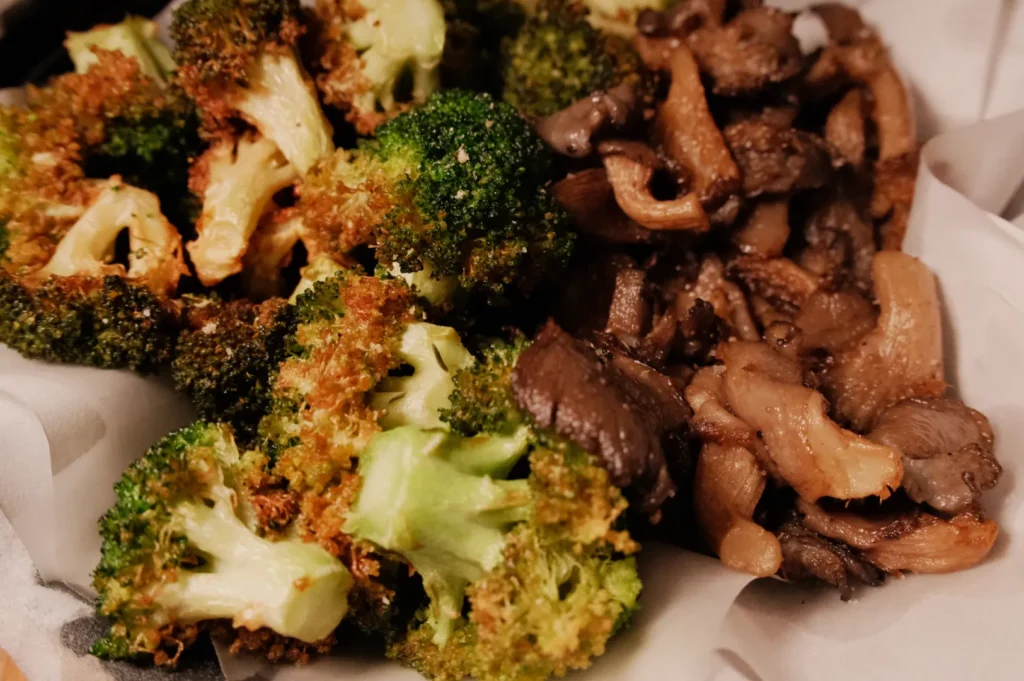
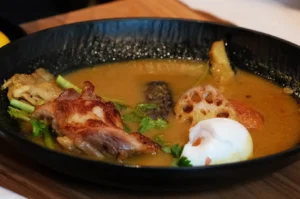
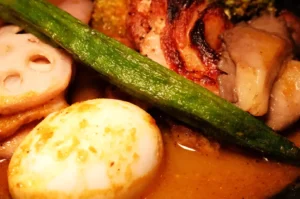
One of the clearest ways this rhythm shift reveals itself is through how the deep fried vegetables are experienced. Bell pepper, lotus root, aubergine, and potato, all prepared using traditional Japanese cutting and frying methods, arrive vivid and glossy on top of the curry soup. At lunch, these vegetables are eaten quickly as part of the whole bowl, appreciated for their texture and colour but consumed within the rhythm of a fast meal.
In the evening, the same vegetables often become a point of conversation. Guests notice the technique more. They ask why the lotus root holds its shape so well, or why the aubergine has that particular silkiness without being oily.
The su-age style of frying, which flash fries vegetables without a heavy batter, is designed to preserve their natural colour and flavour, and it is precisely this kind of detail that becomes more noticeable when people are not rushing. Evening diners tend to slow down enough to actually taste the layers of what is in front of them, from the caramelised onion and garlic base of the broth to the individual character of each vegetable.
Chicken and Broth, Read Differently by the Clock
The chicken itself, simmered until tender and served in that rich, aromatic curry soup, plays a slightly different role depending on the hour. During the day it is often the centrepiece, the protein that makes the meal feel complete and filling. At night, when soup curry shares the table with other small plates, the chicken becomes part of a broader spread, something to be enjoyed alongside other flavours rather than the singular focus of the meal.
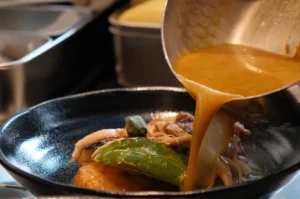
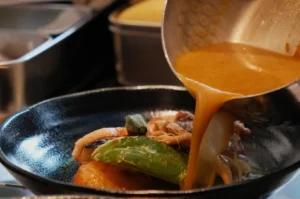
This is part of why we do not treat our soup curry as a fixed, static dish that only exists in one mode. The broth, prepared in a heavy bottomed pot to develop a deep, layered flavour, is versatile enough to hold its own whether it is the star of a solo lunch or one component of a shared evening spread with sake and conversation.
From Efficient Comfort to Unhurried Ritual

Perhaps the most interesting shift is not in the food itself but in what people are seeking from it.
During the day, soup curry is often sought out as efficient comfort, something warming and satisfying that fits neatly into a working schedule. It is soul food in the most practical sense, nourishing and quick. In the evening, that same soul food quality takes on a different meaning. It becomes part of a ritual rather than a solution. Guests are not looking to solve hunger quickly, they are looking to unwind.
The soup curry becomes almost meditative in this setting. Steam rising from the bowl, the aroma of curry powder and garam masala, the option to pair it with a small plate from the izakaya menu. Same recipe, same commitment to Hokkaido authenticity, but a completely different lens.
We often think about this in terms of what a typical curry restaurant might miss if it treated every hour of service the same way. Many establishments serve one static experience regardless of time. What we find is that leaning into the natural rhythm of the day, rather than fighting it, allows the same dish to feel genuinely different without changing a single ingredient.
The Room Itself Shifts Too
It is not only the food and the pace of eating that changes after six. The room itself takes on a different character. Lighting that felt simply functional at lunch becomes warmer and more atmospheric in the evening. Tables that hosted quick, purposeful meals during the day become gathering points for longer conversations.
This is part of what makes soup curry such an interesting dish to build a restaurant around. It is flexible enough to anchor an efficient midday meal and substantial enough to remain satisfying as part of a slower, more social evening. Few dishes manage both roles convincingly, but soup curry’s soulful, layered nature allows it to do exactly that.
A Dish That Adapts Without Losing Itself
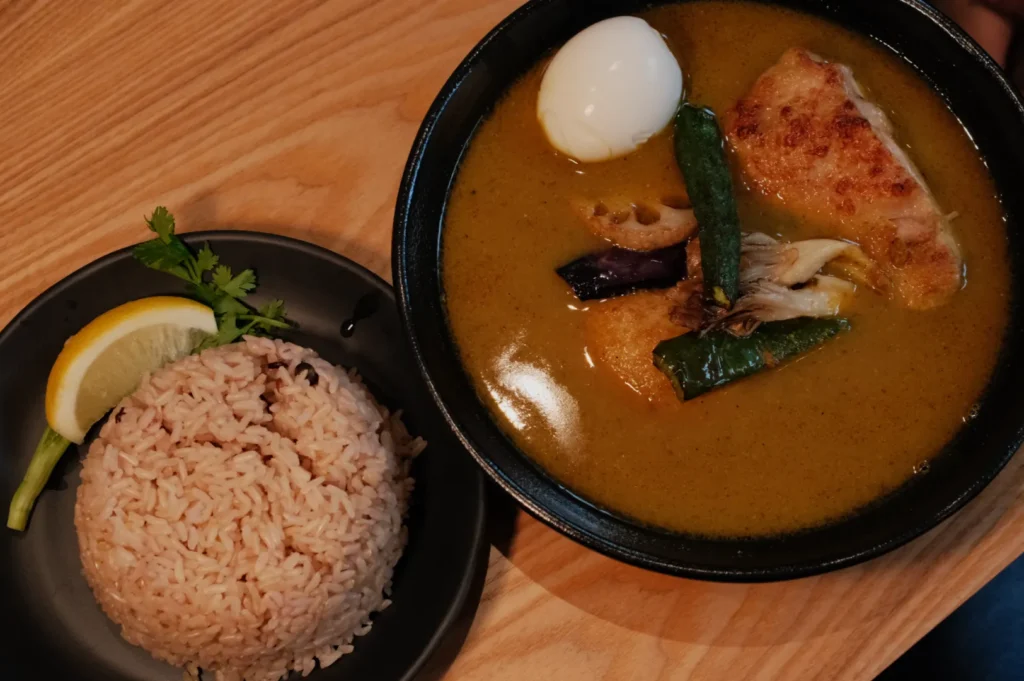
What we find most compelling about this daily rhythm is that nothing about the soup curry itself actually changes. The broth is prepared the same way. The vegetables are cut and fried using the same techniques. The chicken simmers in the same aromatic base. What changes entirely is the context around it, the pace of the room, the expectations of the guest, and the role the dish plays in that particular moment of someone’s day.
This is something we think about constantly at Soup Curry by Ki-Setsu, where the same kitchen produces a dish that can be a quick, grounding lunch or the centrepiece of a relaxed evening spent lingering over small plates. It is a reminder that soul food does not need to be reinvented to feel fresh throughout the day, it simply needs a setting that understands how to let it breathe differently depending on the hour.
By the time evening settles in and the room shifts into its cosier, more intimate rhythm, the soup curry that started the day as an efficient, comforting meal has quietly become something else entirely: an anchor for a slower kind of togetherness. Same kitchen, same care, but an entirely different rhythm once the sun goes down.