There is a moment that happens almost every time someone tries soup curry for the first time. They look into the bowl, see a thin, almost translucent broth instead of the thick, clinging gravy they expected, and their face changes. A flicker of doubt. Will this actually be a meal, or just a starter dressed up as one?
We understand the scepticism. Most people have grown up associating a “proper” curry with something you can practically stand a spoon in. Thick, glossy, coating every grain of rice it touches. So when a bowl of soup curry arrives looking closer to a consommé than a stew, it is natural to wonder whether it has any substance behind that clarity.
What we have learned, serving this dish to curious diners in Singapore, is that the clear curry broth is not a compromise on fullness. It is a completely different way of achieving it, and in many ways, a more honest one.
The Illusion of Lightness
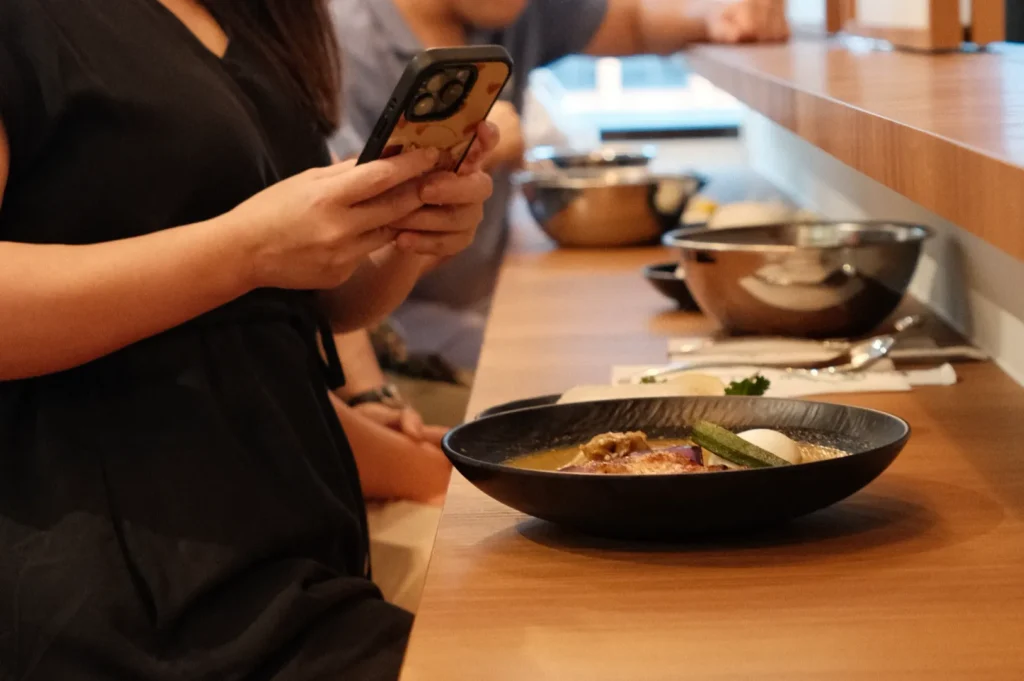
Thickness has become a shorthand for satisfaction in a lot of comfort food, and it is easy to see why. A roux based curry or a heavily reduced gravy signals richness because it is visually dense. Our eyes tell us before our stomachs do. But density on a plate and satiety in the body are not the same thing, and a clear curry broth actually plays a different, arguably smarter game.
A thick gravy fills you up primarily through starch and fat suspended in the sauce itself. It is efficient, but it also tends to sit heavily, and the richness that feels satisfying in the first few spoonfuls can turn overwhelming by the last.
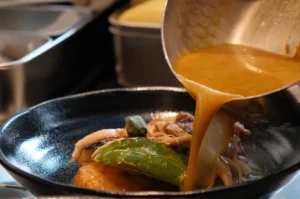
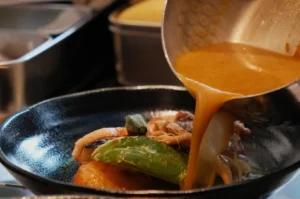
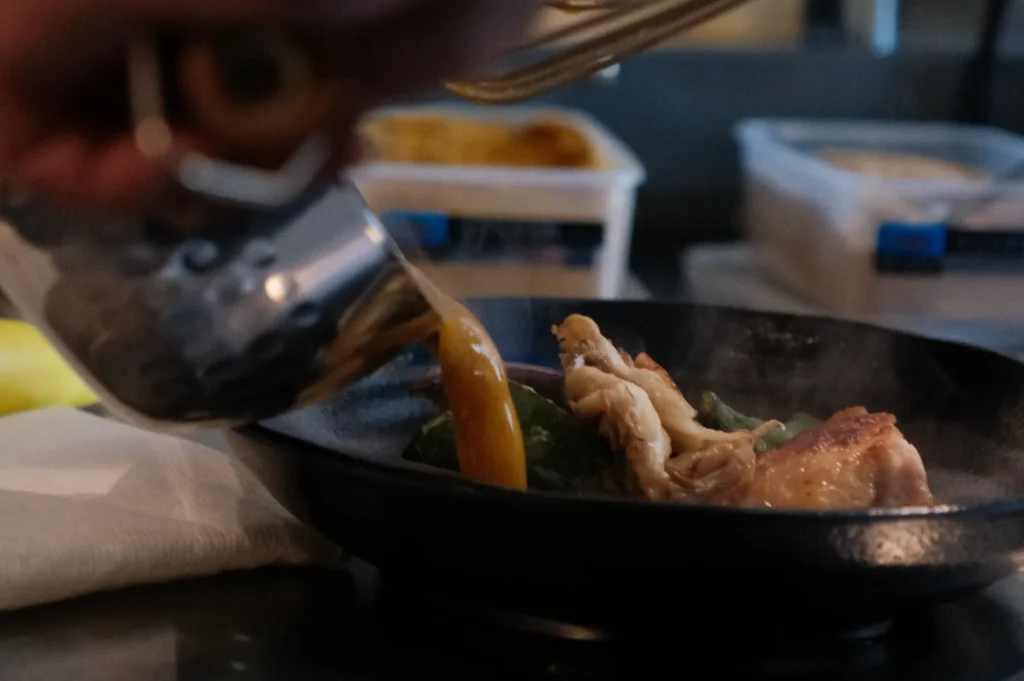
Soup curry broth works differently. Ours is built from chicken bones and chicken broth, slowly drawn out alongside curry powder, garam masala and tomato paste, so the depth comes from the layers of spice and the natural gelatine released during a long simmer, not from flour or cream. The result looks light because it has not been artificially thickened, but the flavour is anything but thin. It is concentrated, warming and complex, closer to a well built consommé than a quick broth.
What Fills the Bowl, Not Just the Spoon
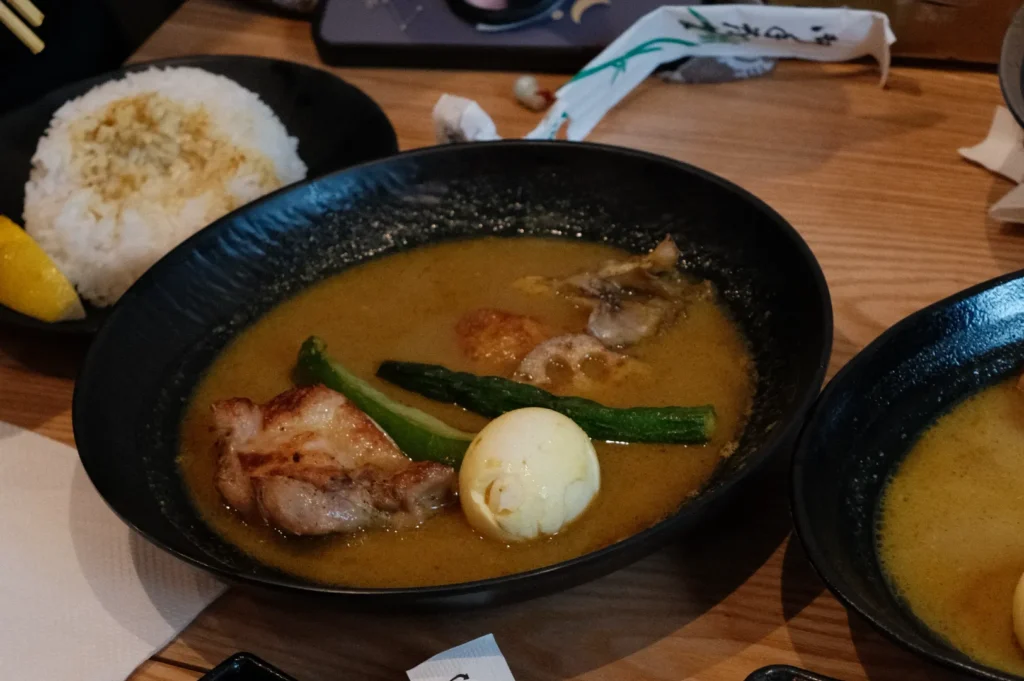
The real answer to why a clear broth still leaves you full, along with the quiet health benefits that come with it, lies less in the liquid and more in what is sitting inside it. A bowl of soup curry is not built the way a Western soup is, where the broth carries most of the substance. Here, the broth is the seasoning and the warmth, while the ingredients do the work of actually filling you up.
The Vegetables Do More Than Add Colour
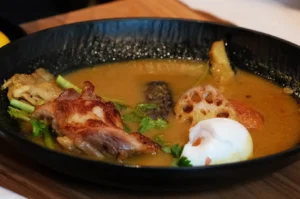
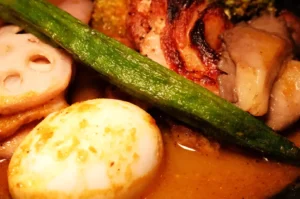
Anyone who has seen a bowl of soup curry before tasting it will remember the vegetables first. Bell peppers in deep red and green, rounds of lotus root, matte purple aubergine, and thick wedges of potato, all standing upright and vivid rather than boiled into submission.
This is not simply for visual appeal, although it certainly helps. These vegetables are prepared using a Japanese deep frying method known as su-age, where each piece is flash fried without any batter. The technique seals in moisture and structure, so instead of vegetables that have softened and shrunk during cooking, you get pieces that retain their original volume, their fibre, and a satisfying bite.
That matters more than it sounds. A great deal of what makes a meal feel filling is not just calories, but volume and chew. Vegetables that have been simmered into a stew for an hour tend to collapse, losing both bulk and the sense of texture that tells your body you have eaten something substantial. Su-age vegetables do the opposite. They stay firm, they stay large, and they force you to actually chew through a meal rather than simply swallow it down. That alone changes how filling a bowl feels, regardless of how light the broth around it appears.
Protein You Can Actually See
The second pillar of a soup curry bowl is the meat, and in our case, that means tender chicken leg, cooked so it falls away easily but has not been reduced to shreds lost in a sauce. Because the broth is clear, nothing about the protein is hidden or diluted. You can see exactly how much chicken is in your bowl, and you eat it as a distinct component rather than something dissolved into a gravy.
Psychologically, this matters as much as it does nutritionally. Being able to see your protein, rather than having it disappear into a thick sauce, reinforces the sense that you are eating a complete meal rather than a light broth with garnish.
Rice as the Anchor
No conversation about fullness in soup curry is complete without mentioning the rice, which is served separately rather than folded into the broth. This is a deliberate structural choice. Steamed white rice acts as the anchor of the meal, absorbing spoonfuls of broth as you go, so that each mouthful can be adjusted from light and soupy to hearty and rice forward depending on how you eat it.
This is part of why soup curry can feel deceptively filling. You are not passively finishing a bowl of soup. You are actively building each bite, and rice is doing quiet, steady work in the background to make sure you leave satisfied.
Why Clarity Does Not Mean Absence
There is a broader point here about what makes food feel substantial, and it goes beyond soup curry specifically. Thickness in a sauce is often achieved through starches, cream, or extended reduction, all of which add calories without necessarily adding nutritional density. A clear curry broth strips that away and leaves you with something more honest: spice, bone broth, and time.
The warmth from garam masala and curry powder does something a thick gravy cannot always manage, which is to open up your palate rather than coat and dull it. Each spoonful stays distinct instead of blending into a uniform richness, which is part of why people often find they can finish an entire bowl of soup curry without the heaviness that can follow a thicker curry dish.
There is also a practical, physical element worth mentioning. A broth built primarily from bones and aromatics, rather than fat and flour, tends to sit more comfortably. Guests who might feel sluggish after a rich, oil heavy meal often comment that soup curry leaves them satisfied without that same weighed down feeling. That is not an accident. It reflects a style of cooking where the priority is coaxing flavour out through patience and technique rather than through added richness.
A Different Kind of Comfort Food
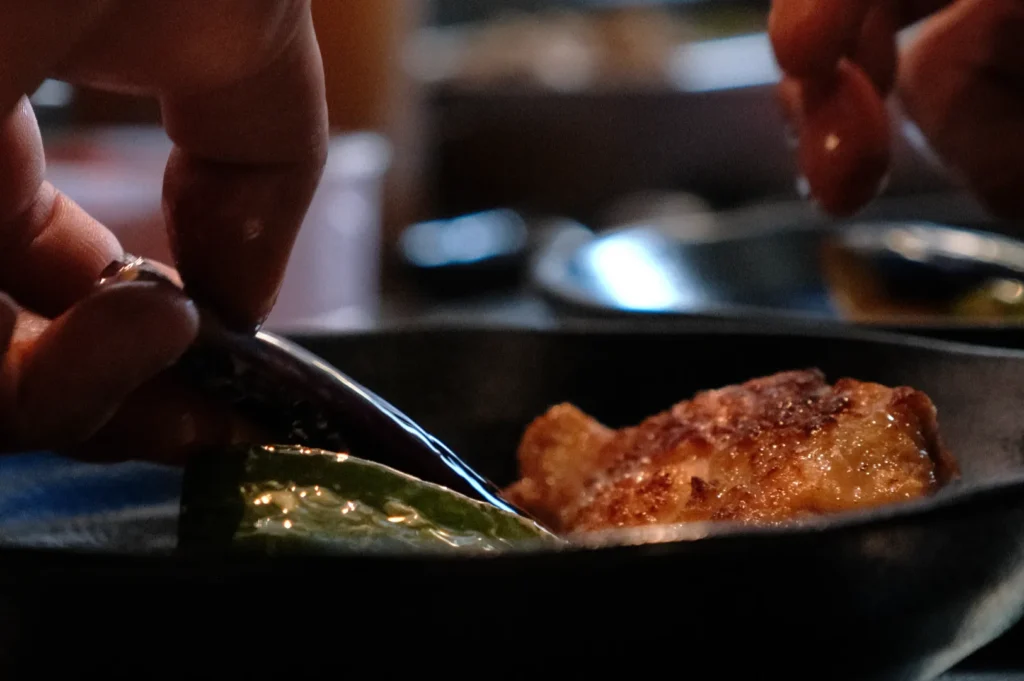
Soup curry originated in Sapporo, in Japan’s northern region of Hokkaido, where winters are long and the need for something genuinely warming runs deep. It makes sense that a dish born in that climate would prioritise warmth and nourishment over visual richness. This is soul food in the truest sense, built to sustain people through cold months, not to impress with how thickly it clings to a spoon.
When we bring that same approach to Singapore through Soup Curry by Ki-Setsu, the intention has always been to preserve that philosophy rather than adapt it into something heavier or more familiar to local expectations of what curry should look like.
It is worth noting too that a clear broth invites a kind of attentiveness that a thick one does not. Because nothing is hidden beneath a heavy sauce, every ingredient has to earn its place. The vegetables have to be prepared properly. The chicken has to be cooked with care. The broth has to be built slowly, because there is nowhere for shortcuts to hide. In some ways, a clear curry broth demands more skill, not less, precisely because there is less room for concealment.
Rethinking What “Filling” Really Means
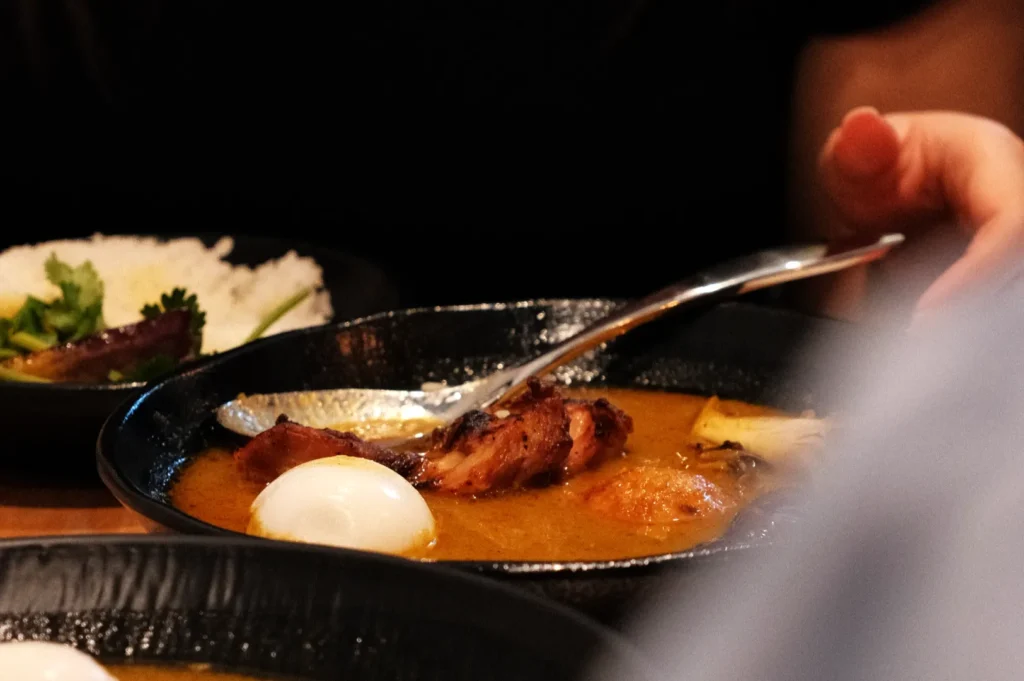
By the time most guests reach the bottom of their bowl, the initial doubt about a thin looking broth has usually disappeared entirely. What replaces it is a fuller understanding of how a meal can satisfy without relying on visual heaviness. A clear curry broth is not an absence of richness. It is richness expressed differently, through layered spice, patiently drawn bone broth, vegetables that retain their integrity, and a portion of rice that lets you control the meal as you eat it.
The next time a bowl of soup curry arrives looking lighter than expected, it is worth remembering that clarity in a broth says nothing about how satisfied you will feel afterwards. If anything, it is a sign that nothing has been added simply to create an illusion of fullness. What is there is there because it belongs, and that, more than thickness ever could, is what actually fills you up.